

FSI Online Courses
Here's every CFD online course related to FSI category.
Fluid-Structure Interaction Concepts, Intrinsic FSI, ANSYS Fluent
Beginner, Intermediate, Advanced
Price: Free
Introduction to the Fluid-Structure Interaction (Intrinsic FSI) in ANSYS Fluent software Introduction to the Structural Model Introduction to Linear Elasticity and Non-Linear Elasticity Introduction to One-Way FSI and Two-Way FSI Introduction to the Dynamic Structural System
Fluid-Structure Interaction (FSI) Concepts, System Coupling, ANSYS Fluent
Beginner, Intermediate, Advanced
Price: Free
Introduction to the Fluid-Structure Interaction (FSI) in ANSYS Workbench software Introduction to the Fluent solver Introduction to the Structural solver Introduction to System Coupling Introduction to One-Way FSI and Two-Way FSI
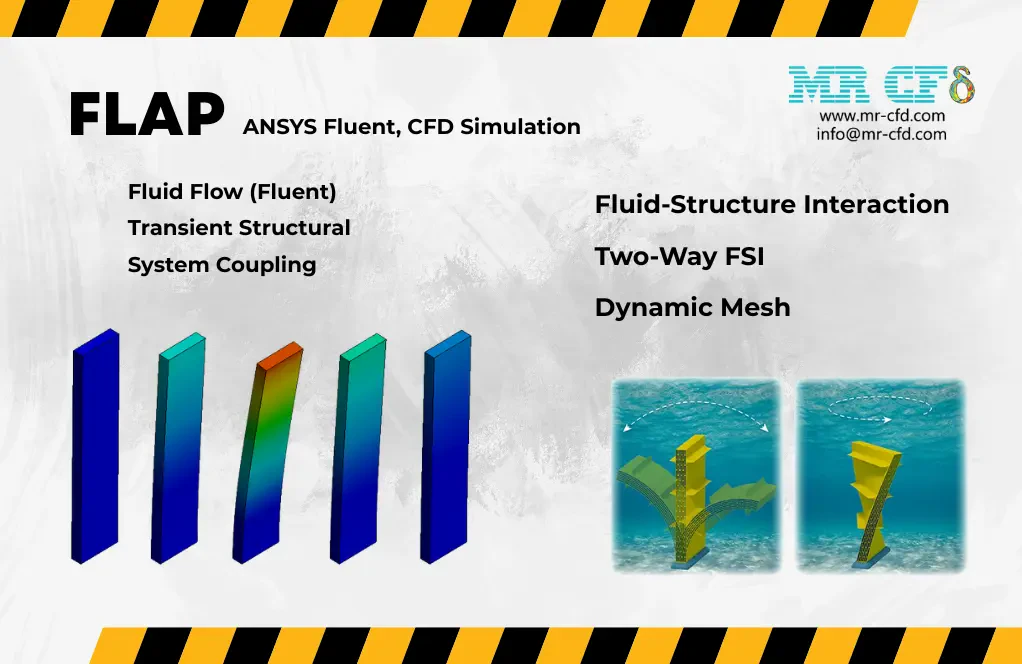
Flap, Two-way FSI, ANSYS Fluent CFD Simulation
Intermediate, Advanced
Price: $210
This product numerically simulates a Flap motion or deformation using ANSYS software. This project is implemented as a Fluid-Structure Interaction (FSI) approach. We perform the Fluid simulation in ANSYS Fluent and the Solid simulation in ANSYS Transient Structural. The System Coupling is used to define Data Transfer between fluid and structural calculations. We use a 2-Way FSI for data transfer in both from fluid to solid and from solid to fluid. We design the 3-D model in the Design Modeler software and mesh it in the ANSYS Meshing software. We use the Dynamic Mesh option to account for fluid domain deformation. The run calculation is in an Unsteady State (transient).
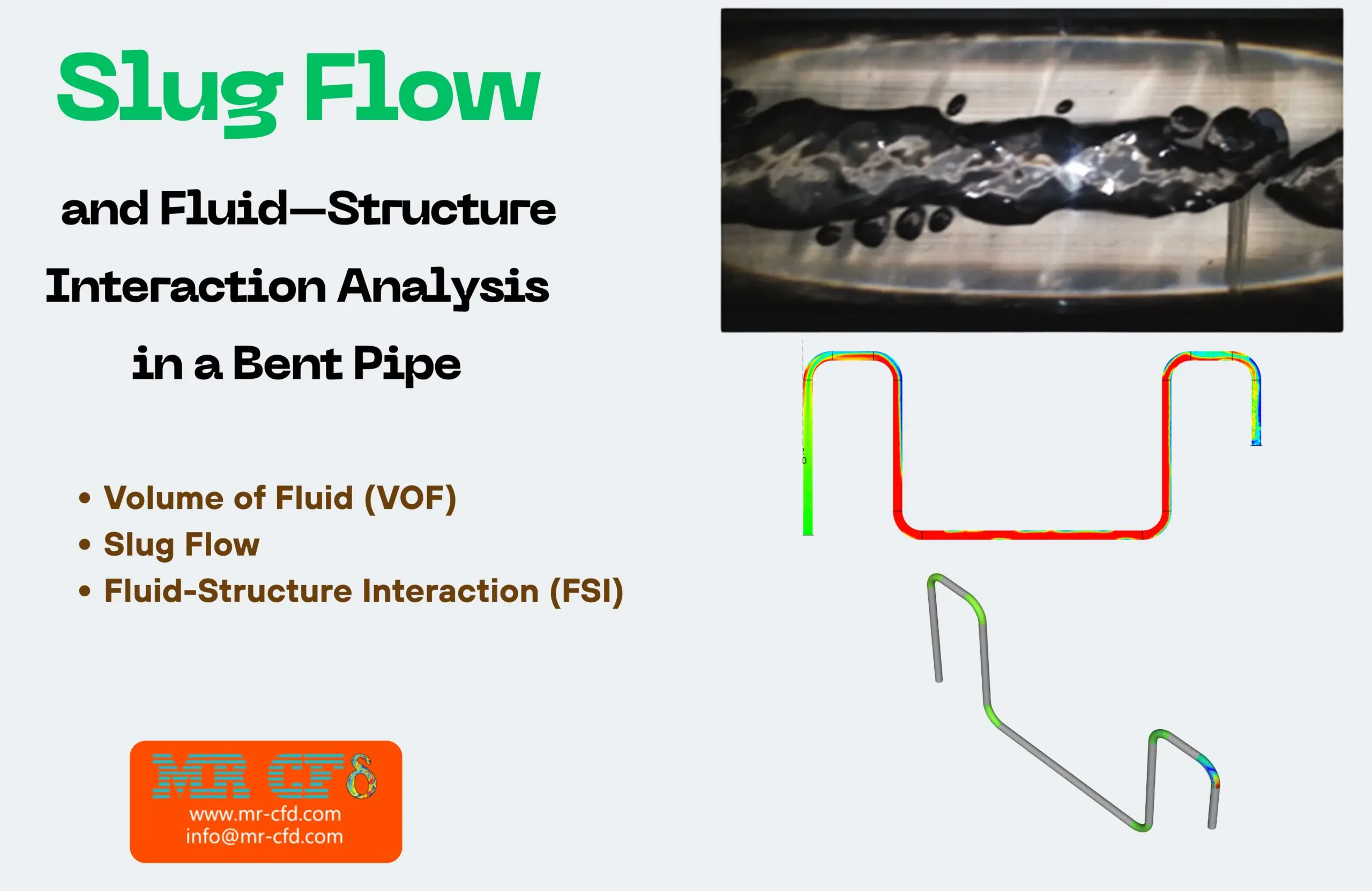
Slug Flow CFD Simulation and Fluid–Structure Interaction Analysis in a Bent Pipe
Intermediate, Advanced
Price: $210
This project simulates slug flow of gas–liquid mixture in a bent pipe using ANSYS. The VOF multiphase model is applied to capture slug formation, phase separation, and velocity distribution. Results show strong gas redistribution and velocity rise up to 48 m/s in pipe bends. The structural response is negligible, with displacements around 10⁻¹⁴ m near curved sections.

Price: $270
This artery flow project involves the simulation of blood flow in a compliant artery using CFD and FSI techniques in ANSYS. The primary objectives are to validate the simulation against a published study, analyze mesh independence, and investigate the effects of wall compliance and porosity on hemodynamic behavior. The artery geometry is simplified and reconstructed for numerical accuracy, with meshing performed in ANSYS Meshing and flow solved using Fluent. Wall deformation is modeled using the FSI module, while porosity effects are simulated by assigning high-viscosity fluid properties to the vessel wall. Simulations are performed under unsteady, incompressible flow conditions with non-Newtonian blood properties. Key results include time-dependent deformation, wall shear stress, and velocity distributions, with validation confirming a shear stress error below 1% in mesh studies.
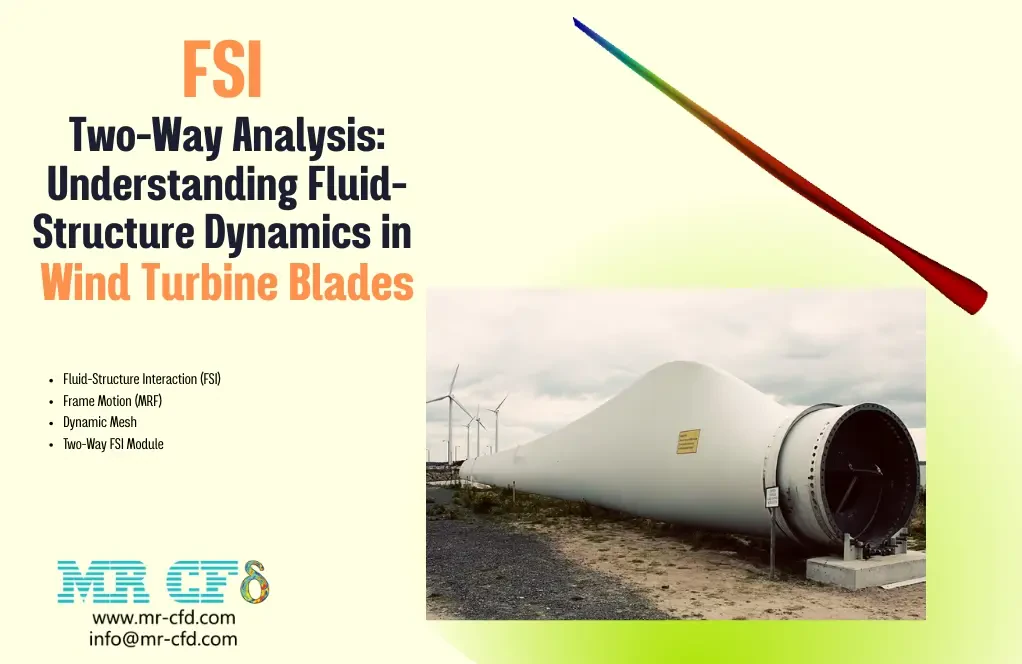
FSI Two-Way Analysis: Understanding Fluid-Structure Dynamics in Wind Turbine Blades
Intermediate, Advanced
Price: $270
This project focuses on the two-way Fluid-Structure Interaction (FSI) simulation of wind turbine blades to analyze their performance under specified conditions. Utilizing a dynamic mesh and advanced computational techniques, the study aims to evaluate key parameters such as torque, maximum stress, and total deformation. By modifying the geometry in ANSYS Spaceclaim and conducting the simulation with 990,399 cells, the project demonstrates how the blade’s structural integrity is affected by fluid flow and mechanical forces. The results, including stress distribution and displacement, provide insights into optimizing wind turbine design for improved efficiency and durability.
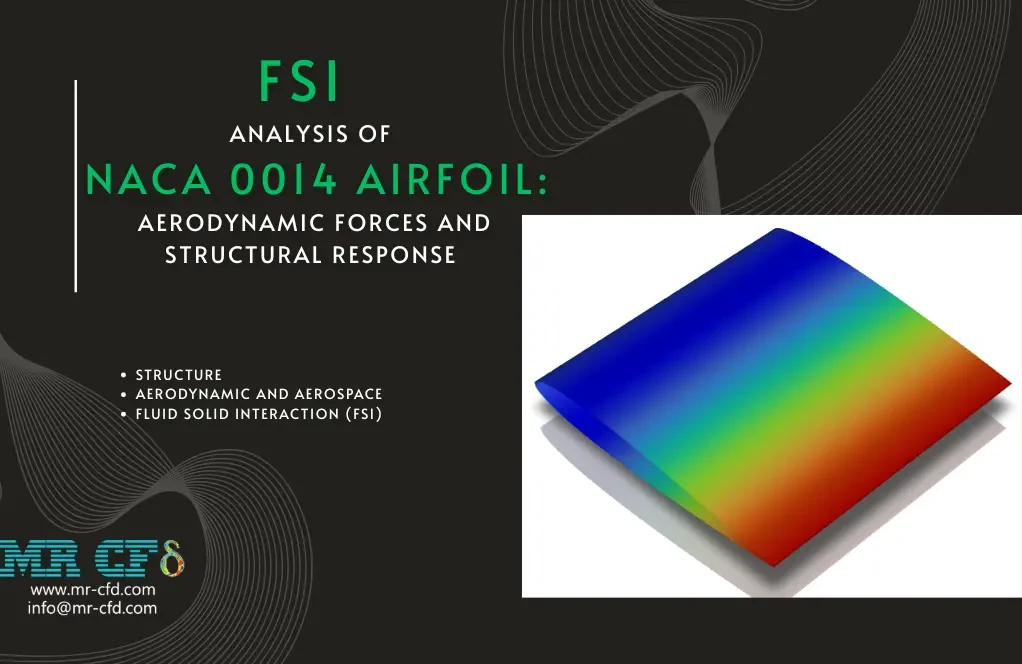
FSI Analysis of NACA 0014 Airfoil: Aerodynamic Forces and Structural Response
Intermediate, Advanced
Price: $30
The current FSI analysis investigates the aerodynamic performance of a NACA 0014 airfoil using one-way Fluid-Structure Interaction in ANSYS Fluent. The geometry was created in Design Modeler and meshed in ANSYS Meshing, generating 1,708,222 unstructured cells with boundary layer refinement. A pressure-based solver with the Spalart-Allmaras turbulence model was used, and structural response was analyzed via the Linear Elasticity model.
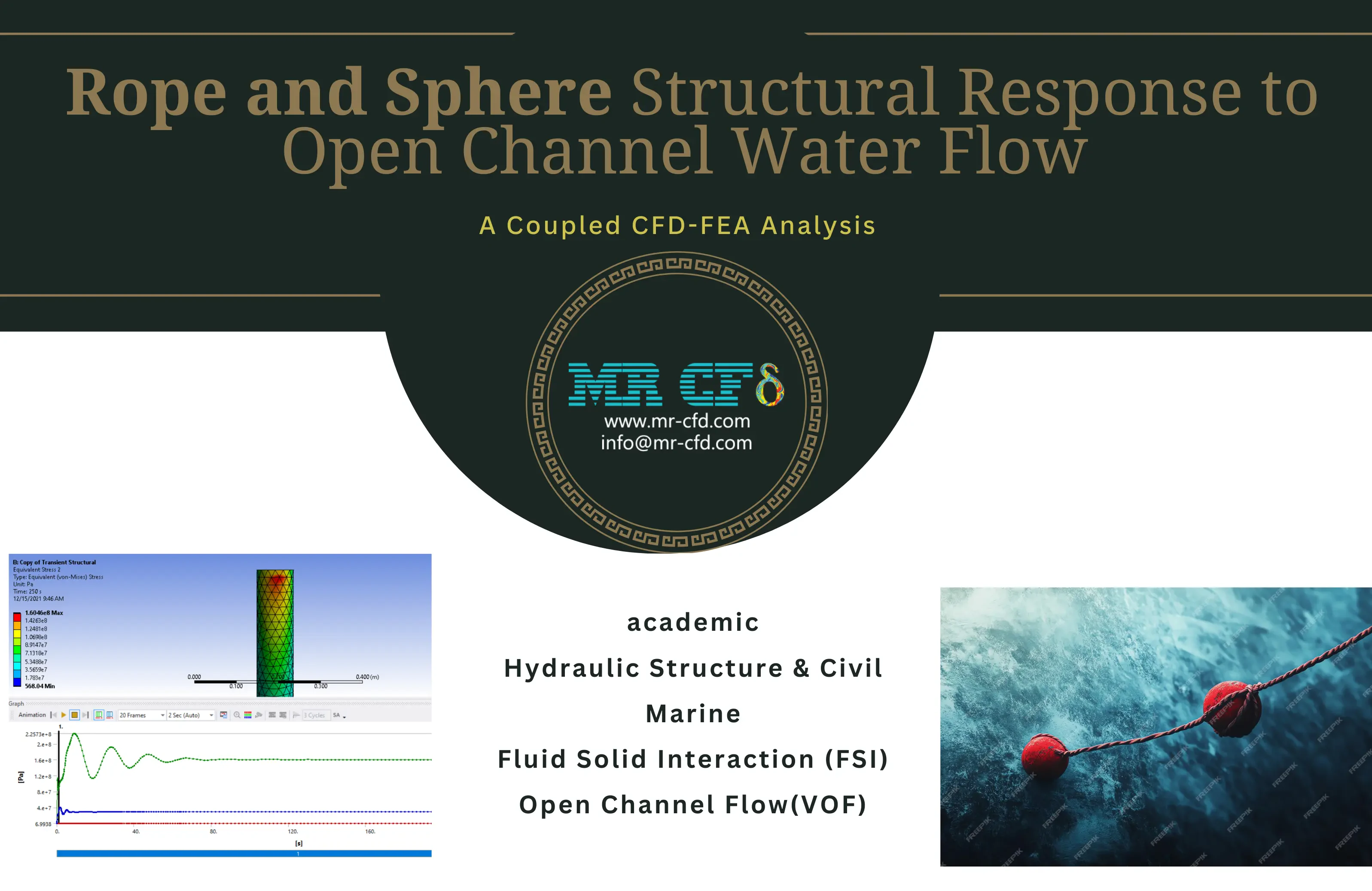
Rope and Sphere Structural Response to Open Channel Water Flow: A Coupled CFD-FEA Analysis (FSI)
Intermediate, Advanced
Price: $30
This report presents a numerical simulation study of an open channel flow interacting with a rope and sphere using the Volume of Fluid (VOF) method. The geometry was created in SpaceClaim, meshed in ANSYS Meshing, and the flow field was solved using ANSYS Fluent. The drag forces obtained from Fluent were applied to the rope and sphere geometry in ANSYS Transient Structural.
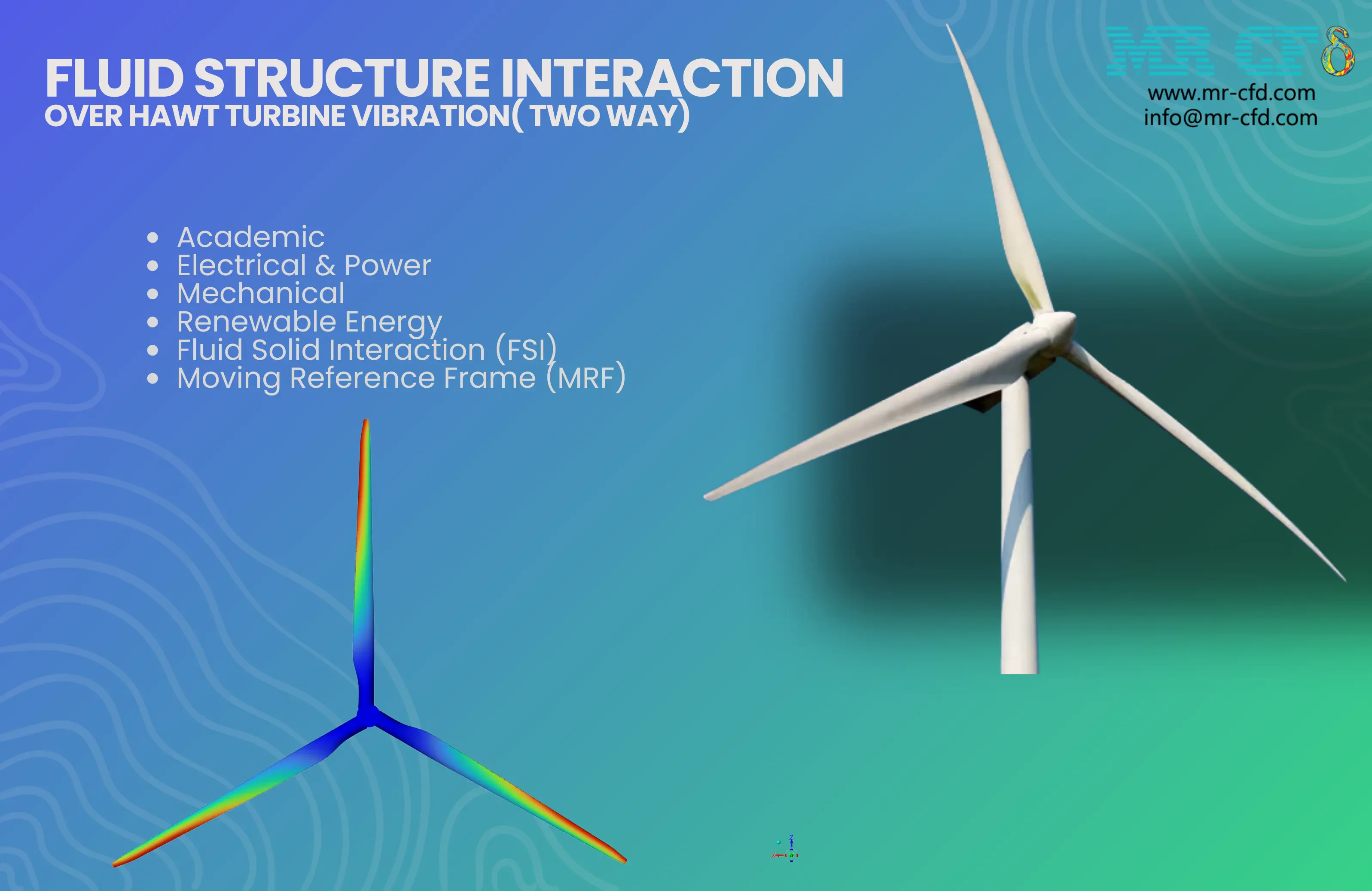
Fluid-Structure Interaction over HAWT Turbine Vibration (two-way)
Intermediate, Advanced
Price: $60
this report presents a FSI analysis of a HAWT using CFD. The geometry was created using ANSYS Design Modeler, and meshing was performed with ANSYS Meshing, resulting in a high-fidelity model with 3,465,821 cells. The simulation leverages (MRF) approach for rotating domains and dynamic mesh methods to capture the complex fluid-structure interactions. A two-way FSI approach was employed to capture the mutual interaction between the fluid flow and the structural deformation of the turbine blades.