

VOF Online Courses
Here's every CFD online course related to VOF category.
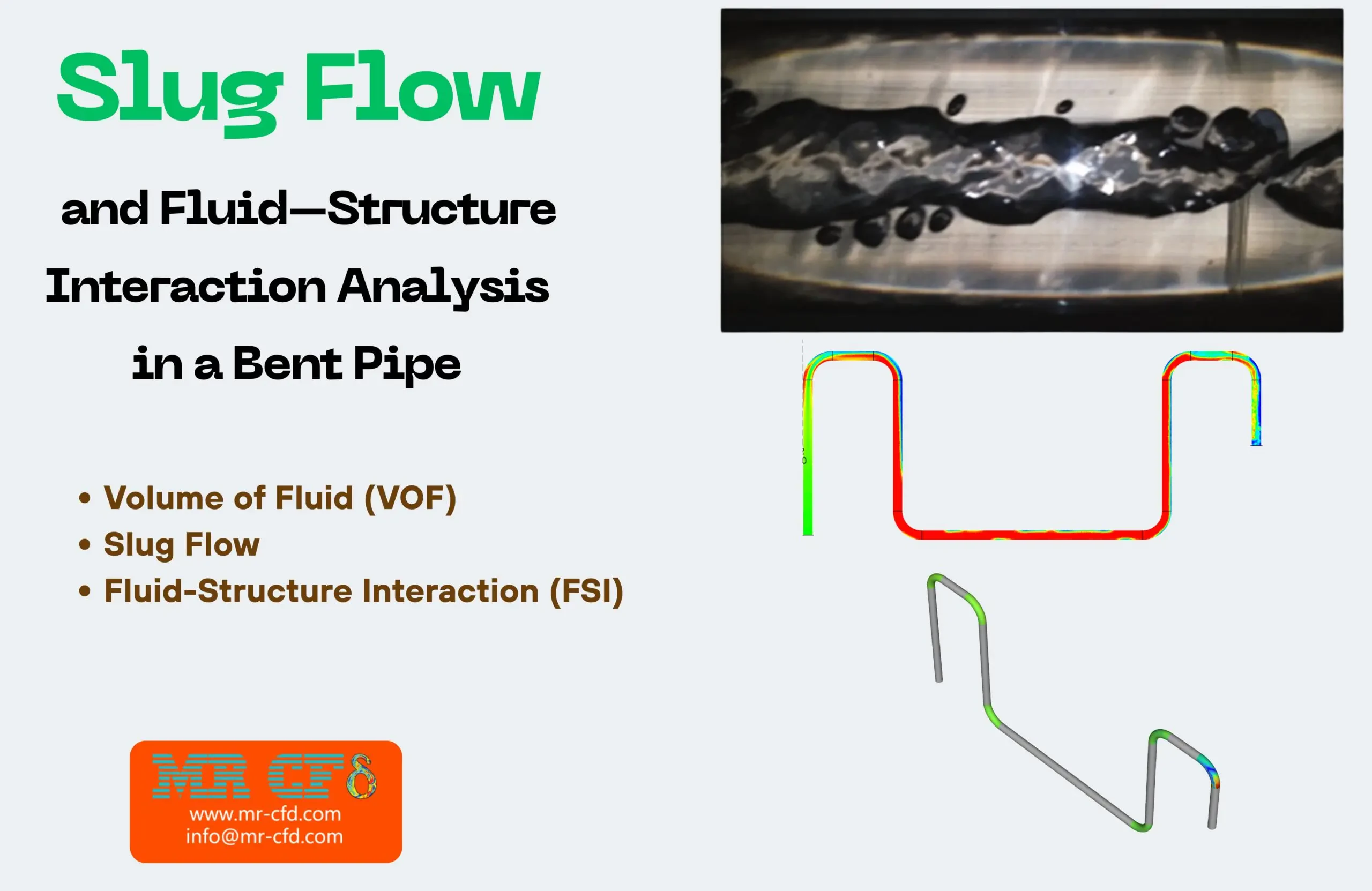
Slug Flow CFD Simulation and Fluid–Structure Interaction Analysis in a Bent Pipe
Intermediate, Advanced
Price: $210
This project simulates slug flow of gas–liquid mixture in a bent pipe using ANSYS. The VOF multiphase model is applied to capture slug formation, phase separation, and velocity distribution. Results show strong gas redistribution and velocity rise up to 48 m/s in pipe bends. The structural response is negligible, with displacements around 10⁻¹⁴ m near curved sections.
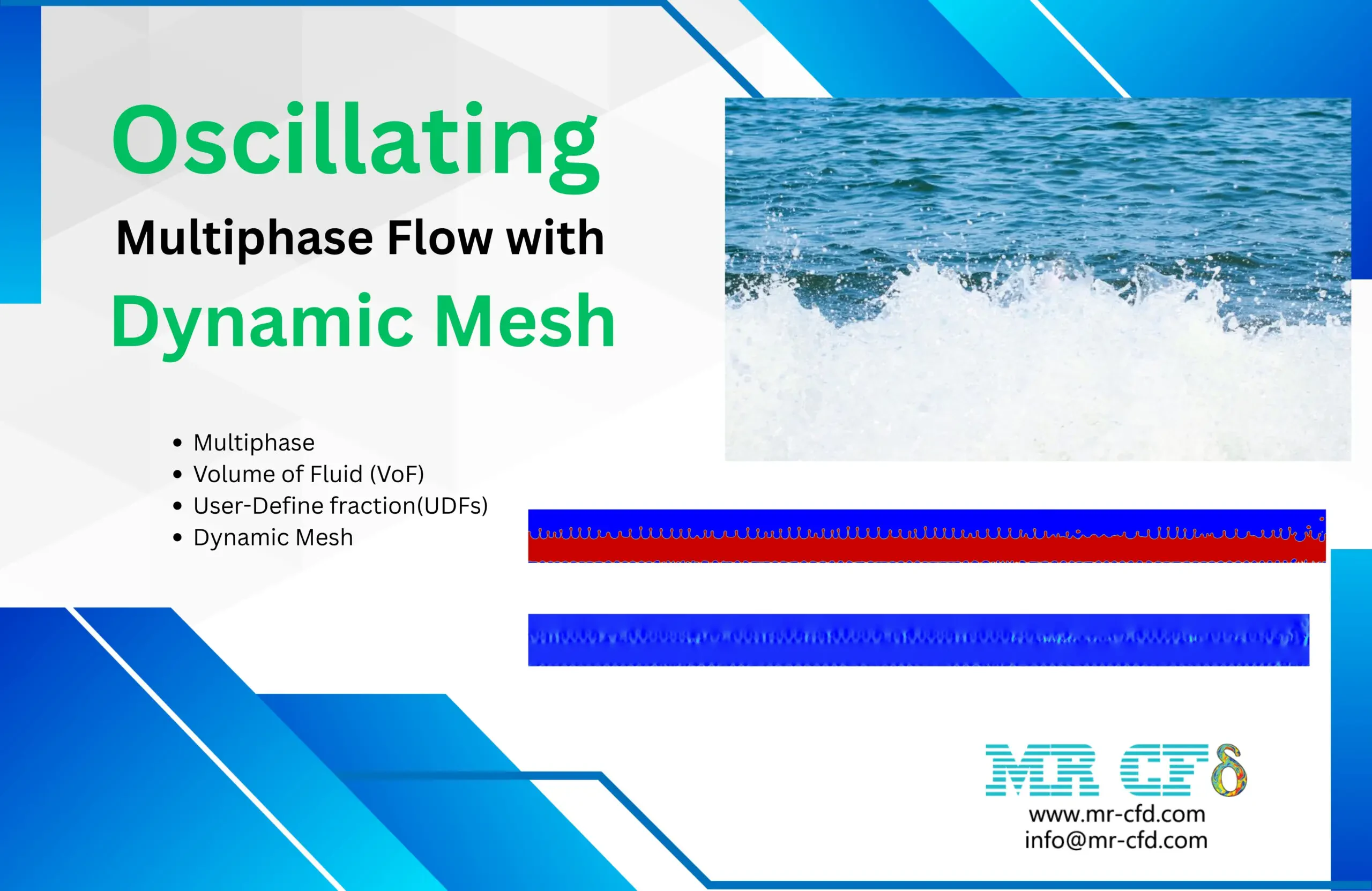
Oscillating Multiphase Flow with Dynamic Mesh
Intermediate, Advanced
Price: $270
In the oscillating multiphase CFD study, the interaction of water and air inside a narrow rectangular channel is investigated using ANSYS Fluent. The geometry is created in ANSYS Design Modeler and meshed with a structured grid of 480,760 cells in ANSYS Meshing. The Volume of Fluid (VOF) method is applied for tracking the water and air interface, with water defined as the primary phase and air as the secondary phase. A dynamic mesh technique with smoothing and re-meshing options is enabled, along with a moving wall defined by a User-Defined Function (UDF).
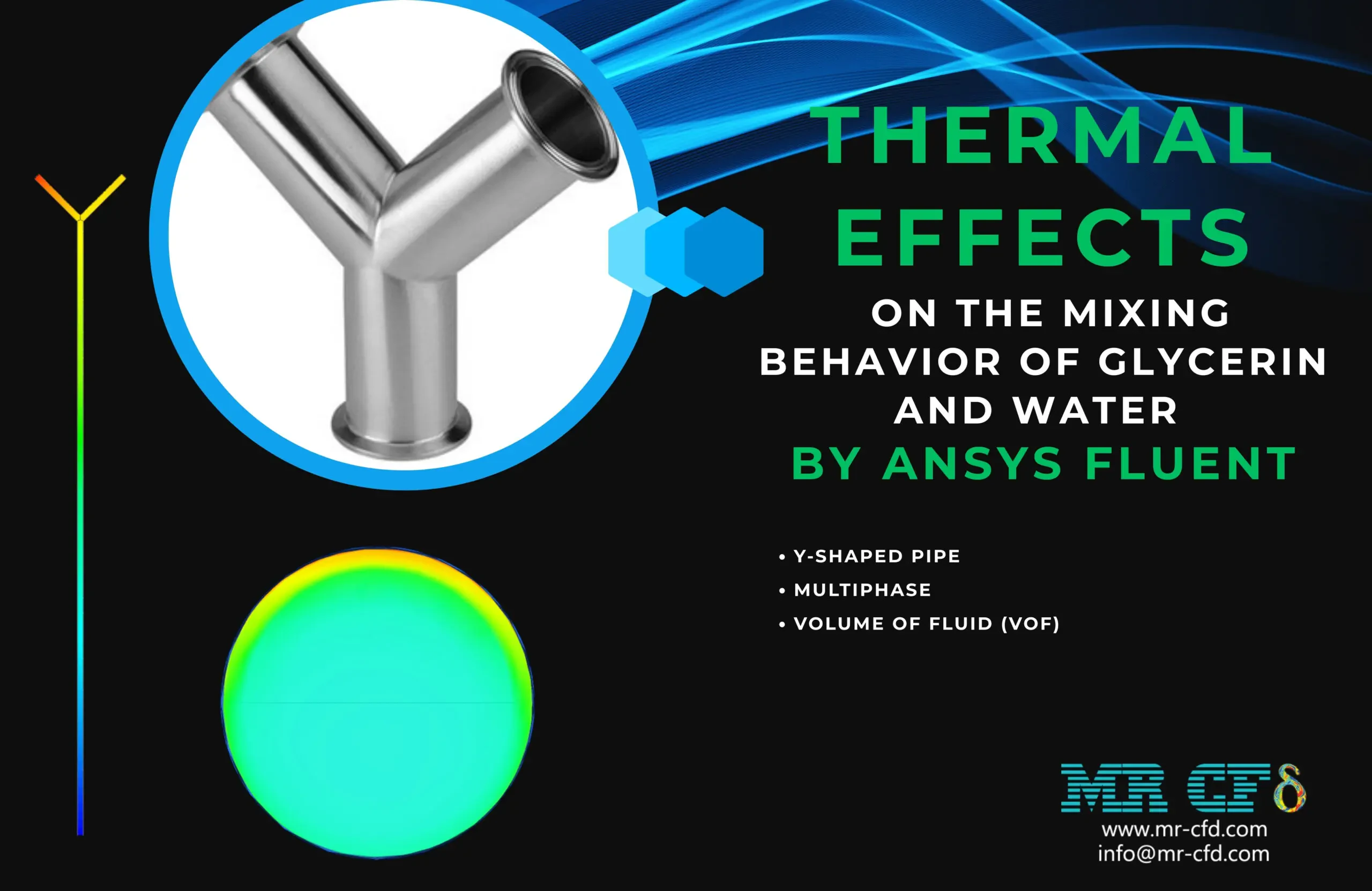
Thermal Effects on the Mixing Behavior of Glycerin and Water by ANSYS Fluent
Intermediate, Advanced
Price: $120
In the thermal effects on mixing in pipesCFD study investigates the thermal effect on the mixing of glycerin and water in a Y-shaped pipe using ANSYS Fluent. The geometry is created in ANSYS Design Modeler and meshed in ANSYS Meshing to generate a high-quality computational grid. The Volume of Fluid (VOF) method with an implicit formulation is applied, and the realizable k–epsilon model is used for turbulence modeling. A mass flow inlet of 0.15 kg/s is set for both phases, and simulations are carried out without heat flux and with a 30,000 W heat flux.
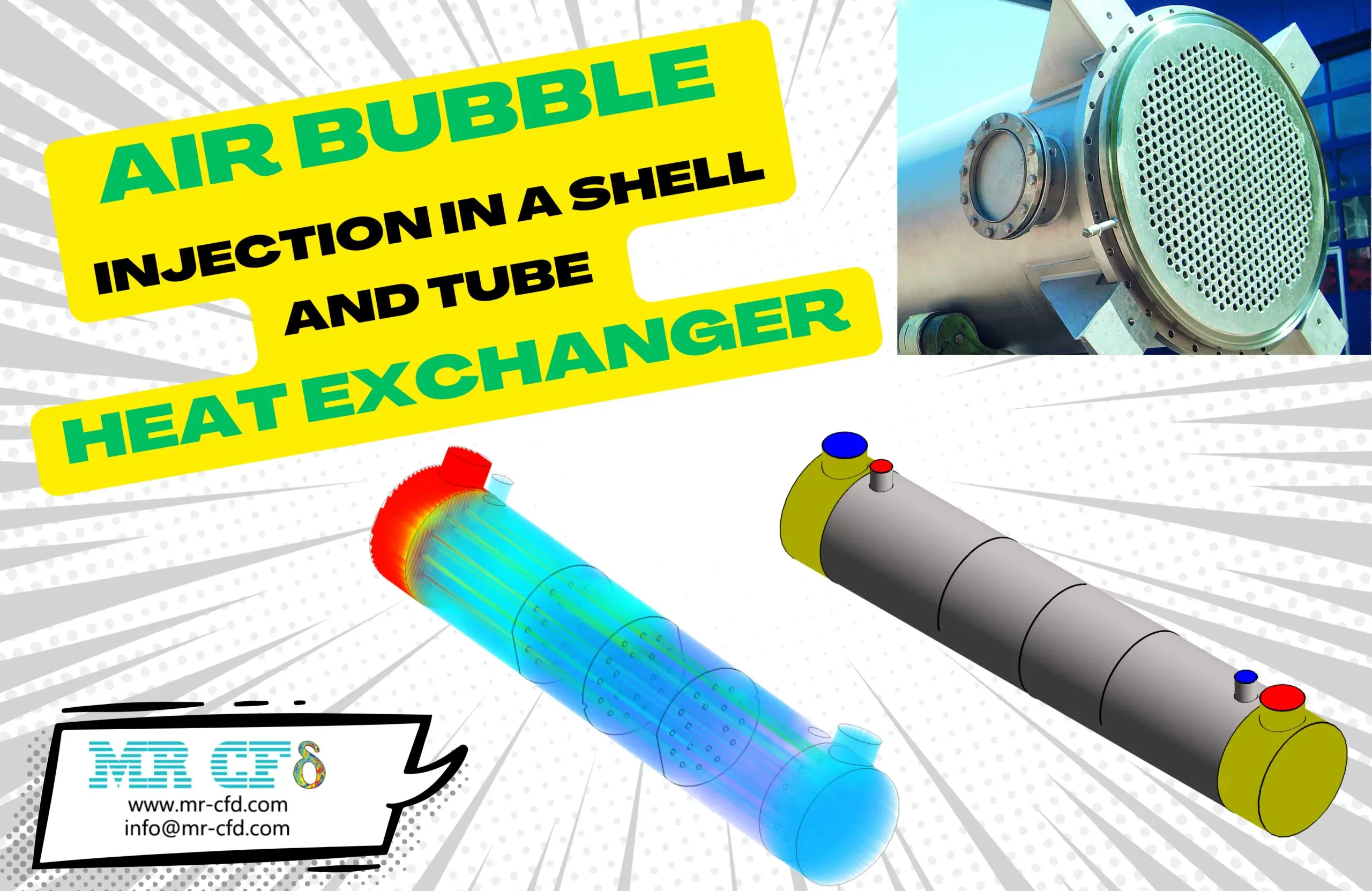
Air Bubble Injection in a shell and tube heat exchanger
Intermediate, Advanced
Price: $200
In this project, the heat transfer performance of a shell-and-tube heat exchanger with air bubble injection was simulated using ANSYS Fluent software. Three cases were studied: air injection into the shell, into the tube, and into both sides simultaneously. The geometry was created in SpaceClaim and meshed in ANSYS Meshing, initially generating about 12.6 million tetrahedral elements, later converted to a polyhedral mesh with approximately 2.43 million cells to reduce computational cost. The model was solved using a pressure-based steady solver with gravity effects included. A VOF multiphase model was applied to track air and water phases, while the realizable k-ε turbulence model with standard wall functions was used to capture flow behavior. The energy equation was enabled, and the SIMPLE algorithm with second-order upwind discretization ensured solution accuracy.
Price: $510
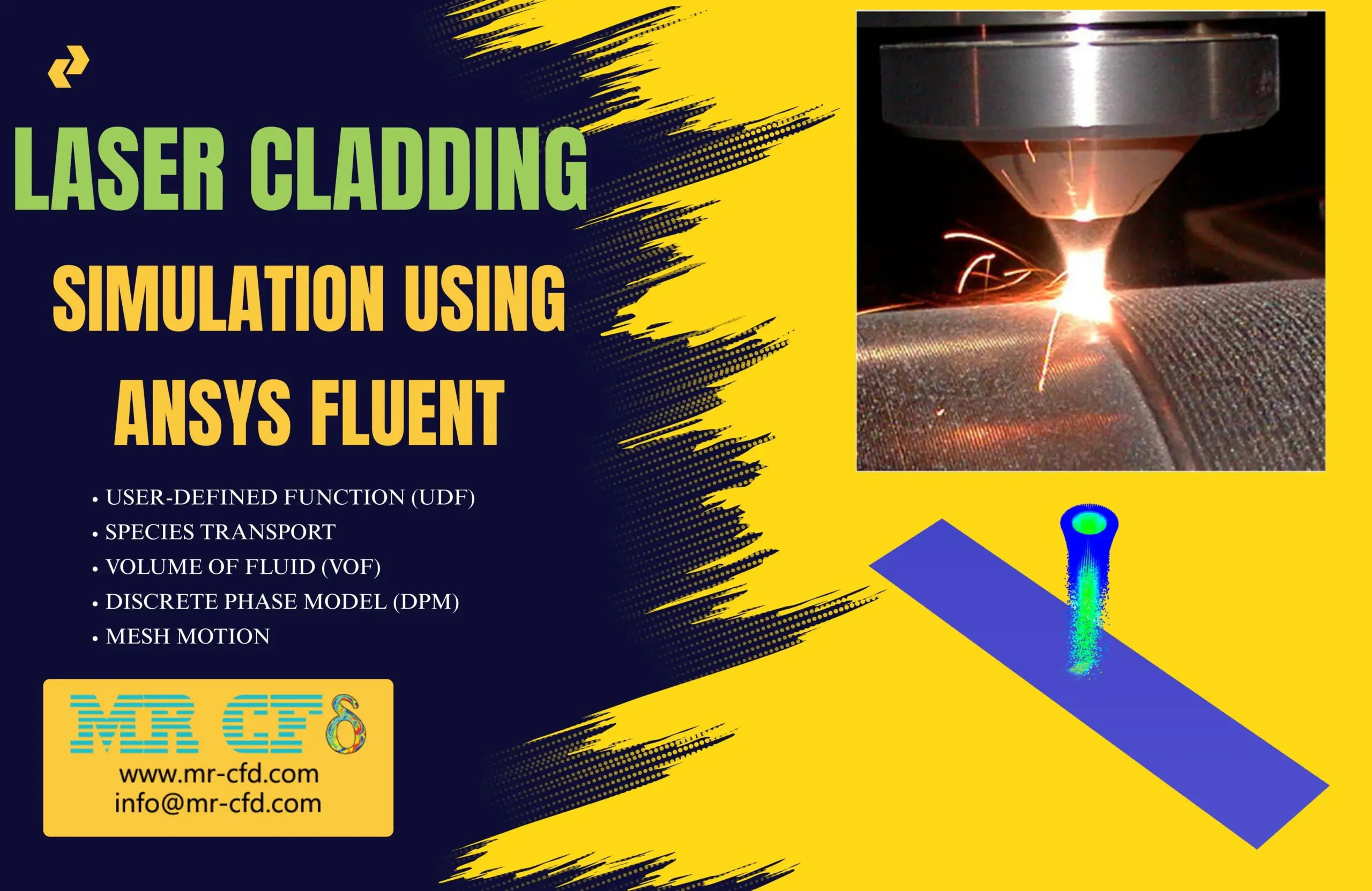
In the Laser Cladding project, we simulated the deposition of nickel droplets under an argon gas stream using ANSYS Fluent software. The three-dimensional geometry was created in Design Modeler with a computational domain of 0.05 × 0.01 × 0.025 m. A structured non-conformal mesh was generated in ANSYS Meshing, consisting of approximately 798,400 computational cells with refined regions near the deposition zone. The transient simulation employed the VOF multiphase model, coupled with species transport and energy equations, while turbulence was modeled using the Realizable k-ε model. A User-Defined Function (UDF) implemented the moving Gaussian laser heat source, enabling realistic simulation of droplet injection, spreading, and weld layer formation.
Price: $300
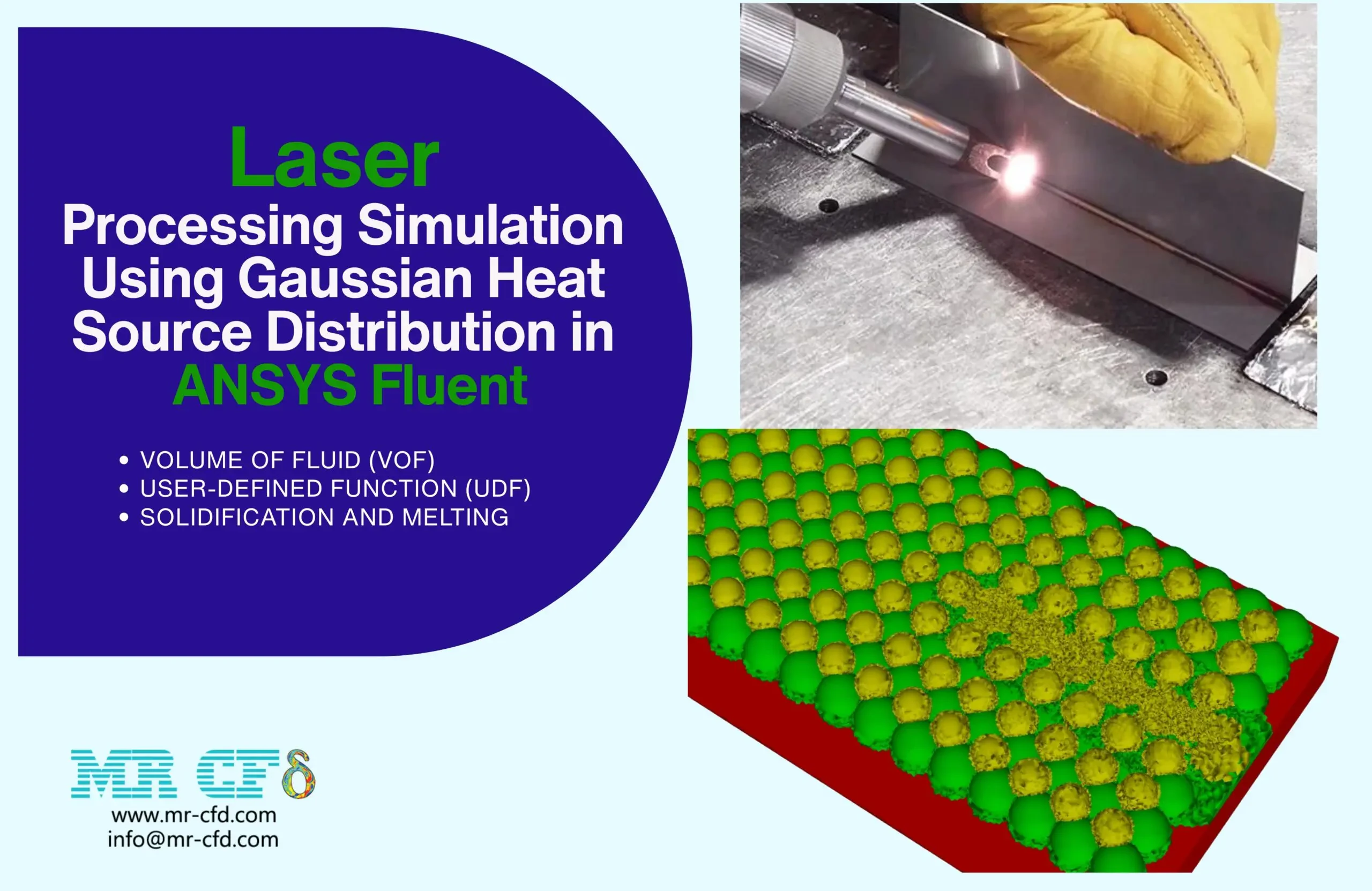
In Laser Processing project, we have simulated the laser-induced selective melting of bi-material particles using ANSYS Fluent software. Three-dimensional modeling was performed using Design Modeler software with a computational domain of 1.0 × 0.5 × 0.4 mm dimensions. The meshing of the model was accomplished using ANSYS Fluent Meshing software, generating approximately 800,000 computational cells with refined regions around the particle bed. The transient simulation employs VOF multiphase model, Solidification and Melting model, and a User-Defined Function (UDF) implementing the moving Gaussian laser heat source with laminar flow characteristics.
Price: $48
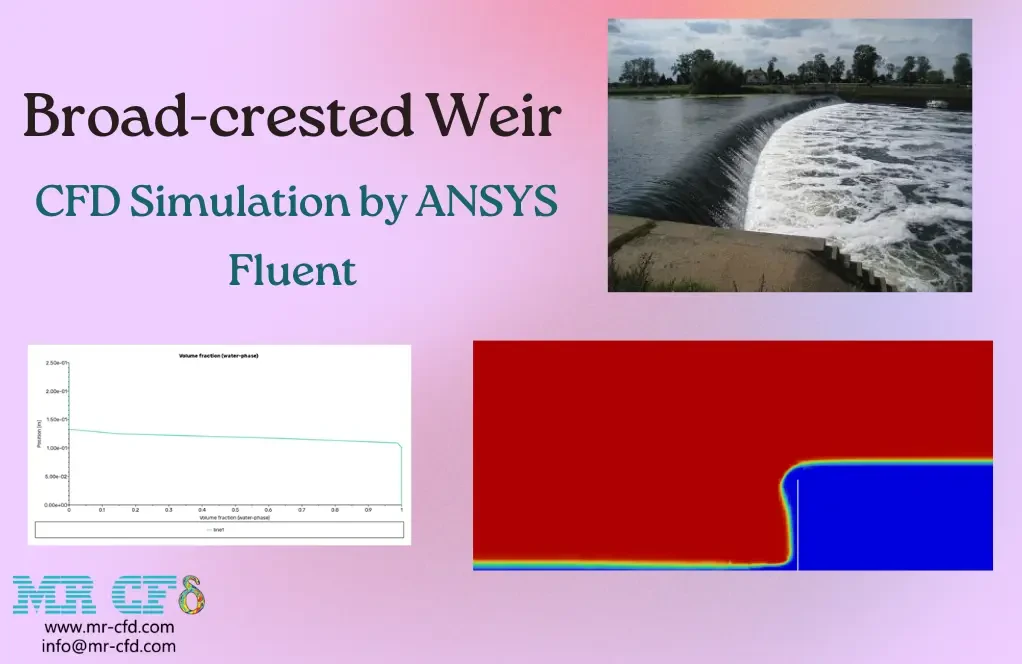
This project involves the simulation of a broad-crested weir using ANSYS Fluent to analyze fluid dynamics parameters. The primary goals are to assess the flow rate, drag force, and water level at various sections of the weir and compare these with experimental results. The geometry is created in SpaceClaim and meshed in ANSYS Meshing, resulting in a structured mesh with 1,222,021 elements for improved accuracy. The CFD simulation employs a pressure-based solver and a multiphase VOF model to address the incompressibility of fluids, with air as the primary phase and water as the secondary.
Price: $120
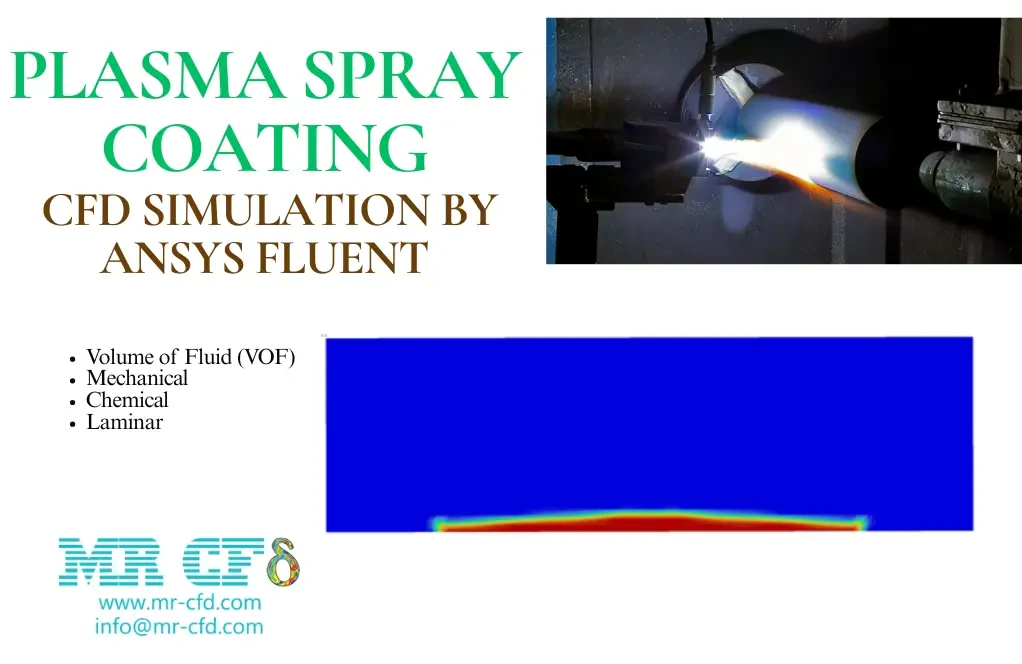
The project involves the numerical simulation of plasma spray coating using Ansys Fluent. Based on the paper, the study analyzes the impact and spread of Titanium Oxide on a surface. The 3D geometry is developed using the Design Modeler software. The meshing process utilizes ANSYS Meshing software, generating a structured mesh with 1,299,934 elements. The simulation utilizes a VOF multiphase model to capture the dynamics of droplet impact and spreading accurately.
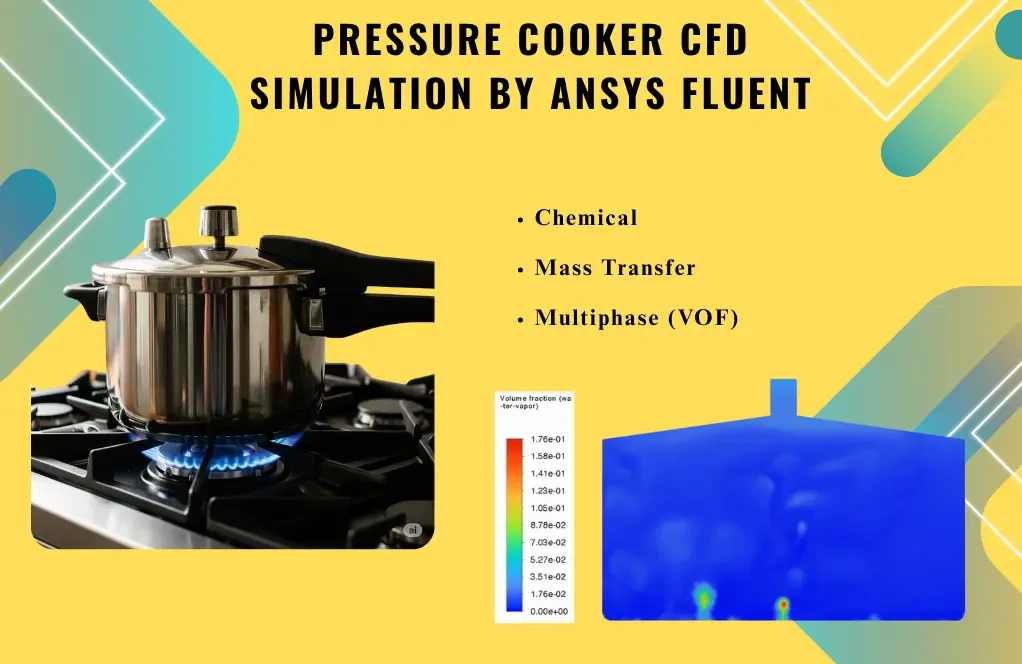
Pressure Cooker CFD Simulation by ANSYS Fluent
Beginner, Intermediate
Price: $140
This report presents a simulation which investigates the multiphase flow and mass transfer phenomena within a pressure cooker, focusing on the interactions between liquid water, water vapor, and air. The evaporation rate, pressure build-up, and temperature distribution within the pressure cooker were analyzed over a 30-second period. A high-quality tetrahedron elements mesh was generated using ANSYS Meshing software. Appropriate multiphase settings and boundary conditions were applied to correctly simulate the boiling process and vapor generation.