

Chemical Engineering CFD GOLDEN Training Course
Price:
$21,864
$4,899
MR CFD's "Chemical Engineering CFD Simulation GOLDEN Training Package" is a comprehensive bundle of over 315 ANSYS Fluent tutorials designed for professors, CEOs, managers, institutes, and firms, transforming novices into experts in chemical engineering simulations. Covering end-to-end workflows from fluidized bed reactors and cyclones to combustion chambers, fuel cells, heat exchangers, multi-phase flows, electrolyzers, and advanced topics like PBM, erosion, drying, and explosions, it provides step-by-step geometry, meshing, solving, and post-processing for real-world applications. With 15 years of MR CFD expertise, one year of technical support, three months of HPC access, regular updates for emerging fields like bubble traps, and cost-saving pre-simulated cases, it accelerates onboarding, enriches curricula, streamlines team readiness, and ensures competitive innovation across diverse chemical challenges.
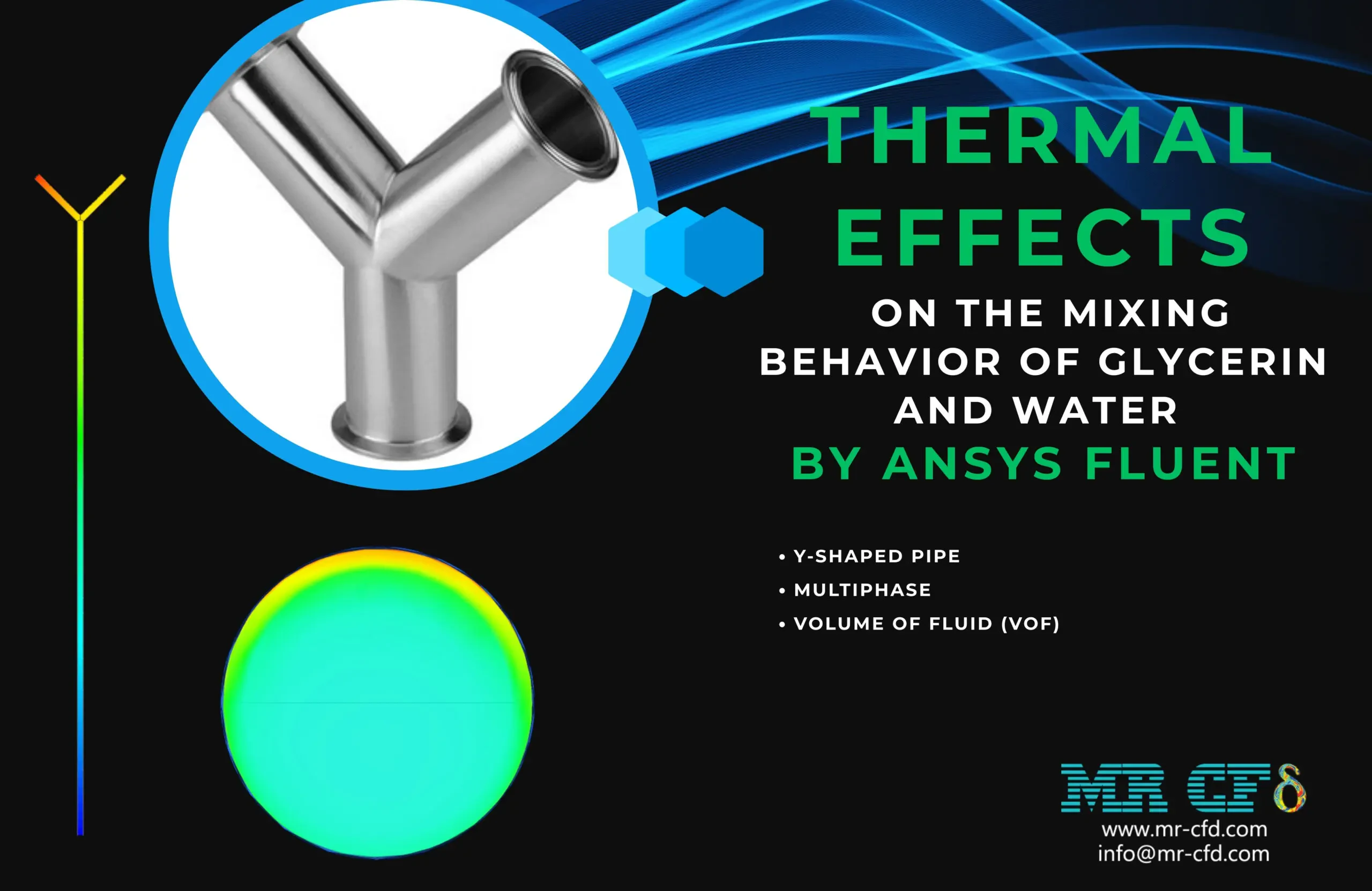
Thermal Effects on the Mixing Behavior of Glycerin and Water by ANSYS Fluent
Intermediate, Advanced
Price: $120
In the thermal effects on mixing in pipesCFD study investigates the thermal effect on the mixing of glycerin and water in a Y-shaped pipe using ANSYS Fluent. The geometry is created in ANSYS Design Modeler and meshed in ANSYS Meshing to generate a high-quality computational grid. The Volume of Fluid (VOF) method with an implicit formulation is applied, and the realizable k–epsilon model is used for turbulence modeling. A mass flow inlet of 0.15 kg/s is set for both phases, and simulations are carried out without heat flux and with a 30,000 W heat flux.
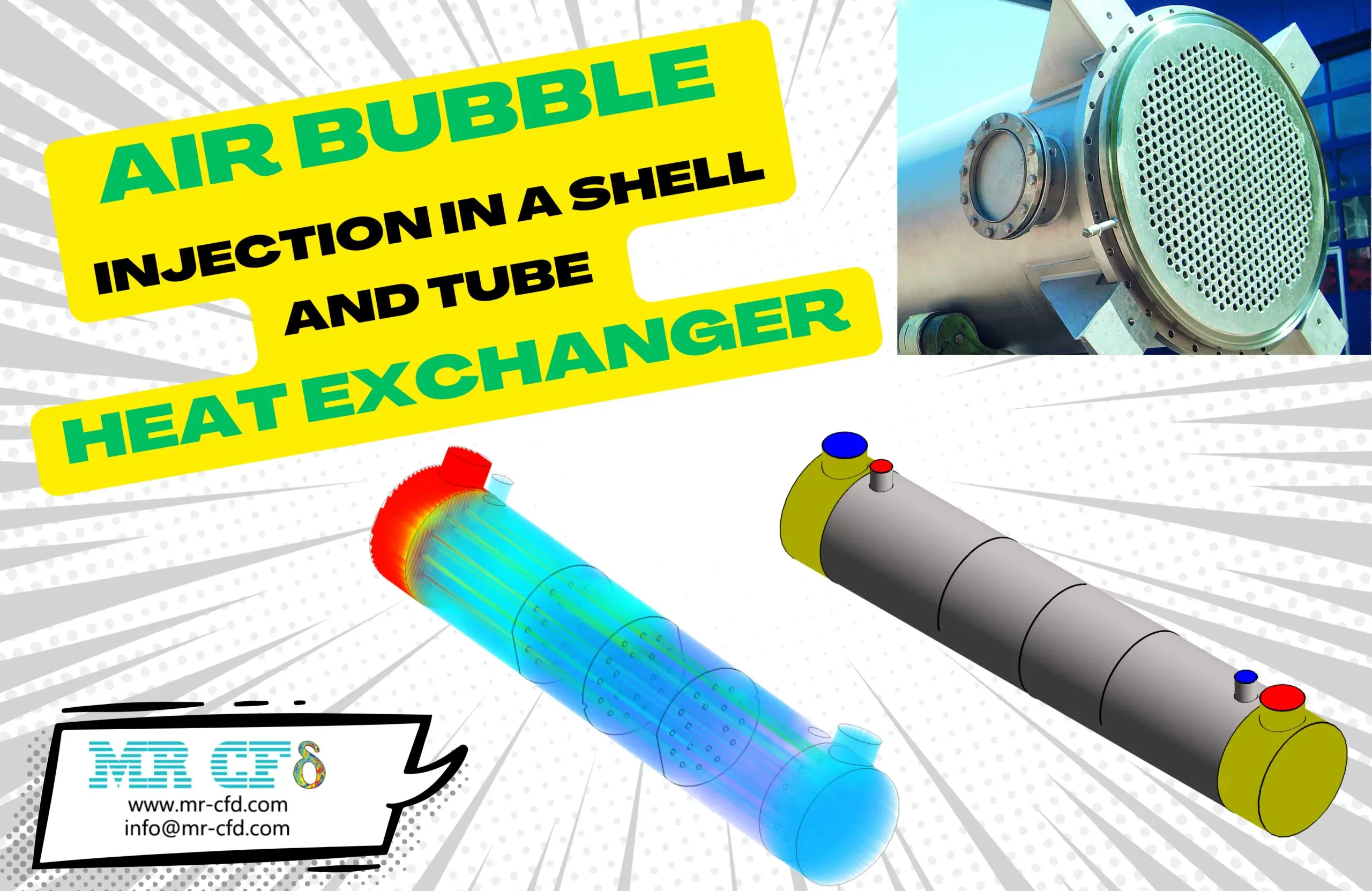
Air Bubble Injection in a shell and tube heat exchanger
Intermediate, Advanced
Price: $200
In this project, the heat transfer performance of a shell-and-tube heat exchanger with air bubble injection was simulated using ANSYS Fluent software. Three cases were studied: air injection into the shell, into the tube, and into both sides simultaneously. The geometry was created in SpaceClaim and meshed in ANSYS Meshing, initially generating about 12.6 million tetrahedral elements, later converted to a polyhedral mesh with approximately 2.43 million cells to reduce computational cost. The model was solved using a pressure-based steady solver with gravity effects included. A VOF multiphase model was applied to track air and water phases, while the realizable k-ε turbulence model with standard wall functions was used to capture flow behavior. The energy equation was enabled, and the SIMPLE algorithm with second-order upwind discretization ensured solution accuracy.
Price: $510
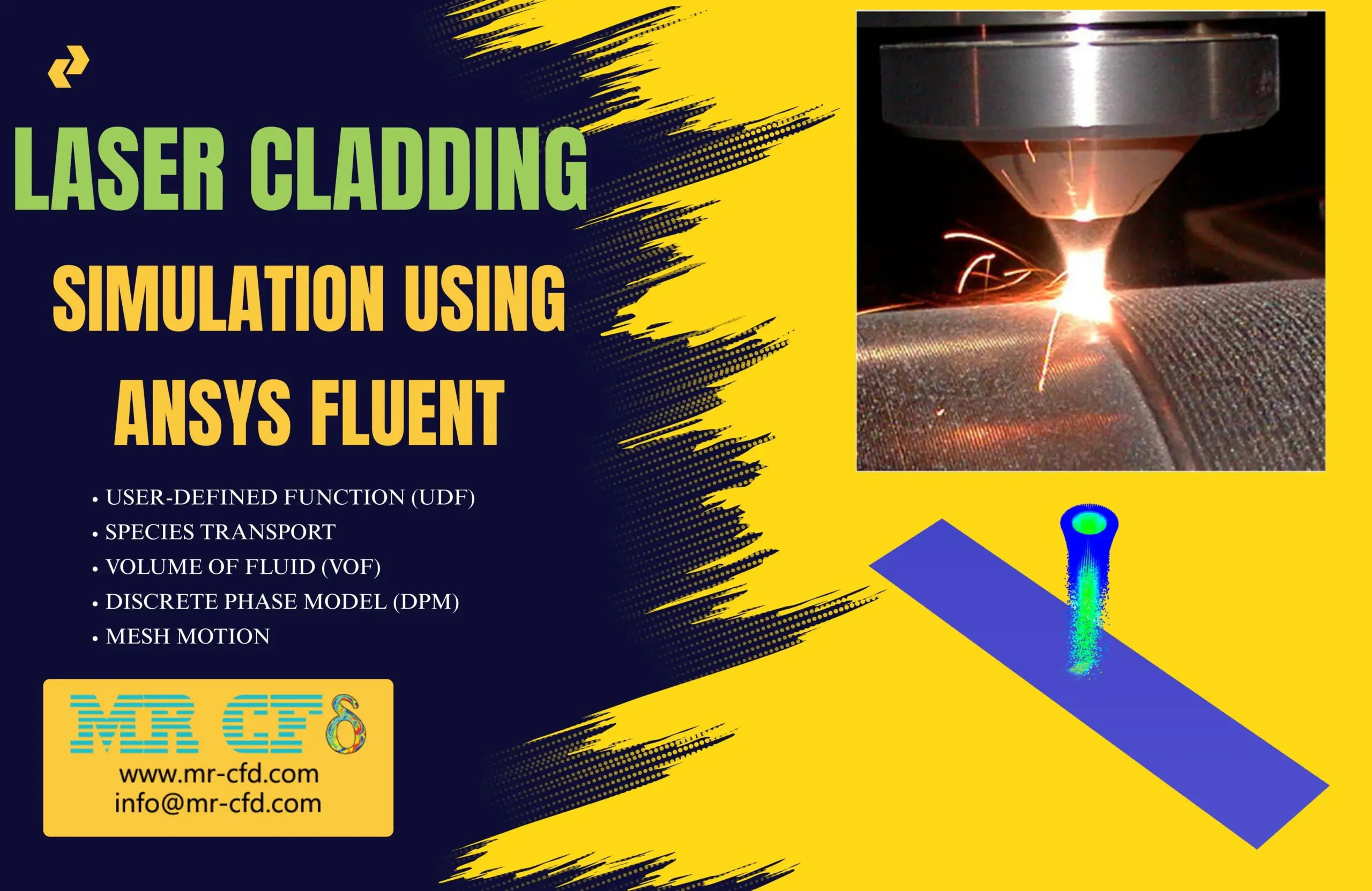
In the Laser Cladding project, we simulated the deposition of nickel droplets under an argon gas stream using ANSYS Fluent software. The three-dimensional geometry was created in Design Modeler with a computational domain of 0.05 × 0.01 × 0.025 m. A structured non-conformal mesh was generated in ANSYS Meshing, consisting of approximately 798,400 computational cells with refined regions near the deposition zone. The transient simulation employed the VOF multiphase model, coupled with species transport and energy equations, while turbulence was modeled using the Realizable k-ε model. A User-Defined Function (UDF) implemented the moving Gaussian laser heat source, enabling realistic simulation of droplet injection, spreading, and weld layer formation.
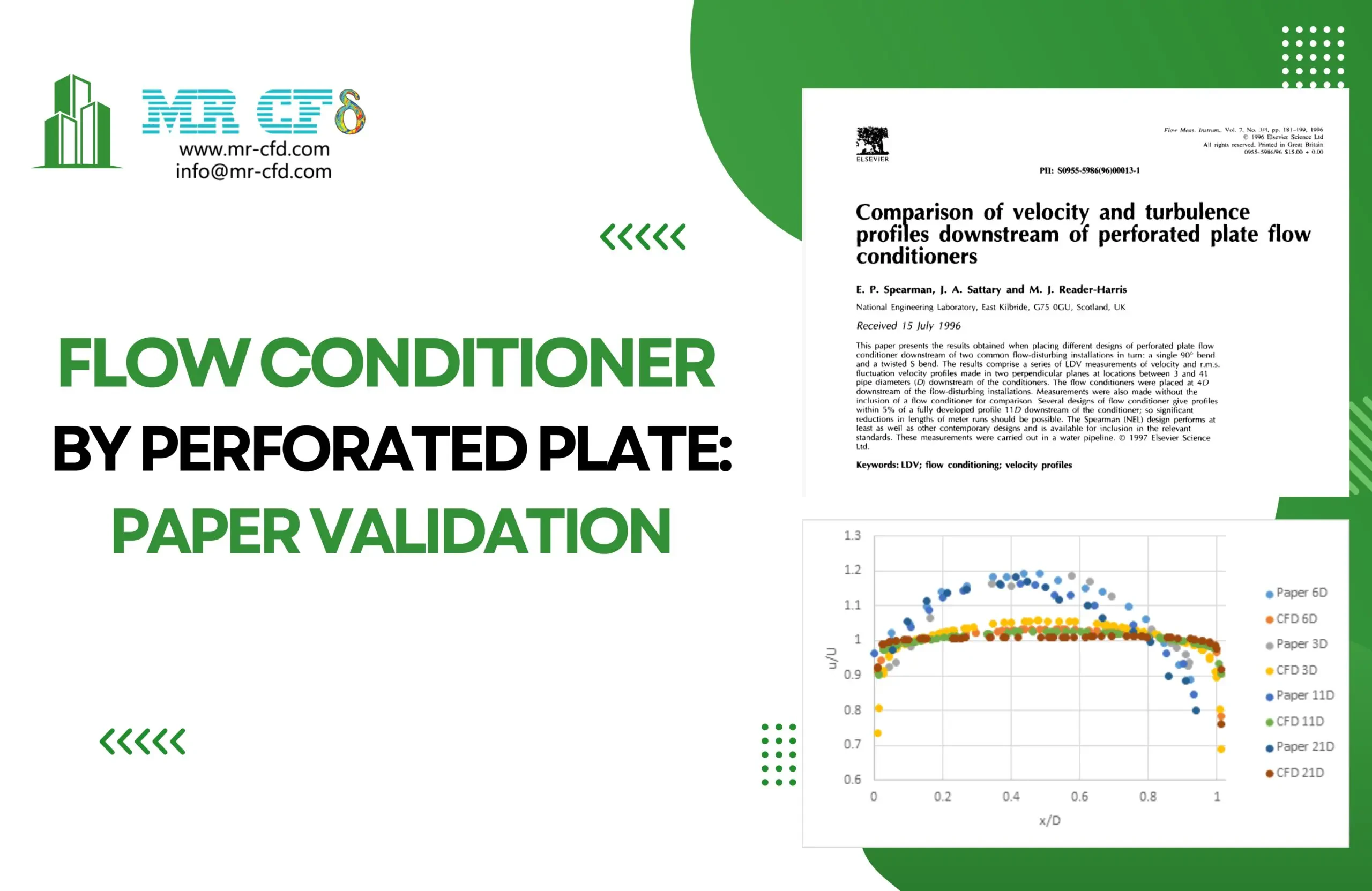
Flow Conditioner by Perforated Plate: Paper Validation
Intermediate, Advanced
Price: $210
The current CFD analysis numerically validates the paper “Comparison of velocity and turbulence profiles downstream of perforated plate flow conditioners” by Spearman et al. using ANSYS Fluent software. The model designed and meshed the pipe geometry with perforated plate flow conditioner in SpaceClaim and ANSYS Meshing, generating 583,842 tetrahedral cells. A pressure-based solver with k-ε standard turbulence modeling and gravity effects (-9.81 m/s²) is employed, using water as the working fluid with velocity inlet profile and pressure outlet boundary conditions coupled via SIMPLE algorithm.
Price: $300
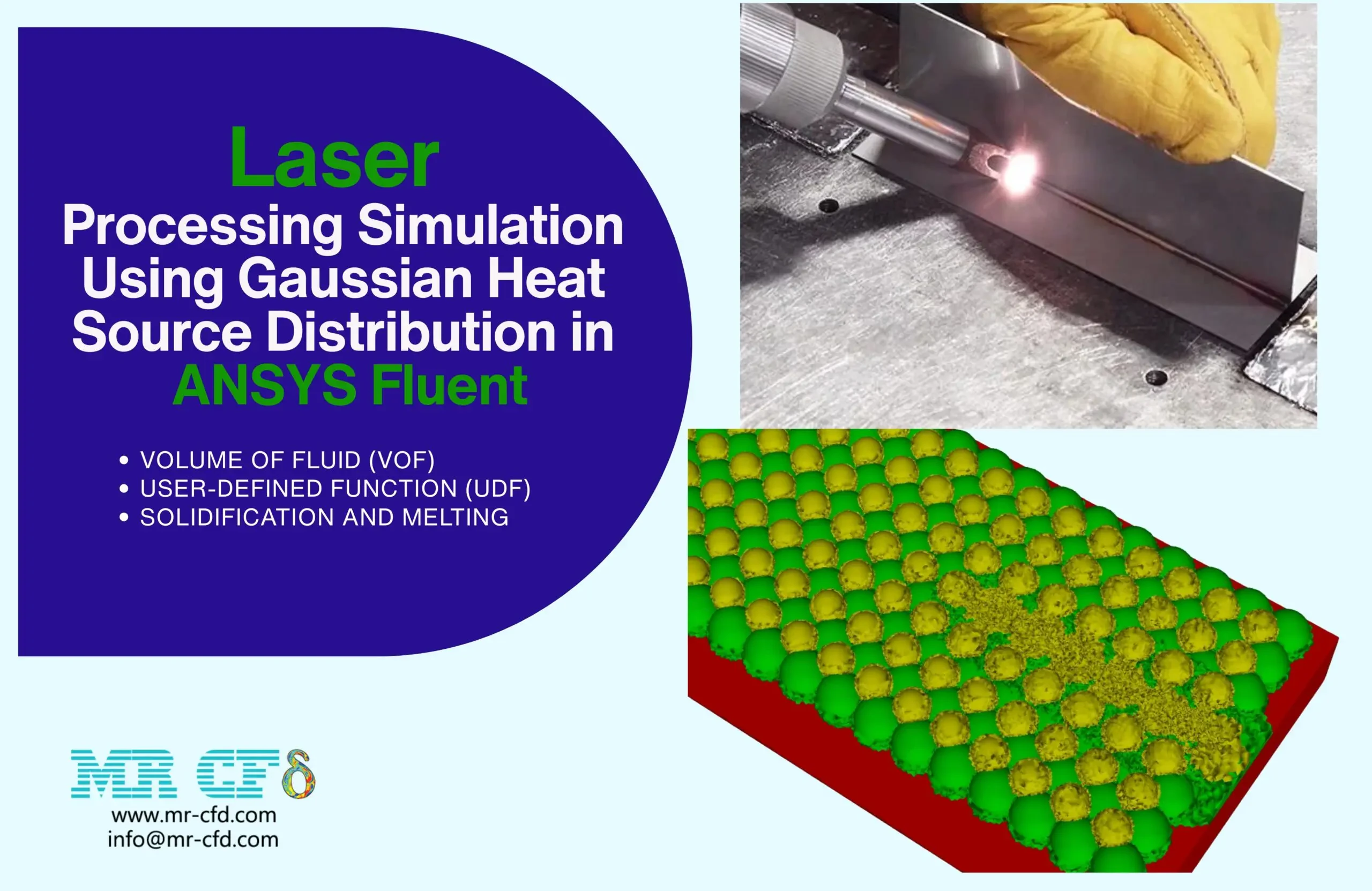
In Laser Processing project, we have simulated the laser-induced selective melting of bi-material particles using ANSYS Fluent software. Three-dimensional modeling was performed using Design Modeler software with a computational domain of 1.0 × 0.5 × 0.4 mm dimensions. The meshing of the model was accomplished using ANSYS Fluent Meshing software, generating approximately 800,000 computational cells with refined regions around the particle bed. The transient simulation employs VOF multiphase model, Solidification and Melting model, and a User-Defined Function (UDF) implementing the moving Gaussian laser heat source with laminar flow characteristics.
Price: $420
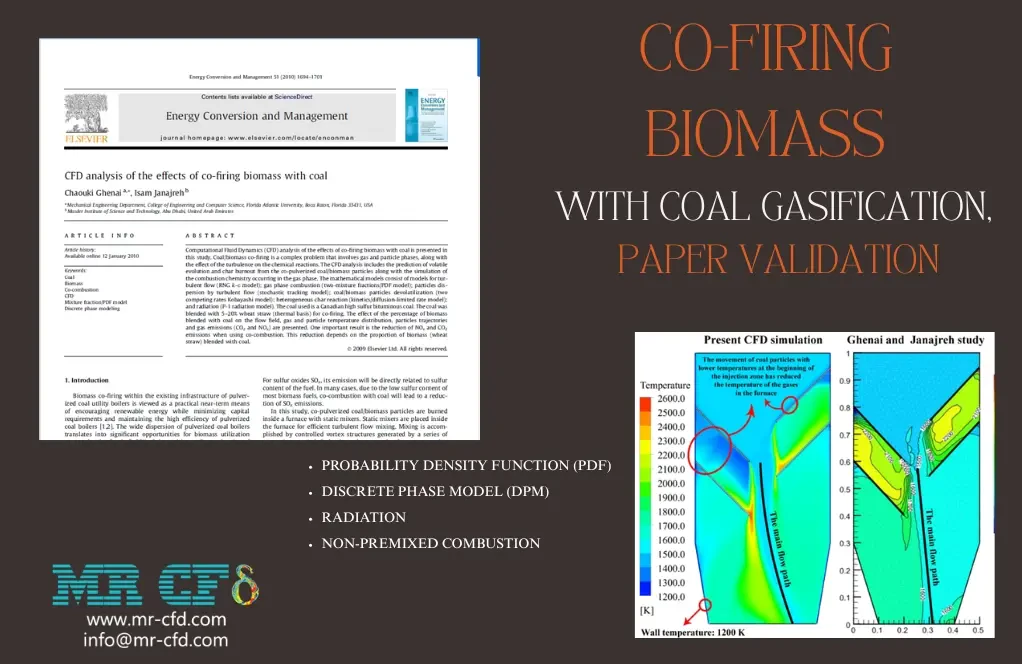
Co-firing Biomass with Coal Gasification. This project involves the simulation of coal and biomass co-firing in a furnace using CFD techniques. The primary objectives are to examine the combustion characteristics and validate the simulation results against the study by Ghenai and Janajreh. The furnace is defined with specific boundary conditions, and simulations are performed using an unsteady, incompressible flow model. The turbulent flow within the furnace is modeled using the k-e RNG turbulent model, thermal radiation is simulated with the P1 model, and combustion is analyzed with a PDF model. The simulation incorporates the kinetics/diffusion-limited rate model for particle combustion and the two competing rates Kobayashi model for devolatilization. Results are compared in terms of temperature contours and particle trajectories, confirming the simulation’s accuracy with a maximum error of approximately 5% in particle temperature ranges.
Price: $220
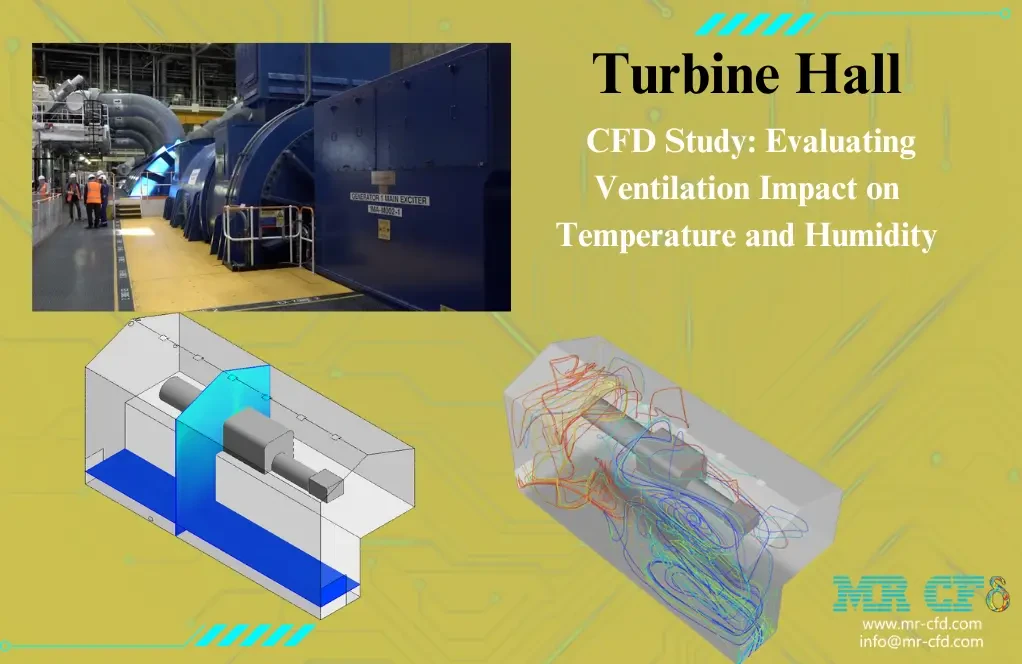
This project involves the simulation and analysis of the ventilation system within a turbine hall located in Hong Kong. Using a pressure-based CFD solver, the study examines the thermal conditions, including temperature variations and relative humidity during summer. The fluid domain, modeled as a mixture of nitrogen, water vapor, and oxygen, includes six exhaust fans strategically placed on the roof. The study explores four scenarios to assess different ventilation strategies, highlighting the importance of open doors during unit onloading to maintain a safer working environment. The findings contribute to optimizing the thermal management strategies and ensuring worker safety by maintaining acceptable temperature and humidity levels.
Price: $120
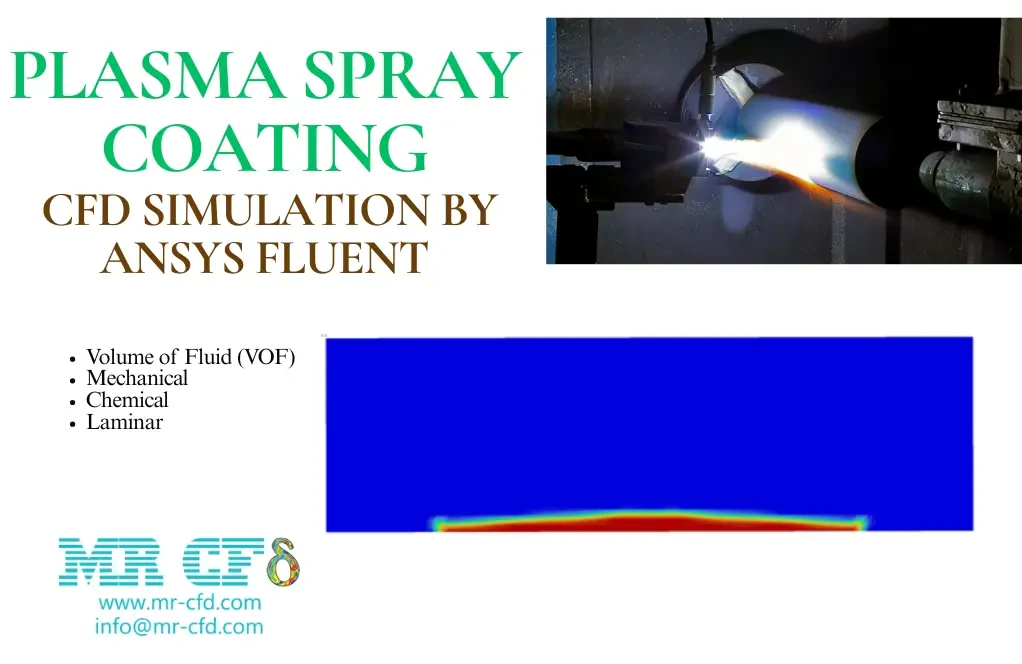
The project involves the numerical simulation of plasma spray coating using Ansys Fluent. Based on the paper, the study analyzes the impact and spread of Titanium Oxide on a surface. The 3D geometry is developed using the Design Modeler software. The meshing process utilizes ANSYS Meshing software, generating a structured mesh with 1,299,934 elements. The simulation utilizes a VOF multiphase model to capture the dynamics of droplet impact and spreading accurately.
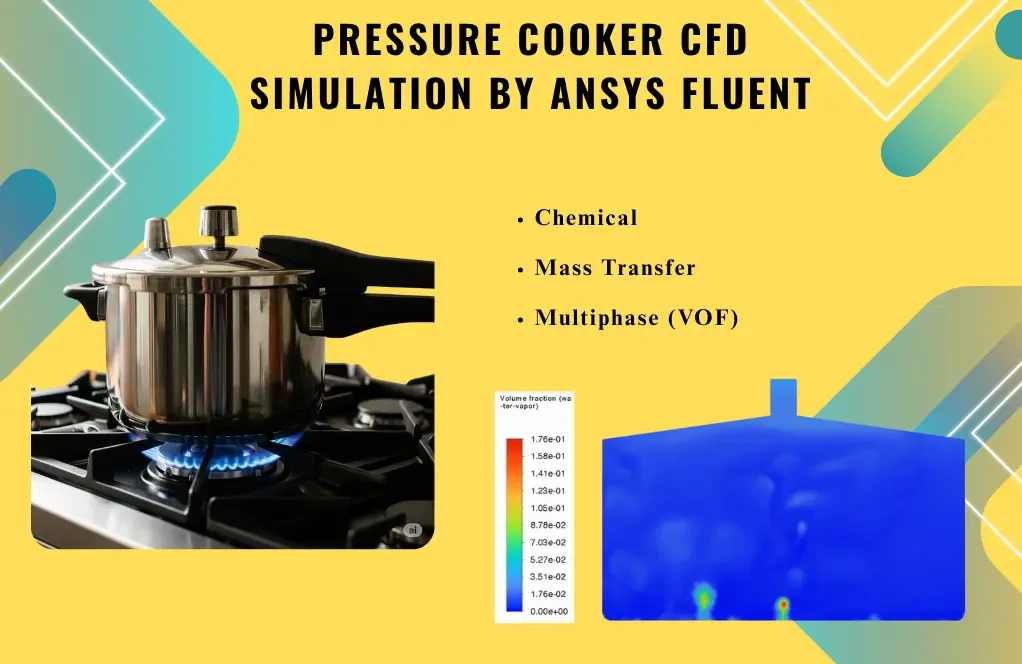
Pressure Cooker CFD Simulation by ANSYS Fluent
Beginner, Intermediate
Price: $140
This report presents a simulation which investigates the multiphase flow and mass transfer phenomena within a pressure cooker, focusing on the interactions between liquid water, water vapor, and air. The evaporation rate, pressure build-up, and temperature distribution within the pressure cooker were analyzed over a 30-second period. A high-quality tetrahedron elements mesh was generated using ANSYS Meshing software. Appropriate multiphase settings and boundary conditions were applied to correctly simulate the boiling process and vapor generation.
Complete Chemical Engineering CFD Course (All in One Chemical Engineering CFD Training Package)
The Complete Chemical CFD Course Bundle for Engineering Teams is a premium, all-inclusive training bundle created for organizations that need deep, practical, and scalable chemical engineering simulation expertise. Developed by MR CFD, this package helps engineering teams, universities, professors, institutes, research centers, and industrial companies master real-world chemical process CFD workflows through a massive library of applied simulation projects.
Unlike a standard beginner course, this GOLDEN package is built as a complete professional training ecosystem under the broader category of CFD Courses. It consolidates advanced simulations for fluidized bed reactors, cyclones, heat exchangers, combustion chambers, fuel cells, electrolyzers, multiphase flow, PBM, drying, erosion, explosion modeling, chemical reactions, and process equipment into one structured masterclass solution.
Why Choose This Chemical CFD Simulation GOLDEN Package?
This package is designed for serious buyers who need more than basic software training. It is built for decision-makers, professors, CEOs, technical managers, instructors, and advanced engineers who want to create a reliable internal CFD capability for chemical engineering projects.
| Business Need | How This GOLDEN Package Solves It |
| Faster chemical CFD onboarding | New employees can study complete, pre-built chemical simulation workflows instead of learning through trial and error. |
| Reduced training cost | One comprehensive bundle replaces multiple scattered tutorials, separate courses, and repetitive internal training sessions. |
| Advanced process simulation coverage | The package includes reactors, fuel cells, combustion, heat exchangers, electrolyzers, multiphase systems, PBM, drying, erosion, and explosion cases. |
| Academic teaching support | Professors and instructors receive practical CFD case studies suitable for coursework, labs, workshops, and student projects. |
| Enterprise knowledge management | Teams can standardize chemical CFD workflows and reduce inconsistency across departments. |
| Real-world project readiness | Learners work with applied simulations rooted in industrial chemical engineering challenges. |
Complete Chemical Engineering CFD Training for Companies, Universities, and Research Teams
This GOLDEN package gives your organization a structured path to chemical engineering CFD mastery. It supports users who need to simulate multiphase reactors, fluidized beds, combustion systems, fuel cells, electrolysis stacks, heat exchangers, separators, cyclones, dryers, boiling systems, mixers, chemical reactions, gasification, sedimentation, erosion, pollutant dispersion, and process equipment performance.
For companies, this package reduces dependency on isolated experts and creates a repeatable training pathway for CFD engineers, process engineers, R&D teams, and technical departments. For universities and institutes, it provides an extensive library of practical chemical engineering simulations that can be used in lectures, assignments, labs, research projects, and advanced training programs.
What Is Included in the Chemical GOLDEN Training Package?
| Included Asset | Value for the Buyer |
| +300 CFD simulation projects | A large-scale chemical engineering CFD library in one premium package. |
| Step-by-step tutorials | Practical guidance from geometry creation to final post-processing. |
| Geometry, meshing, solver, and results workflows | End-to-end learning for real engineering and process applications. |
| Advanced chemical process case studies | Coverage of reactors, cyclones, heat exchangers, combustion, fuel cells, electrolyzers, PBM, drying, erosion, and multiphase flow. |
| 1 year of technical support | Direct expert support from MR CFD specialists for package users. |
| 3 months of HPC access | Additional computational power for selected CFD learning and simulation needs. |
| Regular package enhancements | Continued value through updates for emerging chemical CFD topics such as bubble traps and packed bed systems. |
Chemical Engineering CFD Topics Covered in This GOLDEN Course Package
This package covers a wide range of chemical engineering CFD simulations, from core process equipment to advanced multiphysics, reactive flow, heat transfer, particle transport, electrochemical systems, and industrial validation workflows.
| Training Area | Covered Topics |
| Fluidized bed systems | Bubbling fluidized bed gasifiers, circulating fluidized bed boilers, fluidized bed reactors, bio-reactors, polymerization reactors, packed bed reactors, and dryers. |
| Heat exchangers | Shell and tube, plate, triple, finned tube, ground, rotary, porous, pin-fin, nanofluid, CHT, baffle-cut optimization, twisted tape, and vortex generator cases. |
| Combustion and reacting flow | Premixed combustion, non-premixed combustion, advanced combustion, methane combustion, syngas combustion, catalytic combustion, DPM combustion, and pollutant prediction. |
| Multiphase flow | Bubble injection, slug flow, methanol micro-channel regimes, ammonia flashing, laser processing, nanofluid cooling, heat pipes, and crystallization. |
| Chemical reactors | Catalytic reactors, packed bed reactors, tubular porous reactors, bubble column reactors, micro-reactors, plasma gasification reactors, bioreactors, and fluidized bed reactors. |
| Fuel cells and electrolyzers | PEMFC, SOFC, PEM fuel cell stacks, radial and serpentine fuel cells, high-temperature electrolysis, alkaline electrolysis, PEM electrolysis, and SOEC stacks. |
| Separation systems | Cyclones, hydro-cyclones, gas-liquid separators, two-phase and three-phase separators, vortex separators, magnetic separators, and FCC riser systems. |
| PBM and crystallization | Population balance models for air bubbles, nucleation, FeNi nanoparticle synthesis, Loratadine crystallization, and particle size distribution studies. |
| Drying and evaporation | Spray dryers, seed dryers, rice dryers, solar dryers, heat pump dryers, evaporation-condensation, surface evaporation, falling droplets, and liquid immersion cooling. |
| Erosion and sedimentation | DPM erosion in elbows, pipes, obstruction channels, pumps, turbines, sewer conduits, shell and tube systems, sand sedimentation, and slurry flow erosion. |
| Explosion and safety | Oil storage tank explosions, pollutant dispersion, car explosion tunnel ventilation, and combustion risk scenarios. |
| Mixing and mixers | Mixing tanks, helical impellers, MRF, SRF, mesh motion, T-junctions, Y-junctions, ethanol-gasoline pipelines, baffle configurations, and powder distribution. |
Advanced Modules for Deep Chemical CFD Capability
The Chemical GOLDEN Training Package includes advanced simulation categories that help engineers move beyond basic setup and into professional-grade chemical process modeling.
Key advanced modules include:
Fluidized bed reactor simulations for gasification, polymerization, drying, and reactive particle systems.
Combustion chamber simulations for premixed, non-premixed, catalytic, methane, syngas, hydrogen, and DPM-based combustion.
Multiphase flow workflows for gas-liquid, solid-gas, liquid-solid, boiling, flashing, bubble formation, and slug flow systems.
Fuel cell and electrolysis simulations for PEMFC, SOFC, PEM electrolysis, alkaline electrolysis, and SOEC stacks.
Population Balance Model projects for crystallization, nucleation, bubble distribution, and nanoparticle synthesis.
Erosion and sedimentation simulations using DPM-based particle tracking in pipes, pumps, turbines, elbows, and process equipment.
Drying and evaporation simulations for spray drying, seed drying, solar drying, fluidized bed drying, and evaporation-condensation systems.
Pollutant dispersion and explosion studies for environmental safety, storage tanks, tunnels, combustion chambers, and industrial risk analysis.
Chemical reaction and gasification workflows including steam methane reforming, ammonia decomposition, Fischer-Tropsch synthesis, biomass combustion, and plasma gasification.
Mixer and process optimization projects for tanks, static mixers, T-junctions, Y-junctions, baffle systems, and multiphase mixing performance.
GOLDEN Package vs Zero to Advanced Chemical CFD Courses
| Feature | Chemical GOLDEN Training Package | Zero to Advanced Course |
| Main intent | Complete premium bundle for mastery, team training, and institutional use | Structured learning path from basics to advanced level |
| Best for | Companies, universities, instructors, research teams, process engineers, and advanced CFD users | Individual learners who need a progressive foundation |
| Content depth | Broad multi-topic chemical CFD library with +300 applied simulations | Focused curriculum with step-by-step skill development |
| Project variety | Reactors, combustion, fuel cells, electrolyzers, heat exchangers, PBM, erosion, drying, cyclones, and multiphase flow | Fewer projects with stronger beginner-to-advanced continuity |
| Business value | Reduces training cost, accelerates onboarding, and standardizes team capability | Helps individuals build CFD confidence and software fluency |
| Purchase motivation | All-inclusive chemical simulation capability building | Personal learning and structured technical growth |
Who Should Buy This Chemical Engineering CFD Training Package?
This package is ideal for:
Universities and professors who need advanced chemical CFD teaching materials.
Chemical engineering companies that want to train teams faster and more consistently.
Process engineering departments working on reactors, separators, heat exchangers, combustion, and multiphase systems.
Research institutes studying PBM, fuel cells, electrolysis, gasification, erosion, drying, and reactive flow.
Technical managers and CEOs who want a scalable internal CFD training asset.
Professional CFD instructors who need ready-to-use chemical simulation case studies for workshops and academic programs.
Advanced CFD practitioners who want a large chemical process simulation library for deeper technical mastery.
Business Benefits of Buying the Complete Chemical CFD Course Bundle
This package is not only a learning resource. It is a strategic training investment for organizations that want better CFD capability, faster project execution, stronger internal knowledge, and lower simulation risk.
| ROI Driver | Business Impact |
| Faster onboarding | New engineers become productive sooner on chemical CFD projects. |
| Reduced external training dependency | Teams can learn from a complete internal CFD training resource. |
| Better workflow consistency | Engineers follow proven simulation workflows instead of scattered tutorials. |
| Lower project risk | Teams learn from pre-built, practical chemical engineering examples. |
| Stronger academic outcomes | Instructors can assign realistic process simulation projects. |
| Improved innovation speed | Teams can evaluate reactors, heat exchangers, fuel cells, separators, and multiphase systems faster. |
| Higher long-term value | One package supports repeated training across departments, students, interns, and new employees. |
Why This Complete Chemical CFD Course Is Built for Direct Purchase
When your team needs serious chemical CFD capability, buying isolated tutorials one by one creates gaps, duplicated effort, and inconsistent learning outcomes. This GOLDEN package removes that friction by giving you a complete chemical engineering simulation library in one purchase.
You get a premium training resource built around real process applications, including fluidized beds, reactors, combustion chambers, heat exchangers, fuel cells, electrolyzers, cyclones, separation systems, PBM, boiling, drying, erosion, sedimentation, explosion modeling, pollutant dispersion, and multiphase flow. That makes it a strong choice for buyers who want immediate access to a deep, organized, and commercially valuable CFD learning system.
So…
Invest in the Complete Chemical CFD Course Bundle for Engineering Teams and give your team a complete chemical engineering CFD training system built for advanced industrial and academic performance. Whether you manage a university lab, a corporate CFD department, a chemical process engineering team, or a technical training center, this package helps you reduce training time, improve simulation quality, and build long-term internal expertise.
Instead of purchasing separate courses and managing disconnected learning materials, choose one premium GOLDEN package that delivers depth, breadth, support, HPC access, and practical project readiness in a single solution.
FAQ
What is included in the Chemical GOLDEN Training Package?
The Chemical GOLDEN Training Package includes +300 CFD simulation projects covering reactors, fluidized beds, cyclones, combustion, heat exchangers, fuel cells, electrolyzers, multiphase flow, PBM, erosion, drying, boiling, mixing, and chemical reactions.
Who is this chemical CFD training package designed for?
This package is designed for universities, professors, engineering companies, process engineers, CFD instructors, research institutes, technical managers, CEOs, and advanced users who need a complete chemical engineering simulation training solution.
Is this package suitable for company-wide chemical CFD team training?
Yes. The package is ideal for team training because it provides a large library of practical chemical CFD projects that help standardize workflows, reduce onboarding time, and improve readiness for industrial simulation projects.
How is this GOLDEN package different from a Zero to Advanced course?
A Zero to Advanced course is usually a structured learning path for individuals, while this GOLDEN package is a premium all-inclusive bundle with a much wider range of advanced chemical engineering CFD simulations for teams, institutions, and expert users.
Can university professors use this package for teaching chemical engineering CFD?
Yes. Professors and instructors can use the package as a ready-made library of chemical CFD case studies for lectures, assignments, workshops, laboratory training, and advanced student projects.
Does this package cover reactors and fluidized bed simulations?
Yes. The package covers fluidized bed reactors, packed bed reactors, catalytic reactors, bioreactors, bubble column reactors, tubular porous reactors, polymerization reactors, gasifiers, and fluidized bed drying systems.
Does this chemical CFD package include combustion and reaction simulations?
Yes. It includes premixed combustion, non-premixed combustion, catalytic combustion, methane combustion, hydrogen combustion, syngas combustion, DPM combustion, steam methane reforming, ammonia decomposition, and Fischer-Tropsch synthesis simulations.
Are fuel cells and electrolyzers included in this package?
Yes. The package includes PEMFC, SOFC, PEM fuel cell stacks, radial and serpentine fuel cells, PEM electrolysis, alkaline electrolysis, high-temperature electrolysis, and SOEC electrolysis stack simulations.
Is technical support included after purchasing the GOLDEN package?
Yes. Buyers receive 1 year of non-limited technical support from MR CFD experts, helping teams and learners resolve technical questions related to the training package.
Why should I buy the Chemical GOLDEN Training Package instead of separate courses?
Buying the GOLDEN package gives you a broader, more cost-effective, and more organized training solution. It saves time, reduces repeated training costs, supports team-wide learning, and gives access to a complete chemical engineering CFD simulation library in one purchase.