

HAWT and VAWT Comparison, (Mesh Motion and MRF)
Price: $72
- CFD analyses For HAWT and VAWT using ANSYS Fluent software.
- Paper Validation For HAWT.
- 3-D modeling with the ANSYS Design Modeler and mesh Generation with ANSYS Meshing.
- The Multiple Reference Frame (MRF) or Frame Motion method is applied for HAWT.
- The Mesh Motion method is applied for VAWT.
HAWT and VAWT Description
In this tutorial, we will simulate the fluid flow passing over two models of wind turbines, vertical axis wind turbine (VAWT) and horizontal axis wind turbine (HAWT). These types of wind turbines have a different rotating motion with regard to the global coordinate systems and different methodologies must be considered when modeled.
One of the most intriguing applications of CFD for engineers is its capability to model fluid flow passing through turbomachines. Turbomachines are rotating machines for converting the kinetic energy of fluid flow to the rotating motion of machines such as turbines or vice versa for pumps.
This product is the 5th episode of the Turbomachinery Training Course.
Comparison between the two models
As stated earlier, the VAWT rotates around an axis perpendicular to the flow direction, while the HAWT are turbomachines rotating around a parallel axis with respect to the flow direction.
In other words, to model the rotating motion of a VAWT, the accurate method would be to use mesh motion and make sure that the rotating and stationary zone are linked with an interface boundary. Also, the simulation must be done in a transient manner to take care of mesh moving in a rotating manner.
For the HAWT section, you will see a Paper Validation simulation. For modeling HAWTs, the user can simply use the frame motion technique and apply the desired rotating speed to the blades of the turbine and have no worries regarding the steady or non-steady time studies. However, the penalty of using such a method is that some time-dependent phenomena would be missed.
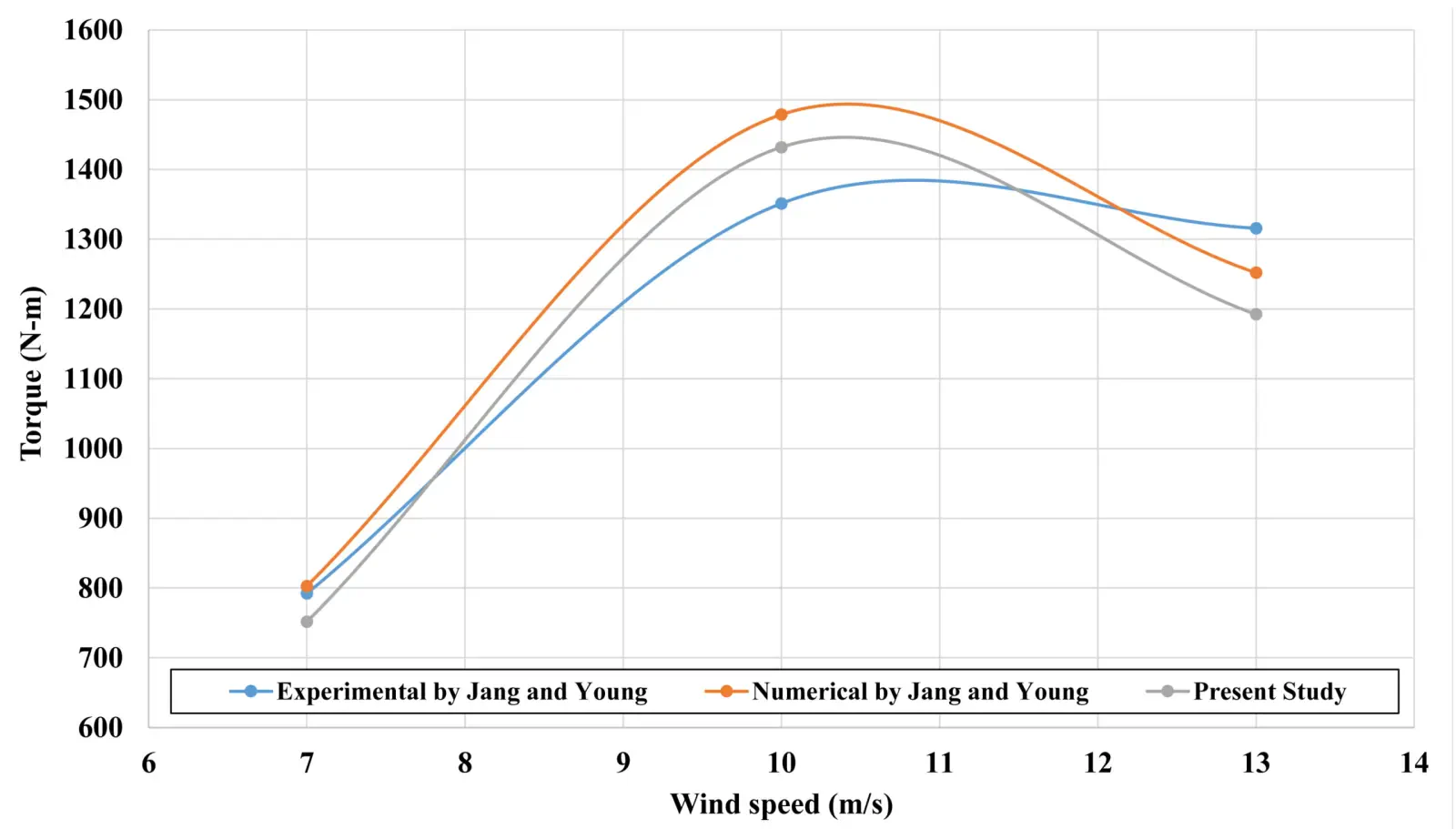
Also, it will be explained how a user can define different reports such as lift, drag, and moment for blades of any turbine, and obtain various results and data regarding the motion of turbomachines which would be of great importance when designing such structures.
Conclusion
In this tutorial, you will learn how to employ two of the most famous models for simulating the rotating motion of turbomachines, including mesh motion and frame motion. To accurately model the turbomachines having a rotating axis non-perpendicular to flow direction (VAWT), mesh motion should be used. While for simulating rotating structures such as HAWT, it is enough to employ the frame motion technique.