

CFD Advanced Courses
Here's every CFD online course in the Advanced level.
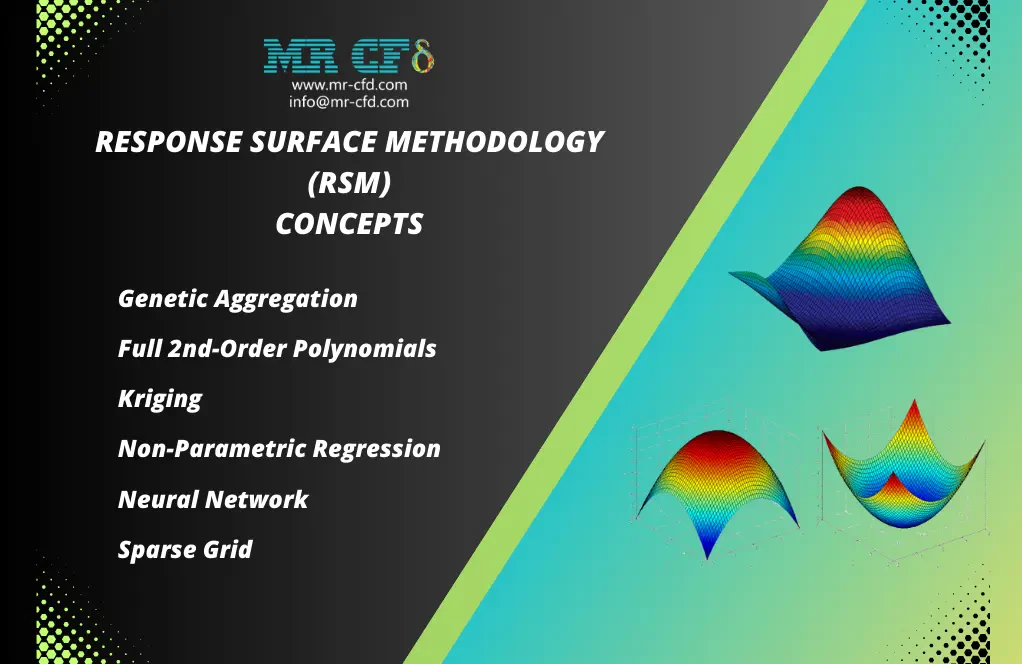
Response Surface Methodology (RSM) Concepts, Optimization by ANSYS Fluent
Beginner, Intermediate, Advanced
Price: Free
Introduction to the Response Surface Methodology (RSM) in ANSYS Fluent software Introduction to the Genetic Aggregation Introduction to the Full 2nd-Order Polynomials Introduction to the Kriging Introduction to the Non-Parametric Regression Introduction to the Neural Network Introduction to the Sparse Grid
Price: $72
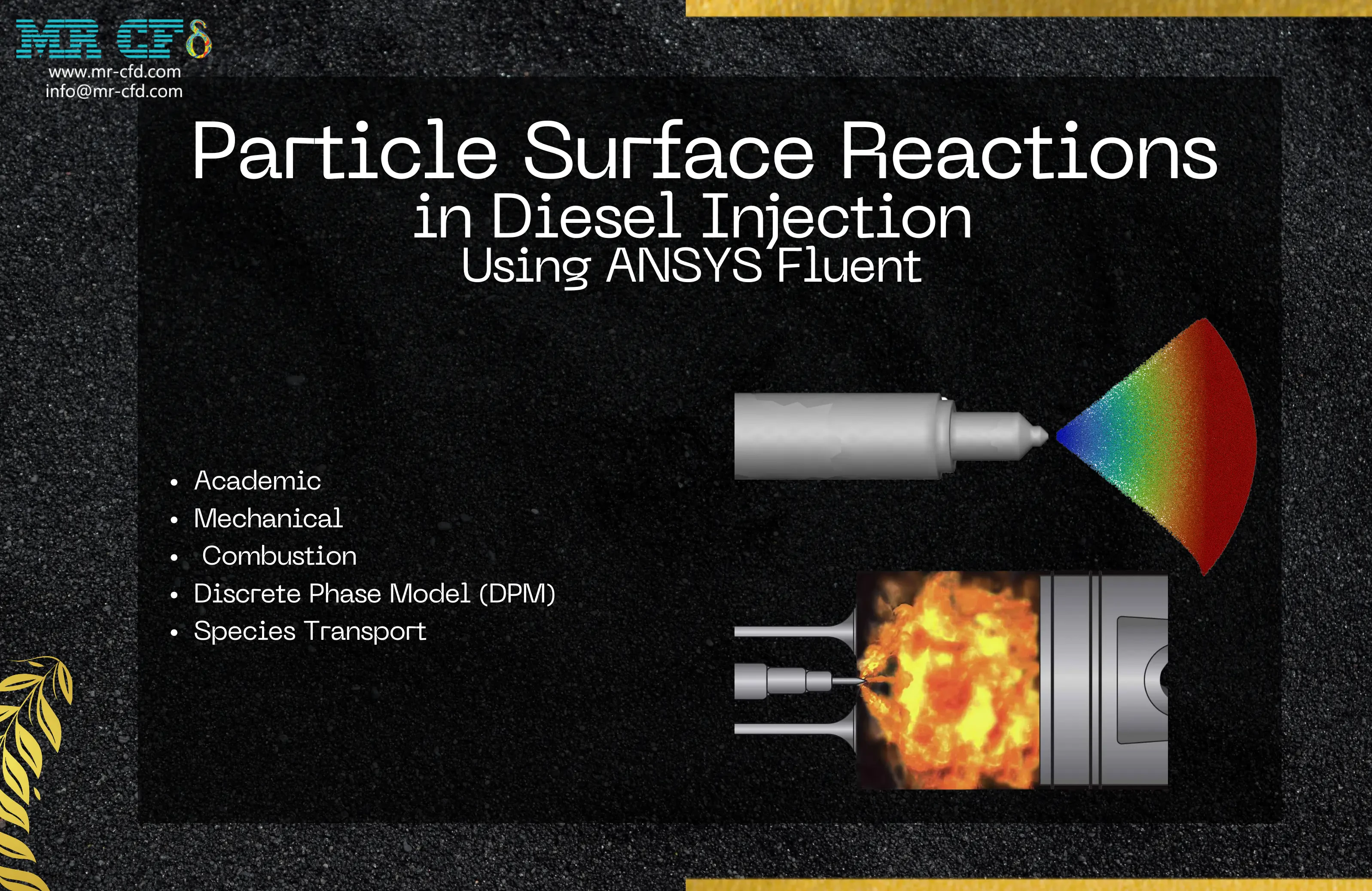
The main objective of this study is to analyze the behavior of the reacting spray The study combines the finite-rate chemistry and eddy dissipation models to capture kinetic-controlled and turbulence-driven reaction dynamics Water evaporates first due to its lower boiling point, while gasoline undergoes thermal decomposition and combustion The mesh was generated using ANSYS Meshing. The final mesh comprises 1,250,256 cells, balancing computational accuracy and efficiency.
Price: $260
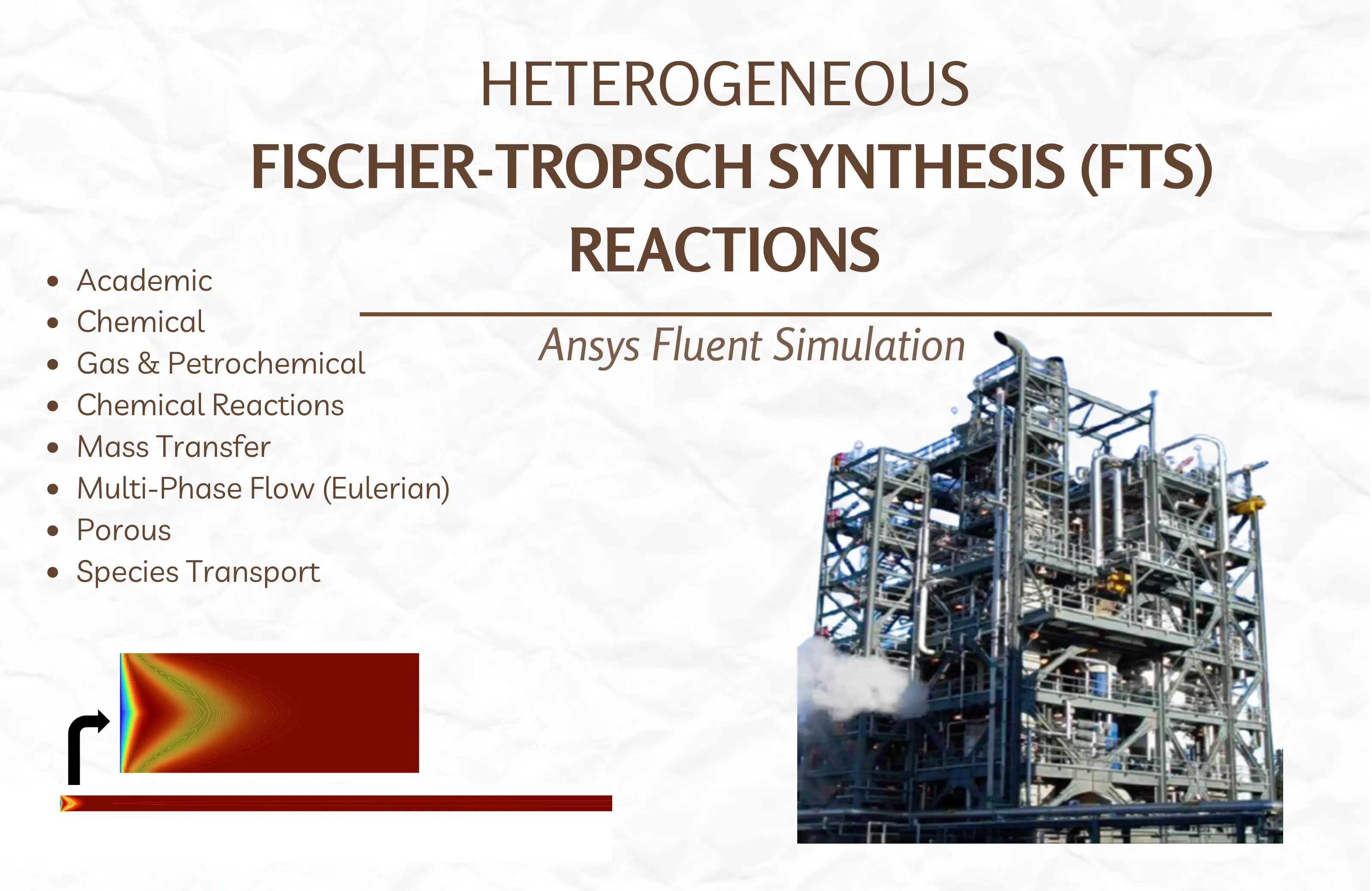
This report presents the simulation of a reactive multiphase system incorporating heterogeneous Fischer-Tropsch synthesis reactions in a porous medium An iron (Fe) catalyst catalyzes the reactions, and the reaction rates are determined using Arrhenius kinetics. The Eulerian multiphase model is employed to investigate the interaction between different phases A Lee mass transfer model is applied for the phase change of water between liquid and gaseous states. A 2D geometry was created using SpaceClaim and The domain was meshed in ANSYS Meshing, using a structured mesh with 105,000 structured elements.
Price: $499
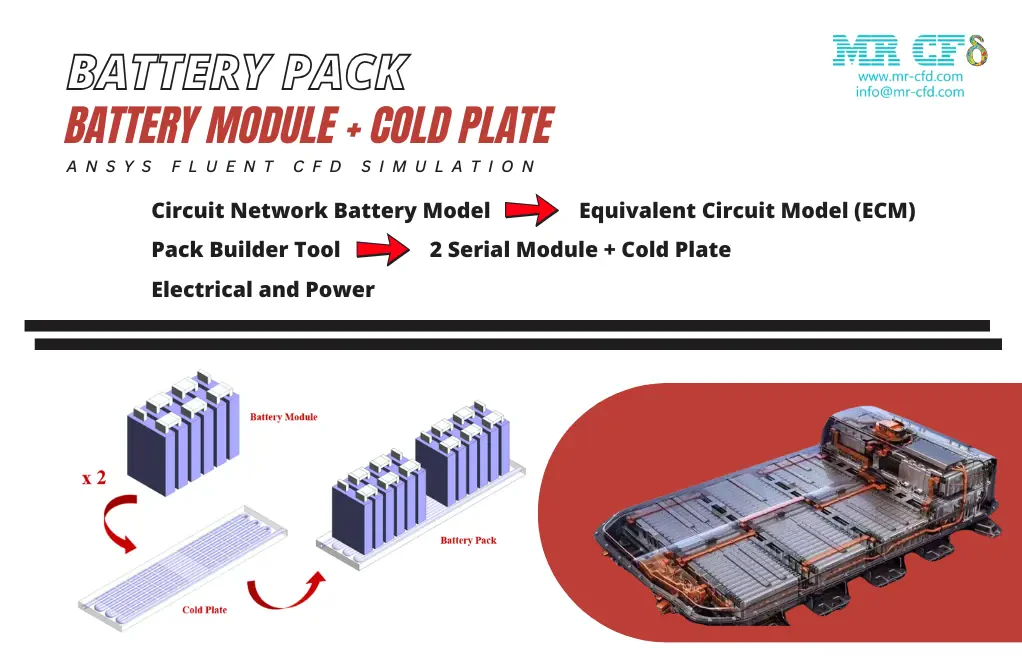
This product numerically simulates a Battery Pack using ANSYS Fluent software. We use the Pack Builder to define a battery pack consisting of two Battery Modules and a Cold Plate. We design the 3-D models with the Design Modeler software. We mesh the models with ANSYS Meshing software. We use the Circuit Network Battery model to define the discharge. We use the ECM (Equivalent Circuit Model) sub-model to determine the electrochemical computations. The run calculation is in an unsteady state (transient).
Price: $150
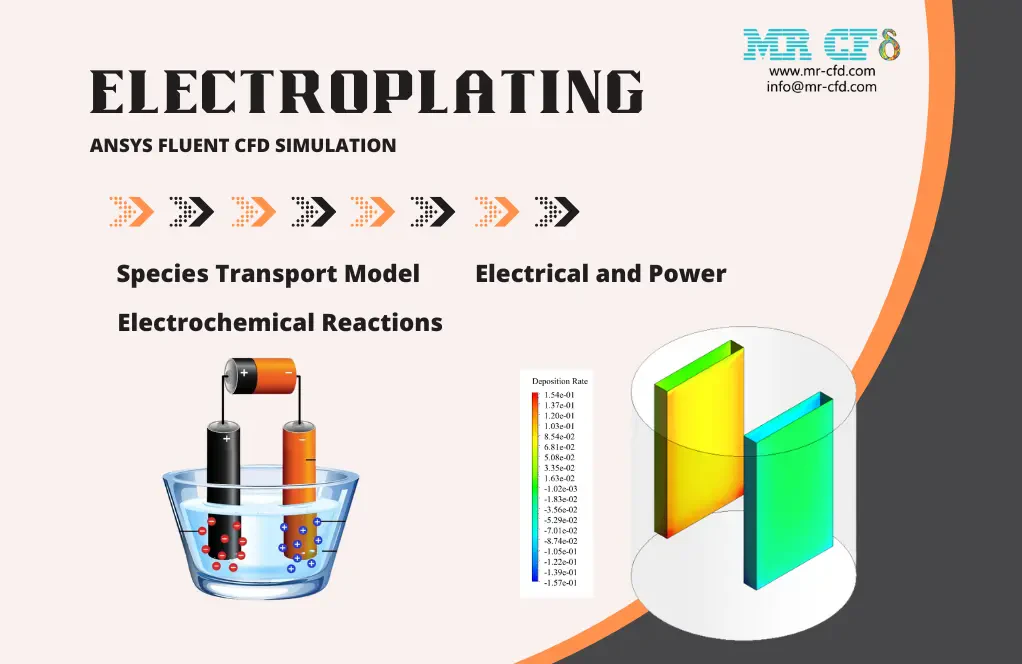
This product numerically simulates the Electroplating using ANSYS Fluent software. We design the 3-D model using the Design Modeler software. We mesh the model with ANSYS Meshing software; the element numbers are 89115. We use the Species Transport model to define the electrochemical reactions. We use the Potential/Electrochemistry model to apply the potential equations. The run calculation is in an unsteady state (transient).
Ammonia Decomposition in a Micro-Reactor, CFD Simulation
Intermediate, Advanced
Price: $14
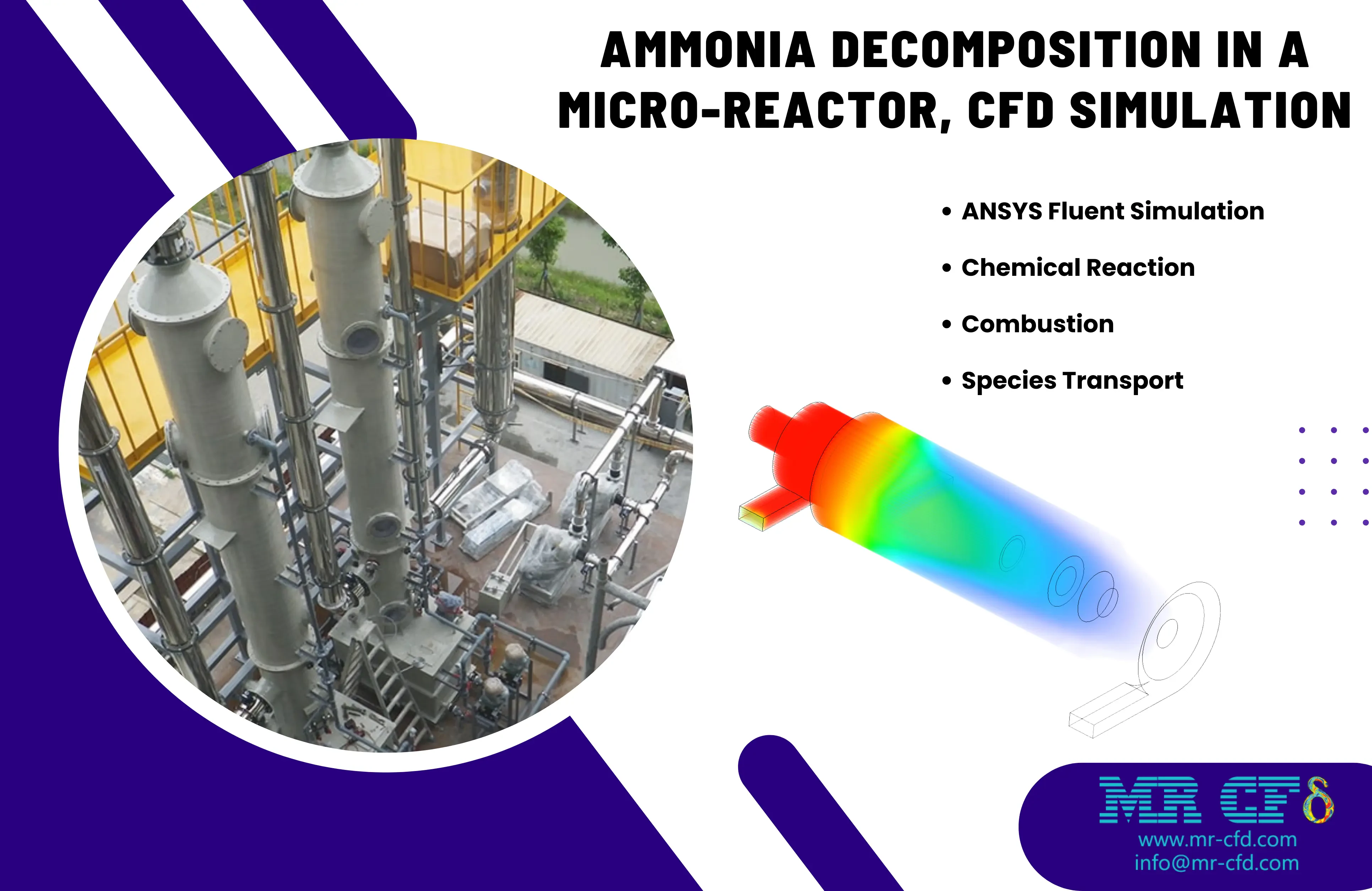
This report presents a simulation which investigates the production of hydrogen gas from ammonia, using the heat of the propane-air reaction. The ammonia conversion rate and the overall system efficiency were calculated. The geometry of the ammonia decomposition micro-combustor was created using ANSYS SpaceClaim software. A high-quality tetrahedron elements mesh was generated using ANSYS Meshing software. Appropriate species transport settings and boundary conditions were applied to correctly simulate the rate of ammonia decomposition.
Heat Pump Dryer For Wood Drying, Ansys Fluent CFD Simulation
Intermediate, Advanced
Price: $360
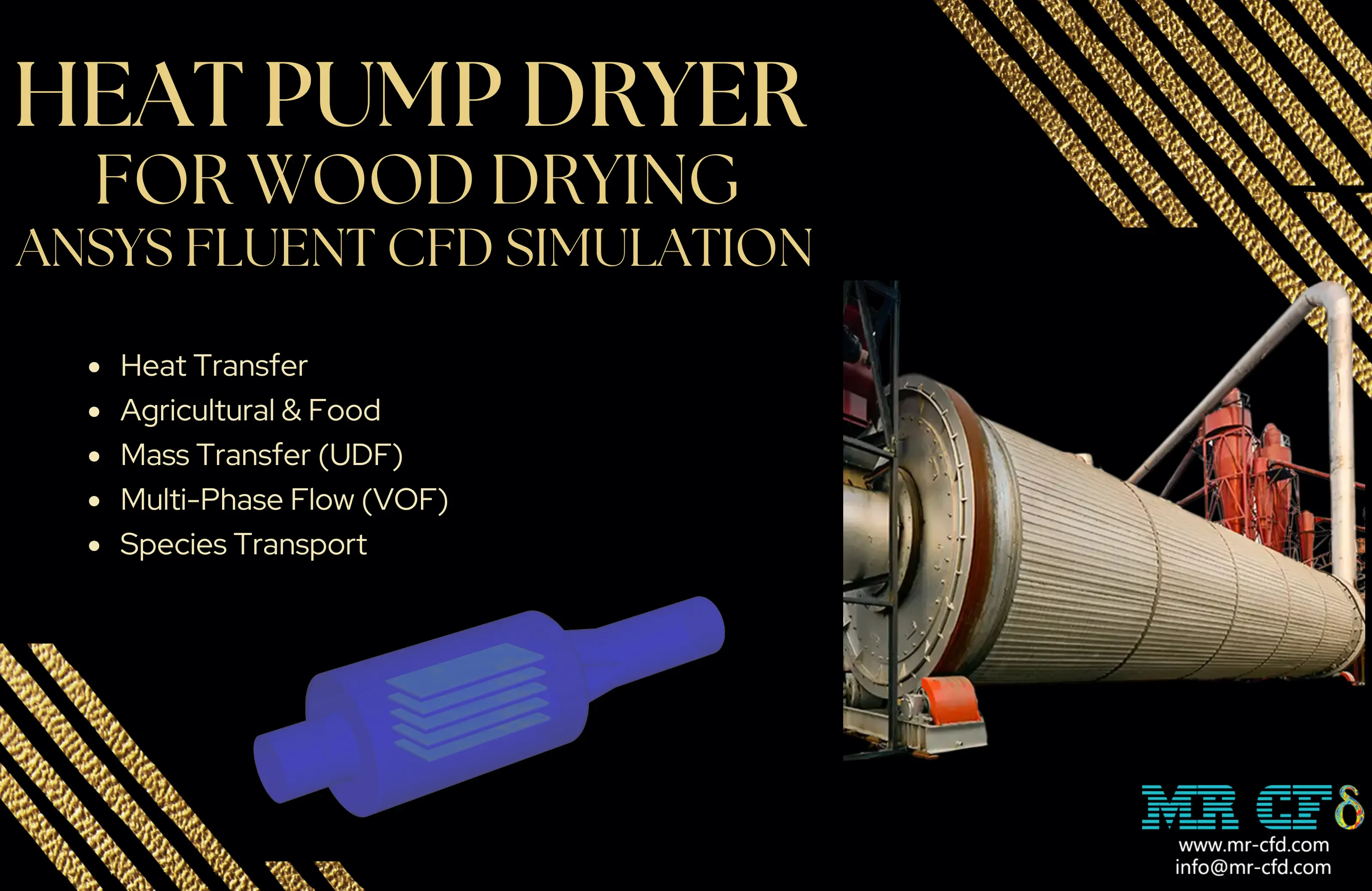
This project aimed to simulate the performance of a heat pump dryer designed for drying wet wood volatiles. The Volume of Fluid (VOF) method was employed to capture the interaction between air and liquid water phases. Species Transport Model was activated to simulate the mass transfer associated with water evaporation. A User-Defined Function (UDF) was developed to represent the evaporation process accurately.

CFD Algorithms: ANSYS Fluent Different Capabilities
Beginner, Intermediate, Advanced
Price: Free
Comprehensive analysis of different CFD algorithms using a variable-width channel case study (5cm inlet, 10cm outlet, 20cm length). Pressure-based solvers (SIMPLE, SIMPLEC, PISO, Coupled) compared with density-based solvers (Roe, AUSM) for various flow conditions. SIMPLE algorithm excels in low-speed flows, while Coupled solver shows superior performance across all speed regimes. Density-based solvers (Roe, AUSM) perform best in high-speed and supersonic flows but struggle with low Mach numbers. Under-relaxation factors significantly impact convergence stability and simulation accuracy. Optimal solver selection depends on flow regime: low subsonic (SIMPLE/SIMPLEC), transonic/supersonic (Coupled/AUSM), hypersonic (Roe/AUSM).
Discretization Methods in CFD
Beginner, Intermediate, Advanced
Price: Free
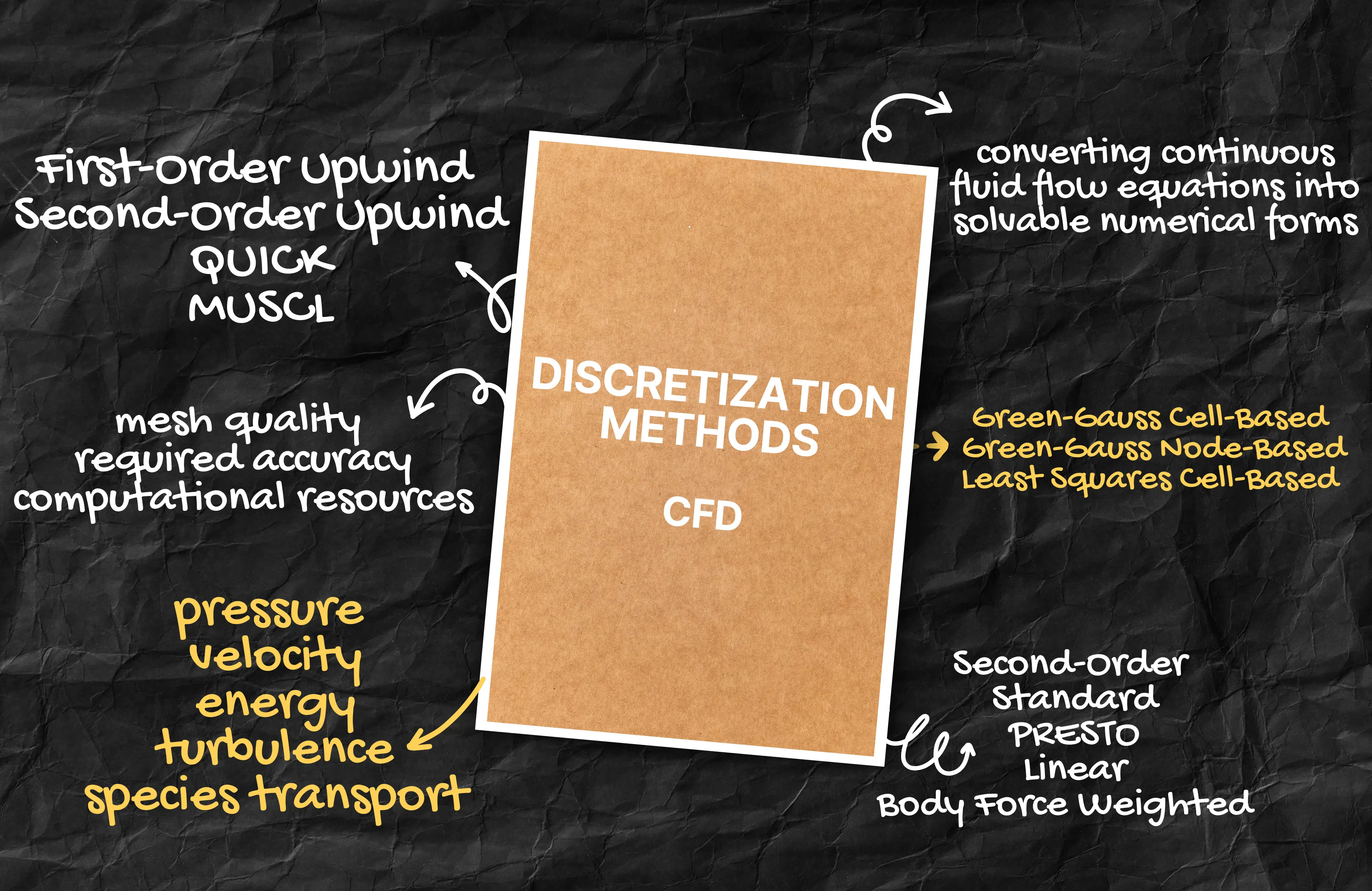
Discretization methods in ANSYS Fluent are crucial techniques for converting continuous fluid flow equations into solvable numerical forms. Three main gradient calculation methods are available: Green-Gauss Cell-Based, Green-Gauss Node-Based, and Least Squares Cell-Based. Pressure discretization offers five options: Second-Order, Standard, PRESTO, Linear, and Body Force Weighted schemes. Momentum discretization includes First-Order Upwind, Second-Order Upwind, QUICK, and MUSCL schemes. Choice of method depends on mesh quality, required accuracy, and available computational resources. These methods apply to various parameters including pressure, velocity, energy, turbulence, and species transport equations.