MQ-9 UAV FSI Analysis: CFD Simulation by Ansys Fluent
Price: $649
- The problem numerically simulates a MQ-9 UAV using ANSYS Fluent software.
- We design the 3-D model with the SpaceClaim software.
- We mesh the model with Ansys Meshing software. The element number equals 11,136,403 and their type is Tetrahedral.
- In this simulation, Dynamic Mesh is used for FSI modeling.
FSI Analysis: MQ-9 UAV CFD Simulation Training
Introduction
FSI simulation involves the interaction between the fluid and the structure. If we only want to consider the effects of the fluid on the structure, we use one-way method, and if we want to consider the effect of the structure on the fluid in addition to the effect of the fluid on the structure, we use two-way method. In this simulation, we have performed a two-way simulation. Previously, we could only run the two-way method in Workbench, but now Fluent software also has this capability. However, if our simulation involves large displacements, it is better to use Workbench because Fluent is not able to accurately analyze large displacements.
Developed by General Atomics Aeronautical Systems, the MQ-9 Reaper has served as one of the U.S. Air Force’s primary unmanned combat and reconnaissance aircraft since 2007. Operating at altitudes above 15,000 meters with a cruising speed of 370 km/h and an endurance of up to 27 hours, this advanced UAV combines endurance with striking power. With a payload capacity of 1,700 kg, it commonly carries precision-guided weapons such as Hellfire missiles and GBU-12 bombs. Integrated electro-optical and radar sensors enable the Reaper to detect, track, and engage targets in all weather conditions.
Beyond its performance metrics, the MQ-9 embodies American technological dominance in counterterrorism and asymmetric warfare. Its blend of Intelligence, Surveillance, and Reconnaissance (ISR) with precision-strike capabilities lowers operational costs and removes pilot risk. Having surpassed two million combat flight hours in regions including the Middle East, Ukraine, and the Red Sea, the Reaper has transformed modern warfare and set the benchmark for future unmanned aerial systems.
The geometry of the present model is three-dimensional and has been designed using SpaceClaim software. We do the meshing of the present model with Ansys Meshing software. The mesh type is Tetrahedral, and the element number is 11,136,403.
Methodology
In this FSI study used a steady-state, pressure-based CFD simulation in ANSYS Fluent software to analyze the incompressible flow around a UAV and the fluid-structure interactions(FSI). The flow physics was modeled using the k-ω SST turbulence model and a dynamic mesh was also used.
Results and Conclusion
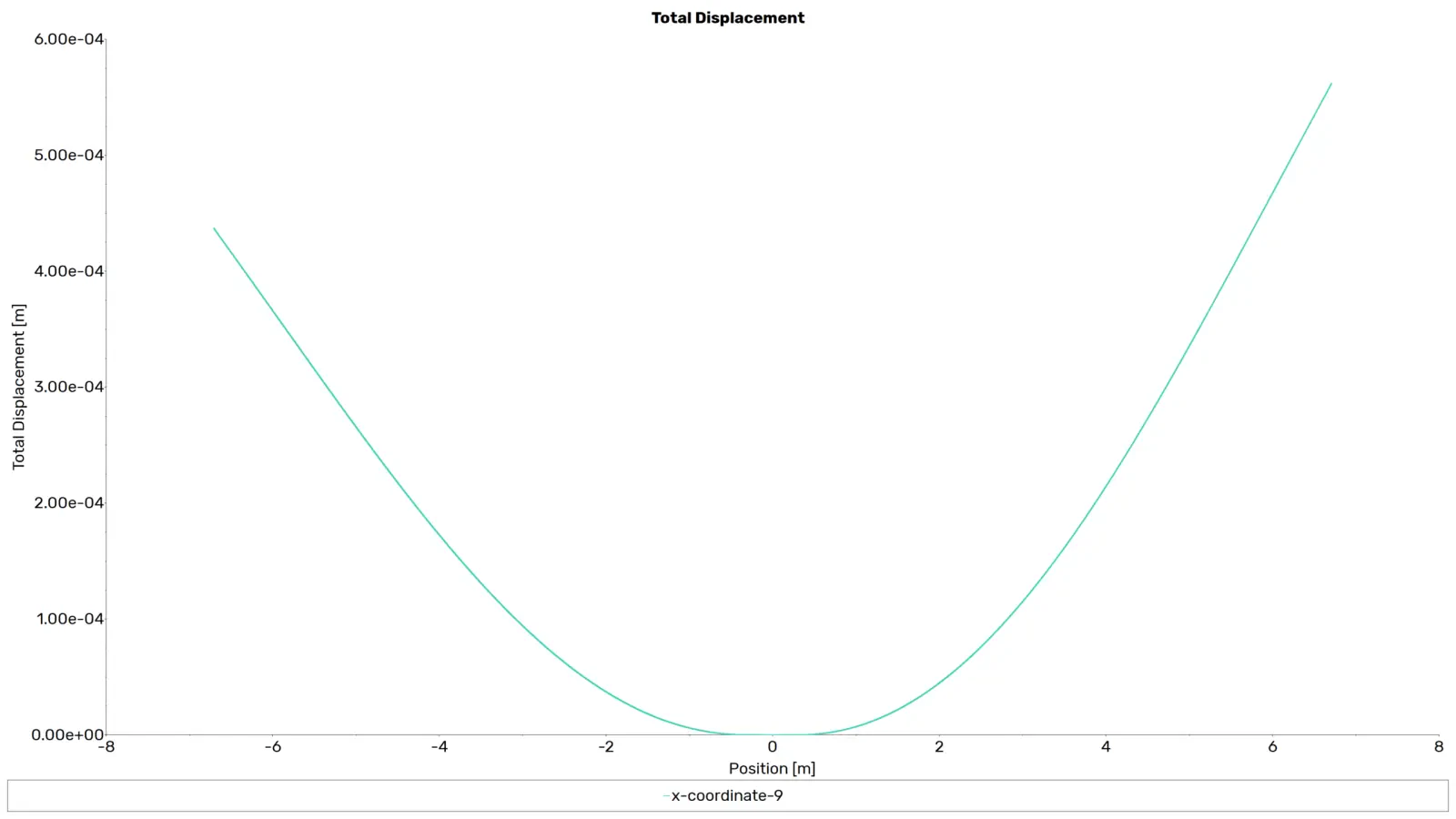
According to the extracted contours, it is observed that, as expected, the greatest displacement occurs at the wing tips of the UAV and the greatest stress is at the wing-body connection.
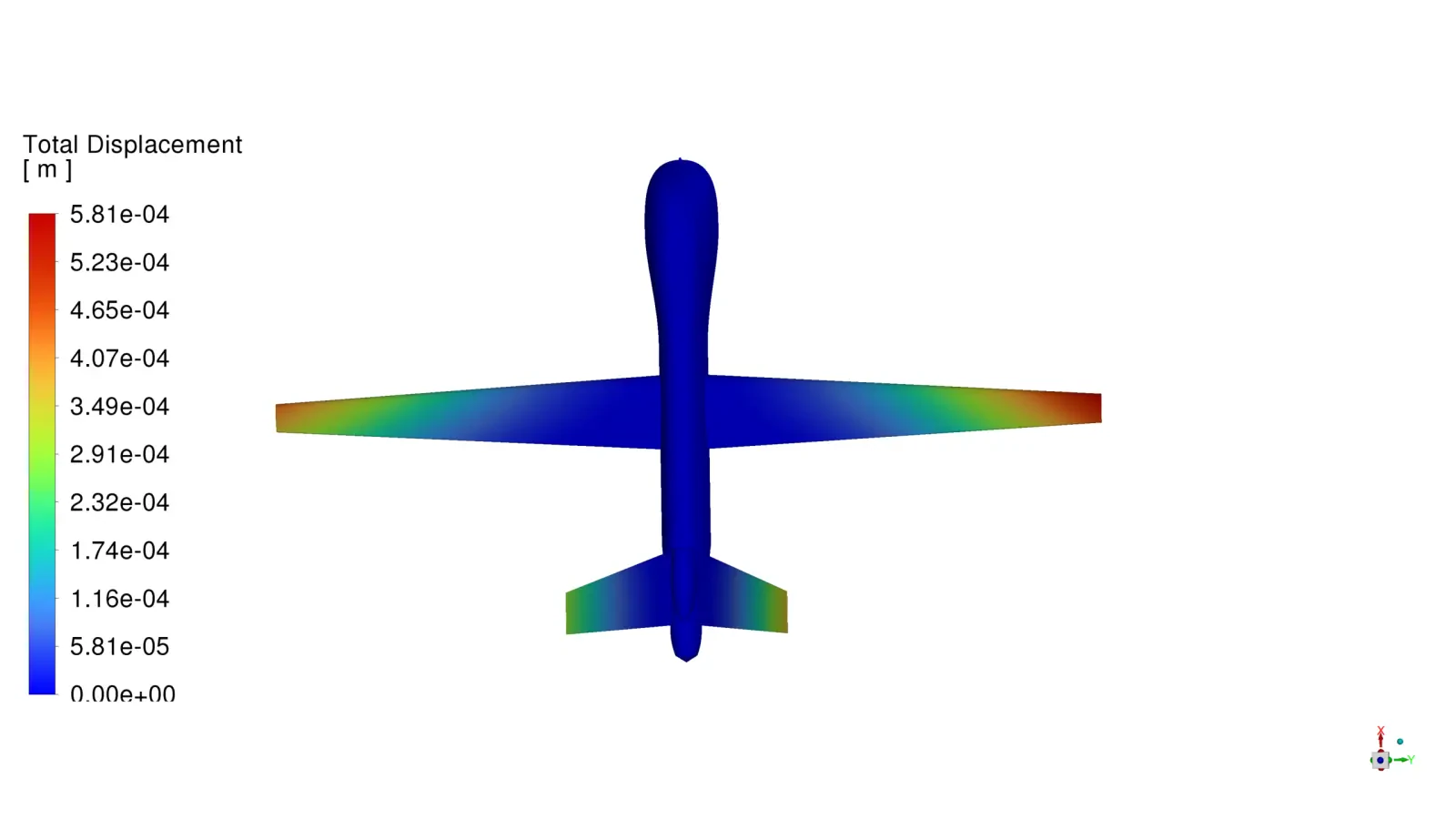
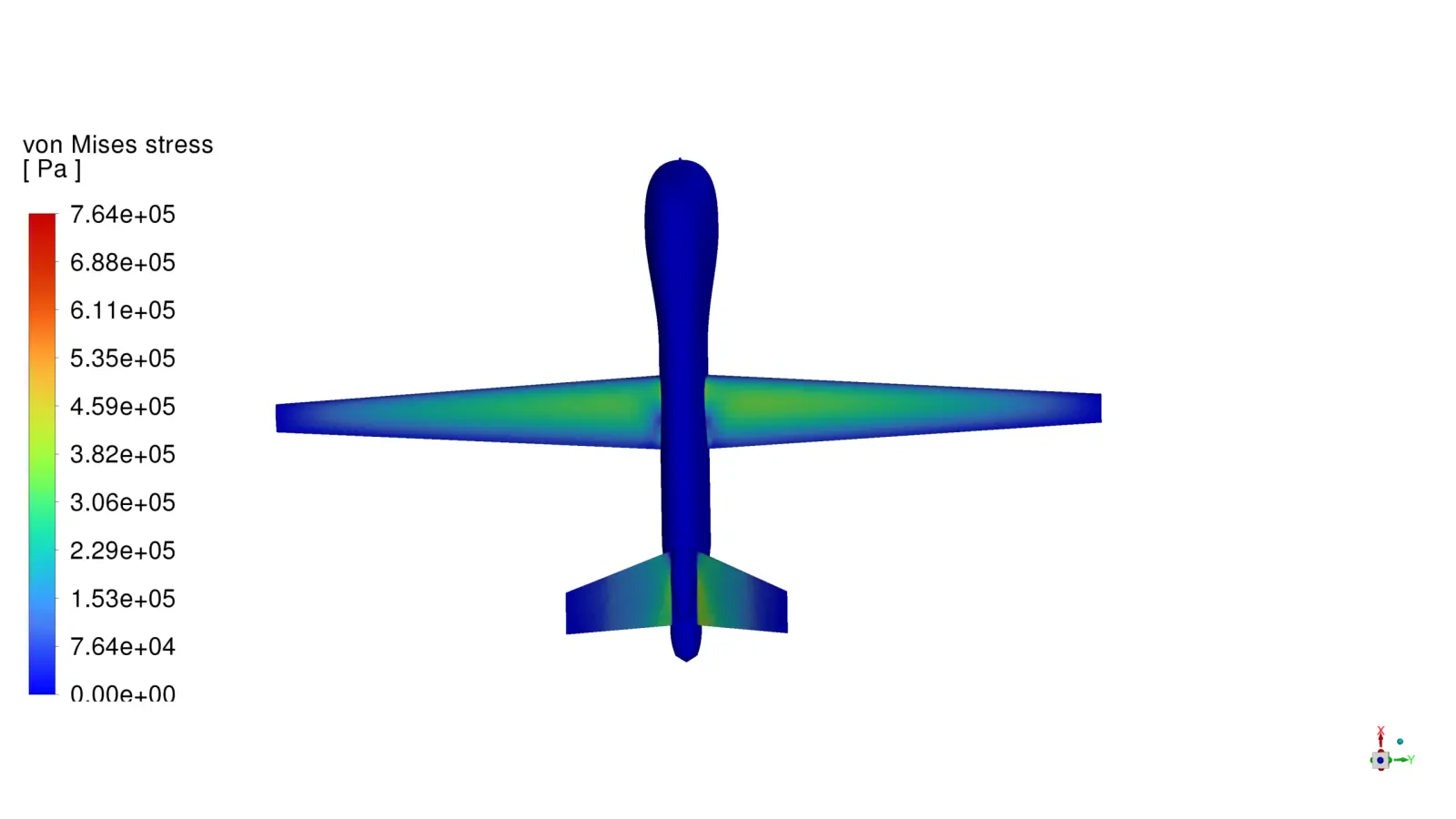
It is also seen in the diagrams that the amount of displacement decreases from the wingtips to the fuselage junction and reaches zero at the fuselage. Although the fuselage displacement may sometimes not be zero, its amount is very small and is usually ignored. The two diagrams below are for the front and rear airfoils.