

Acoustic GOLDEN Training Package: +35 Simulations (All in One Course)
Price:
$1,352
$699
MR CFD's Acoustic Engineering GOLDEN Training Package, covering FW-H, Wave Equation, and Broadband Noise Sources for comprehensive aeroacoustics and noise analysis.
- Practical exercises and case studies rooted in real-world, +30 pre-simulated Acoustic projects.
- Step-by-step tutorials from geometry creation, meshing, solving, and advanced post-processing.
- While you obtain the Golden Package, you will receive non-limited 1-year technical support from MR CFD experts.
- By purchasing this Golden package, you can benefit from our 3-month HPC.
Acoustic GOLDEN Training Package: +35 Simulations (All in One Course)
Price:
$1,352
$699
MR CFD's Acoustic Engineering GOLDEN Training Package, covering FW-H, Wave Equation, and Broadband Noise Sources for comprehensive aeroacoustics and noise analysis.
- Practical exercises and case studies rooted in real-world, +30 pre-simulated Acoustic projects.
- Step-by-step tutorials from geometry creation, meshing, solving, and advanced post-processing.
- While you obtain the Golden Package, you will receive non-limited 1-year technical support from MR CFD experts.
- By purchasing this Golden package, you can benefit from our 3-month HPC.
Acoustics: Advanced CFD Training Package
Intermediate, Advanced
Price: $89
Advance your acoustics CFD skills with this 10-project ANSYS Fluent training package — covering fundamental sound propagation, flow-induced noise in ducted and muffler systems, wind and hydro turbine acoustics, and combustion-coupled thermoacoustic phenomena.
Acoustics: Beginner CFD Training Package
Beginner, Intermediate
Price: $49
Acoustics: Beginner CFD Training Package is a ten-project introduction to computational aeroacoustics and sound simulation in ANSYS Fluent. Starting from the core acoustic models and building through silencers, rotating machinery, and the aeroacoustics of airfoils, cars, and fans, it gives newcomers a hands-on, application-driven foundation in the CFD techniques behind modern noise prediction and control engineering — one real engineering case at a time.
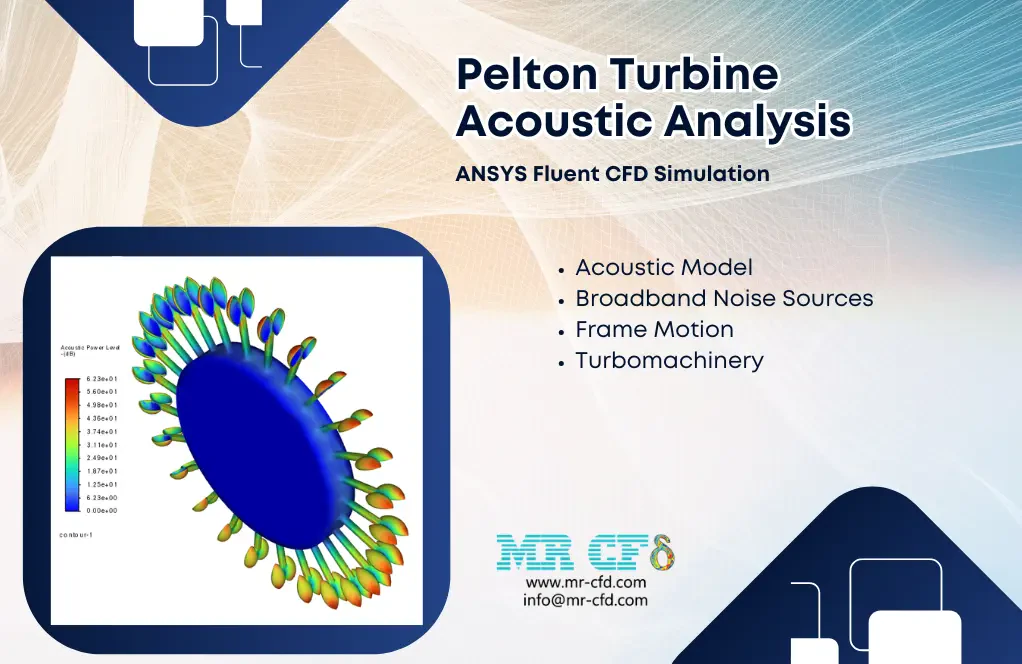
Pelton Turbine, Acoustic Analysis, ANSYS Fluent CFD Simulation
Intermediate, Advanced
Price: $54
This product numerically simulates a Pelton Turbine under Acoustic analysis using ANSYS Fluent software. We design the 3D model with Design Modeler software. We mesh the model with ANSYS Meshing software. We use the Broadband Noise Source method to define an Acoustic model. We use the Frame Motion to define a rotational flow.
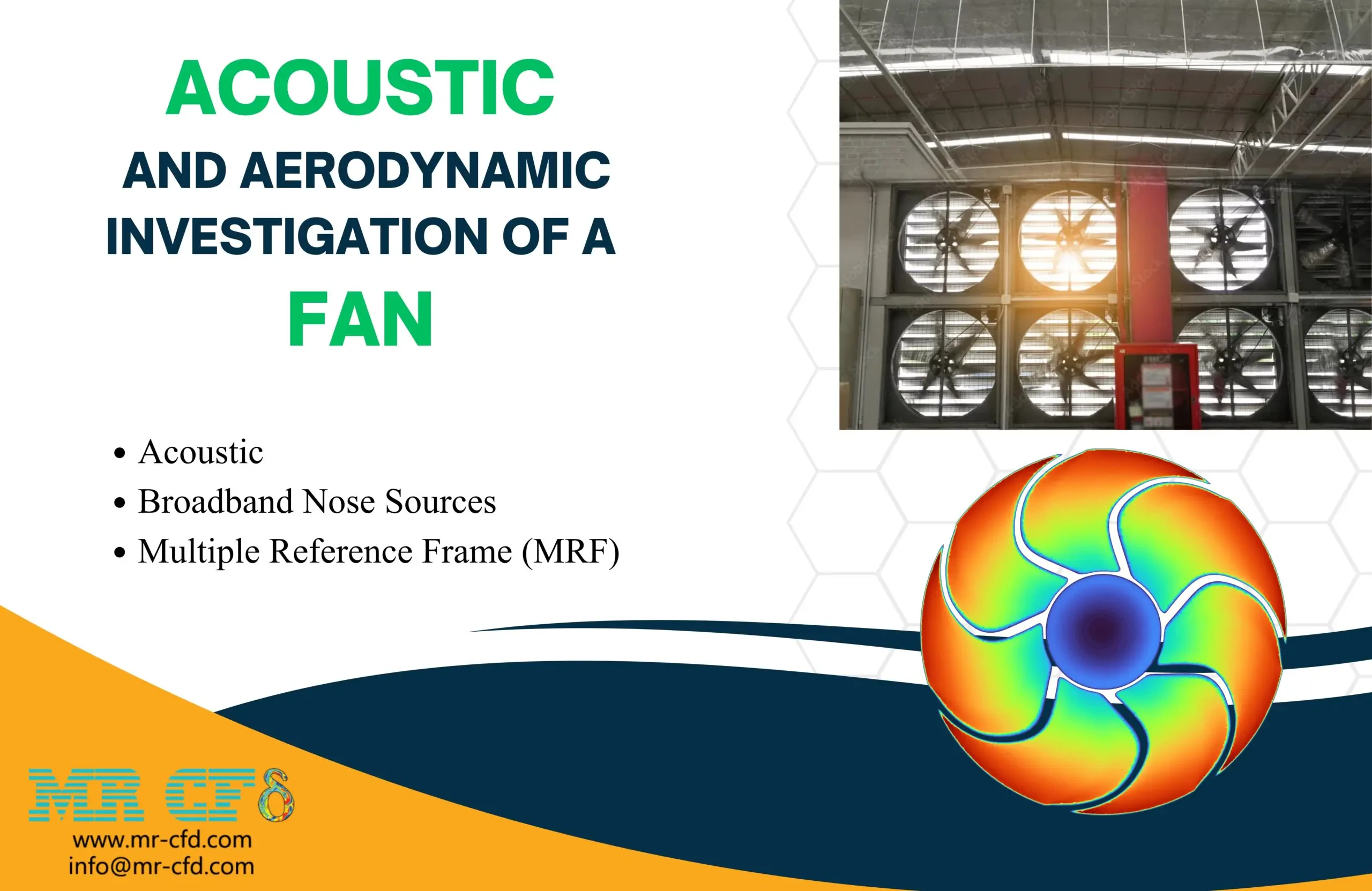
Acoustic and Aerodynamic Investigation of a Fan Using the MRF Technique in ANSYS Fluent
Intermediate
Price: $28
The fan geometry, consisting of six blades and three zones, was created in DesignModeler and meshed with an unstructured tetrahedral grid of about 3 million elements. Broadband noise sources were applied in ANSYS Fluent to evaluate the acoustic performance and sound power level distribution. The Multiple Reference Frame (MRF) approach was used to model the rotating zone at 3000 RPM under steady-state conditions. Results show high-pressure and velocity regions near the blade tips, leading to stronger acoustic power levels along the fan casing.
ANSYS Fluent: All Levels CFD Training Package
Beginner, Intermediate, Advanced
Price: $169
Comprehensive ANSYS Fluent Course: Master computational fluid dynamics (CFD) through 14 hands-on CFD simulation projects, progressing from beginner fundamentals to expert-level ANSYS Workbench workflows. Advanced Multiphysics Training: Gain specialized CFD training in complex physics, including multiphase models, compressible flow, combustion dynamics, and acoustic modeling. Real-World Engineering Applications: Apply ANSYS Fluent to solve critical industry challenges in thermal management, aerospace aerodynamics, and environmental engineering. Career-Ready Simulation Skills: Build a professional portfolio and prepare for Ansys CFD certification with project-based learning designed for students, researchers, and practicing engineers.
Gun Muffler CFD Simulation: Acoustic and Dynamic Mesh Analysis by Ansys Fluent
Intermediate, Advanced
Price: $54
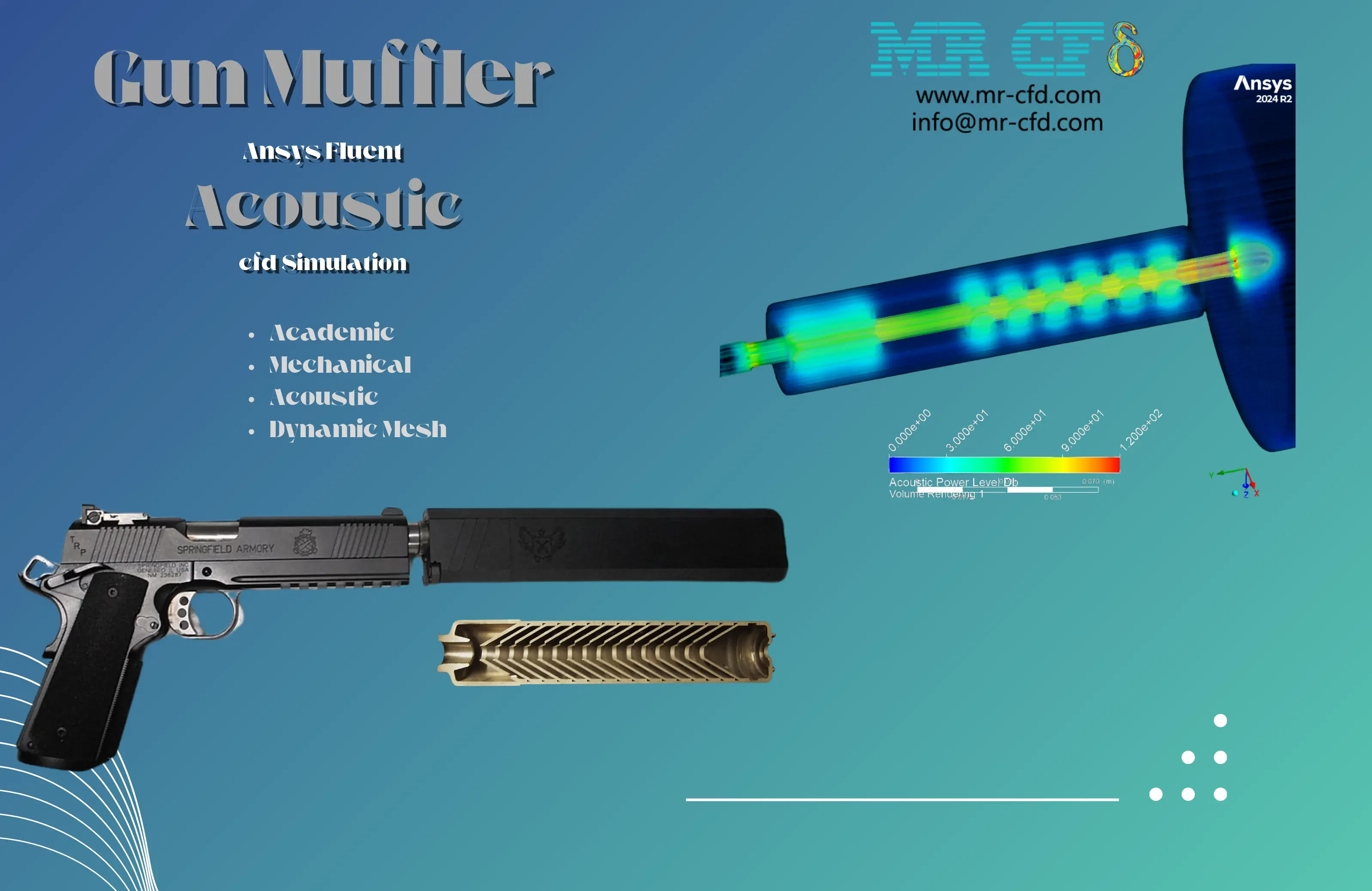
his report presents the simulation and analysis of a gun muffler using ANSYS Fluent The objective is to compare the acoustic parameters of a gunshot with and without a muffler The study involves creating the geometry in SpaceClaim, meshing in ANSYS Meshing, and using dynamic mesh and broadband acoustic models to simulate the bullet’s movement and sound propagation
Price: $63
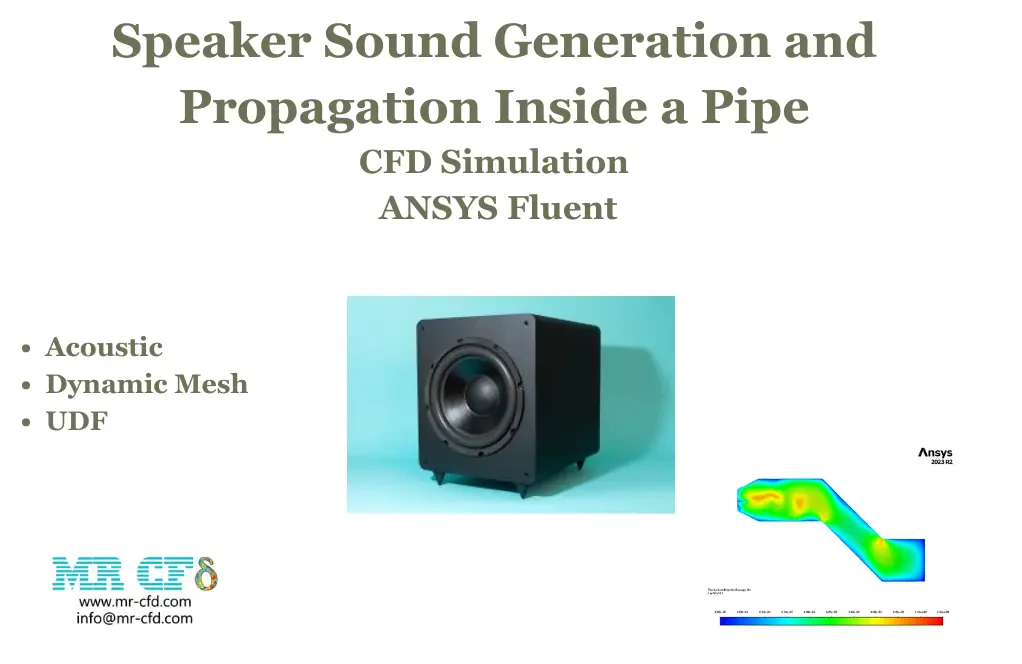
In this project, generation of sound by displacing of speaker diaphragm is modeled using ANSYS Fluent. The geometry was created in SpaceClaim, and a mesh consisting of 687,500 elements was generated using ANSYS Meshing. Dynamic mesh used to model the movement of diaphragm during simulation. In this project we are going to analyze and see how a speaker can generate a specific sound wave.
Price: $16
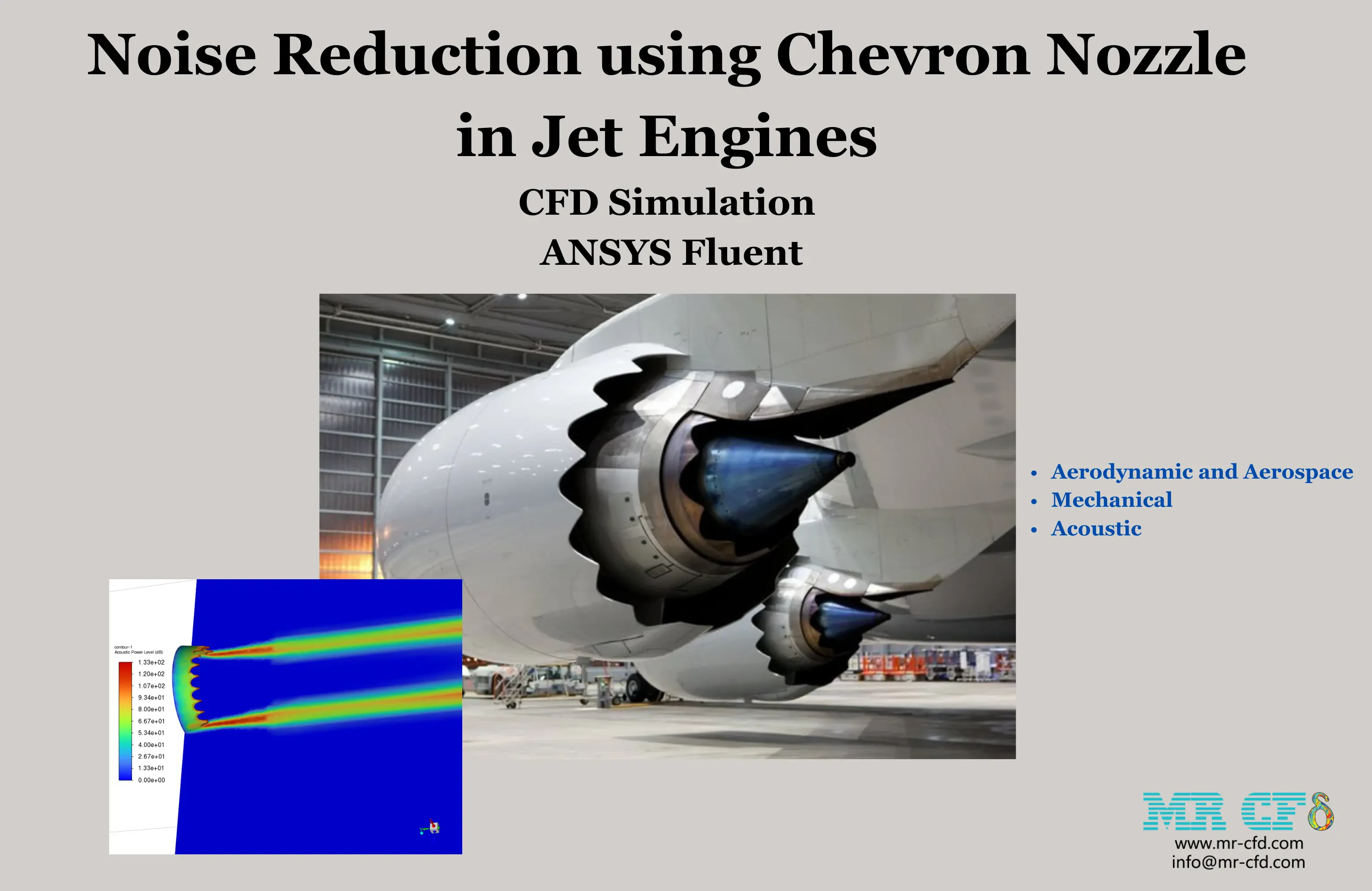
This project simulates Noise Reduction Using Chevron Nozzles in Jet Engines using ANSYS Fluent. The geometry was created in SpaceClaim, and a mesh consisting of 1,317,762 elements was generated using ANSYS Meshing. The broadband noise source model was chosen to simulate noise generation and propagation.
Price: $20
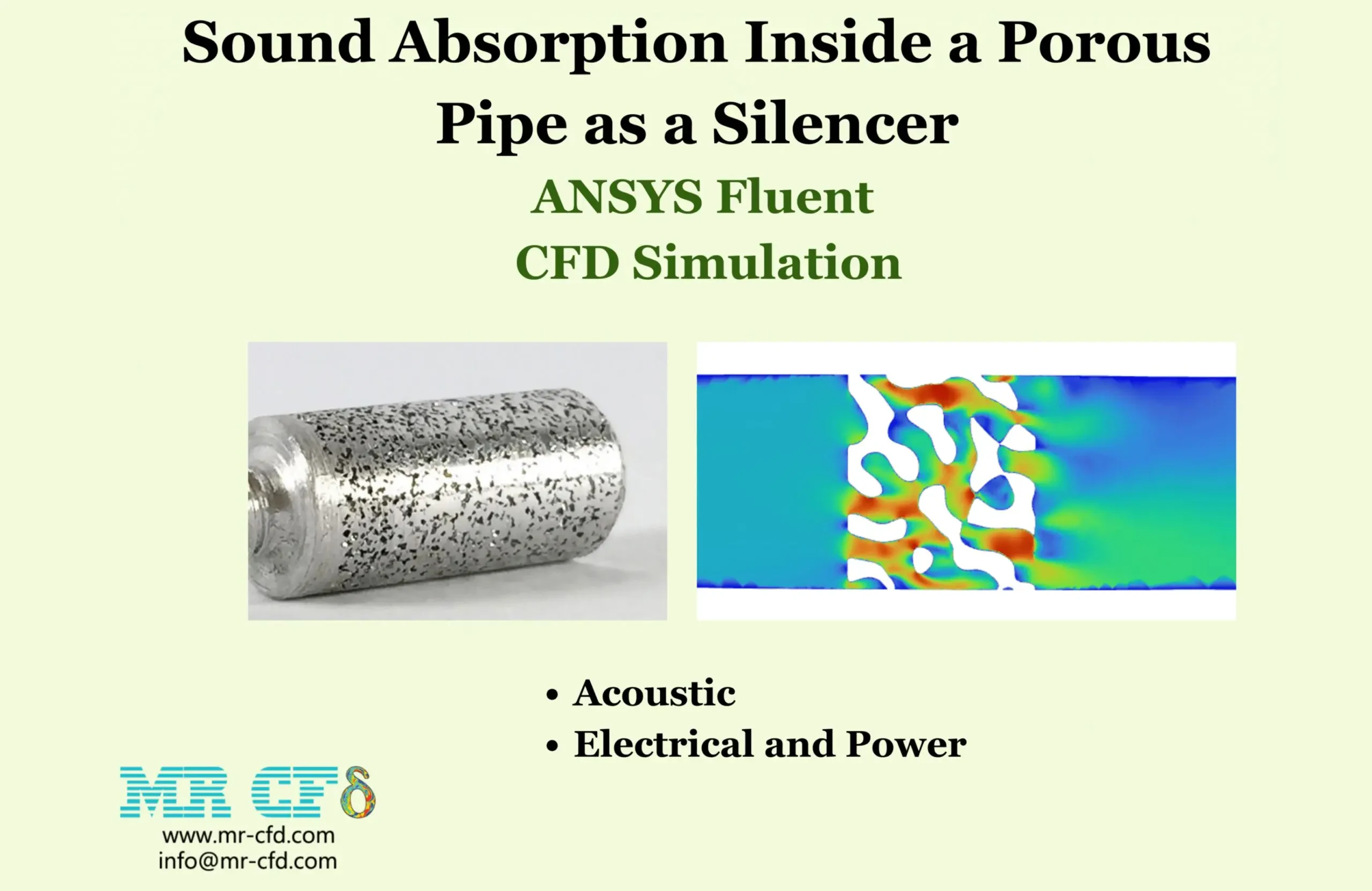
The present problem simulates the Sound Absorption Inside a Porous Pipe as a silencer using ANSYS Fluent. We have designed the 3-D geometry using SpaceClaim software and created 1,209,174 polyhedral cells on this geometry using ANSYS Meshing software. We employ the FW-H acoustic model to predict the acoustical behavior of systems.
Acoustic CFD Complete Course: 35+ ANSYS Fluent Simulation Projects
Acoustic CFD simulation has become one of the most technically demanding and commercially critical disciplines in modern engineering. From the aerodynamic noise radiating off wind turbine blades to the tonal frequencies generated inside turbojet intake fans, the ability to computationally predict, analyze, and suppress sound generation and noise propagation is no longer a specialized research luxury—it is a core industrial requirement. This course, offered through MR CFD, is a structured, production-grade acoustic engineering CFD training program built on 35+ fully pre-simulated ANSYS Fluent projects spanning beginner to advanced engineering complexity.
Accessible through the CFD Training Course, this complete aeroacoustics CFD course integrates three of ANSYS Fluent’s primary acoustic solvers—Ffowcs Williams & Hawkings (FW-H), Wave Equation, and Broadband Noise Sources—alongside high-fidelity turbulence modeling techniques including Large Eddy Simulation (LES). Whether you are an engineering student building foundational competencies, a researcher pursuing computational acoustics validation, or an industry professional solving noise reduction challenges in rotating machinery, this course delivers the technical depth and simulation breadth required for real-world engineering impact.
Why Acoustic Engineering and CFD Noise Prediction Are Critical Disciplines in Modern Industry
The global demand for acoustic engineering CFD expertise is accelerating across every sector that involves fluid motion and mechanical rotation. Regulatory frameworks for noise emissions in aviation, automotive, and wind energy industries have become increasingly stringent, compelling engineering teams to adopt computational acoustics simulation as a primary design verification tool rather than a post-prototype diagnostic.
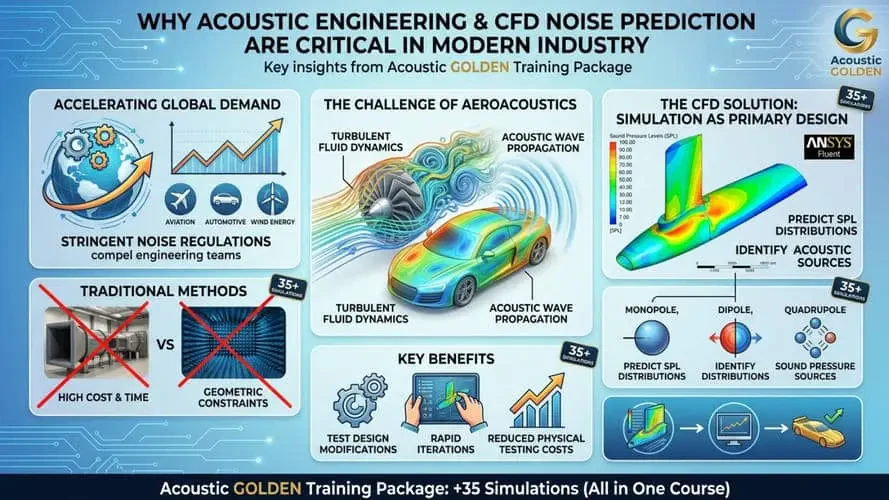
Aeroacoustic noise prediction addresses one of the most complex multi-physics challenges in engineering: the interaction between turbulent fluid dynamics and acoustic wave propagation. Traditional experimental methods—wind tunnel testing, anechoic chamber measurements—are cost-prohibitive and geometrically constrained. CFD noise prediction using ANSYS Fluent enables engineers to evaluate sound pressure level (SPL) distributions, identify dominant acoustic monopole, dipole, and quadrupole sources, and test design modifications at a fraction of the physical testing cost.
From HAWT wind turbine acoustic analysis to Francis turbine noise CFD, the engineering bottleneck has consistently been the shortage of professionals who can confidently configure acoustic solvers, interpret near-field and far-field acoustics results, and translate simulation data into actionable design decisions. This course directly addresses that gap, producing engineers fluent in the full acoustic CFD simulation workflow.
Technical Core Competencies in Acoustic CFD Simulation You Will Master
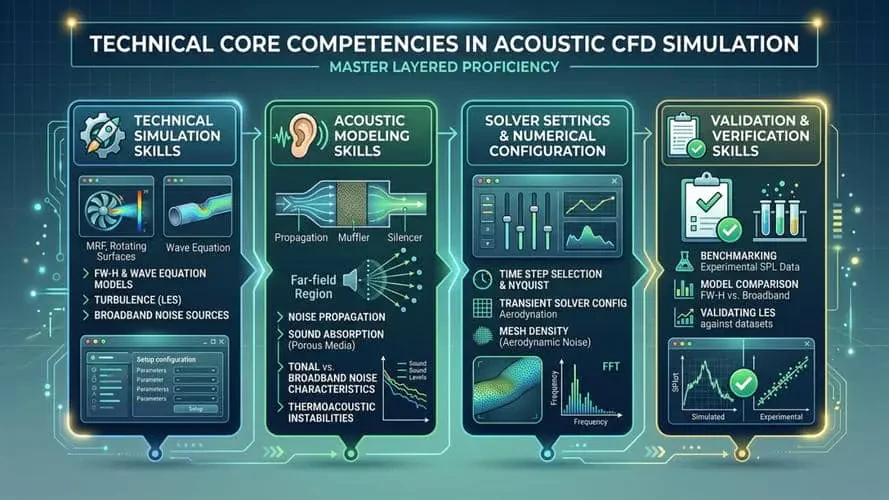
This course is structured to build layered technical proficiency across four critical skill domains:
Technical Simulation Skills
- Configuring FW-H acoustic model parameters in ANSYS Fluent for rotating and stationary surfaces
- Setting up wave equation acoustic model for internal duct and pipe propagation problems
- Applying Broadband Noise Sources model for steady-state statistical noise estimation
- Implementing LES turbulence modeling for high-fidelity vortex-induced sound prediction
- Utilizing the Multiple Reference Frame (MRF) technique for fan and compressor acoustic simulations
Acoustic Modeling Skills
- Defining acoustic receiver points and monitoring far-field sound pressure level spectra
- Characterizing tonal noise vs. broadband noise contributions in rotating machinery
- Modeling sound absorption in porous media for silencer and muffler design
- Simulating noise propagation CFD modeling through complex duct geometries
- Coupling thermoacoustic instabilities with combustion chamber fluid dynamics
Solver Settings and Numerical Configuration
- Time step selection and Nyquist criteria for acoustic frequency resolution
- Pressure-based transient solver configuration for acoustic pressure fluctuation capture
- Mesh density requirements for aerodynamic noise generation accuracy
- Post-processing using FFT analysis for acoustic spectrum extraction
Validation and Verification Skills
- Benchmarking simulation results against published experimental SPL data
- Comparing FW-H vs. broadband noise model predictions for engineering decision-making
- Validating LES acoustic CFD against wind tunnel measurement datasets
Comprehensive Course Modules and Simulated Acoustic CFD Projects
Noise Reduction Engineering: Silencers, Mufflers, and Porous Absorbers
This module addresses one of the most commercially valuable applications of acoustic CFD simulation: the design and optimization of noise reduction systems. Projects include the simulation of a plate silencer and sound absorption configuration, sound absorption inside a porous pipe as a silencer, and a gun muffler CFD simulation incorporating both acoustic modeling and dynamic mesh analysis. Students learn to quantify transmission loss, pressure drop penalties, and broadband attenuation performance. The engineering relevance spans defense systems, industrial exhaust silencers, HVAC duct lining, and automotive muffler design—industries where regulatory noise compliance directly affects product certification and market access.
Ffowcs Williams & Hawkings (FW-H) Acoustic Model Applications
The FW-H acoustic model is the cornerstone of modern aeroacoustics CFD simulation, and this module delivers comprehensive mastery of its application across multiple engineering geometries. Projects include an acoustic investigation on a HAWT, a direct FW-H and Broadband Noise comparison on a HAWT, and a sound generation of a ceiling fan comparing FW-H against the wave equation acoustic model. Students configure acoustic integration surfaces, define receiver locations, and extract far-field SPL spectra using FFT post-processing. Understanding when to deploy FW-H versus alternative models is a critical engineering judgment skill developed throughout this module, directly applicable to wind energy, aerospace, and consumer product noise certification.
Wave Equation Acoustic Model for Internal Propagation Problems
The wave equation acoustic model in ANSYS Fluent provides a direct solution to the linearized acoustic wave equations, making it particularly powerful for noise propagation CFD modeling inside enclosed or semi-enclosed domains. This module covers the theoretical foundations of the wave equation solver, its boundary condition requirements, and its application to the sound generation of a ceiling fan. Students compare results directly against FW-H predictions, developing a rigorous understanding of solver selection criteria based on geometry type, frequency range, and computational budget—skills essential for computational acoustics research and industrial product development.
Broadband Noise Sources Model for Steady-State Acoustic Analysis
The Broadband Noise Sources model enables engineers to obtain rapid, steady-state estimates of acoustic power levels without the computational overhead of transient LES simulations. This module covers the model’s surface acoustic power formulations and its application to HAWT aeroacoustic analysis and comparative studies against FW-H. Students learn to identify high-noise-generating surface regions, enabling targeted geometric modifications that reduce turbulence-induced noise at the design stage. This workflow is particularly valuable in early-phase industrial design cycles where computational efficiency is paramount.
Rotating Machinery Acoustics: Fans, Compressors, and Turbines
Rotating machinery represents the highest-demand application domain for acoustic CFD simulation in industry. This module covers four distinct rotating system types: air compressor acoustics analysis, fan acoustic simulation using the MRF technique, ducted fan noise and thrust prediction, and acoustic simulation in a turbojet intake fan. Each project introduces unique modeling challenges—rotor-stator interaction noise, blade-passing frequency tonal components, and intake duct resonance. The culminating project, Francis turbine acoustics CFD analysis, addresses hydraulic turbomachinery noise, a critical concern in hydropower plant design and operation. Students gain direct experience with the Multiple Reference Frame (MRF) technique and understand its limitations relative to fully transient sliding mesh approaches for tonal noise prediction.
Aeroacoustic Sound Generation on Airfoils and Vehicle Geometries
This module bridges fundamental aeroacoustics CFD theory with applied engineering design. Projects include sound generation on an airfoil at 3 different attack angles, providing direct insight into how angle of attack influences trailing edge noise and leading edge turbulence interaction noise. The sound generation on a car with and without a spoiler project demonstrates the impact of geometric modifications on vehicle aerodynamic noise generation—a direct industrial application in automotive NVH (Noise, Vibration, and Harshness) engineering. Students learn to interpret directivity patterns, identify dominant noise source mechanisms, and quantify the acoustic benefit of design changes.
Jet Engine Noise Reduction Using Chevron Nozzle Geometry
The noise reduction using chevron nozzles in jet engines project addresses one of the most iconic and technically challenging problems in aerospace aeroacoustics. Chevron nozzles modify the turbulent mixing layer at the jet exhaust, reducing the dominant quadrupole noise sources responsible for community noise near airports. Students configure the FW-H acoustic model for high-speed jet flows, analyze shear layer turbulence characteristics, and quantify SPL reductions achievable through nozzle geometry modification. This project directly prepares engineers for roles in aerospace propulsion noise compliance and jet engine design optimization.
Speaker Sound Generation and Acoustic Propagation Inside Pipes
The speaker sound generation and propagation inside a pipe project introduces students to electro-acoustic source modeling and internal duct acoustics. This project applies the wave equation acoustic model to simulate how acoustic energy generated by a speaker source propagates, reflects, and dissipates within a cylindrical pipe domain. Engineering applications include the design of acoustic measurement systems, loudspeaker enclosures, and industrial pipe noise control. Students develop skills in acoustic boundary condition specification, pressure wave reflection management, and standing wave identification.
Thermoacoustics in Combustion Chambers: Instability and Noise Coupling
The thermoacoustics analysis in combustion chamber project represents one of the most advanced topics in this course, addressing the dangerous coupling between heat release fluctuations and acoustic resonance modes in gas turbine and industrial combustor systems. Students learn to model combustion-acoustic feedback mechanisms, identify unstable operating conditions, and evaluate geometric or operational modifications that suppress combustion-induced noise. This project is directly relevant to gas turbine manufacturers, industrial burner designers, and aerospace propulsion researchers where thermo-acoustic instability poses significant structural and operational risks.
LES Acoustic Simulation of Airflow Over Cylinders in Multiple Configurations
The acoustic CFD simulation using LES of airflow over cylinders in 4 different positions project provides rigorous training in high-fidelity turbulence-resolved acoustic simulation. Cylinder arrays and bluff body configurations generate intense vortex-induced sound through periodic vortex shedding, making them canonical benchmark cases for computational acoustics validation. Students configure LES solver settings, manage computational mesh requirements for accurate turbulent energy cascade resolution, and extract acoustic pressure fluctuation data for far-field noise prediction. This project builds the numerical rigor required for academic research publication and advanced industrial simulation workflows.
Professional Engineering Competencies and Simulation Workflows You Will Develop
| Skill Category | Specific Competency Developed |
|---|---|
| CFD Acoustic Modeling | FW-H, Wave Equation, Broadband Noise Sources setup and interpretation |
| Turbulence Modeling for Acoustics | LES, DES, and RANS selection criteria for aeroacoustic noise prediction |
| Rotating Machinery Simulation | MRF technique, sliding mesh, blade-passing frequency analysis |
| Post-Processing & Analysis | FFT spectral analysis, SPL directivity plots, acoustic power maps |
| Noise Control Engineering | Silencer design, porous absorber modeling, noise reduction quantification |
| Solver Configuration | Time step sizing, acoustic CFL criteria, receiver point definition |
| Validation & Benchmarking | Experimental data comparison, model-to-model accuracy assessment |
| Multi-Physics Coupling | Thermo-acoustic instability, combustion-acoustic interaction modeling |
Real-World Industrial Applications of Acoustic CFD Simulation Expertise
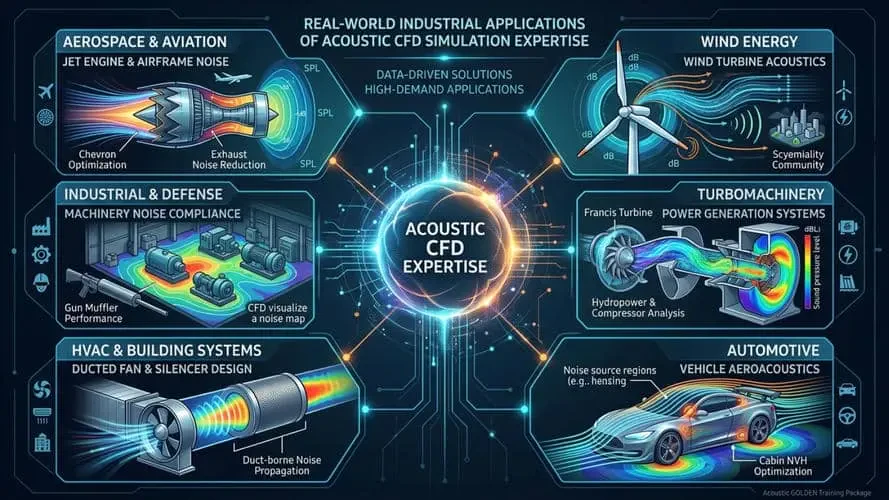
The skills developed throughout this complete aeroacoustics CFD course map directly to high-demand engineering applications across multiple industries:
- Aerospace & Aviation: Jet engine exhaust noise reduction, chevron nozzle optimization, turbojet intake acoustic analysis, and airframe noise prediction for regulatory compliance
- Wind Energy: HAWT acoustic analysis, blade trailing edge noise prediction, and wind farm community noise assessment
- Turbomachinery & Power Generation: Francis turbine acoustics CFD, compressor noise analysis, and hydropower plant acoustic impact studies
- Automotive & Transportation: Vehicle exterior aeroacoustic noise, spoiler geometry optimization, and cabin NVH simulation
- HVAC & Building Systems: Ducted fan noise prediction, silencer and muffler design, and duct-borne noise propagation CFD modeling
- Defense & Industrial Equipment: Gun muffler acoustic performance, industrial exhaust silencer design, and machinery noise compliance
- Consumer Products: Ceiling fan and speaker acoustic optimization using FW-H and wave equation models
Who Should Enroll in This Acoustic Engineering Complete CFD Course
This acoustic CFD simulation course is engineered for professionals across four distinct career profiles:
- Engineering Students (Undergraduate & Graduate): Build a competitive, portfolio-ready skill set in ANSYS Fluent acoustic modeling that directly differentiates your graduate school applications and early career opportunities in aerospace, automotive, and energy sectors
- PhD Researchers & Academic Faculty: Access fully pre-simulated benchmark cases for computational acoustics research validation, curriculum development, and thesis project acceleration in aeroacoustics and noise control
- Industry Engineers & Simulation Specialists: Rapidly upskill in rotating machinery acoustics CFD, noise reduction simulation, and advanced acoustic solver configuration to meet project deadlines and regulatory noise compliance requirements
- Technical Managers & Engineering Team Leads: Equip your team with standardized, production-grade acoustic CFD simulation capabilities that reduce onboarding time, eliminate training inconsistencies, and accelerate project delivery timelines
Professionals interested in pairing acoustic simulation expertise with high-performance computing capabilities can explore ANSYS HPC to optimize large-scale acoustic LES simulation runtimes.
Why MR CFD Delivers Unmatched Acoustic CFD Simulation Training
MR CFD brings over 15 years of specialized CFD consulting and simulation training experience to every course in its portfolio. This acoustic engineering CFD course is not assembled from theoretical textbook exercises—every project is built from production-grade simulation workflows validated against real engineering benchmarks and industry standards.
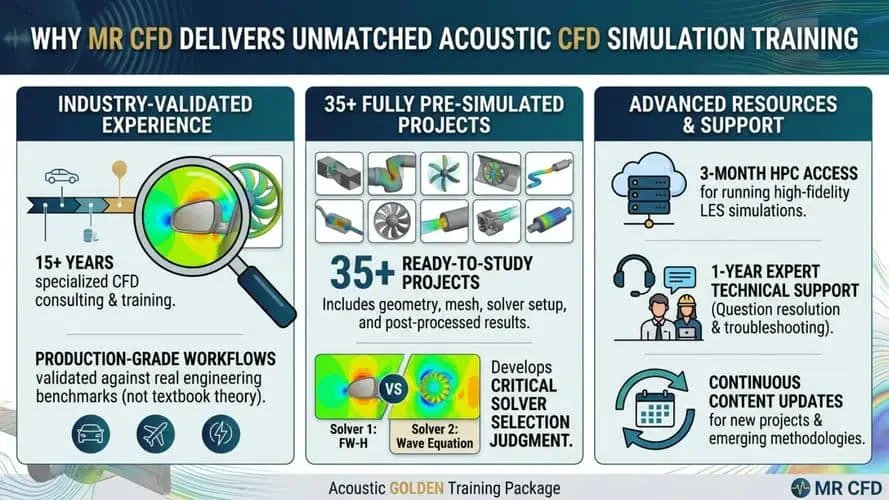
Key differentiators that define the MR CFD training standard:
- 35+ Fully Pre-Simulated Projects: Every tutorial includes complete geometry, mesh, solver setup, and post-processed results—ready for immediate technical study and direct application
- Multi-Model Acoustic Coverage: Unique direct comparison projects (FW-H vs. Wave Equation, FW-H vs. Broadband Noise) develop critical solver selection judgment that textbooks cannot provide
- Industry-Standard Verification: Simulation methodologies align with aerospace, energy, and automotive industry noise prediction standards
- 1-Year Expert Technical Support: Unlimited access to MR CFD simulation engineers for question resolution, troubleshooting, and advanced guidance throughout your learning journey
- 3-Month HPC Access: Computational resources for running high-fidelity LES acoustic simulations that would otherwise require institutional supercomputing access
- Continuous Content Updates: Regular additions of new acoustic simulation projects ensure the course remains aligned with evolving industry challenges and emerging acoustic CFD methodologies
Engineers seeking applied simulation experience beyond coursework can explore CFD professional consulting services for project-specific acoustic simulation support.
Learning Progression Path and Advanced Acoustic CFD Training Tracks
This course is structured across three progressive competency levels, ensuring engineers at every stage of their career can extract maximum value:
| Level | Focus Area | Representative Projects |
|---|---|---|
| Beginner | Acoustic model fundamentals, basic solver setup | Broadband noise on HAWT, ceiling fan FW-H simulation |
| Intermediate | Rotating machinery, silencer design, multi-model comparison | Fan MRF acoustics, porous pipe silencer, FW-H vs. wave equation |
| Advanced | LES acoustics, thermoacoustics, jet noise, multi-physics coupling | LES cylinder acoustics, combustion chamber thermoacoustics, chevron nozzle jet noise |
Upon completing this course, engineers are well-positioned to advance into specialized simulation domains. Recommended progression tracks include:
- Advanced Turbomachinery CFD: Deepening rotating machinery simulation expertise with sliding mesh and rotor-stator interaction modeling
- Combustion & Reacting Flow CFD: Extending thermoacoustic competencies into full combustion simulation workflows
- Structural Acoustics & Vibro-Acoustics: Coupling fluid acoustic simulations with structural vibration response analysis
Students interested in applying their acoustic CFD skills within a structured mentored engineering environment can learn about CFD Internship for hands-on professional development opportunities.
Enroll in the Acoustic CFD Complete Course and Build Engineering Simulation Mastery
The gap between engineers who understand acoustic CFD simulation conceptually and those who can execute complete ANSYS Fluent acoustic modeling workflows from solver configuration to validated results is precisely where career and project outcomes diverge. This course closes that gap with 35+ real engineering projects, three acoustic solver frameworks, and 15 years of MR CFD simulation expertise embedded in every tutorial.
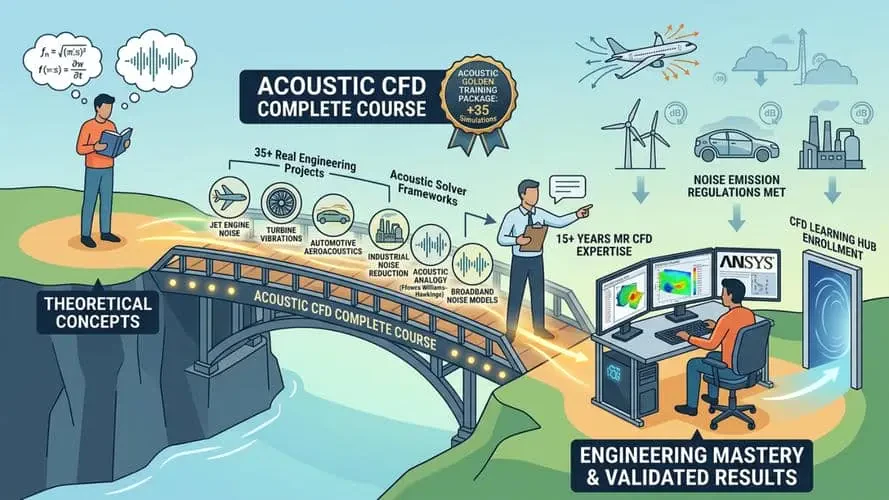
Acoustic noise prediction, rotating machinery acoustics, noise reduction engineering, and thermoacoustic analysis are not peripheral skills in today’s engineering landscape—they are central technical requirements across aerospace, energy, automotive, and industrial sectors facing increasingly strict noise emission regulations.
Explore the full catalog of available CFD simulation courses and enroll in the Acoustic CFD Complete Course through the CFD Learning Hub. Build the acoustic simulation competencies your engineering career demands—with structured projects, expert support, and a learning path designed for real-world technical impact.