

Biomedical & Healthcare Golden Training Package
Price:
$3,580
$1,559
The Biomedical and Healthcare GOLDEN Training Package delivers 40+ ANSYS Fluent tutorials, transforming teams into experts with instant project readiness. Tailored for professors, CEOs, and firms, it covers blood flow in clogged arteries and bifurcations, non-Newtonian and pulsatile hemodynamics, FSI vessels, aortic valves, stents, bypass grafts, inhaler sprays, nanoparticle injection, hyperthermia therapy, operating room and ICU ventilation, and airborne virus transmission from coughs to sneezes. Includes step-by-step exercises, 1-year support, 3-month HPC, lifetime updates, and +15 years of MR CFD expertise for stress-free onboarding and competitive edge.
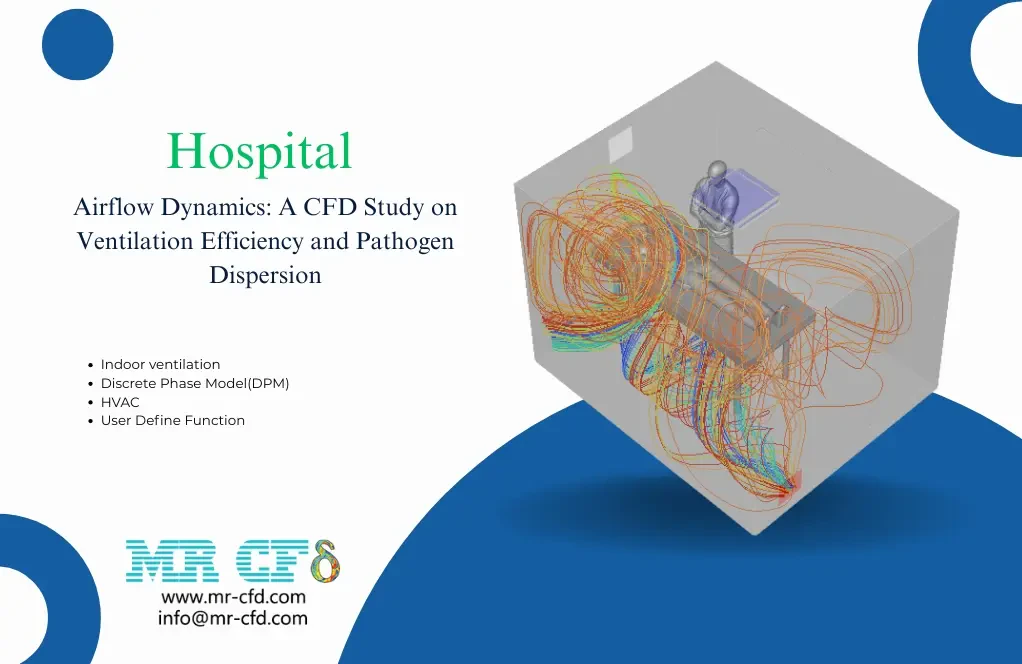
Hospital Airflow Dynamics: A CFD Study on Ventilation Efficiency and Pathogen Dispersion
Intermediate
Price: $270
The project aims to evaluate and enhance hospital room ventilation systems to effectively control aerosol dispersion, a crucial aspect of maintaining a safe environment within healthcare facilities. Three scenarios are analyzed: sneezing, coughing, and breathing, each with varying particle injection velocities and mass flow rates, to observe their effects on airflow patterns and particle trajectories. The simulation highlights that current ventilation setups exhibit limitations, as particles often become trapped or follow circular paths, indicating areas for improvement in ventilation strategy. Results suggest optimizing airflow by adjusting inlet and outlet conditions and improving flow patterns to enhance particle escape and overall air quality, ensuring safety and comfort in hospital settings.
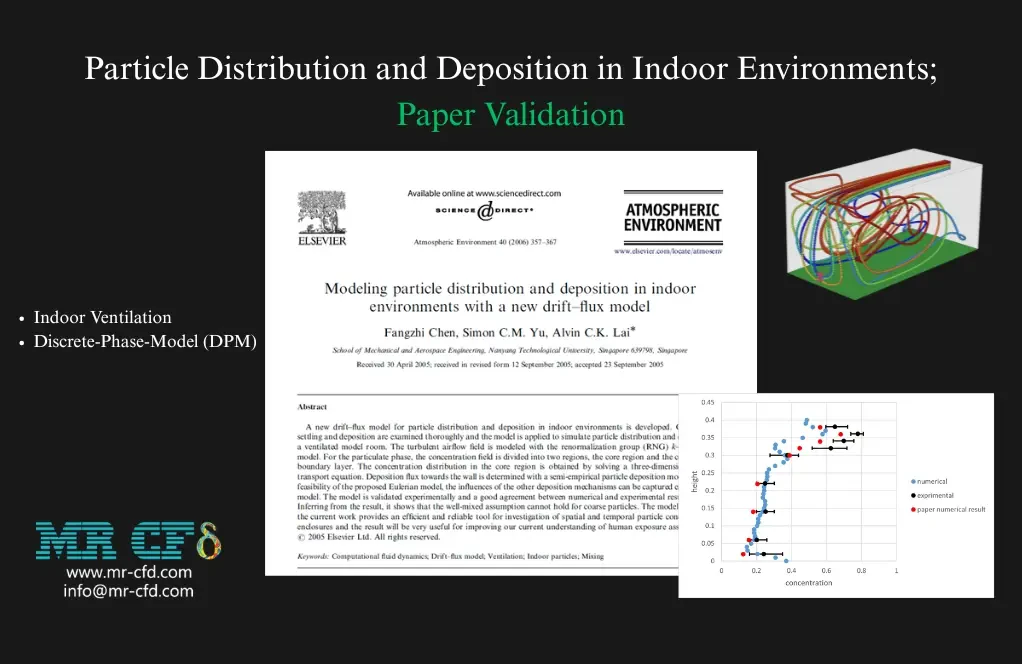
Particle Distribution and Deposition in Indoor Environments; Paper Validation
Intermediate, Advanced
Price: $210
The current CFD analysis numerically validates the paper “Modeling particle distribution and deposition in indoor environments with a new drift–flux model” using ANSYS Fluent software. We designed and meshed the room geometry in Design Modeler and ANSYS Meshing, generating 128,000 cells. A pressure-based solver with k-ε RNG turbulence modeling is employed, and particle dynamics are simulated using the DPM model.
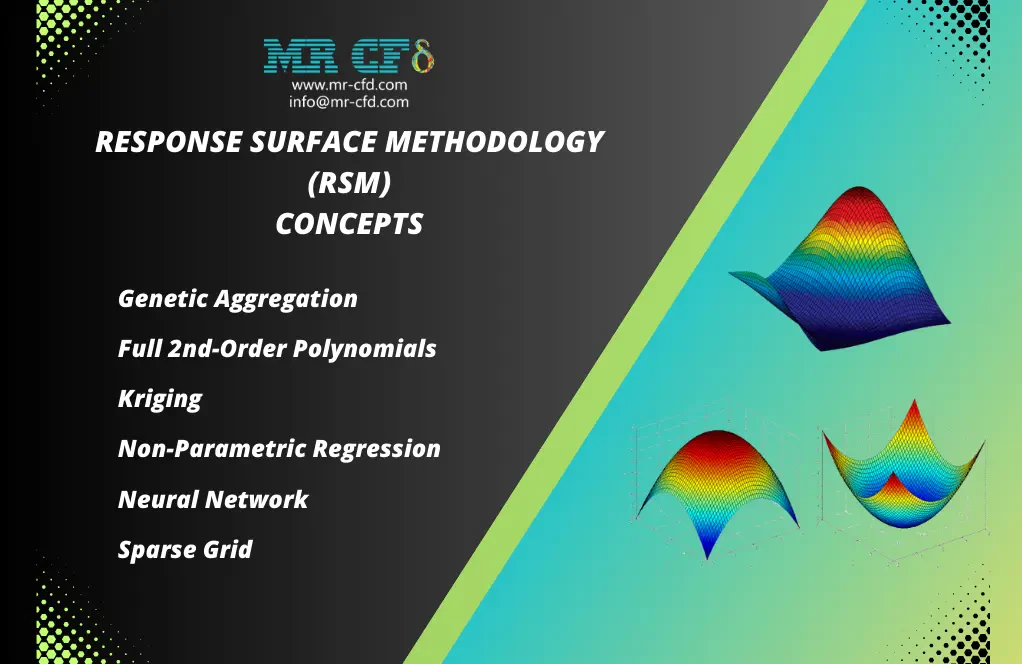
Response Surface Methodology (RSM) Concepts, Optimization by ANSYS Fluent
Beginner, Intermediate, Advanced
Price: Free
Introduction to the Response Surface Methodology (RSM) in ANSYS Fluent software Introduction to the Genetic Aggregation Introduction to the Full 2nd-Order Polynomials Introduction to the Kriging Introduction to the Non-Parametric Regression Introduction to the Neural Network Introduction to the Sparse Grid
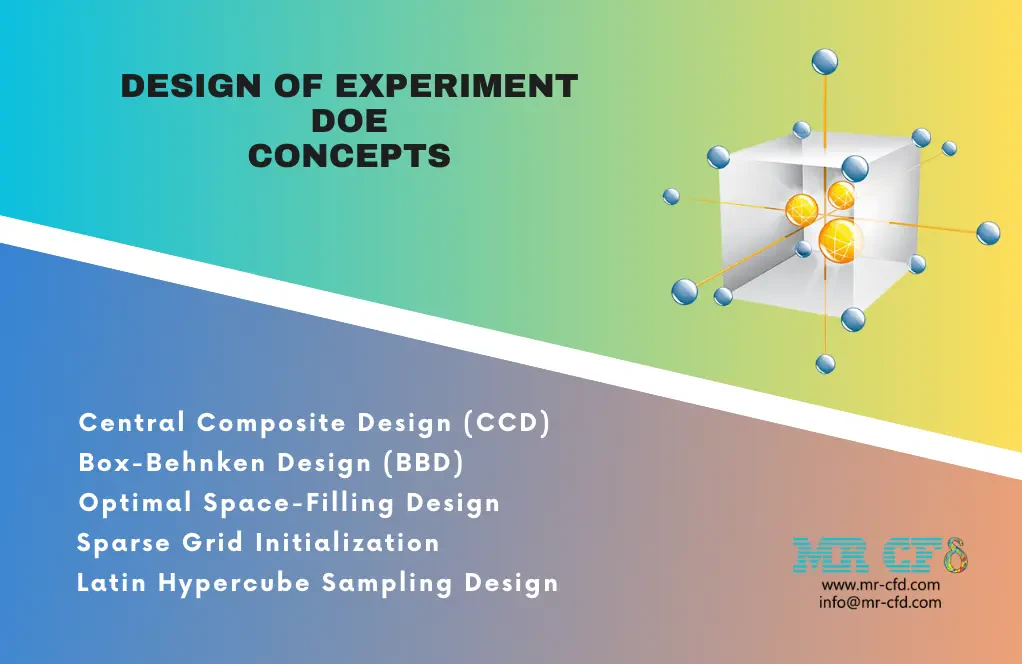
Price: Free
Introduction to the Design of Experiment (DOE) in ANSYS Fluent software Introduction to the Central Composite Design (CCD) Introduction to the Rotatable, VIF-Optimality, G-Optimality, and Face-Centered Introduction to the Box-Behnken Design (BBD) Introduction to the Optimal Space-Filling Design Introduction to the Sparse Grid Initialization Introduction to the Latin Hypercube Sampling Design Introduction to the Custom and Custom+Sampling
Computational Fluid Dynamics (CFD): Introduction
Beginner, Intermediate, Advanced
Price: Free
This is the first session of a Computational Fluid Dynamics (CFD) course, focusing on equations and numerical methods for discretization and solving them in detail. The course is designed by the Mister CFD team to help students and engineers understand the numerical techniques used in software like Ansys Fluent, rather than focusing on fundamental coding. It introduces CFD as a method for solving nonlinear partial differential equations (Navier-Stokes equations) through numerical techniques, since general analytical solutions aren’t available. The document covers three main numerical methods: Finite Difference Method (FDM), Finite Volume Method (FVM), and Finite Element Method (FEM), with their advantages and limitations. It explains different types of Partial Differential Equations (PDEs) including their classifications based on order, linearity, and behavior (Elliptic, Parabolic, and Hyperbolic). The content concludes with detailed explanations of conservation equations, numerical errors in CFD, and the importance of Taylor series in discretization processes.
Price: $27
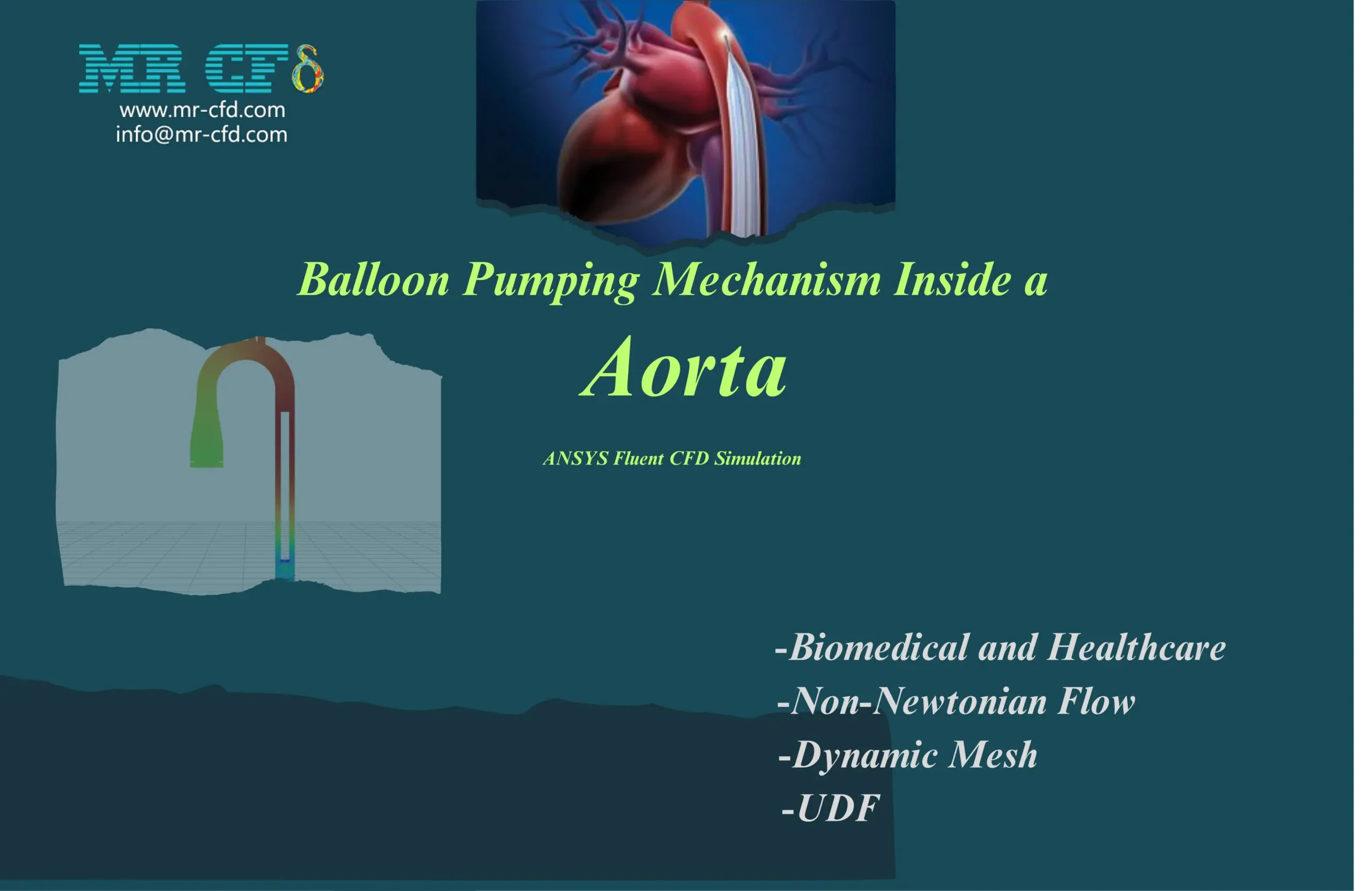
In this project, the function of balloon pumping mechanism inside an aorta was simulated using ANSYS Fluent. The geometry was created in SpaceClaim, and a mesh consisting of 450,795 elements was generated using ANSYS Meshing. Deflection of heart valve and balloon is simulated by dynamic mesh and with the grid motion UDFs.
Price: $29
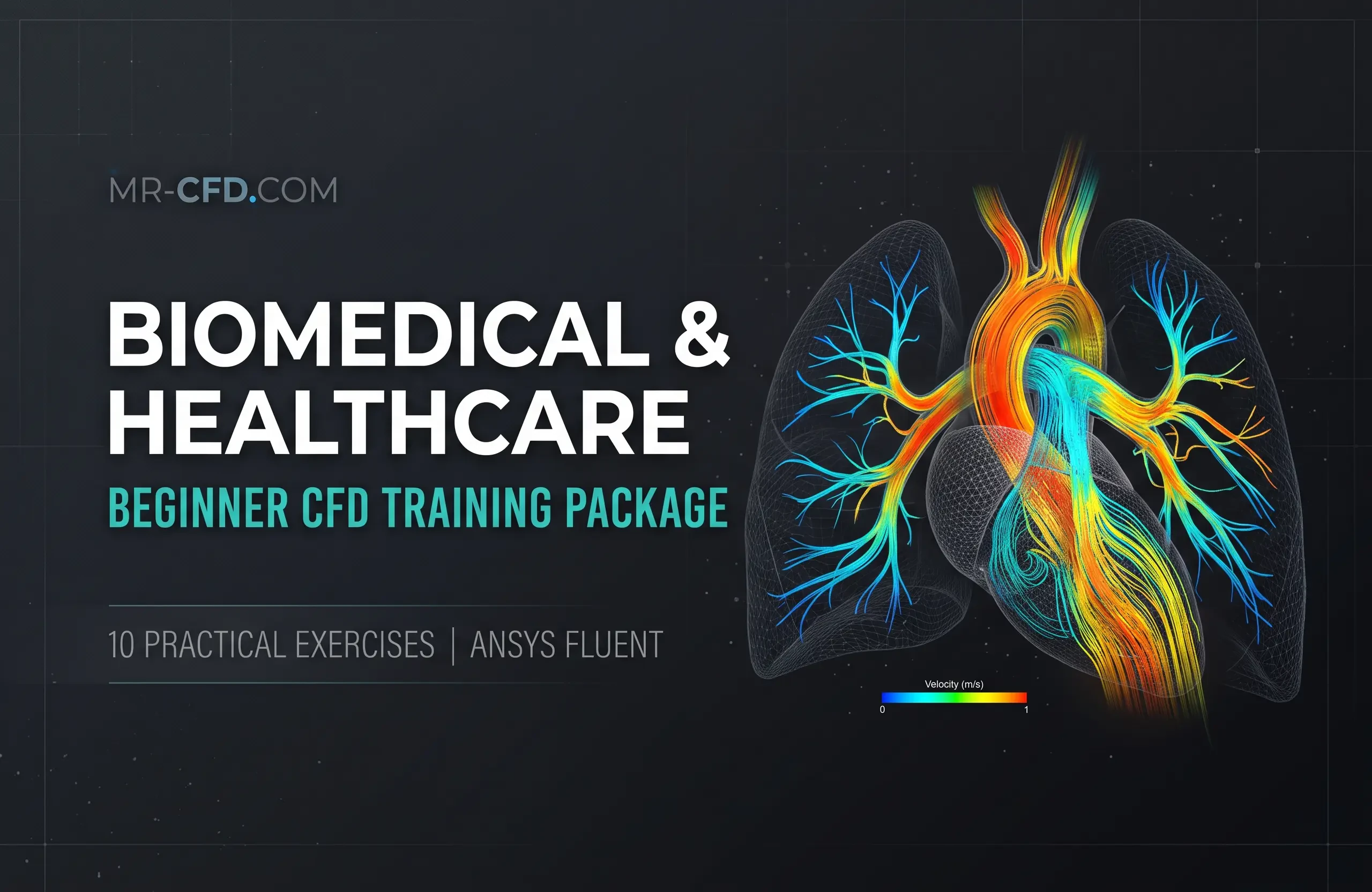
This ten-part package introduces beginners to biomedical and healthcare CFD simulation using ANSYS Fluent, covering blood flow through diseased arteries, inhaled drug delivery to the lungs, airborne transmission of respiratory viruses across everyday environments, and microfluidic droplet generation — building steadily from core cardiovascular flow concepts to more complex multiphase and particle-tracking applications.
Price: $12
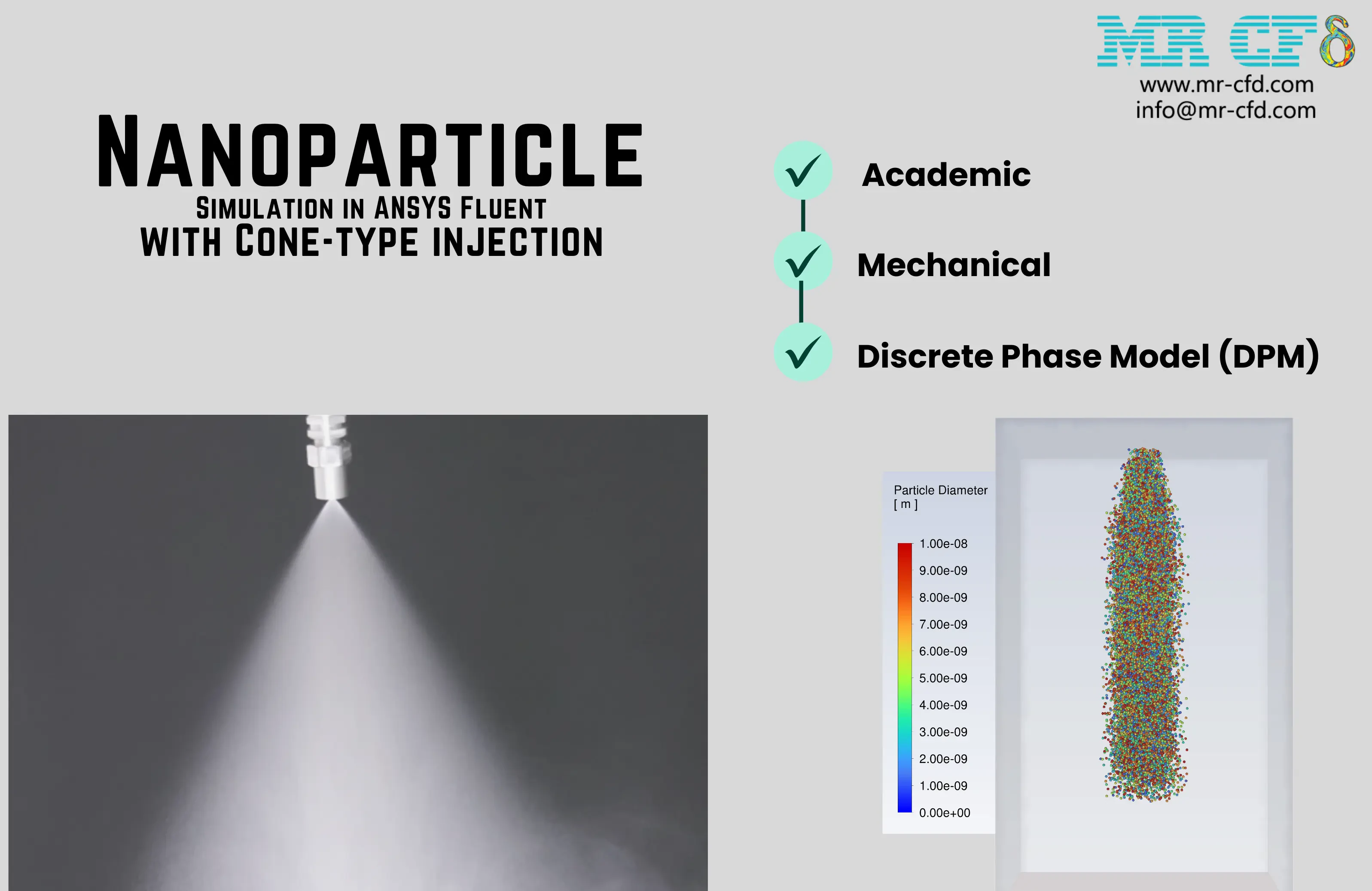
This report details a nanoparticle simulation conducted using ANSYS Fluent The simulation geometry consists of a rectangular cuboid created in SpaceClaim . Meshing was performed in ANSYS Meshing, resulting in a grid of 151,294 triangular cells Discrete Phase Model (DPM) activated, Flow and turbulence equations deactivated
Price: $360
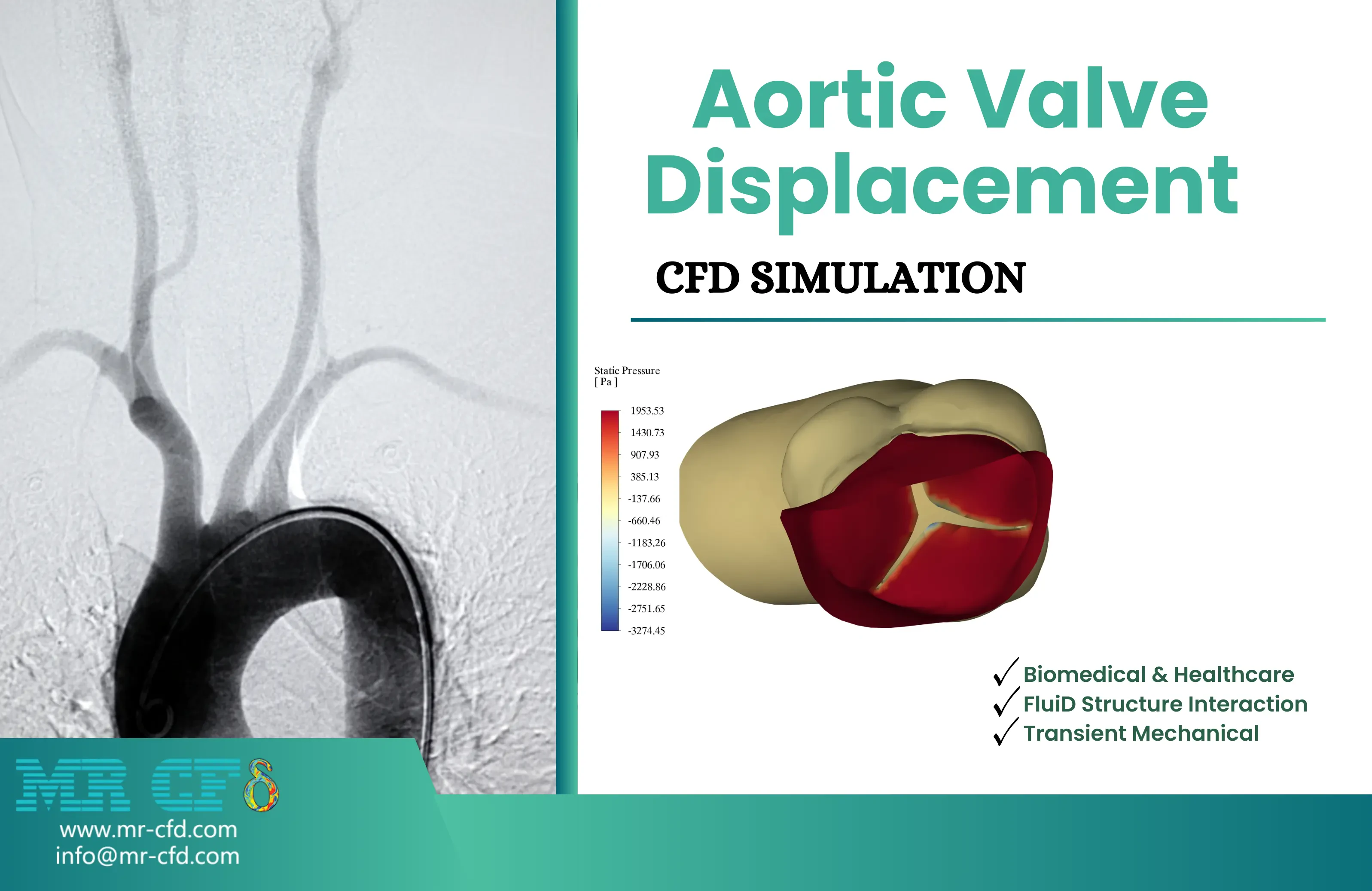
The study conducts a CFD analysis of aortic valve displacement using ANSYS Workbench. The geometry is designed in SpaceClaim based on CT-scan data, with a mesh of 67,926 fluid elements and 627,914 solid elements. The simulation uses a pressure-based transient solver with a laminar flow model. System coupling between Transient Structural and Fluent enables analysis of valve leaflet movement and blood flow interaction. Results show pressure gradients, velocity patterns, wall shear stress distribution, and valve leaflet deformation.
The Biomedical and Healthcare GOLDEN Training Package is MR CFD’s most complete ANSYS Fluent collection for medical and life-science simulation, with 40+ hands-on tutorials that take you from first setup to advanced, publication-level modeling. Built for professors, CEOs, research teams, and engineering firms, it gives your group a ready-to-use project library, so new members become productive quickly and ongoing work starts from proven templates.
Cardiovascular and hemodynamics: Simulate blood flow in clogged arteries, arterial occlusion, arterial and coronary bifurcations, aortic non-Newtonian pulsating flow, veins, and arteries with porous walls. Progress to fluid-structure interaction (FSI) for flexible vessels and lumen walls, aortic valve displacement, arterial stents, balloon pumping inside the aorta, and coronary artery bypass graft anastomoses with paper validation. Quantify wall shear stress, oscillatory shear index (OSI), and relative residence time (RRT).
Respiratory flow and drug delivery: Model asthma spray inhalers and injection into the lungs, and nanoparticle injection using the discrete phase model (DPM).
Airborne transmission and infection control: Analyze virus spread from coughs, sneezes, and talking in open air, cars, airplanes, elevators, classrooms, coffee shops, and banks. Evaluate face shields and plastic barriers, and measure airborne risk.
Clinical facilities: Optimize operating room HVAC, ICU ventilation, clean room breathing, and hospital airflow and pathogen dispersion.
Therapy, imaging, and biotech: Explore hyperthermia therapy of cancer tissue, Monte Carlo radiation for CT scans, microfluidic droplet generation (VOF), fluidized bed bioreactors, and drug crystallization with the population balance model (PBM).
What’s included:
Step-by-step exercises with complete setup, meshing, solving, and post-processing
Projects spanning beginner, intermediate, and advanced levels
1-year technical support
3-month HPC access
Lifetime updates
Backed by 15 years of MR CFD simulation expertise
Whether you’re preparing a research paper, validating a medical device, or building in-house CFD capability, this package gives you the knowledge, tools, and confidence to deliver faster and stay ahead of the competition.