

Aerodynamics & Aerospace Online Courses
Here's every CFD online course related to Aerodynamics & Aerospace category.
Price: $29
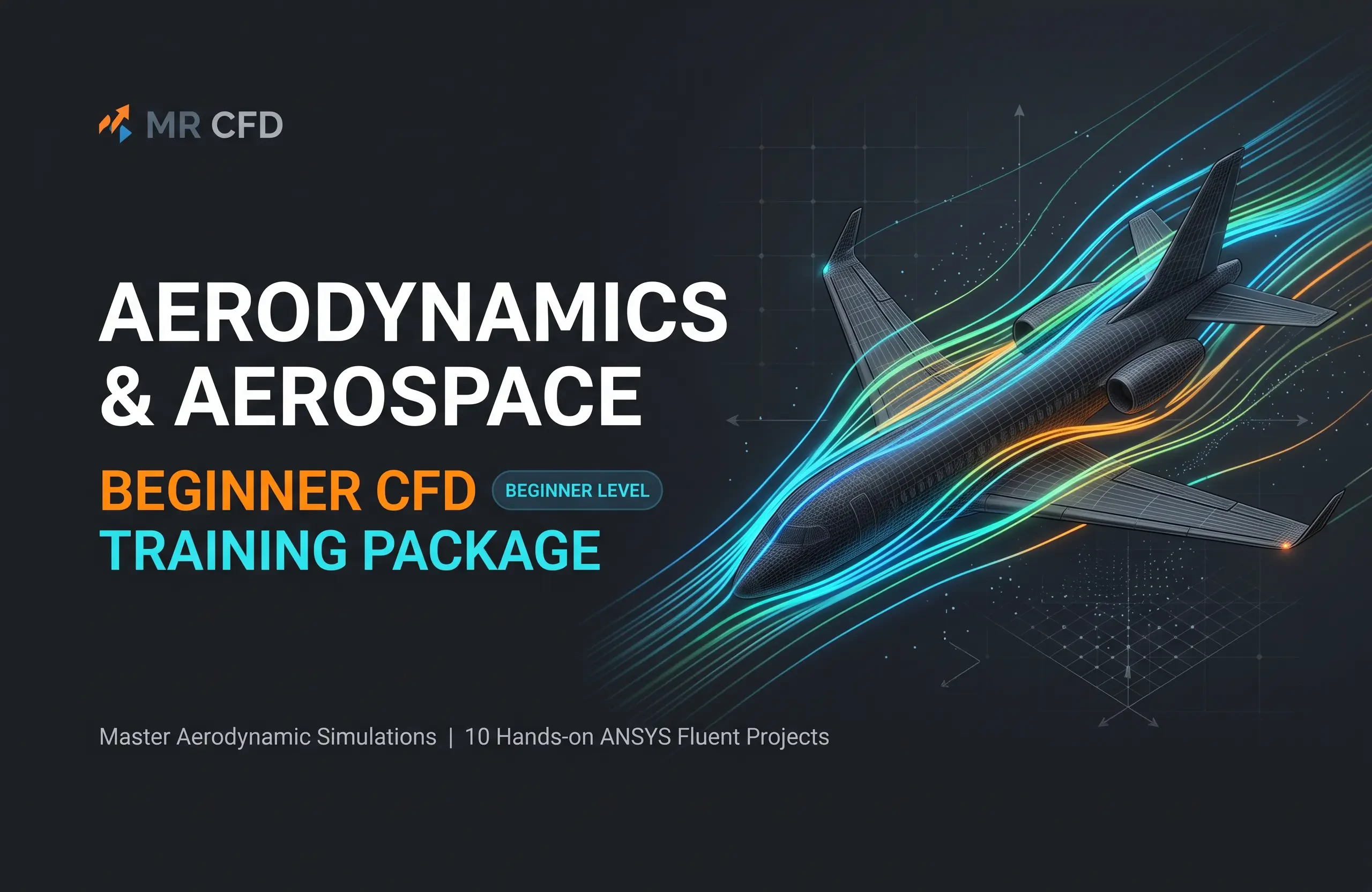
This package uses 10 aerospace-focused ANSYS Fluent projects as a vehicle for building broad, transferable CFD competency. Beyond aerodynamic fundamentals, learners are exposed to a range of core CFD disciplines — including heat transfer, compressible flow, and moving reference frame modeling — giving beginners a cross-disciplinary foundation that extends well past aerospace applications alone.
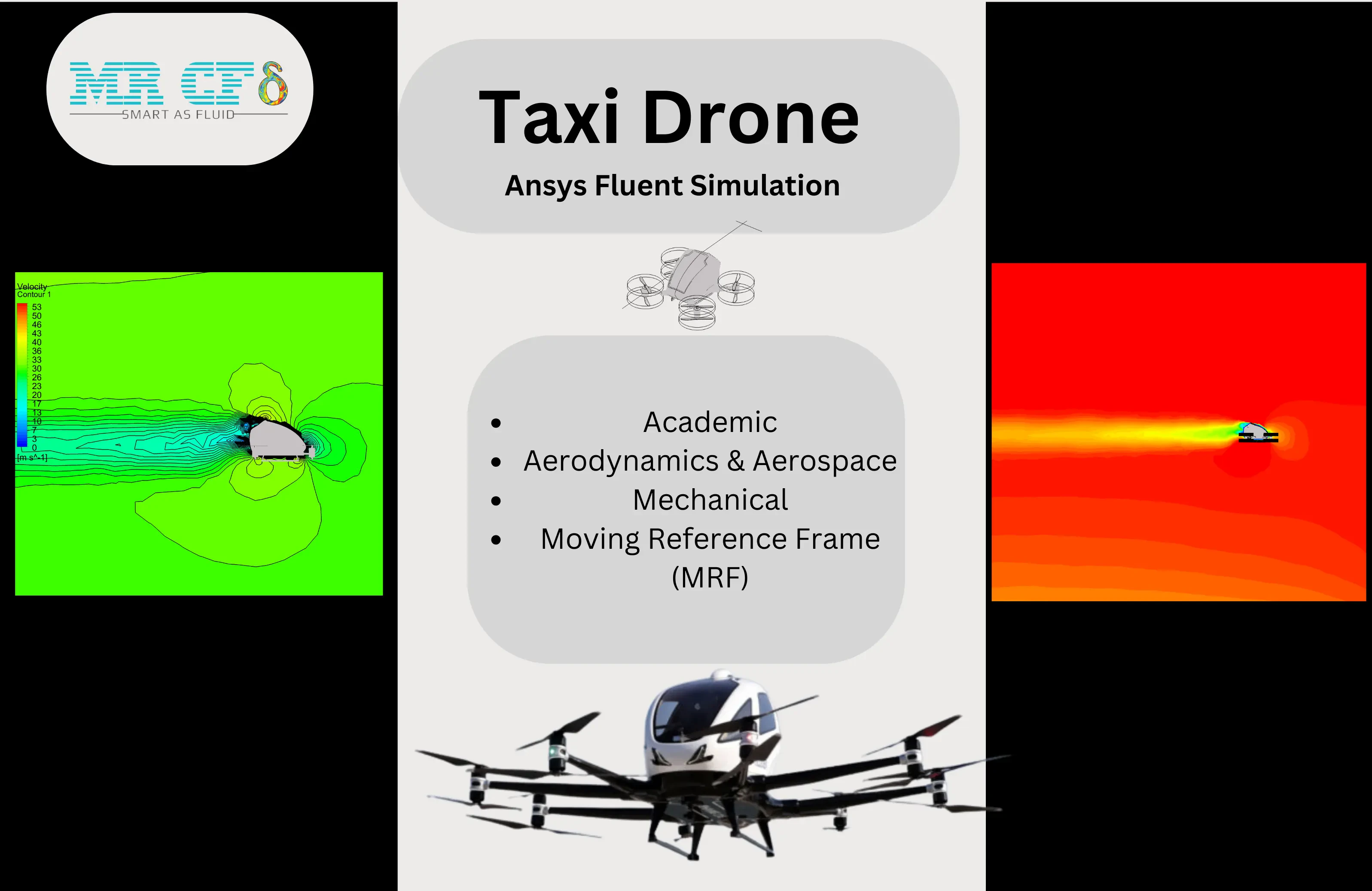
Taxi Drone, Ansys Fluent Simulation
Intermediate
Price: $319
Taxi Drone Ansys Fluent Simulation involves using advanced CFD software to analyze the aerodynamic performance of urban air mobility vehicles The geometry of the taxi drone was designed using ANSYS SpaceClaim , The mesh was generated using ANSYS Meshing, resulting in a total of 2,829,977 elements The velocity inlet was set to 30 m/s with an angle of attack of 5 degrees. The rotational speed of the blades was configured with MRF method at 5000 RPM, with the upper and lower blades rotating in opposite directions.
Price: $56
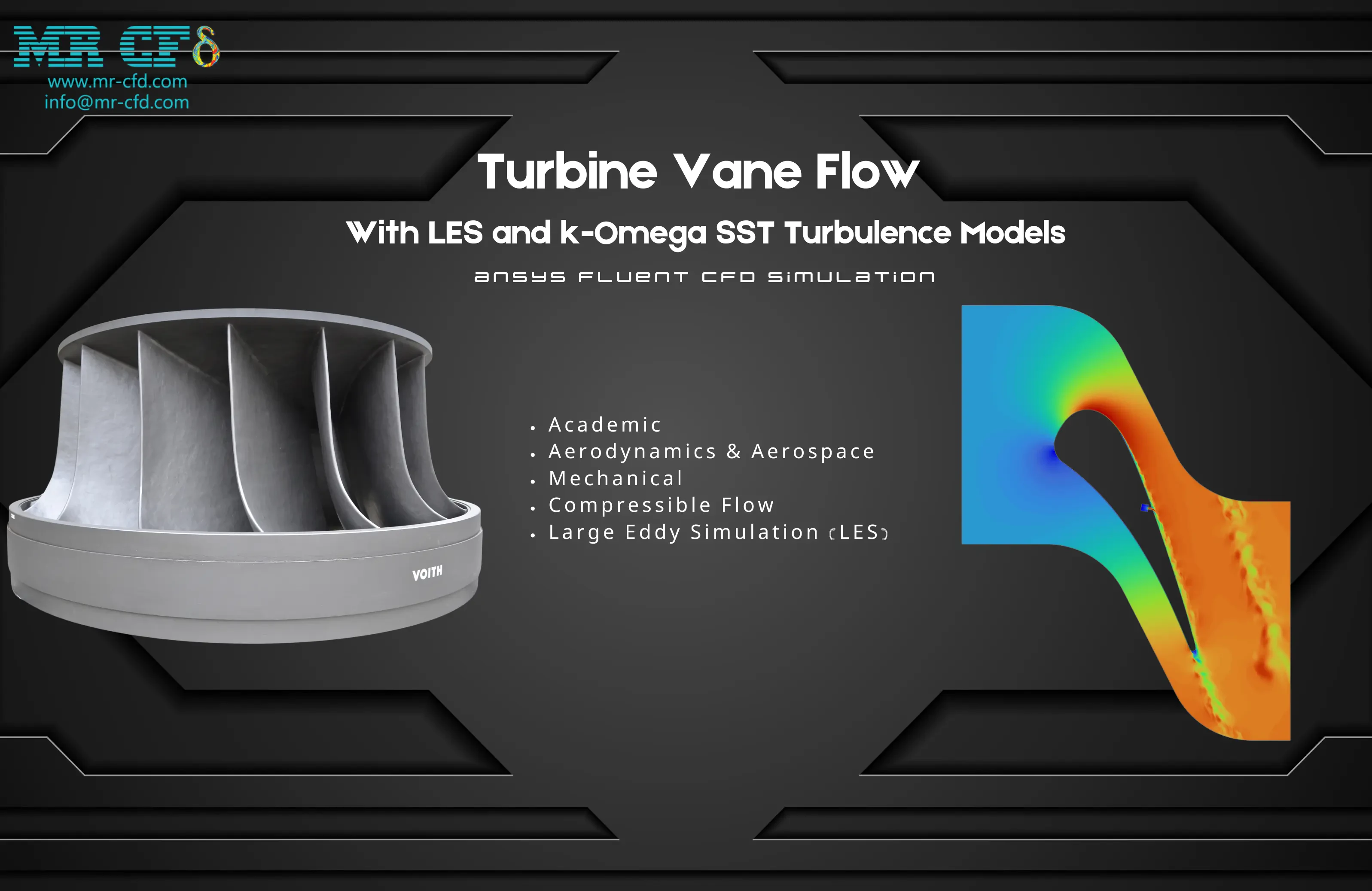
This study investigates the aerodynamic performance of a turbine vane using CFD simulations with two different turbulence models The simulations were conducted using ANSYS Fluent, comparing the k-Omega SST and Large Eddy Simulation (LES) turbulence models The geometry of the turbine vane was created using ANSYS Design Modeler. The computational domain was then discretized using ANSYS Meshing, resulting in a high-resolution structured mesh of 12,634,415 elements
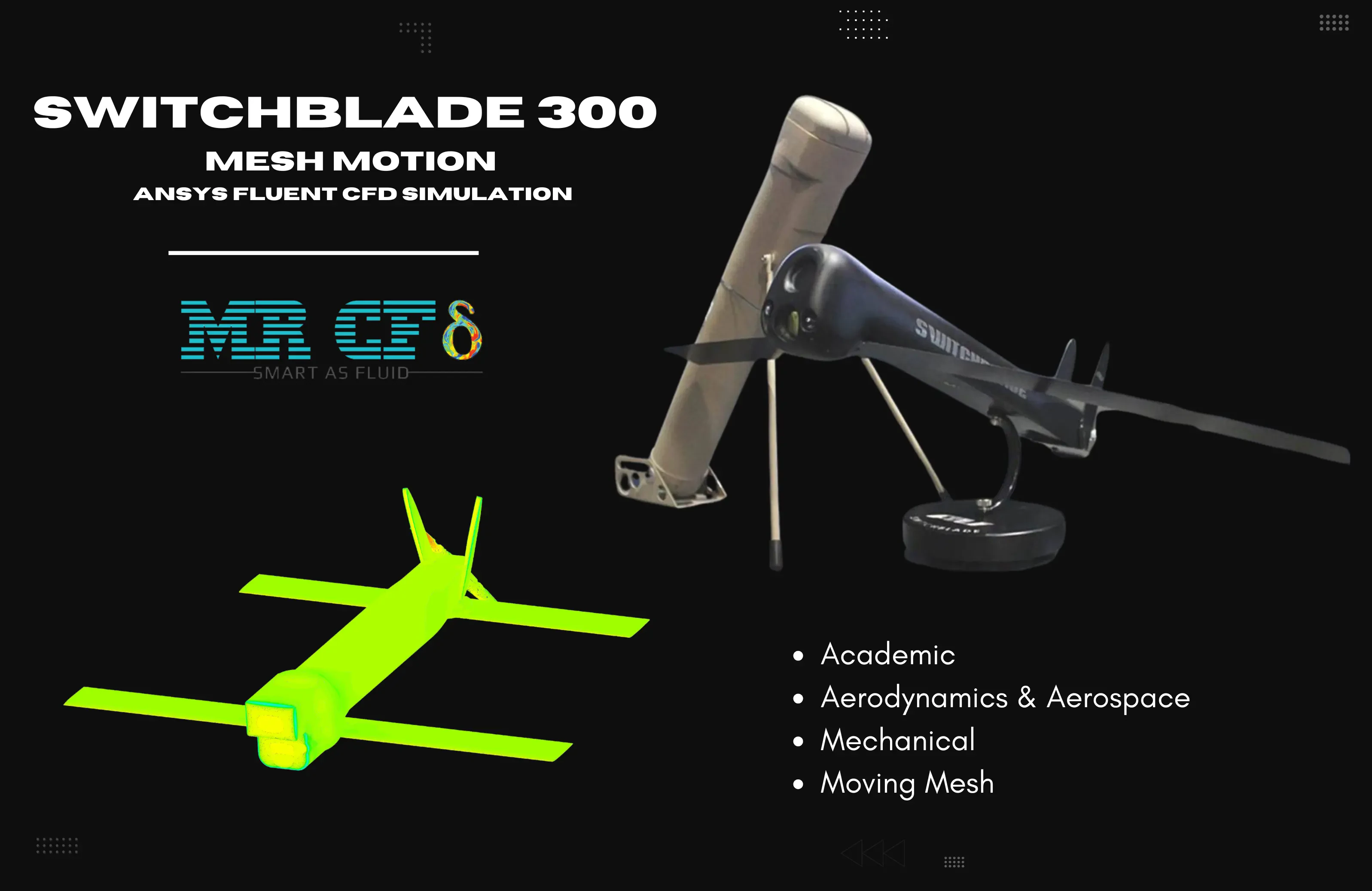
Switchblade 300 Drone, Transient Ansys Fluent CFD Simulation
Intermediate, Advanced
Price: $20
This report discusses the CFD simulation conducted for the Switchblade 300 using ANSYS Fluent software The geometry of the Switchblade 300 was created using SpaceClaim Initially, Using ANSYS Meshing, a non-conformal mesh with approximately 40 million tetrahedral cells was generated, after that We decided to change the mesh type to polyhedral in Ansys fluent to decrease the number of mesh elements from 40,000,000 to 7,000,000 The setup included a velocity inlet of 28.05 m/s, an angle of attack of 5 degrees, and a rotational speed of 5000 RPM
Price: $32
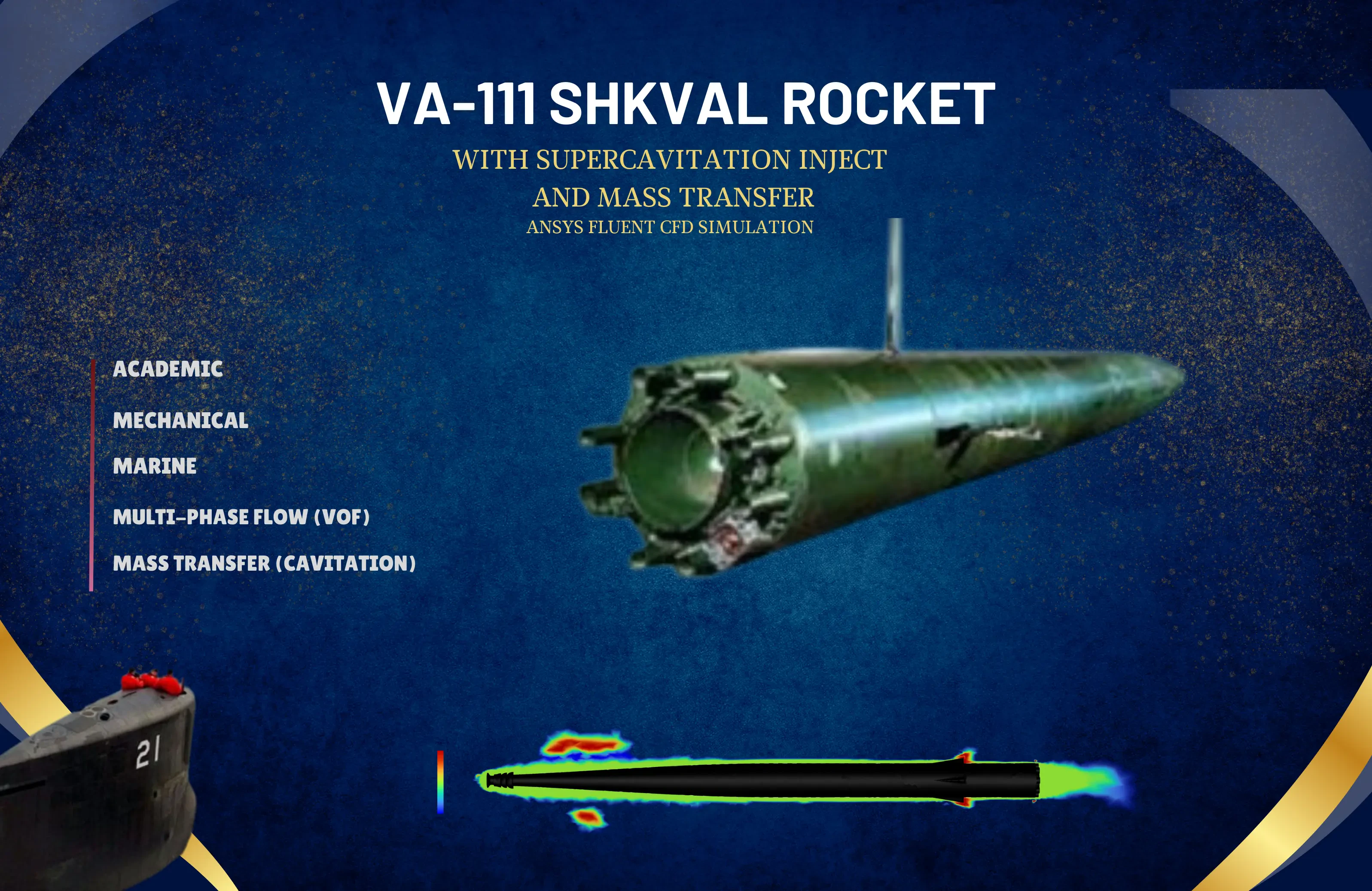
This study extends the previous simulation of the VA-111 Shkval rocket using ANSYS Fluent software by incorporating mass transfer to capture the cavitation effects The geometry is designed in SpaceClaim, and the meshing is performed using Fluent Meshing; the element number equals 257,000 polyhedral cells. The simulation uses the Pressure-based and VOF Multiphase model to define a two-phase flow To capture the cavitation effects, the Zwart-Gerber-BelAmri model is enabled
Price: $649
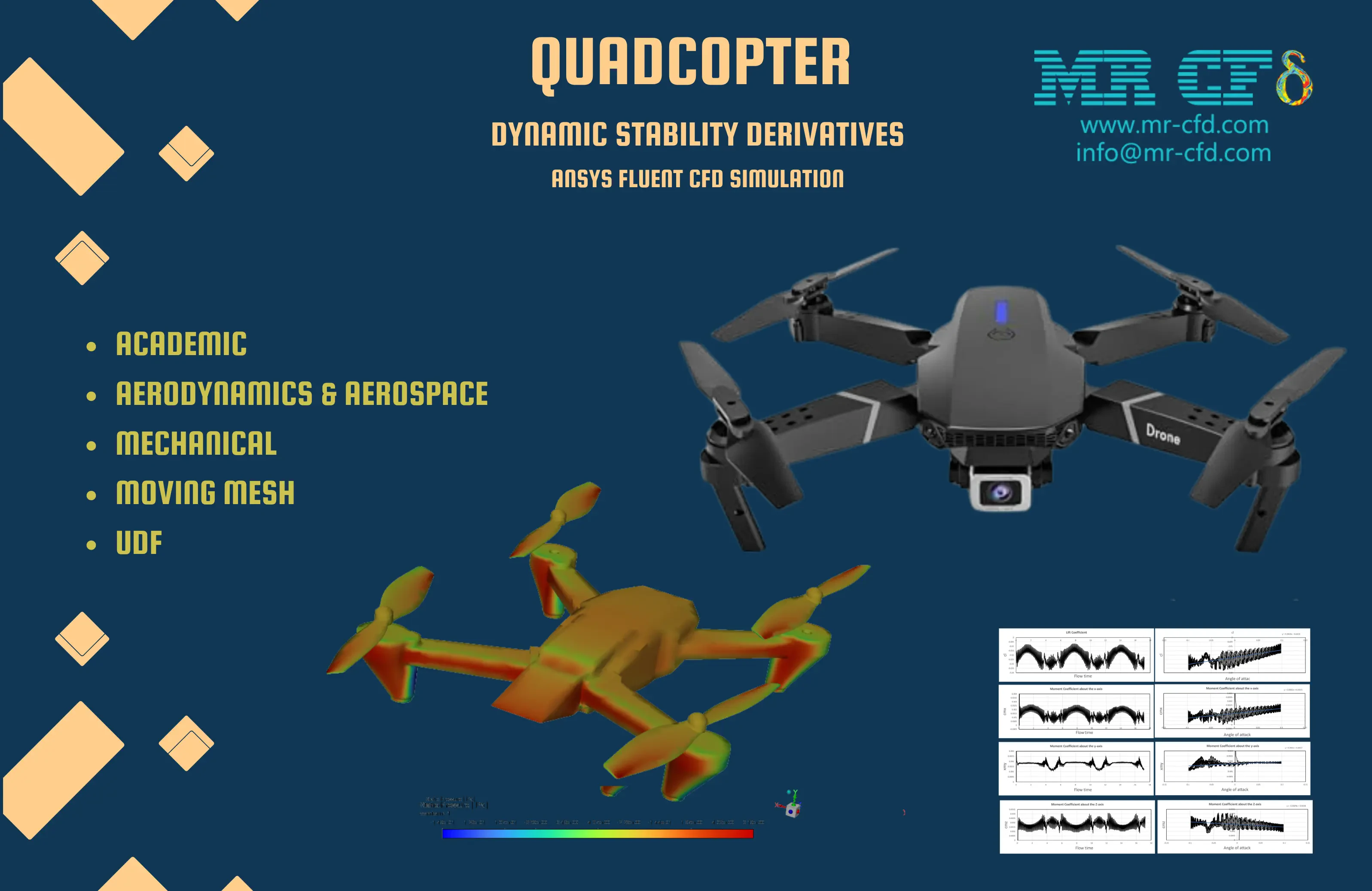
The problem numerically simulates the Dynamic Stability Derivatives of Quadcopter using ANSYS Fluent We designed the 3-D symmetry model using the SpaceClaim We mesh the model with ANSYS Meshing software, and the element number equals 1,710,236. We perform this simulation as unsteady (Transient). We use the Mesh Motion and UDF files to define the rotational and oscillation motion of the Quadcopter and blades.
Price: $31.50
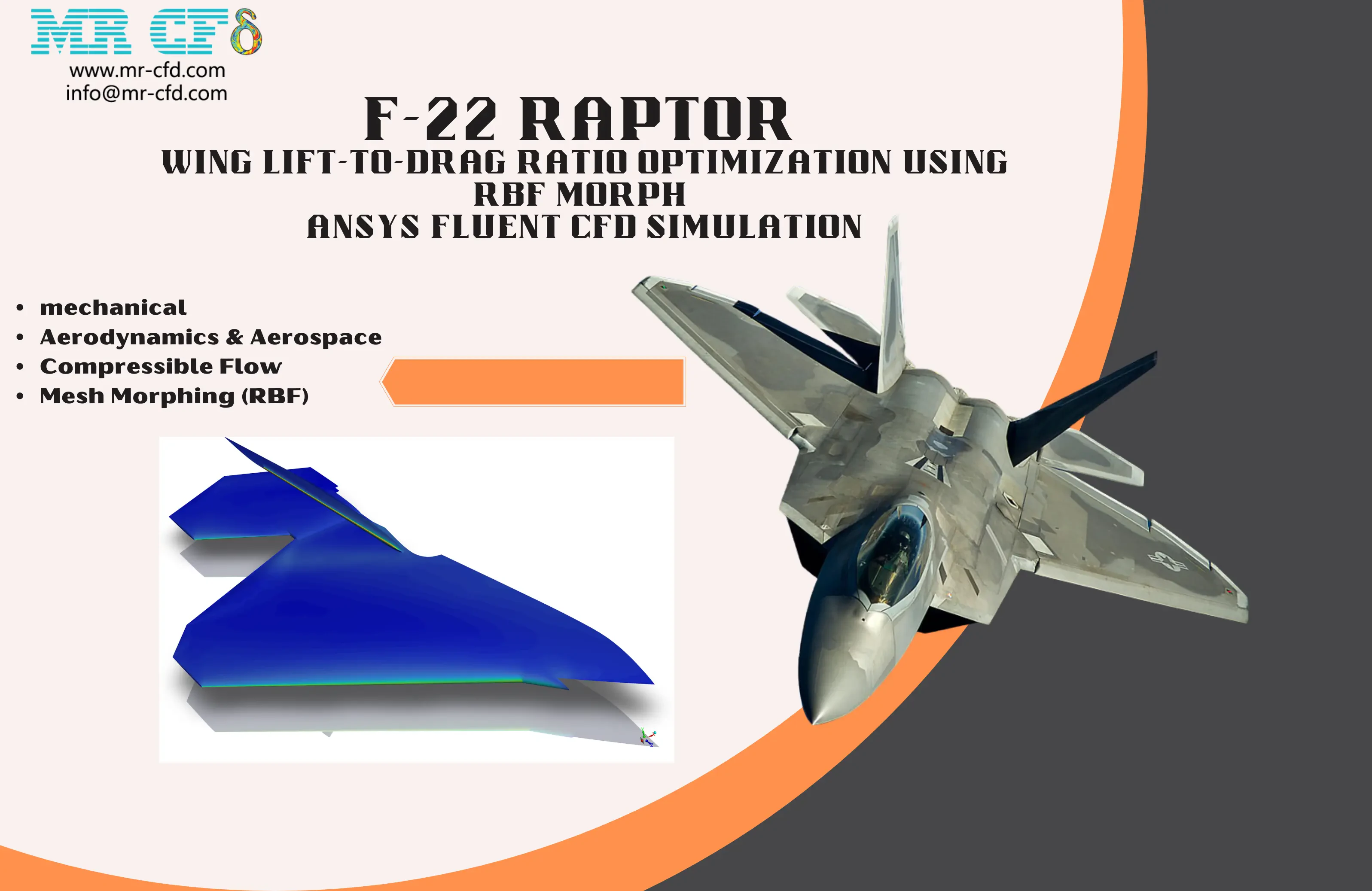
The problem numerically simulates the Lockheed Martin F-22 Raptor using ANSYS Fluent The geometry is designed in SpaceClaim, and the meshing is performed using fluent Meshing. The mesh type is polyhedral, and the element number equals 4,989,000. We aim to Maximize the Lift-to-Drag Ratio of wings. We use the Adjoint Solver to analyze the Shape Sensitivity. The Design Optimization is performed with the Gradient-based Radial Basis Function (RBF) used to apply Mesh Morphing.
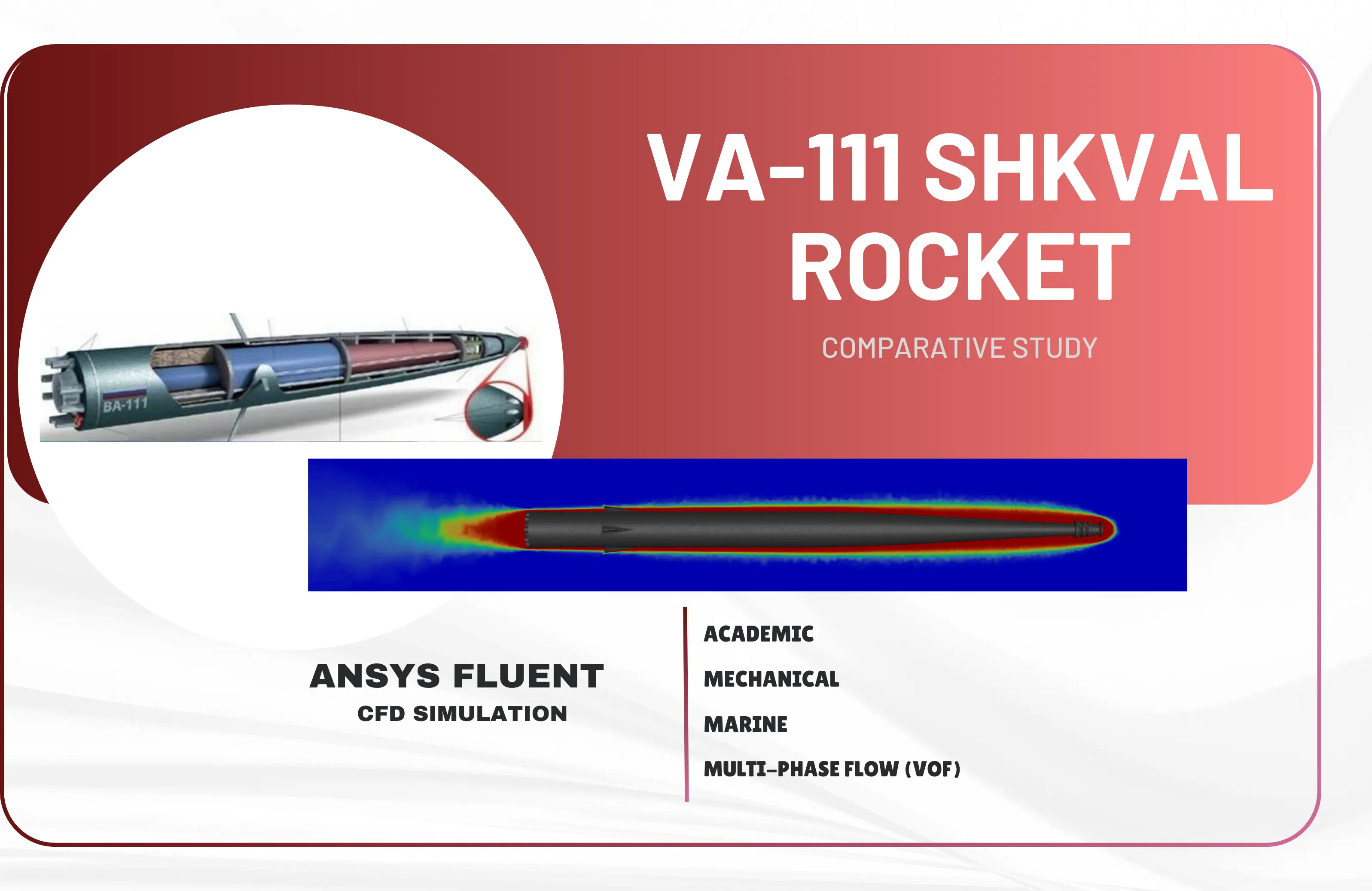
VA-111 Shkval Rocket Performance Comparative Study with and without Supercavitation injection
Advanced
Price: $14
This problem simulates a VA-111 Shkval rocket using ANSYS Fluent software. The geometry is designed in SpaceClaim, and the meshing is performed using Fluent Meshing; the element number equals 257,000 polyhedral cells. The simulation uses the Pressure-based and VOF Multiphase model to define a two-phase flow. The turbulence model is set to SST k-ω.
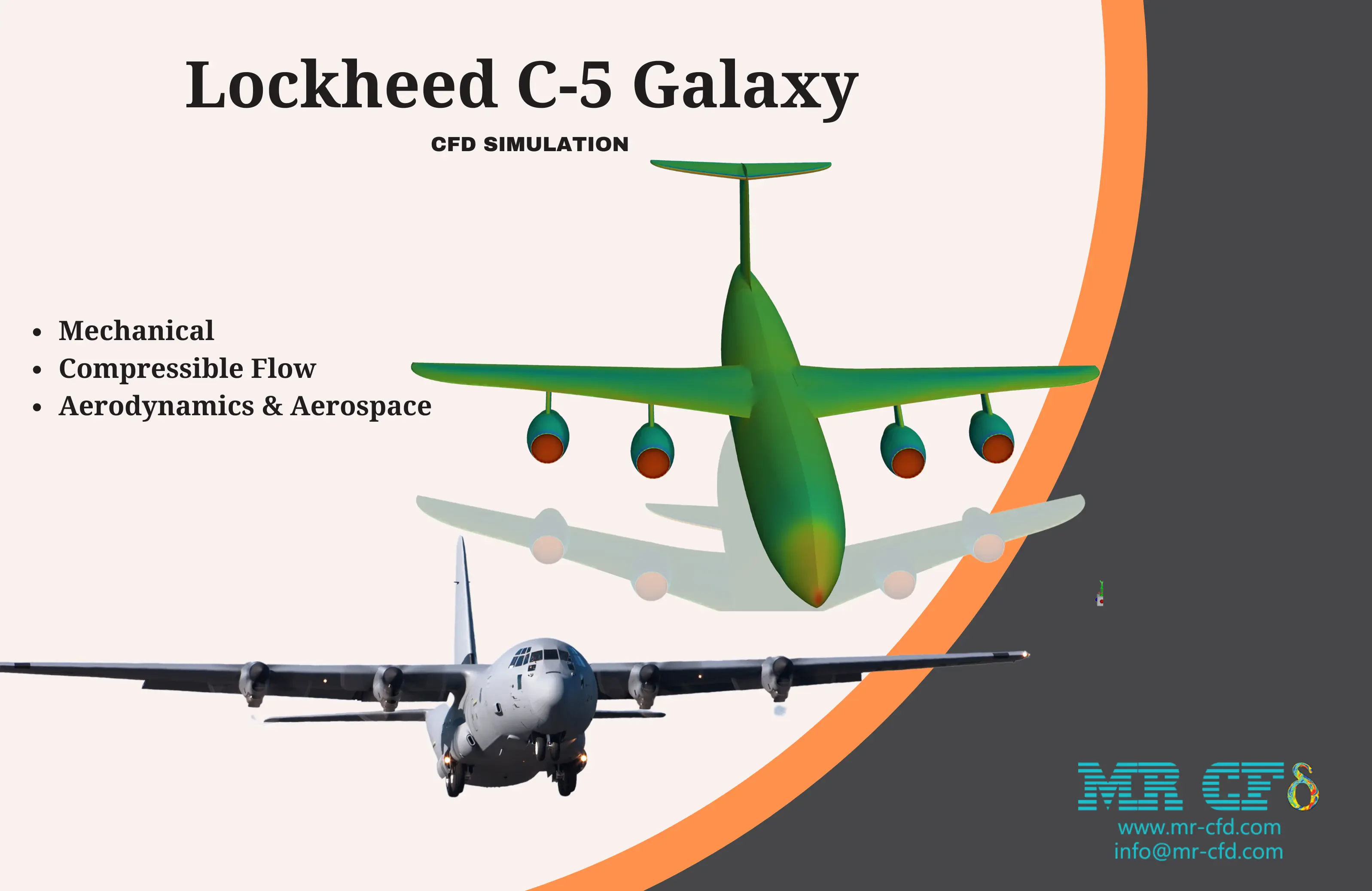
Lockheed C-5 Galaxy Aerodynamic CFD Simulation
Beginner, Intermediate
Price: $10
This problem simulates a Lockheed C-5 Galaxy using ANSYS Fluent software. The geometry is designed in SpaceClaim, and the meshing is performed using fluent Meshing with approximately 14 million cells. The simulation is carried out using the pressure-based solver. The turbulence model is set to Realizable k-ε.