

Aerodynamics & Aerospace Online Courses
Here's every CFD online course related to Aerodynamics & Aerospace category.
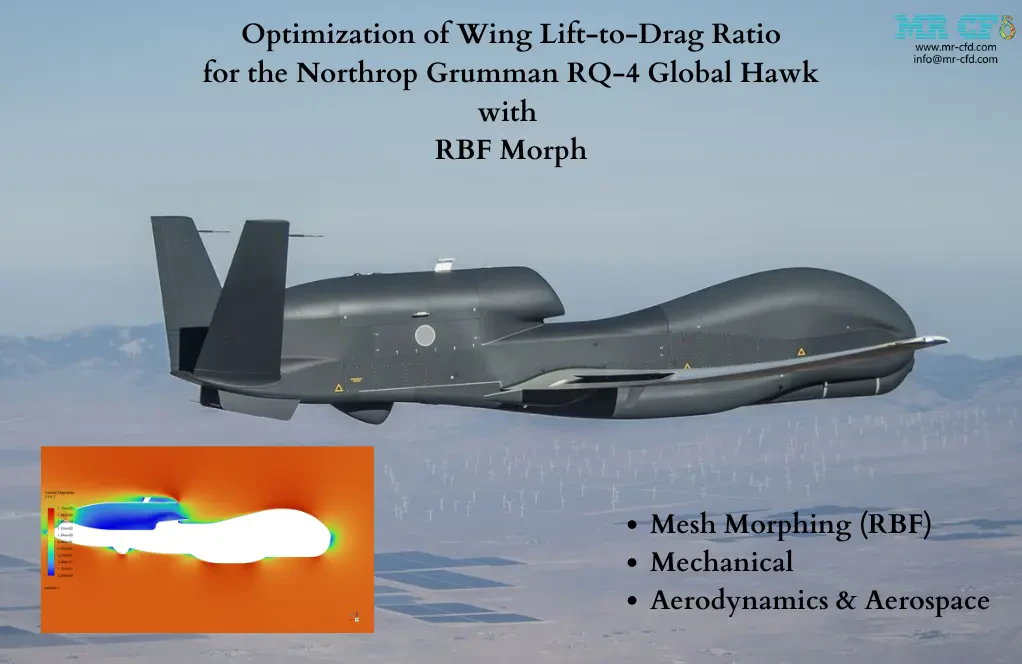
Optimization of Wing Lift-to-Drag Ratio for the Northrop Grumman RQ-4 Global Hawk with RBF Morph
Advanced
Price: $225
The problem numerically simulates the Northrop Grumman RQ-4 Global Hawk using ANSYS Fluent The geometry is designed in SpaceClaim, and the meshing is performed using fluent Meshing. The mesh type is polyhedral, and the element number equals 2,063,629. We aim to Maximize the Lift-to-Drag Ratio of wings. We use the Adjoint Solver to analyze the Shape Sensitivity. The Design Optimization is performed with the Gradient-based The Radial Basis Function (RBF) is used to apply Mesh Morphing.
Price: $319
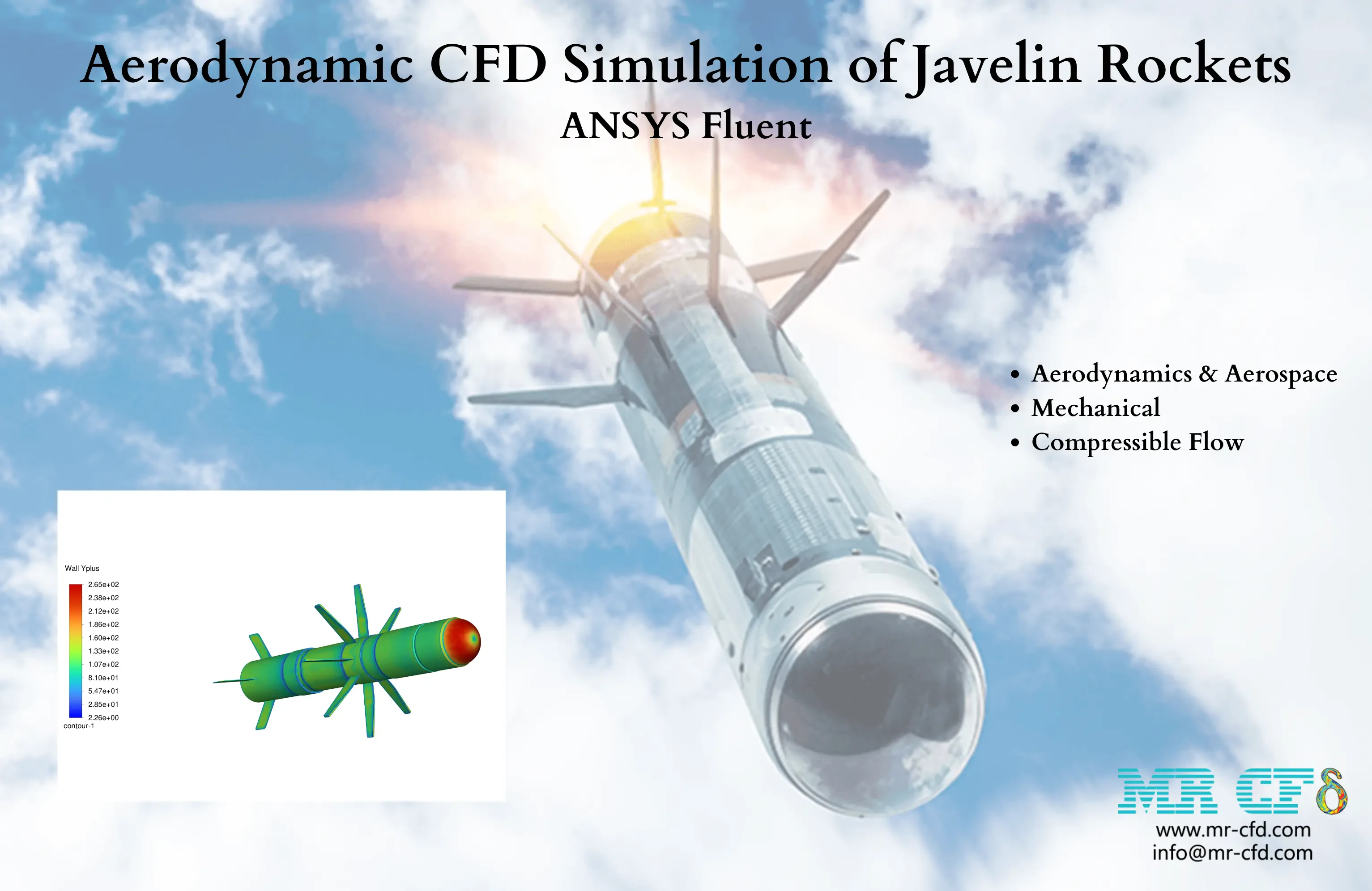
This problem simulates a javelin rocket using ANSYS Fluent software. The geometry is designed in SpaceClaim, and the meshing is performed using ANSYS Meshing. The simulation is carried out using the density-based solver. The turbulence model is set to Realizable k-ε.
Price: $30
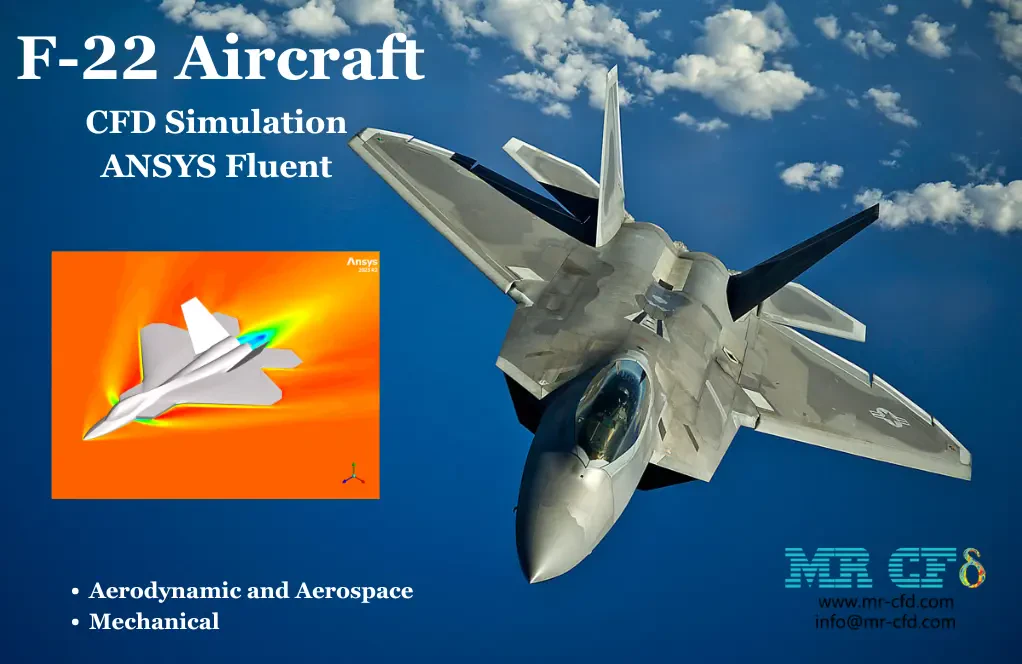
This problem simulates a F-22 aircraft using ANSYS Fluent software. The geometry is designed in SpaceClaim, and the meshing is performed using FLUENT Meshing. The simulation is carried out using the density-based solver. The turbulence model is set to k-ε Realizable.
Price: $15
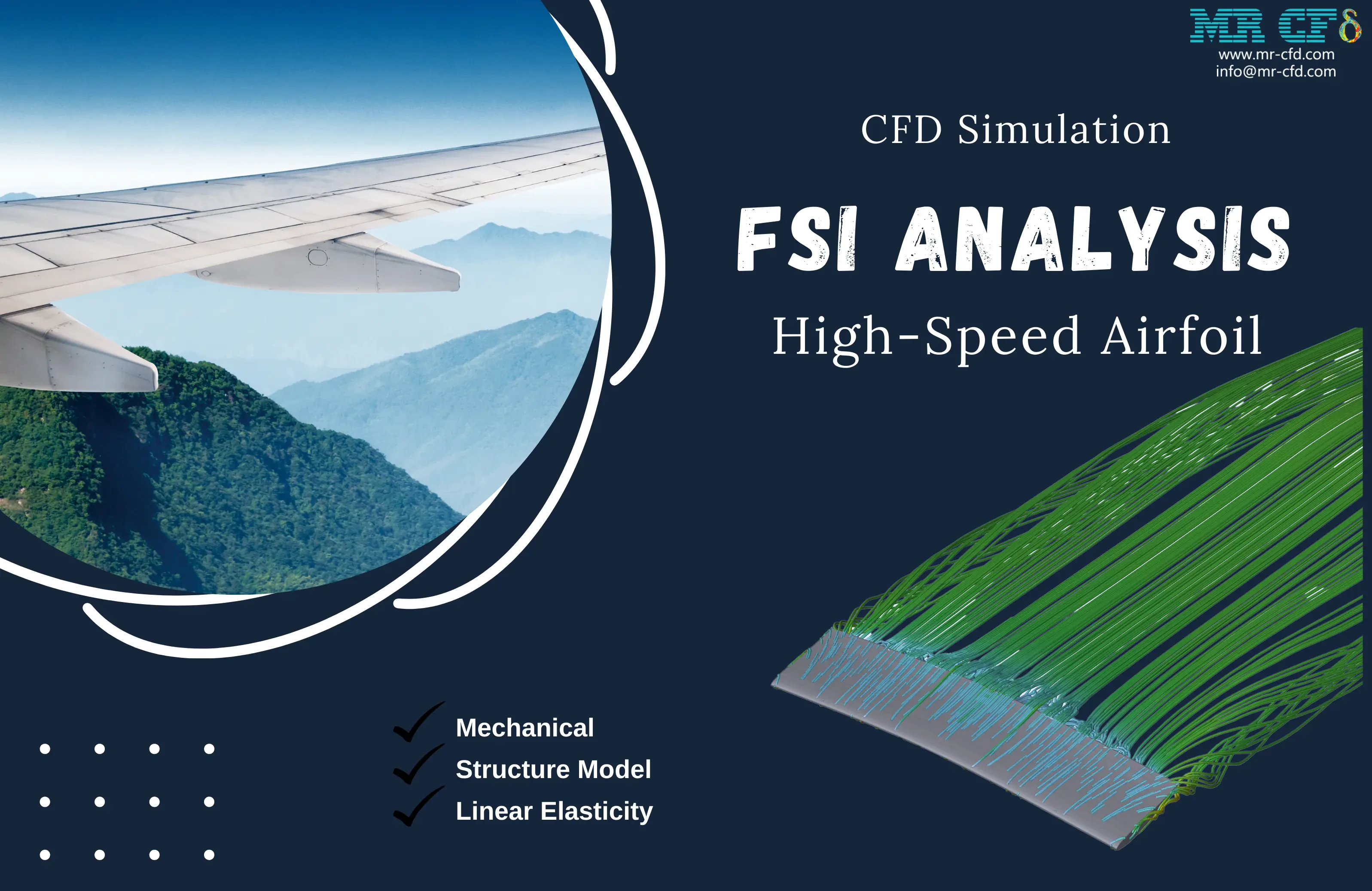
This project simulates the Fluid-Structure Interaction (FSI) of a high-speed airfoil using ANSYS Fluent software. The airfoil geometry is designed in ANSYS Design Modeler. ANSYS Meshing is used to generate a high-quality mesh with 2,398,833 elements. In this study, the complex flow behavior and structural response of the airfoil are simulated using a pressure-based transient solver and the Realizable k-epsilon turbulence model. The pressure distribution, velocity patterns, and airfoil displacement under high-speed conditions are well modeled in this project.
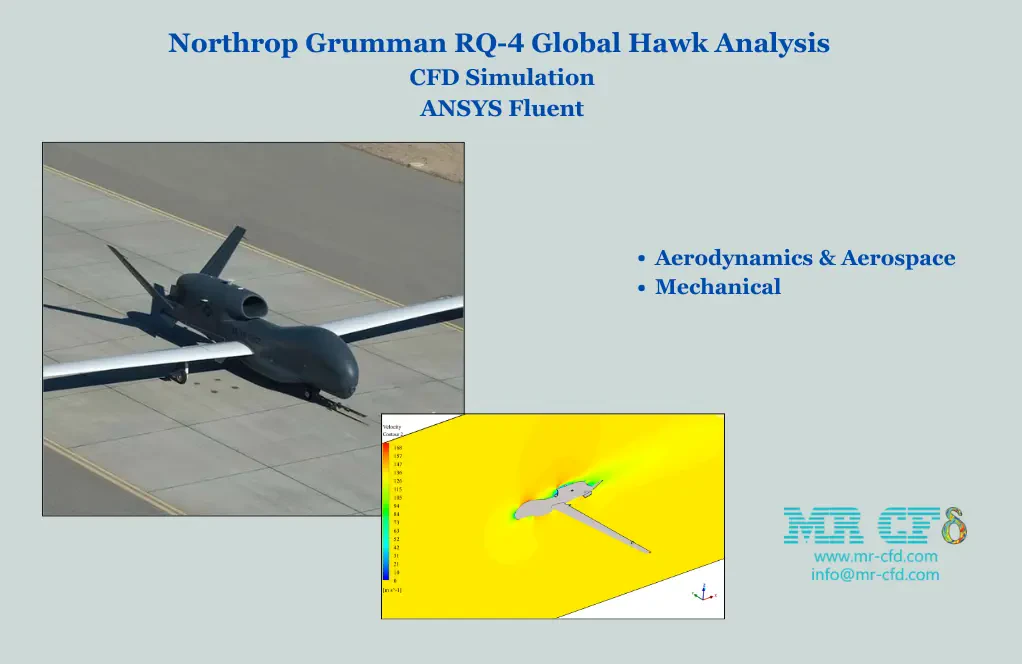
Northrop Grumman RQ-4 Global Hawk Analysis CFD Simulation, ANSYS Fluent
Beginner, Intermediate
Price: $219
This study aims to investigate the aerodynamic performance of a Grumman RQ-4 Global Hawk using ANSYS Fluent. The Global Hawk geometry was modelled using SpaceClaim then imported into ANSYS Fluent for meshing consisting 3,764,695 elements. The simulation used a pressure-based solver.
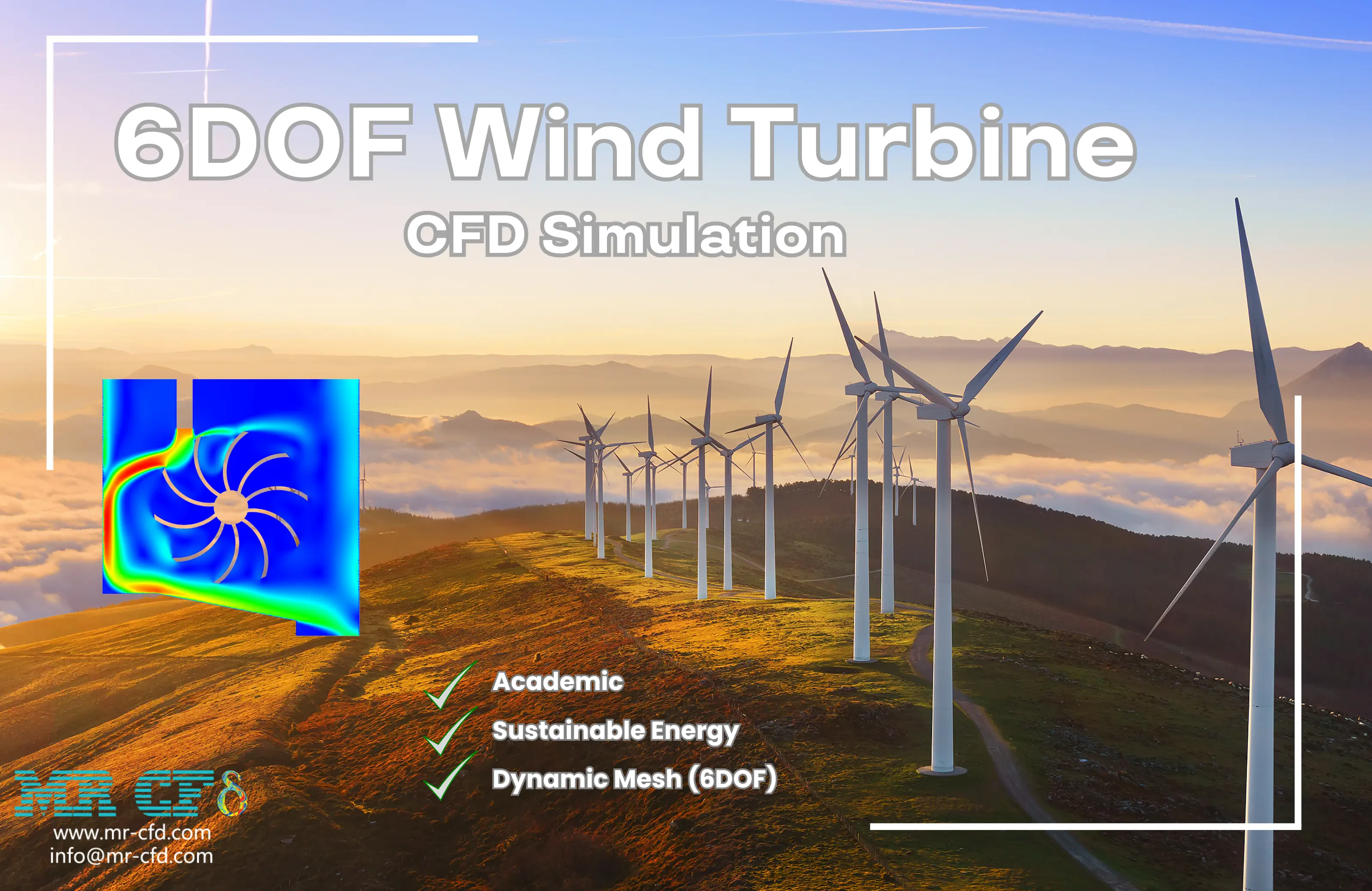
6DOF Wind Turbine CFD Simulation
Intermediate, Advanced
Price: $14
This study investigates the airflow dynamics of a 2D wind turbine using CFD analysis in ANSYS Fluent. The 2D geometry was created in ANSYS Design Modeler and meshed using ANSYS Meshing, resulting in a tetrahedral mesh of 60,912 elements. The simulation utilizes a dynamic mesh feature with remeshing and smoothing methods, coupled with a Six DOF (Degree of Freedom) model for turbine rotation. A transient, pressure-based solver captures time-dependent flow characteristics. The simulation examines airflow patterns, velocity distributions, and turbine performance over multiple time steps, visualized through velocity magnitude contours.
Price: $14
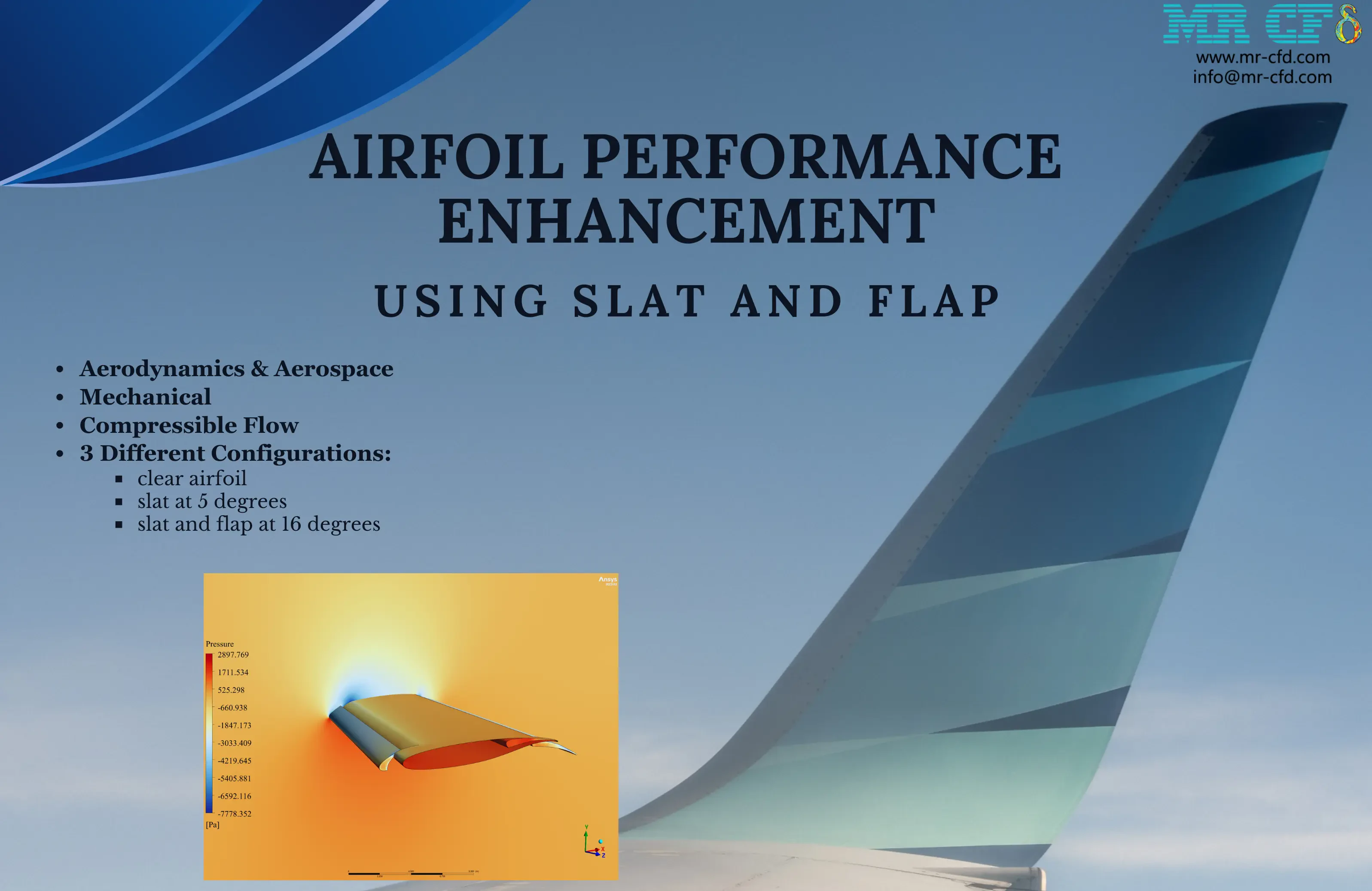
This project investigates the aerodynamic performance enhancement of an airfoil through CFD analysis in ANSYS Fluent. Three configurations are studied: a clean airfoil, an airfoil with a slat, and an airfoil with both slat and flap. The geometry was designed in ANSYS Design Modeler and meshed using ANSYS Meshing, resulting in approximately 5 million elements. The simulations use a density-based solver to account for compressibility effects. The study demonstrates significant improvements in lift-to-drag ratio, particularly when both slat and flap are employed.
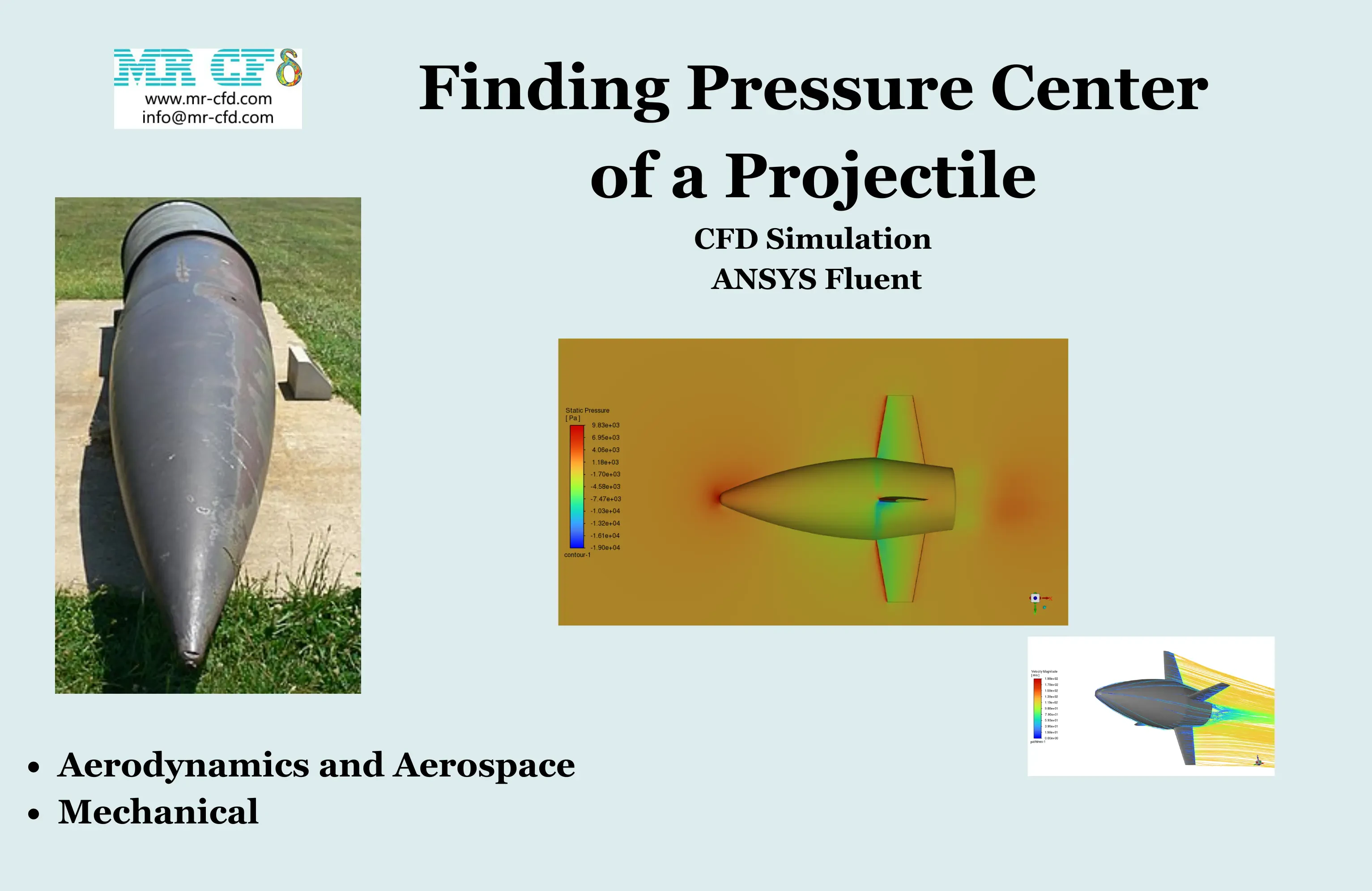
Finding Pressure Center of a Projectile CFD Simulation, ANSYS Fluent
Intermediate, Advanced
Price: $6
In this project, the flow around a projectile is modeled using ANSYS Fluent. The geometry was created in SpaceClaim, and a mesh consisting of 2,871,393 elements was generated using ANSYS Meshing. In this project we are going to find the center of pressure and calculate the lift force on the projectile .
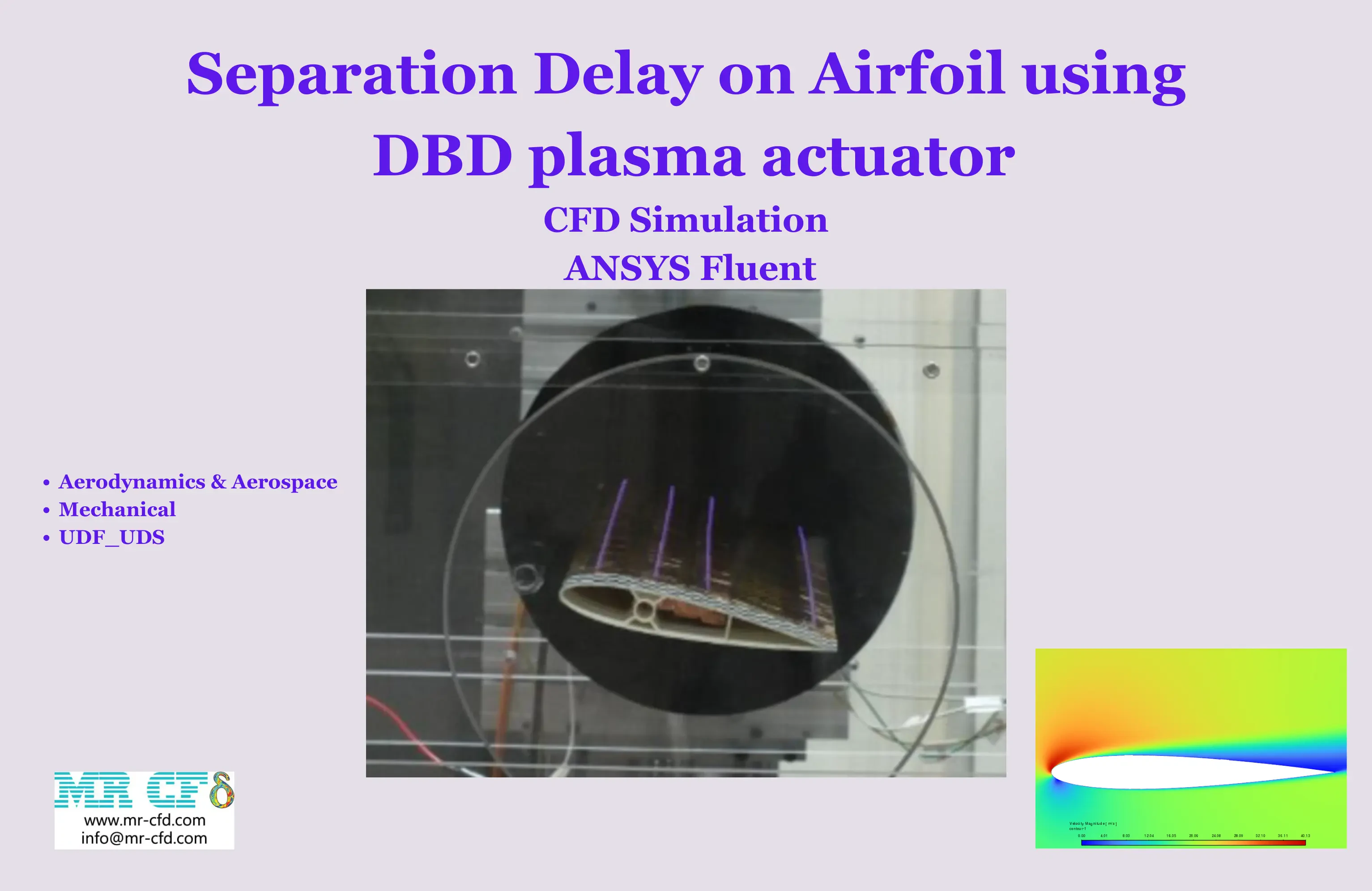
Separation Delay on Airfoil Using DBD plasma actuator, ANSYS Fluent
Intermediate, Advanced
Price: $30
In this project, the electrical current caused by the electrical potential is modeled using ANSYS Fluent. Also, the magnetic field created by the electrical current and its body force is simulated. Three User-Defined Scalars (UDS) are added for calculating the electrical and magnetic properties, and five User-Defined Functions (UDF) are used for the computation of the magnetic equations' source terms, heat release from the electric field, and momentum body forces. The geometry was created in SpaceClaim, and a mesh consisting of 463,701 elements was generated using ANSYS Meshing. The improvement of the flow field in terms of separation on an airfoil NACA 0012 was investigated by using plasma at two velocities and angles of attack.