

Biomedical & Healthcare Online Courses
Here's every CFD online course related to Biomedical & Healthcare category.
Price: $270
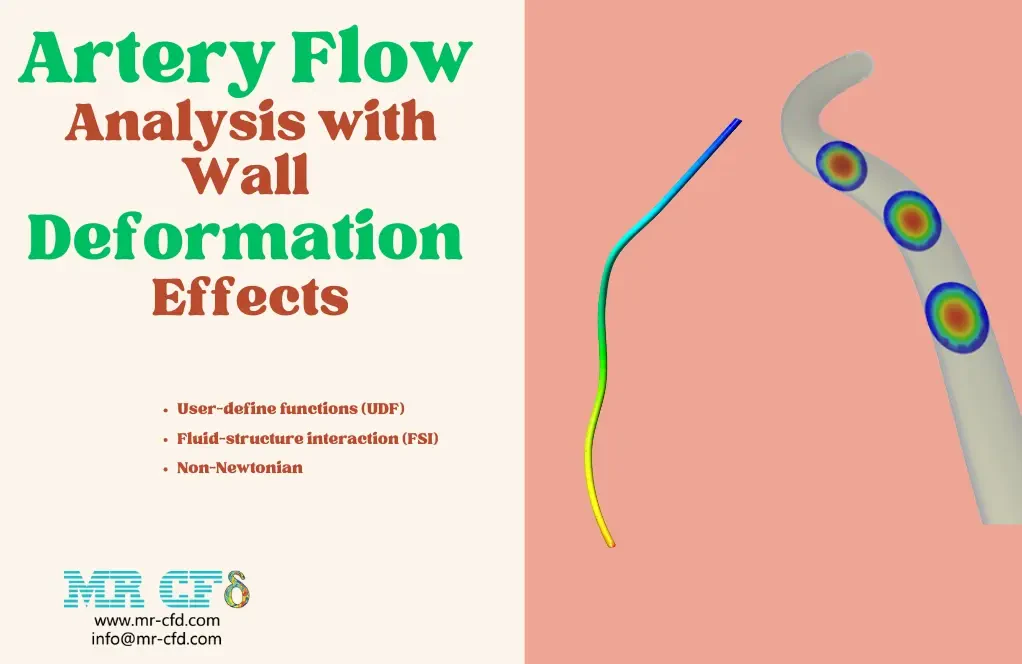
This artery flow project involves the simulation of blood flow in a compliant artery using CFD and FSI techniques in ANSYS. The primary objectives are to validate the simulation against a published study, analyze mesh independence, and investigate the effects of wall compliance and porosity on hemodynamic behavior. The artery geometry is simplified and reconstructed for numerical accuracy, with meshing performed in ANSYS Meshing and flow solved using Fluent. Wall deformation is modeled using the FSI module, while porosity effects are simulated by assigning high-viscosity fluid properties to the vessel wall. Simulations are performed under unsteady, incompressible flow conditions with non-Newtonian blood properties. Key results include time-dependent deformation, wall shear stress, and velocity distributions, with validation confirming a shear stress error below 1% in mesh studies.
Price: $240
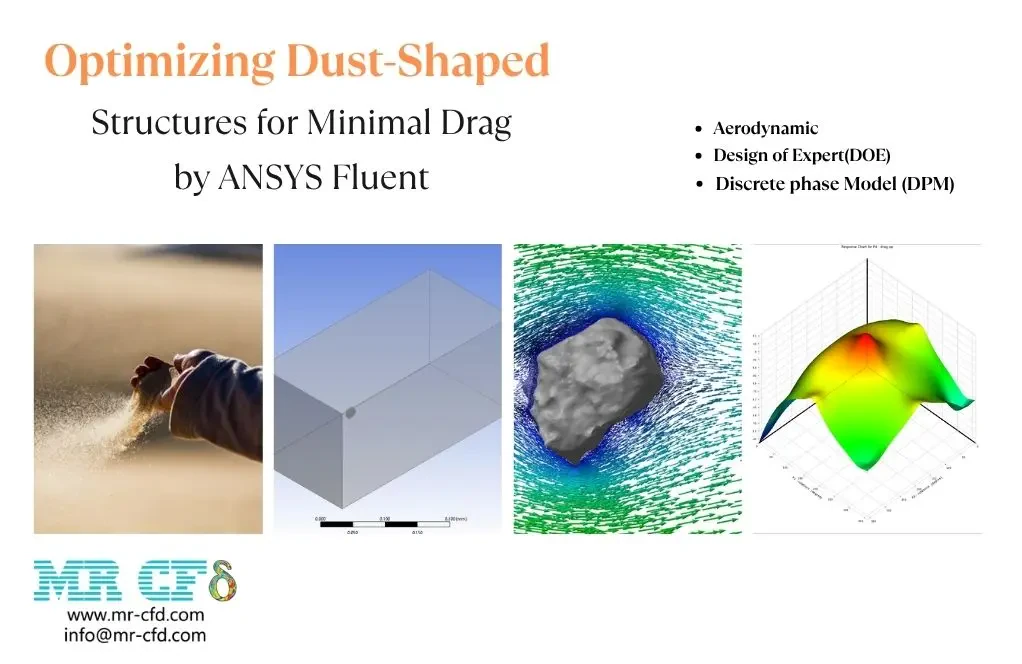
This project simulates and analyzes a dust-shaped geometry exposed to wind using Computational Fluid Dynamics (CFD). The study employs a pressure-based solver with a focus on understanding drag forces resulting from varying inlet velocities and rotational dynamics. The study uses advanced optimization techniques, including Design of Experiment (DOE) and Central Composite Design (CCD) methods, to explore 15 design scenarios. The findings highlight the inlet velocity magnitude as the most influential parameter, aiding in the optimization of aerodynamic efficiency and contributing to enhanced dust simulation accuracy.
Quantitative Distribution and CFD Simulation of Human-Exhaled Particles in Ventilation Systems
Intermediate, Advanced
Price: $120
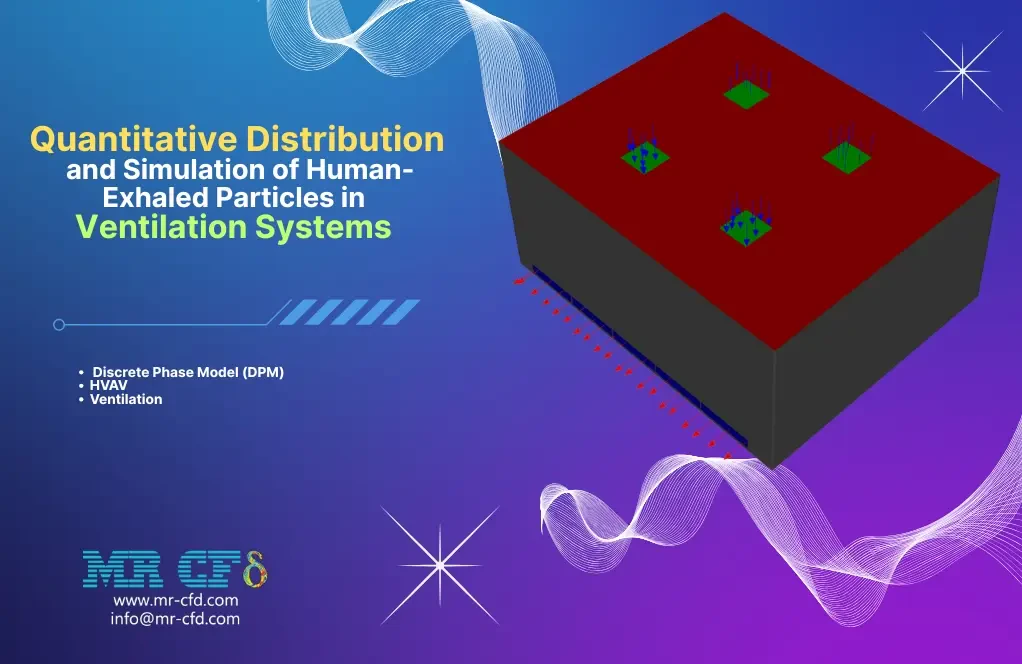
In this project, the quantitative distribution of human exhaled particles in a ventilated room is simulated using ANSYS Fluent software, based on the methodology from Zhijian Liu’s study. The 3-D geometry and mesh were created with user-provided files and consist of 547,820 elements. The simulation accounts for steady-state flow conditions and transitions to solve energy and DPM equations transiently. Airflow dynamics and heat transfer are analyzed using the ideal gas equation to address density variations due to temperature changes. The fan’s operation is modeled through a polynomial pressure jump function.
Hospital Airflow Dynamics: A CFD Study on Ventilation Efficiency and Pathogen Dispersion
Intermediate
Price: $270
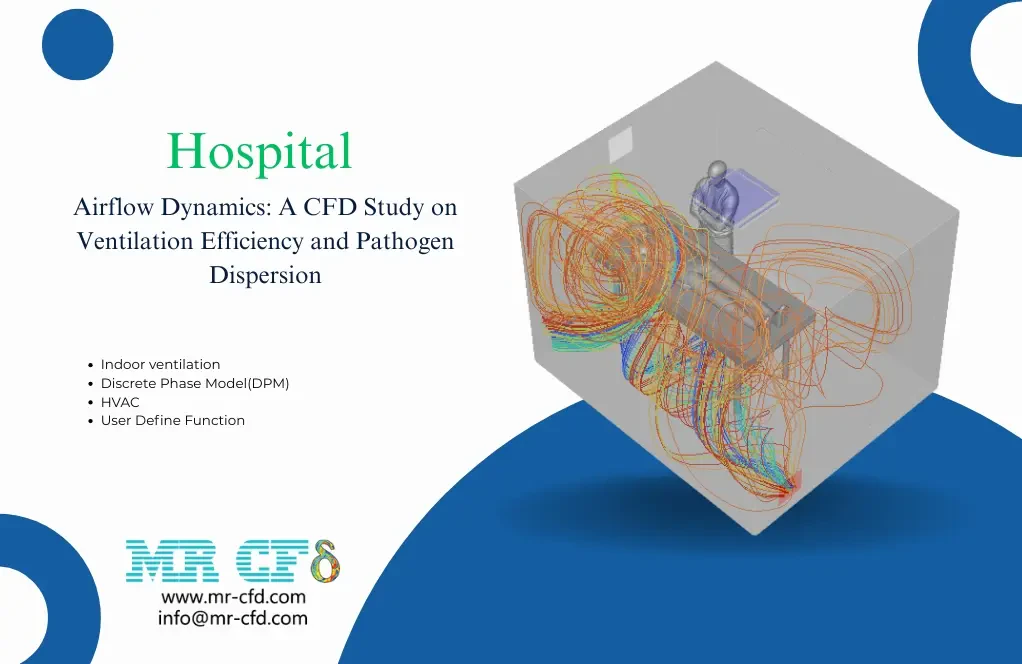
The project aims to evaluate and enhance hospital room ventilation systems to effectively control aerosol dispersion, a crucial aspect of maintaining a safe environment within healthcare facilities. Three scenarios are analyzed: sneezing, coughing, and breathing, each with varying particle injection velocities and mass flow rates, to observe their effects on airflow patterns and particle trajectories. The simulation highlights that current ventilation setups exhibit limitations, as particles often become trapped or follow circular paths, indicating areas for improvement in ventilation strategy. Results suggest optimizing airflow by adjusting inlet and outlet conditions and improving flow patterns to enhance particle escape and overall air quality, ensuring safety and comfort in hospital settings.
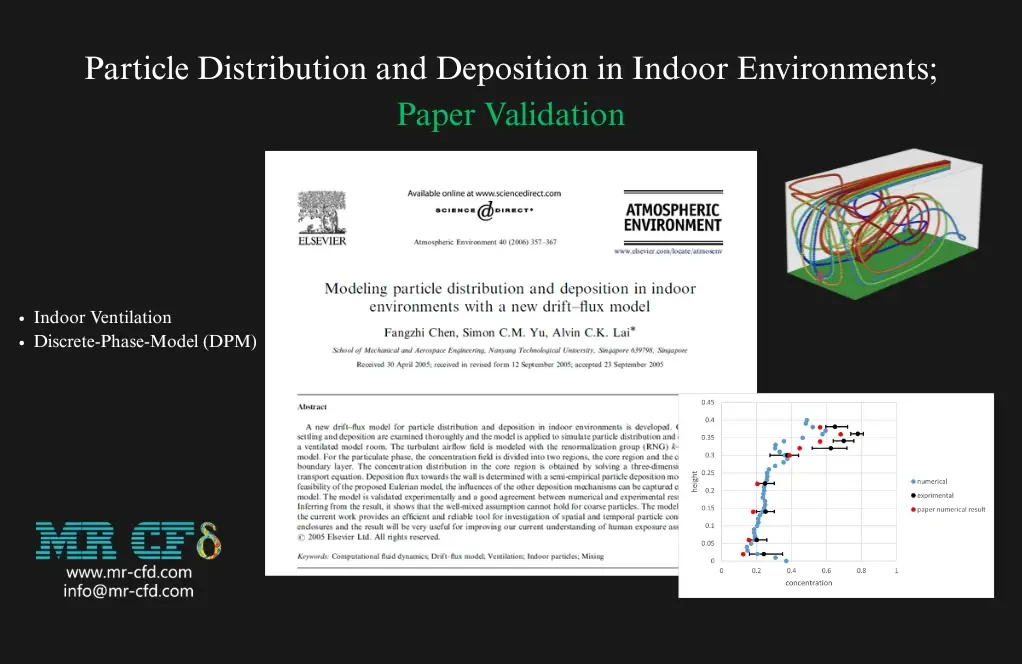
Particle Distribution and Deposition in Indoor Environments; Paper Validation
Intermediate, Advanced
Price: $210
The current CFD analysis numerically validates the paper “Modeling particle distribution and deposition in indoor environments with a new drift–flux model” using ANSYS Fluent software. We designed and meshed the room geometry in Design Modeler and ANSYS Meshing, generating 128,000 cells. A pressure-based solver with k-ε RNG turbulence modeling is employed, and particle dynamics are simulated using the DPM model.
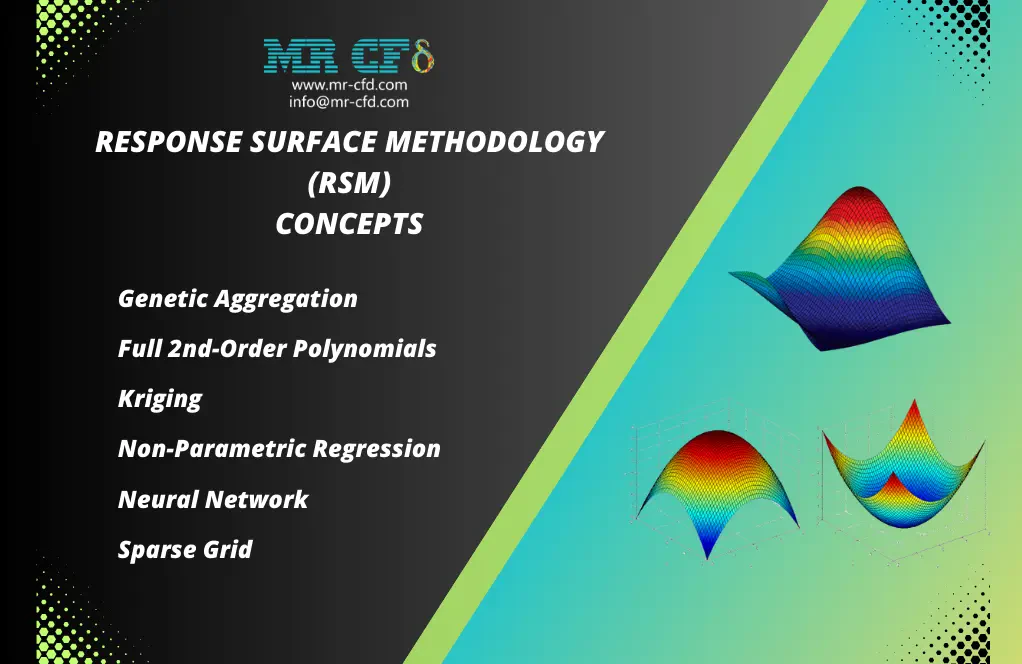
Response Surface Methodology (RSM) Concepts, Optimization by ANSYS Fluent
Beginner, Intermediate, Advanced
Price: Free
Introduction to the Response Surface Methodology (RSM) in ANSYS Fluent software Introduction to the Genetic Aggregation Introduction to the Full 2nd-Order Polynomials Introduction to the Kriging Introduction to the Non-Parametric Regression Introduction to the Neural Network Introduction to the Sparse Grid
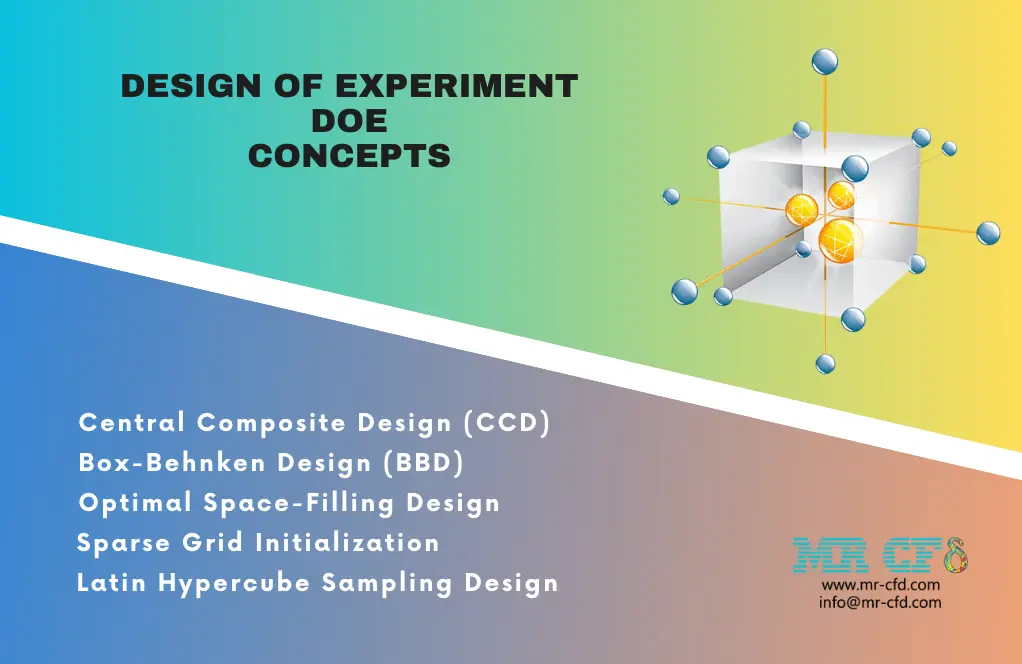
Price: Free
Introduction to the Design of Experiment (DOE) in ANSYS Fluent software Introduction to the Central Composite Design (CCD) Introduction to the Rotatable, VIF-Optimality, G-Optimality, and Face-Centered Introduction to the Box-Behnken Design (BBD) Introduction to the Optimal Space-Filling Design Introduction to the Sparse Grid Initialization Introduction to the Latin Hypercube Sampling Design Introduction to the Custom and Custom+Sampling

Computational Fluid Dynamics (CFD): Introduction
Beginner, Intermediate, Advanced
Price: Free
This is the first session of a Computational Fluid Dynamics (CFD) course, focusing on equations and numerical methods for discretization and solving them in detail. The course is designed by the Mister CFD team to help students and engineers understand the numerical techniques used in software like Ansys Fluent, rather than focusing on fundamental coding. It introduces CFD as a method for solving nonlinear partial differential equations (Navier-Stokes equations) through numerical techniques, since general analytical solutions aren’t available. The document covers three main numerical methods: Finite Difference Method (FDM), Finite Volume Method (FVM), and Finite Element Method (FEM), with their advantages and limitations. It explains different types of Partial Differential Equations (PDEs) including their classifications based on order, linearity, and behavior (Elliptic, Parabolic, and Hyperbolic). The content concludes with detailed explanations of conservation equations, numerical errors in CFD, and the importance of Taylor series in discretization processes.
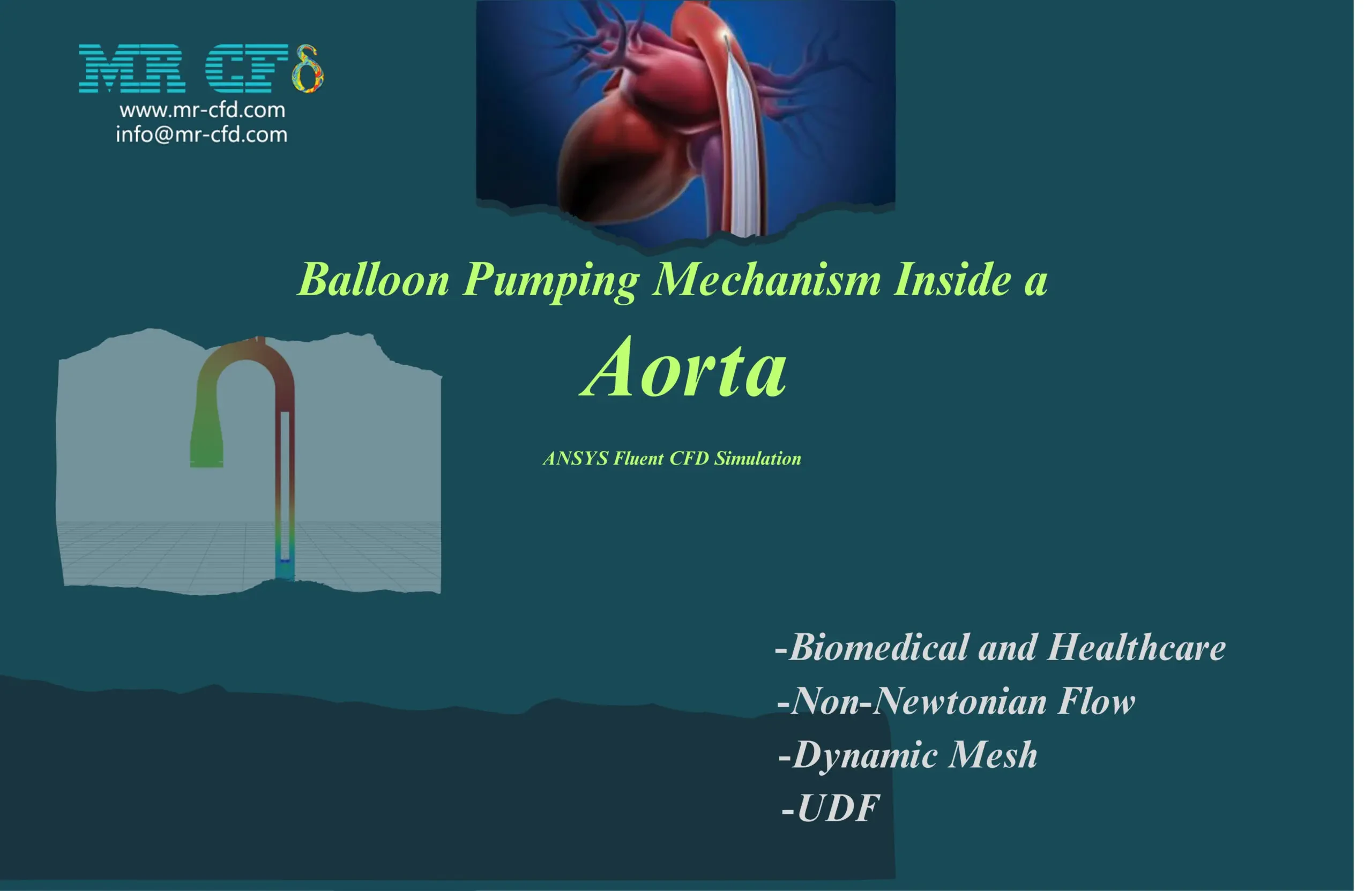
Price: $27
In this project, the function of balloon pumping mechanism inside an aorta was simulated using ANSYS Fluent. The geometry was created in SpaceClaim, and a mesh consisting of 450,795 elements was generated using ANSYS Meshing. Deflection of heart valve and balloon is simulated by dynamic mesh and with the grid motion UDFs.