

Heat Transfer Online Courses
Here's every CFD online course related to Heat Transfer category.
Price: $60
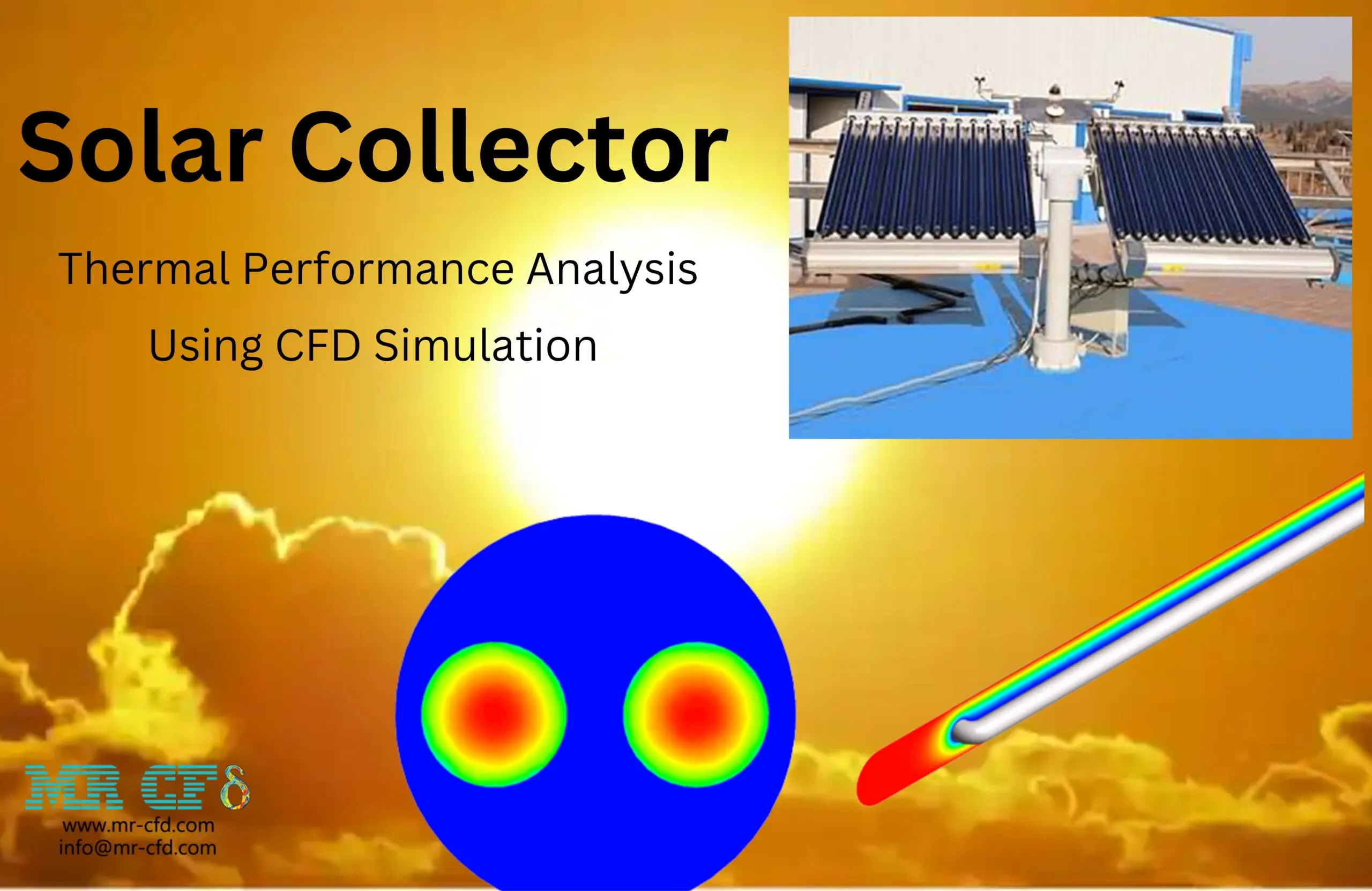
This project presents a CFD simulation of a solar collector designed to analyze heat transfer and fluid flow inside a U-shaped tube. The system uses water as the working fluid under steady-state conditions. The outer wall is maintained at a constant high temperature to simulate solar heating. Results show an effective temperature rise, confirming efficient thermal performance of the collector.
Price: $270
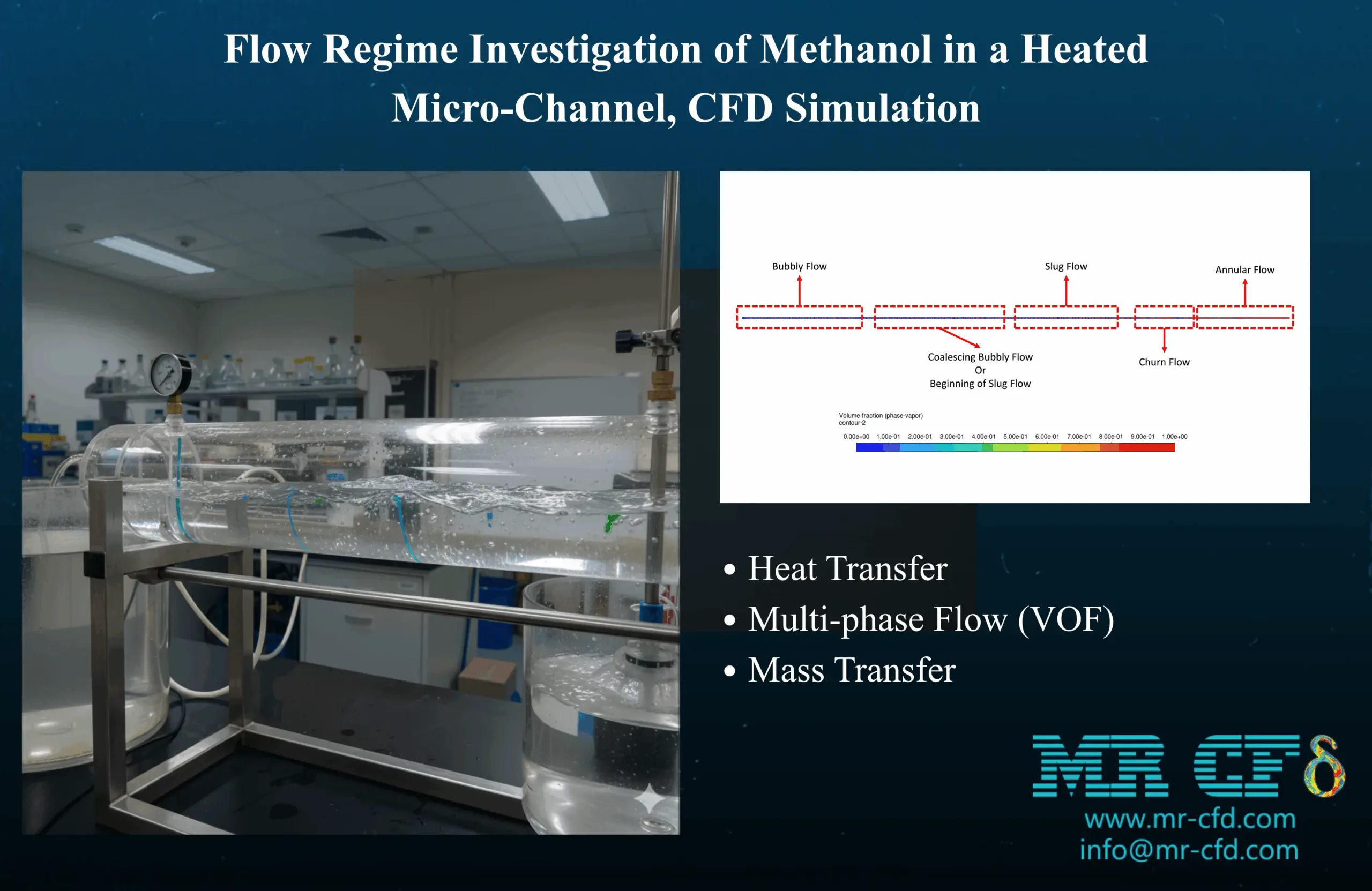
This report presents a simulation that investigates the two-phase flow boiling of methanol in a heated horizontal micro-channel. The development and transition of different flow regimes (bubbly, slug, churn, and annular) along the channel were analyzed. The 2D geometry of the micro-channel was created using ANSYS SpaceClaim software. A high-quality structured mesh was generated using ANSYS Meshing software. Appropriate multiphase model settings and boundary conditions were applied to correctly simulate the evaporation process and the resulting flow patterns.
Heat Pipe Evaporation and Condensation CFD Simulation Using ANSYS Fluent
Intermediate, Advanced
Price: $24
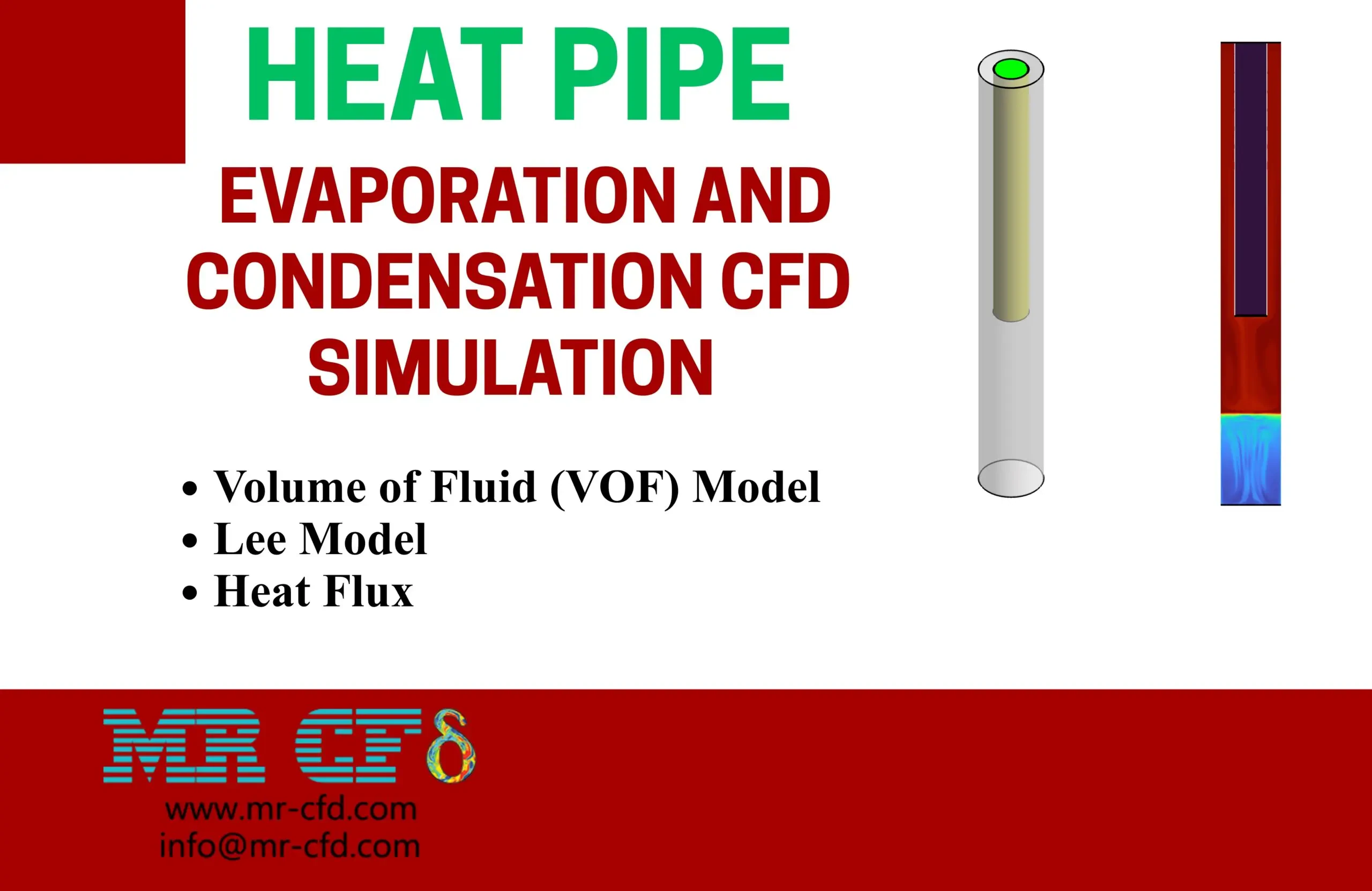
This transient 3D simulation models evaporation and condensation of water in a thermosyphon heat pipe using the VOF and k‑ε models. The domain, meshed with 3,900,000 elements, includes heated and cooled sections defined by heat‑flux and temperature boundaries. At t = 1.655 s, liquid accumulates in the evaporator, vapor rises to the condenser, and condensation occurs at cooler surfaces. Contours of mass transfer, liquid fraction, temperature, and velocity confirm stable phase circulation and efficient heat transport.

Optimization, DOE: CFD Simulation Masterclass
Beginner, Intermediate, Advanced
Price: $299
Master optimization process with our “Optimization (DOE and RSM): All Levels” CFD course using ANSYS Fluent. From basics to advanced, learn to perform Optimization procedures with different types of Design of Experiments (DOEs) and various Response Surface methodologies (RSMs). This course equips you with the essential skills to optimize all construction designs in all engineering fields using CFD. Ideal for beginners and experts alike, enhance your capabilities in design optimization for cutting-edge research and industrial applications.
Heat Sink Cooling Performance Using Water and Nanofluids (TiO₂, SiO₂, Fe₃O₄) in ANSYS Fluent
Beginner, Intermediate
Price: $63
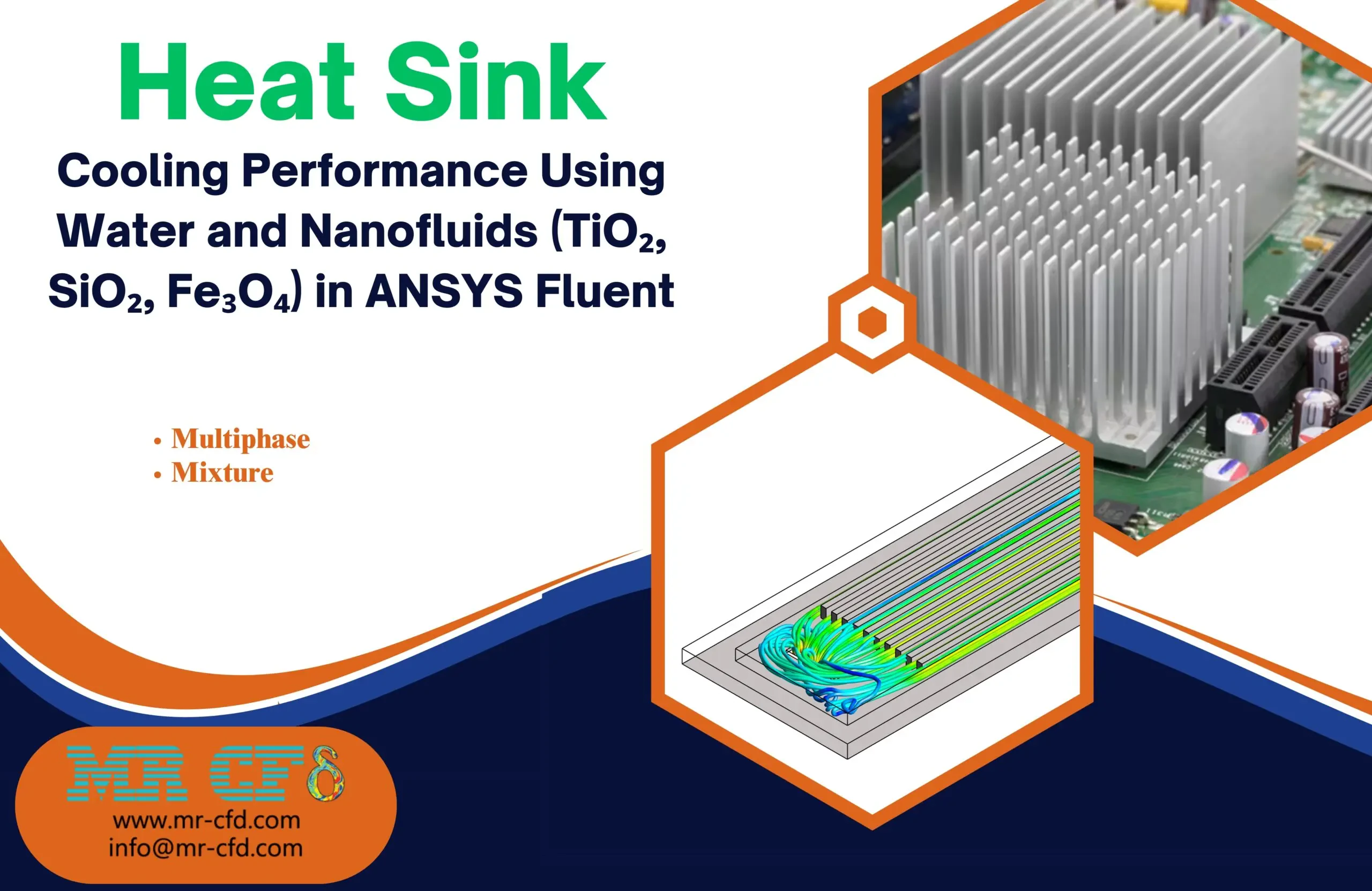
This project presents a numerical study of heat transfer in a heat sink using ANSYS Fluent. Four cases were simulated, including pure water (single-phase) and three nanofluids (water mixed with TiO₂, SiO₂, and Fe₃O₄) using the mixture multiphase model. The geometry was created in ANSYS DesignModeler, and a high-quality mesh of about 1.6 million elements was generated. A pressure-based, steady-state solver with the SIMPLE algorithm was applied. The results, illustrated in contour plots of velocity and temperature, show that nanofluids enhance cooling efficiency compared to pure water. Among the tested fluids, the Fe₃O₄–water mixture demonstrated the best thermal performance at the fins and base plate, highlighting its potential for advanced heat sink applications
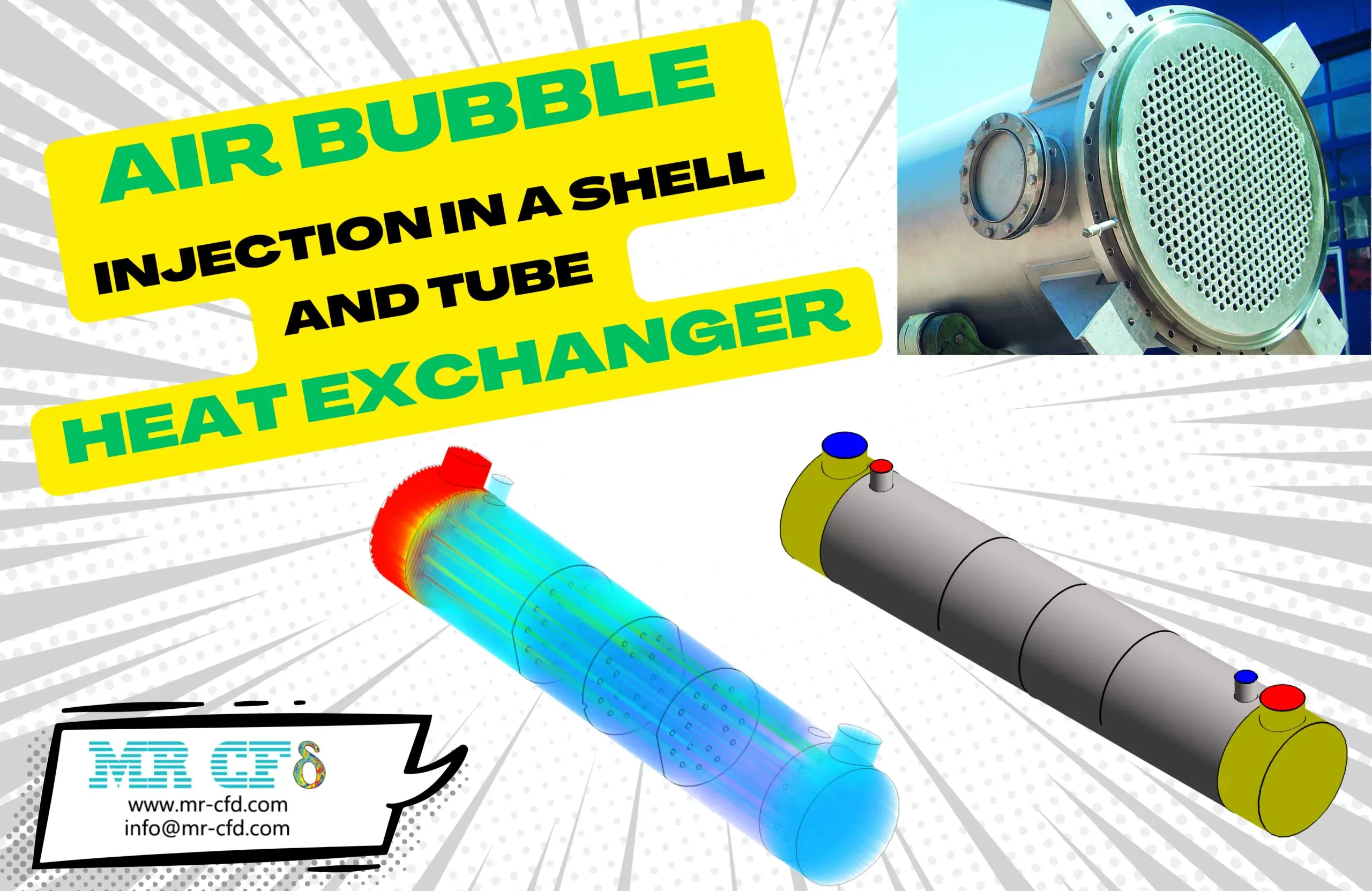
Air Bubble Injection in a shell and tube heat exchanger
Intermediate, Advanced
Price: $200
In this project, the heat transfer performance of a shell-and-tube heat exchanger with air bubble injection was simulated using ANSYS Fluent software. Three cases were studied: air injection into the shell, into the tube, and into both sides simultaneously. The geometry was created in SpaceClaim and meshed in ANSYS Meshing, initially generating about 12.6 million tetrahedral elements, later converted to a polyhedral mesh with approximately 2.43 million cells to reduce computational cost. The model was solved using a pressure-based steady solver with gravity effects included. A VOF multiphase model was applied to track air and water phases, while the realizable k-ε turbulence model with standard wall functions was used to capture flow behavior. The energy equation was enabled, and the SIMPLE algorithm with second-order upwind discretization ensured solution accuracy.
Price: $510
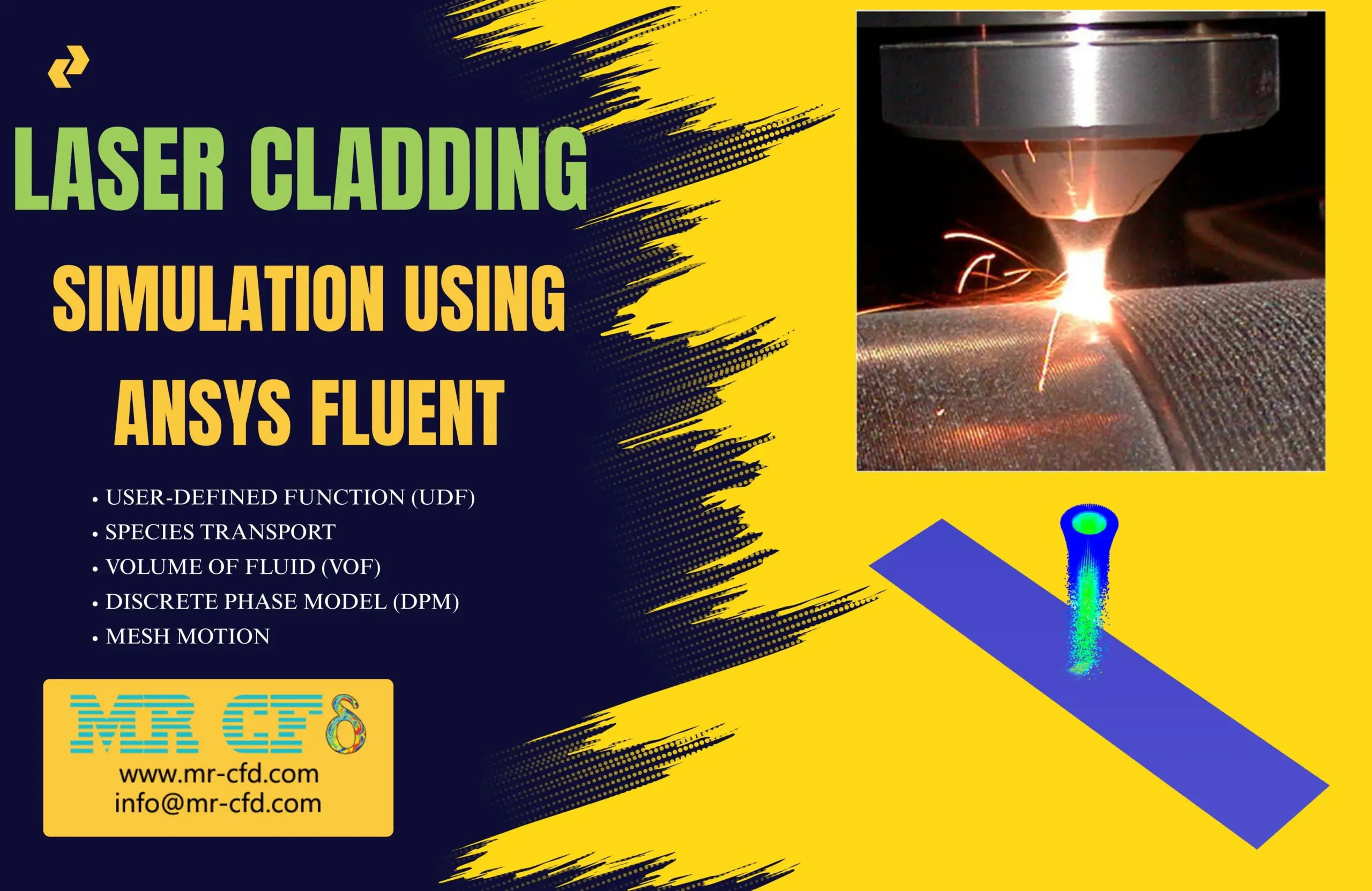
In the Laser Cladding project, we simulated the deposition of nickel droplets under an argon gas stream using ANSYS Fluent software. The three-dimensional geometry was created in Design Modeler with a computational domain of 0.05 × 0.01 × 0.025 m. A structured non-conformal mesh was generated in ANSYS Meshing, consisting of approximately 798,400 computational cells with refined regions near the deposition zone. The transient simulation employed the VOF multiphase model, coupled with species transport and energy equations, while turbulence was modeled using the Realizable k-ε model. A User-Defined Function (UDF) implemented the moving Gaussian laser heat source, enabling realistic simulation of droplet injection, spreading, and weld layer formation.
Price: $300
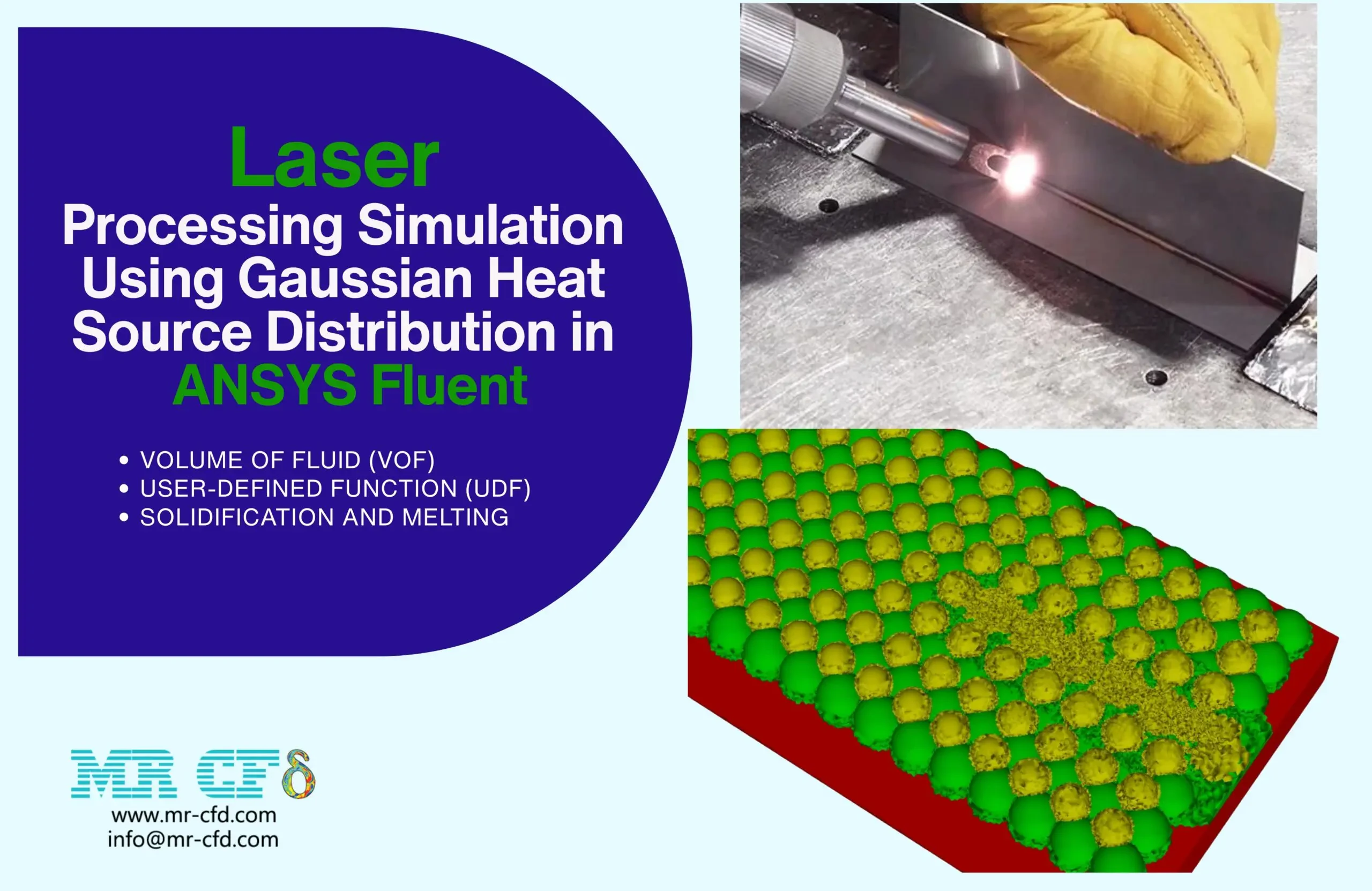
In Laser Processing project, we have simulated the laser-induced selective melting of bi-material particles using ANSYS Fluent software. Three-dimensional modeling was performed using Design Modeler software with a computational domain of 1.0 × 0.5 × 0.4 mm dimensions. The meshing of the model was accomplished using ANSYS Fluent Meshing software, generating approximately 800,000 computational cells with refined regions around the particle bed. The transient simulation employs VOF multiphase model, Solidification and Melting model, and a User-Defined Function (UDF) implementing the moving Gaussian laser heat source with laminar flow characteristics.
Price: $24
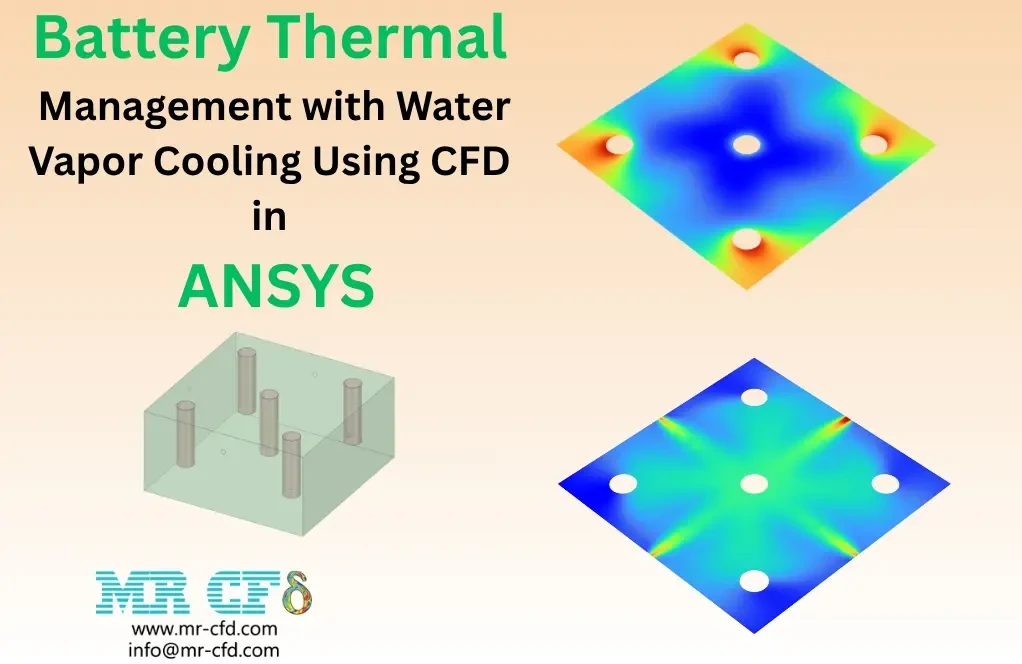
In Battery Thermal Management project simulates battery thermal management using water vapor injection cooling in ANSYS Fluent. A five-cell vertical battery pack is modeled in SpaceClaim, with unstructured mesh and wall boundary layers applied for accuracy. Air and water vapor at 18°C are injected from side nozzles at 0.5 m/s to reduce battery temperatures. The model runs species transport in pseudo-transient mode, includes a grid independence study, and analyzes the effectiveness of vapor cooling on temperature reduction.