

Industrial Online Courses
Here's every CFD online course related to Industrial category.
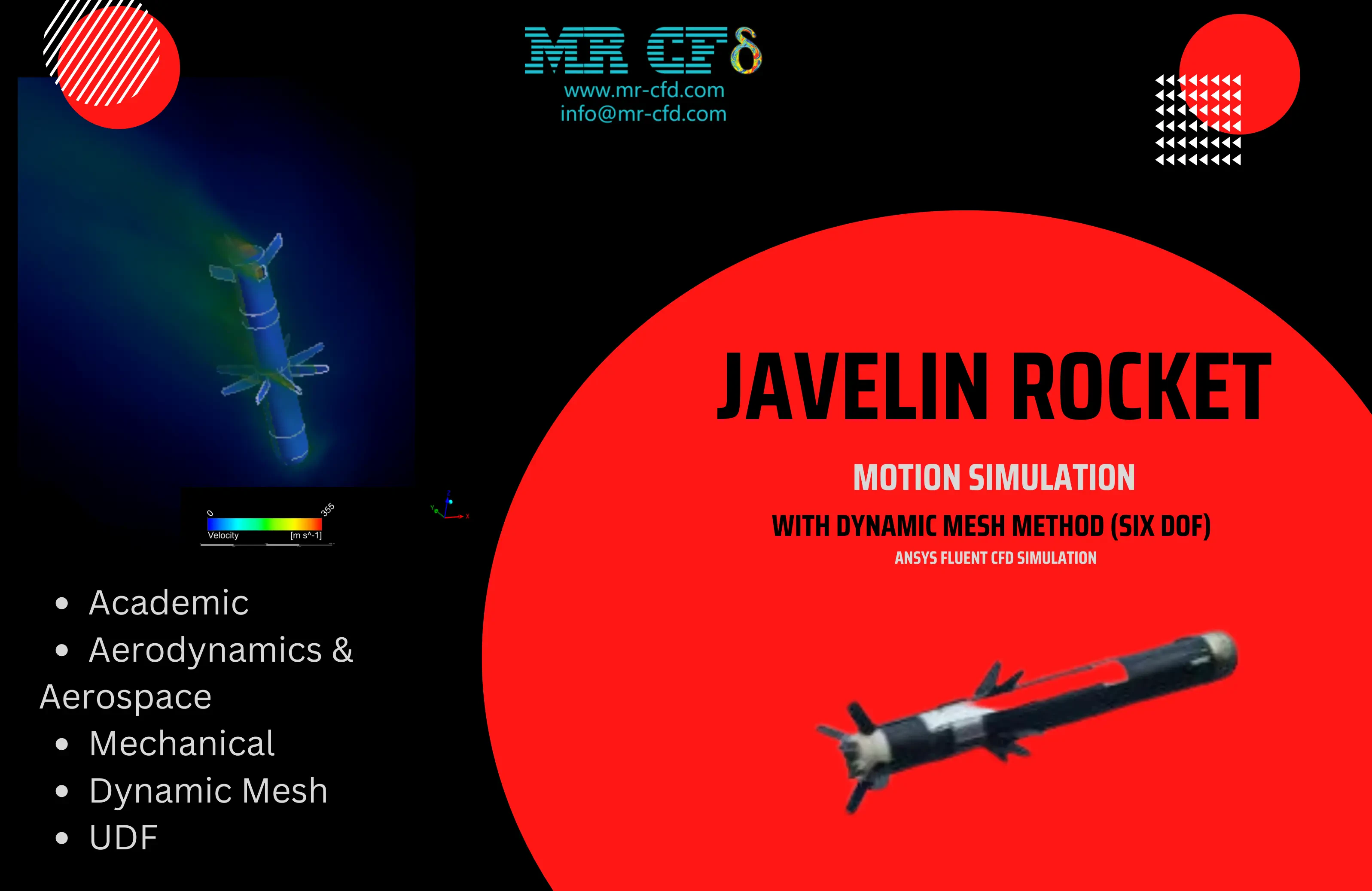
Javelin Rocket Motion Simulation with Dynamic Mesh Method (Six DOF) using ANSYS Fluent
Intermediate, Advanced
Price: $429
This report presents a simulation of the motion of a javelin rocket using the dynamic mesh method The geometry of the javelin rocket is created using Spaceclaim software A high-quality mesh is generated around the rocket geometry using ANSYS Meshing(about 250,000 elements) The six DOF solver settings are specified, including the mass properties and the degrees of freedom for translation and rotation.
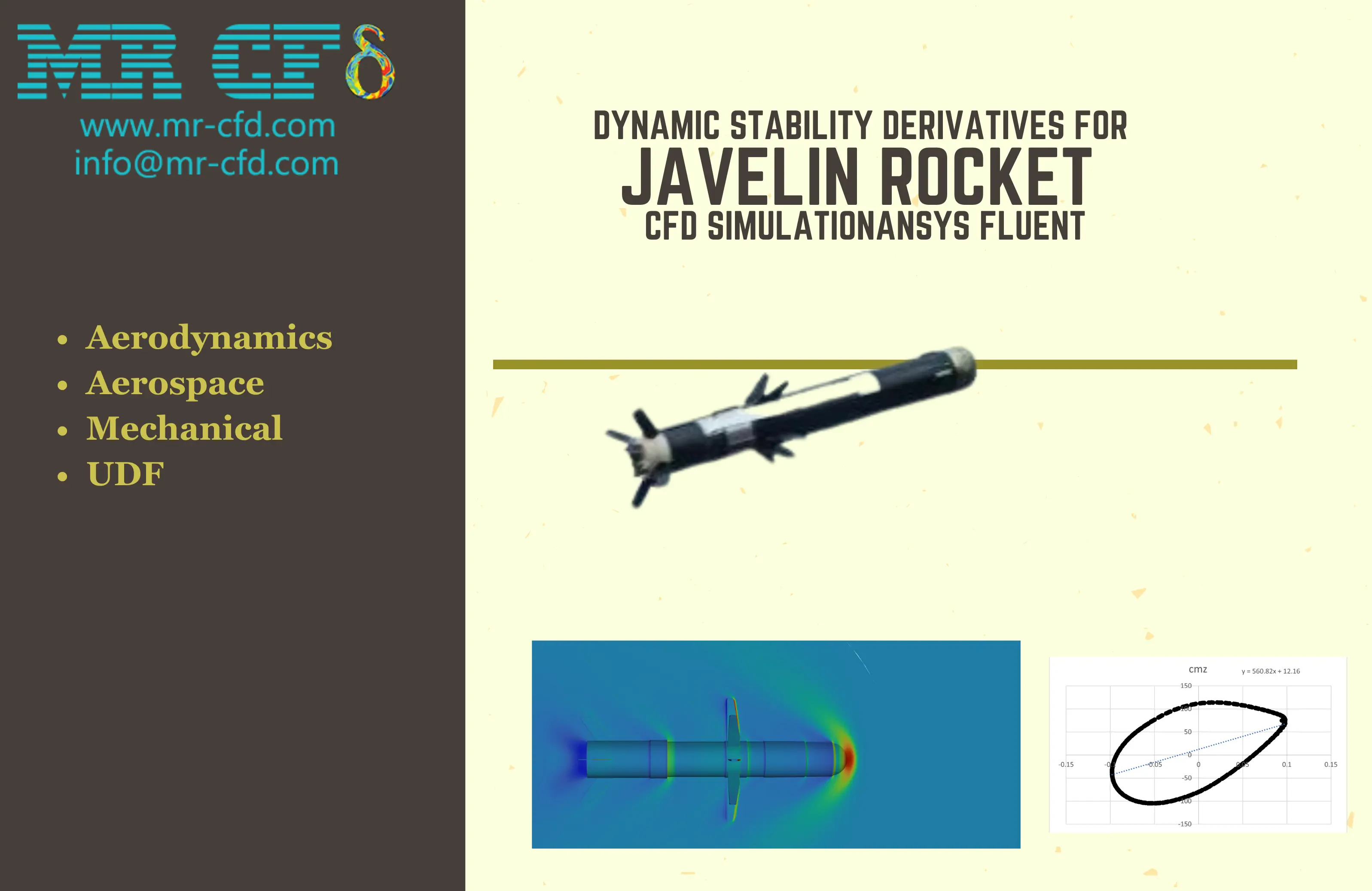
Price: $649
The problem numerically simulates the Dynamic Stability Derivatives of the Javelin Rocket using ANSYS Fluent. We designed the 3-D model using the SpaceClaim. We mesh the model with ANSYS Meshing software, and the element number equals 4,245,614. We perform this simulation as unsteady (Transient). We use the Mesh Motion and UDF files to define the rotational and oscillation motion of the Rocket.
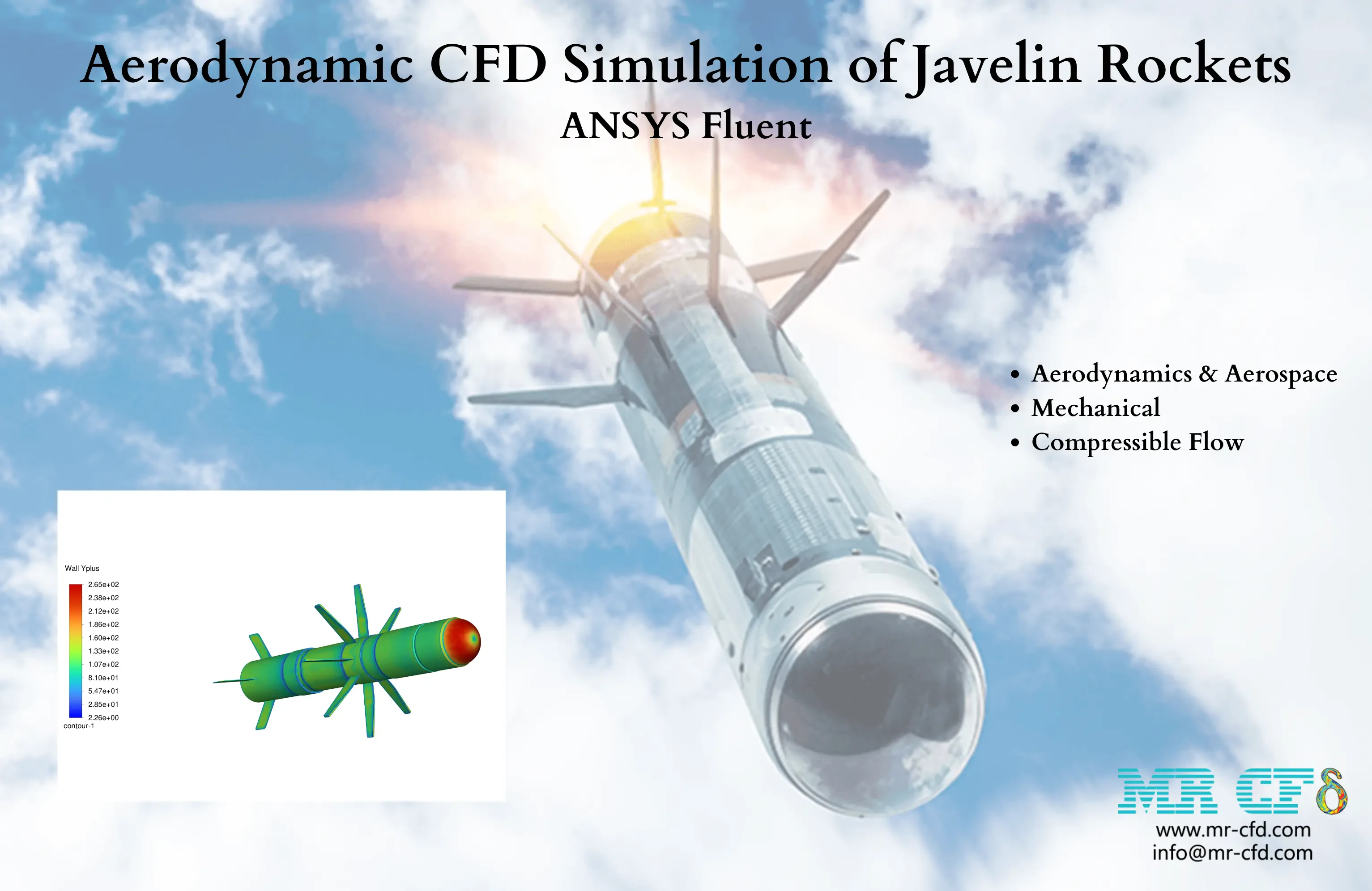
Price: $319
This problem simulates a javelin rocket using ANSYS Fluent software. The geometry is designed in SpaceClaim, and the meshing is performed using ANSYS Meshing. The simulation is carried out using the density-based solver. The turbulence model is set to Realizable k-ε.
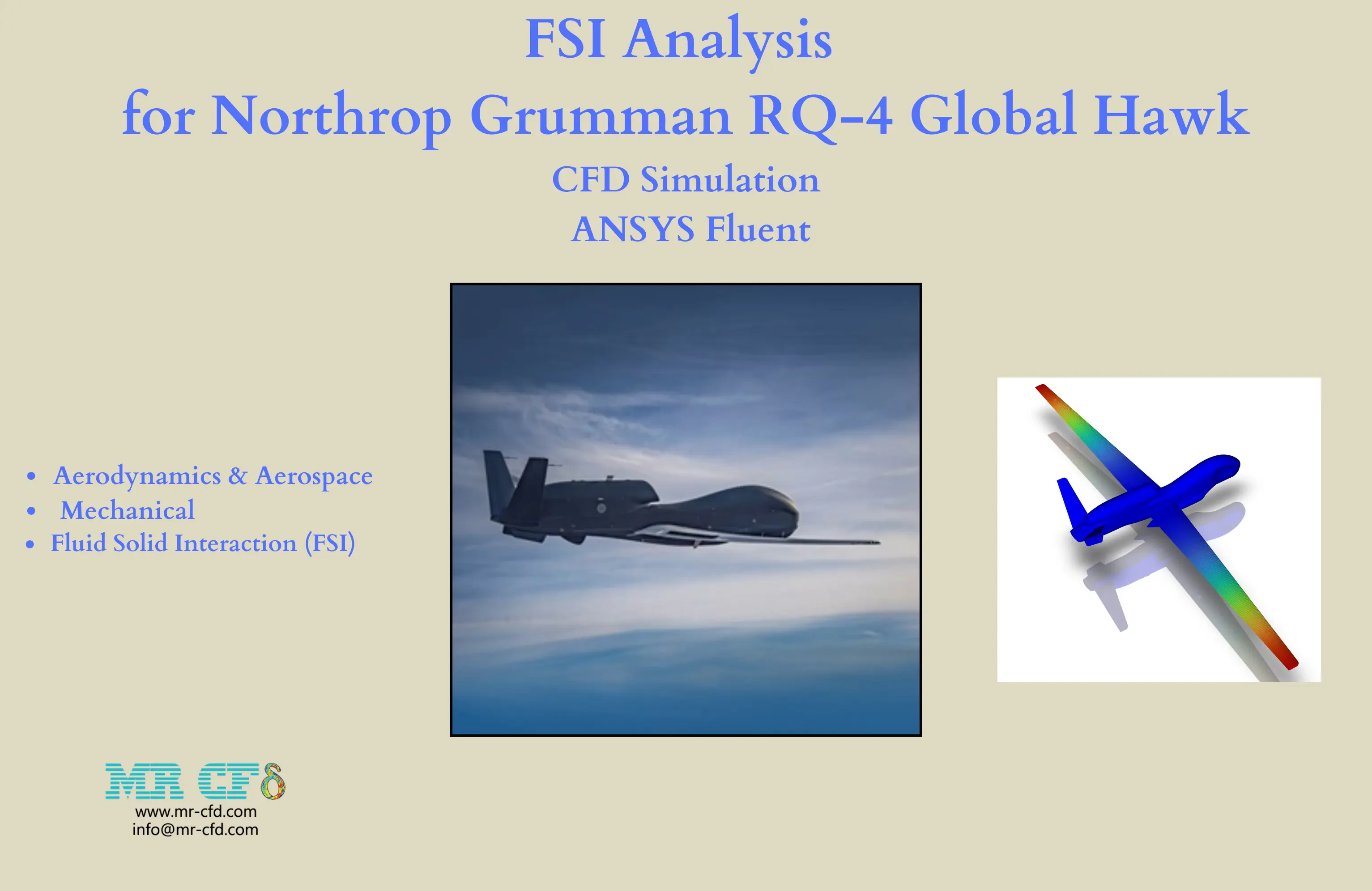
FSI Analysis for Northrop Grumman RQ-4 Global Hawk, ANSYS Fluent
Intermediate, Advanced
Price: $489
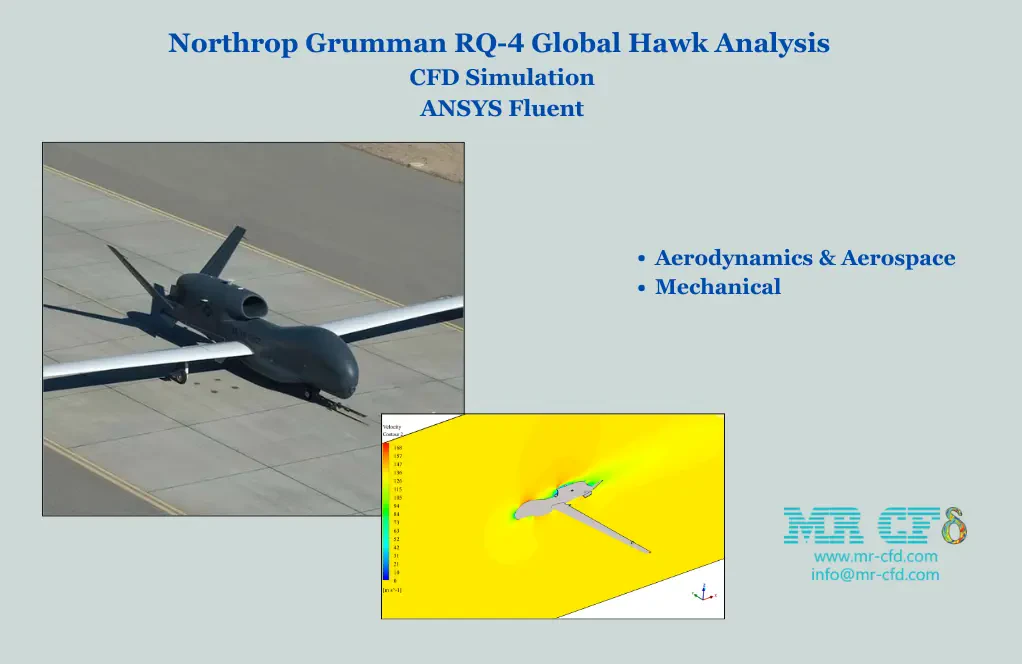
The problem numerically simulates the Fluid-Structure Interaction over Northrop Grumman RQ-4 Global Hawk using ANSYS Fluent software. The Global Hawk geometry was modeled using SpaceClaim and then imported into ANSYS meshing for meshing consisting of 5,056,067 non-conformal elements. The simulation used a pressure-based solver. One way FSI model analyses total strain, and stress over the turbine.
Northrop Grumman RQ-4 Global Hawk Analysis CFD Simulation, ANSYS Fluent
Beginner, Intermediate
Price: $219
This study aims to investigate the aerodynamic performance of a Grumman RQ-4 Global Hawk using ANSYS Fluent. The Global Hawk geometry was modelled using SpaceClaim then imported into ANSYS Fluent for meshing consisting 3,764,695 elements. The simulation used a pressure-based solver.
Price: $569
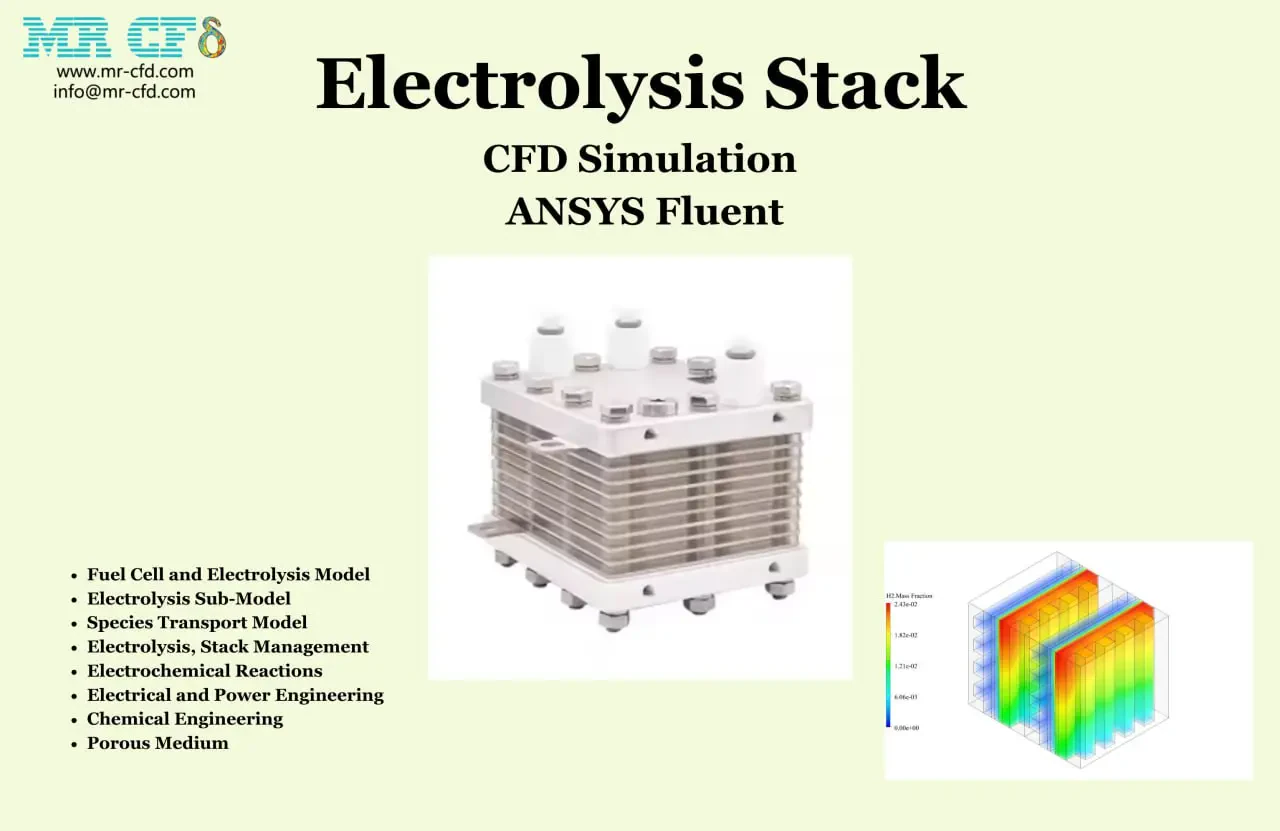
The problem numerically simulates the Electrolysis Stack using ANSYS Fluent software. We design the 3-D model with the Design Modeler software. We mesh the model with ANSYS Meshing software. The mesh is Structured, and the element number equals 279,868. We used the Fuel Cell and Electrolysis model and Electrolysis sub-model to define the electrolysis process. We used the Species model to define H2, O2, and H2O.
Price: $689
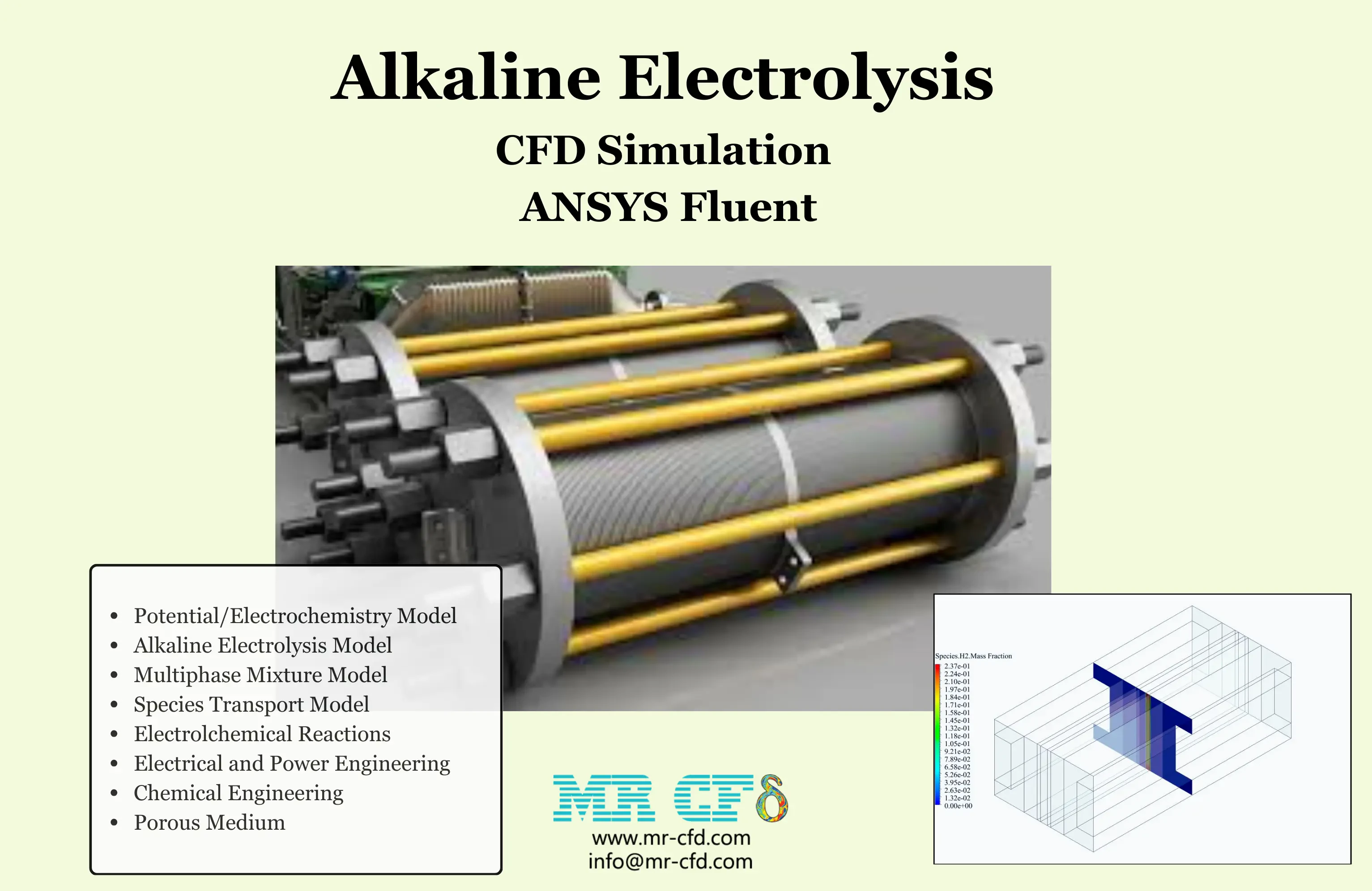
The problem numerically simulates the Alkaline Electrolysis using ANSYS Fluent software. We design the 3-D model with the Design Modeler software. We mesh the model with ANSYS Meshing software. The mesh is Structured, and the element number equals 428,800. We used the Potential/Electrochemistry model to define the potential equation. We used the Electrolysis sub-model and Alkaline Electrolysis type to define the electrolysis process. We used the Species model to define H2, O2, and H2O. We used the Mixture Multiphase model to define water.
Price: $689
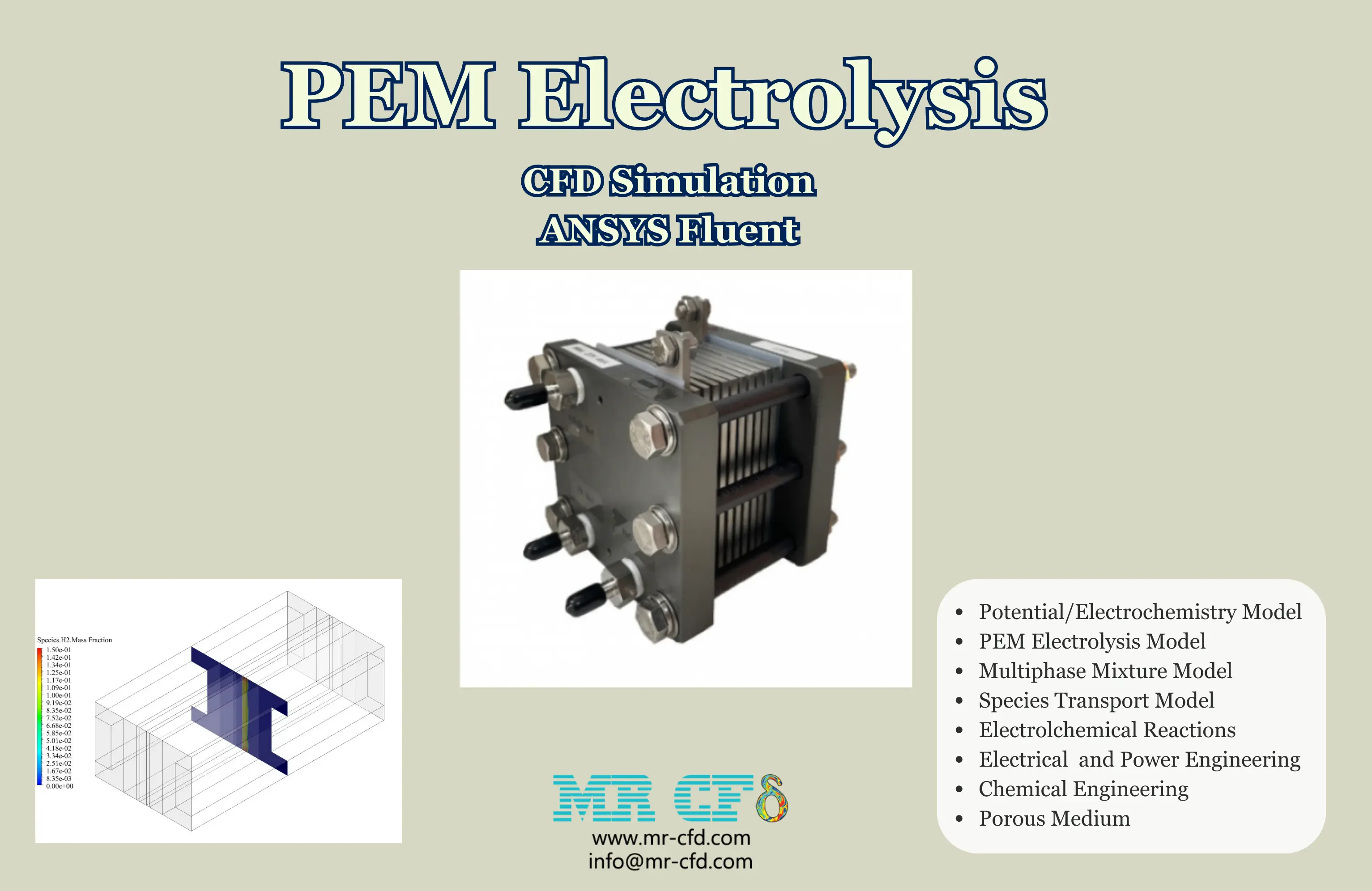
The problem numerically simulates the PEM Electrolysis using ANSYS Fluent software. We design the 3-D model with the Design Modeler software. We mesh the model with ANSYS Meshing software. The mesh is Structured, and the element number equals 428,800. We used the Potential/Electrochemistry model to define the potential equation. We used the Electrolysis sub-model and PEM Electrolysis type to define the electrolysis process. We used the Species model to define H2, O2, and H2O. We used the Mixture Multiphase model to define water.
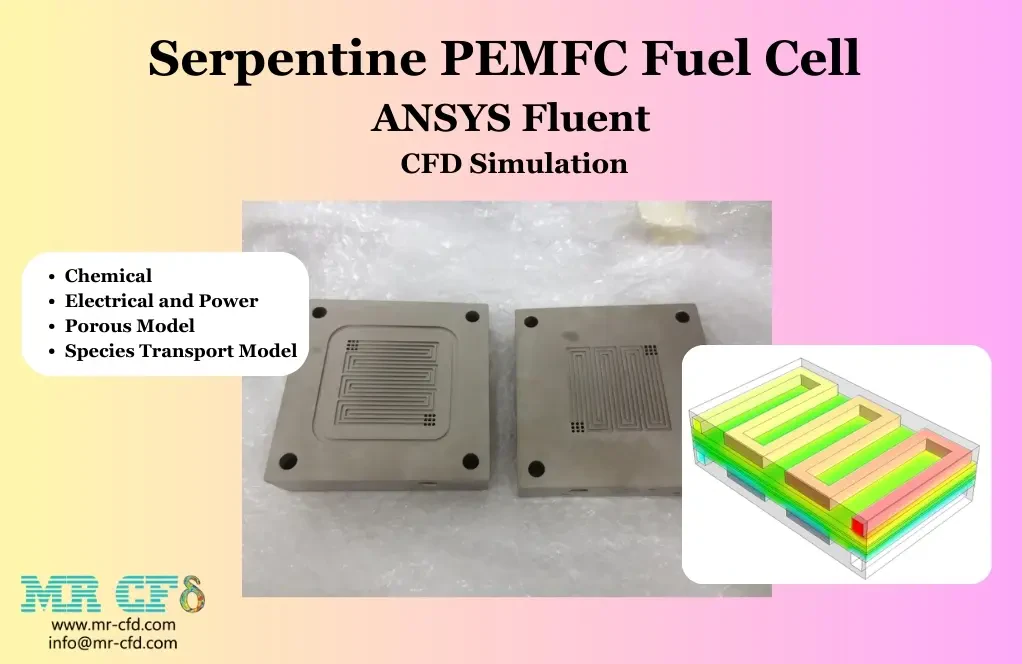
Price: $569
The problem numerically simulates a Serpentine Fuel Cell using ANSYS Fluent software. We design the 3-D model with the Design Modeler software. We mesh the model with ANSYS Meshing software, and the element number equals 9,396,122. We use the Fuel Cell and Electrolysis Model to define a fuel cell. We used the PEMFC sub-model to define a proton exchange membrane fuel cell. We used the Species model to define H2, O2, and H2O.