

Radiation Online Courses
Here's every CFD online course related to Radiation category.
ANSYS Fluent: All Levels CFD Training Package
Beginner, Intermediate, Advanced
Price: $129
Comprehensive ANSYS Fluent Course: Master computational fluid dynamics (CFD) through 14 hands-on CFD simulation projects, progressing from beginner fundamentals to expert-level ANSYS Workbench workflows. Advanced Multiphysics Training: Gain specialized CFD training in complex physics, including multiphase models, compressible flow, combustion dynamics, and acoustic modeling. Real-World Engineering Applications: Apply ANSYS Fluent to solve critical industry challenges in thermal management, aerospace aerodynamics, and environmental engineering. Career-Ready Simulation Skills: Build a professional portfolio and prepare for Ansys CFD certification with project-based learning designed for students, researchers, and practicing engineers.

Radiation: CFD Simulation Masterclass
Beginner, Intermediate, Advanced
Price: $149
The “Radiation: All Levels” course is a comprehensive training program designed to master radiation heat transfer simulations using ANSYS Fluent. Covering fundamental concepts and six key radiation models (Rosseland, P1, DTRM, Discrete Ordinates, Surface to Surface, and Monte Carlo), this course guides learners through theory and practical applications. Structured into seven chapters, it progresses from basic principles to advanced simulations, featuring real-world projects such as gasification processes, combustion in train tunnels, and solar radiation analysis. By completing this course, students gain in-depth knowledge of radiation heat transfer and develop proficiency in using ANSYS Fluent for complex simulations across various engineering applications, making it an essential resource for professionals and students in the field of thermal engineering and computational fluid dynamics.
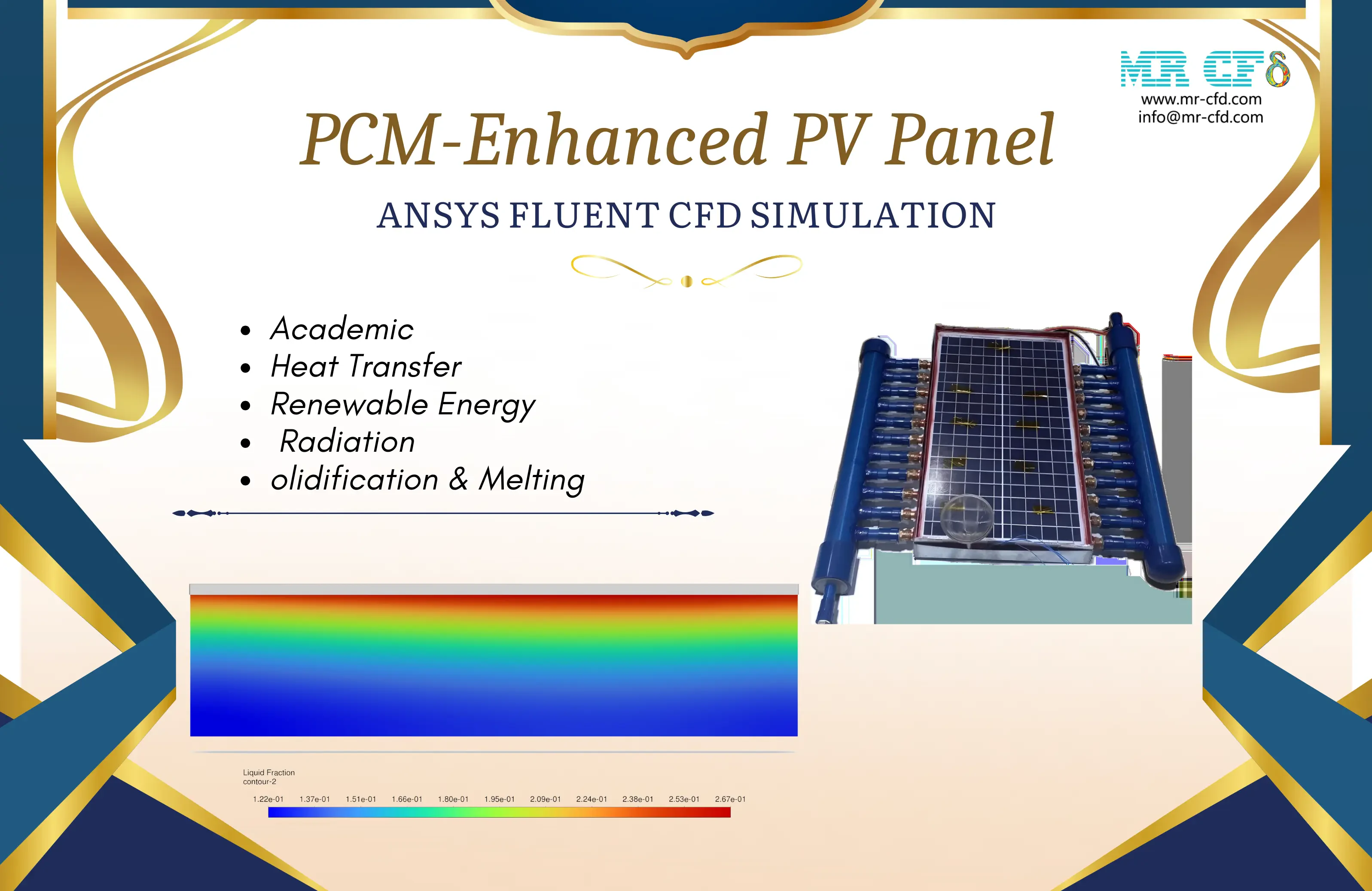
PCM-Enhanced PV Panel, Ansys Fluent CFD Simulation
Intermediate, Advanced
Price: $54
In this product, we conducted a comprehensive study comparing two distinct cases1) A conventional PV panel without pCM 2) An enhanced system incorporating PCM cooling technology comprehensive three-dimensional model was developed using ANSYS SpaceClaim,The computational domain was discretized using ANSYS Meshing software, employing a structured grid approach with approximately 1,000,000 elements The Solidification and Melting model was activated to accurately capture the phase change dynamics of the PCM The Discrete Ordinates (DO) radiation model was implemented to account for radiative heat transfer Solar Ray Tracing was enabled for precise solar load calculations
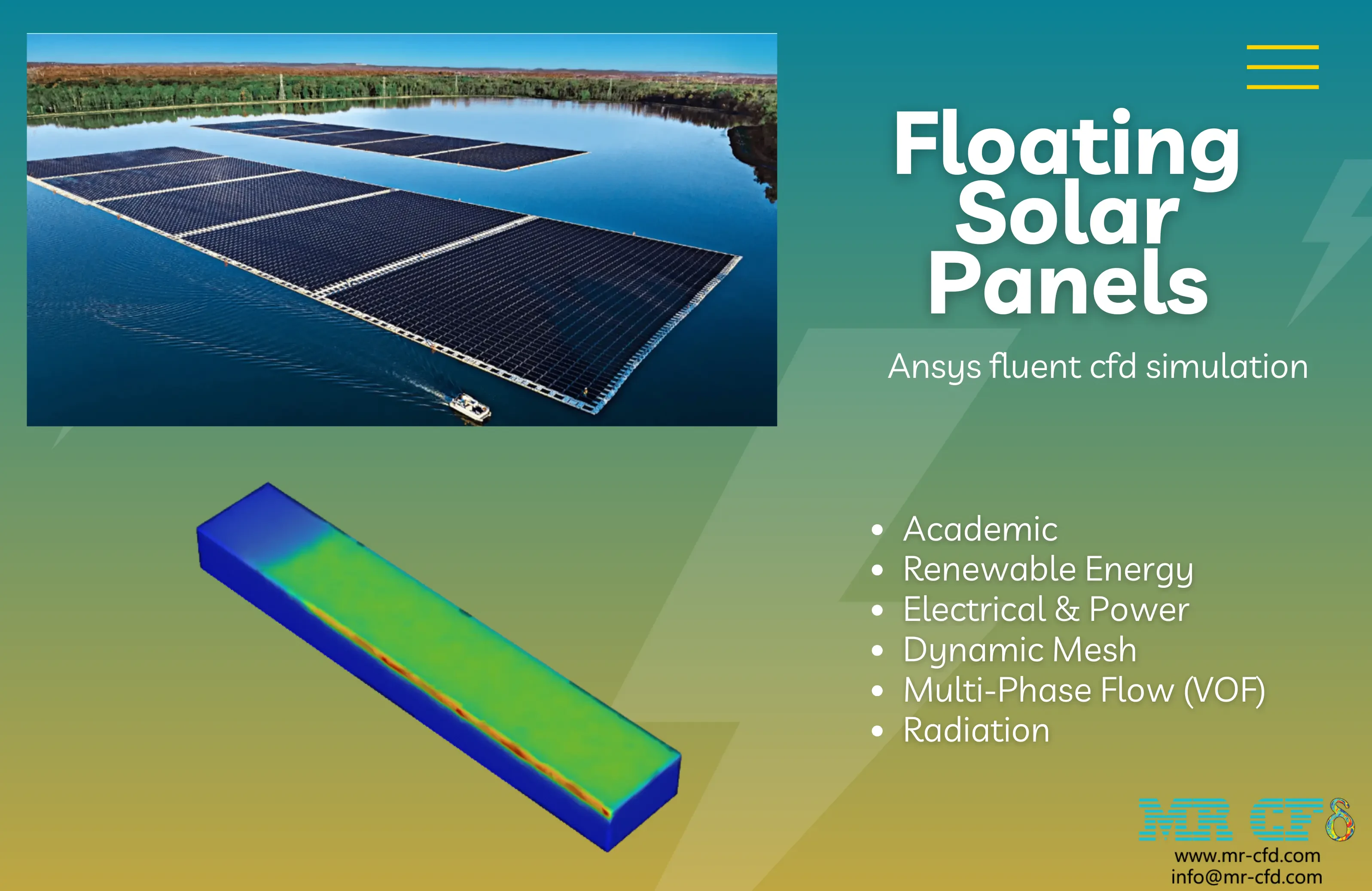
Floating Solar Panel CFD Simulation, ANSYS Fluent Tutorial
Intermediate, Advanced
Price: $40
we are simulating the solar panel that is floated on the water surface,The simulation is 3D and the solar panels and performed by ANSYS Fluent. The geometry is designed using Spaceclaim software. Then, it is meshed in ANSYS Meshing. In total 479895 cells are generated. phases are modeled by Volume of Fluid multiphase model. The dynamic mesh can reproduce elements by remeshing and smoothing types. Also, the radiation is activated.
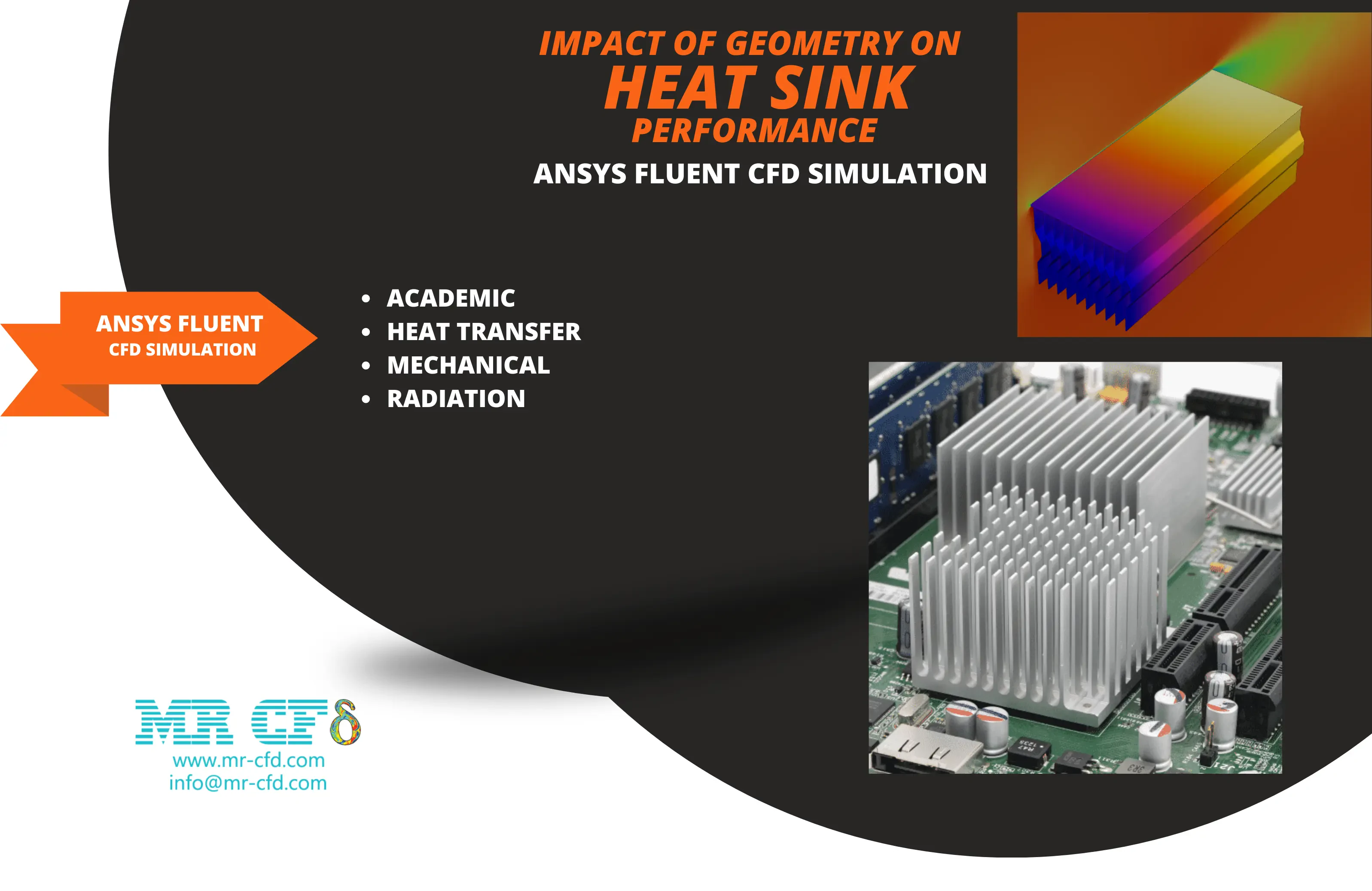
Impact of Geometry on Heat Sink Performance
Beginner, Intermediate
Price: $14
This study compares the thermal performance of open and enclosed heat sink designs using CFD simulations The open design features exposed fins, while the enclosed design has a closed-top 3-D symmetry model designed using ANSYS Design Modeler software model meshed with ANSYS Meshing software, and the element number equals 2,599,334. The discrete Ordinates (DO) radiation model was activated to simulate the impact of solar irradiation
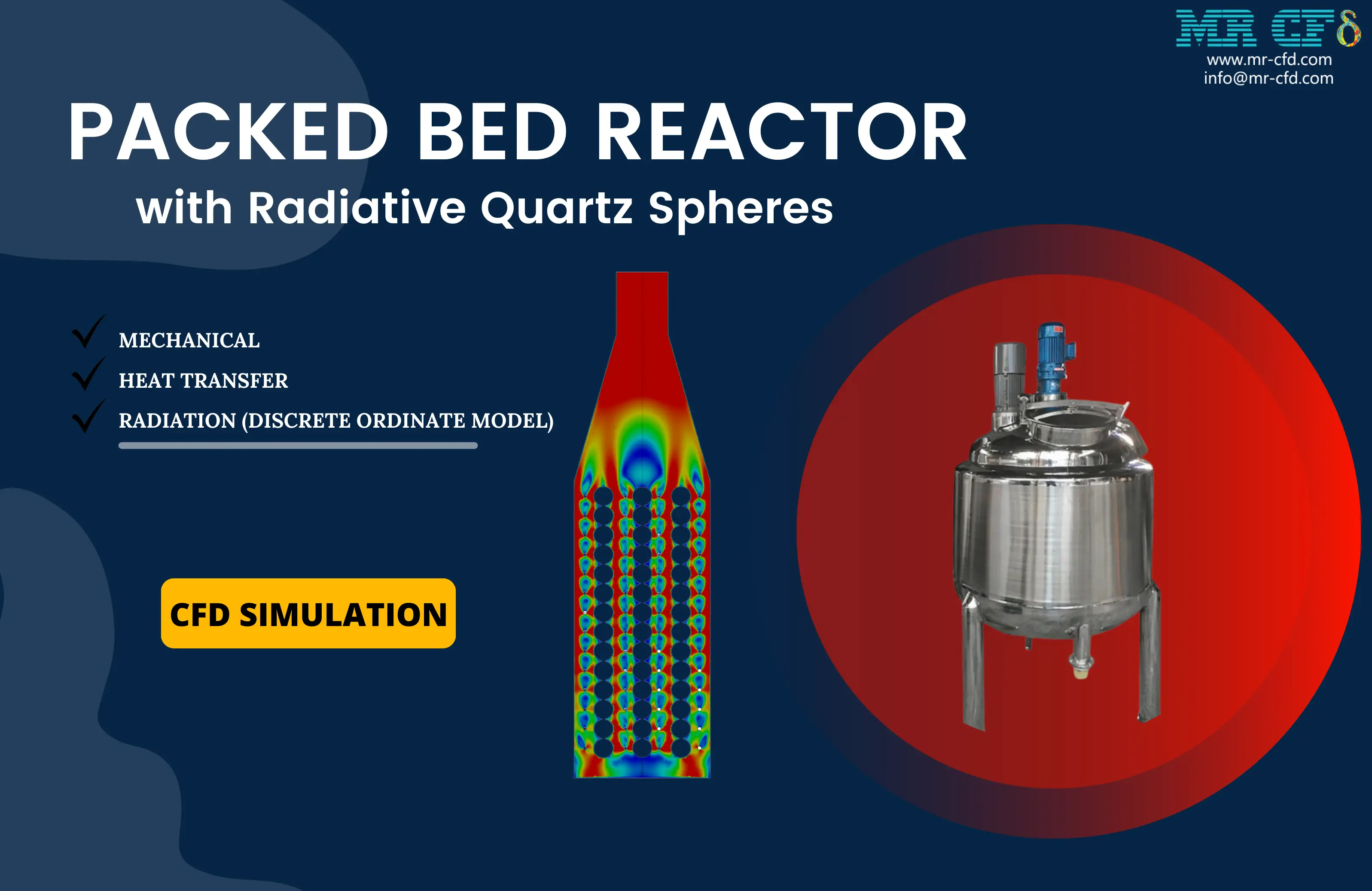
Packed Bed Reactor with Radiative Quartz Spheres
Intermediate, Advanced
Price: $12
This study numerically simulates the heat transfer and fluid dynamics in a packed bed reactor with radiative quartz spheres using ANSYS Fluent software. The 3-D model is designed using ANSYS Design Modeler and meshed with ANSYS Meshing software, resulting in approximately 4 million polyhedral elements. The simulation employs the RNG k-ε turbulence model with standard wall functions, and the Discrete Ordinate (DO) radiation model to capture temperature variations accurately. The energy equation is enabled to track temperature distribution, and the solver is pressure-based with steady-state conditions. The study aims to provide insights into optimizing packed bed reactor designs for various industrial applications.
Price: $330
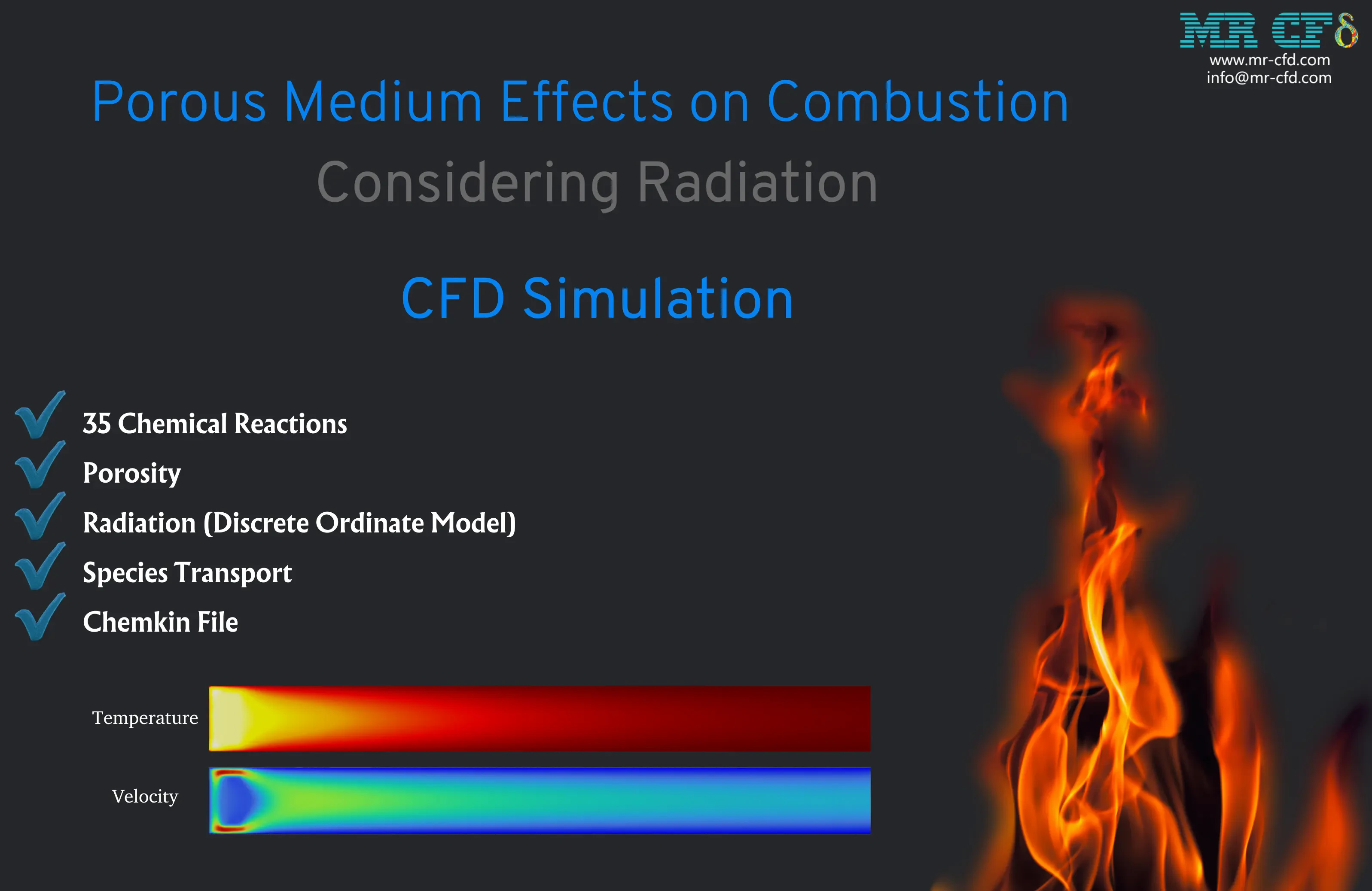
This project investigates the combustion process in a cylindrical chamber with a porous medium using CFD analysis in ANSYS Fluent. The geometry was designed in ANSYS Design Modeler and meshed using ANSYS Meshing, resulting in a high-quality mesh with 815,135 elements. The simulation employs the RNG k-ε turbulence model, Discrete Ordinate (DO) radiation model, and Species Transport model with Volumetric Reactions. Additional submodels for NOx and Soot formation are included. A cylindrical porous zone with 0.5 fluid porosity is incorporated near the inlet. The study demonstrates the impact of the porous medium on flow patterns, temperature distribution, species concentrations, and pollutant formation.
Price: $200
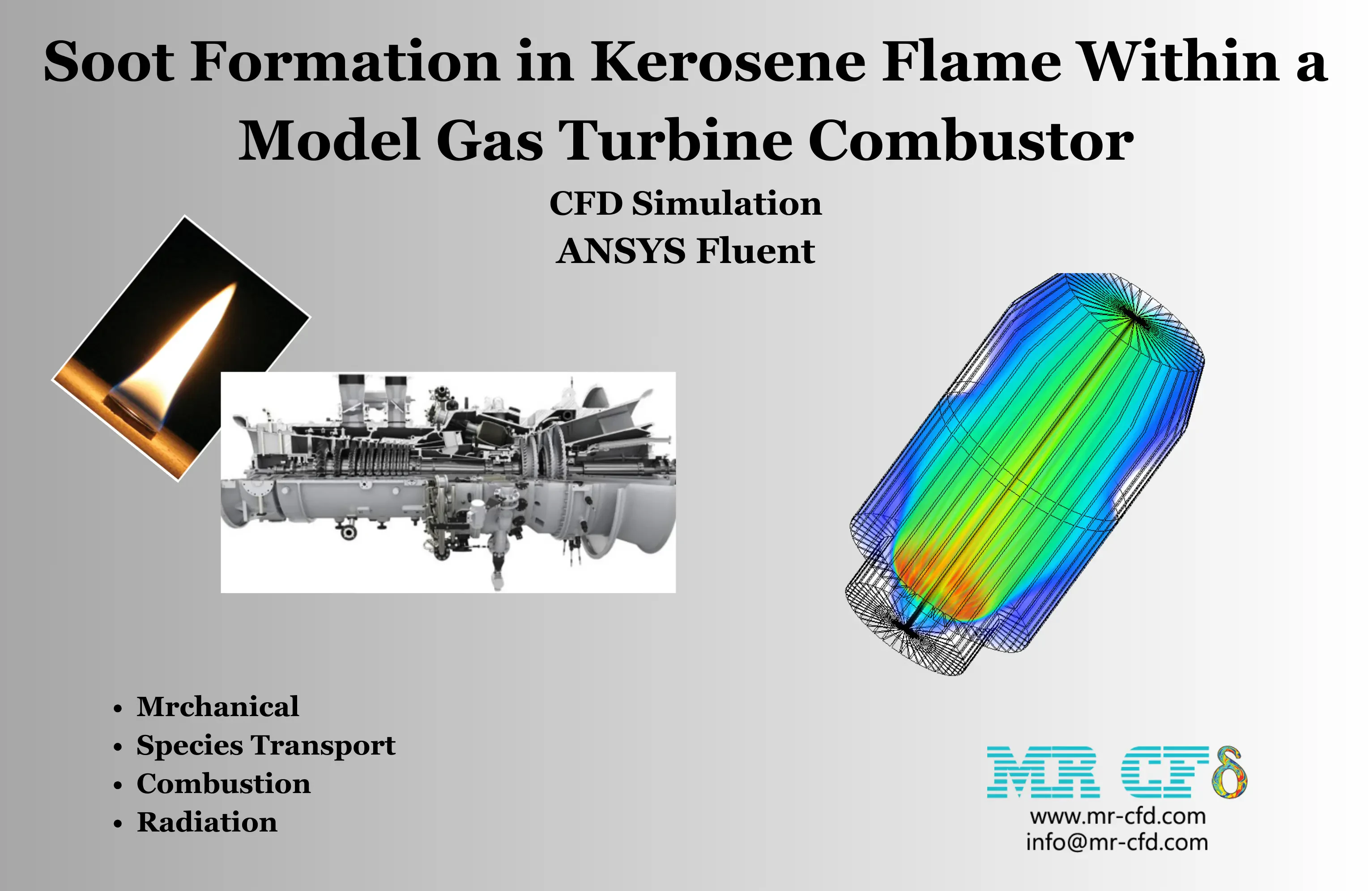
In this project, the combustion of kerosene in a model gas turbine combustor, with all its complexities, was modeled using ANSYS Fluent. Soot formation in the combustion process was modeled with the Moss-Brooks model by selecting "C2H2" and "C2H4" species as precursors for surface growth, and the Lee model for oxidation. The geometry was created in SpaceClaim, and a mesh consisting of 51,427 elements was generated using ANSYS Meshing. The rates of nucleation, surface growth, coagulation, and oxidation, as well as the soot mass fraction and temperature in the combustor, were investigated in this study.
Price: $12
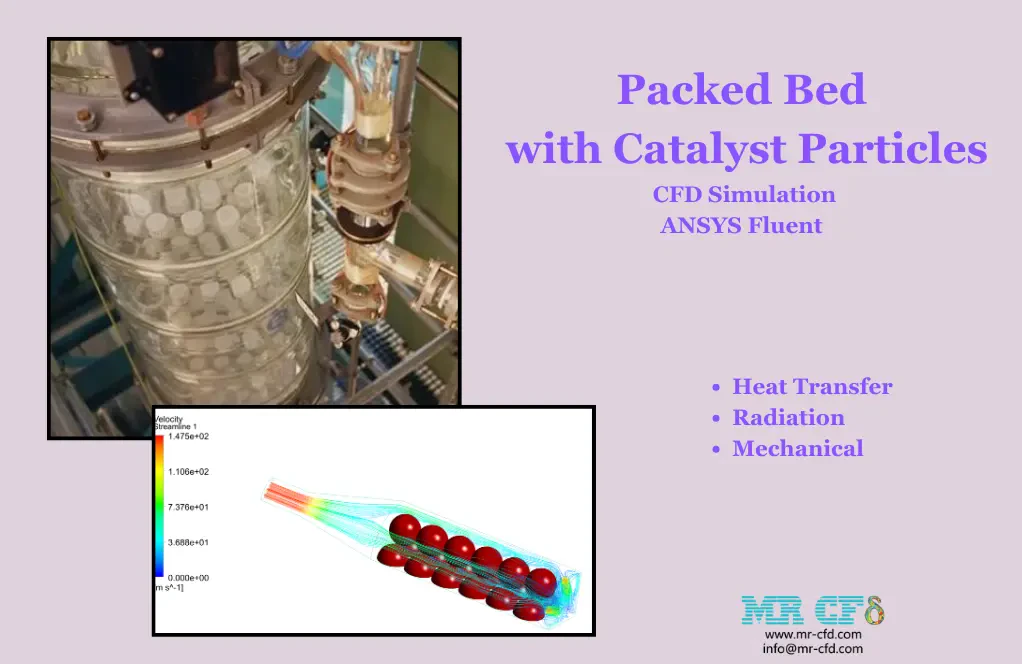
This project simulates a Packed Bed with catalyst Particles, modeled as heat source in ANSYS Fluent. The geometry is designed in Design modeler then meshed in ANSYS Meshing with 252,565 polyhedral cells. RNG k-ε model is activated as turbulence model. The radiation is taken into account in heat transfer with DO model.