

Urban Planning Online Courses
Here's every CFD online course related to Urban Planning category.
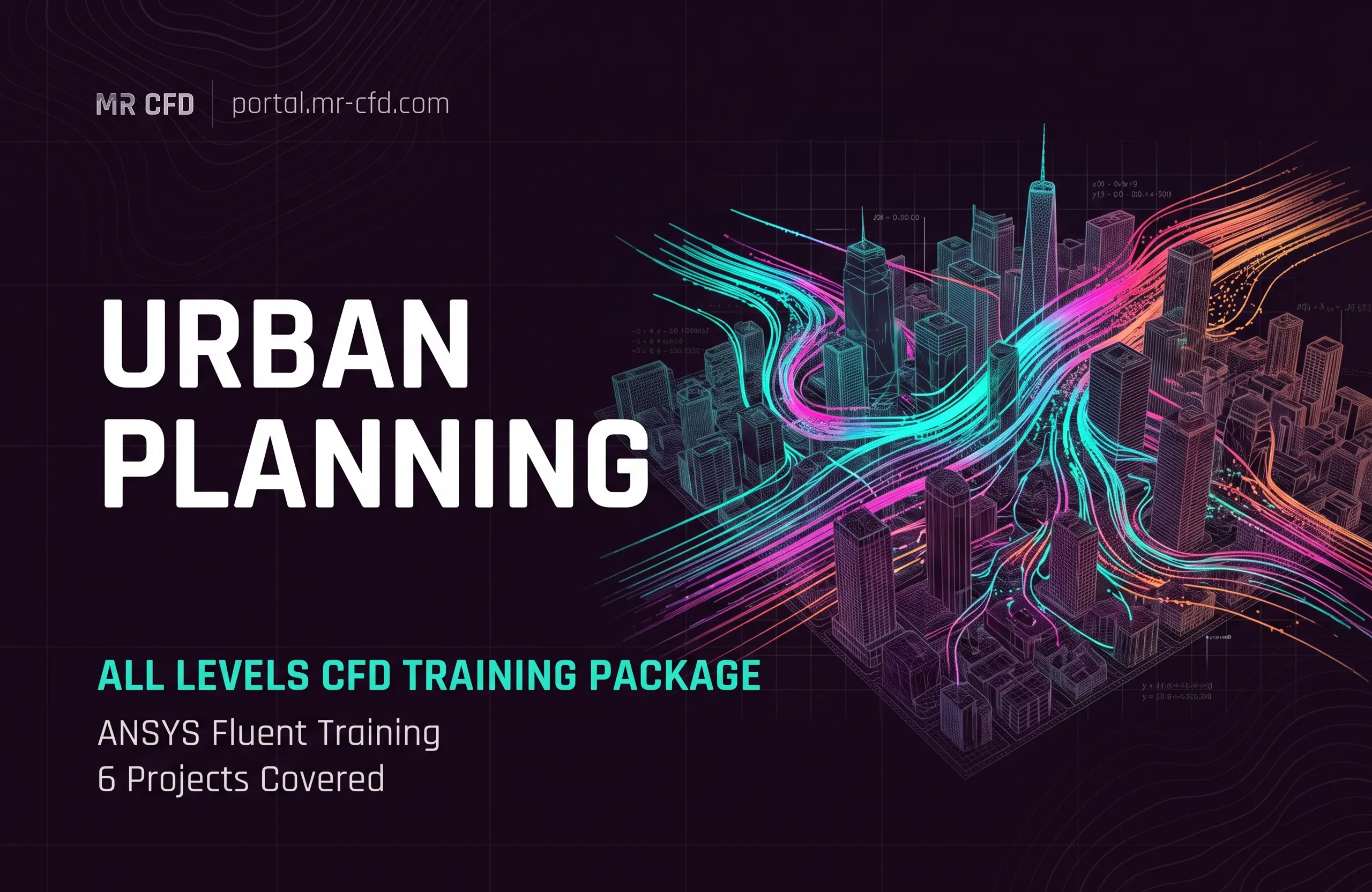
Urban Planning: All Levels CFD Training Package
Beginner, Intermediate, Advanced
Price: $69
Urban Planning: All Levels CFD Training Package is a six-project introduction to urban airflow and air-quality simulation in ANSYS Fluent. Starting from wind flow around individual buildings and building through street-canyon pollutant dispersion to district-scale air quality and the urban heat island effect, it gives learners a hands-on, application-driven foundation in the CFD techniques behind modern urban planning and sustainable city design — one real engineering case at a time.
Price: $49
The final step in the series, this course covers the most demanding version of each project — high-speed and reacting flows, fluid-structure interaction, UDFs, and moving geometry — the kind of coupled, multi-physics problems most CFD engineers never get past. It's built for those who want to solve undefined, real-world problems and defend their results with confidence.

Build Real-World CFD Skills with ANSYS Fluent
Intermediate
Price: $29
Building on the fundamentals, this course tackles harder, more realistic versions of the same 16 engineering fields and flow models, introducing multi-phase interactions, transient behavior, and more demanding boundary conditions. You'll leave with the skills to handle real project complexity, not just tutorial-scale problems.
Price: $9
This course takes you from zero to your first working simulations in ANSYS Fluent, covering foundational projects across 16 engineering fields — aerospace, biomedical, chemical, HVAC, marine, renewable energy, and more — alongside core flow models and Fluent modules. By the end, you'll be comfortable setting up, running, and interpreting basic CFD simulations on your own.
Price: $120
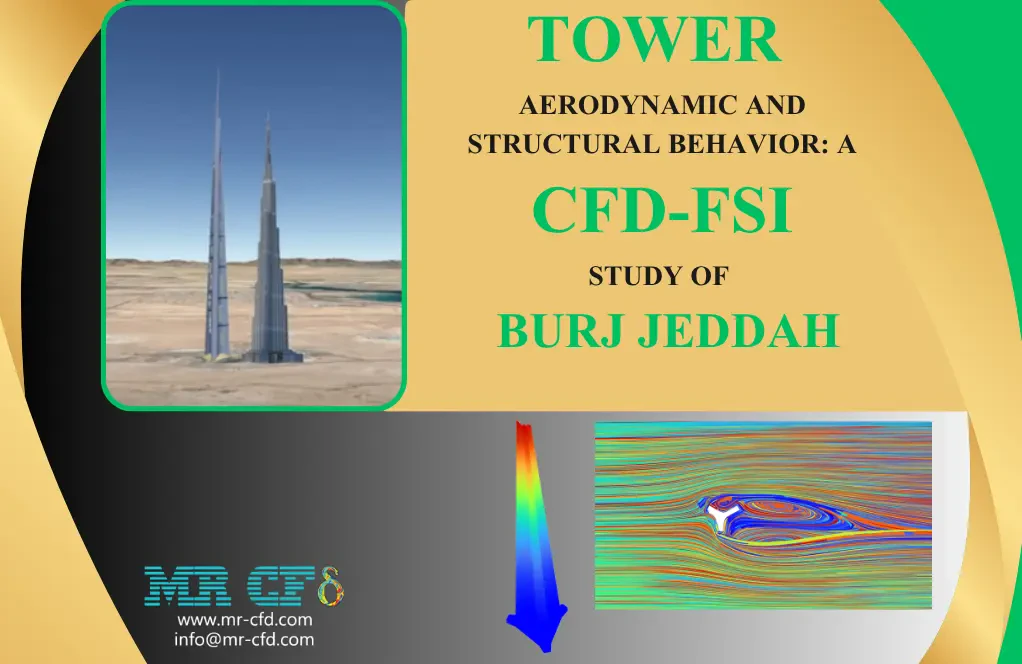
This study examines the aerodynamic behavior around a scaled model of Burj Jeddah. The tower geometry was modeled in ANSYS SpaceClaim, with a length of about 7 m, and discretized using a tetrahedral mesh of approximately 2.5 million cells. A pressure-based steady-state CFD simulation was performed using the standard -turbulence model and a 10 m/s velocity inlet. The results show the flow field around the tower and the resulting structural displacement due to wind loading.
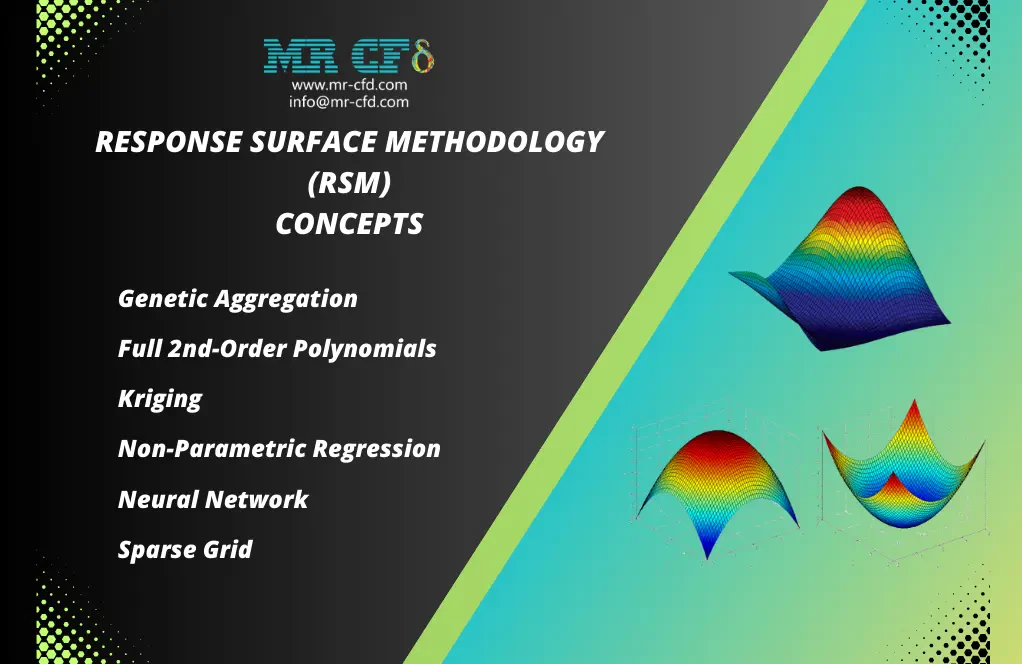
Response Surface Methodology (RSM) Concepts, Optimization by ANSYS Fluent
Beginner, Intermediate, Advanced
Price: Free
Introduction to the Response Surface Methodology (RSM) in ANSYS Fluent software Introduction to the Genetic Aggregation Introduction to the Full 2nd-Order Polynomials Introduction to the Kriging Introduction to the Non-Parametric Regression Introduction to the Neural Network Introduction to the Sparse Grid
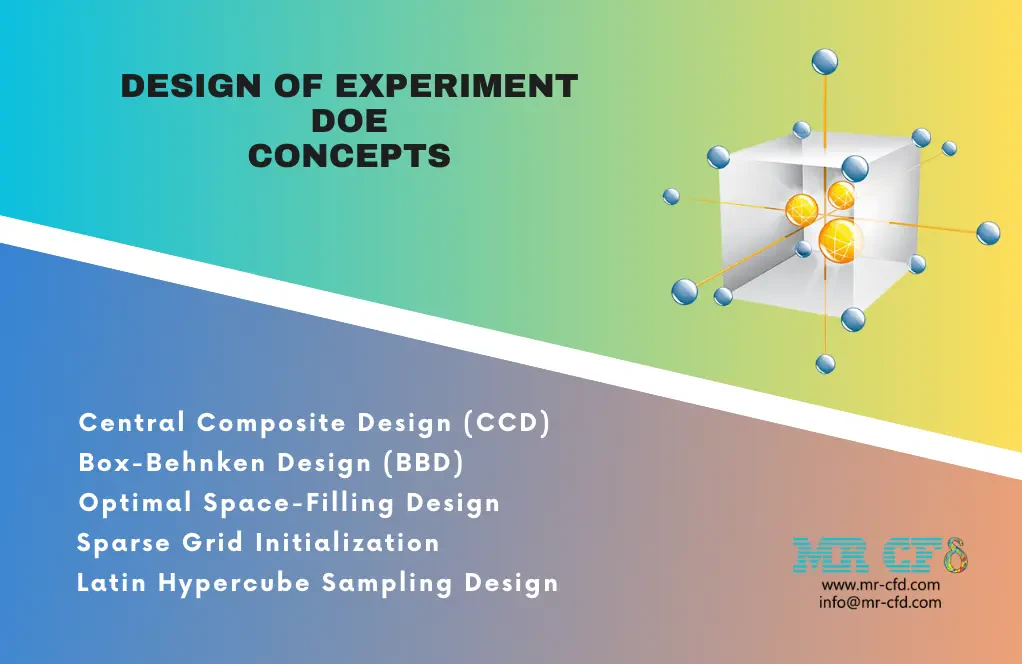
Price: Free
Introduction to the Design of Experiment (DOE) in ANSYS Fluent software Introduction to the Central Composite Design (CCD) Introduction to the Rotatable, VIF-Optimality, G-Optimality, and Face-Centered Introduction to the Box-Behnken Design (BBD) Introduction to the Optimal Space-Filling Design Introduction to the Sparse Grid Initialization Introduction to the Latin Hypercube Sampling Design Introduction to the Custom and Custom+Sampling

Computational Fluid Dynamics (CFD): Introduction
Beginner, Intermediate, Advanced
Price: Free
This is the first session of a Computational Fluid Dynamics (CFD) course, focusing on equations and numerical methods for discretization and solving them in detail. The course is designed by the Mister CFD team to help students and engineers understand the numerical techniques used in software like Ansys Fluent, rather than focusing on fundamental coding. It introduces CFD as a method for solving nonlinear partial differential equations (Navier-Stokes equations) through numerical techniques, since general analytical solutions aren’t available. The document covers three main numerical methods: Finite Difference Method (FDM), Finite Volume Method (FVM), and Finite Element Method (FEM), with their advantages and limitations. It explains different types of Partial Differential Equations (PDEs) including their classifications based on order, linearity, and behavior (Elliptic, Parabolic, and Hyperbolic). The content concludes with detailed explanations of conservation equations, numerical errors in CFD, and the importance of Taylor series in discretization processes.
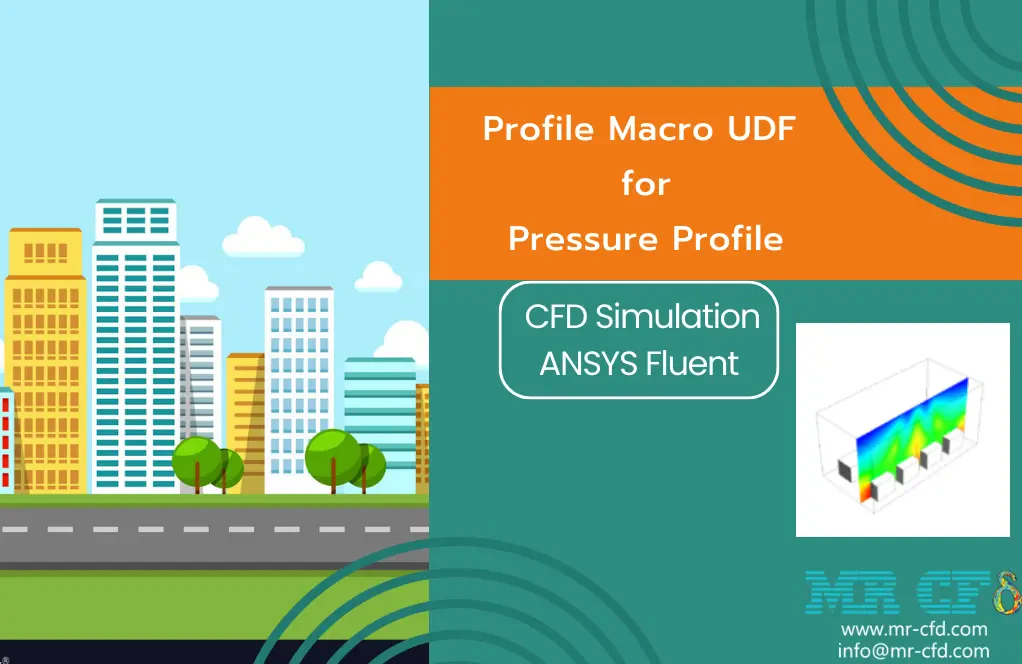
Profile Macro, UDF, Pressure Profile CFD Simulation
Intermediate, Advanced
Price: $24
The problem numerically simulates the air pressure profile in an urban area using ANSYS Fluent software. We design the 3-D model with the Design Modeler software. We mesh the model with ANSYS Meshing software. The mesh is Structured, and the element number equals 118,400. We use the User-Defined Function (UDF) to define a pressure profile. We use the Profile Macro for UDF.