

VOF Online Courses
Here's every CFD online course related to VOF category.
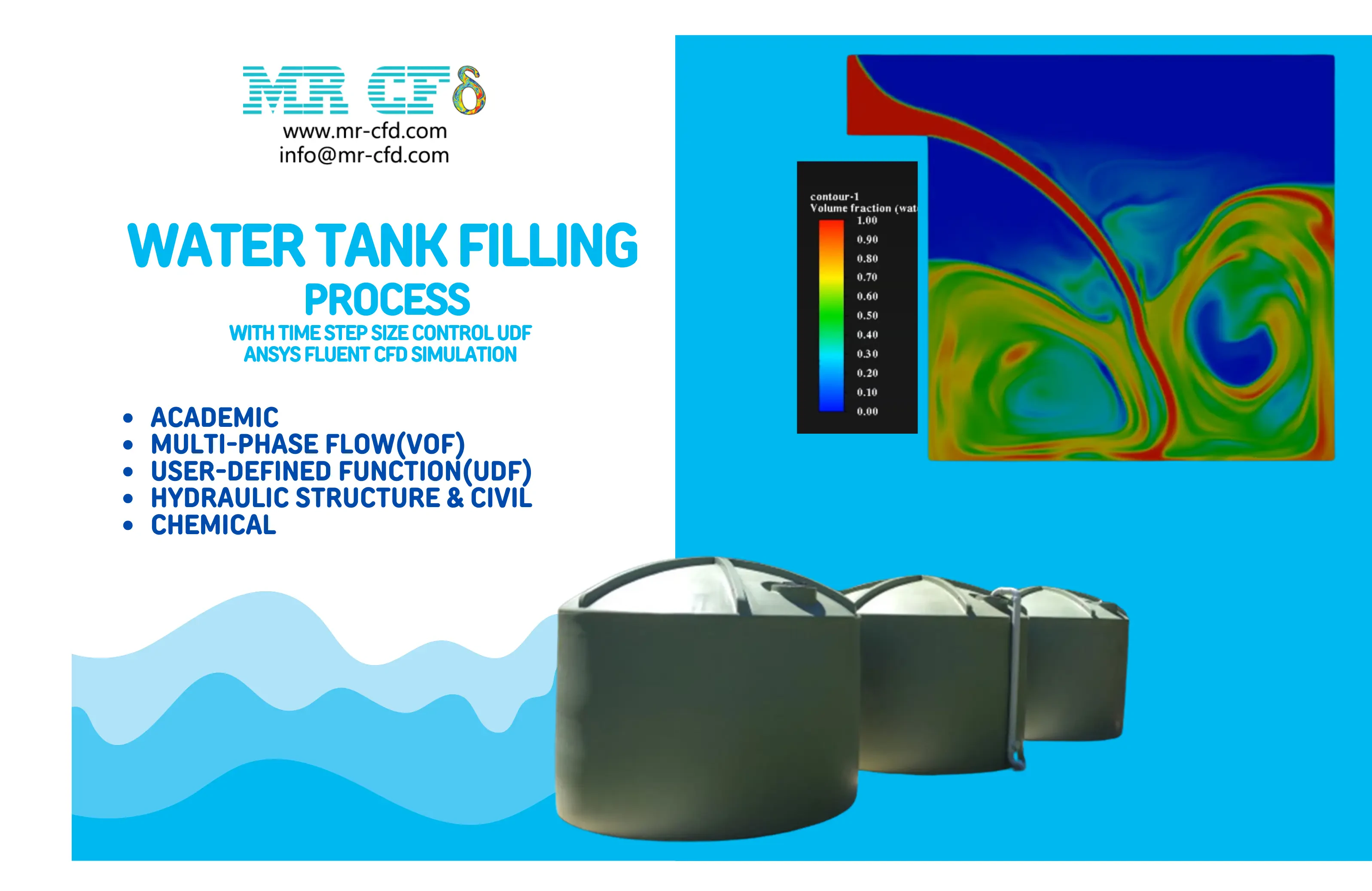
Water Tank Filling Process With Time Step Size Control UDF, CFD Simulation
Intermediate, Advanced
Price: $24
This study uses CFD simulation to investigate the water tank filling process The geometry of the tank was created using ANSYS Design Modeler, and the computational domain was discretized using ANSYS Meshing, resulting in over 135,000 elements The Volume of Fluid (VOF) model was employed to simulate the interaction between water and air phases A User-Defined Function (UDF) was implemented to control the time step size
Price: $12
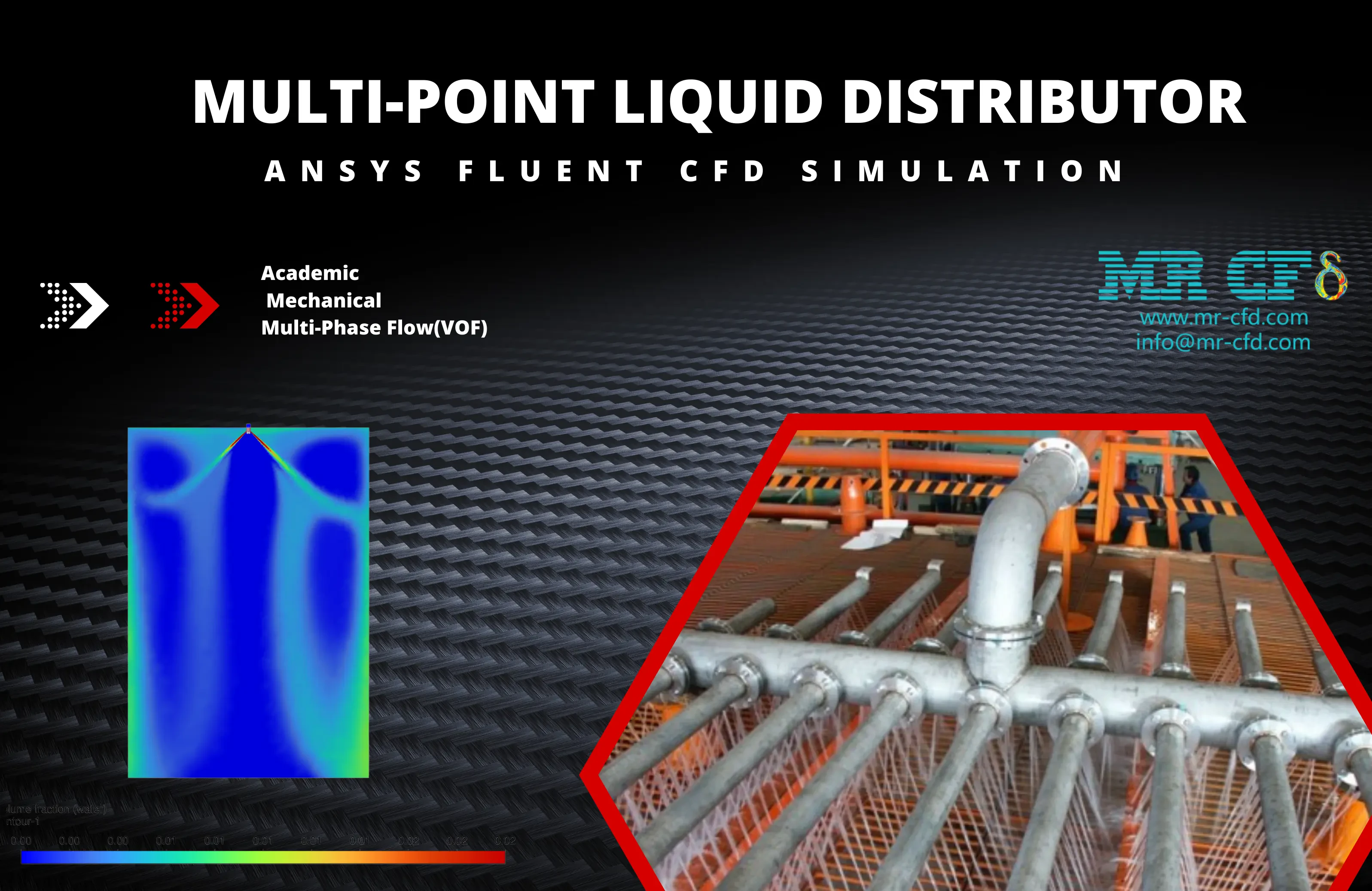
This study presents a CFD analysis of a Multi-point Liquid Distributor for packed columns using ANSYS Fluent. We designed the 3-D symmetry model using the ANSYS Design Modeler We mesh the model with ANSYS Meshing software, and the element number equals 783,039. The Volume of Fluid (VOF) model was utilized to simulate the multiphase flow of water and air. A steady-state, pressure-based solver was employed for the simulation.
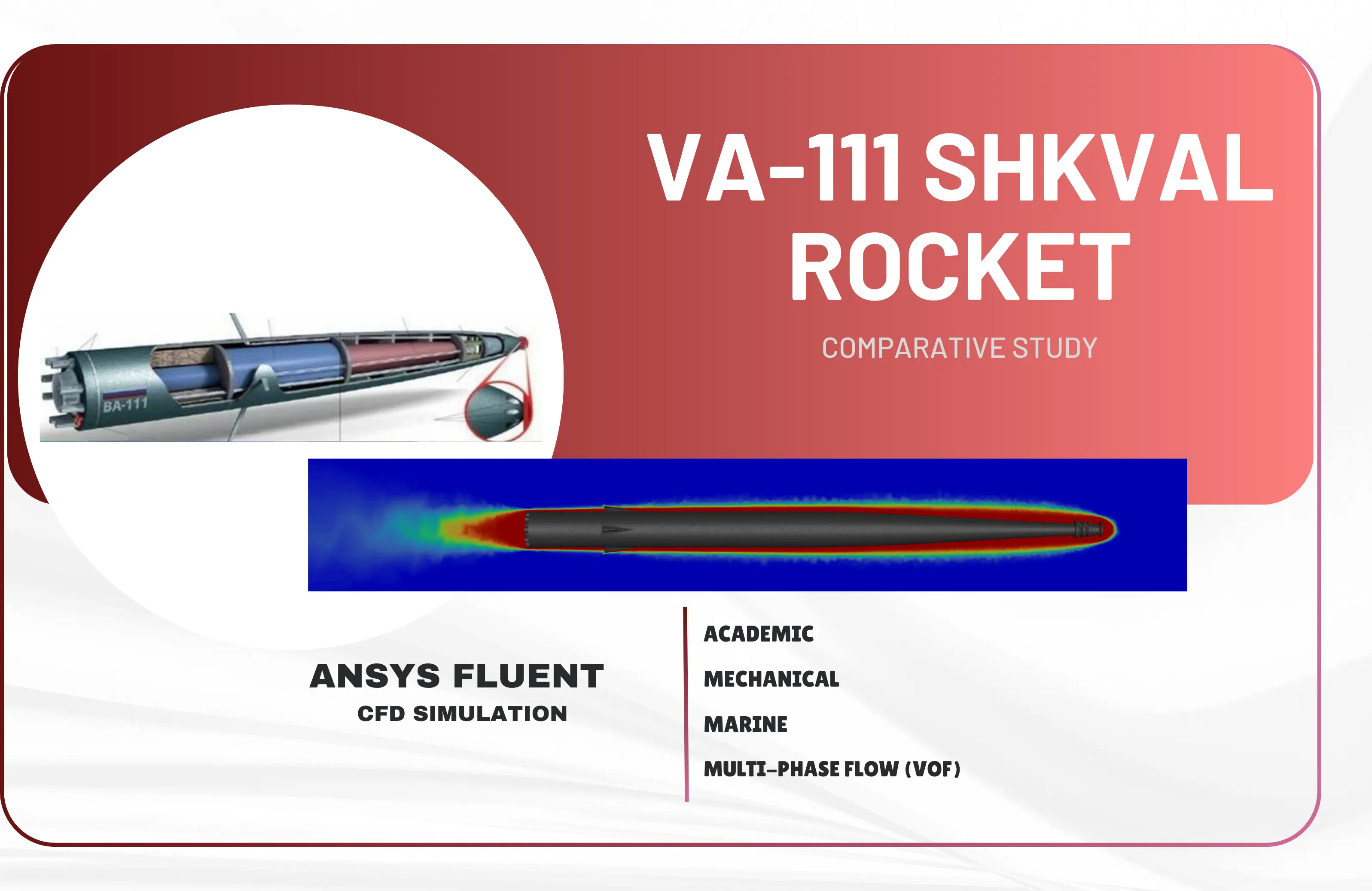
VA-111 Shkval Rocket Performance Comparative Study with and without Supercavitation injection
Advanced
Price: $14
This problem simulates a VA-111 Shkval rocket using ANSYS Fluent software. The geometry is designed in SpaceClaim, and the meshing is performed using Fluent Meshing; the element number equals 257,000 polyhedral cells. The simulation uses the Pressure-based and VOF Multiphase model to define a two-phase flow. The turbulence model is set to SST k-ω.
Price: $80
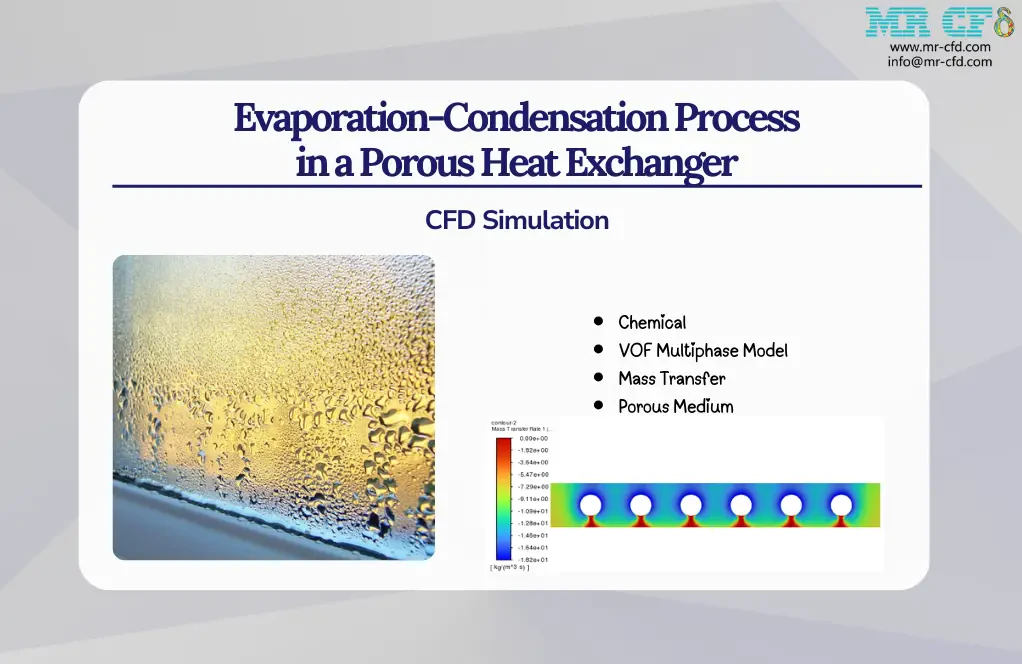
The study investigates Evaporation-Condensation Process in a Porous Heat Exchanger using ANSYS Fluent. The geometry is created in ANSYS Design Modeler, with a mesh of 8,777,268 elements generated using ANSYS Meshing. The simulation employs a pressure-based transient solver with the k-epsilon turbulence model and Volume of Fluid (VOF) multiphase model. It conducts a time-dependent analysis with enabled condensation in mass transfer mechanisms to simulate phase change from vapor to liquid water. Also, the domain is considered to be porous.

Cavitation Phenomenon Around a Triangular Obstacle
Beginner, Intermediate
Price: $14
The study investigates cavitation in water flow around a triangular obstacle using ANSYS Fluent CFD simulation. The geometry is created in ANSYS Design Modeler, with a mesh of 310,000 structured elements generated using ANSYS Meshing. The simulation employs a pressure-based transient solver with the k-epsilon turbulence model and Volume of Fluid (VOF) multiphase model. ANSYS Fluent conducts a time-dependent analysis with enabled cavitation in mass transfer mechanisms to simulate phase change from liquid water to vapor.
Price: $100
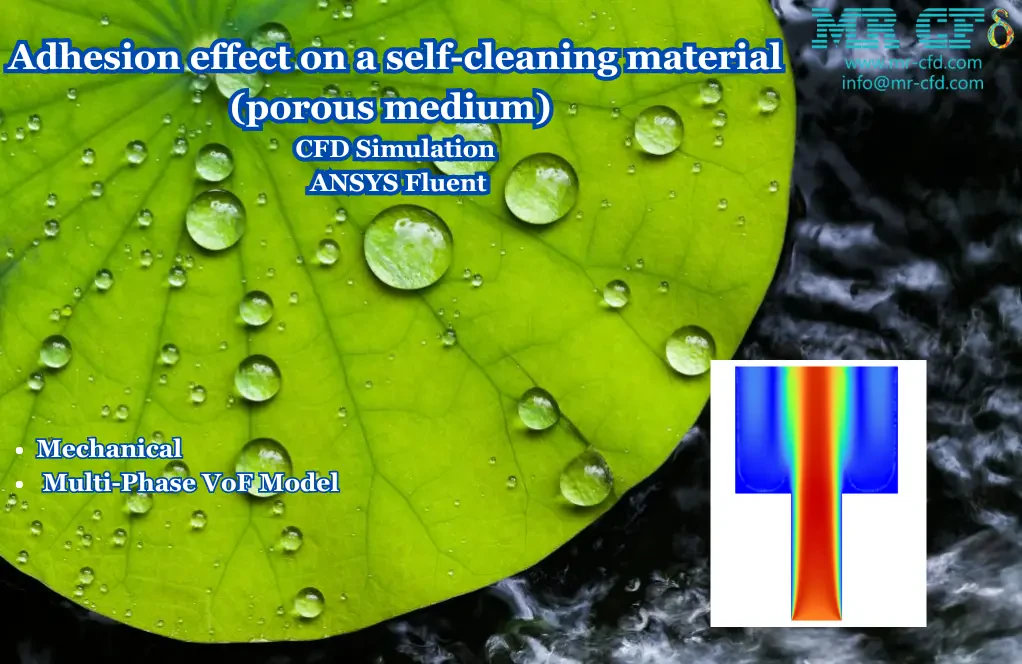
This problem simulates Adhesion effect on a self-cleaning material (porous)using Ansys Fluent software. The 2-D geometry is designed in Design Modeler software. Ansys Meshing software is used to generate the mesh; the element number equals 105,000. In this project, the Hydrophilicity and hydrophobicity of surfaces is simulated using the VOF How the flow pattern near a hydrophobic surface and near a hydrophobic surface is well modeled in this project.
Venturi Nozzle Multiphase Flow Analysis
Intermediate
Price: $10
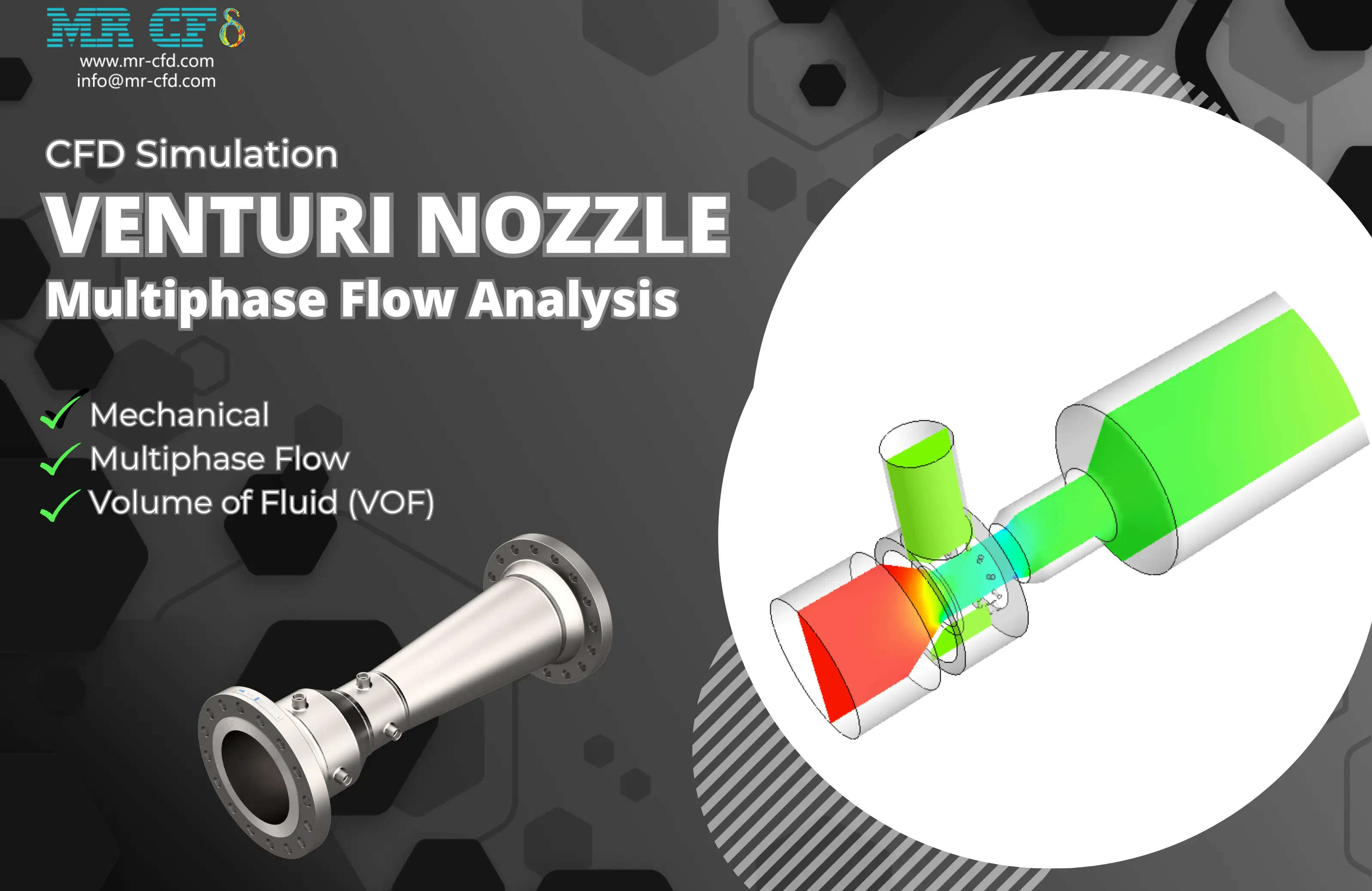
The problem numerically simulates multiphase flow in a venturi nozzle using ANSYS Fluent software. The geometry is designed in ANSYS Design Modeler and ANSYS Meshing is used to generate a mesh with 829,367 cells. The Volume of Fluid (VOF) multiphase model is employed to handle the interaction between air and water phases. The Realizable k-epsilon turbulence model with Enhanced Wall Treatment is used to simulate turbulent flow. Results are analyzed for air volume fraction, pressure distribution, and velocity patterns throughout the venturi turbine geometry.
Energy Dissipation on Stepped Spillways using blocks CFD Simulation
Beginner, Intermediate
Price: $14
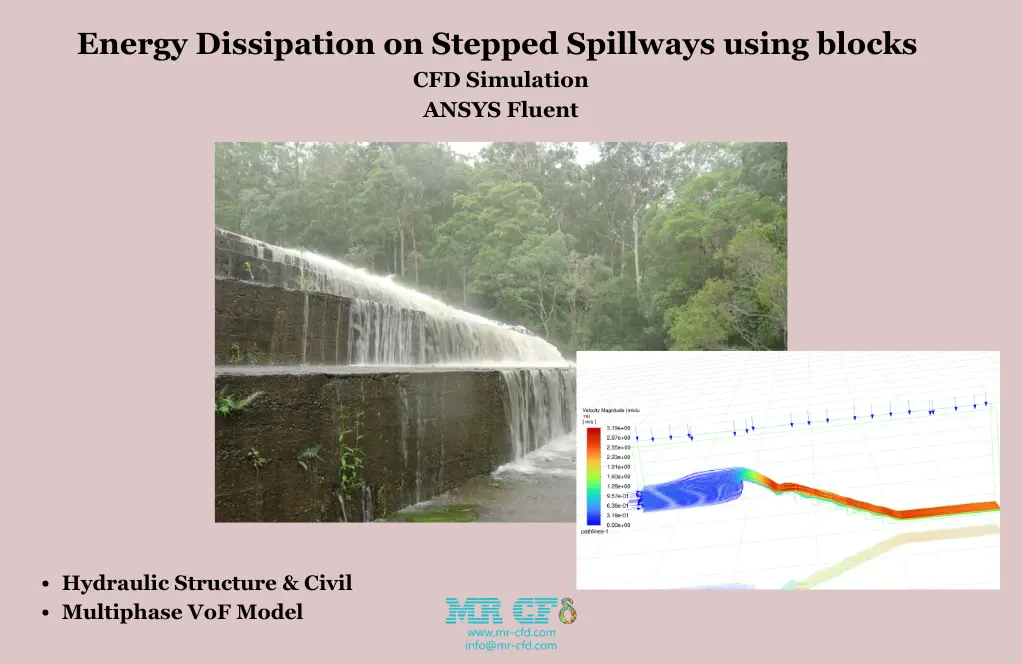
This study investigates the effects of energy dissipation blocks on the energy dissipation efficiency of stepped spillways using computational fluid dynamics (CFD) simulations. Two spillway configurations, with and without blocks, were analyzed under different flow conditions. The results showed that the presence of blocks enhanced energy dissipation by 6% compared to the conventional stepped spillway design. These findings contribute to the optimization of stepped spillway designs for improved energy dissipation and downstream channel protection.
Price: $160
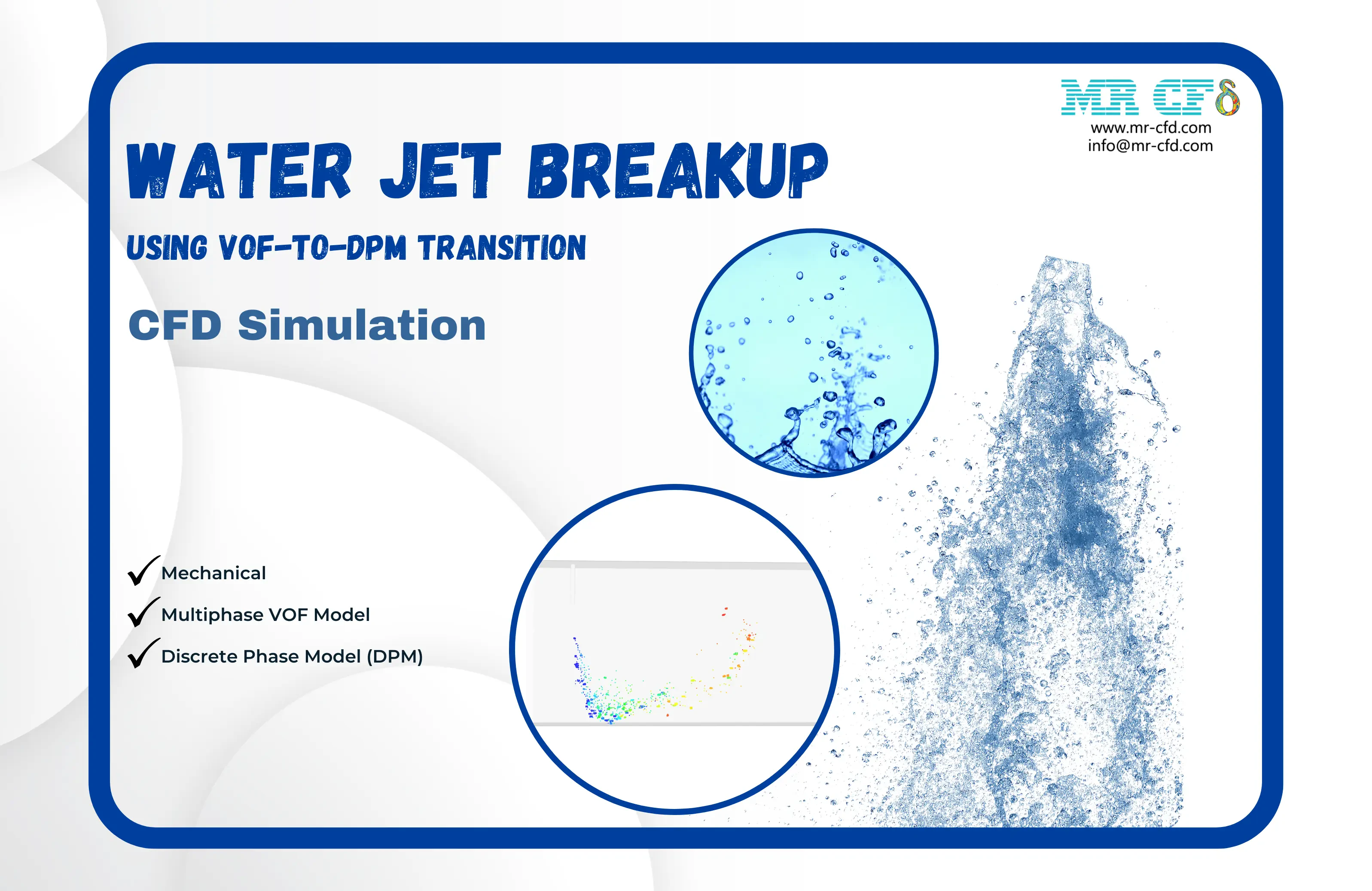
The problem numerically simulates the Water Jet Breakup using ANSYS Fluent software. The3-D geometry is designed in Design Modeler software. We used ANSYS Meshing to generate mesh; the element number equals 3,157,674. The Adaptive mesh refinement is the mesh method for this problem. The liquid bulk in the domain is simulated using VOF model. Also, the droplets are modeled via DPM model.