

Electrical & Power GOLDEN Training Package
Price:
$9,844
$2,249
teams, professors, and decision-makers with over 170 ANSYS Fluent tutorials—from beginner to expert—covering real-world simulations like HAWT/VAWT turbines, ACSC condensers, PVT panels, battery cooling, heat sinks, fuel cells, MHD/EHD effects, arc welding, and more. This turnkey suite delivers step-by-step projects (geometry to post-processing), 1-year expert support, 3-month HPC access, and ongoing updates, slashing training costs and onboarding time while ensuring mastery of electroplating, ventilation, PCM cooling, and power system CFD for immediate productivity in industries and academia.
Price: $200
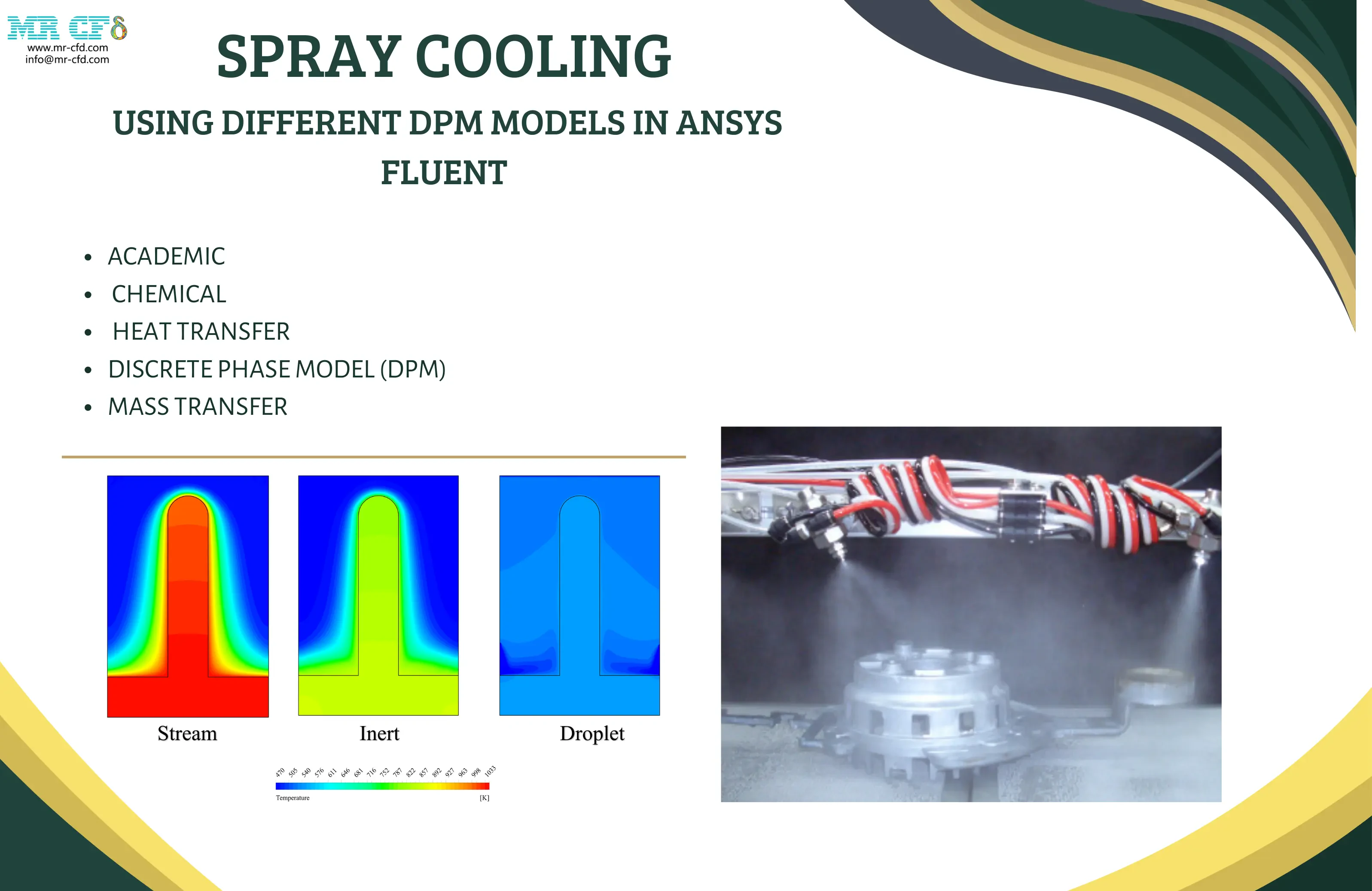
In this comprehensive study, three distinct cases were investigated to analyze the effectiveness of spray cooling approaches utilizing ANSYS Fluent software. The simulation setup began with the creation of detailed geometry using SpaceClaim, followed by the generation of a high-quality quadrilateral mesh in ANSYS Meshing. Three simulation cases were compared: baseline airflow only (Case 1), water injection with inert particles (Case 2), and water injection with droplet interactions and phase change A two-way coupling approach was employed in the DPM configurations to capture the complete interaction between the discrete phase and the continuous flow field.
PCM-Enhanced PV Panel, Ansys Fluent CFD Simulation
Intermediate, Advanced
Price: $54
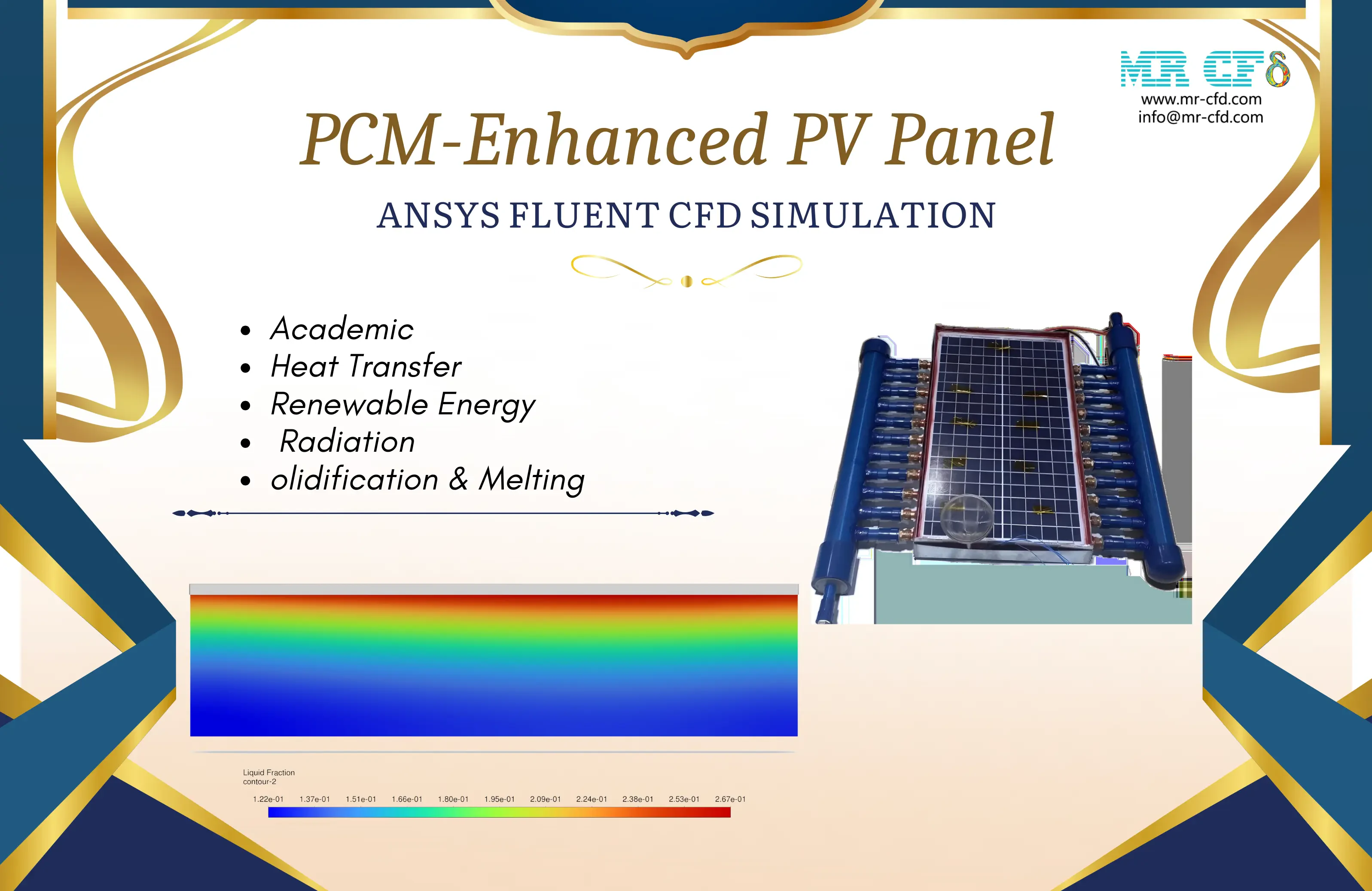
In this product, we conducted a comprehensive study comparing two distinct cases1) A conventional PV panel without pCM 2) An enhanced system incorporating PCM cooling technology comprehensive three-dimensional model was developed using ANSYS SpaceClaim,The computational domain was discretized using ANSYS Meshing software, employing a structured grid approach with approximately 1,000,000 elements The Solidification and Melting model was activated to accurately capture the phase change dynamics of the PCM The Discrete Ordinates (DO) radiation model was implemented to account for radiative heat transfer Solar Ray Tracing was enabled for precise solar load calculations
Price: $200
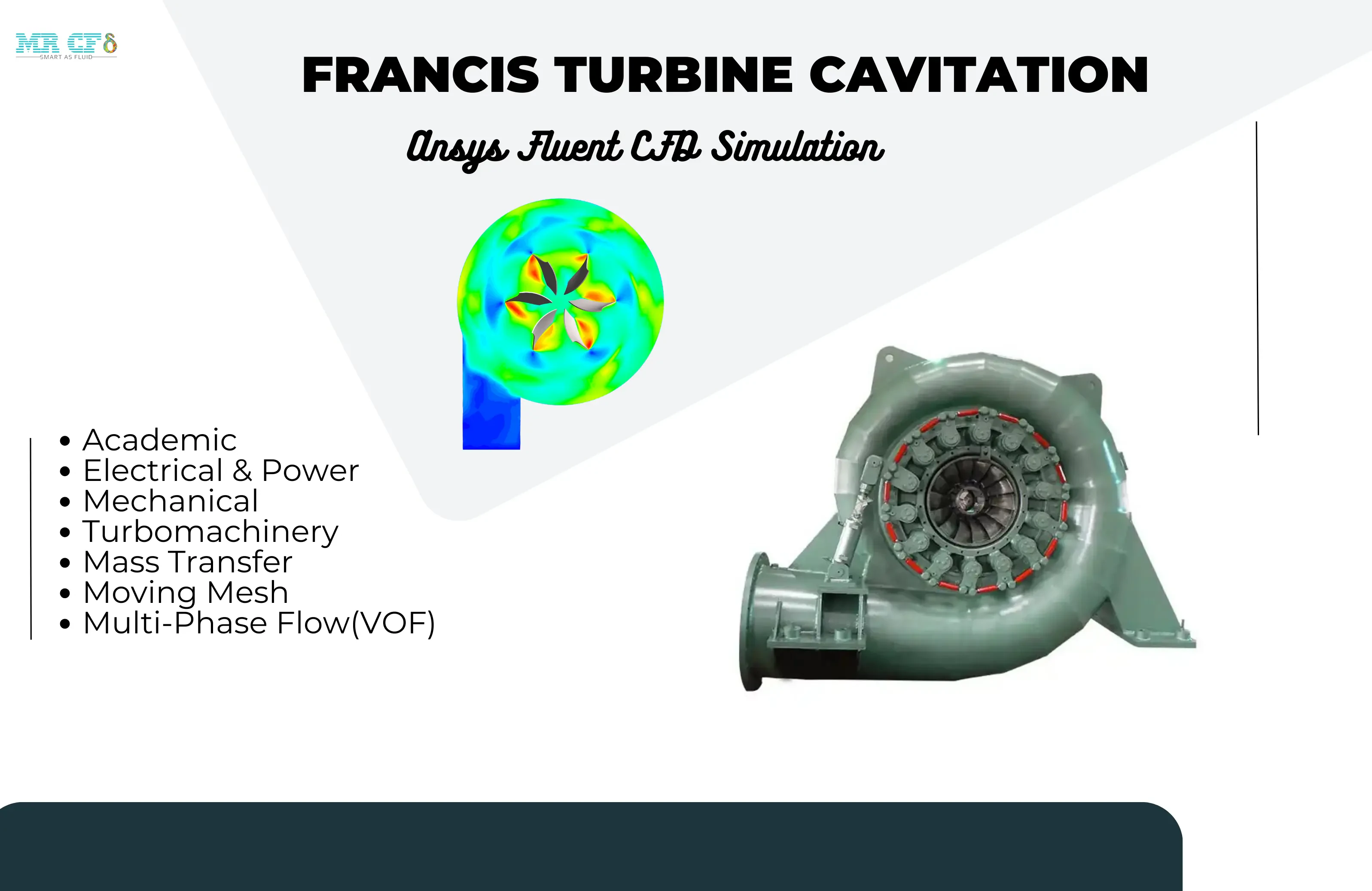
The computational fluid dynamics (CFD) analysis of a Francis turbine was conducted using ANSYS Fluent software to investigate its performance characteristics and flow behavior. This study aims to provide detailed insights into the pressure distribution, velocity patterns, and potential cavitation phenomena within the turbine system. The simulation incorporates advanced numerical models and careful consideration of boundary conditions to ensure accurate results.
Battery Model Introduction
Intermediate
Price: Free
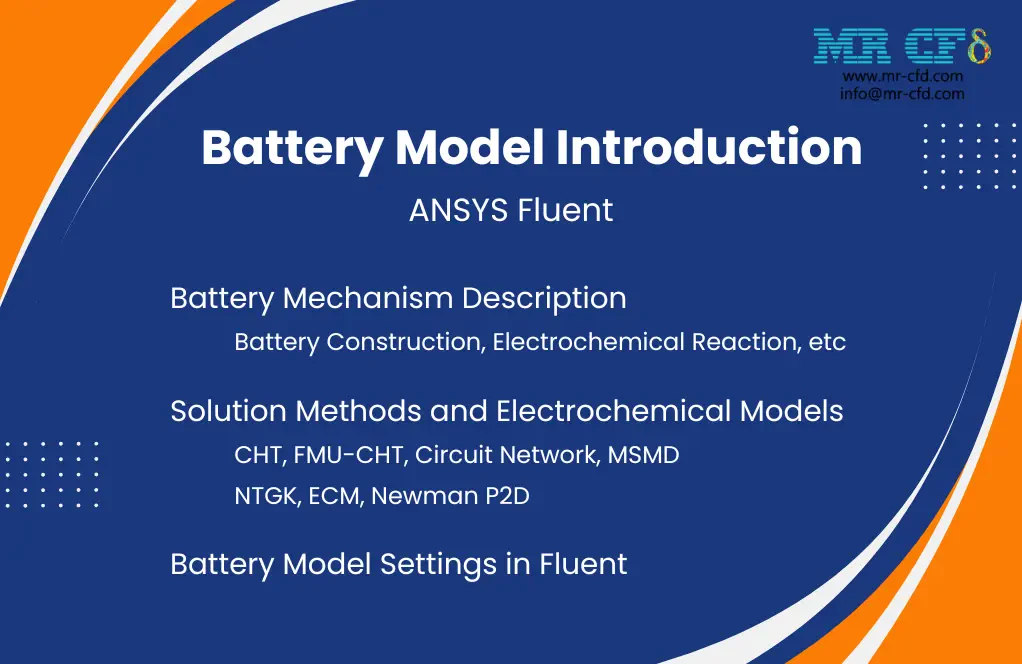
Introduction to the Battery Model in ANSYS Fluent software Introduction to the Battery System Operation Introduction to the Solution Methods (CHT, FMU-CHT, Circuit Network, MSMD) Introduction to the Electrochemistry Models (NTGK, ECM, Newman P2D) Introduction to the Battery Model Settings
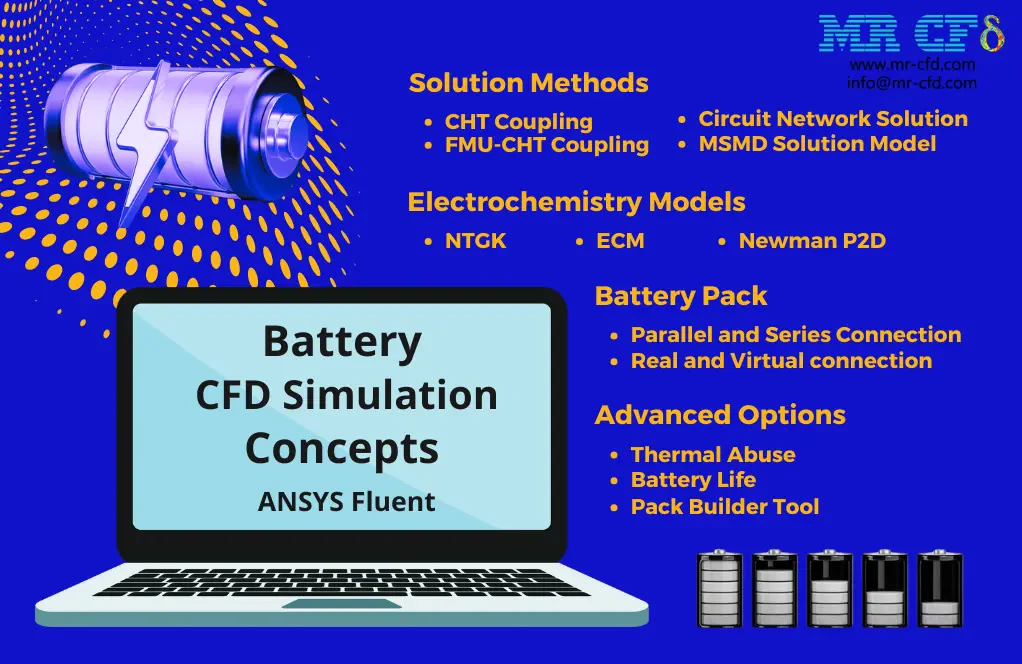
Battery CFD Simulation Concepts, ANSYS Fluent
Beginner, Intermediate, Advanced
Price: $9
Introduction to the Battery Model in ANSYS Fluent software Introduction to the Solution Methods (CHT, FMU-CHT, Circuit Network, MSMD) Introduction to the Electrochemistry Models (NTGK, ECM, Newman P2D) Introduction to the Battery Module and Battery Pack (Parallel and Series) Introduction to the Real Connection and Virtual Connection Introduction to the Thermal Abuse, Battery Life, and Pack Builder options
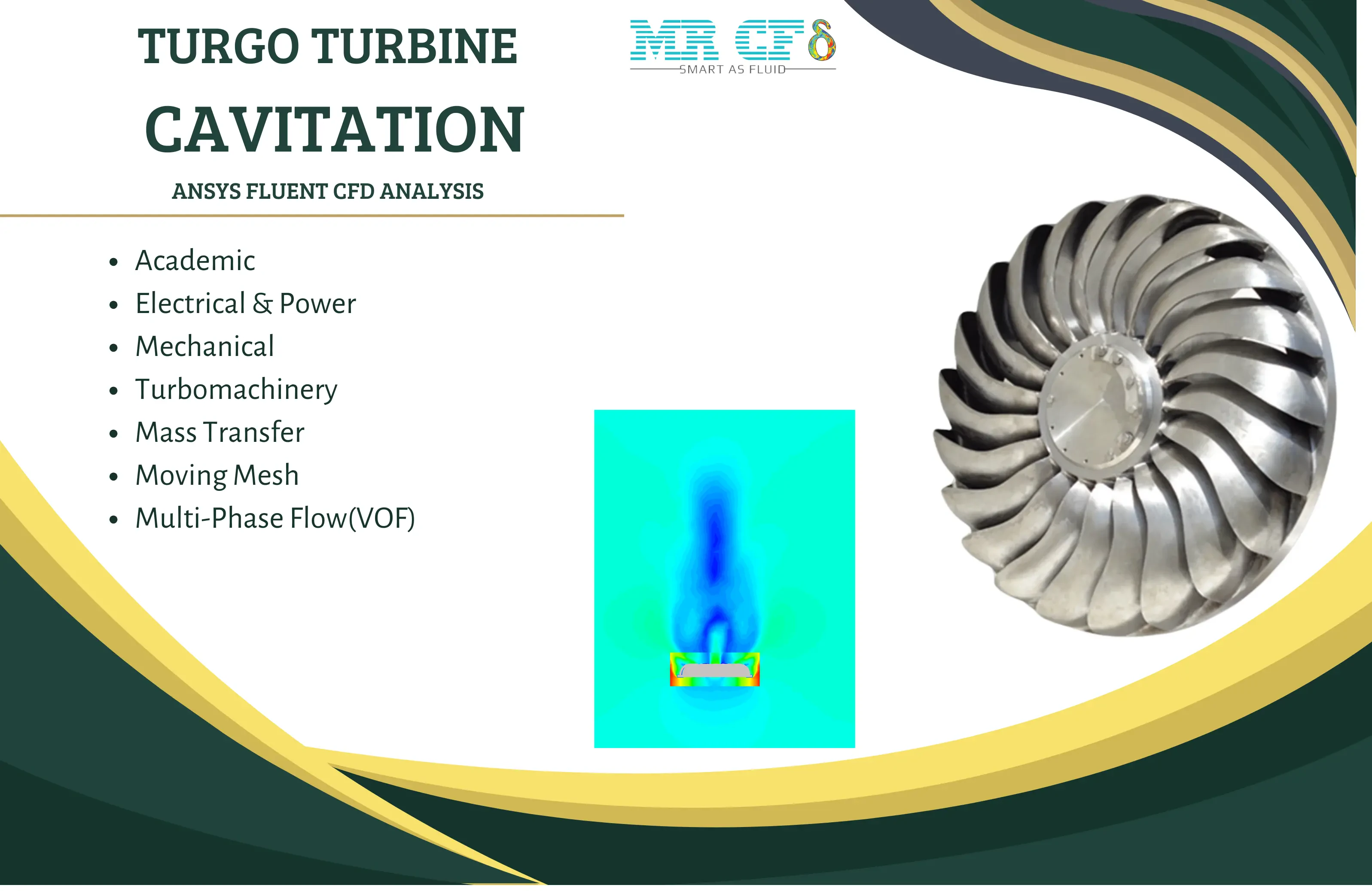
Turgo Turbine Cavitation: CFD Analysis
Intermediate, Advanced
Price: $20
The project utilized the ANSYS software suite to simulate and analyze the fluid behavior and cavitation characteristics under specific operating conditions. The initial phase of the project involved geometry creation using ANSYS Design Modeler, followed by mesh generation in ANSYS Meshing. The multiphase modeling approach utilized the Volume of Fluid (VOF) method, coupled with cavitation mechanisms to accurately represent the two-phase flow dynamics
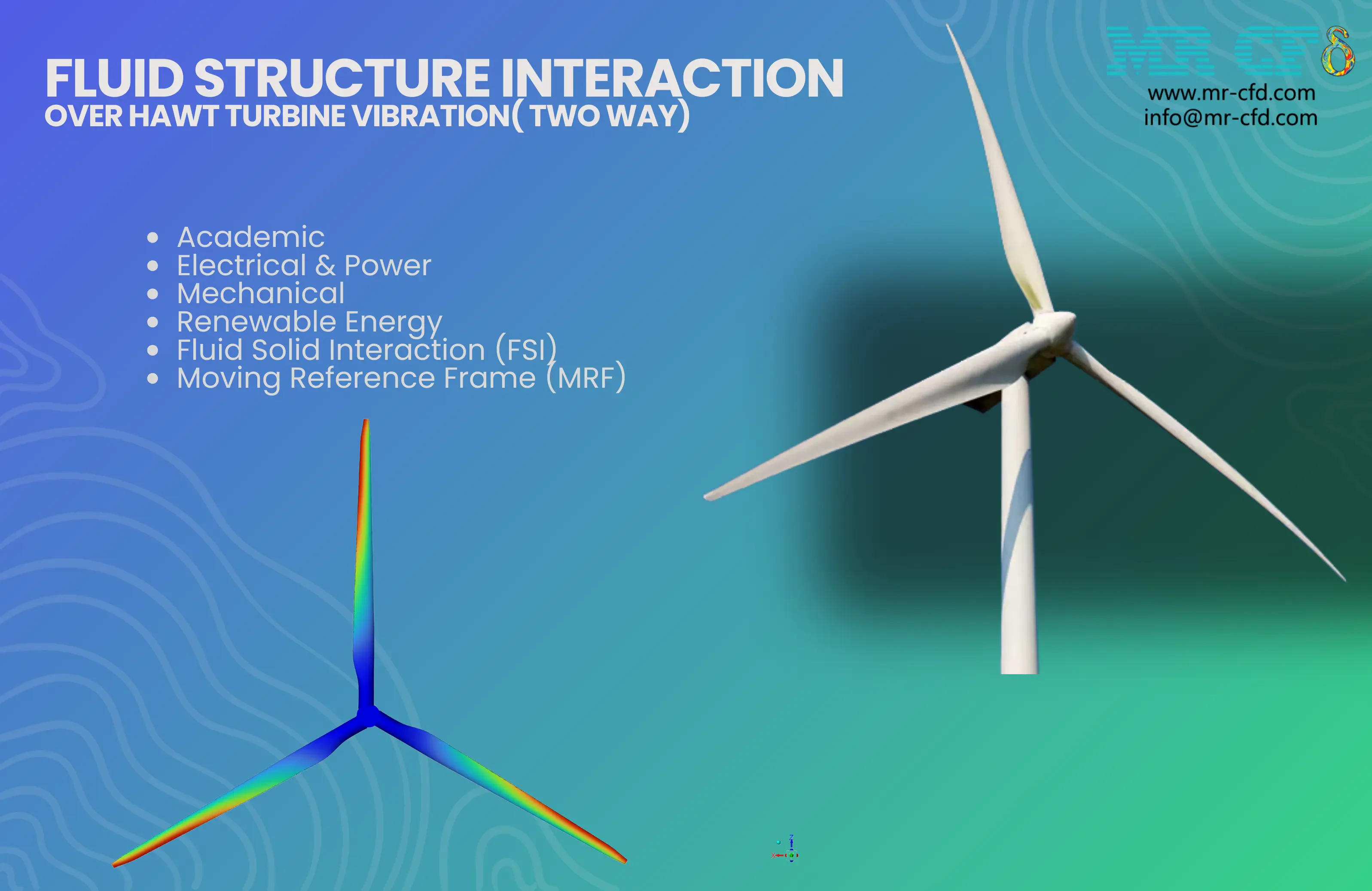
Fluid-Structure Interaction over HAWT Turbine Vibration (two-way)
Intermediate, Advanced
Price: $60
this report presents a FSI analysis of a HAWT using CFD. The geometry was created using ANSYS Design Modeler, and meshing was performed with ANSYS Meshing, resulting in a high-fidelity model with 3,465,821 cells. The simulation leverages (MRF) approach for rotating domains and dynamic mesh methods to capture the complex fluid-structure interactions. A two-way FSI approach was employed to capture the mutual interaction between the fluid flow and the structural deformation of the turbine blades.
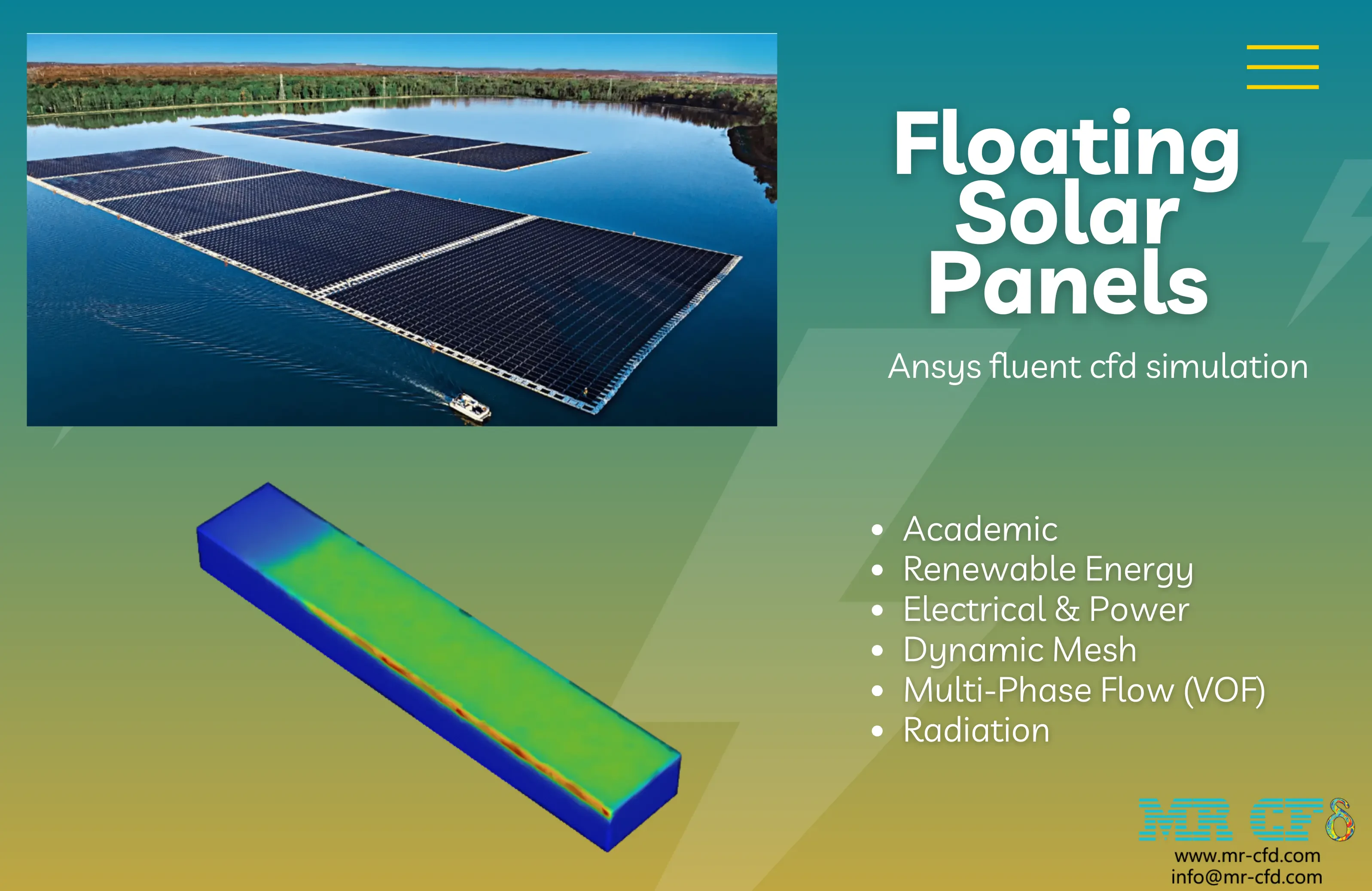
Floating Solar Panel CFD Simulation, ANSYS Fluent Tutorial
Intermediate, Advanced
Price: $40
we are simulating the solar panel that is floated on the water surface,The simulation is 3D and the solar panels and performed by ANSYS Fluent. The geometry is designed using Spaceclaim software. Then, it is meshed in ANSYS Meshing. In total 479895 cells are generated. phases are modeled by Volume of Fluid multiphase model. The dynamic mesh can reproduce elements by remeshing and smoothing types. Also, the radiation is activated.
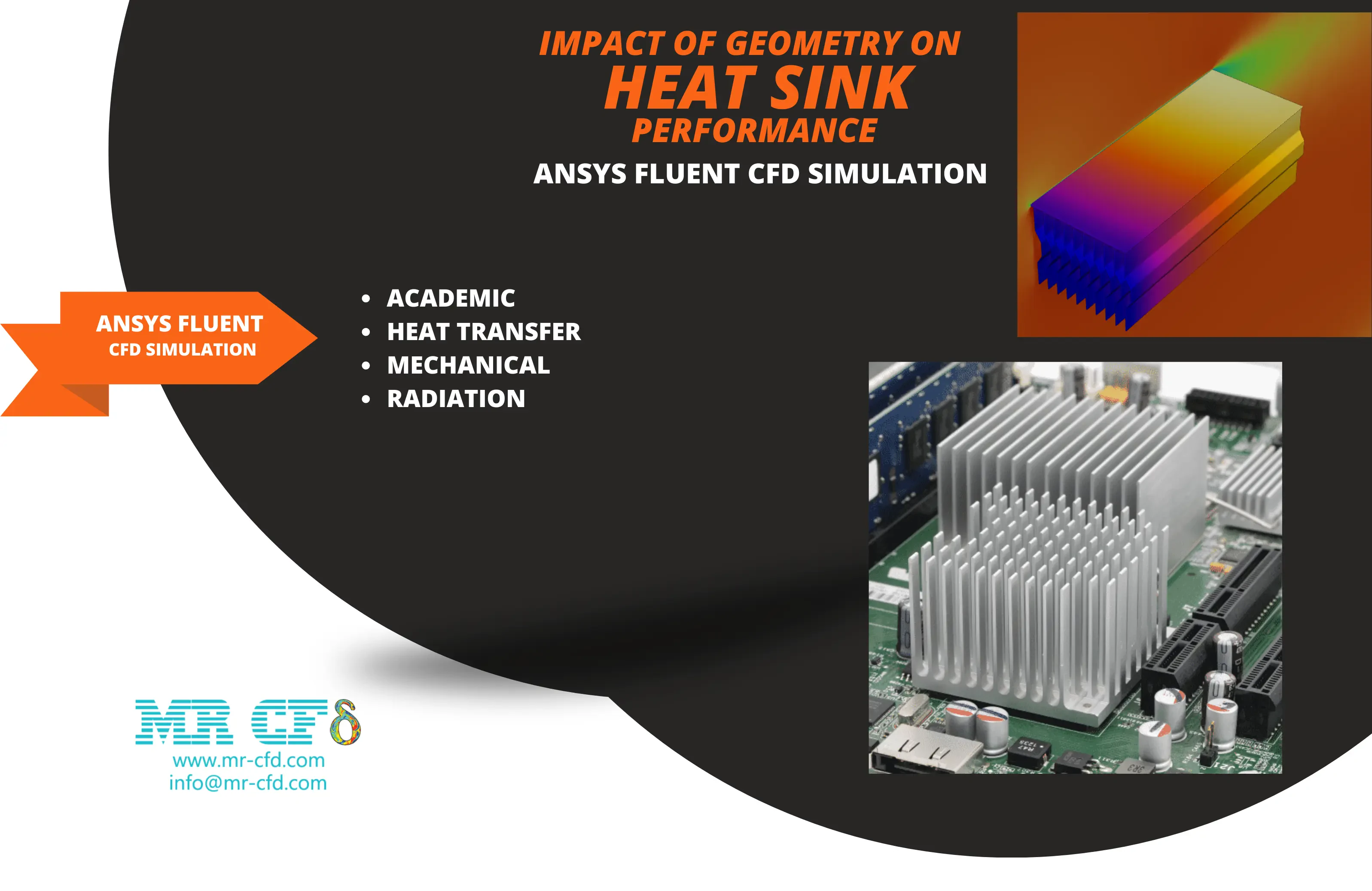
Impact of Geometry on Heat Sink Performance
Beginner, Intermediate
Price: $14
This study compares the thermal performance of open and enclosed heat sink designs using CFD simulations The open design features exposed fins, while the enclosed design has a closed-top 3-D symmetry model designed using ANSYS Design Modeler software model meshed with ANSYS Meshing software, and the element number equals 2,599,334. The discrete Ordinates (DO) radiation model was activated to simulate the impact of solar irradiation
Complete Electrical and Power CFD Course +140 Simulations (All in One Course)
The Complete Electrical and Power CFD Course: +140 CFD Simulations by ANSYS Fluent is a comprehensive training solution for engineers, universities, companies, institutes, professors, managers, and technical teams that need practical CFD capability in electrical and power engineering applications.
Developed by MR CFD, this course is part of MR CFD’s professional CFD Courses and Complete CFD Courses is designed to help learners move from scattered tutorials to a complete, structured, project-based CFD training experience. The course is also offered as the Electrical and Power GOLDEN Training Package, giving buyers access to a wide range of real-world simulations in one comprehensive package.
This complete course covers battery thermal management, fuel cells, electrolyzers, electronics cooling, heat sinks, PCM cooling, EHD, MHD, wind turbines, water turbines, turbine cavitation, active ventilation, generator room cooling, photovoltaic thermal systems, and advanced thermal management for electrical and power systems.
Why Choose This Complete Electrical and Power CFD Course?
This course is built for buyers who need practical simulation readiness, not only theoretical knowledge. It helps engineering teams, academic departments, and industrial companies train users faster, reduce project risk, and standardize CFD workflows across electrical and power engineering applications.
| Business Need | How This Complete CFD Course Solves It |
| Faster team onboarding | New engineers can learn from complete, pre-built electrical and power CFD projects. |
| Reduced training cost | One comprehensive course replaces scattered tutorials, repeated internal training, and disconnected learning resources. |
| Practical power engineering coverage | The course includes batteries, fuel cells, electrolyzers, heat sinks, turbines, cooling systems, PCM, EHD, MHD, and ventilation. |
| Academic teaching support | Professors can use the simulations as practical teaching material for students, interns, and research assistants. |
| Enterprise workflow consistency | Teams can follow proven simulation workflows instead of building every process from scratch. |
| Real project readiness | Learners work with applied CFD simulations rooted in power, electronics, cooling, and renewable energy systems. |
Complete Electrical and Power Engineering CFD Training for Teams
This course gives your organization a structured path to CFD mastery in electrical and power engineering. It supports users who need to simulate battery packs, lithium-ion battery cooling, PCM-based thermal management, PEM fuel cells, alkaline electrolysis, heat sinks, microchannels, IGBT cooling, server room cooling, generator room ventilation, wind turbines, water turbines, hydropower systems, and thermal behavior in power equipment.
For companies, this complete CFD course reduces dependency on isolated experts and creates a repeatable learning pathway for engineering teams. For universities and institutes, it provides ready-to-use simulation projects that can support lectures, laboratories, workshops, research projects, and advanced engineering curricula.
What You Get in This Electrical and Power CFD Course
| Included Asset | Value for the Buyer |
| +140 CFD simulation projects | A comprehensive electrical and power engineering CFD library in one course package. |
| Step-by-step tutorials | Practical guidance from geometry creation to final post-processing. |
| Complete simulation workflows | Geometry, meshing, solver setup, results analysis, and engineering interpretation. |
| Advanced power engineering case studies | Coverage of batteries, fuel cells, electrolyzers, turbines, heat sinks, cooling systems, PCM, EHD, MHD, and ventilation. |
| 1 year of technical support | Direct support from MR CFD experts for course users. |
| 3 months of HPC access | Additional computational resources for selected learning and simulation needs. |
| Regular course enhancements | Continued value through updates for emerging fields such as PCM cooling, turbine systems, and advanced electrical thermal management. |
Electrical and Power CFD Topics Covered in This Complete Course
This complete CFD course covers a broad range of electrical and power engineering applications, from electronics cooling and battery systems to renewable energy turbines, electrochemical devices, and thermal management of power equipment.
| Training Area | Covered Topics |
| Battery CFD simulation | Battery pack 1P6S, battery 1P1S, battery model introduction, battery CFD concepts, PCM-covered batteries, and validation-based battery projects. |
| Battery thermal management | Water vapor cooling, nanofluid cooling, PCM cooling, lithium-ion battery thermal management, and advanced cooling strategies. |
| Electronics cooling | PCB submerge cooling, ASIC miner liquid immersion cooling, IGBT heat sink cooling, server room cooling, heat sink cooling, and porous medium cooling. |
| Heat sink CFD | Microchannel heat sink optimization, conjugate heat transfer in microchannel heat sinks, splitter plate effects, CPU heat sink thermal paste, and pin-fin heat sinks. |
| Fuel cell CFD | PEM fuel cells, proton exchange membrane fuel cells, polymer electrolyte membrane fuel cells, and paper-validation fuel cell projects. |
| Electrolyzer CFD | PEM electrolysis, alkaline electrolysis, electrolyzer validation cases, and multiphase applications in electrochemical systems. |
| PCM thermal management | PCM cooling, PCM-enhanced PV panels, battery cooling by PCM, lithium-ion battery PCM protection, and phase change thermal control. |
| EHD and electric field effects | Electric field effect on nanofluid heat transfer, charge density modeling, and combustion in the presence of EHD. |
| MHD and magnetic field effects | MHD fluid flow, magnetic field effects on nanofluid flow, magnetic heat transfer, and magnetic force effects. |
| Active ventilation | Greenhouse ventilation, classroom airborne risk, miner room ventilation, server room cooling, generator room ventilation, and fan-assisted cooling. |
| Wind turbine CFD | Vertical axis wind turbines, Darrieus turbines, H-Type VAWT, helical blade turbines, Savonius turbines, Liam F1 wind turbine, and wind turbine validation cases. |
| Water and tidal turbines | Pelton wheel turbines, horizontal axis tidal turbines, Archimedes screw turbines, Francis turbines, Turgo turbines, hydrokinetic turbines, and hydropower optimization. |
| Turbine cavitation | Francis turbine cavitation, Turgo turbine cavitation, hydrokinetic turbine cavitation, and cavitation studies in power-generation equipment. |
| Optimization projects | DOE, RSM, microchannel heat sink optimization, turbine hydropower optimization, and design improvement workflows. |
Advanced Electrical and Power CFD Modules Included
This complete course includes advanced simulation categories that help engineers move beyond basic CFD setup and into professional-grade power engineering analysis.
Key advanced modules include:
Battery thermal management simulations for lithium-ion batteries, battery packs, PCM cooling, nanofluid cooling, and water vapor cooling.
Electronics cooling workflows for PCB cooling, ASIC miner immersion cooling, IGBT heat sinks, server rooms, microchannels, and porous heat sinks.
Fuel cell simulations for PEMFC systems, polymer electrolyte membrane fuel cells, proton exchange membrane fuel cells, and validation-based electrochemical workflows.
Electrolyzer simulations for PEM electrolysis, alkaline electrolysis, and multiphase electrochemical applications.
Wind turbine CFD projects for VAWT, Darrieus turbines, H-Type turbines, helical turbines, Savonius turbines, and performance comparison studies.
Water turbine and hydropower simulations for Pelton wheels, Francis turbines, Turgo turbines, tidal turbines, Archimedes screw turbines, and hydrokinetic systems.
EHD and MHD simulations for electric field effects, magnetic field effects, nanofluid behavior, charge density, and enhanced heat transfer.
PCM and phase change projects for power equipment cooling, battery protection, PV panel thermal management, and energy storage applications.
Active ventilation projects for generator rooms, miner rooms, greenhouses, classrooms, server rooms, and fan-assisted thermal control.
Optimization-based simulations using DOE, RSM, and microchannel heat sink optimization workflows.
Complete Electrical and Power CFD Course vs Standard Single-Topic Training
<div class="compare-chart">
| Feature | Complete Electrical and Power CFD Course | Standard Single-Topic CFD Training |
| Main purpose | Comprehensive CFD training for electrical and power engineering applications | Focused learning for one narrow topic |
| Best for | Companies, universities, professors, research teams, instructors, and advanced engineers | Individual learners studying a specific subject |
| Content depth | +140 applied CFD simulations across power, cooling, electrochemical, and renewable energy systems | Limited case studies in one application area |
| Project variety | Batteries, fuel cells, electrolyzers, heat sinks, turbines, PCM, EHD, MHD, ventilation, and optimization | Usually limited to one workflow or equipment type |
| Business value | Reduces training cost, accelerates onboarding, and standardizes team capability | Builds knowledge in a specific technical niche |
| Purchase motivation | Complete CFD capability building for electrical and power engineering | Individual skill improvement |
</div>
Who Should Buy This Complete Electrical and Power CFD Course?
This course is ideal for electrical engineers, power engineers, thermal engineers, CFD specialists, university professors, research institutes, renewable energy teams, battery development teams, electronics cooling groups, technical managers, CEOs, professional instructors, and advanced engineering practitioners.
It is especially valuable for organizations that want to train multiple users, reduce repeated onboarding, support academic programs, standardize CFD workflows, and improve internal simulation capability across electrical and power engineering applications.
Business Benefits of Buying This Complete CFD Course
| ROI Driver | Business Impact |
| Faster onboarding | New engineers become productive sooner on electrical and power CFD projects. |
| Reduced external training dependency | Teams can learn from a complete internal CFD training resource. |
| Better workflow consistency | Engineers follow proven simulation workflows instead of scattered tutorials. |
| Lower project risk | Teams learn from pre-built, practical electrical and power engineering examples. |
| Stronger academic outcomes | Instructors can assign realistic CFD simulation projects for power systems and electronics cooling. |
| Faster innovation | Teams can evaluate batteries, heat sinks, turbines, fuel cells, and cooling systems more efficiently. |
| Higher long-term value | One complete course supports repeated training across departments, students, interns, and new employees. |
Why This Complete CFD Course Is Built for Direct Purchase
When your team needs serious CFD capability in electrical and power engineering, buying isolated tutorials one by one creates gaps, duplicated effort, and inconsistent learning outcomes. This complete course removes that friction by giving you a structured simulation library in one purchase.
You get practical training built around real engineering applications, including battery cooling, electronics cooling, heat sinks, fuel cells, electrolyzers, PCM systems, wind turbines, water turbines, EHD, MHD, ventilation, and optimization. That makes this course a strong choice for buyers who want immediate access to a deep, organized, and commercially valuable CFD learning system.
So...
Invest in the Electrical and Power GOLDEN Training Package: +140 CFD Simulations by ANSYS Fluent and give your team a complete electrical and power CFD training system built for advanced industrial and academic performance.
Whether you manage a university lab, a corporate CFD department, an electrical engineering team, a power systems group, a battery development unit, or a technical training center, this course helps you reduce training time, improve simulation quality, and build long-term internal expertise.
Instead of purchasing separate tutorials and managing disconnected learning materials, choose one complete CFD course that delivers depth, breadth, technical support, HPC access, and practical project readiness in a single solution.
FAQ for Complete Electrical and Power CFD Course
What is included in the Complete Electrical and Power CFD Course?
The course includes +140 CFD simulation projects covering battery thermal management, electronics cooling, heat sinks, fuel cells, electrolyzers, PCM, EHD, MHD, wind turbines, water turbines, ventilation, optimization, and power system thermal applications.
Who is this electrical and power CFD course designed for?
This course is designed for electrical engineers, power engineers, CFD specialists, university professors, research teams, technical managers, companies, institutes, and advanced users who need practical CFD training for electrical and power engineering applications.
Is this course suitable for company-wide CFD training?
Yes. This complete CFD course is suitable for team training because it provides a large library of practical simulations that help standardize workflows, reduce onboarding time, and improve project readiness.
Can university professors use this course for teaching?
Yes. Professors and instructors can use the course as a ready-made library of practical CFD case studies for lectures, laboratories, assignments, workshops, research projects, and advanced student training.
Does this course cover battery thermal management CFD?
Yes. The course includes battery pack simulations, lithium-ion battery thermal management, PCM battery cooling, nanofluid cooling, water vapor cooling, and validation-based battery CFD projects.
Does this course include electronics cooling and heat sink simulations?
Yes. It includes PCB cooling, ASIC miner liquid immersion cooling, IGBT heat sink cooling, server room cooling, microchannel heat sinks, porous heat sinks, CPU thermal paste, and conjugate heat transfer projects.
Are fuel cells and electrolyzers included in this course?
Yes. The course covers PEM fuel cells, polymer electrolyte membrane fuel cells, proton exchange membrane fuel cells, PEM electrolysis, alkaline electrolysis, and electrochemical multiphase simulations.
Does this course cover renewable energy systems?
Yes. It includes vertical axis wind turbines, Darrieus turbines, Savonius turbines, helical wind turbines, water turbines, tidal turbines, Pelton wheels, Francis turbines, Turgo turbines, and hydropower optimization.
Is technical support included after purchasing the course?
Yes. Buyers receive 1 year of non-limited technical support from MR CFD experts, helping learners and teams resolve technical questions related to the course simulations.
Why should I buy this complete CFD course instead of separate tutorials?
Buying this complete CFD course gives you a broader, more organized, and more cost-effective training solution. It supports team-wide learning, reduces repeated training costs, and gives access to a comprehensive electrical and power CFD simulation library in one purchase.