HVAC Modes Comparison on Corona Virus Particles
Price: $180
In this project, three different HVAC models were analyzed to investigate the effect of different types of ventilation inside a room, in which a corona patient breathes, on the breathing particles coming out from the patient's mouth, and how they spread inside this room.

HVAC Modes Comparison on Corona Virus Particles Spread, ANSYS Fluent CFD Simulation Training
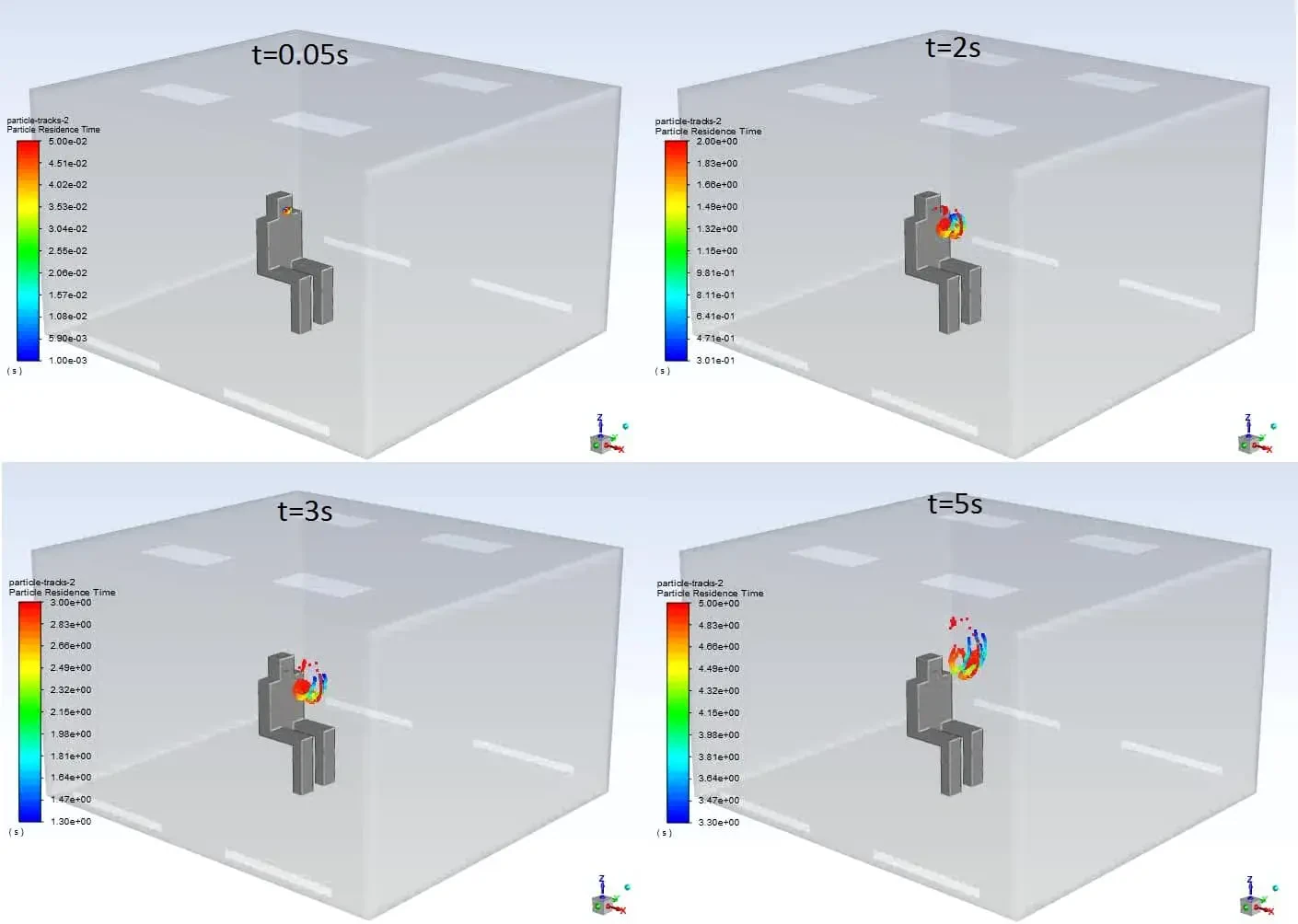
In this project, three different HVAC models were analyzed to investigate the effect of different types of ventilation inside a room by ANSYS Fluent software. A corona patient breathes on the breathing particles coming out from the patient's mouth and how they spread inside this room. These types of HVAC include one-sided, cross-sided, and lateral ventilation. In each case, the airflow enters the domain through the window(s) placed on the wall boundary of the room with a velocity of 2 m/s. The discrete phase model (DPM) was activated, and the patient gave water particles out as exhaling particles with of speed of 3 m/s. RNG k-epsilon model is exploited to solve turbulent flow equations.
Geometry and mesh
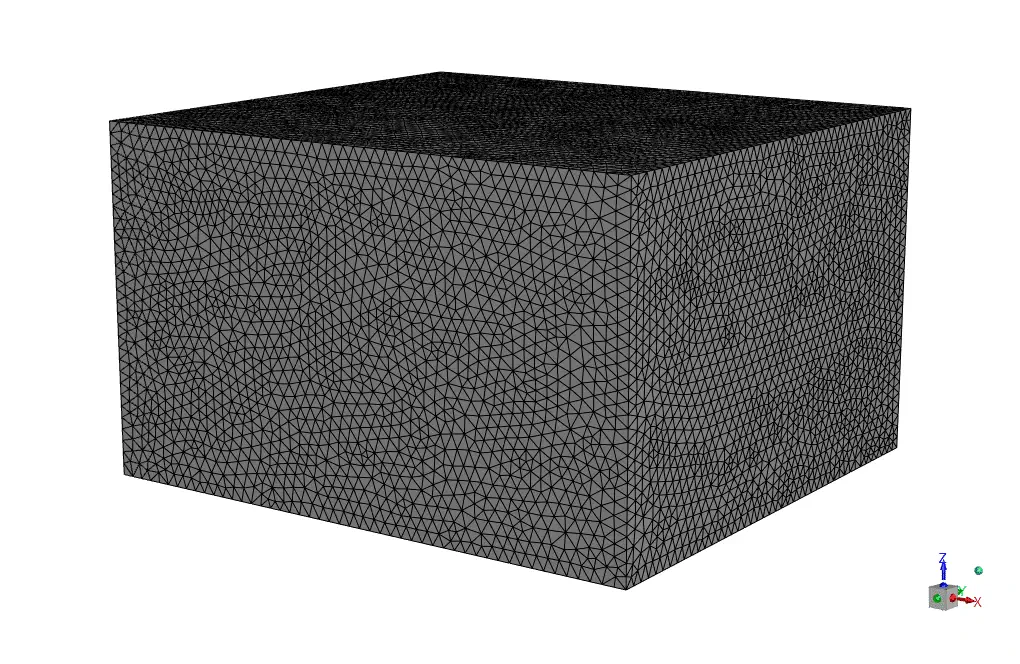
The geometries of this project are designed in an ANSYS design modeler and meshed in ANSYS meshing. The dimensions of the designed room are 5m* 4.5 m*3 m.
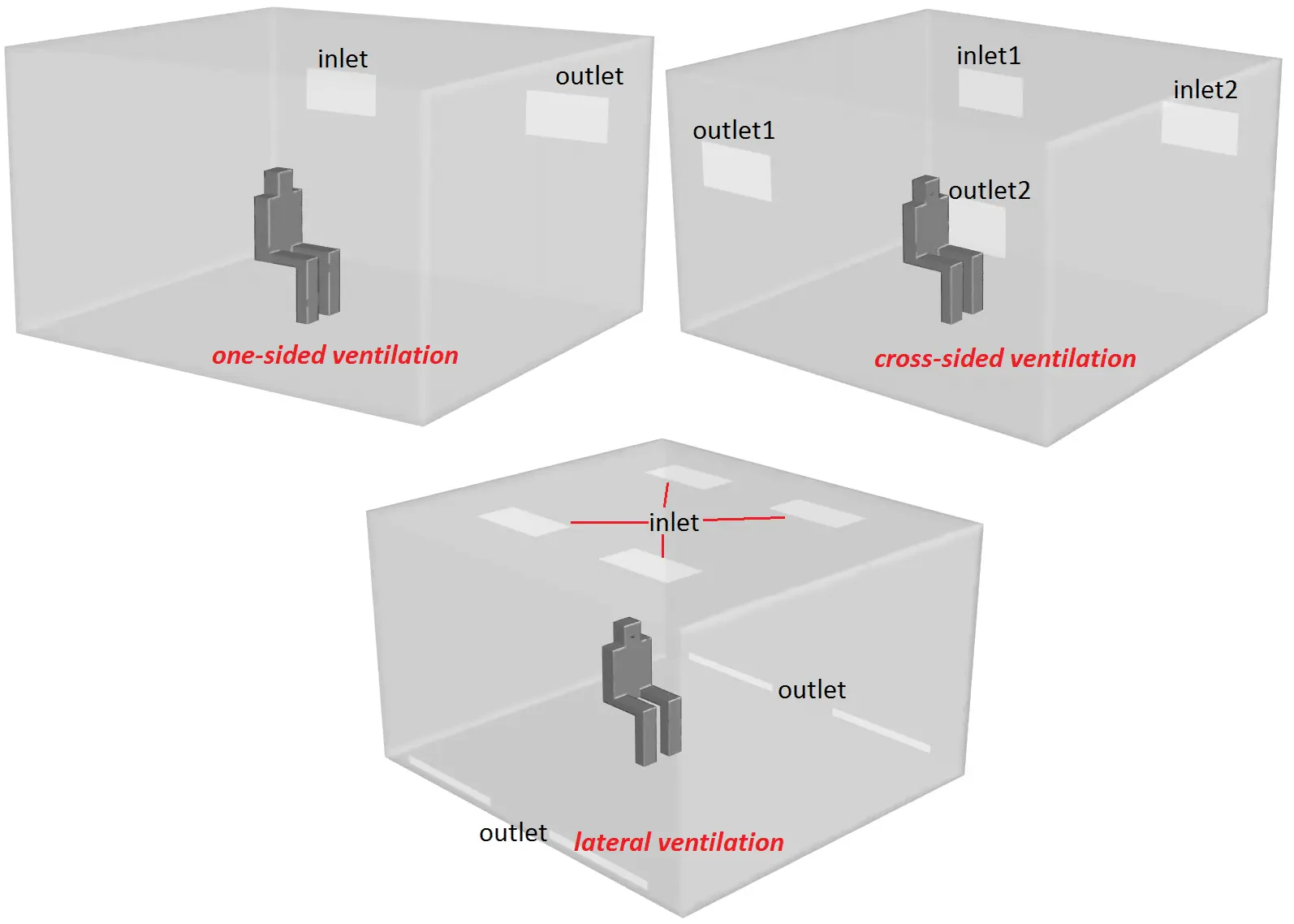
The mesh type used for these geometries are unstructured, and the element numbers are 720274, 720153, and 720316 for on-sided, cross-sided, and lateral ventilation, respectively.
HVAC Effect CFD simulation settings
We consider several assumptions to simulate the present model:
- Simulation is done using a pressure-based solver.
- The present simulation and its results are transient.
- The effect of gravity is activated, and its value is equal to -9.81 m/s2 in the Z direction.
The following table represents a summary of the defining steps of the problem in this project and its solution:
| The applied settings are summarized in the following table. | Models | |
| Viscous model | k-epsilon | |
| k-epsilon model | RNG | |
| near-wall treatment | standard wall function | |
| Discrete phase | on | |
| Unsteady particle tracking | on | |
| Injection-0 & injection-1 | Water liquid particles | |
| Boundary conditions | ||
| Inlet | Velocity inlet | |
| Velocity magnitude (Inlet) | 2 m/s | |
| Velocity magnitude (mouth) | 3 m/s | |
| Outlet | Pressure outlet | |
| Gauge pressure | 0 Pa | |
| Walls | Stationary wall | |
| Human body | Discrete phase BC | Reflect |
| Wall-flow | Discrete phase BC | trap |
| Solution Methods | ||
| Pressure-velocity coupling | SIMPLE | |
| Spatial discretization | Pressure | Second-order |
| Density | second-order upwind | |
| Momentum | second-order upwind | |
| Energy | second-order upwind | |
| turbulent kinetic energy | first-order upwind | |
| turbulent dissipation rate | first-order upwind | |
| Initialization | ||
| Initialization method | Standard | |
| Gauge pressure | 0 Pa | |
| Velocity (x,y,z) | 0 m/s | |
| Turb. kinetic energy | 1 m2/s2 | |
| Turb. Dissipation rate | 1 m2/s3 |
HVAC Modes Comparison on Corona Virus Particles Spread Results
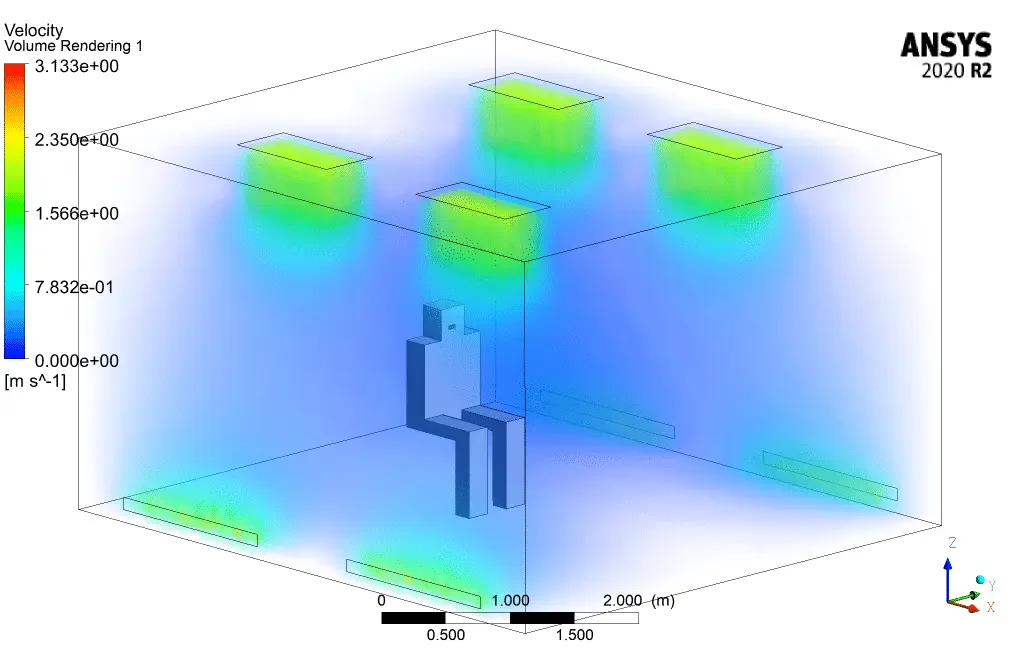
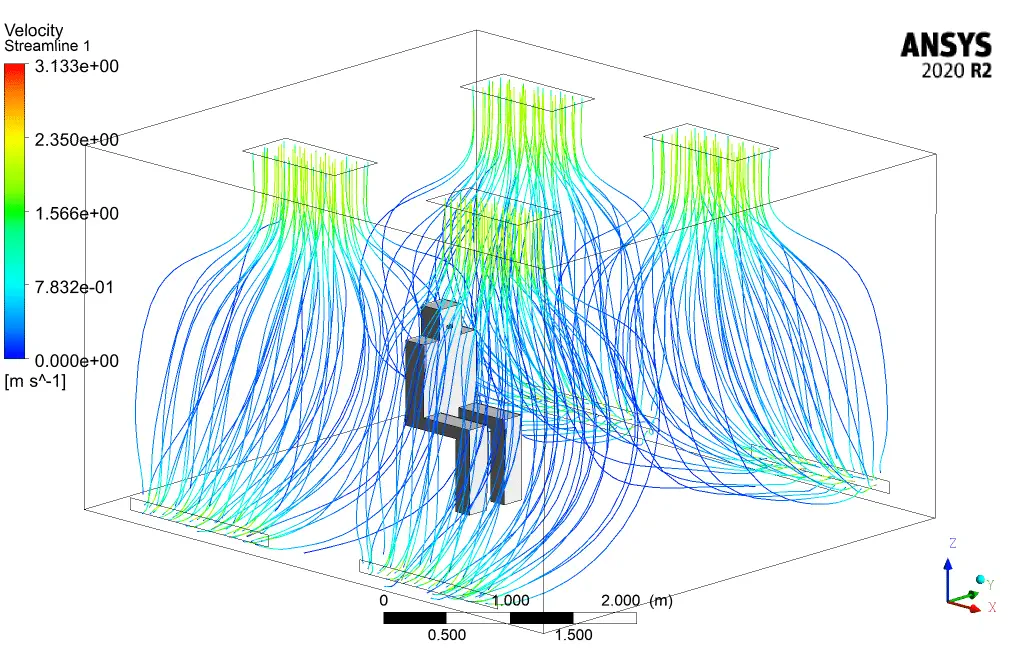
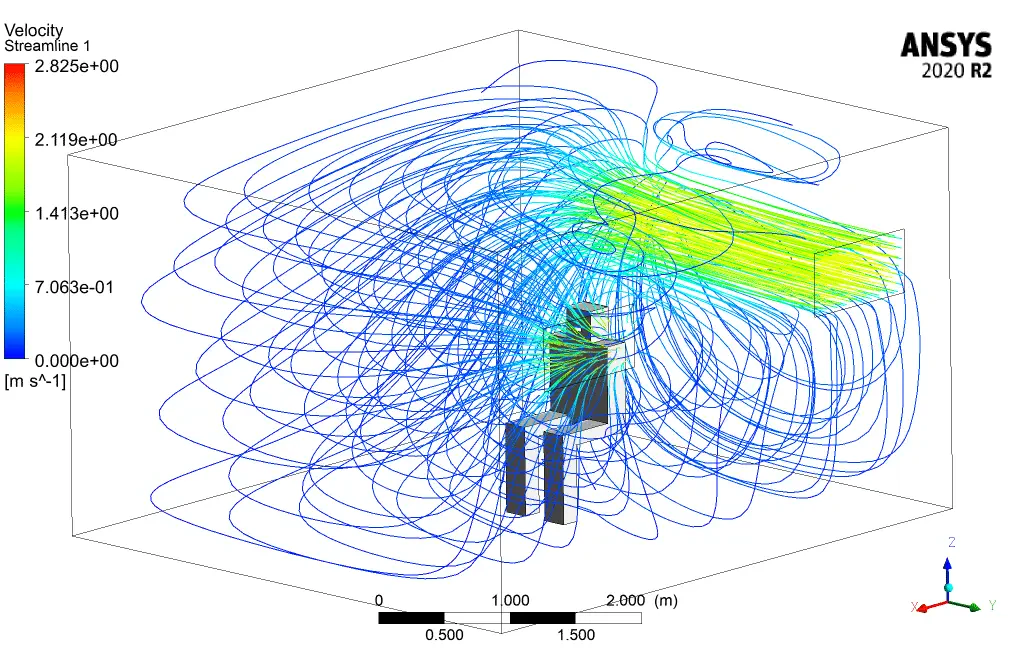
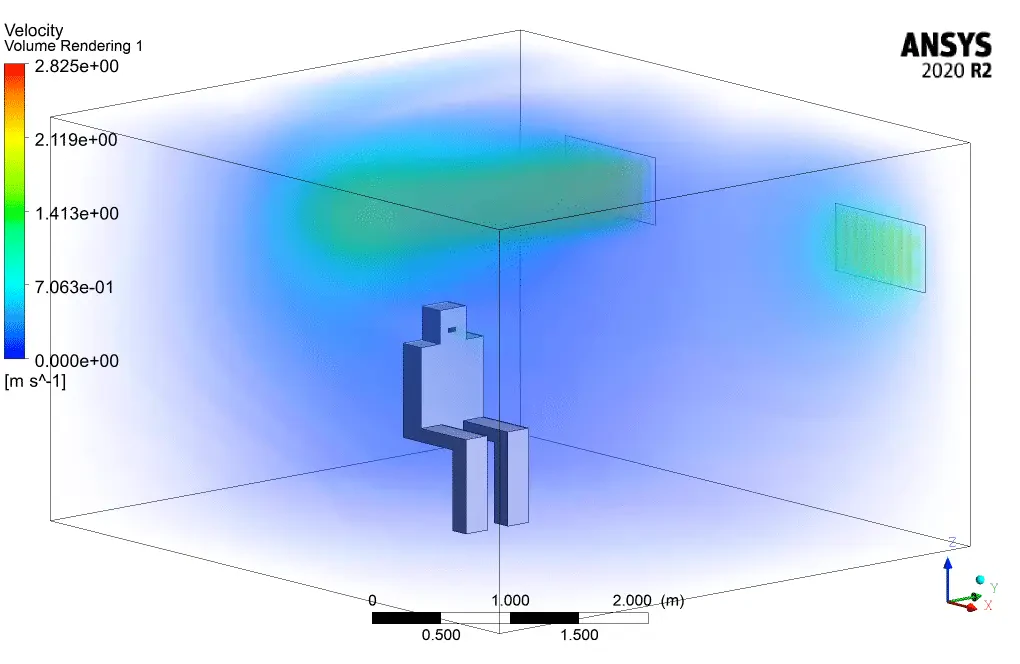
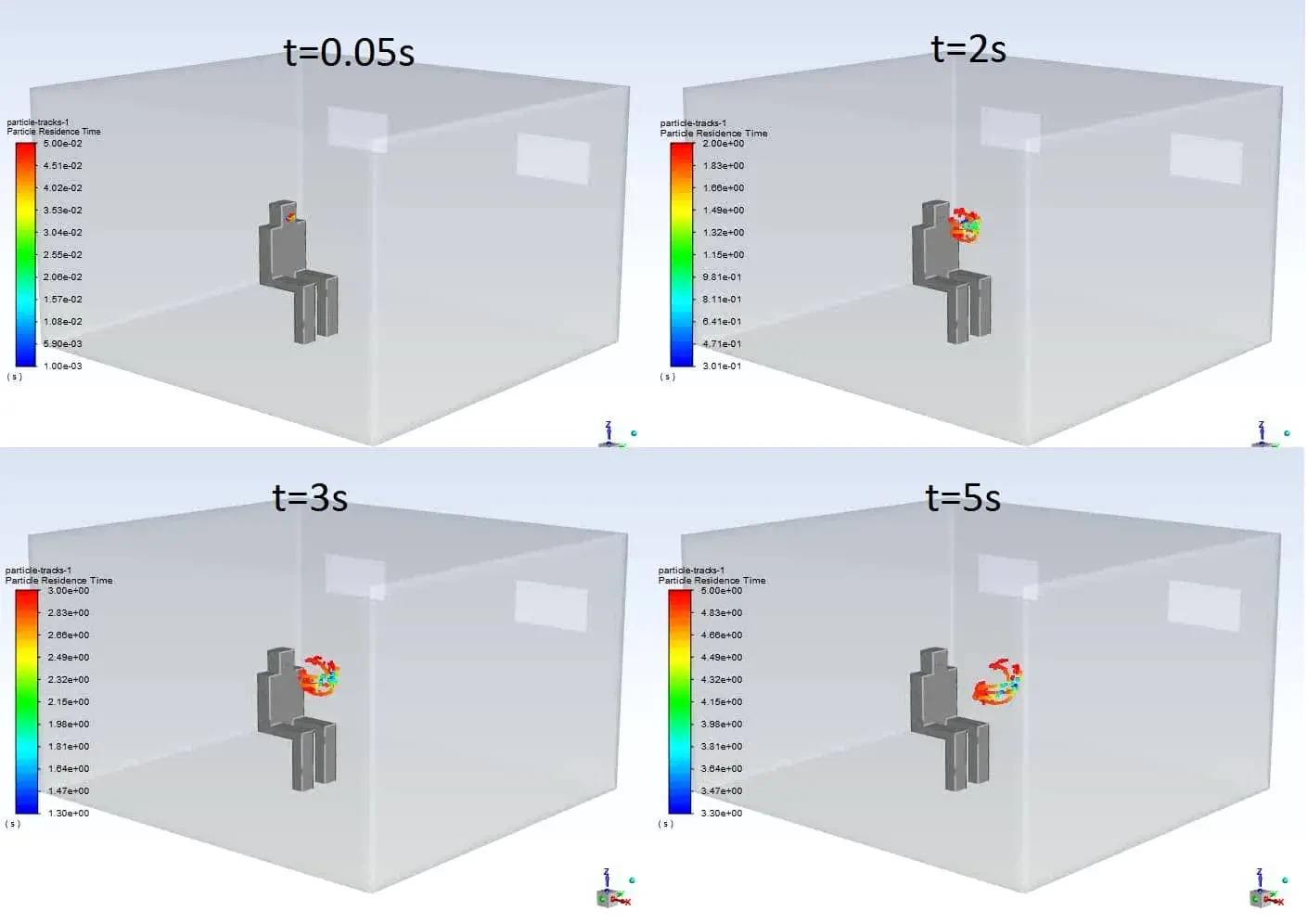
Contours of velocity, streamlines, etc., are obtained and presented. As shown in the presented figures, lateral ventilation has the best performance in removing the particles from the inside of the room, preventing them from facing any other hypothetical occupant in the room. However, one-sided ventilation is the worst type of HVAC to move the particles toward the outlet due to low air circulation inside the domain.
- One-sided
- Cross-sided
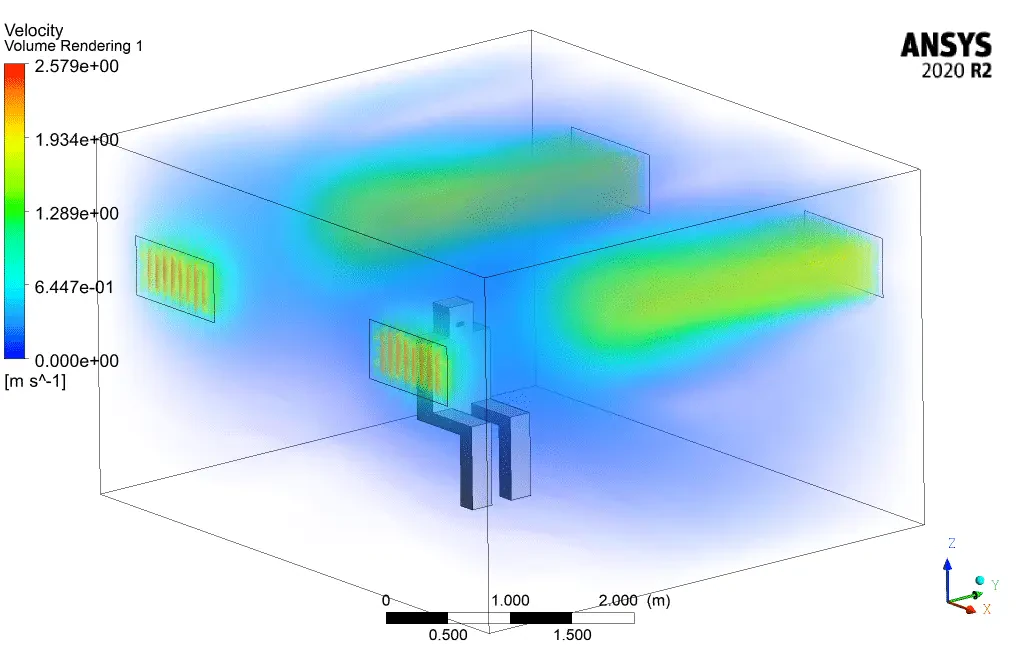
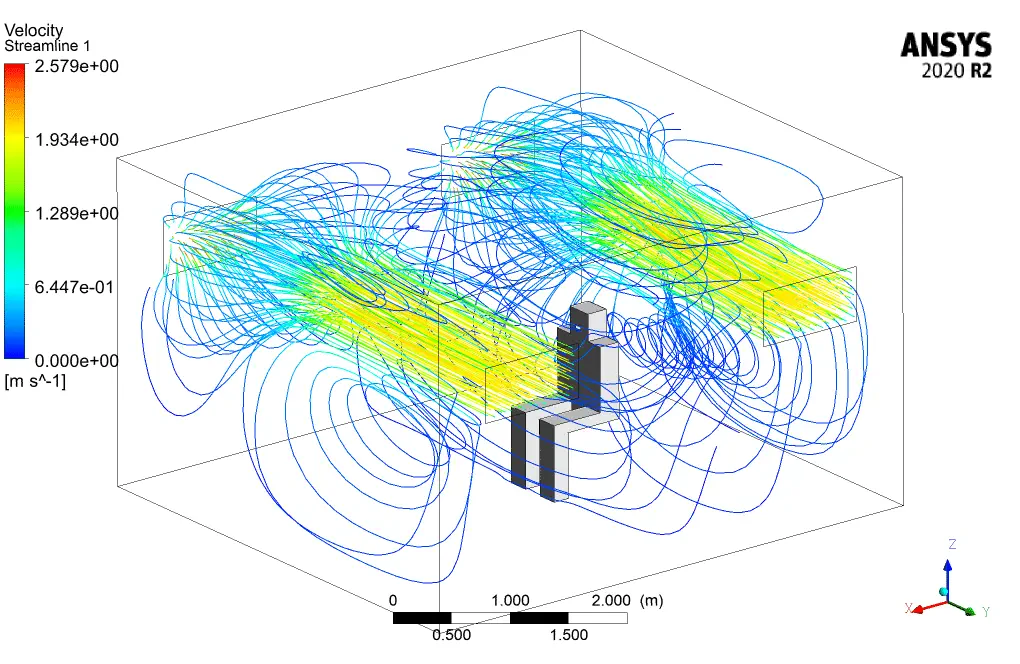
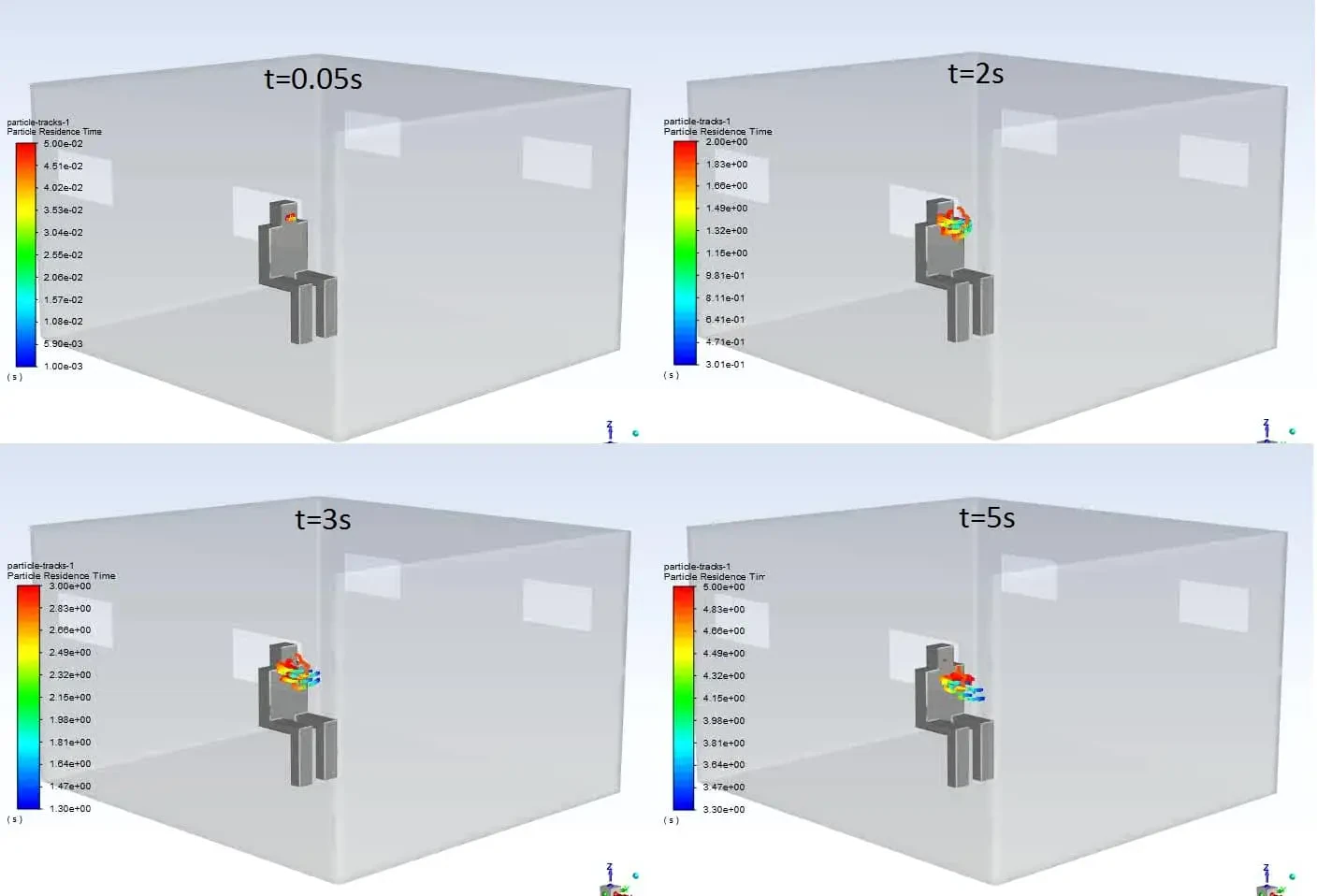
- lateral