

Wind Turbine FSI & Acoustics Training Package
Price: $219
The Wind Turbine FSI & Acoustics Training Package is a focused 5-project path for engineers and researchers who need to predict how wind turbine blades deform under aerodynamic load and how much noise a rotor produces. Working in ANSYS Fluent on a horizontal-axis wind turbine (HAWT), it covers one-way and two-way fluid-structure interaction for blade vibration, far-field noise prediction with the Ffowcs Williams-Hawkings (FW-H) model and receiver points, Broadband Noise Source modeling for acoustic power level on the blade surface, and a direct comparison of the two acoustic approaches. It has nearly 2 hours of video with English audio and draws on 15 years of MR CFD expertise. For rotor aerodynamics and performance, see the HAWT: Wind Turbine Training Package.
-
1 Lesson
-
1 Lesson
-
1 Lesson
-
1 Lesson
-
1 Lesson
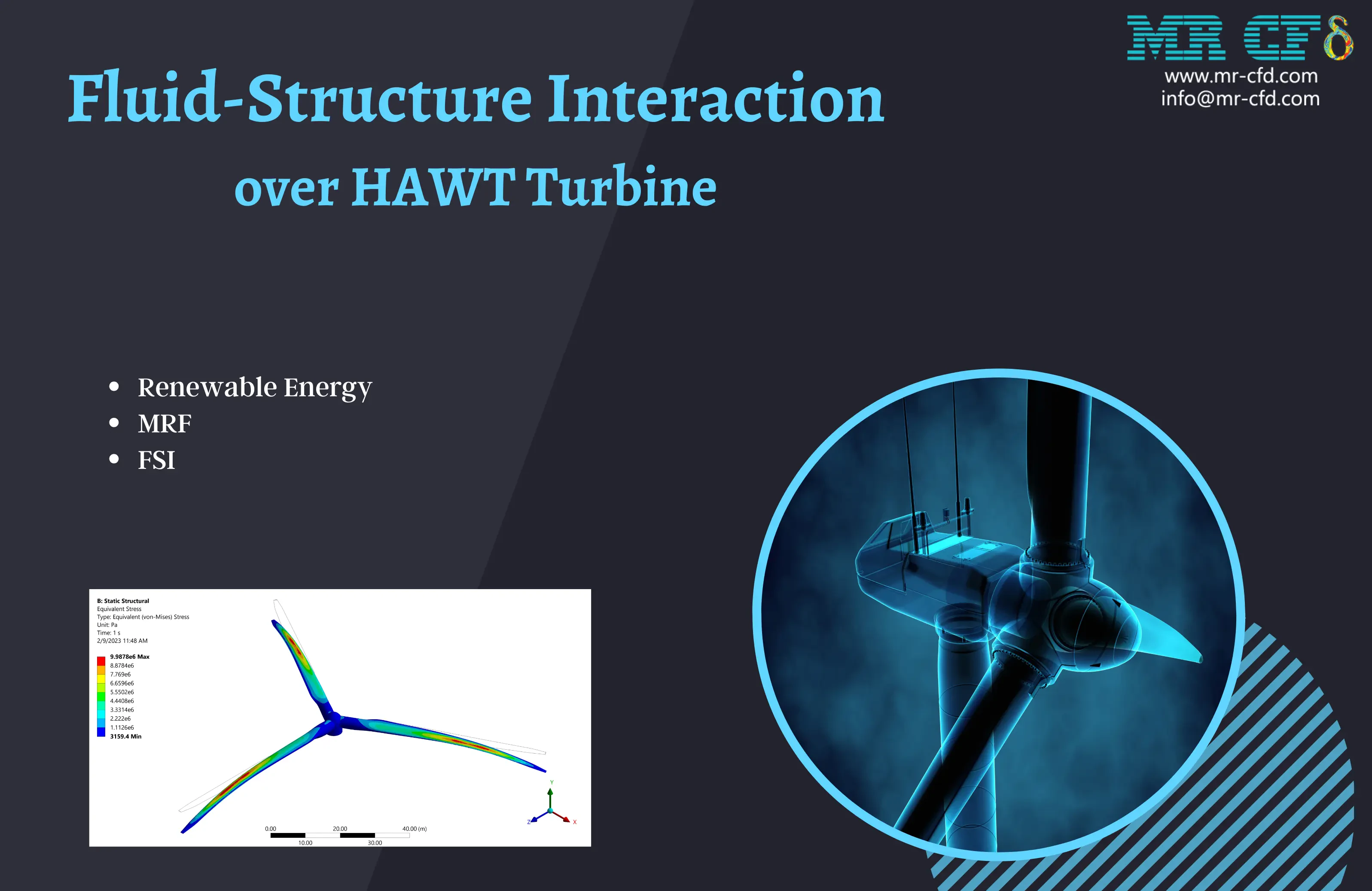
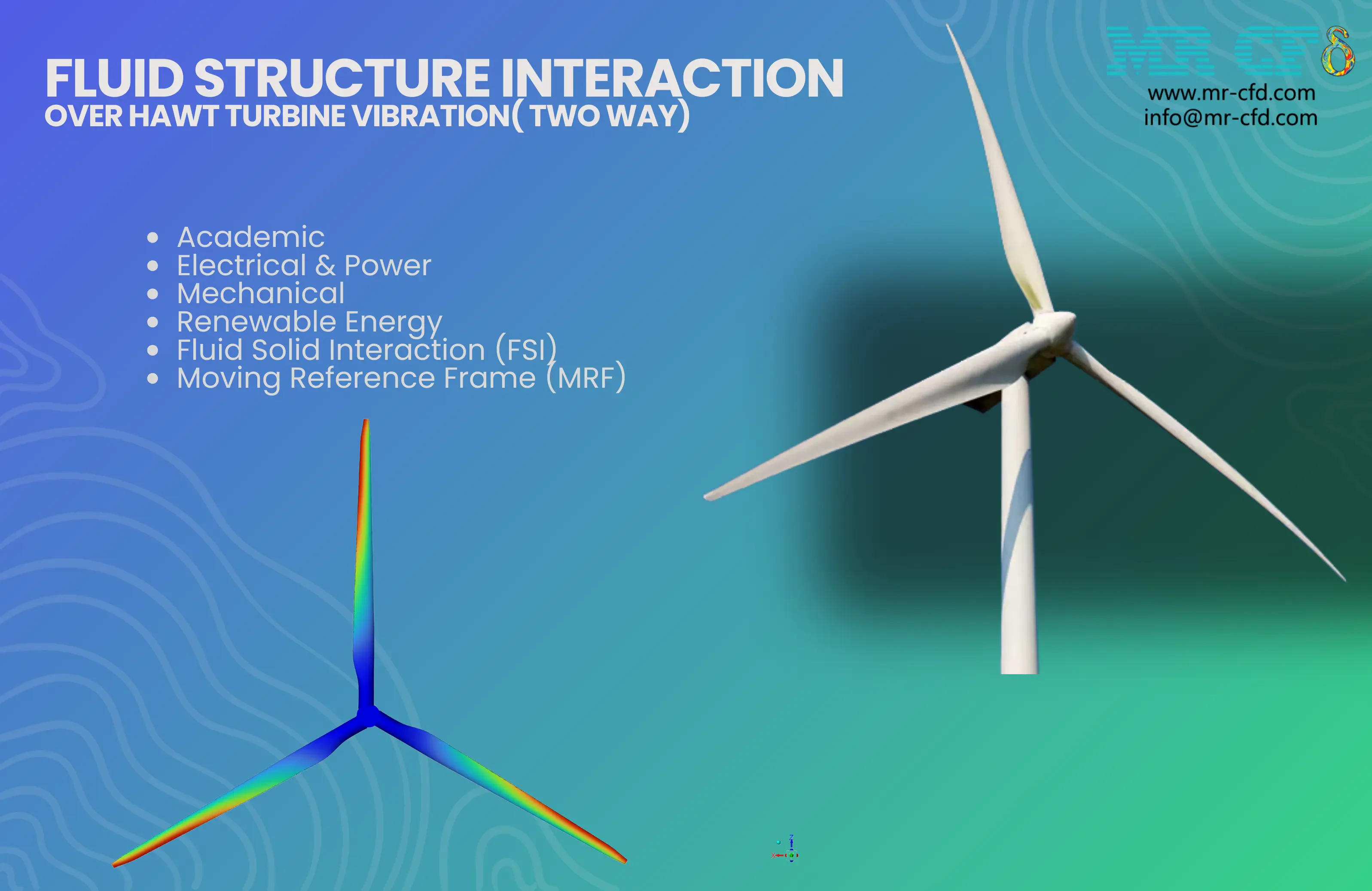
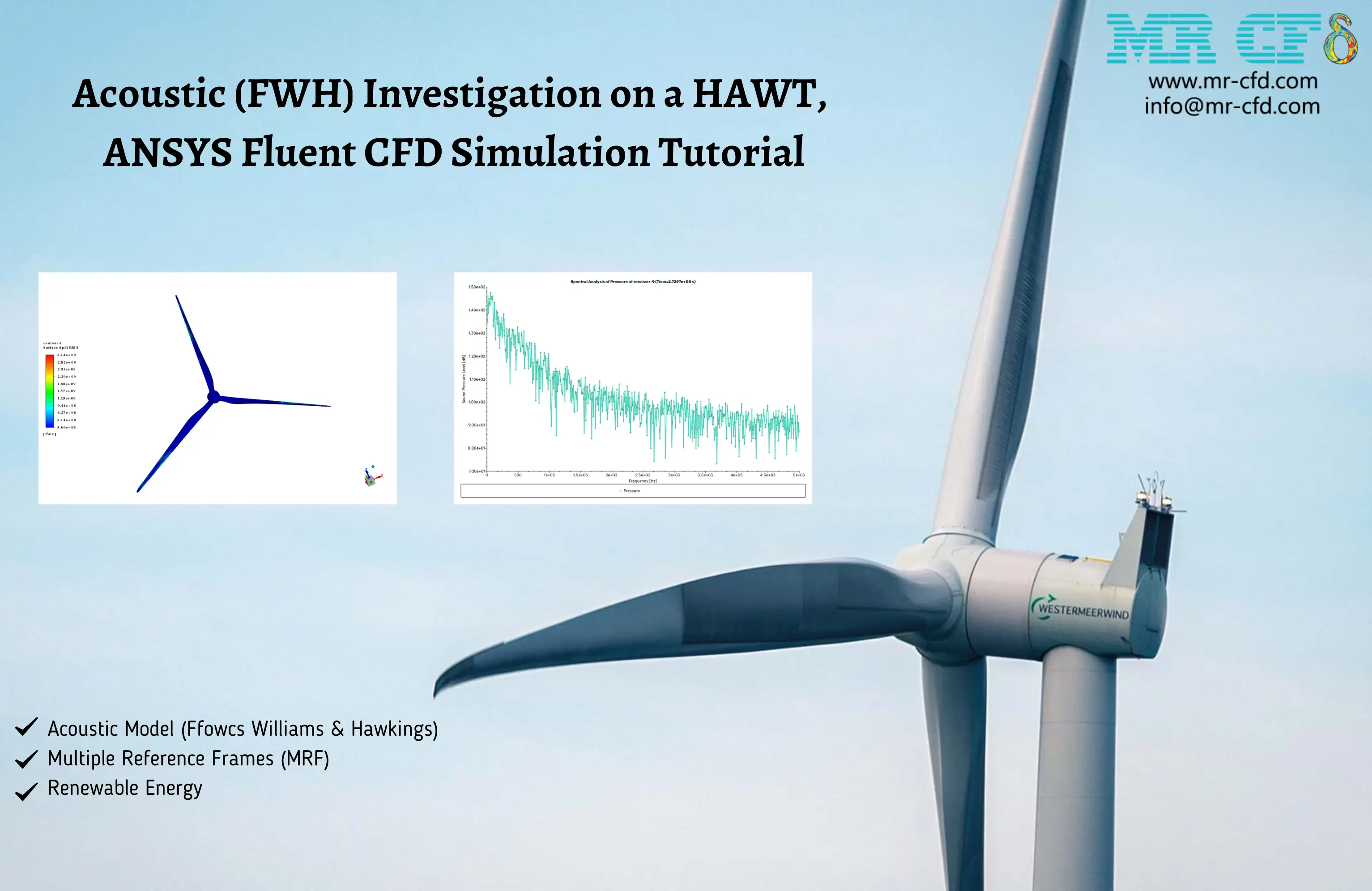
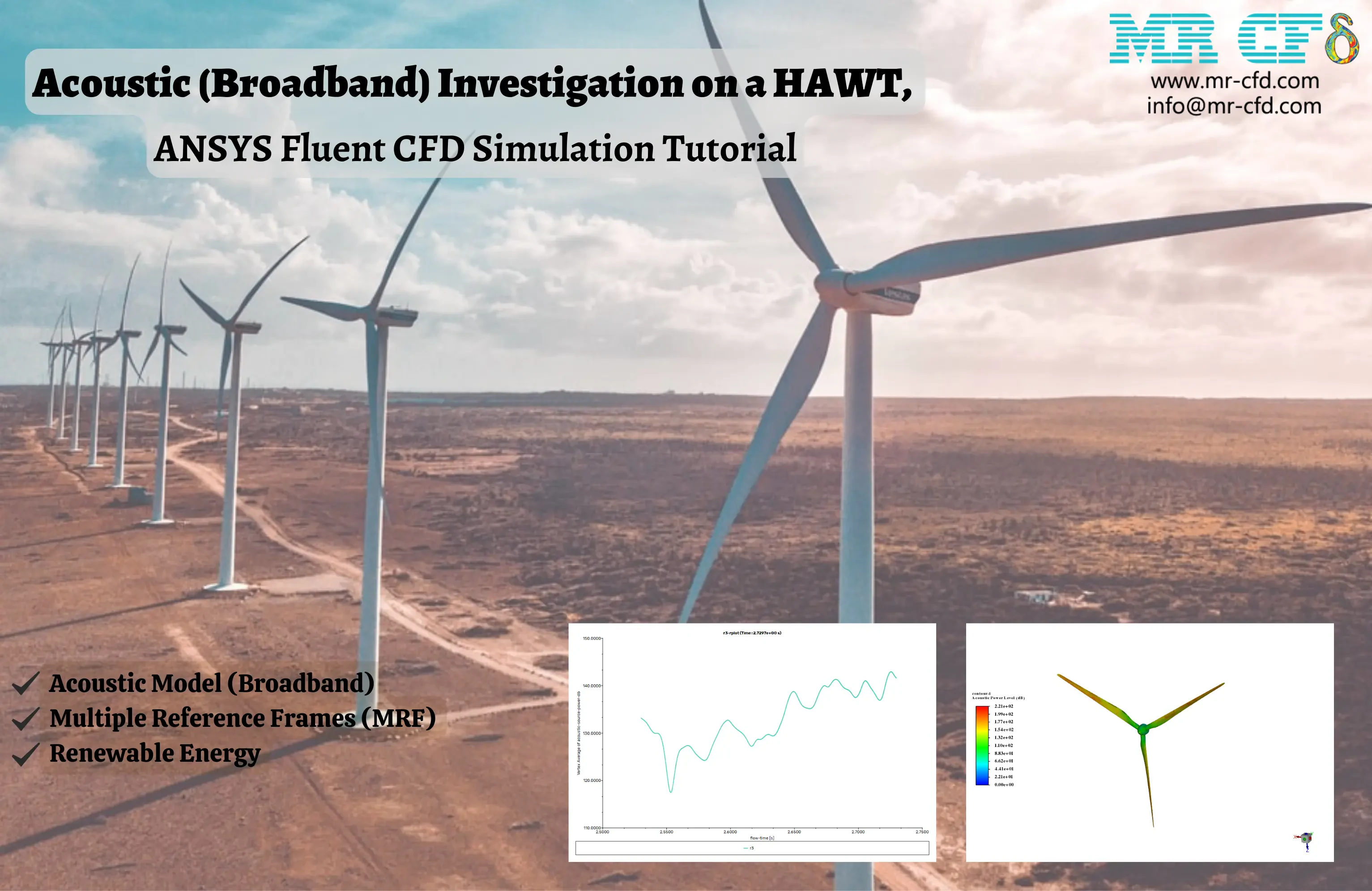
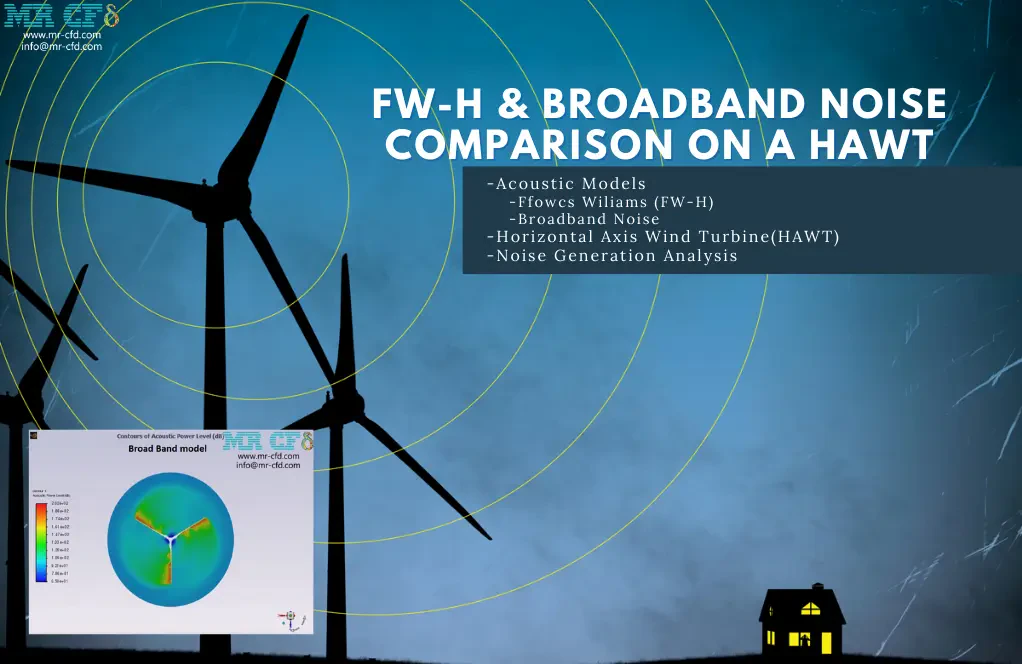
The Wind Turbine FSI & Acoustics Training Package is a focused 5-project path for engineers and researchers who need to go beyond rotor aerodynamics and look at structural response and noise generation. Every project uses a horizontal-axis wind turbine (HAWT) in ANSYS Fluent, so you can compare coupling strategies and acoustic models on the same geometry and see how each choice changes the results and the computational cost.
Fluid-Structure Interaction: You model blade vibration with both one-way and two-way coupling. In the one-way setup, aerodynamic loads from the flow solution are passed to the structure to get stresses and deformation. In the two-way setup, the flow and the blade structure exchange loads and deformation at every coupling step. Running both shows when the simpler one-way approach is accurate enough and when the full two-way interaction is needed.
Aeroacoustics: You predict rotor noise with the Ffowcs Williams-Hawkings (FW-H) acoustic analogy, using a transient rotating-turbine solution and receivers placed at chosen observer locations. Then you apply the Broadband Noise Source model with monitoring points upstream and downstream of the rotor to evaluate the acoustic power level on the blade surface. A final project compares FW-H and broadband results on the same turbine, so you know which model fits which design question.
What’s included:
5 hands-on ANSYS Fluent projects on HAWT FSI and aeroacoustics
Nearly 2 hours of video tutorials with English audio
Subtitles in English, Spanish, Arabic, Turkish, French, and Portuguese
Step-by-step workflows from geometry and setup to post-processing
Content suited to beginner, intermediate, and advanced users
15 years of MR CFD expertise in wind energy CFD
Looking for rotor aerodynamics, power coefficient, and wake analysis? Explore the HAWT: Wind Turbine Training Package.
Whether you’re a researcher studying blade fatigue and vibration, an engineer assessing turbine noise for siting and permitting, or a student moving into coupled multiphysics simulation, this package gives you validated workflows for both the structural and the acoustic side of wind turbine design.