

MR CFD’s All Courses
Here's every Course from Basic to Advanced, that can boost your skills and career.
Price: $319
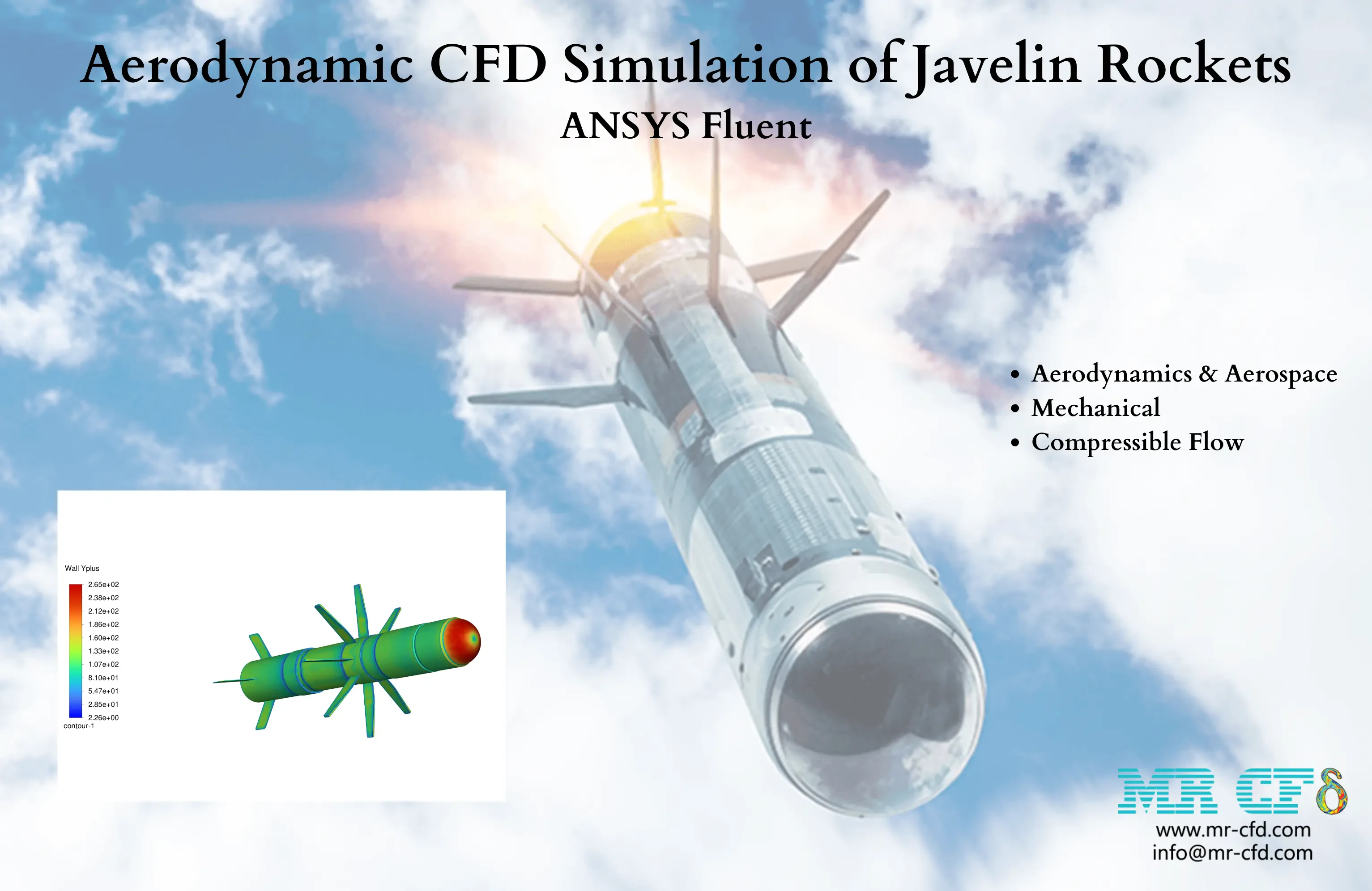
This problem simulates a javelin rocket using ANSYS Fluent software. The geometry is designed in SpaceClaim, and the meshing is performed using ANSYS Meshing. The simulation is carried out using the density-based solver. The turbulence model is set to Realizable k-ε.
Price: $48
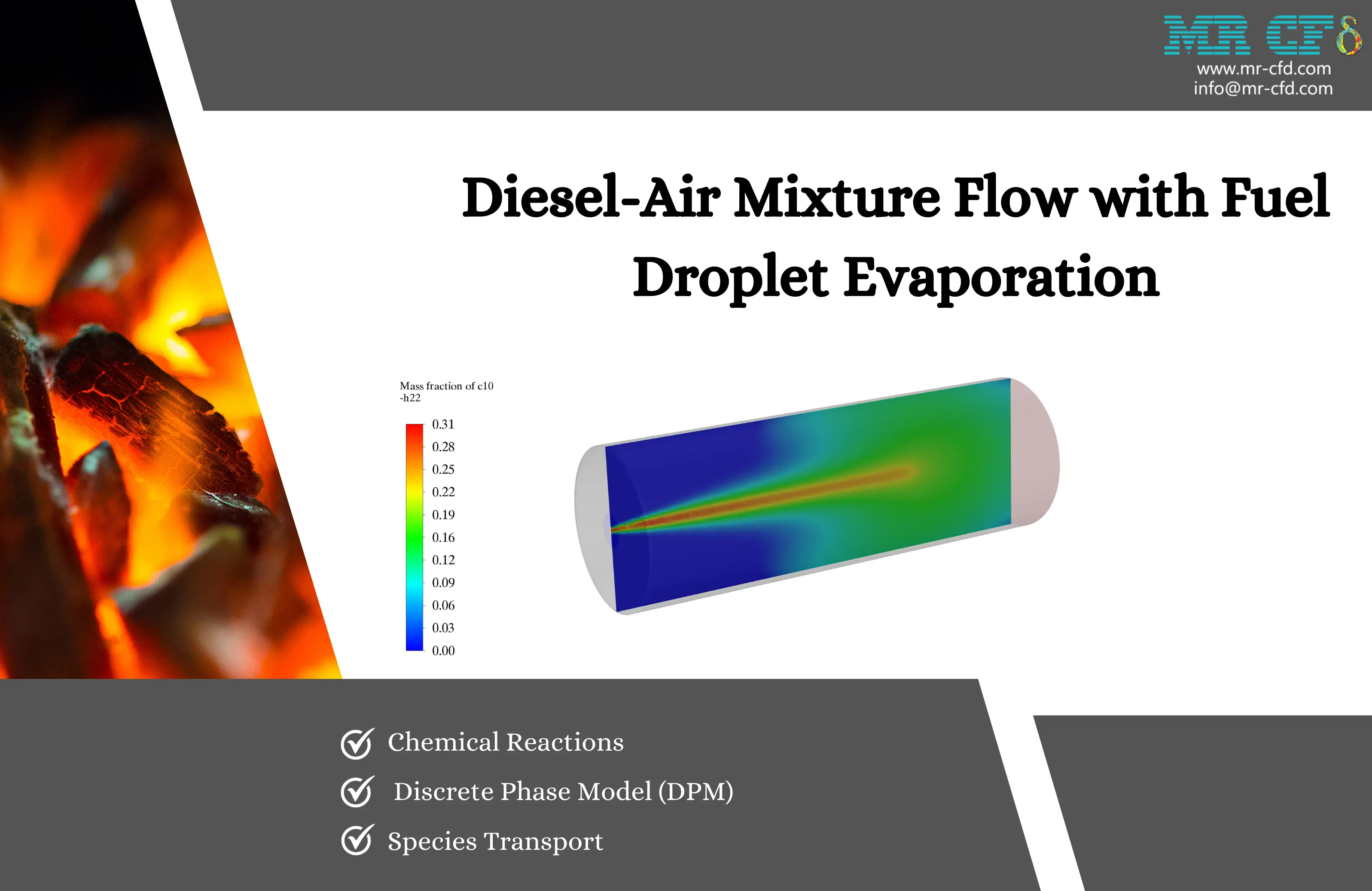
This study simulates diesel-air mixture flow with fuel droplet evaporation using ANSYS Fluent CFD software. The 3D cylindrical chamber geometry is designed in SpaceClaim. Meshing is performed using ANSYS Meshing, resulting in over 2 million elements. The Species Transport model with Eddy-Dissipation is employed for turbulence-chemistry interaction. The Discrete Phase Model (DPM) is utilized to simulate fuel droplet movement and evaporation.
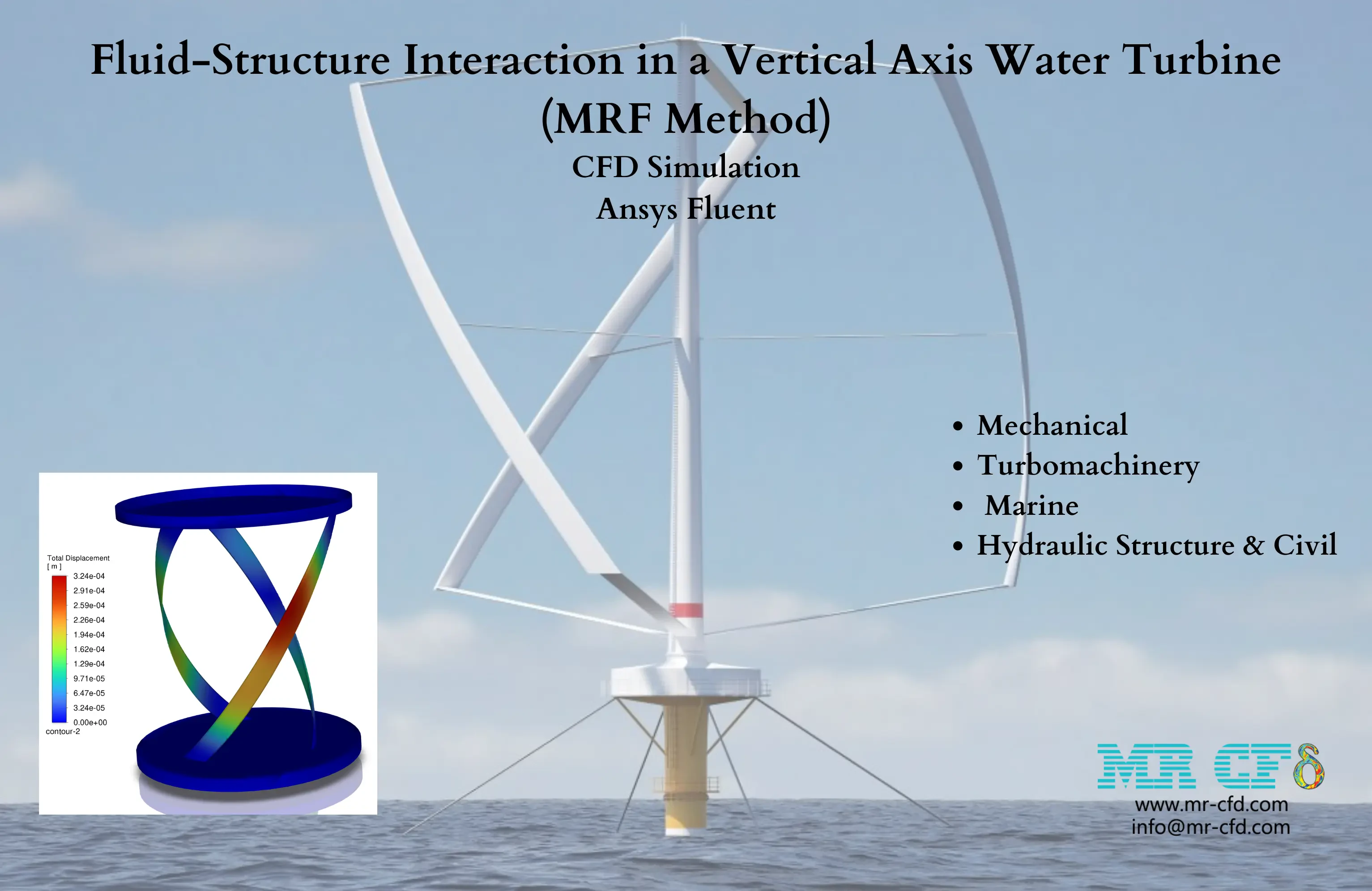
Fluid-Structure Interaction in a Vertical Axis Water Turbine using MRF Method, Ansys Fluent
Intermediate, Advanced
Price: $30
The problem numerically simulates the Fluid-Structure Interaction over Vertical Turbine using ANSYS Fluent software. We designed the 3-D model using the Design Modeler software. The mesh grid is generated using ANSYS Meshing, and the element number equals 705,465. The Frame Motion method is used to rotate the turbine. FSI model analyses total strain, and stress over the VAWT turbine.
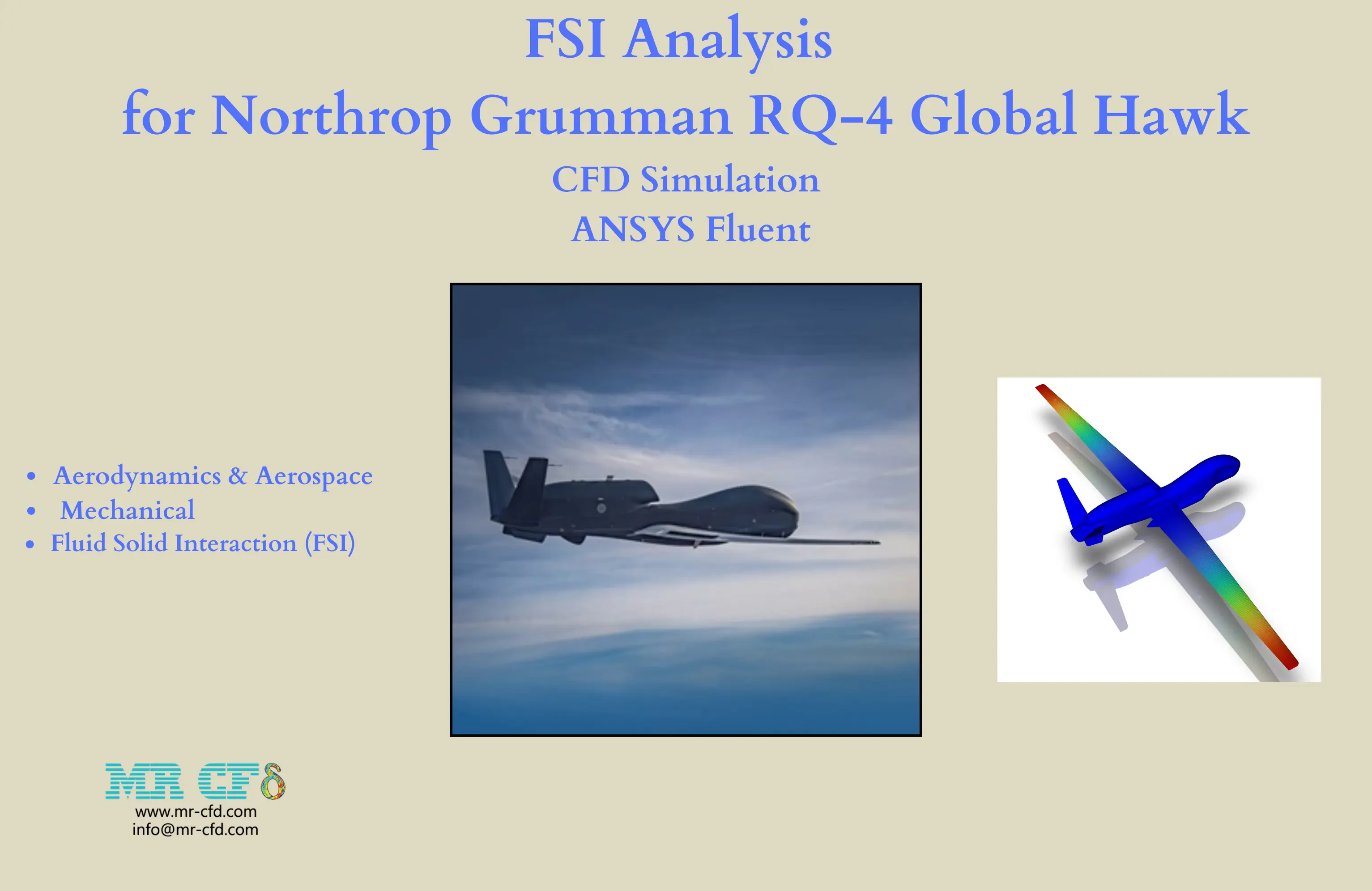
FSI Analysis for Northrop Grumman RQ-4 Global Hawk, ANSYS Fluent
Intermediate, Advanced
Price: $489
The problem numerically simulates the Fluid-Structure Interaction over Northrop Grumman RQ-4 Global Hawk using ANSYS Fluent software. The Global Hawk geometry was modeled using SpaceClaim and then imported into ANSYS meshing for meshing consisting of 5,056,067 non-conformal elements. The simulation used a pressure-based solver. One way FSI model analyses total strain, and stress over the turbine.
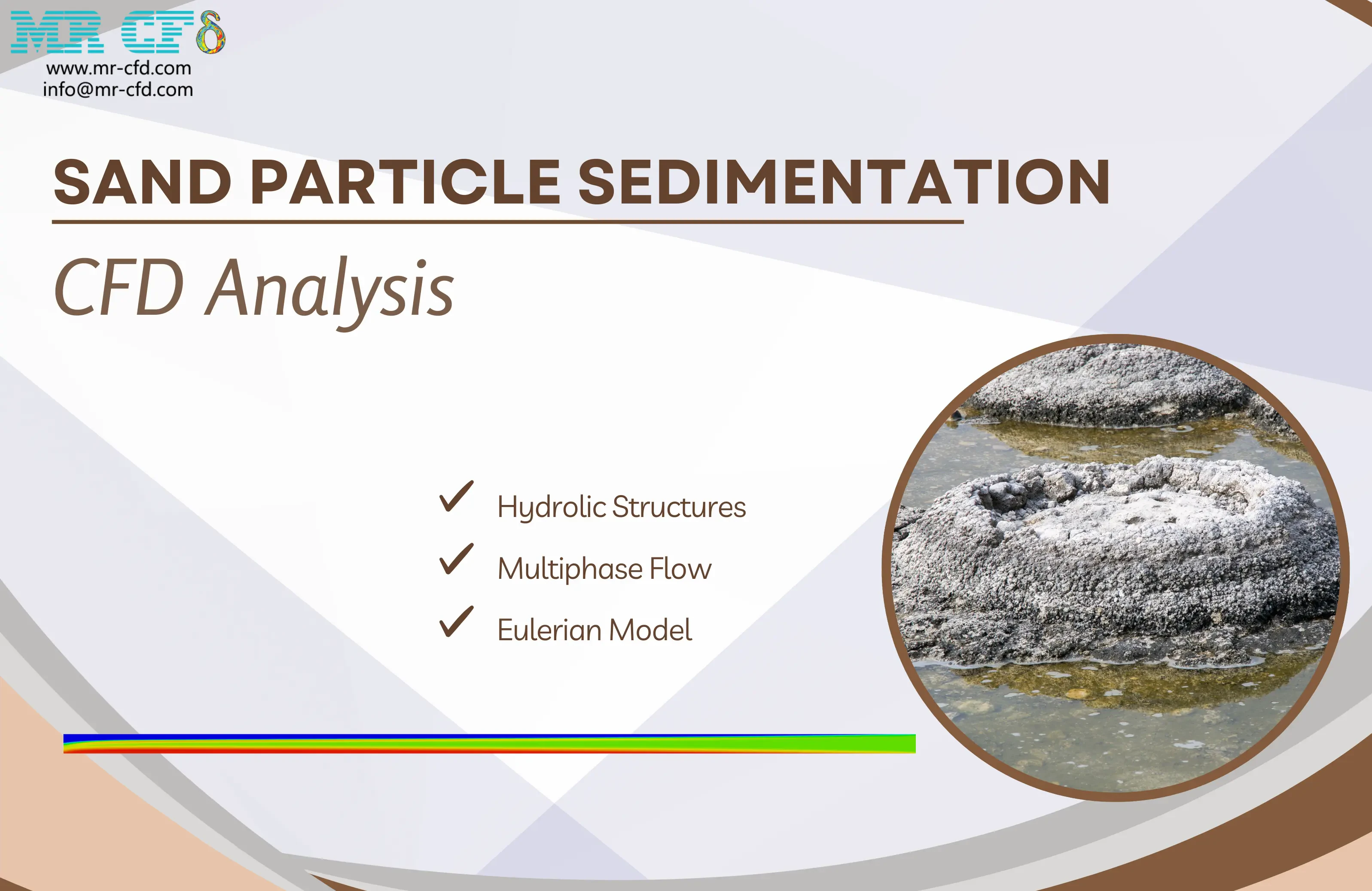
Sand Particle Sedimentation CFD Analysis
Intermediate, Advanced
Price: $30
The study conducts a CFD analysis of sand particle sedimentation using ANSYS Fluent software. We design the cylindrical geometry using ANSYS Design Modeler. We mesh the model using ANSYS Meshing software, resulting in 388,797 hexahedral elements. We use the Eulerian multiphase model to simulate three different sizes of sand particles (small, medium, and large) interacting with the fluid phase. We aim to predict the sedimentation patterns and particle distribution for different sand sizes, analyzing density, pressure, and volume fraction contours.
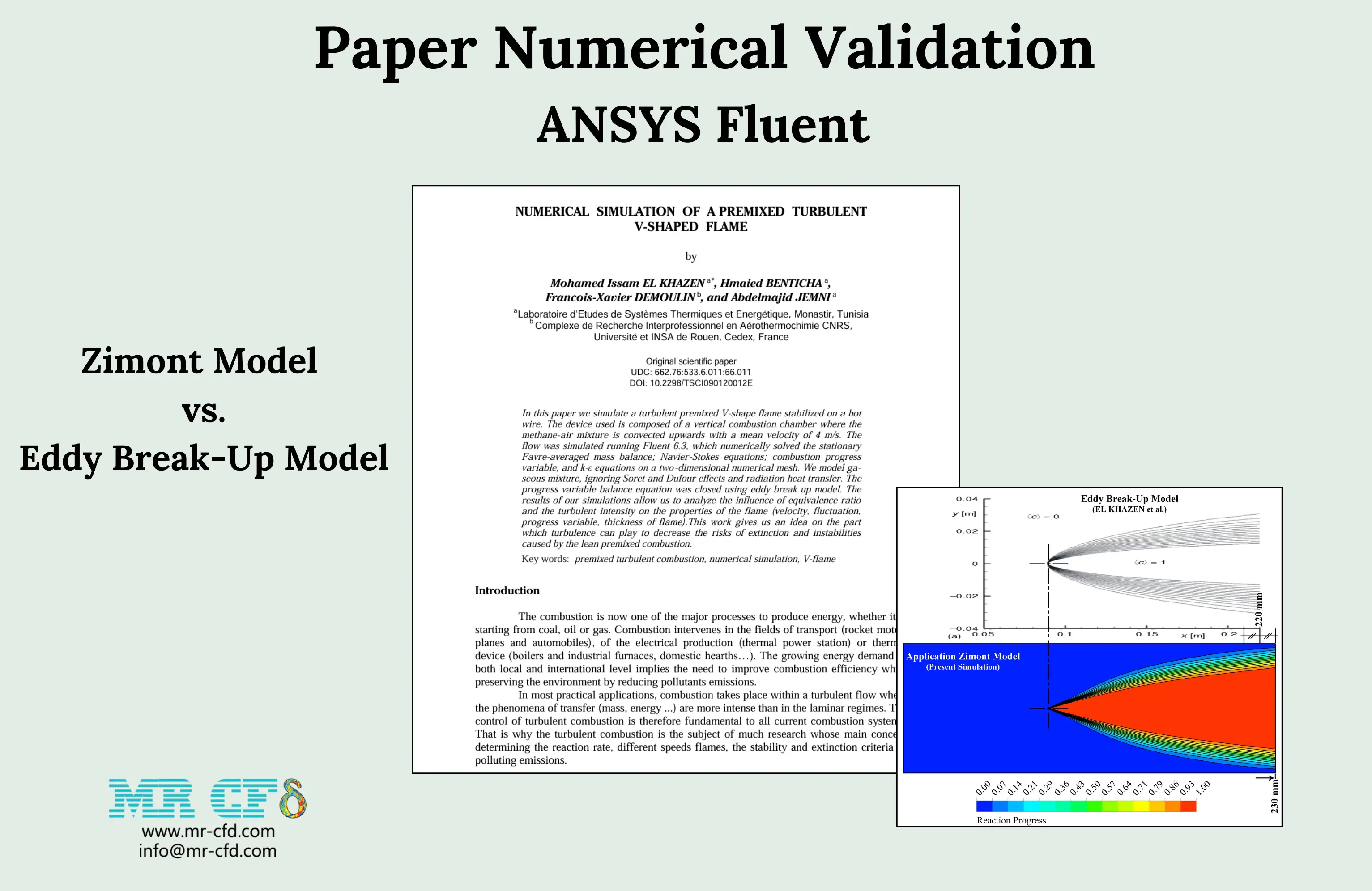
Premixed Turbulent V-shaped flame, Paper Numerical Validation, ANSYS Fluent
Intermediate, Advanced
Price: $36
In this project, a V-Flame is simulated using the Zimont model, then compared with the paper "Numerical simulation of a premixed turbulent V-shaped flame." by Ansys Fluent software. Premixed combustion of methane-air is simulated, comparing the Zimont and Eddy Break-Up models. The geometry is designed in Spaceclaim software. A structured grid is used to create a mesh in the computing domain using ANSYS Meshing software.
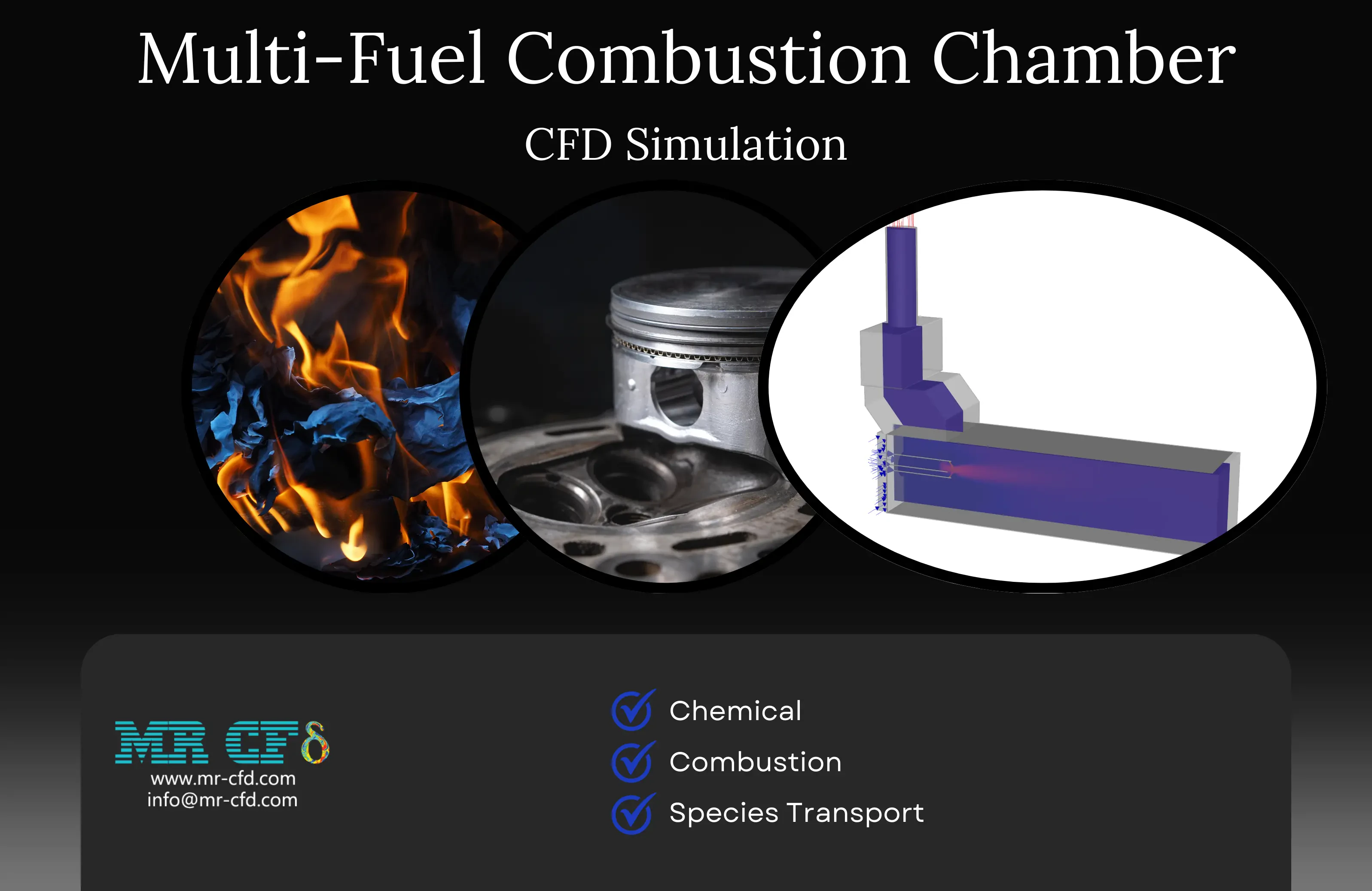
Multi-Fuel Combustion Chamber CFD Simulation
Intermediate
Price: $12
This study presents a CFD simulation of multi-fuel combustion in a combustion chamber using ANSYS Fluent. The 3D geometry was designed in SpaceClaim and meshed in ANSYS Meshing with over 3.6 million polyhedra elements. The simulation employs the Species Transport Model with the Eddy-Dissipation model for turbulence-chemistry interaction. The analysis effectively captures key combustion dynamics, including temperature distribution, species mass fractions, flow patterns, and turbulence flame speed within the chamber.
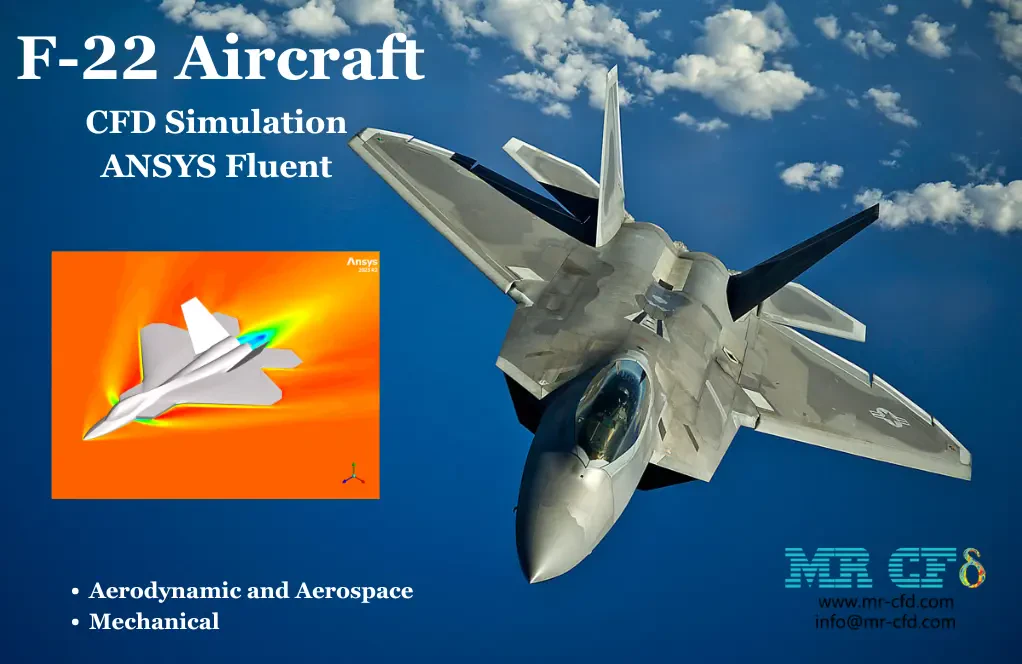
Price: $30
This problem simulates a F-22 aircraft using ANSYS Fluent software. The geometry is designed in SpaceClaim, and the meshing is performed using FLUENT Meshing. The simulation is carried out using the density-based solver. The turbulence model is set to k-ε Realizable.
Price: $140
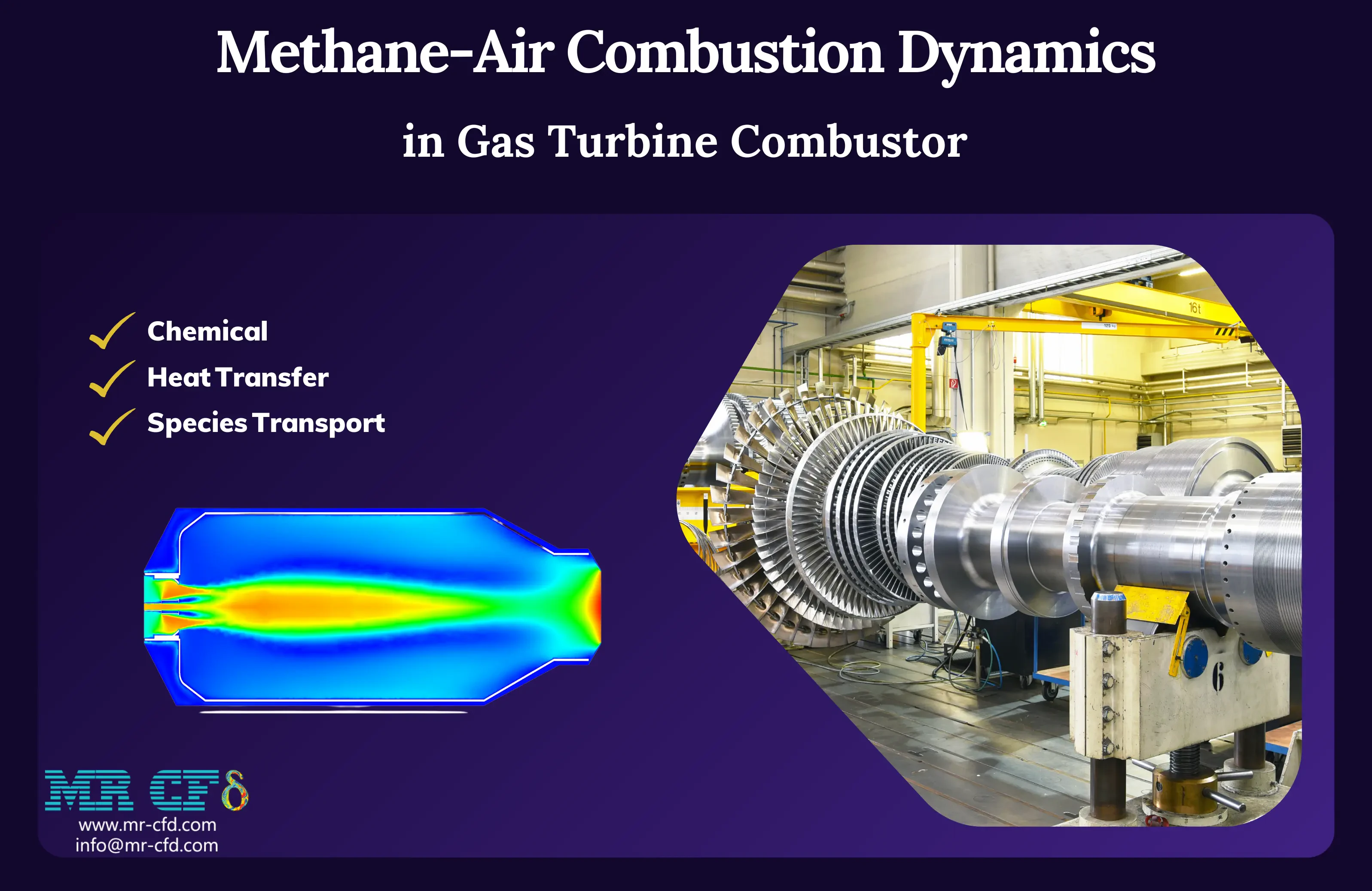
This study presents a CFD analysis of methane-air combustion in a gas turbine combustor using ANSYS Fluent. The 3D geometry represents a quarter section of a cylindrical combustor, designed in ANSYS SpaceClaim. ANSYS Meshing is used to generate a high-resolution mesh with over 2 million elements. The simulation employs the Species Transport model with Volumetric Reaction and the Eddy-Dissipation model for turbulence-chemistry interaction. The analysis effectively captures key combustion dynamics, including species distribution, temperature profiles, pressure variations, and velocity fields within the combustor.