

Fluent Modules Online Courses
Here's every CFD online course related to Fluent Modules category.
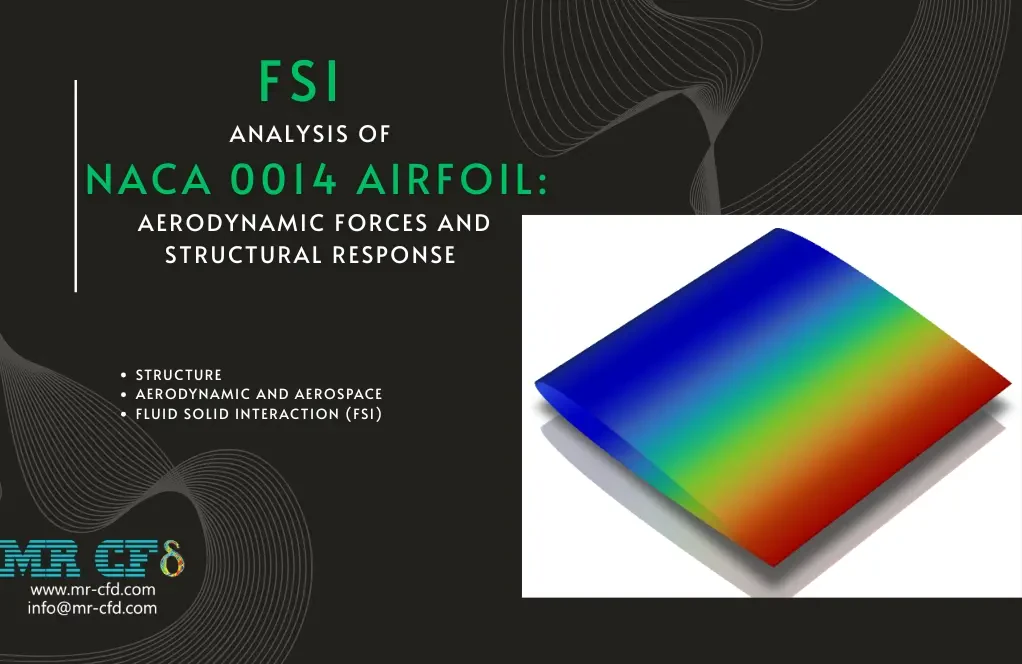
FSI Analysis of NACA 0014 Airfoil: Aerodynamic Forces and Structural Response
Intermediate, Advanced
Price: $30
The current FSI analysis investigates the aerodynamic performance of a NACA 0014 airfoil using one-way Fluid-Structure Interaction in ANSYS Fluent. The geometry was created in Design Modeler and meshed in ANSYS Meshing, generating 1,708,222 unstructured cells with boundary layer refinement. A pressure-based solver with the Spalart-Allmaras turbulence model was used, and structural response was analyzed via the Linear Elasticity model.
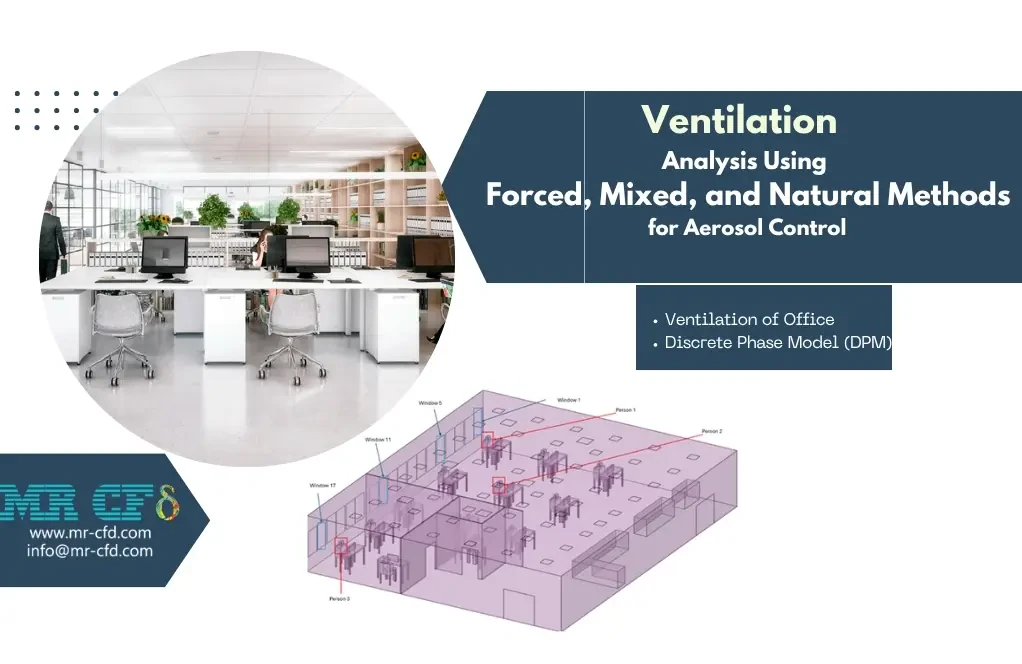
Ventilation Analysis Using Forced, Mixed, and Natural Methods for Aerosol Control
Intermediate, Advanced
Price: Free
Expert-level training package utilizing DPM in ANSYS Fluent, featuring comprehensive analysis of ventilation methods for aerosol control in office environments. Focused on understanding airflow patterns and virus dispersion under various scenarios: forced, mixed, and natural ventilation. Analyzes mechanical ventilation using fan coil units, neutral ventilation through open windows, and combined mixed ventilation approaches. Aimed at researchers and professionals seeking advanced understanding and optimization of ventilation systems for aerosol control in indoor settings.
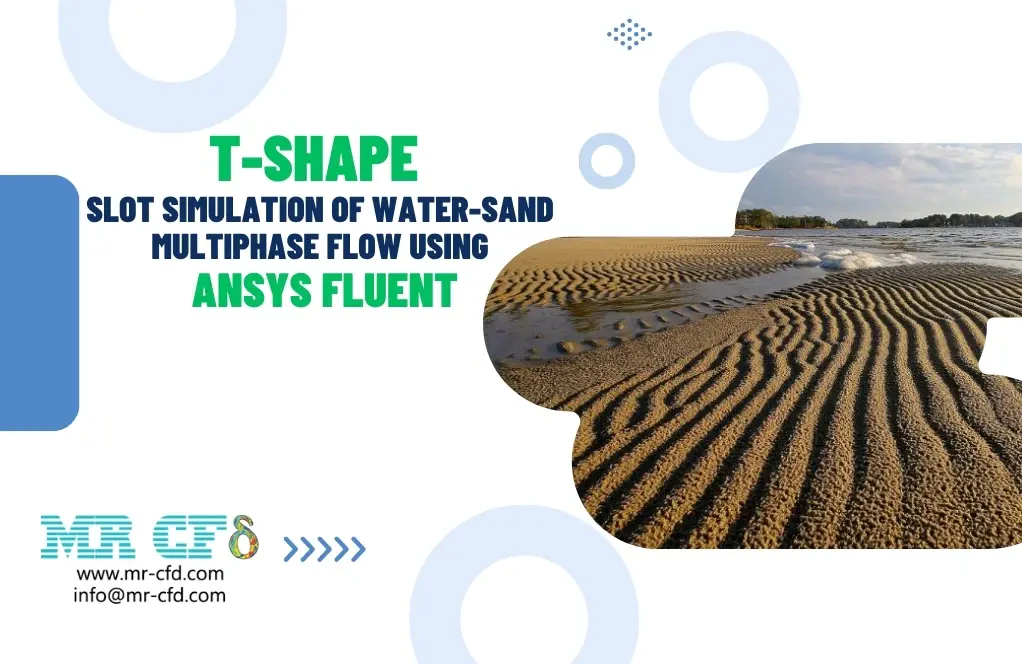
T-Shape Slot CFD Simulation of Water-Sand Multiphase Flow Using DDPM
Intermediate, Advanced
Price: $30
Simulate multiphase flow in complex T-shape geometries with high-fidelity CFD Eulerian and Dense Discrete Phase Modeling (DDPM) for sand-water interaction Apply transient solvers and advanced turbulence models in ANSYS Fluent Develop expertise in modeling sediment transport and particle-laden flows
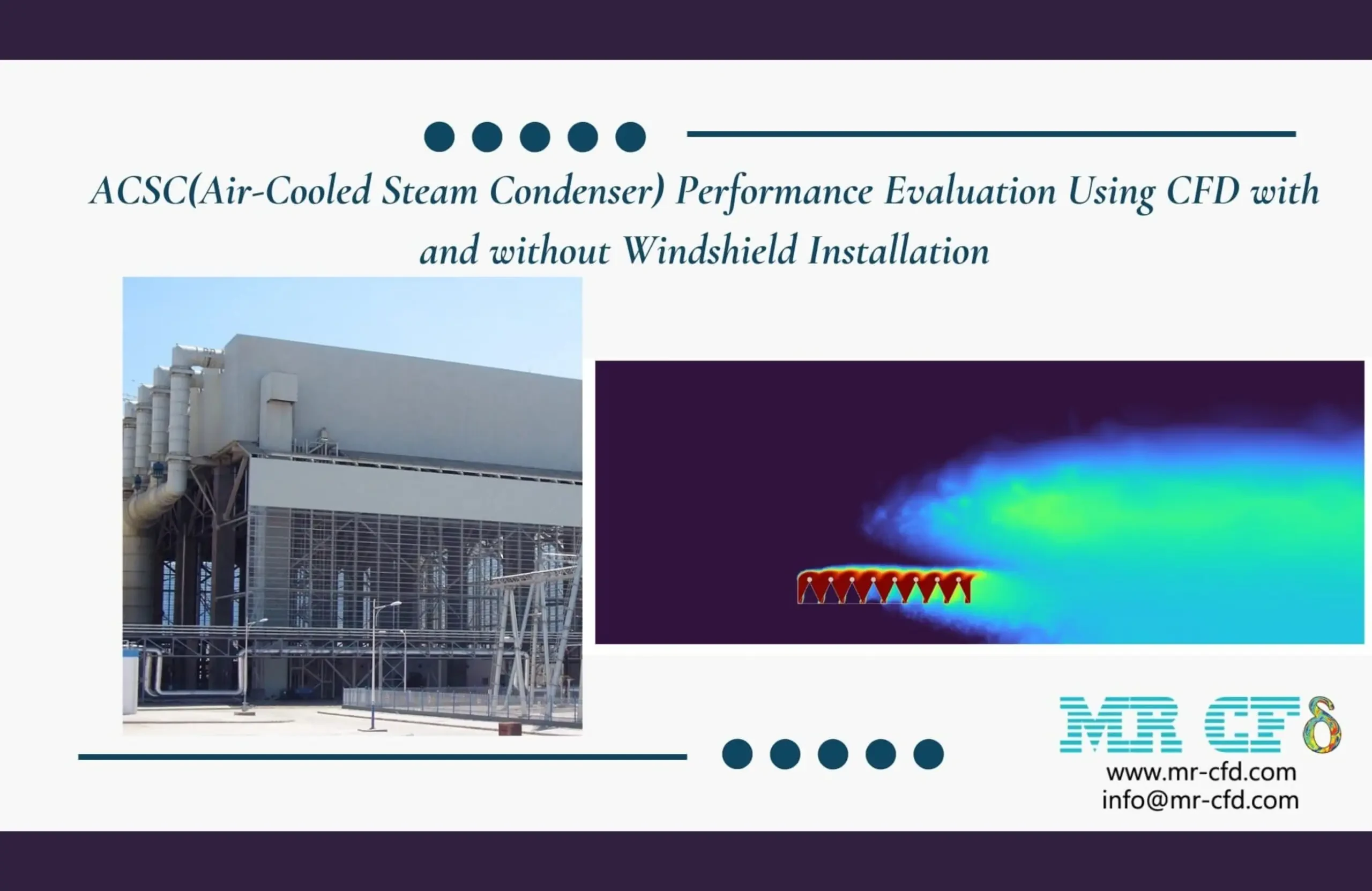
ACSC (Air-Cooled Steam Condenser) Performance Evaluation Using CFD with and without Windshield Installation
Intermediate, Advanced
Price: $14
CFD project simulates airflow through an Air-Cooled Steam Condenser (ACSC) system using ANSYS Fluent software. geometry was modeled in ANSYS SpaceClaim and meshed using ANSYS Meshing with 5,534,281 elements. Two cases were analyzed: with and without windshields to study their effect on airflow and cooling performance. The simulation is pressure-based and uses the realizable k-epsilon turbulence model.
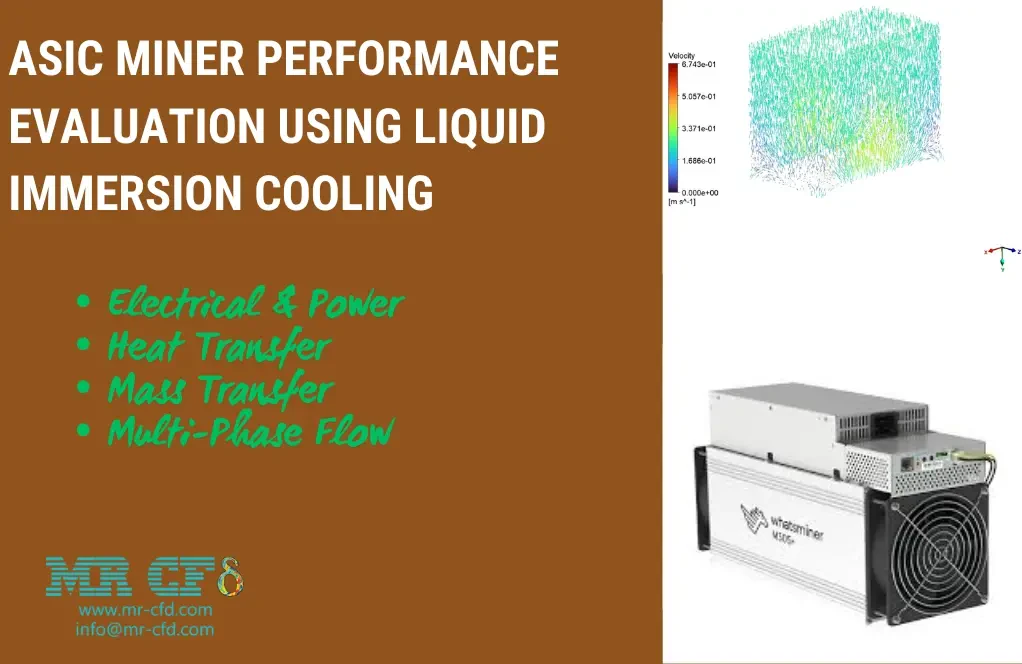
ASIC Miner Performance Evaluation Using Liquid Immersion Cooling
Beginner, Intermediate
Price: $18
The problem numerically simulates the performance of single-phase immersion cooling using ANSYS Fluent software. We design the 3-D model by the Space claim software. We Mesh the model by ANSYS Meshing software, and the element number equals1,591,373.. We perform this simulation as unsteady (Transient). We use the VOF Multi-Phase model to define Mass Transfer in the form of Evaporation-Condensation.
Price: $27
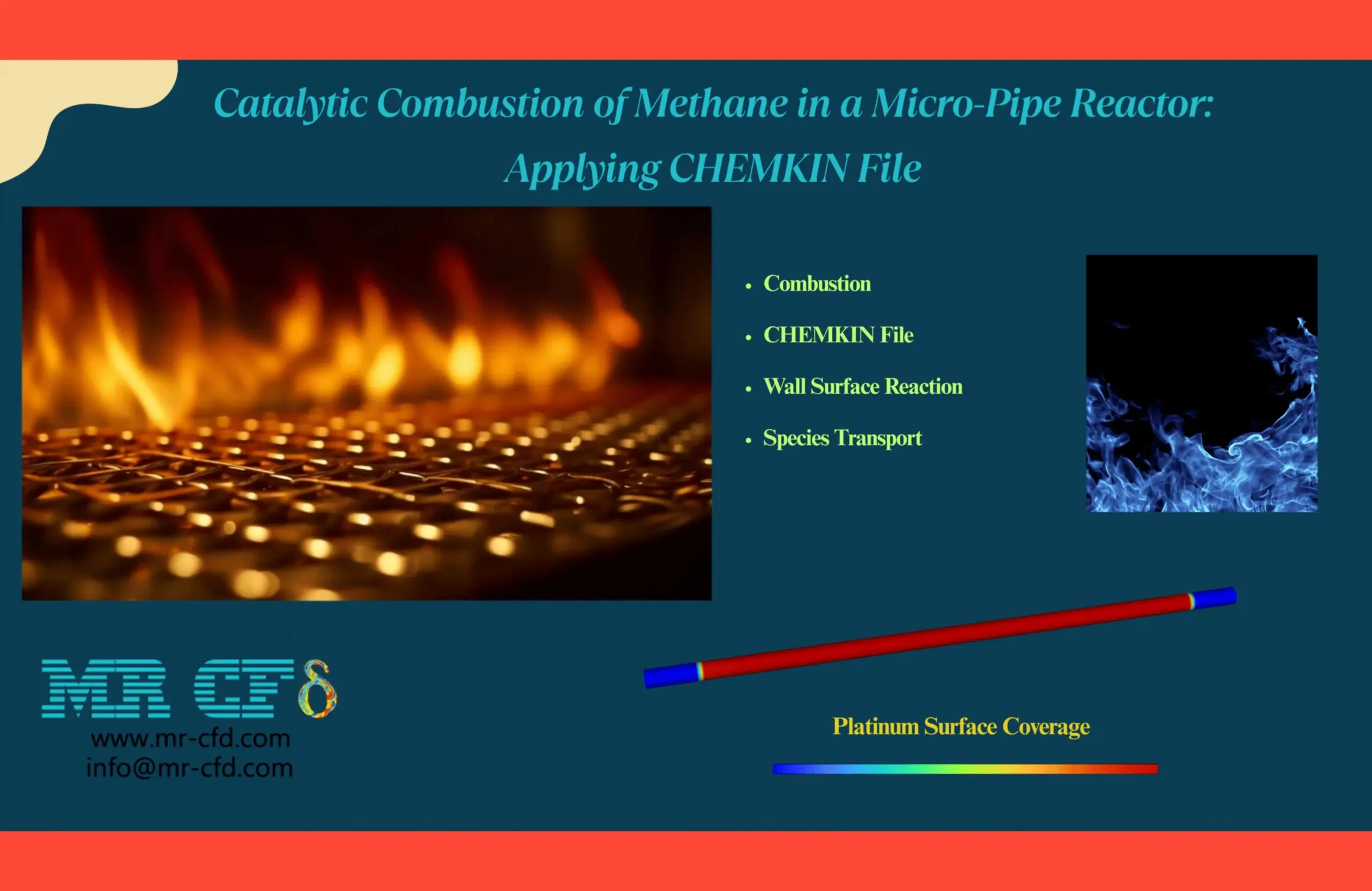
This report presents a simulation which investigates the catalytic combustion of methane in a micro-pipe reactor. A CHEMKIN file was created to define detailed wall surface reactions based on the reactions reported by Deutschmann (1996). The geometry of the micro-reactor was created using ANSYS SpaceClaim software. A high-quality hexahedral elements mesh was generated using ANSYS Meshing software. Appropriate species transport settings and boundary conditions were applied to correctly simulate the volumetric and wall surface reactions.
Microencapsulated PCMs for Energy Saving: Paper Validation
Intermediate, Advanced
Price: $27
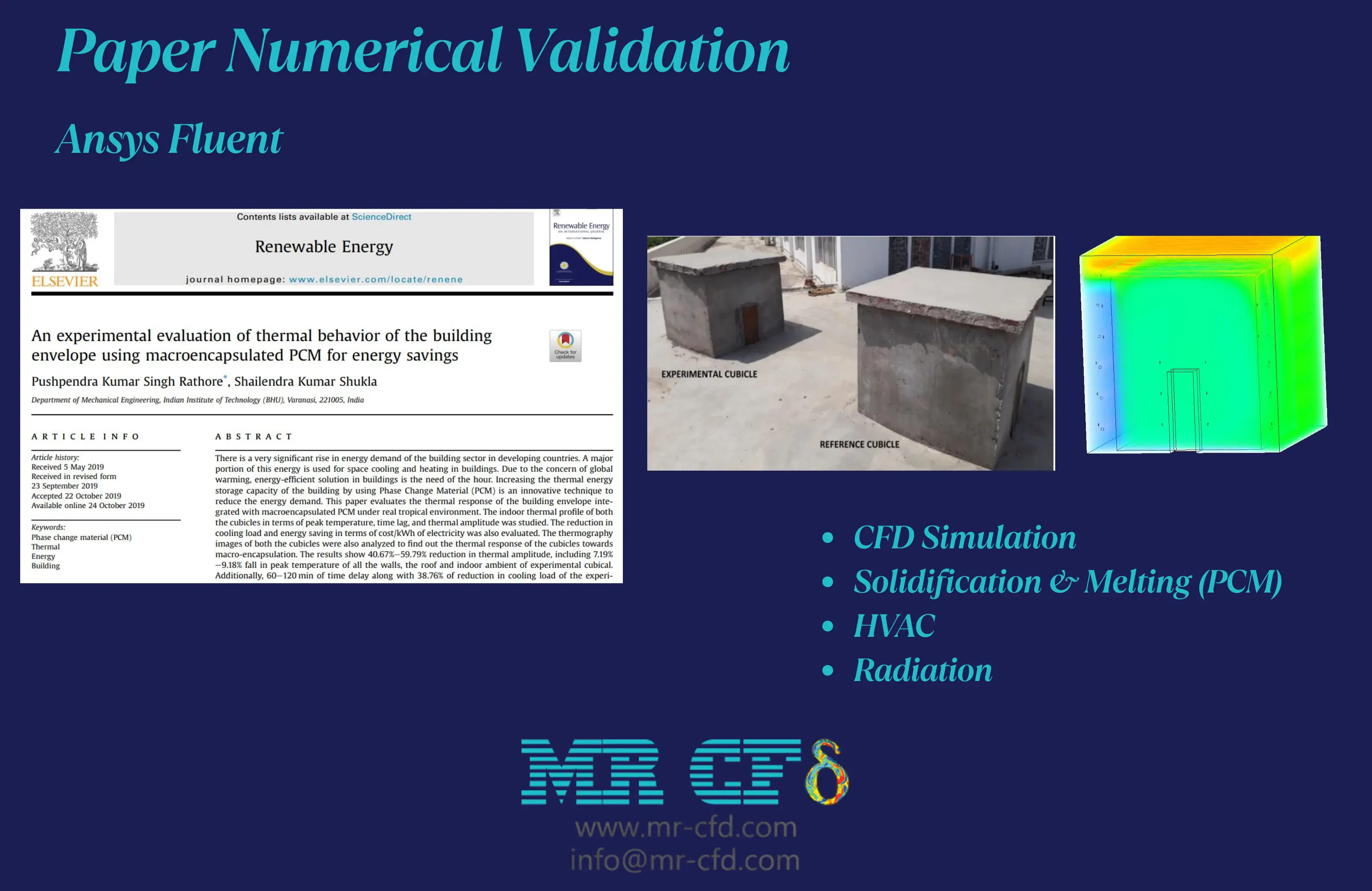
The problem numerically simulates Microencapsulated PCMs in ANSYS Fluent software. The 3D geometry of the model is created in Space Claim software. The model is meshed in ANSYS Meshing creating 4,045,254 elements. We simulate the problem Transient via pressure-based solver.
Price: $28
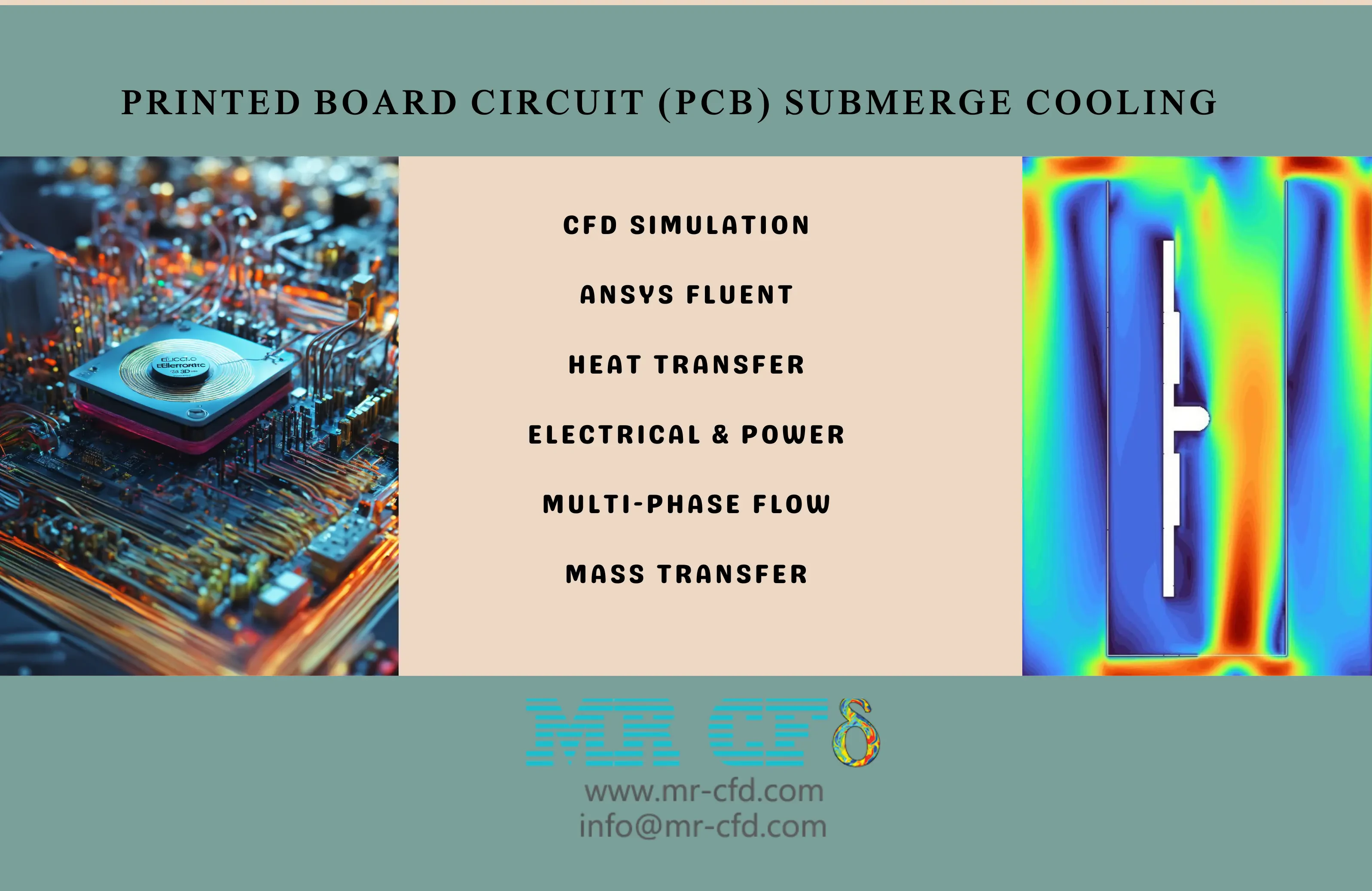
The problem numerically simulates a printed circuit board (PCB) cooling using ANSYS Fluent software. We design the 2-D model by the Space claim software. We Mesh the model by ANSYS Meshing software, and the element number equals 19106. We perform this simulation as unsteady (Transient). We use the VOF Multi-Phase model to define Mass Transfer in the form of Evaporation-Condensation.
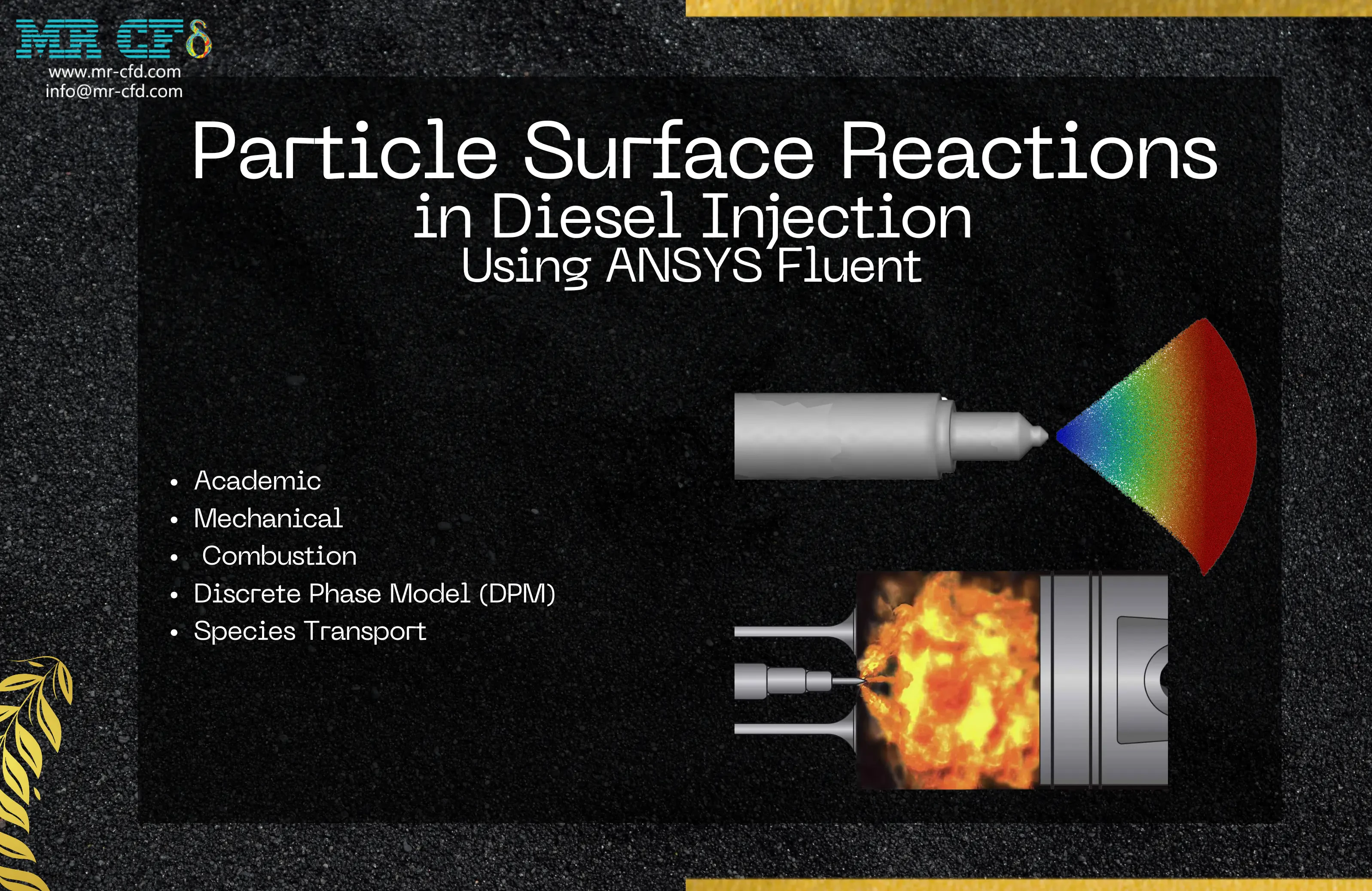
Price: $72
The main objective of this study is to analyze the behavior of the reacting spray The study combines the finite-rate chemistry and eddy dissipation models to capture kinetic-controlled and turbulence-driven reaction dynamics Water evaporates first due to its lower boiling point, while gasoline undergoes thermal decomposition and combustion The mesh was generated using ANSYS Meshing. The final mesh comprises 1,250,256 cells, balancing computational accuracy and efficiency.