

Fluent Modules Online Courses
Here's every CFD online course related to Fluent Modules category.
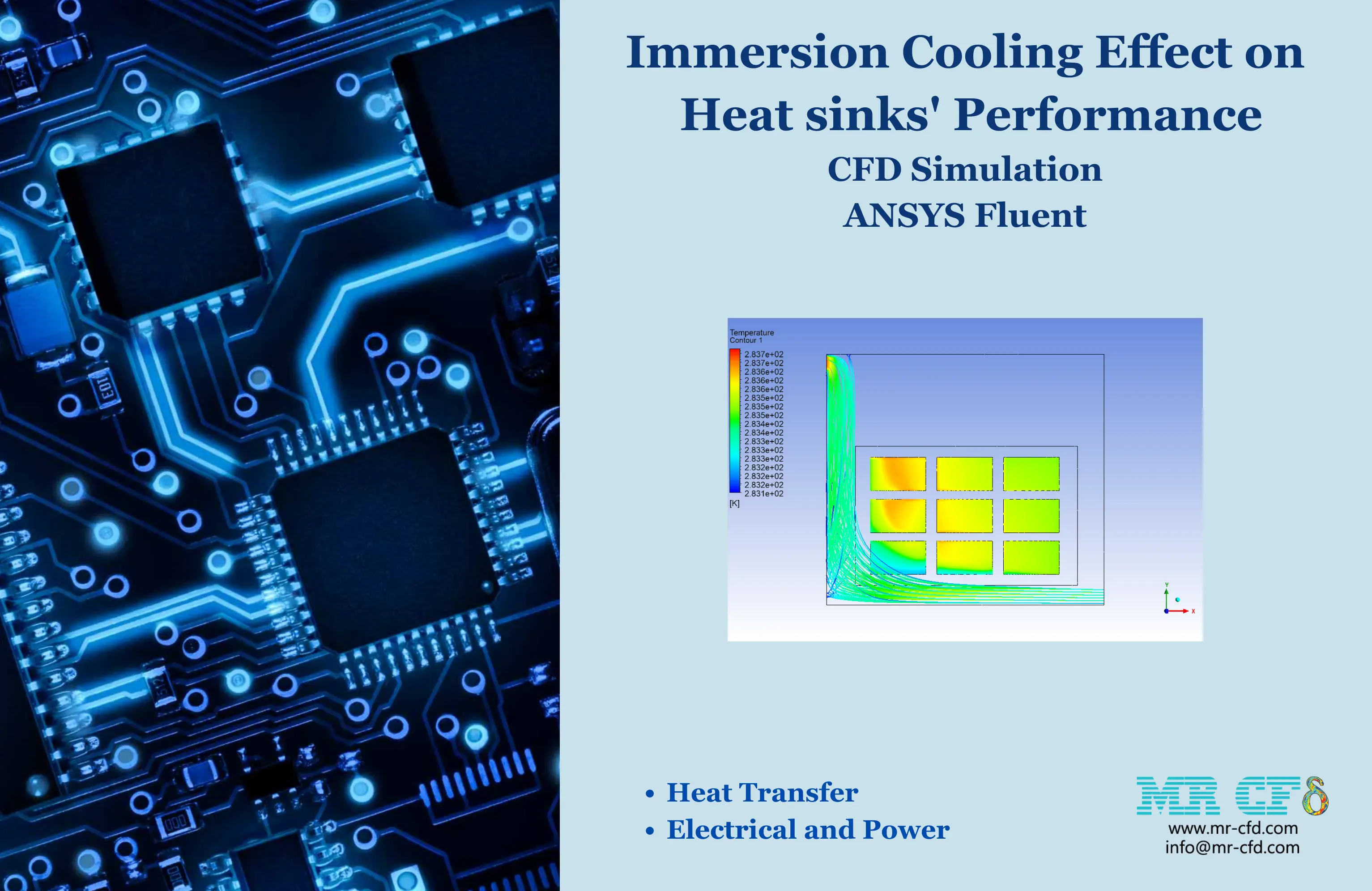
Immersion Cooling Effect on a Heat sink Performance CFD Simulation
Beginner, Intermediate
Price: $23
This project simulates the effect of immersion cooling on heat sinks' performance in ANSYS Fluent software. The 3D model is designed using the Spaceclaim, then meshed using ANSYS Meshing producing 85,000 cells. The k-epsilon RNG turbulence model is employed to accurately predict flow patterns.
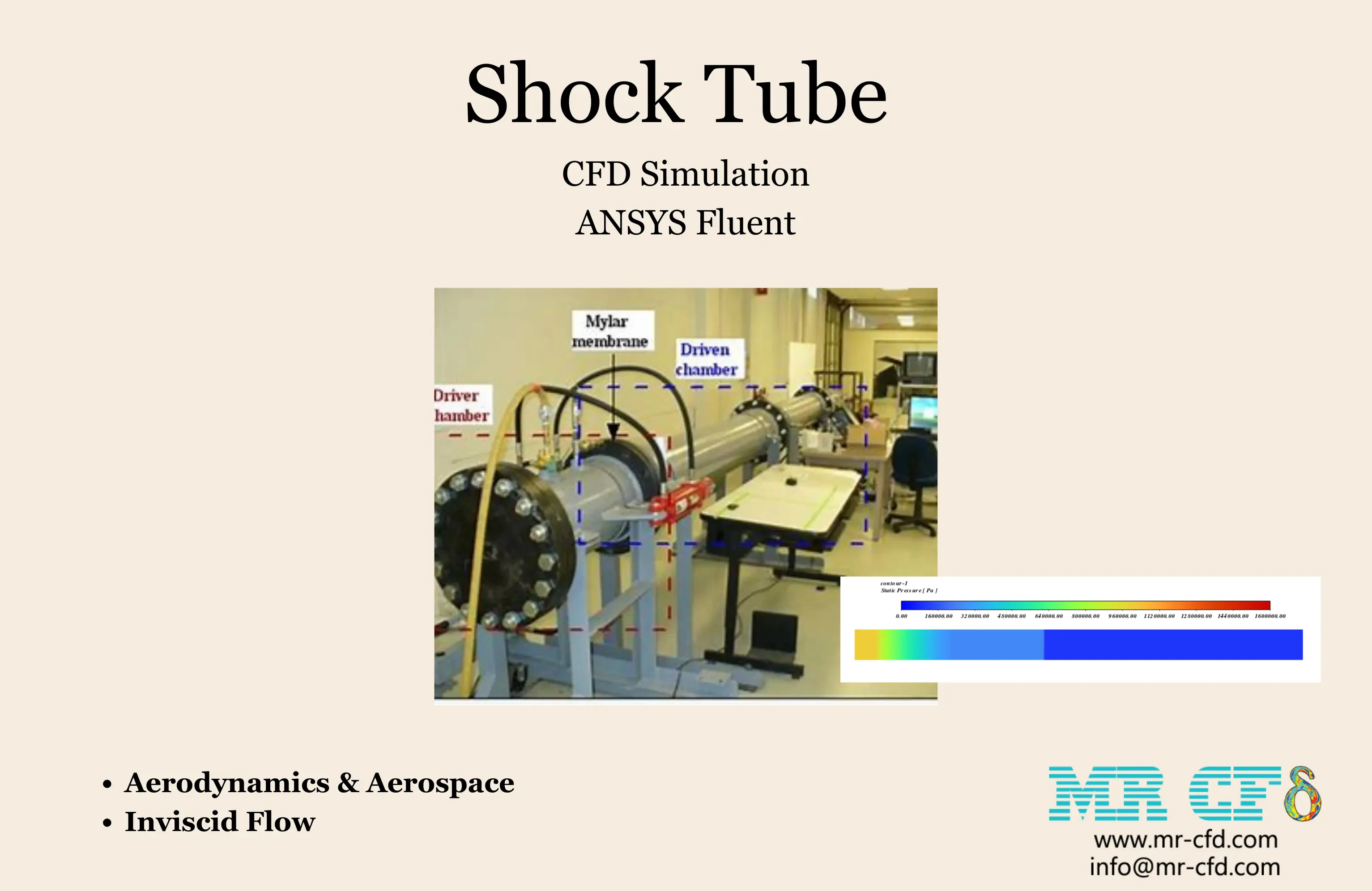
Shock Tube CFD Simulation, ANSYS Fluent
Intermediate
Price: $10
In this project, moving shock and expansion waves in a shock tube were simulated using ANSYS Fluent. The interactions of shock and expansion waves, as well as the reflection of waves at the end wall, were investigated, and the x-t wave diagram for the modeled shock tube was plotted. The geometry was created in SpaceClaim, and a mesh consisting of 300,000 elements was generated using ANSYS Meshing. The turbulence model is defined as Inviscid.
Price: $200
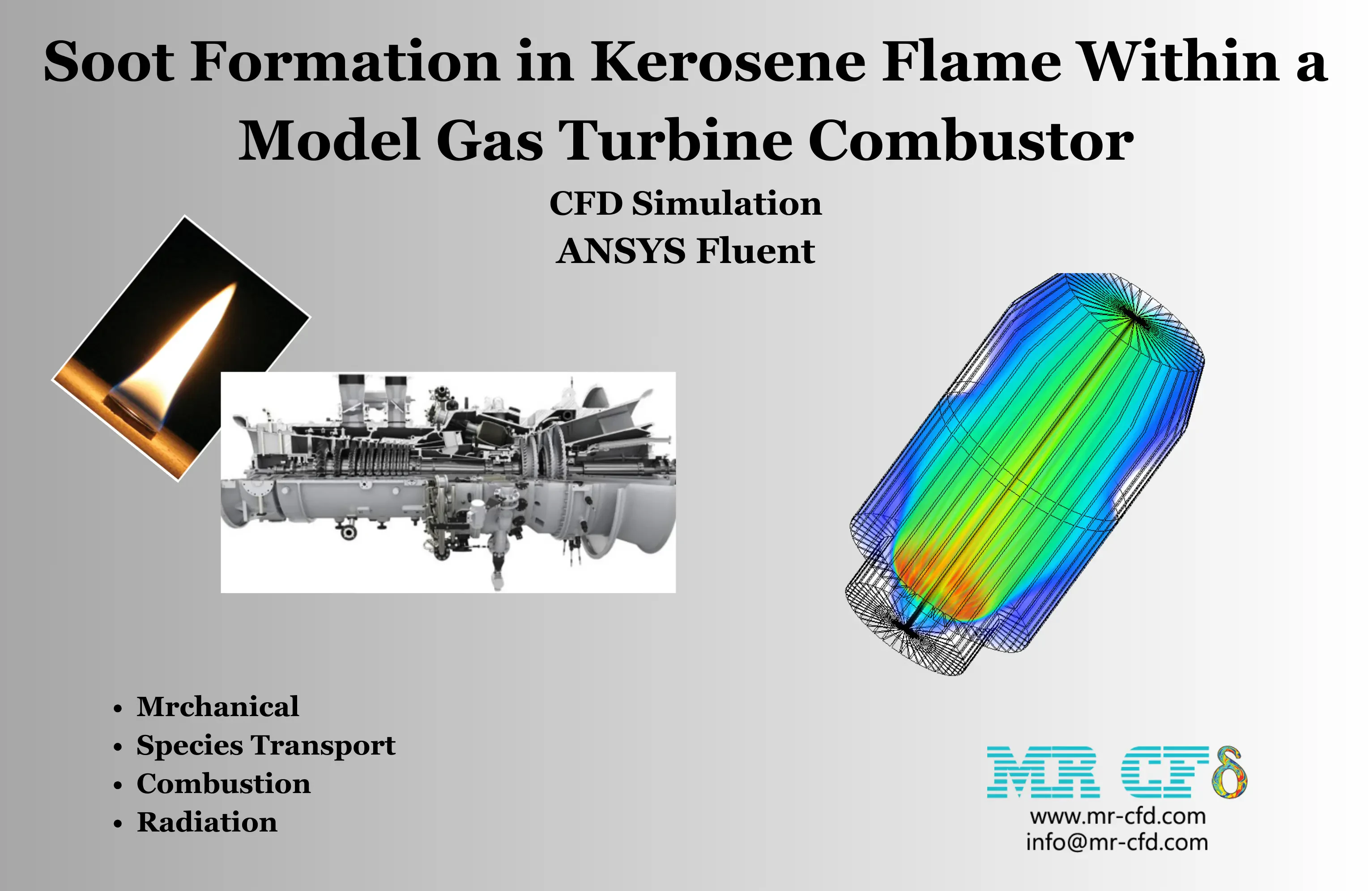
In this project, the combustion of kerosene in a model gas turbine combustor, with all its complexities, was modeled using ANSYS Fluent. Soot formation in the combustion process was modeled with the Moss-Brooks model by selecting "C2H2" and "C2H4" species as precursors for surface growth, and the Lee model for oxidation. The geometry was created in SpaceClaim, and a mesh consisting of 51,427 elements was generated using ANSYS Meshing. The rates of nucleation, surface growth, coagulation, and oxidation, as well as the soot mass fraction and temperature in the combustor, were investigated in this study.
Price: $569
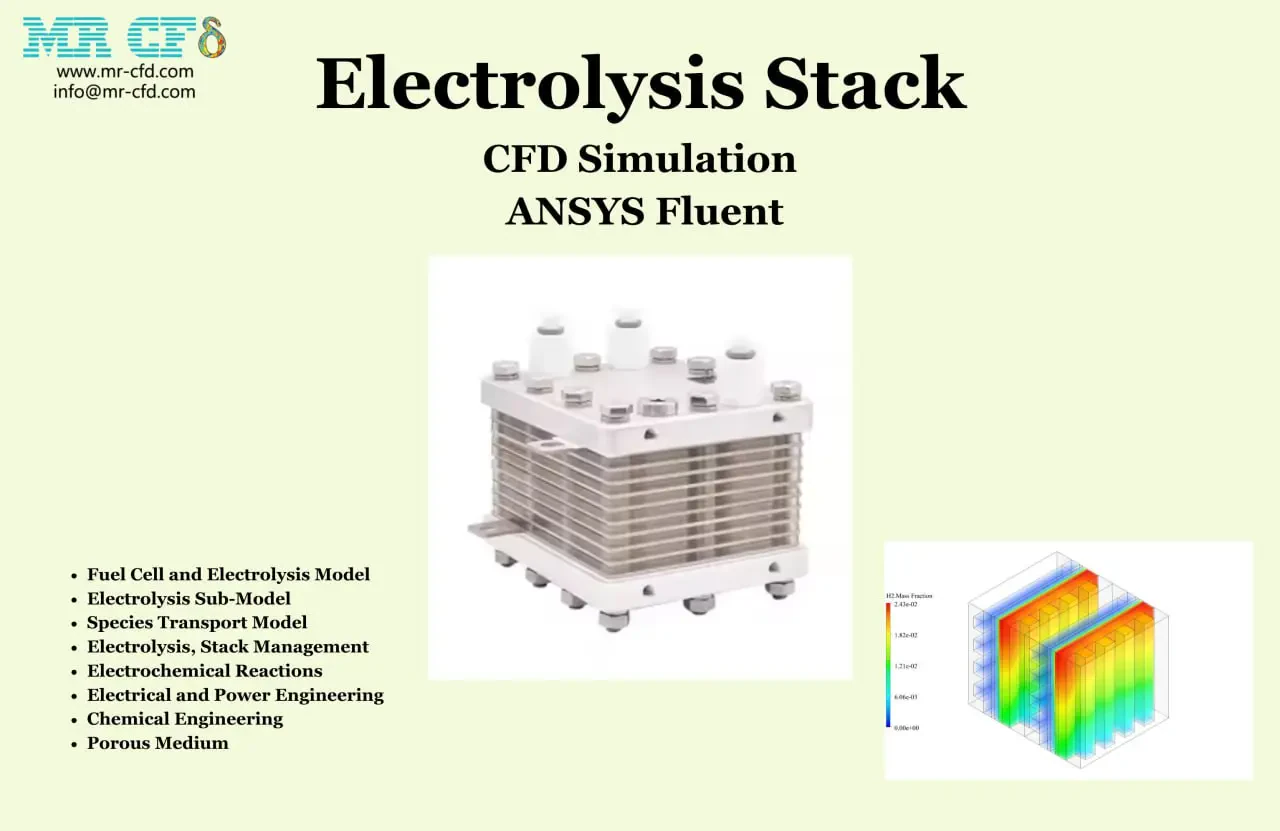
The problem numerically simulates the Electrolysis Stack using ANSYS Fluent software. We design the 3-D model with the Design Modeler software. We mesh the model with ANSYS Meshing software. The mesh is Structured, and the element number equals 279,868. We used the Fuel Cell and Electrolysis model and Electrolysis sub-model to define the electrolysis process. We used the Species model to define H2, O2, and H2O.
Price: $689
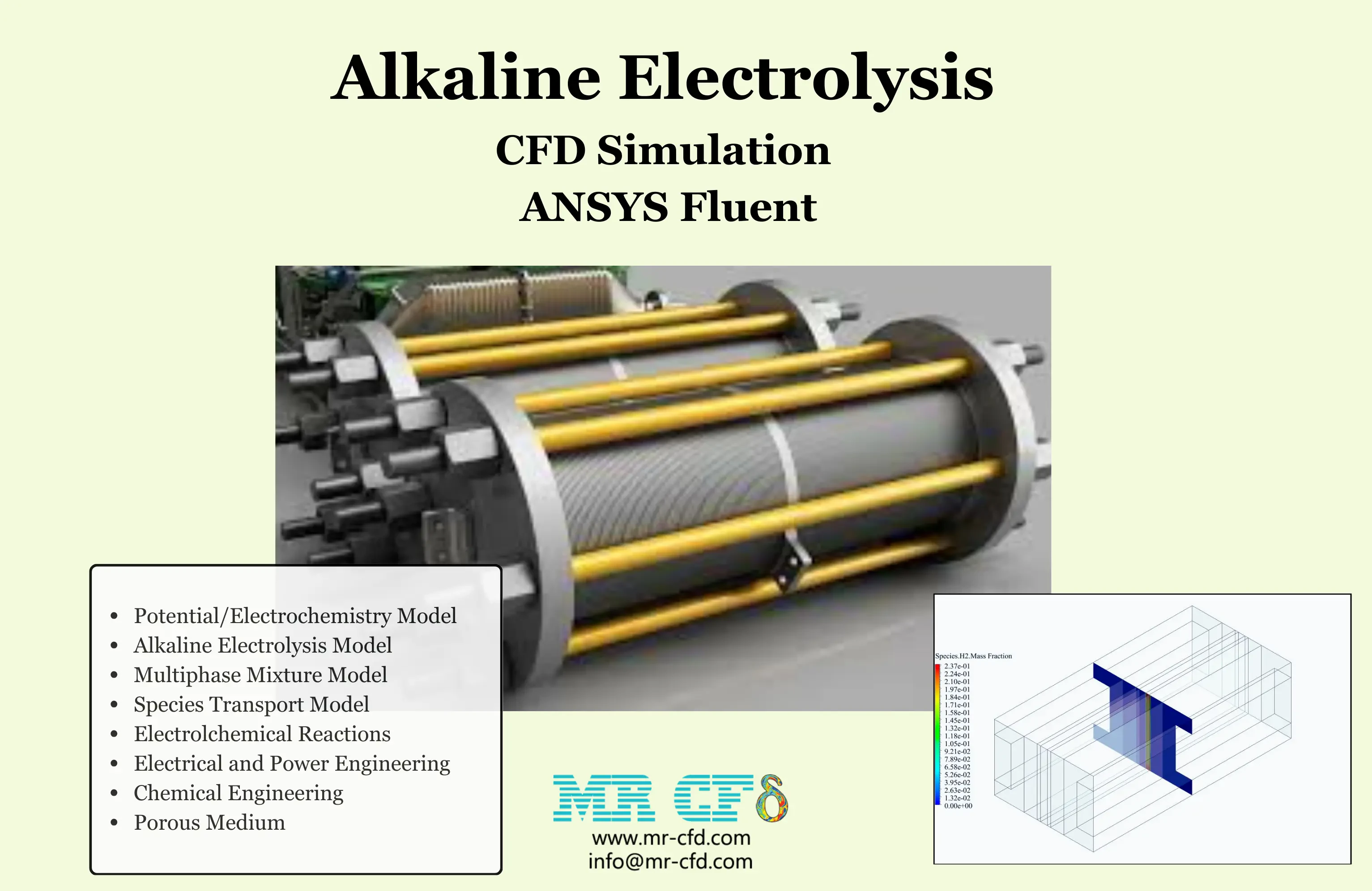
The problem numerically simulates the Alkaline Electrolysis using ANSYS Fluent software. We design the 3-D model with the Design Modeler software. We mesh the model with ANSYS Meshing software. The mesh is Structured, and the element number equals 428,800. We used the Potential/Electrochemistry model to define the potential equation. We used the Electrolysis sub-model and Alkaline Electrolysis type to define the electrolysis process. We used the Species model to define H2, O2, and H2O. We used the Mixture Multiphase model to define water.
Price: $64
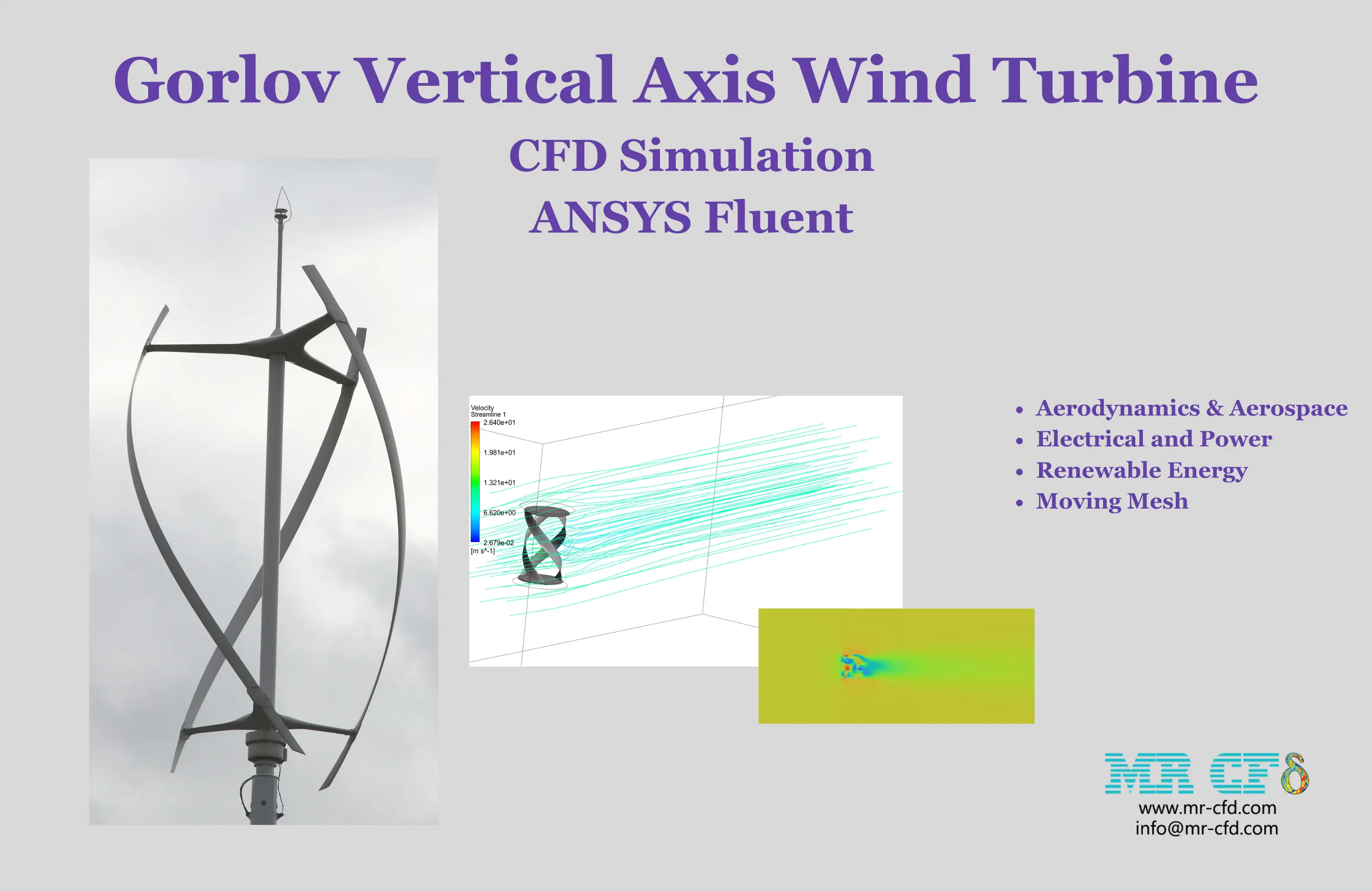
In this project, a Gorlov vertical axis wind turbine is simulated using ANSYS Fluent software. The geometry is re-designed in ANSYS Spaceclaim software and meshed in ANSYS Meshing software. The angular motion is simulated using the sliding mesh (mesh motion) model.
Price: $8
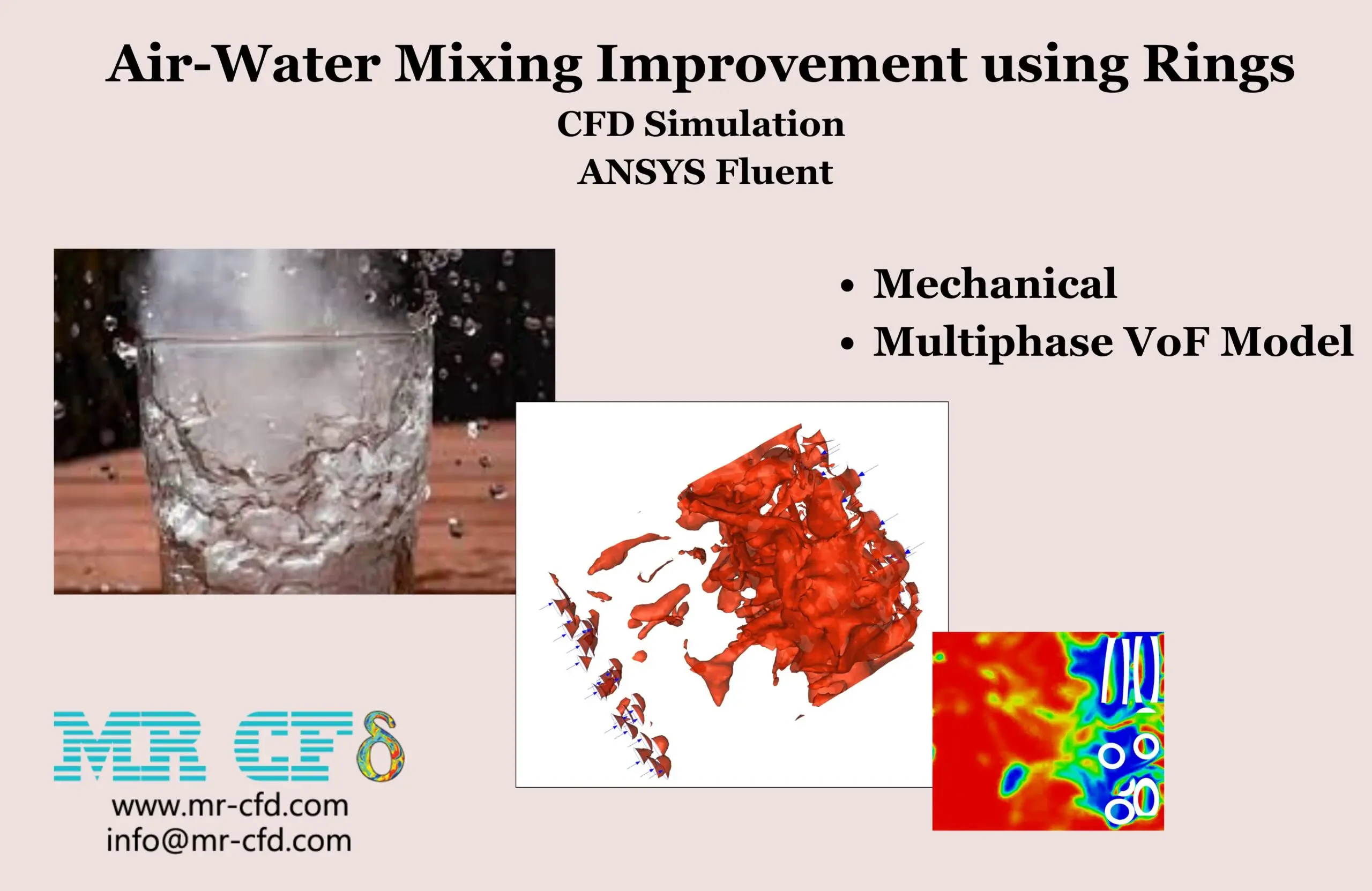
In this project, air-water mixing improvement using rings is simulated by ANSYS Fluent software. The geometry is designed in Design Modeler then meshed in ANSYS Meshing generating 6,342,465 cells. VoF model is activated to simulate mixing the two phases. The turbulence of the flow is simulated by Standard k-e model.
Price: $689
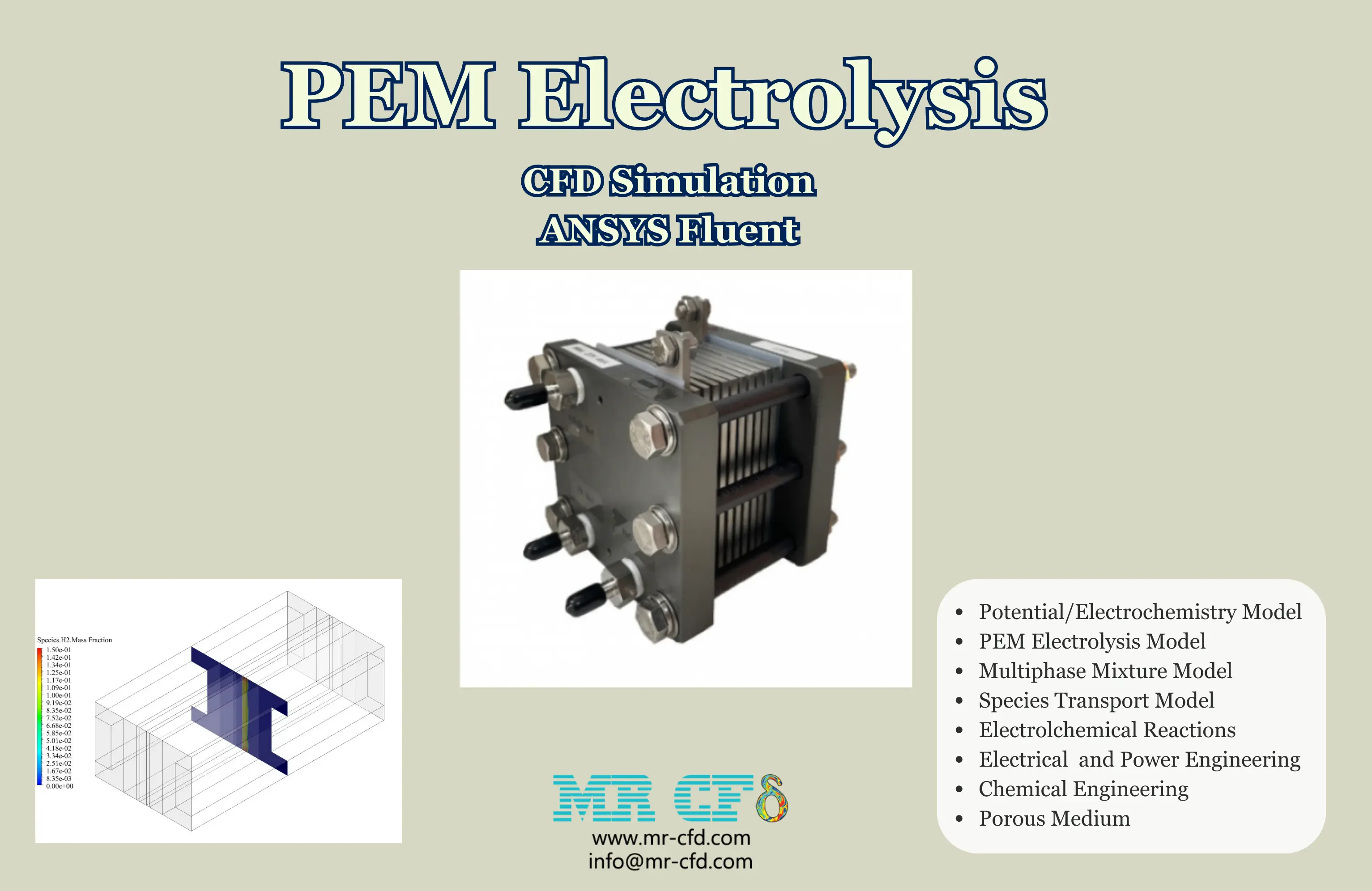
The problem numerically simulates the PEM Electrolysis using ANSYS Fluent software. We design the 3-D model with the Design Modeler software. We mesh the model with ANSYS Meshing software. The mesh is Structured, and the element number equals 428,800. We used the Potential/Electrochemistry model to define the potential equation. We used the Electrolysis sub-model and PEM Electrolysis type to define the electrolysis process. We used the Species model to define H2, O2, and H2O. We used the Mixture Multiphase model to define water.
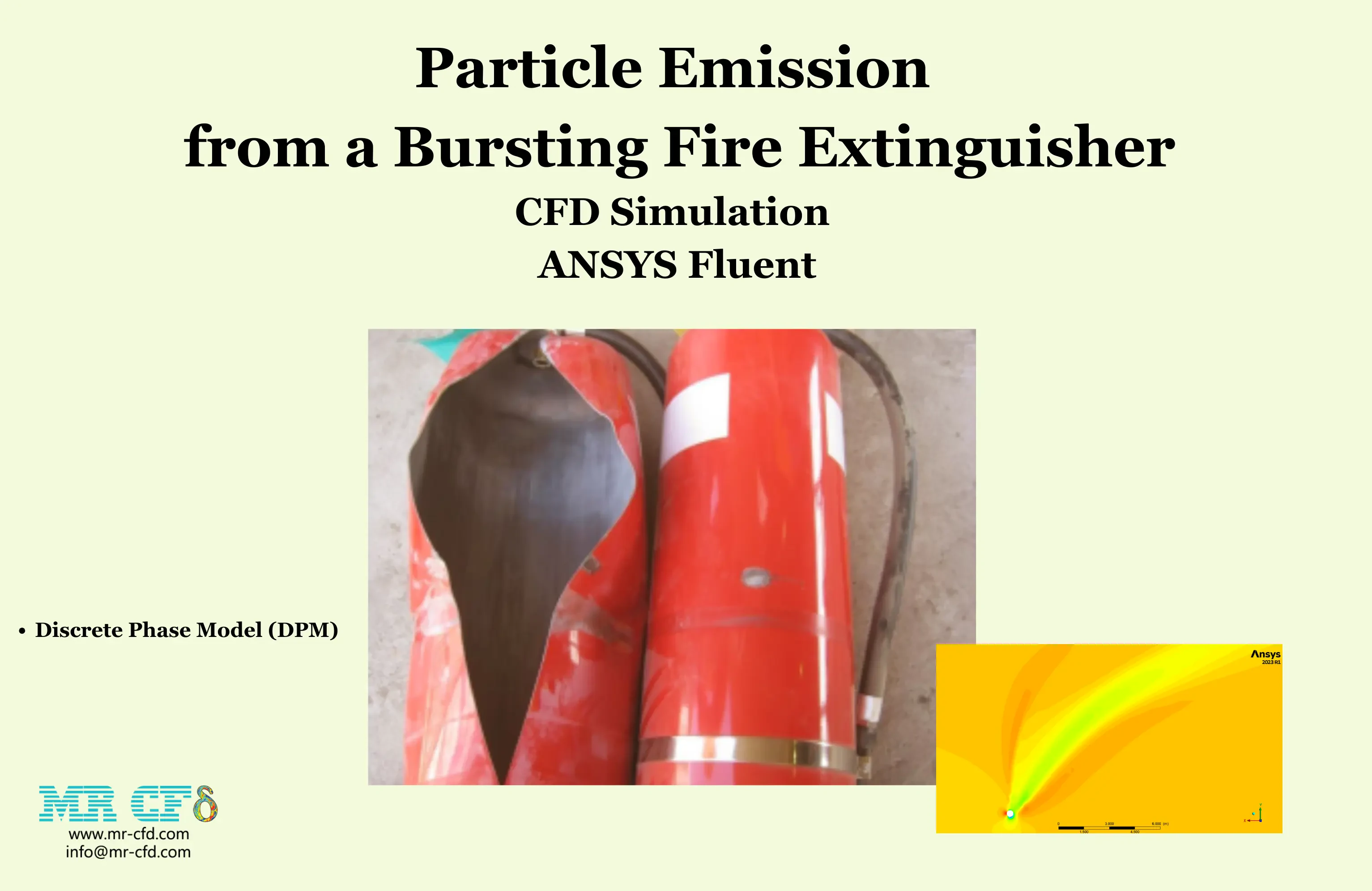
Particle Emission from a Bursting Fire Extinguisher CFD Simulation, ANSYS Fluent
Intermediate, Advanced
Price: $8
In this project, the Particle Emission from a Bursting Fire Extinguisher is modeled using ANSYS Fluent. The geometry was created in SpaceClaim, and a mesh consisting of 1,172,162 elements was generated using ANSYS Meshing. The Discrete Phase Model (DPM) was chosen to simulate emission released from capsule. The turbulence effect is modeled with the k-ε standard model.