

For Professionals Online Courses
Here's every CFD online course related to For Professionals category.
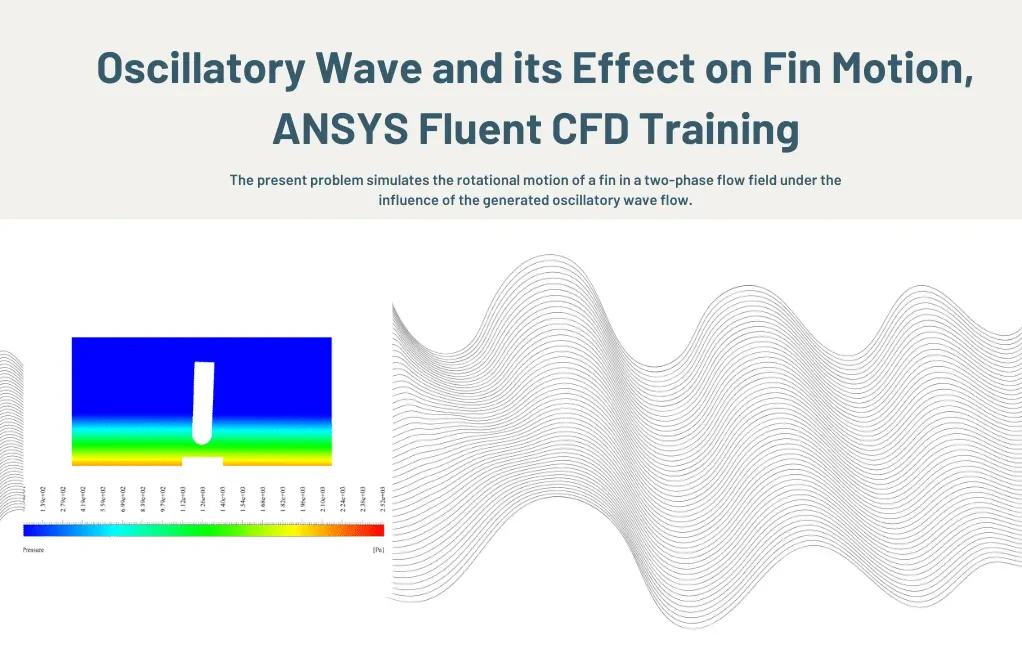
Oscillatory Wave and its Effect on Fin Motion, ANSYS Fluent CFD Training
Intermediate, Advanced
Price: $99
The problem numerically simulates the Rotational Motion of a Fin under the influence of Oscillatory Wave flow using ANSYS Fluent software. We design the 2-D model by the Design Modeler software. We Mesh the model by ANSYS Meshing software, and the element number equals 120049. We perform this simulation as unsteady (Transient). We use the two-phase VOF model to define the flow field containing the water and air. We use Dynamics Mesh to define deformation of the grid around the moving wall. We determine only one degree of freedom (1-DOF) to rotate the fin. We use a UDF to define the reciprocating motion of the wall that causes the wavy flow.
Price: $240
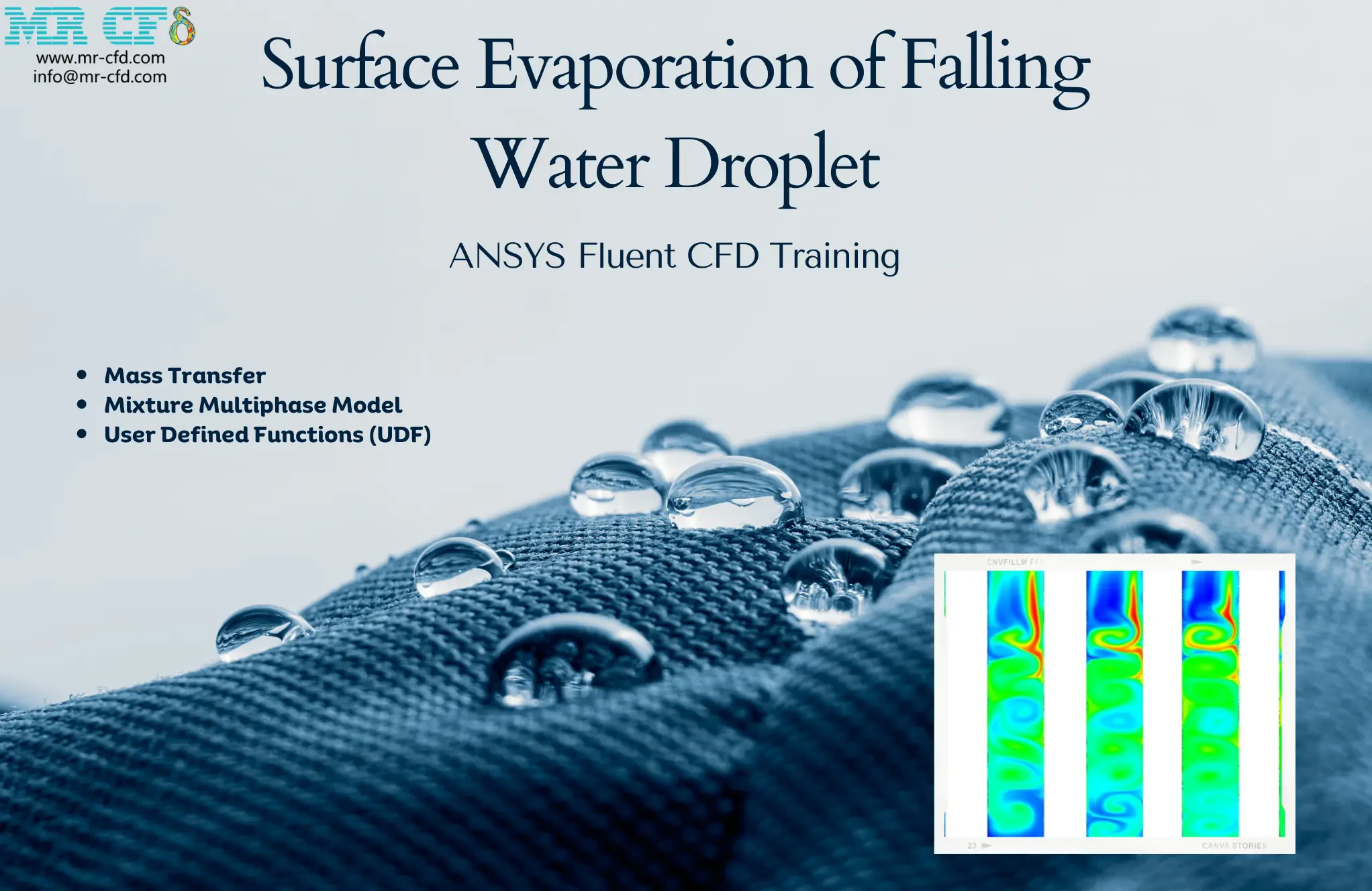
The problem numerically simulates the surface evaporation of a falling water droplet using ANSYS Fluent software. We design the 2-D model by the Design Modeler software. We Mesh the model by ANSYS Meshing software. The mesh type is Structured, and the element number equals 94800. We perform this simulation as unsteady (Transient). We use the Mixture Multi-Phase Model to define droplets inside the air. We use a UDF to define surface evaporation as the Mass Transfer rate between water and air.
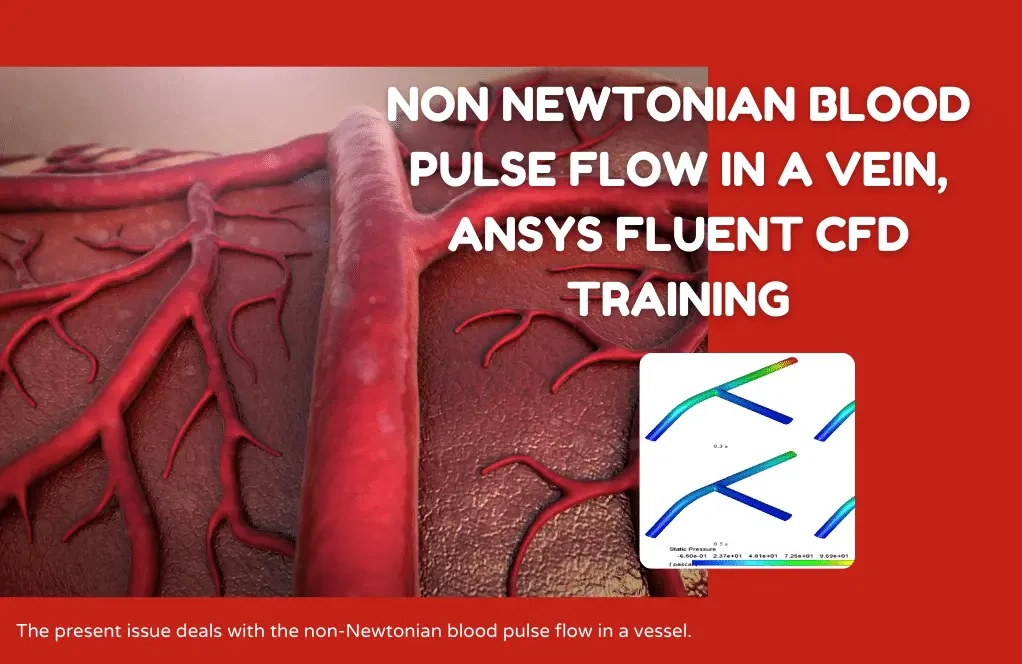
Non-Newtonian Blood Pulse Flow in a Vein, ANSYS Fluent CFD Training
Beginner, Intermediate
Price: $36
The problem numerically simulates Non-Newtonian Blood Pulse Flow in a Vein using ANSYS Fluent software. We design the 3-D model by the Design Modeler software. We Mesh the model by ANSYS Meshing software, and the element number equals 397388. We perform this simulation as unsteady (Transient). We use a UDF to define the pulse of the blood flow. The Carreau Equation is used for viscosity definition to consider non-newtonian blood.
Price: $569
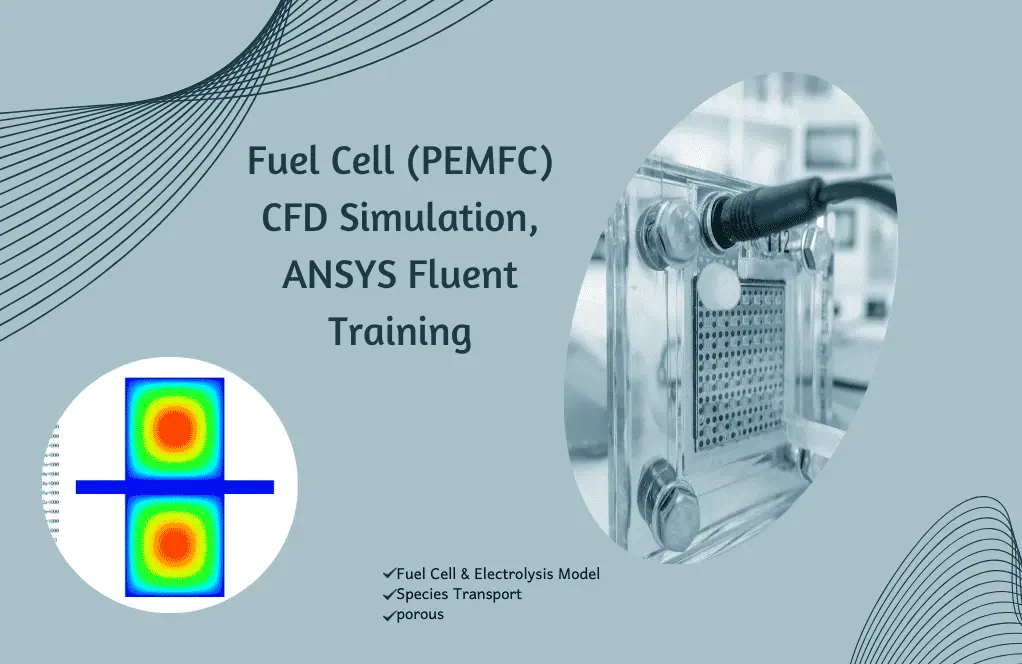
The present problem simulates a fuel cell using PEMFC (polymer electrolyte membrane fuel cell) model in porous medium by ANSYS Fluent software. The geometry of the present model is three-dimensional and has been designed using Design Modeler software. The meshing of the model has been done using ANSYS Meshing software. The mesh type is structured , and the element number is 142,000. Species Transport, Porous & Fuel cell, and electrolysis models are used.
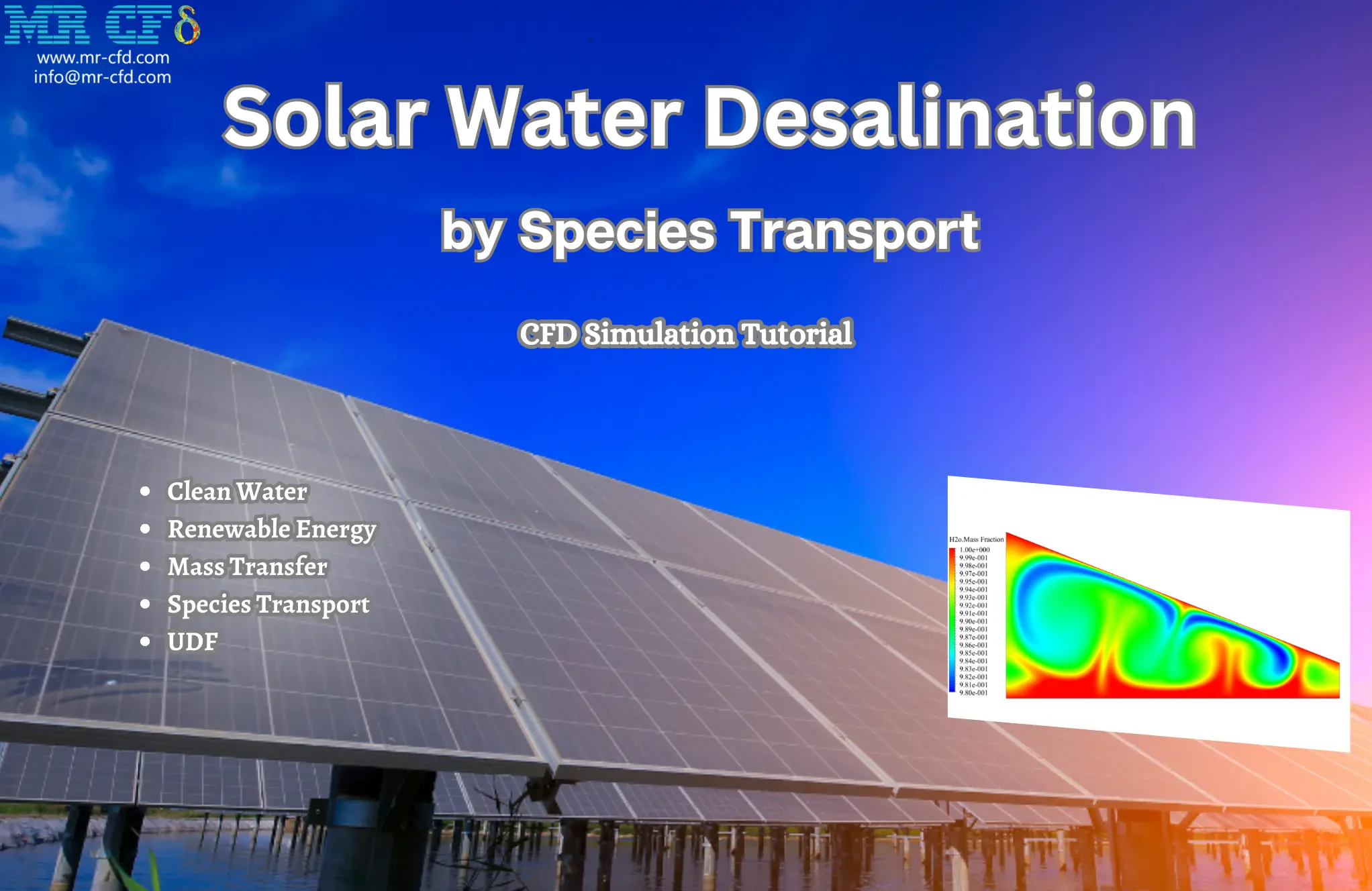
Solar Water Desalination by Species Transport, 2-D
Intermediate, Advanced
Price: $330
The problem numerically simulates the Solar Water Desalination using ANSYS Fluent software. We design the 3-D model by the Design Modeler software. We mesh the model with ANSYS Meshing software. The mesh type is Structured, and the element number equals 16000. We perform this simulation as unsteady (Transient). We use the Species Transport model to define 3 different species. We use a UDF to define mass transfer rate in the form of evaporation-condensation.
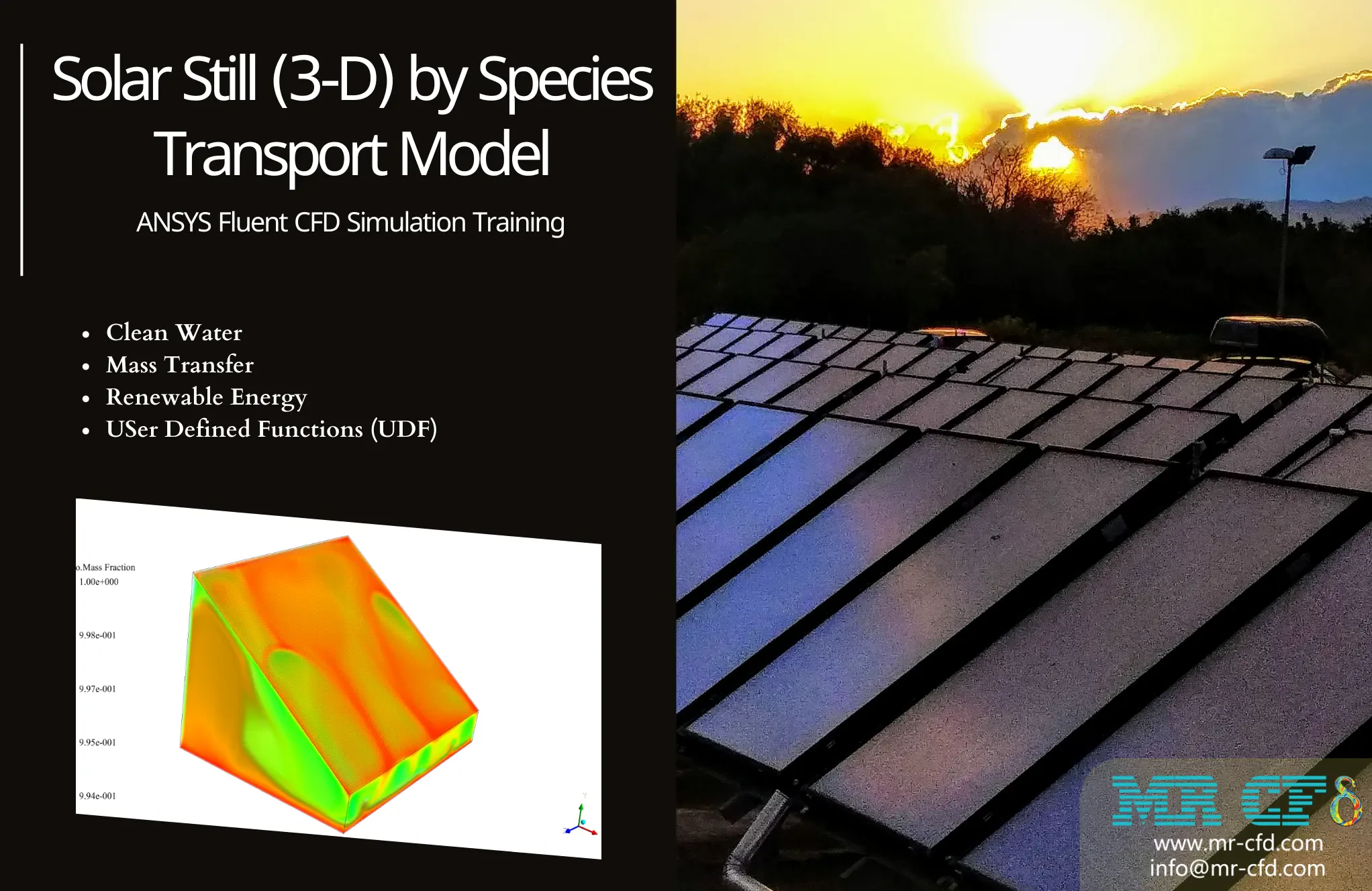
Solar Still (3-D) by Species Transport Model, ANSYS Fluent CFD Simulation Training
Intermediate, Advanced
Price: $330
The present study investigates the performance of a solar-still thermal desalination unit.
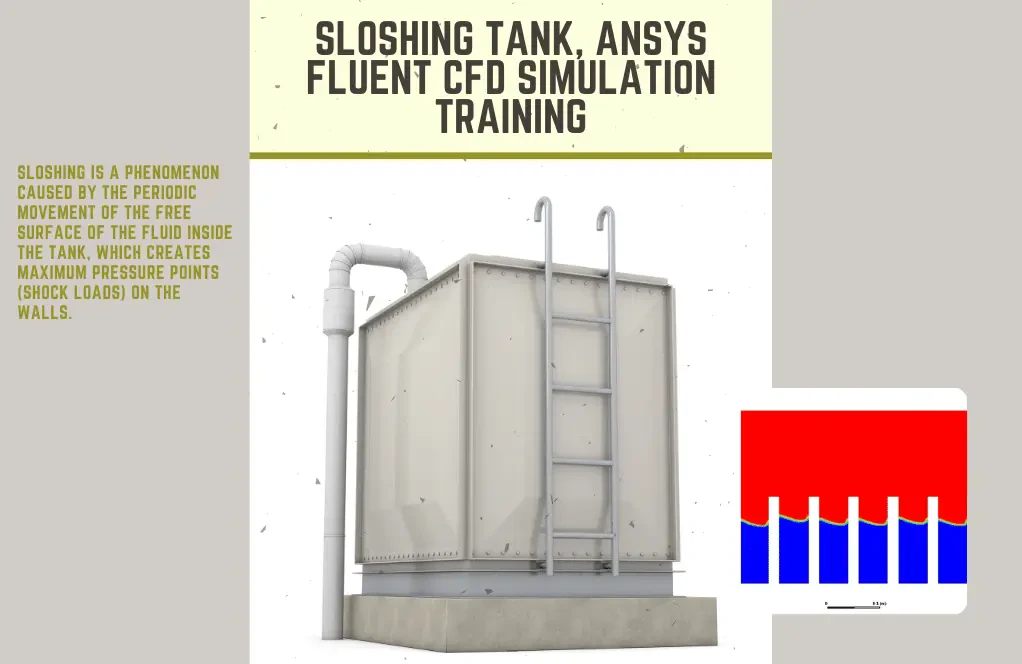
Sloshing Tank, ANSYS Fluent CFD Simulation Training
Intermediate
Price: $99
The Sloshing fluid CFD simulation in a tank containing LNG fuel and air by ANSYS Fluent software. The geometry of the 2-D tank is modeled by Design Modeler software. A structured mesh is done for the sloshing tank by ANSYS Meshing software. The simulation is Transient. The Frame Motion (MRF) method applying a UDF for the sloshing movement is used. The Multiphase VOF model is applied to model the air and fluid.
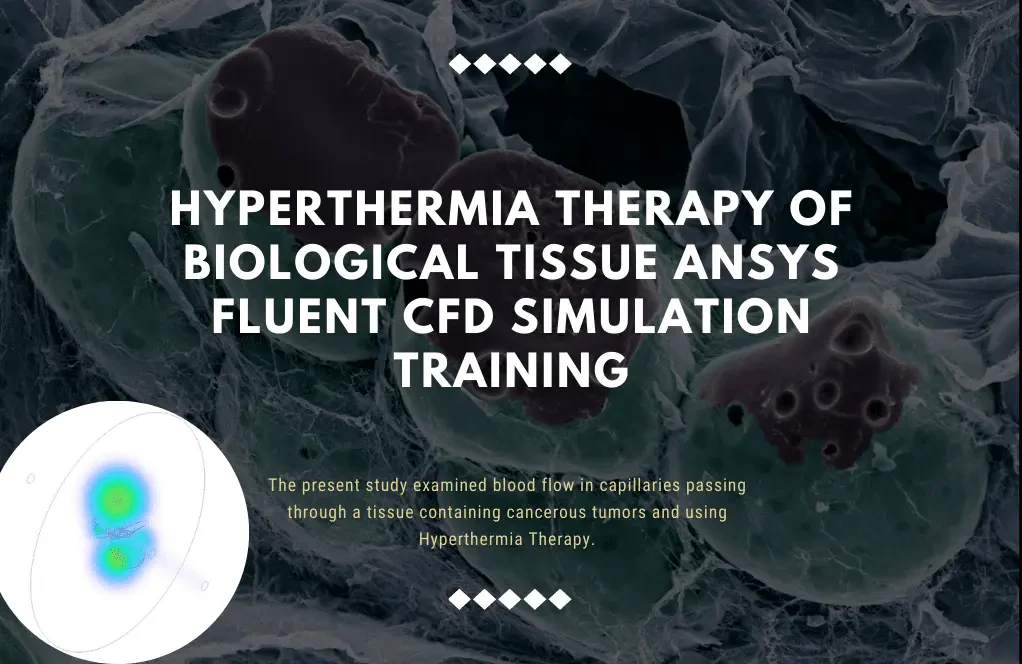
Hyperthermia Therapy of a Cancer Tissue ANSYS Fluent CFD Simulation Training
Intermediate, Advanced
Price: $96
The present study examined blood flow in capillaries passing through a tissue containing cancerous tumors using Hyperthermia Therapy by ANSYS Fluent software. We have designed the geometry using ANSYS Design modeler software and created the mesh on this geometry using ANSYS meshing software. The mesh type is unstructured with 717087 cells. The whole tissue can be considered a porous medium. This simulation is performed as unsteady (Transient). The Source Term option is used. The UDF code defines the amount of heat applied per volume unit.