

For Professionals Online Courses
Here's every CFD online course related to For Professionals category.

Price: $809
The problem numerically simulates a RQ-11 Raven UAV using ANSYS Fluent software. We design the 3-D model with the Design Modeler software. We mesh the model with Fluent Meshing software. The element number equals 5,300,212 and their type is polyhedra. In this simulation, FW_H and BroadBand Noise are used for acoustic modeling.
Price: $809
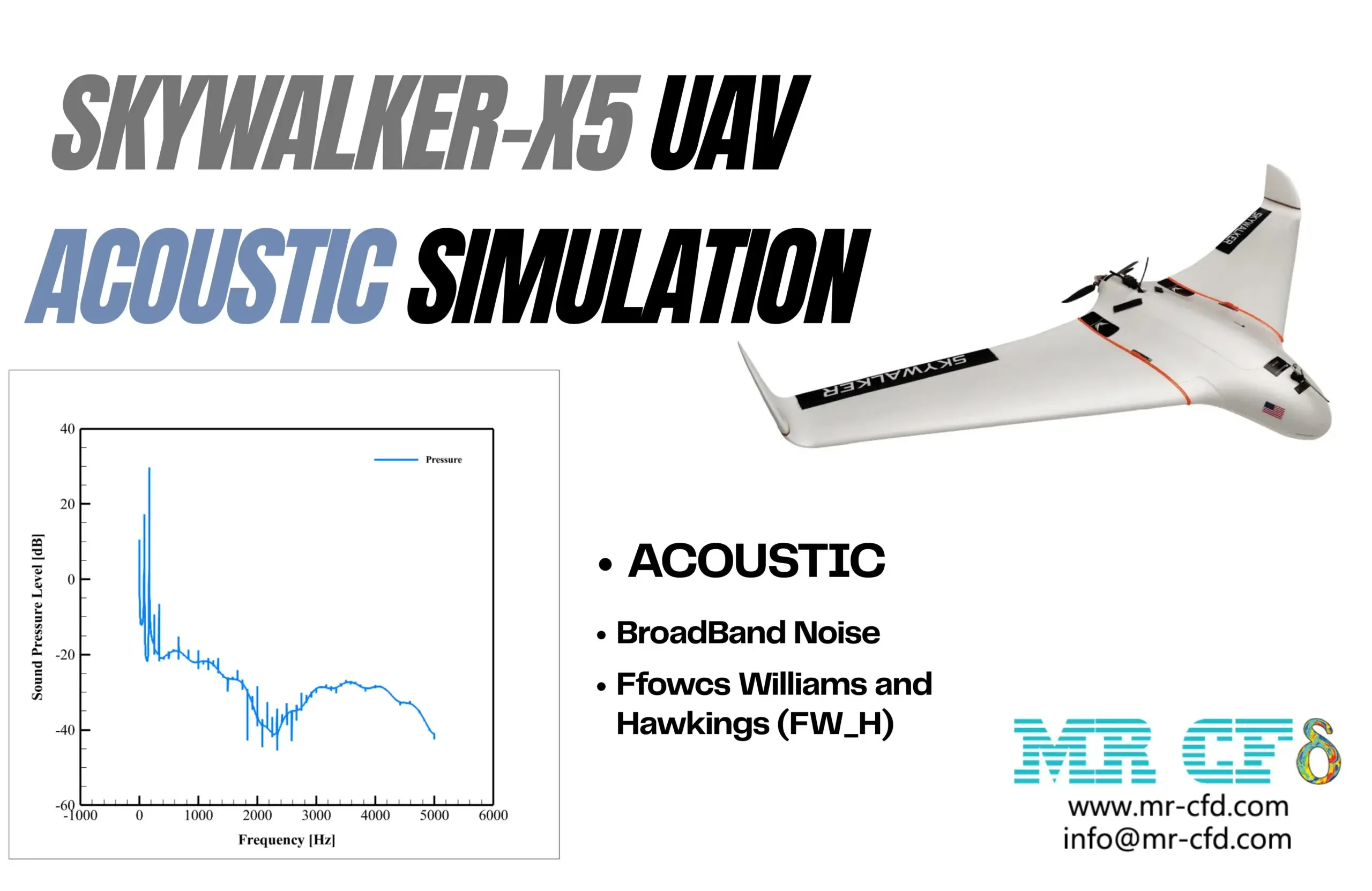
The problem numerically simulates a Skywalker-X5 UAV using ANSYS Fluent software. We design the 3-D model with the Design Modeler software. We mesh the model with ANSYS Meshing software. The element number equals 1,195,030 and their type is polyhedra. In this simulation, FW_H and BroadBand Noise are used for acoustic modeling.
Price: $809
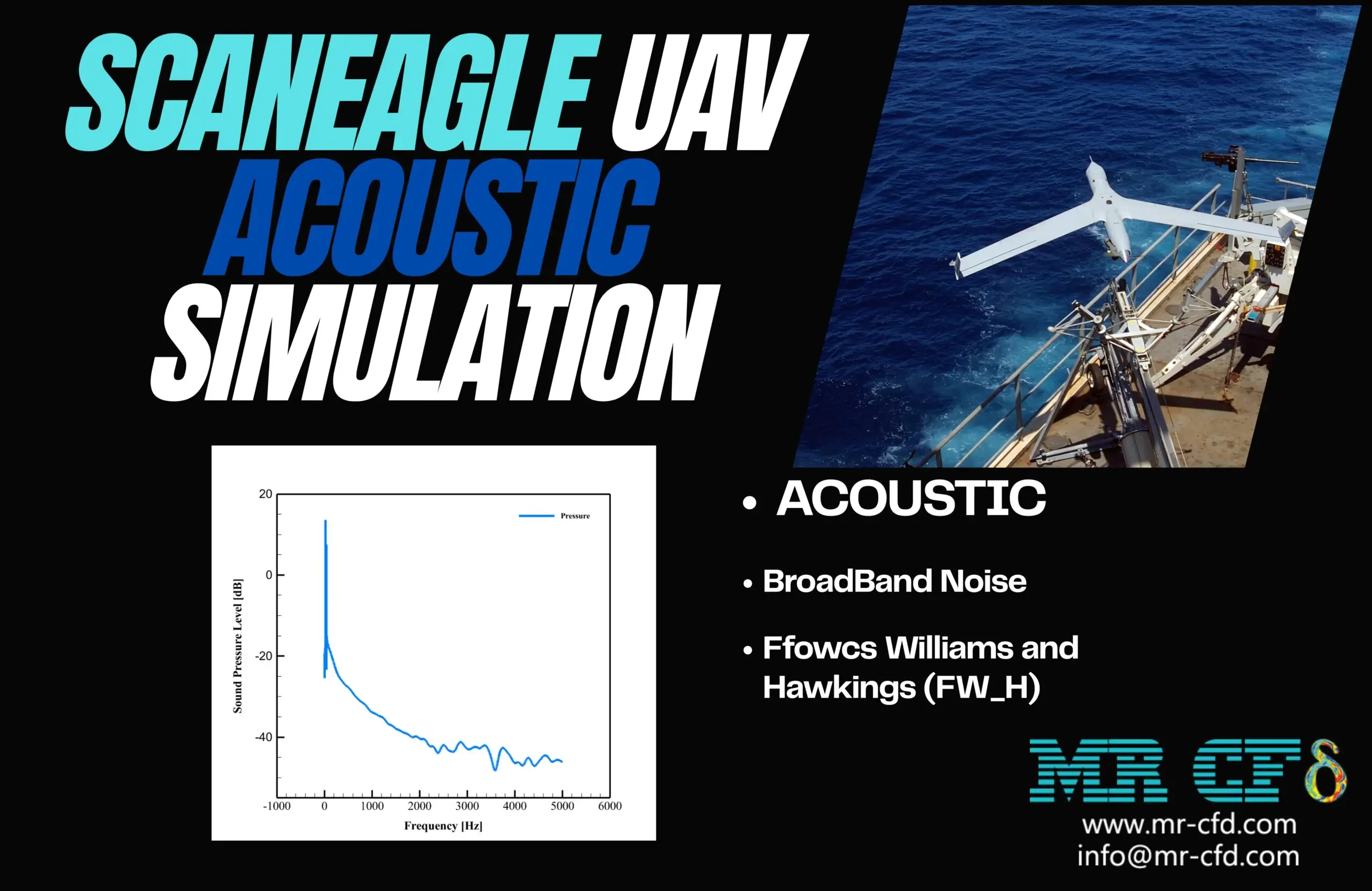
The problem numerically simulates a ScanEagle UAV using ANSYS Fluent software. We design the 3-D model with the Design Modeler software. We mesh the model with ANSYS Meshing software. The element number equals 3,213,450 and their type is polyhedra. In this simulation, FW_H and BroadBand Noise are used for acoustic modeling.
Price: $809
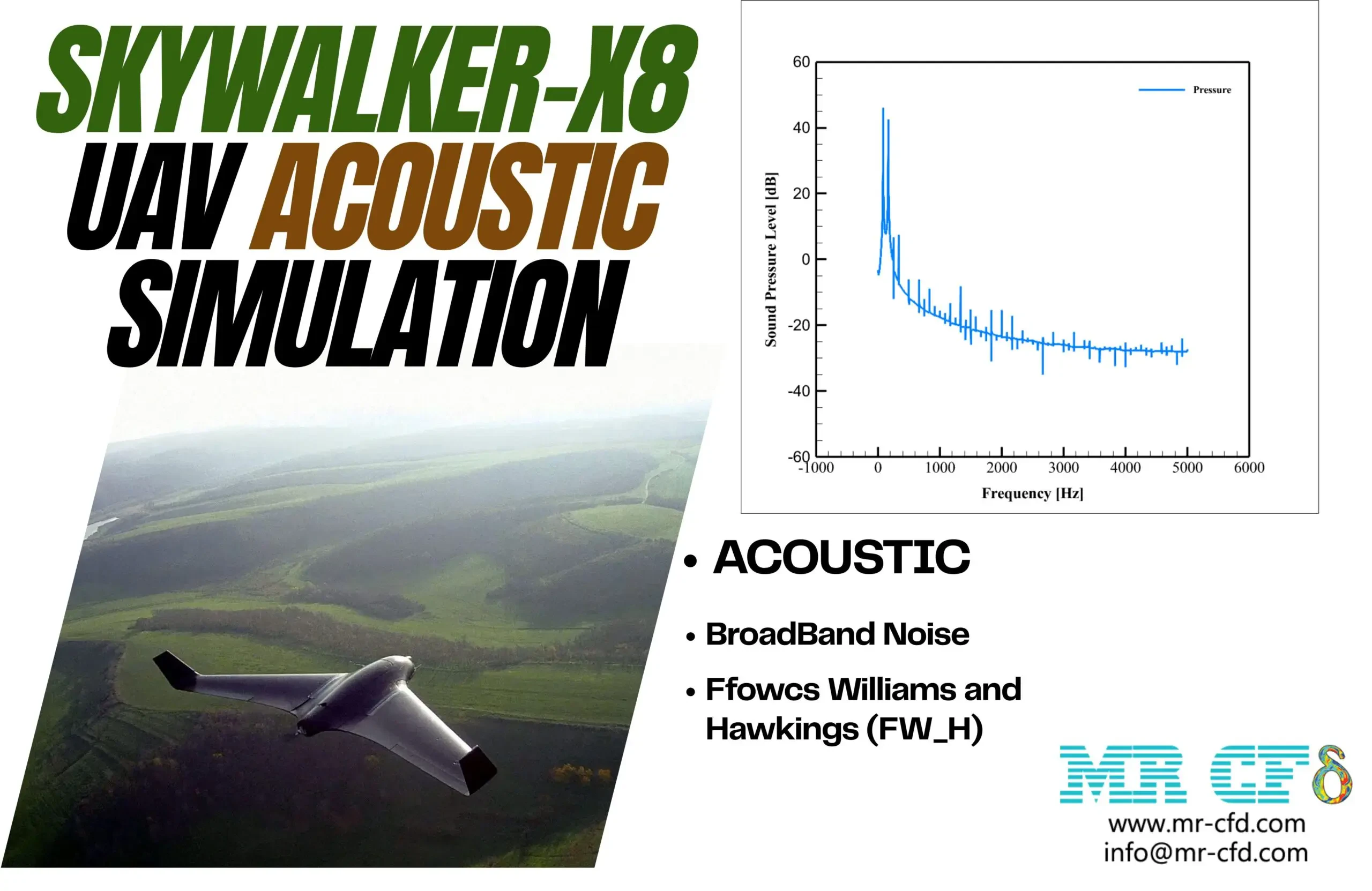
The problem numerically simulates a Skywalker-X8 UAV using ANSYS Fluent software. We design the 3-D model with the Design Modeler software. We mesh the model with Fluent Meshing software. The element number equals 928,595 and their type is polyhedra. In this simulation, FW_H and BroadBand Noise are used for acoustic modeling.
Price: $360
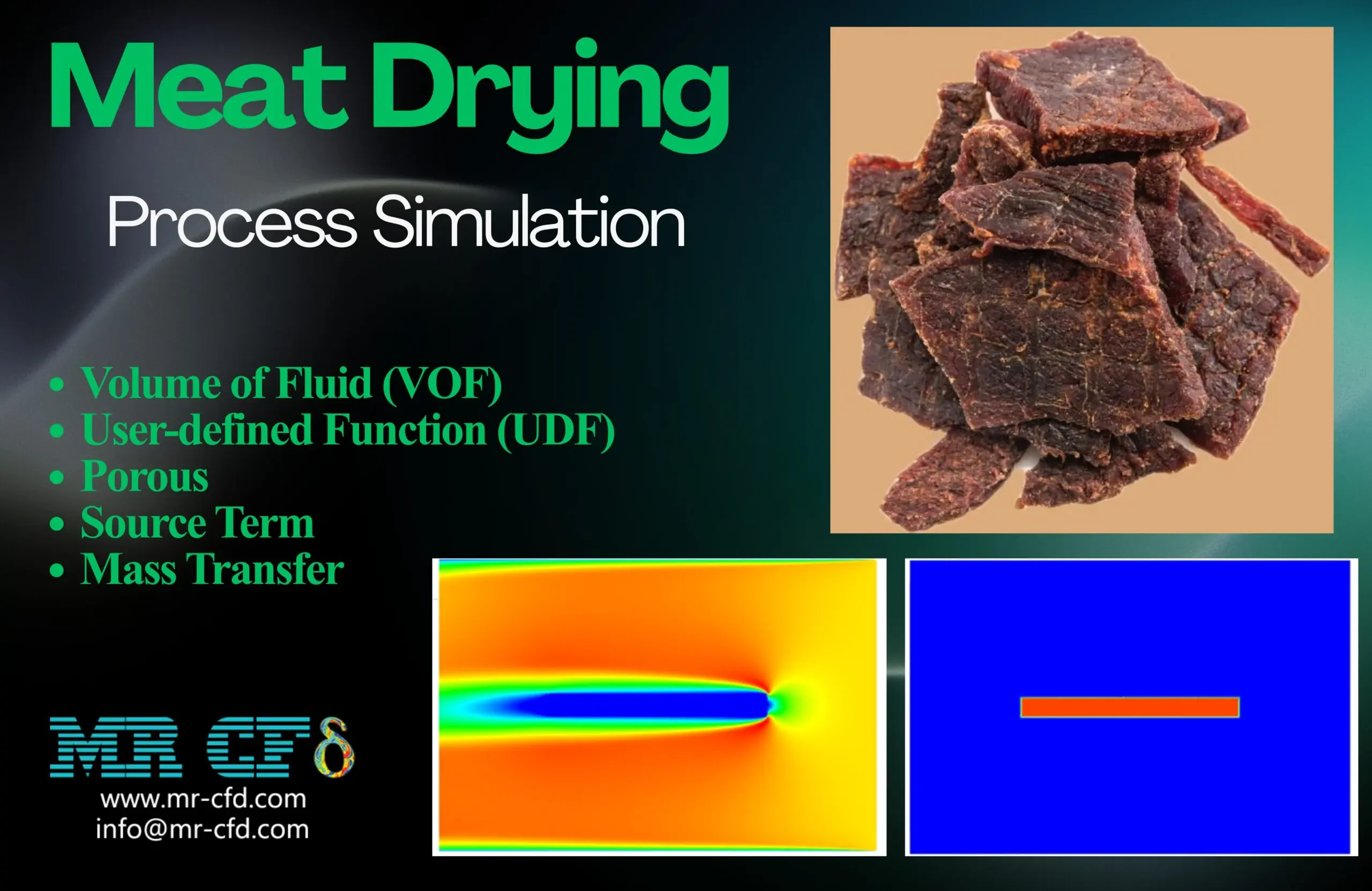
The geometry represents the meat sample and surrounding air domain, discretized with a structured mesh of 58,800 elements to accurately capture heat and mass transfer gradients. The meat drying process was simulated using CFD to analyze heat and mass transfer during drying. The VOF model was applied to capture multiphase interactions between liquid water and vapor. The meat was modeled as a porous medium to represent internal moisture transport. Infrared heating and air convection were used as drying mechanisms under two operating cases. Results showed that higher heat flux and temperature enhanced drying efficiency and reduced moisture content.
Price: $689
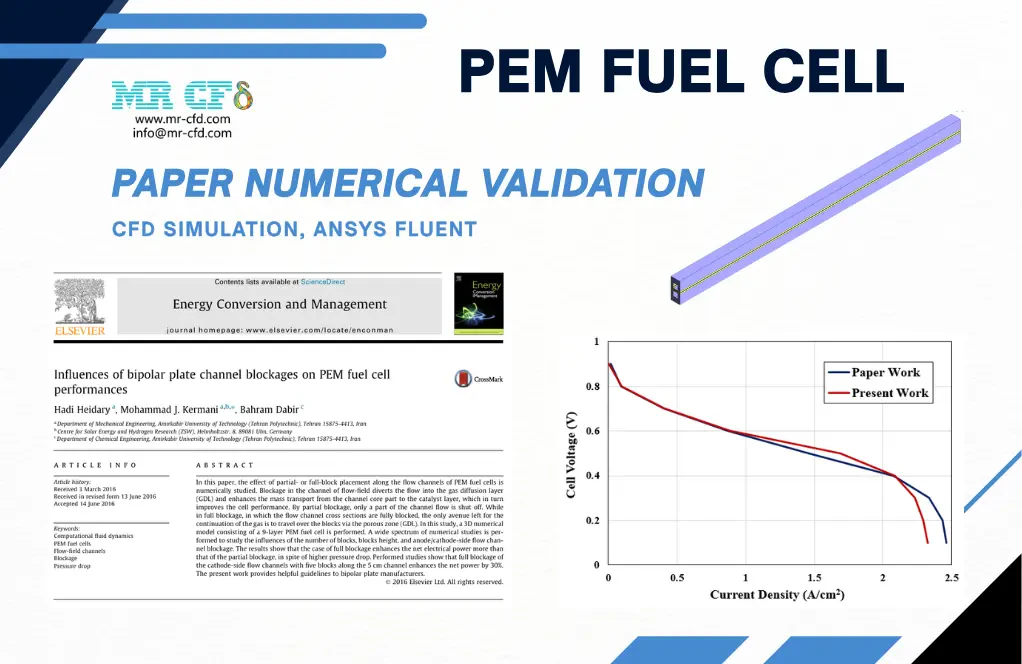
This project numerically simulates the PEM Fuel Cell using ANSYS Fluent software. We design the 3-D model with the Design Modeler software. We mesh the model with ANSYS Meshing software to generate a Structured mesh. We use the Fuel Cell and Electrolysis Model to define a fuel cell. We used the PEMFC sub-model to define a proton-exchange membrane fuel cell. We used the Species model to define H2, O2, and H2O. The present CFD work is Validated with a reference Article.
Price: $819
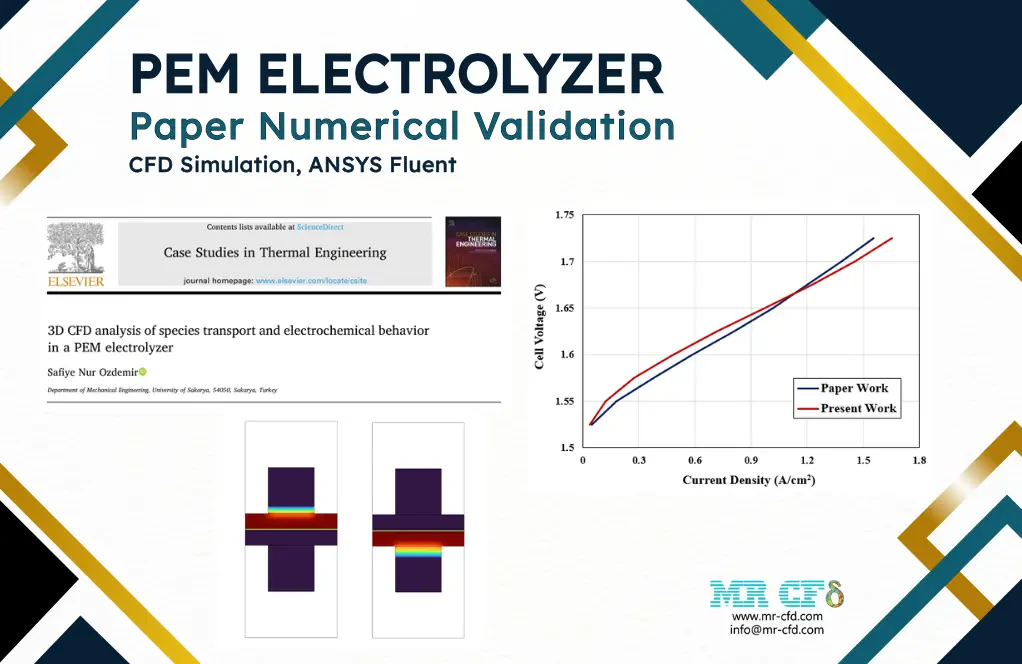
This project numerically simulates the PEM Fuel Cell using ANSYS Fluent software. We design the 3-D model with the Design Modeler software. We mesh the model with ANSYS Meshing software to generate a Structured mesh. We used the Potential/Electrochemistry model to define the potential equations. We used the Electrolysis sub-model and PEM Electrolysis type to define the electrolysis process. We used the Species model to define H2, O2, and H2O. We used the Mixture Multiphase model to define water and species phases. The present CFD work is Validated with a reference Article.
Oscillating Multiphase Flow with Dynamic Mesh
Intermediate, Advanced
Price: $270
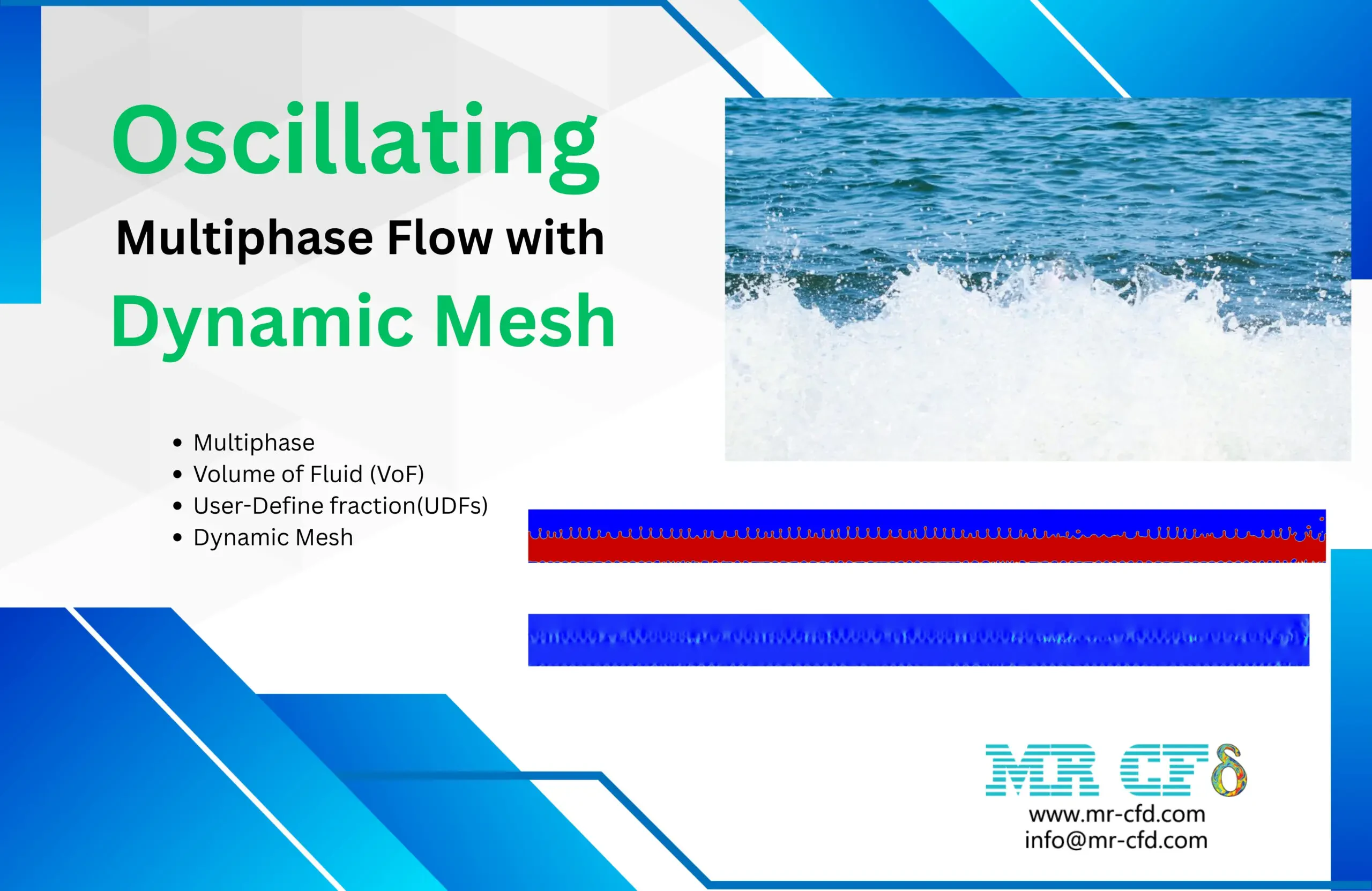
In the oscillating multiphase CFD study, the interaction of water and air inside a narrow rectangular channel is investigated using ANSYS Fluent. The geometry is created in ANSYS Design Modeler and meshed with a structured grid of 480,760 cells in ANSYS Meshing. The Volume of Fluid (VOF) method is applied for tracking the water and air interface, with water defined as the primary phase and air as the secondary phase. A dynamic mesh technique with smoothing and re-meshing options is enabled, along with a moving wall defined by a User-Defined Function (UDF).
Price: $480
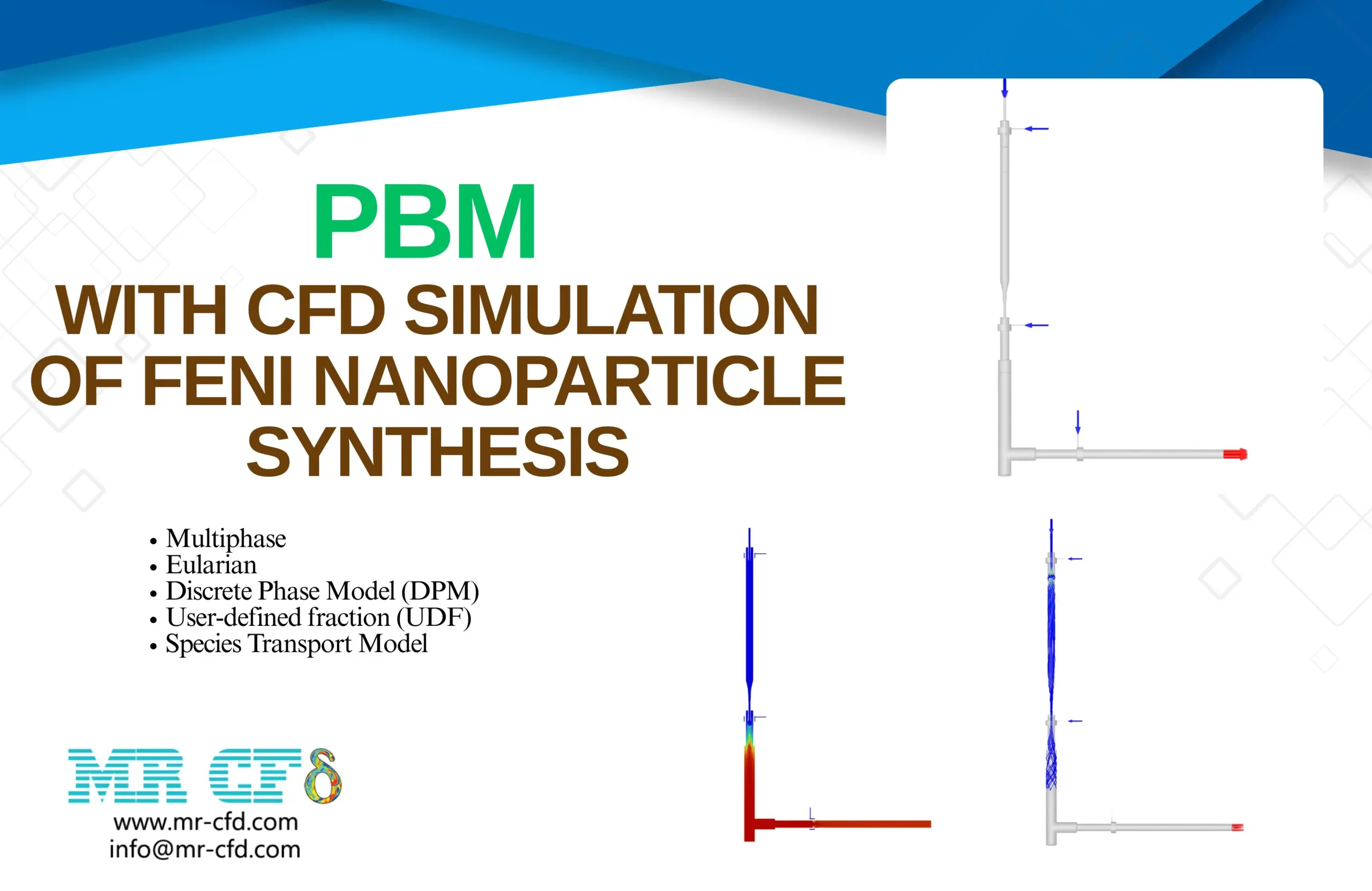
PBM with CFD Simulation of FeNi Nanoparticle Synthesis is performed using ANSYS Fluent . A Multiphase Eulerian approach is applied with FeNi alloy represented in the secondary phase. Powder precursors (FeCl₂ and NiCl₂) are injected into the domain using the Discrete Phase Model (DPM). The Species Transport Model with finite-rate Arrhenius kinetics is used to simulate the reduction reactions. User-Defined Functions (UDFs) implement nucleation, growth, and agglomeration phenomena for nanoparticle prediction.