

Gas & Petrochemical Online Courses
Here's every CFD online course related to Gas & Petrochemical category.
Price: $100
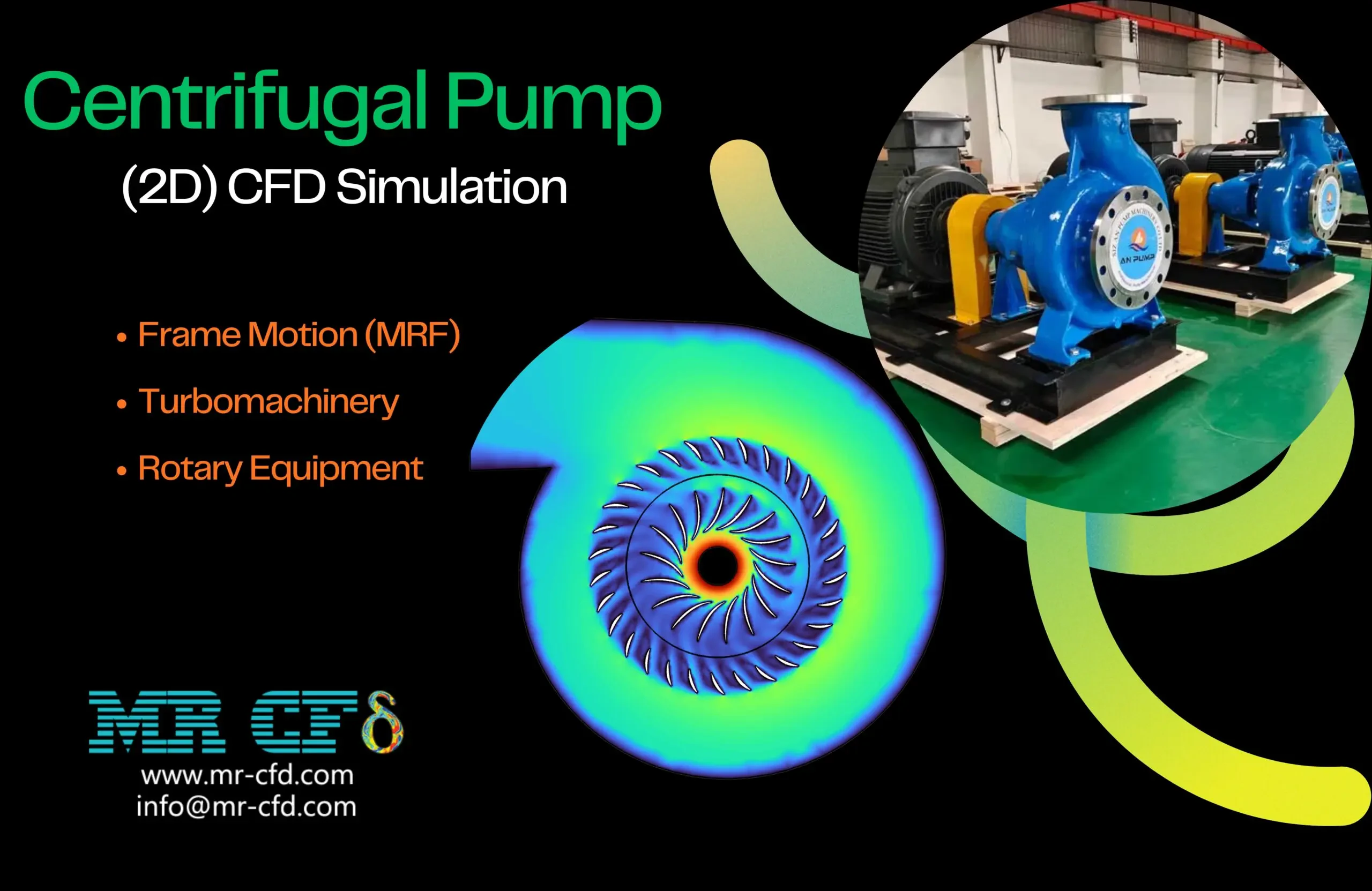
The centrifugal pump was modeled in ANSYS with two zones: the stationary casing and the rotating impeller. A triangular mesh with 17,536 cells was generated to discretize the geometry. The impeller was simulated using the Moving Reference Frame (MRF) approach with a rotation speed of 1500 RPM.
Slug Flow CFD Simulation and Fluid–Structure Interaction Analysis in a Bent Pipe
Intermediate, Advanced
Price: $210
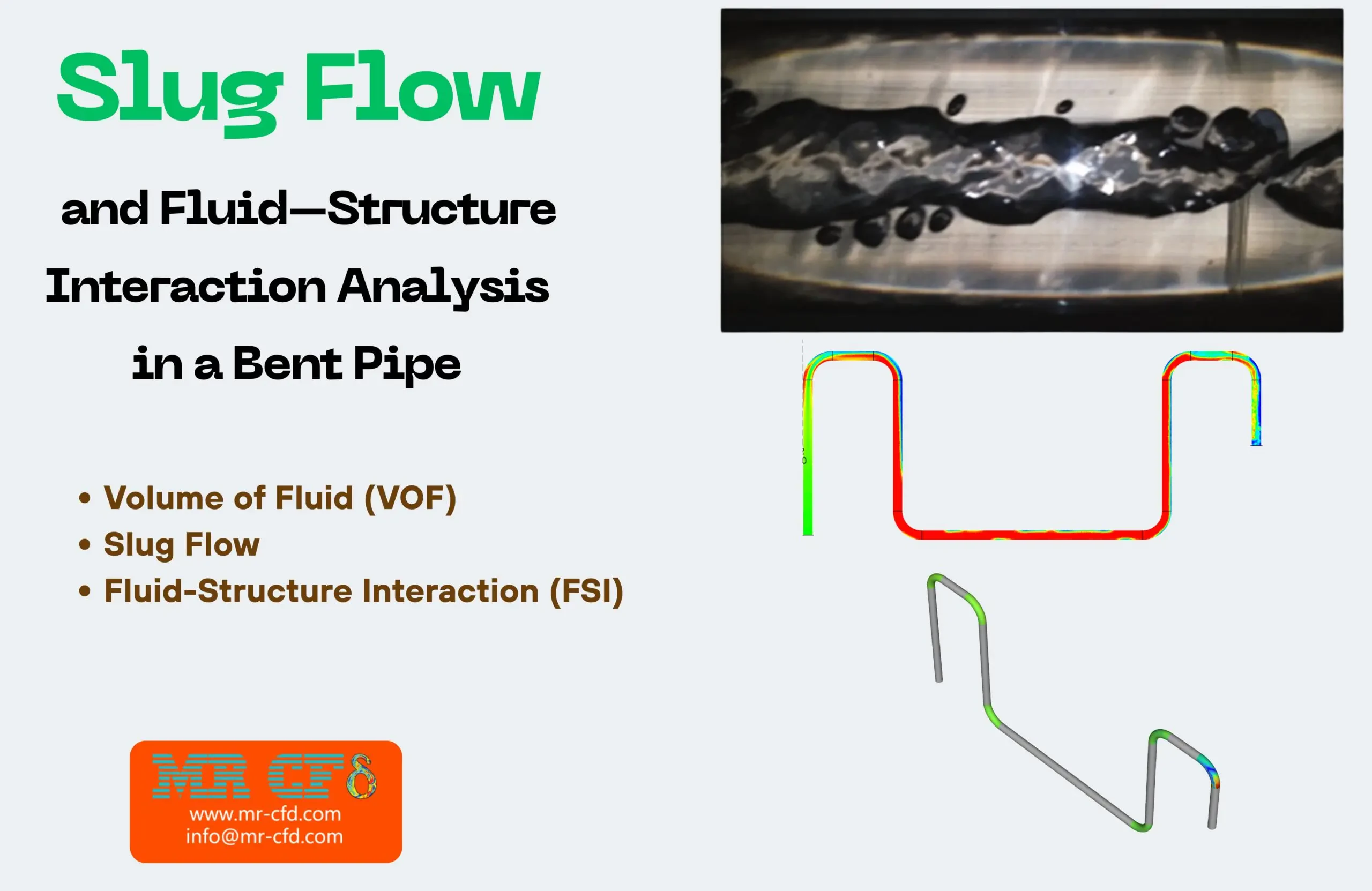
This project simulates slug flow of gas–liquid mixture in a bent pipe using ANSYS. The VOF multiphase model is applied to capture slug formation, phase separation, and velocity distribution. Results show strong gas redistribution and velocity rise up to 48 m/s in pipe bends. The structural response is negligible, with displacements around 10⁻¹⁴ m near curved sections.
Price: $480
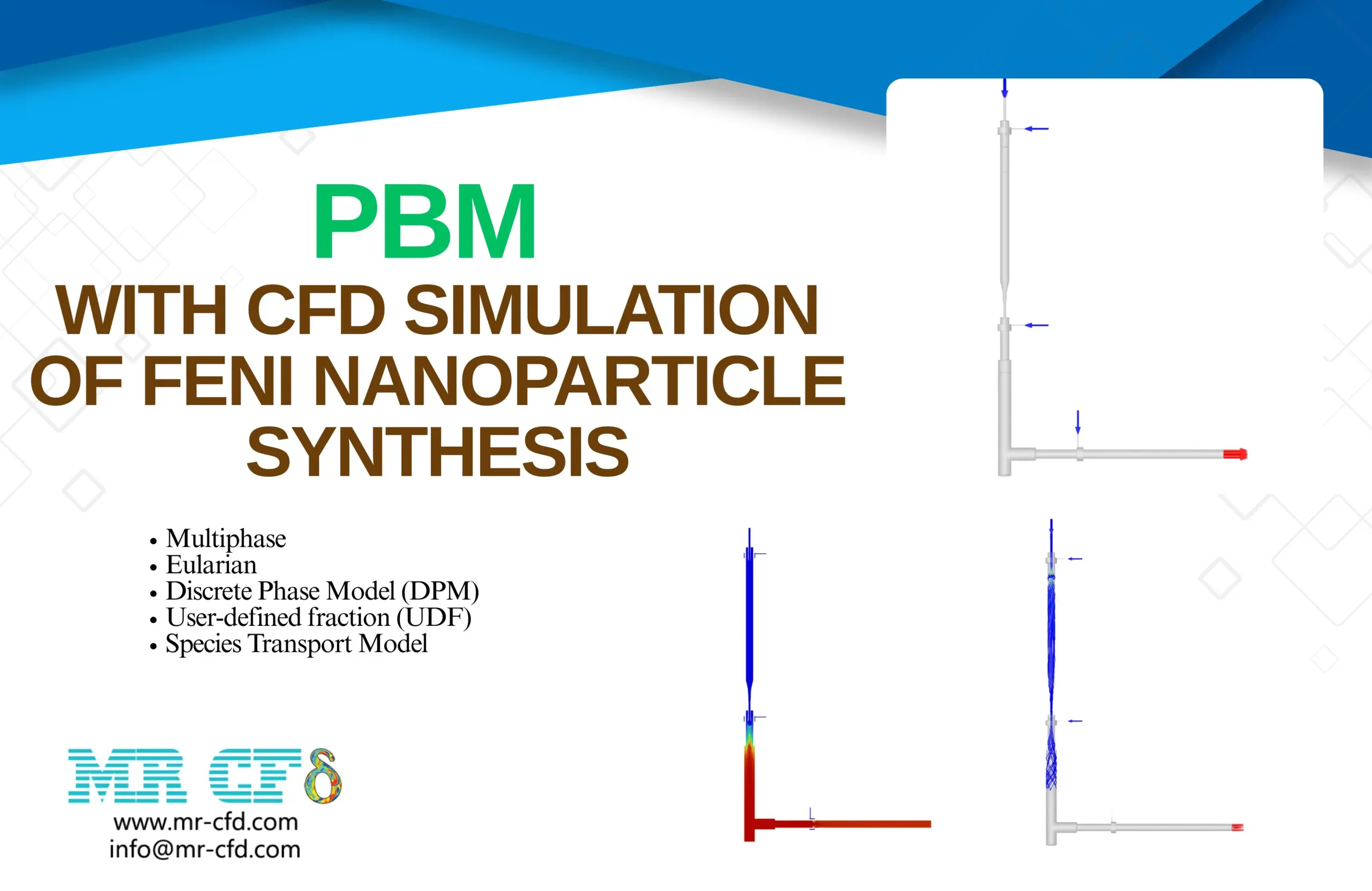
PBM with CFD Simulation of FeNi Nanoparticle Synthesis is performed using ANSYS Fluent . A Multiphase Eulerian approach is applied with FeNi alloy represented in the secondary phase. Powder precursors (FeCl₂ and NiCl₂) are injected into the domain using the Discrete Phase Model (DPM). The Species Transport Model with finite-rate Arrhenius kinetics is used to simulate the reduction reactions. User-Defined Functions (UDFs) implement nucleation, growth, and agglomeration phenomena for nanoparticle prediction.
Thermal Effects on the Mixing Behavior of Glycerin and Water by ANSYS Fluent
Intermediate, Advanced
Price: $120
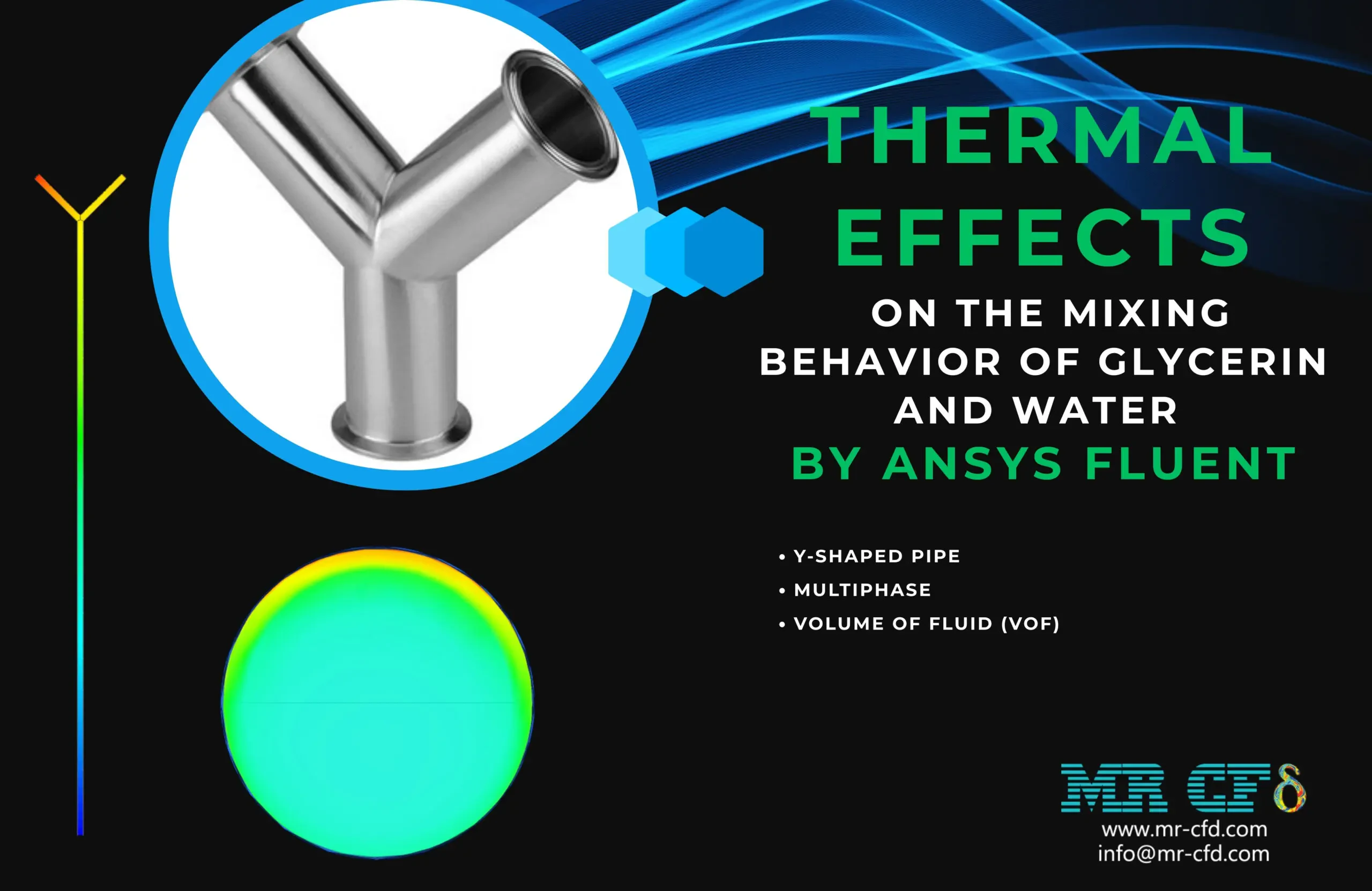
In the thermal effects on mixing in pipesCFD study investigates the thermal effect on the mixing of glycerin and water in a Y-shaped pipe using ANSYS Fluent. The geometry is created in ANSYS Design Modeler and meshed in ANSYS Meshing to generate a high-quality computational grid. The Volume of Fluid (VOF) method with an implicit formulation is applied, and the realizable k–epsilon model is used for turbulence modeling. A mass flow inlet of 0.15 kg/s is set for both phases, and simulations are carried out without heat flux and with a 30,000 W heat flux.
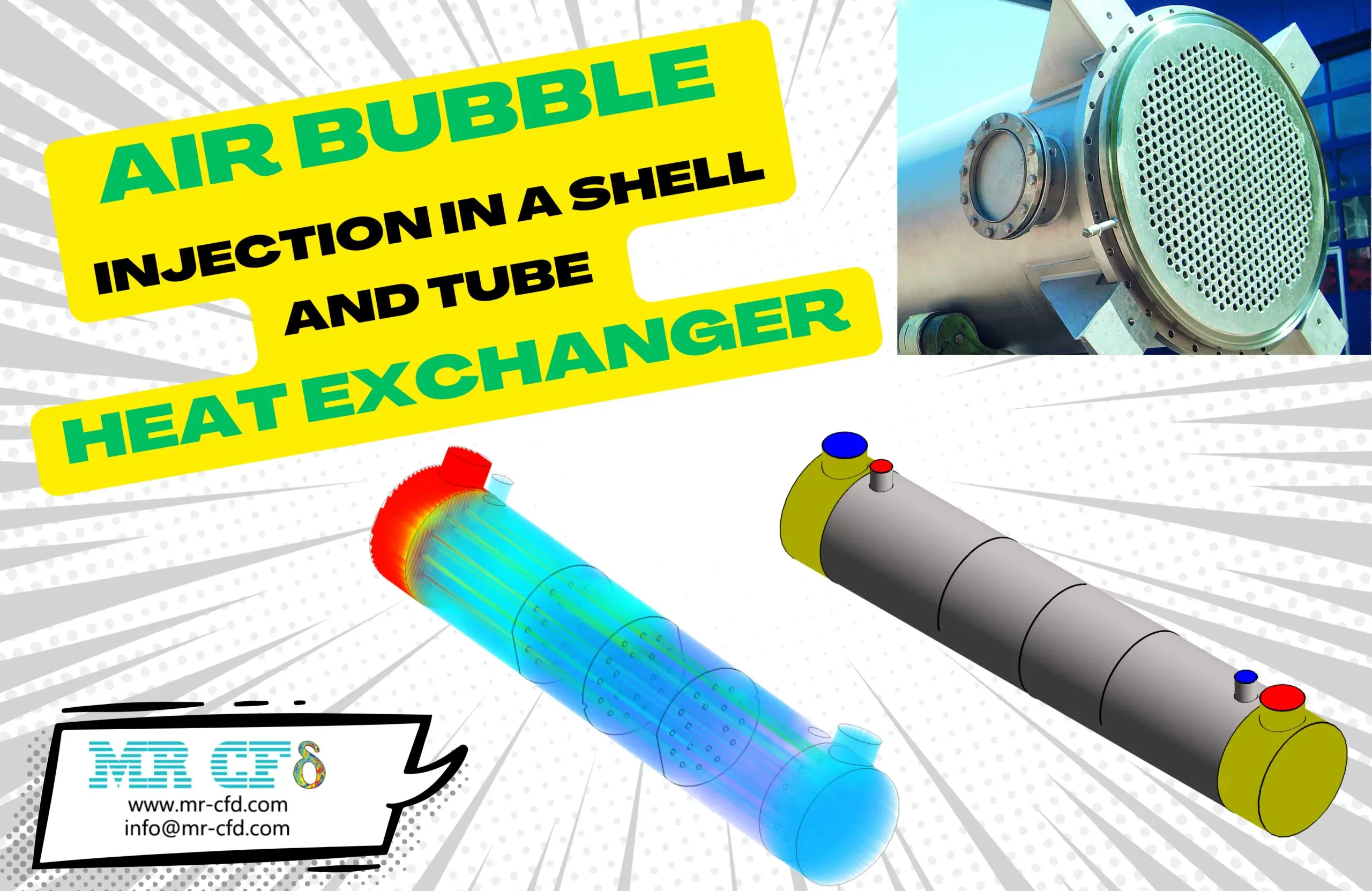
Air Bubble Injection in a shell and tube heat exchanger
Intermediate, Advanced
Price: $200
In this project, the heat transfer performance of a shell-and-tube heat exchanger with air bubble injection was simulated using ANSYS Fluent software. Three cases were studied: air injection into the shell, into the tube, and into both sides simultaneously. The geometry was created in SpaceClaim and meshed in ANSYS Meshing, initially generating about 12.6 million tetrahedral elements, later converted to a polyhedral mesh with approximately 2.43 million cells to reduce computational cost. The model was solved using a pressure-based steady solver with gravity effects included. A VOF multiphase model was applied to track air and water phases, while the realizable k-ε turbulence model with standard wall functions was used to capture flow behavior. The energy equation was enabled, and the SIMPLE algorithm with second-order upwind discretization ensured solution accuracy.
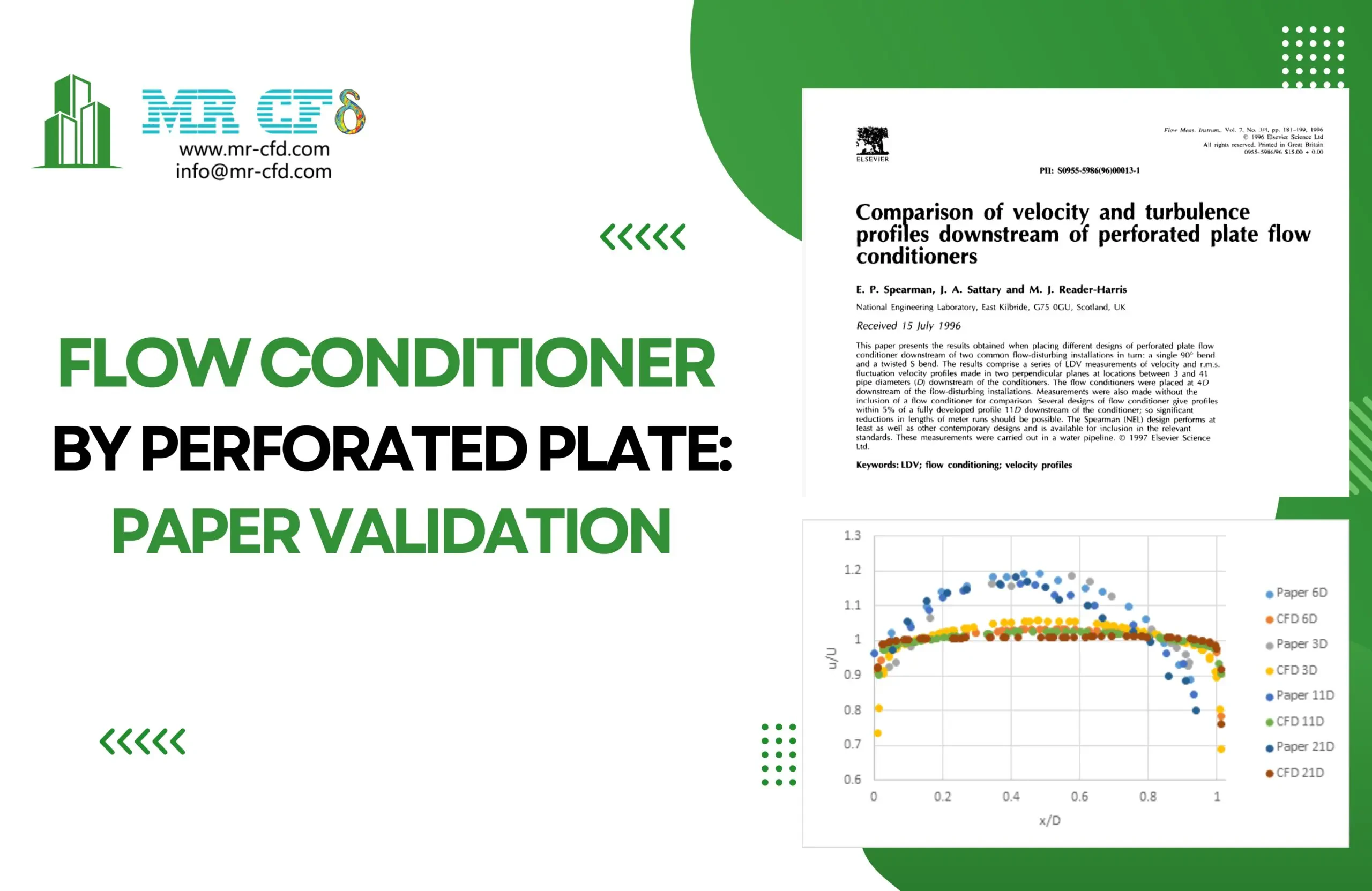
Flow Conditioner by Perforated Plate: Paper Validation
Intermediate, Advanced
Price: $210
The current CFD analysis numerically validates the paper “Comparison of velocity and turbulence profiles downstream of perforated plate flow conditioners” by Spearman et al. using ANSYS Fluent software. The model designed and meshed the pipe geometry with perforated plate flow conditioner in SpaceClaim and ANSYS Meshing, generating 583,842 tetrahedral cells. A pressure-based solver with k-ε standard turbulence modeling and gravity effects (-9.81 m/s²) is employed, using water as the working fluid with velocity inlet profile and pressure outlet boundary conditions coupled via SIMPLE algorithm.
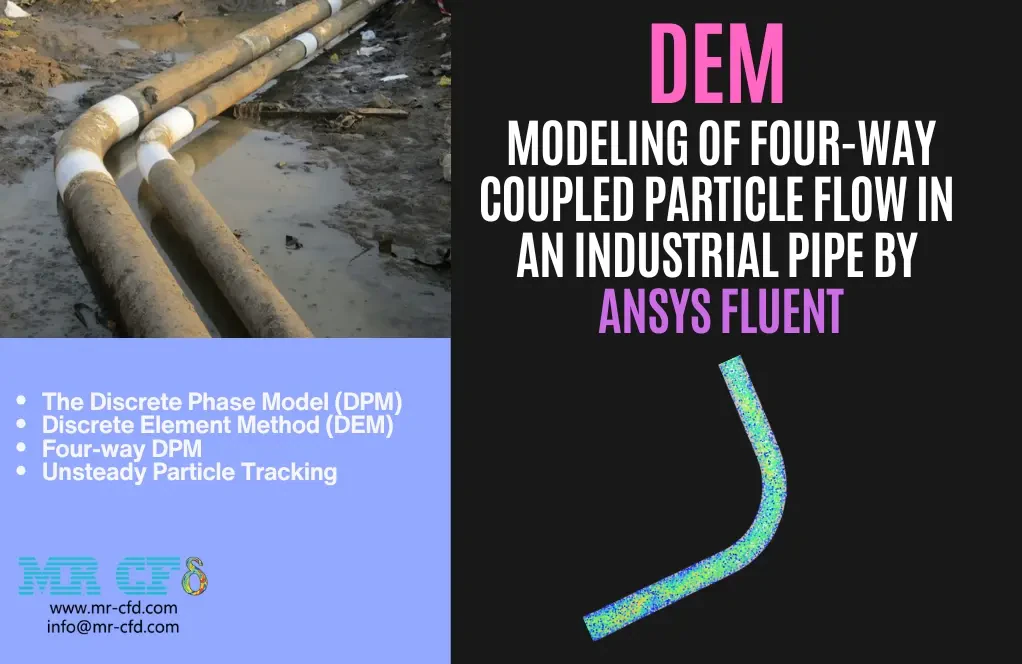
DEM Modeling of Four-Way Coupled Particle Flow in an Industrial Pipe CFD Simulation by ANSYS Fluent
Advanced
Price: $150
The problem numerically simulates particle-laden airflow in a long pipe with a bend using ANSYS Fluent software. We perform this simulation in steady state for the fluid phase with unsteady (transient) particle tracking. We model the problem using a four-way coupled DEM–CFD DPM approach to capture particle–particle and particle–fluid interactions. The DEM collision model, Saffman lift force, and two-way turbulence coupling are included as per project requirements. The geometry is created in ANSYS Design Modeler and meshed in ANSYS Meshing with an unstructured grid of about 382,000 elements.
Price: $420
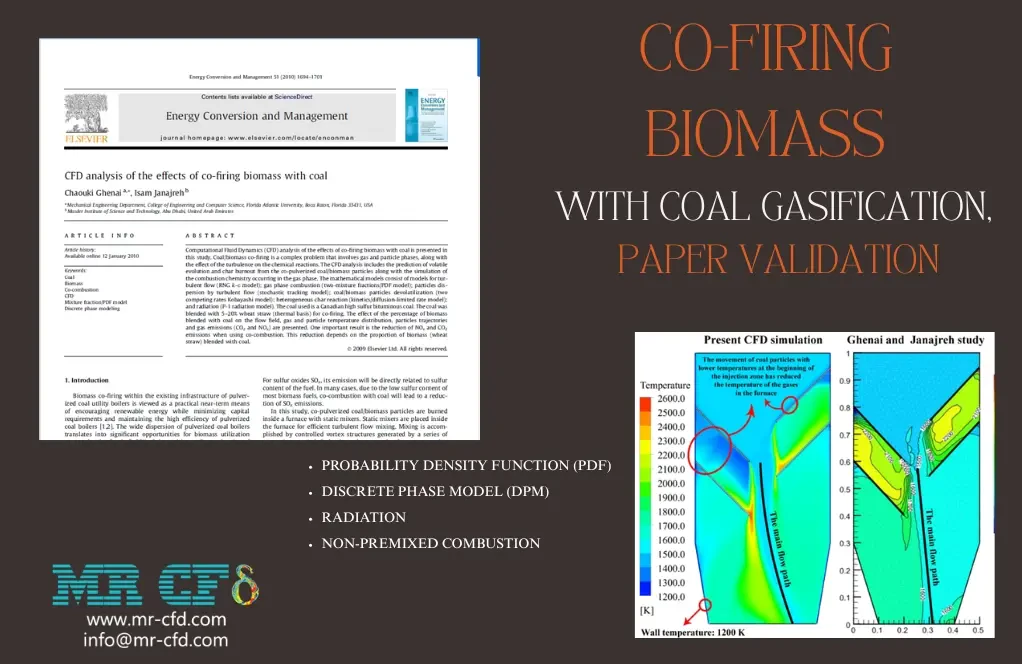
Co-firing Biomass with Coal Gasification. This project involves the simulation of coal and biomass co-firing in a furnace using CFD techniques. The primary objectives are to examine the combustion characteristics and validate the simulation results against the study by Ghenai and Janajreh. The furnace is defined with specific boundary conditions, and simulations are performed using an unsteady, incompressible flow model. The turbulent flow within the furnace is modeled using the k-e RNG turbulent model, thermal radiation is simulated with the P1 model, and combustion is analyzed with a PDF model. The simulation incorporates the kinetics/diffusion-limited rate model for particle combustion and the two competing rates Kobayashi model for devolatilization. Results are compared in terms of temperature contours and particle trajectories, confirming the simulation’s accuracy with a maximum error of approximately 5% in particle temperature ranges.
Price: $220
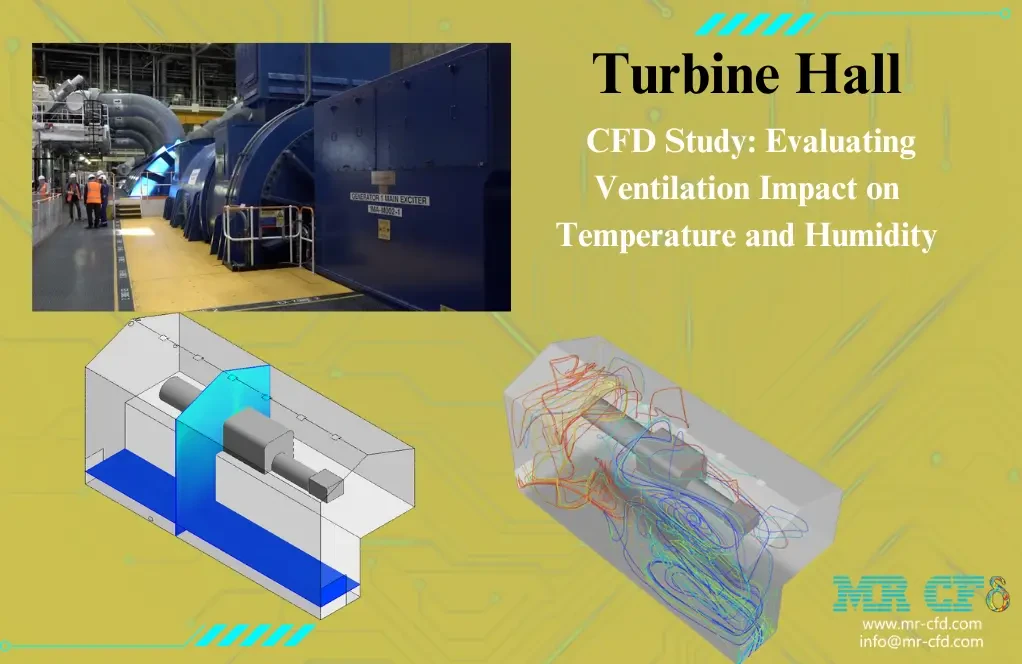
This project involves the simulation and analysis of the ventilation system within a turbine hall located in Hong Kong. Using a pressure-based CFD solver, the study examines the thermal conditions, including temperature variations and relative humidity during summer. The fluid domain, modeled as a mixture of nitrogen, water vapor, and oxygen, includes six exhaust fans strategically placed on the roof. The study explores four scenarios to assess different ventilation strategies, highlighting the importance of open doors during unit onloading to maintain a safer working environment. The findings contribute to optimizing the thermal management strategies and ensuring worker safety by maintaining acceptable temperature and humidity levels.