

Mass Transfer Online Courses
Here's every CFD online course related to Mass Transfer category.
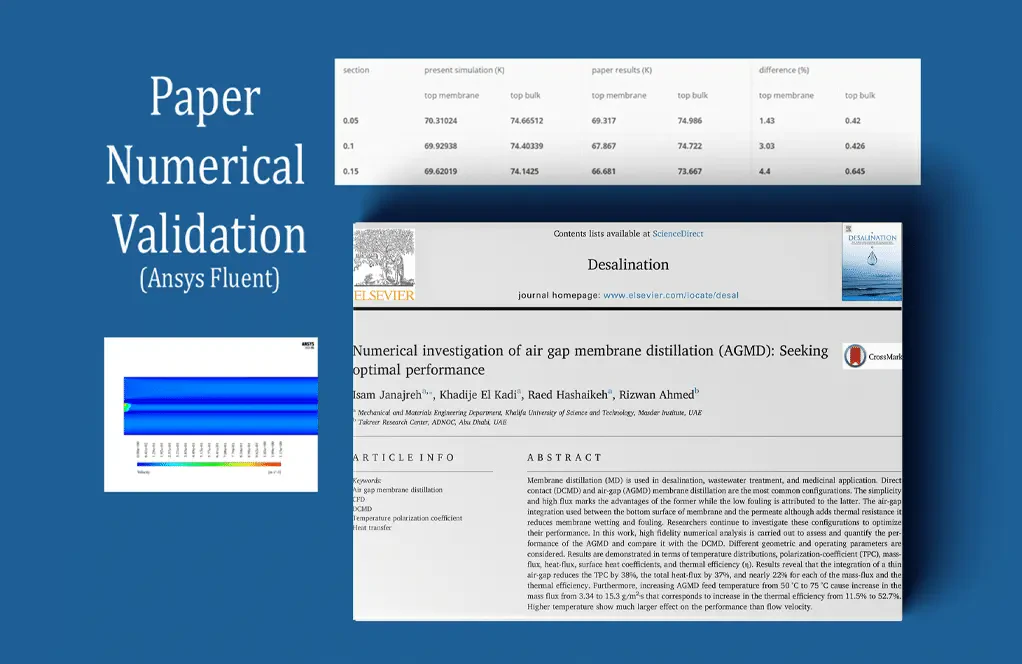
Air Gap Membrane Distillation (AGMD), Paper Numerical Validation, ANSYS Fluent Training
Intermediate, Advanced
Price: $360
The problem numerically simulates the Air Gap Membrane Distillation (AGMD) using ANSYS Fluent software. We design the 3-D model with the Design Modeler software. We mesh the model with ANSYS Meshing software. The mesh type is Structured, and the element number equals 344400. We define porous medium and heat sources in cell zone conditions. This simulation is validated with a reference article.
Price: $24
The present problem simulates the cavitation in a water jet by ANSYS Fluent software.
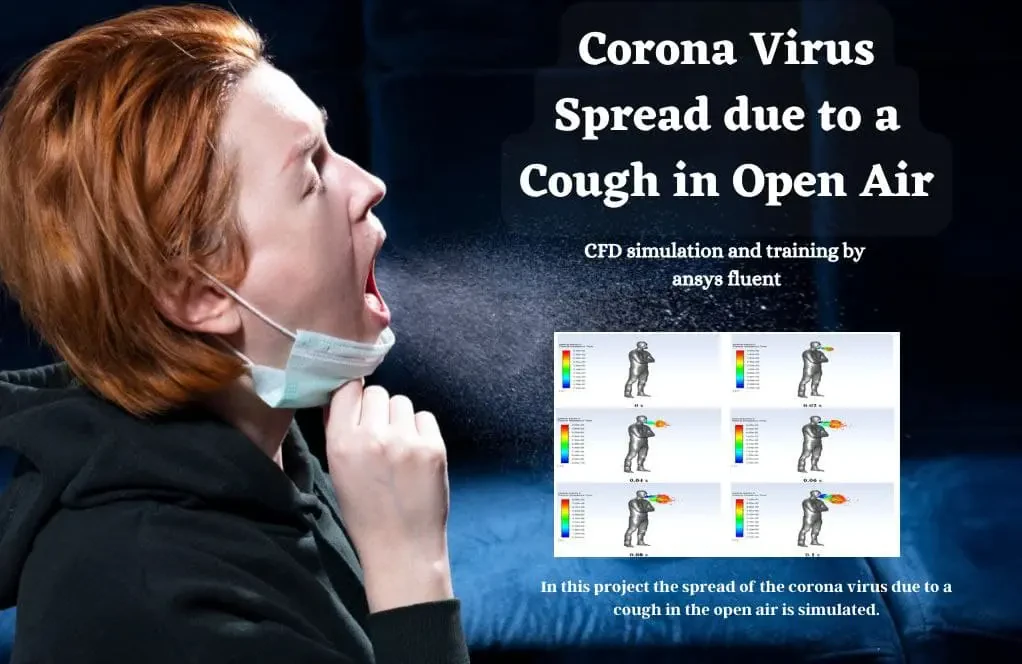
Corona Virus Spread due to a Cough in Open Air
Intermediate, Advanced
Price: $28
The problem numerically simulates coronavirus spread due to human cough in the open air using ANSYS Fluent software. We design the 3-D model with the Design Modeler software. We Mesh the model with ANSYS Meshing software, and the element number equals 584587. We perform this simulation as unsteady (Transient). We use the Discrete Phase Model (DPM) to define an injection of droplet various. We use the Species Transport model to consider evaporating species.
Price: $330
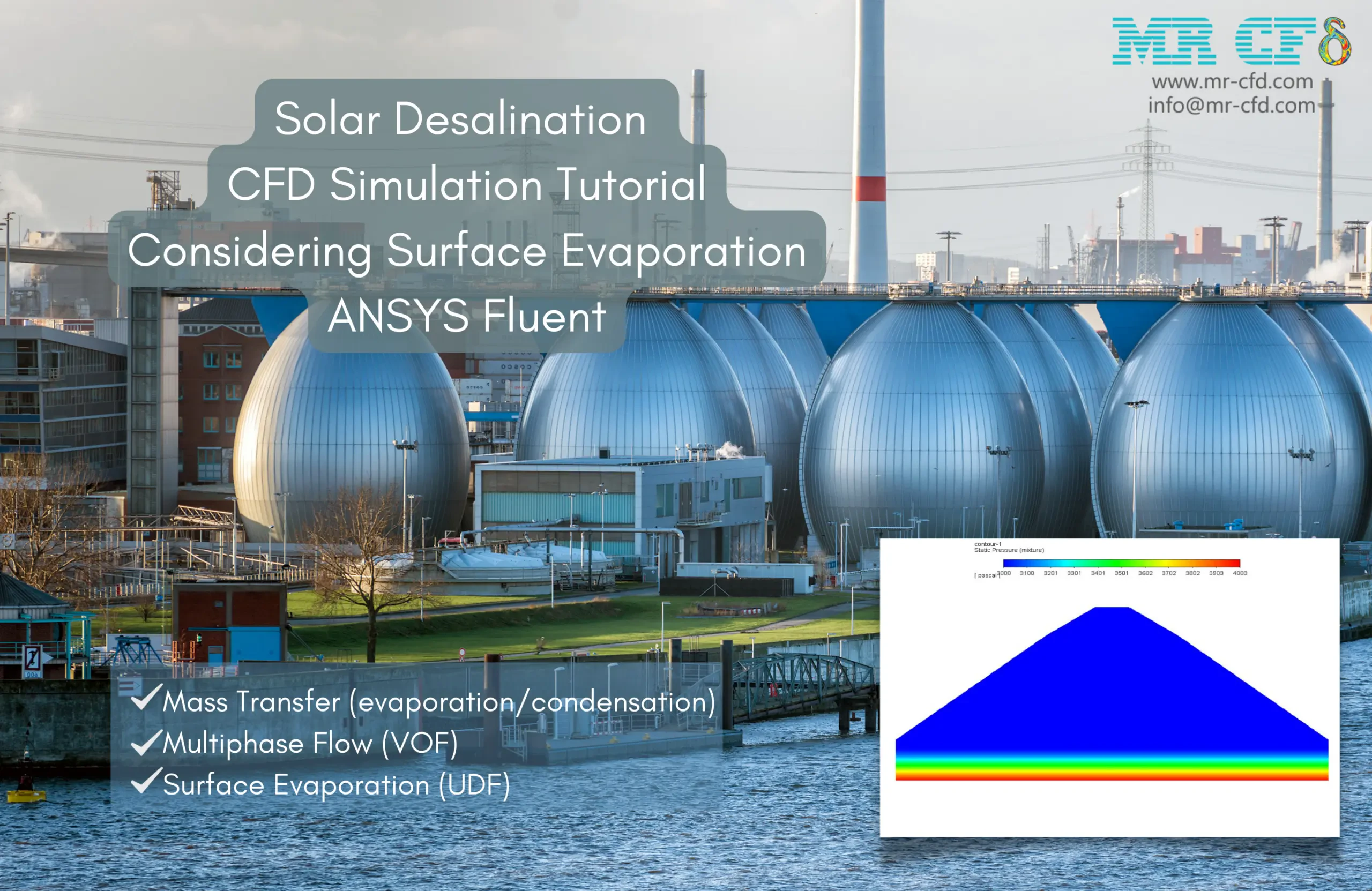
This problem simulates the HVAC of an operating room by ANSYS Fluent software. The geometry of the present model is drawn by Design Modeler software and then meshed by ANSYS Meshing software. It's a Structured mesh, and the cell number equals 938174. The VOF multiphase model is used for three phases: air, water vapor, and water fluid. Mass Transfer is applied to simulate Evaporation/Condensation. Also, a UDF file is used to determine the Surface Evaporation.
Price: $240
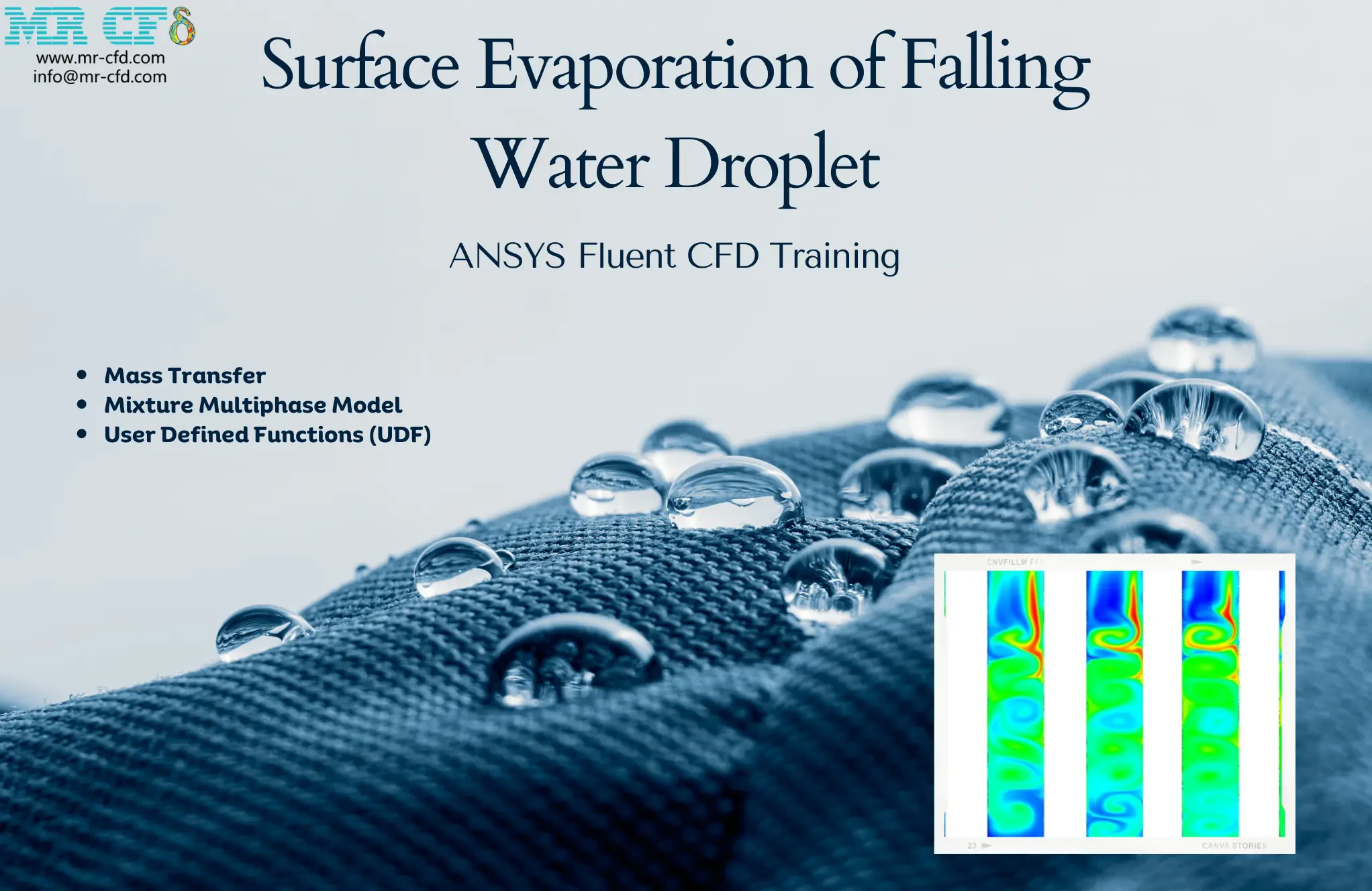
The problem numerically simulates the surface evaporation of a falling water droplet using ANSYS Fluent software. We design the 2-D model by the Design Modeler software. We Mesh the model by ANSYS Meshing software. The mesh type is Structured, and the element number equals 94800. We perform this simulation as unsteady (Transient). We use the Mixture Multi-Phase Model to define droplets inside the air. We use a UDF to define surface evaporation as the Mass Transfer rate between water and air.
Step Solar Still by Solar Ray Tracing, Species Transport
Intermediate, Advanced
Price: $44
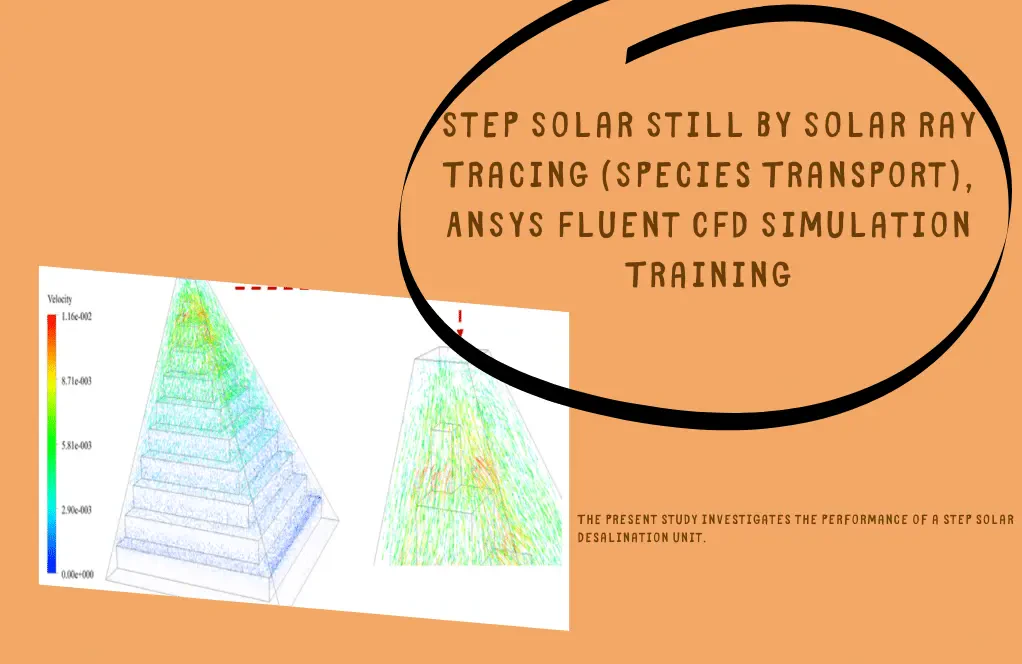
The problem numerically simulates the Step Solar Still by Solar Ray Tracing using ANSYS Fluent software. We design the 3-D model by the Design Modeler software. We Mesh the model by ANSYS Meshing software, and the element number equals 809037. We use the Species Transport model to define water and vapor. The Solar Ray Tracing model is used to apply the heat absorbed by the sun.
Solar Water Desalination by Species Transport, 2-D
Intermediate, Advanced
Price: $330
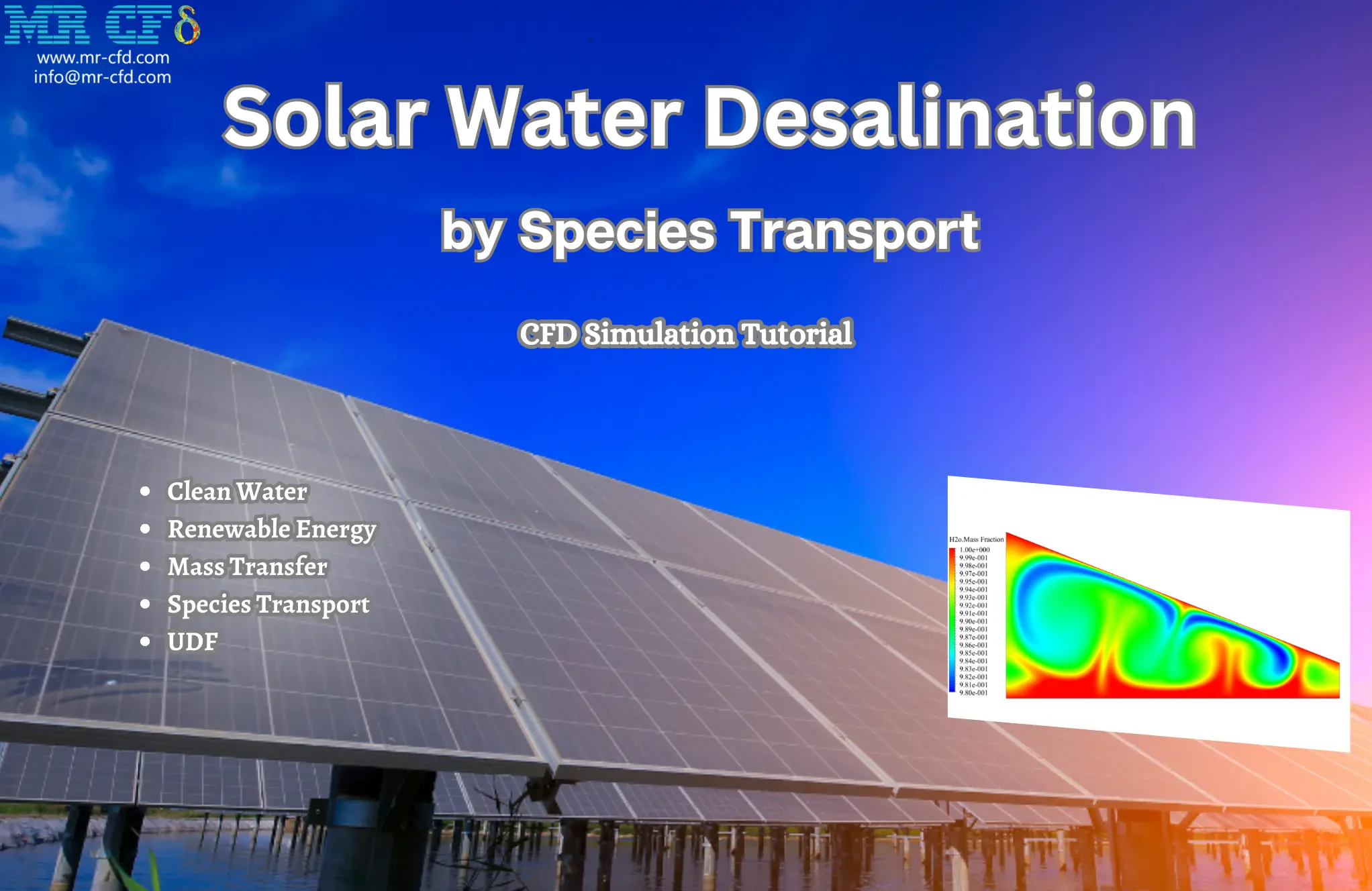
The problem numerically simulates the Solar Water Desalination using ANSYS Fluent software. We design the 3-D model by the Design Modeler software. We mesh the model with ANSYS Meshing software. The mesh type is Structured, and the element number equals 16000. We perform this simulation as unsteady (Transient). We use the Species Transport model to define 3 different species. We use a UDF to define mass transfer rate in the form of evaporation-condensation.
Solar Still (3-D) by Species Transport Model, ANSYS Fluent CFD Simulation Training
Intermediate, Advanced
Price: $330
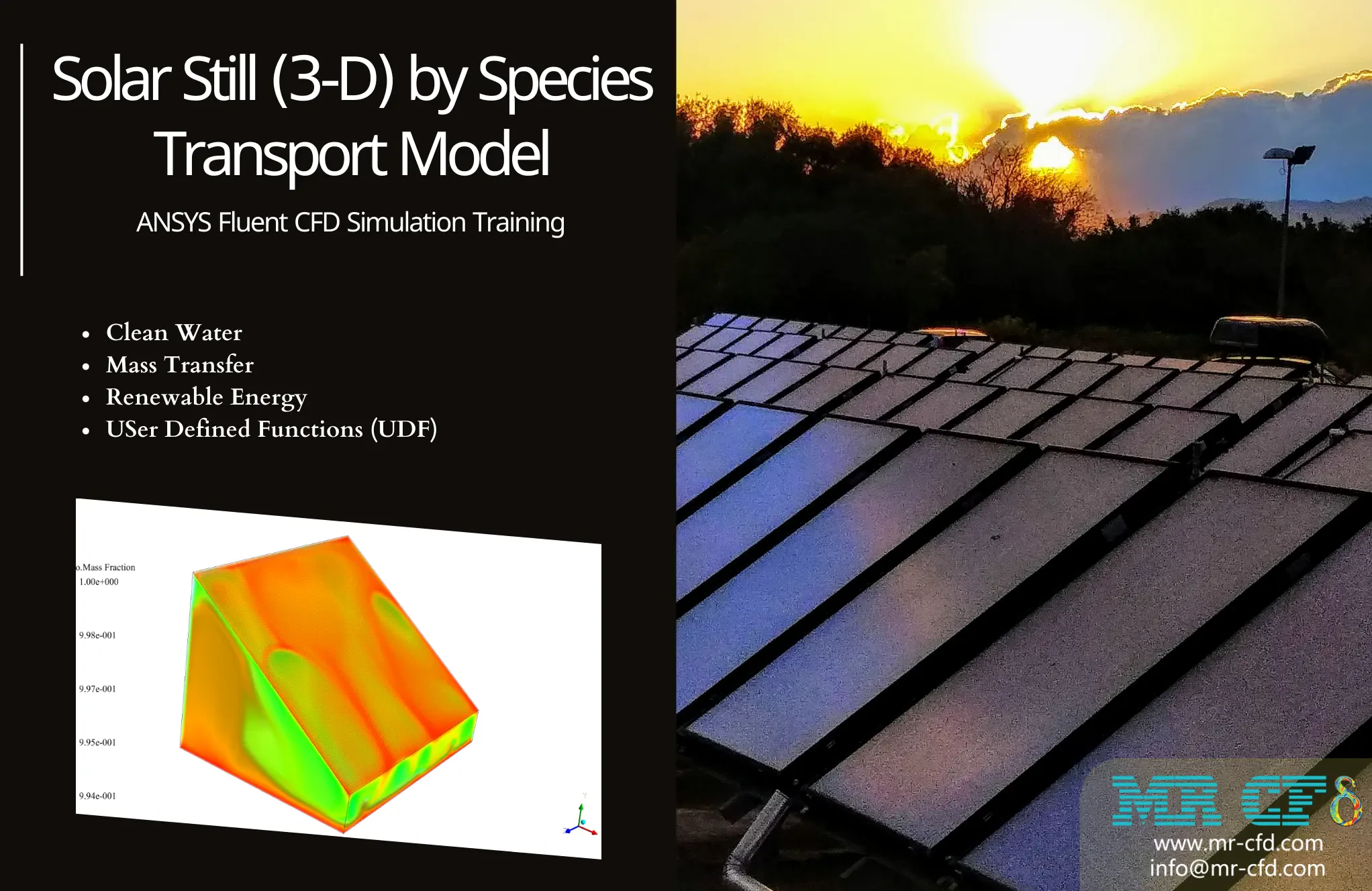
The present study investigates the performance of a solar-still thermal desalination unit.
Price: $390
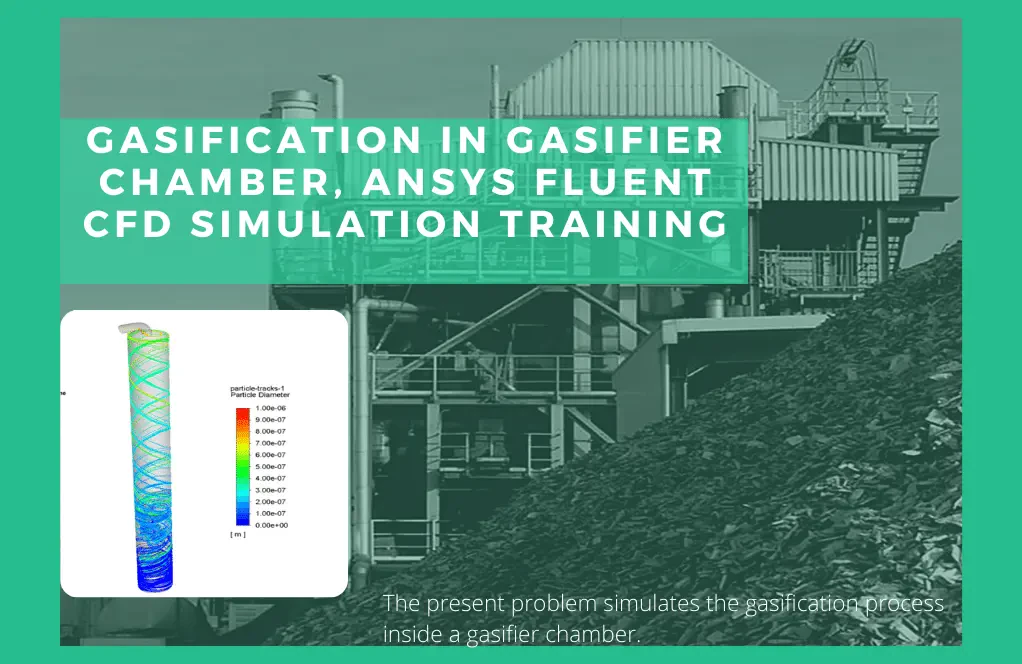
The present problem simulates the gasification process inside a gasifier chamber by ANSYS Fluent. The present 3-D model is designed using Design Modeler software. The meshing of the model has been done using ANSYS Meshing software. The element number is 219170. Water vapor is created by the process of evaporation of water droplets inside the chamber by applying DPM. The species transport model with volumetric reactions has been used and to define the type of reactants and the process of chemical reactions. The CHEMKIN mechanism has been used, which includes 5 chemical reactions involving 8 different types of reactants and products. This model also assumes that Radiation heat transfer due to chemical reactions occurs inside the gasifier chamber, and hence, the P1 model is defined for simulation.