

Mixture Online Courses
Here's every CFD online course related to Mixture category.
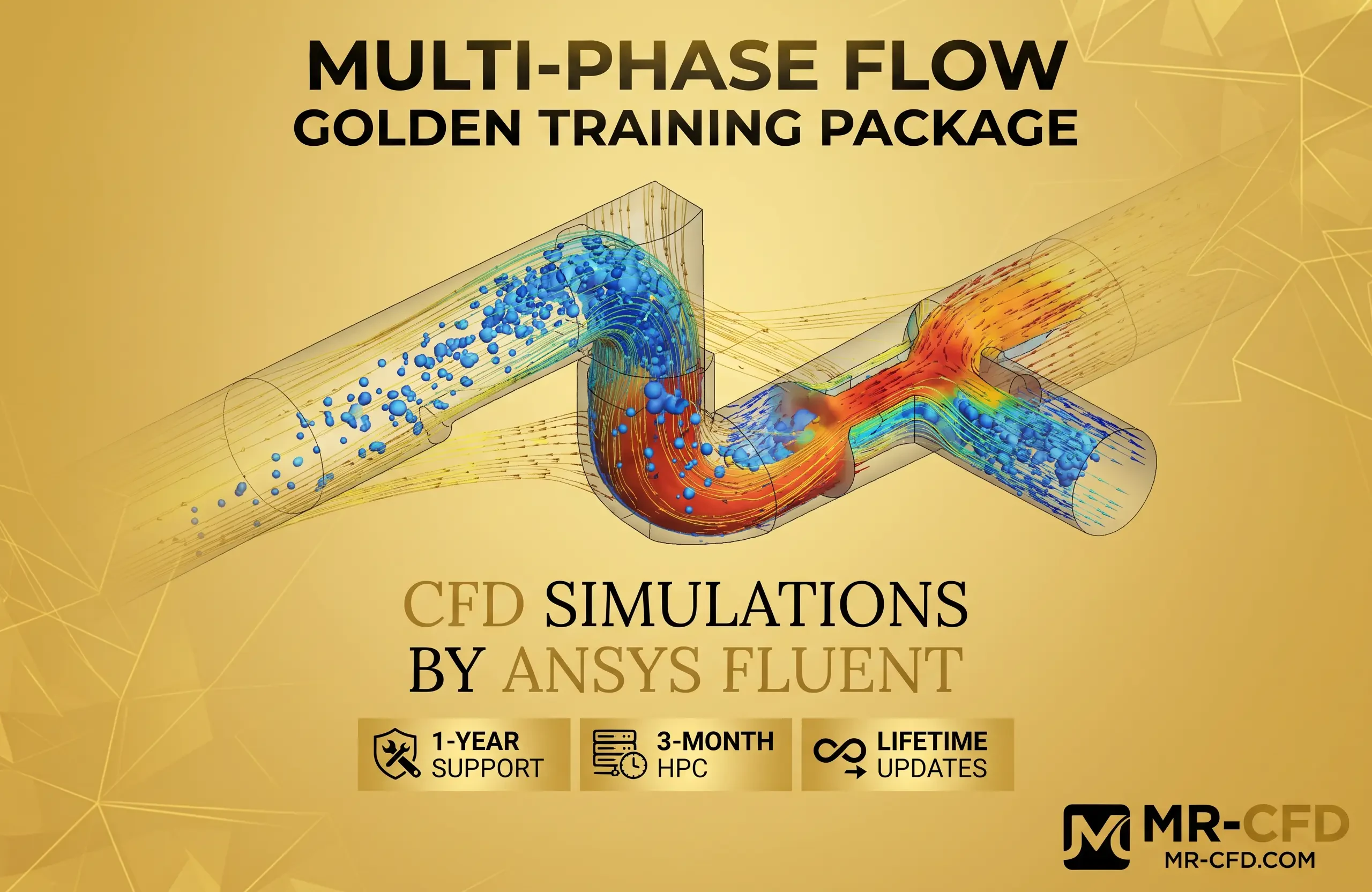
Multi Phase Flow CFD GOLDEN Training Course
Beginner, Intermediate, Advanced
Price: $2,699
MR CFD's Multiphase Flow CFD Simulation GOLDEN Training Package delivers 280+ ANSYS Fluent tutorials on VOF, Eulerian, Mixture, Wet Steam, and more, ideal for professors, managers, and companies to upskill teams fast. It covers real-world cases, with 1-year expert support and 3 months HPC access backed by 15 years' expertise.
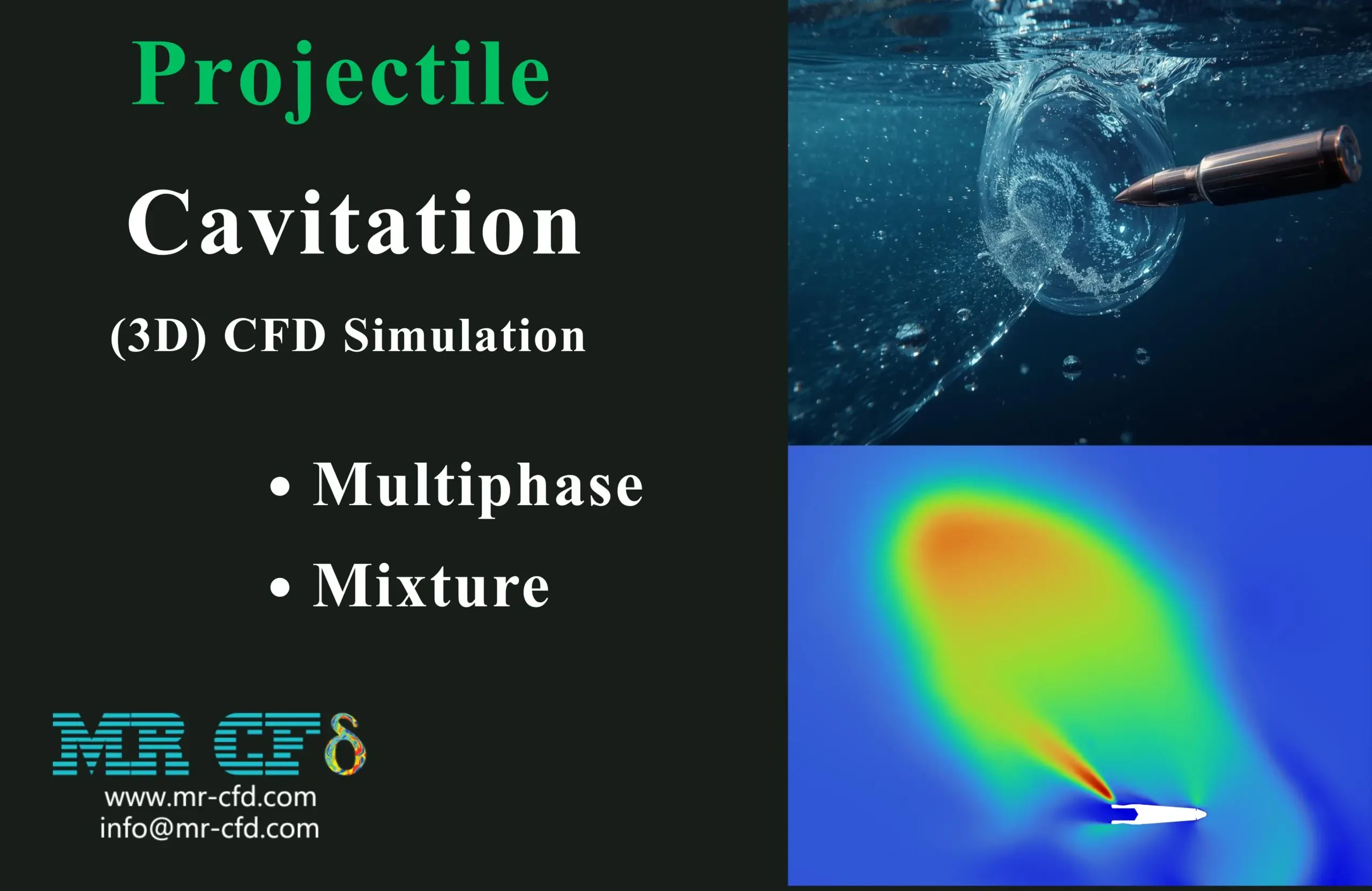
Projectile Cavitation (3D) CFD Simulation
Intermediate, Advanced
Price: $140
The projectile cavitation study investigates the formation and development of a vapor cavity around a projectile 3D transient CFD of a projectile moving obliquely in water using ANSYS Fluent, with mixture cavitation and realizable Two inlet velocities (10 and 20 m/s) are applied to study cavitation inception and development. At 10 m/s the vapor cavity forms only locally and collapses quickly, so cavitation disappears. At 20 m/s a large, stable cavity develops around the projectile and extends into the wake.
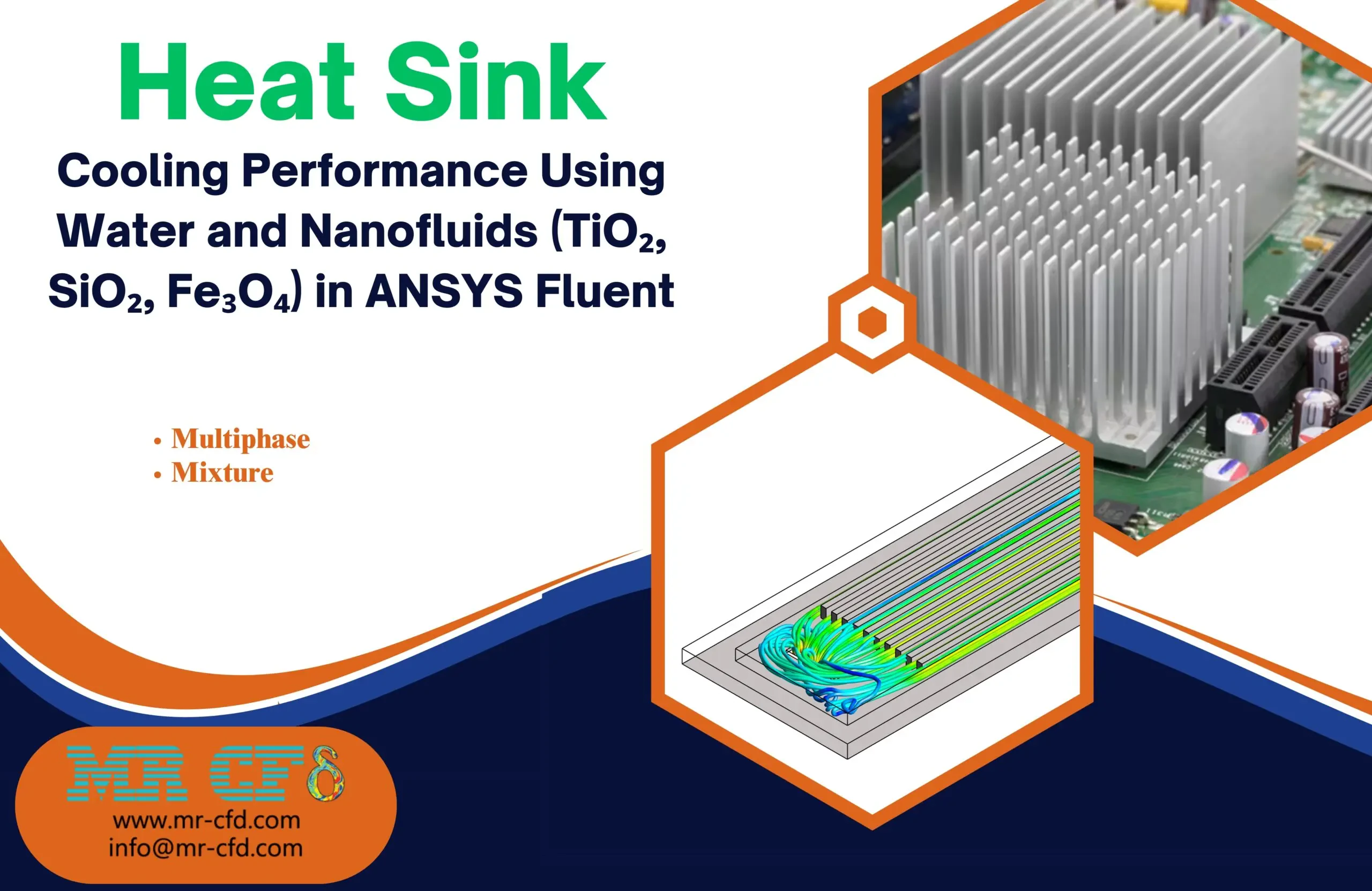
Heat Sink Cooling Performance Using Water and Nanofluids (TiO₂, SiO₂, Fe₃O₄) in ANSYS Fluent
Beginner, Intermediate
Price: $63
This project presents a numerical study of heat transfer in a heat sink using ANSYS Fluent. Four cases were simulated, including pure water (single-phase) and three nanofluids (water mixed with TiO₂, SiO₂, and Fe₃O₄) using the mixture multiphase model. The geometry was created in ANSYS DesignModeler, and a high-quality mesh of about 1.6 million elements was generated. A pressure-based, steady-state solver with the SIMPLE algorithm was applied. The results, illustrated in contour plots of velocity and temperature, show that nanofluids enhance cooling efficiency compared to pure water. Among the tested fluids, the Fe₃O₄–water mixture demonstrated the best thermal performance at the fins and base plate, highlighting its potential for advanced heat sink applications
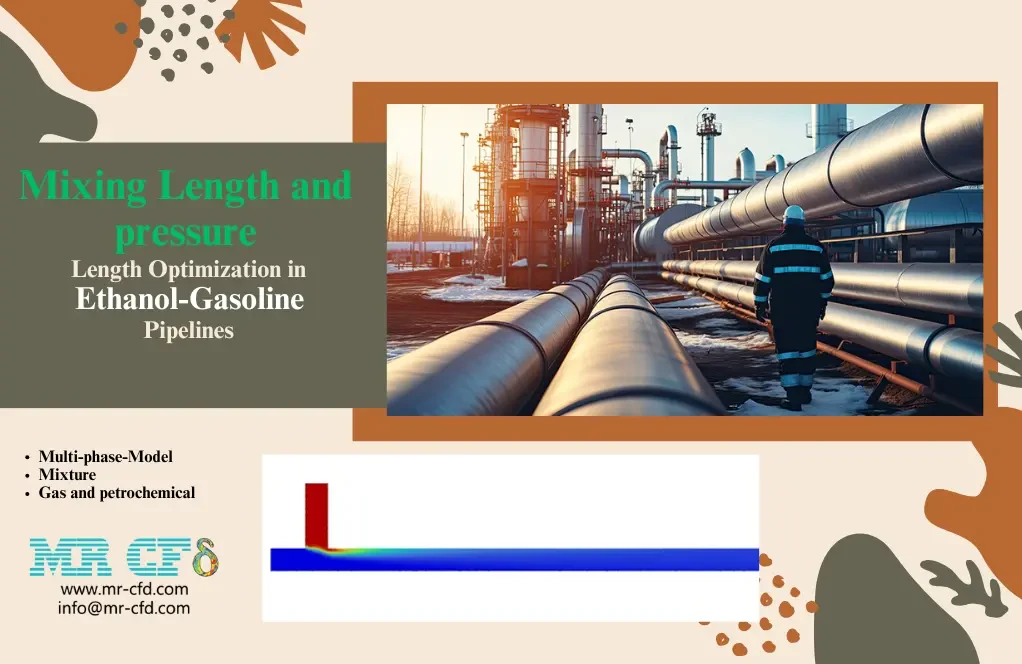
Mixing Length and Pressure Optimization in Ethanol-Gasoline Pipelines
Intermediate, Advanced
Price: $140
The study aims to optimize the mixing length and pressure balance within ethanol-gasoline T-shape pipeline systems, a critical factor for efficient fuel blending. Three distinct pipeline designs were evaluated, each with differing diameters (10-inch and 6-inch) to assess their effects on pressure drop and mixing efficiency This design successfully met all constraints, including maintaining the desired outlet ethanol volume fraction of 7.8% and ensuring the outlet pressure remained above 80 kPa, confirming the feasibility of using thinner pipelines for optimized fuel mix and flow conditions.
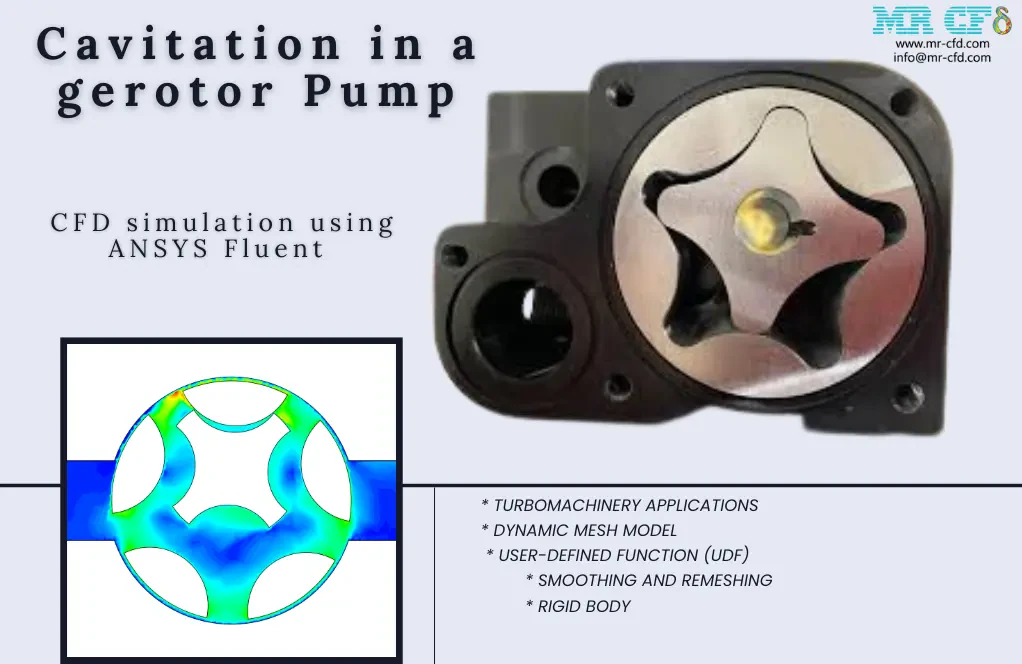
Numerical Investigation of Cavitation Phenomena in a 2D Gerotor Pump Using ANSYS Fluent
Intermediate, Advanced
Price: $144
This study presents a detailed numerical investigation of cavitation phenomena in a gerotor pump using computational fluid dynamics (CFD) simulation The physical modeling incorporated a mixture model for multiphase flow A key aspect of the simulation was the implementation of dynamic mesh capabilities through User Defined Functions (UDFs)
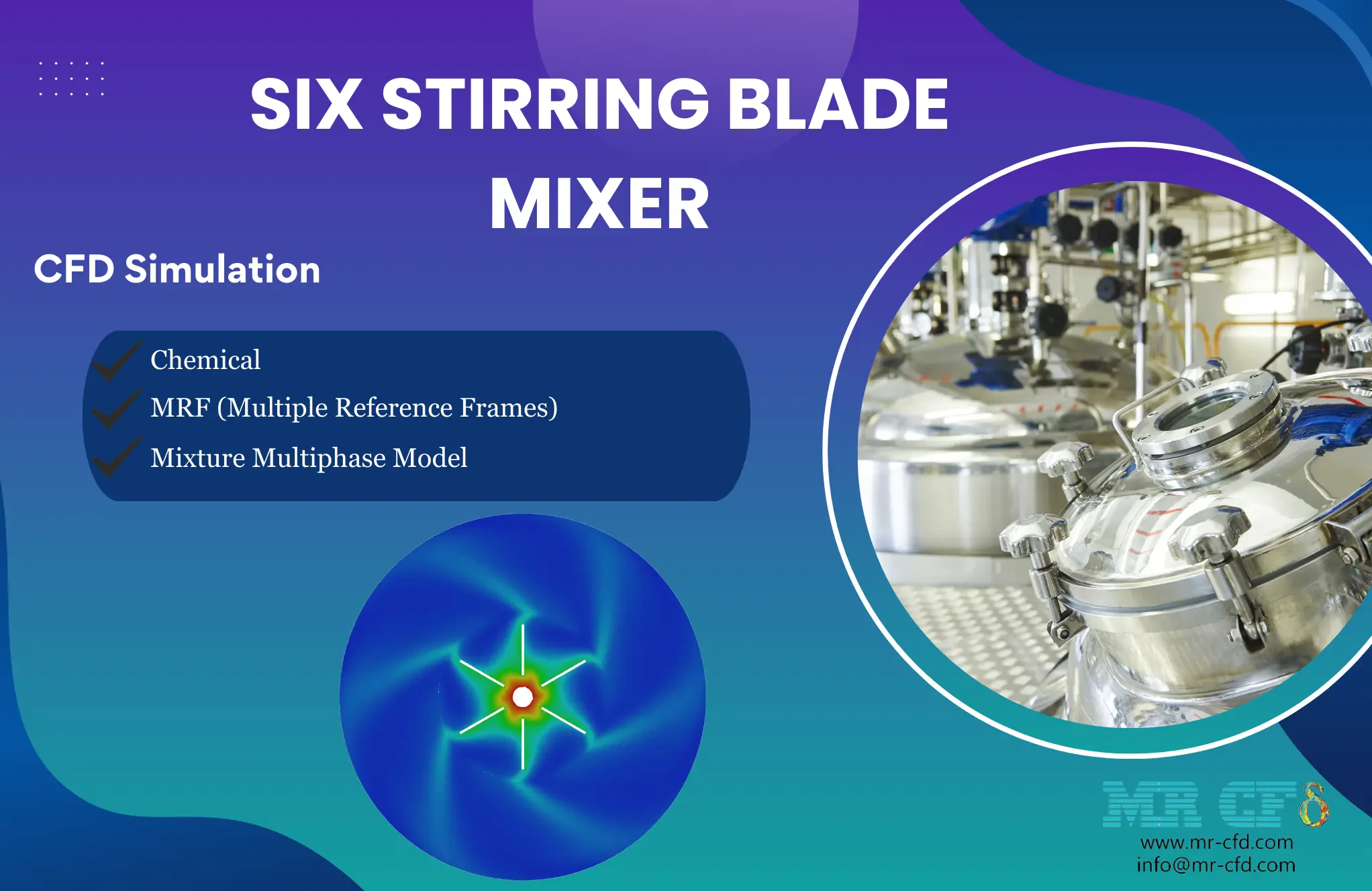
Six Blade Stirring Mixer CFD Simulation, ANSYS Fluent Training
Beginner, Intermediate
Price: $16
The present problem simulates a Six Blade Stirring Mixer using ANSYS Fluent software. We have designed the geometry using DesignModeler software and created the mesh on this geometry using ANSYS Meshing software. The mesh type is unstructured with 5,447,852 cells. The Mixture multiphase model has been used to simulate the present model. The Multiple Reference Frames (MRF) model is used to simulate the motion of impeller. The solution is steady, and the k-Ꜫ model is chosen to simulate the turbulence of the flow.
Price: $30
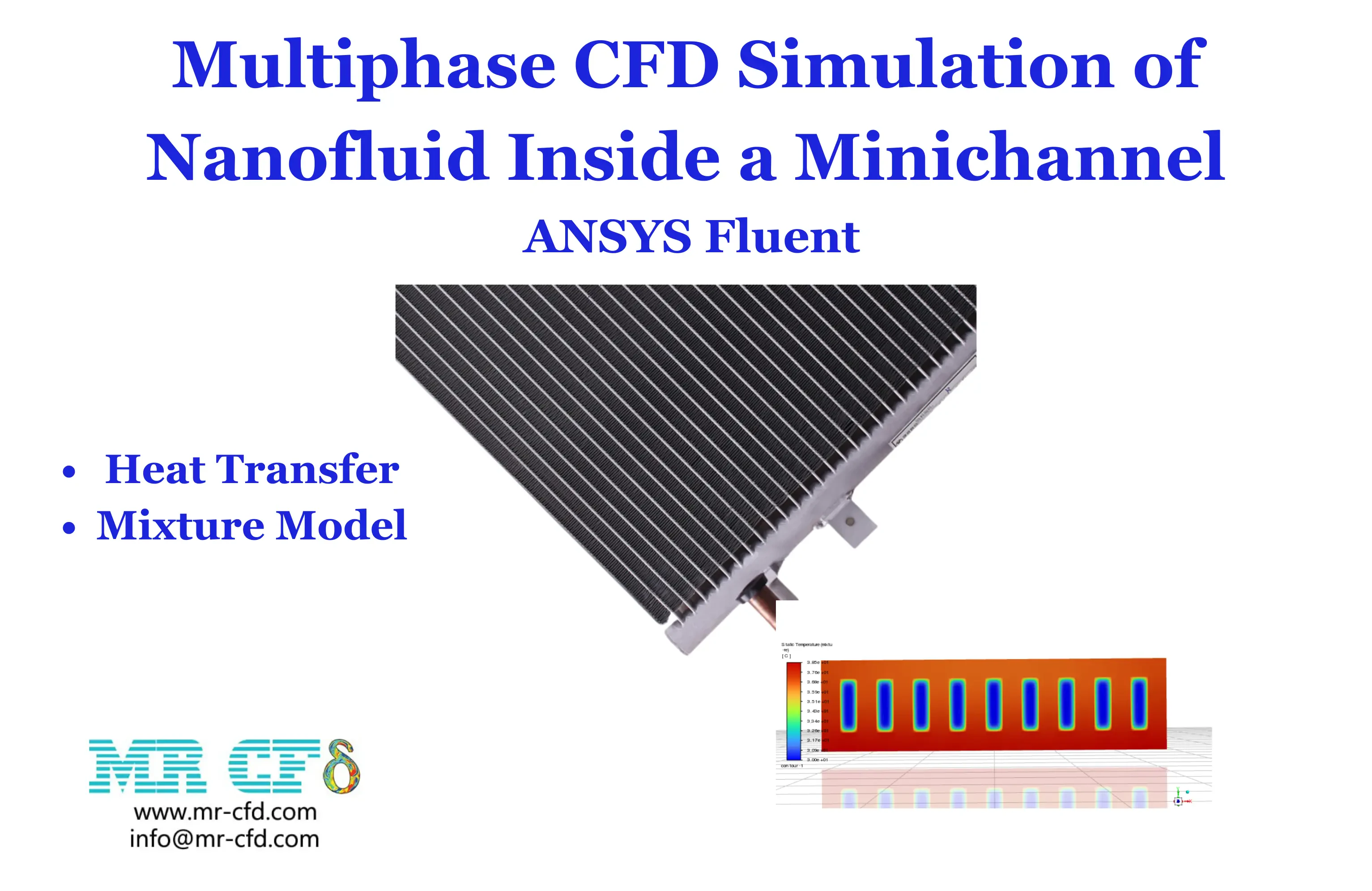
In this project, we aim to simulate heat transfer inside a minichannel with Al2O3 nanoparticles. The geometry is designed using Spaceclaim software then meshed in ANSYS Meshing with 2,850,000 hexagonal elements. Mixture model is used to simulate the presence of nanoparticles as second phase.
Price: $689
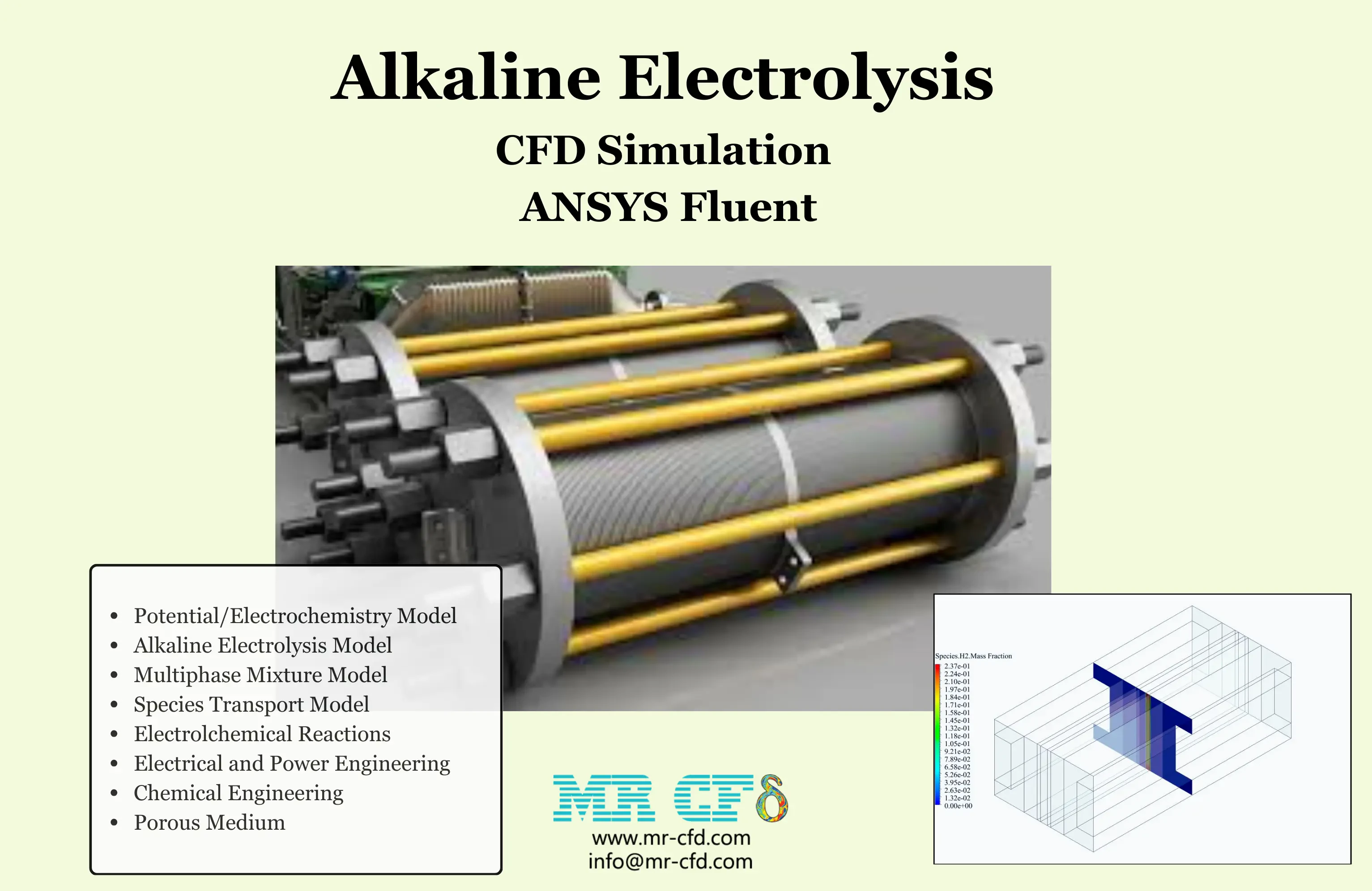
The problem numerically simulates the Alkaline Electrolysis using ANSYS Fluent software. We design the 3-D model with the Design Modeler software. We mesh the model with ANSYS Meshing software. The mesh is Structured, and the element number equals 428,800. We used the Potential/Electrochemistry model to define the potential equation. We used the Electrolysis sub-model and Alkaline Electrolysis type to define the electrolysis process. We used the Species model to define H2, O2, and H2O. We used the Mixture Multiphase model to define water.
Price: $689
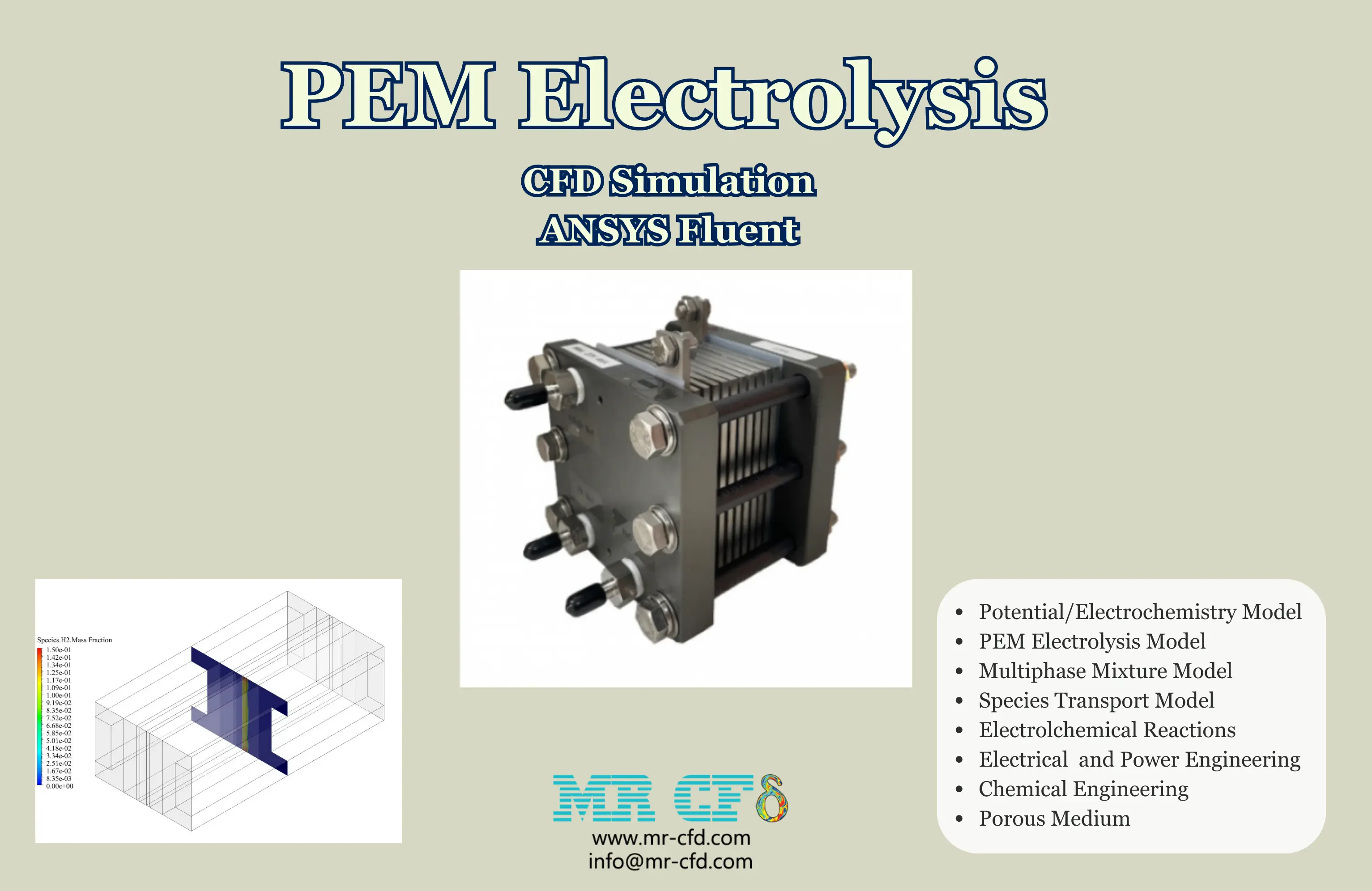
The problem numerically simulates the PEM Electrolysis using ANSYS Fluent software. We design the 3-D model with the Design Modeler software. We mesh the model with ANSYS Meshing software. The mesh is Structured, and the element number equals 428,800. We used the Potential/Electrochemistry model to define the potential equation. We used the Electrolysis sub-model and PEM Electrolysis type to define the electrolysis process. We used the Species model to define H2, O2, and H2O. We used the Mixture Multiphase model to define water.