

Nano-Fluid Online Courses
Here's every CFD online course related to Nano-Fluid category.
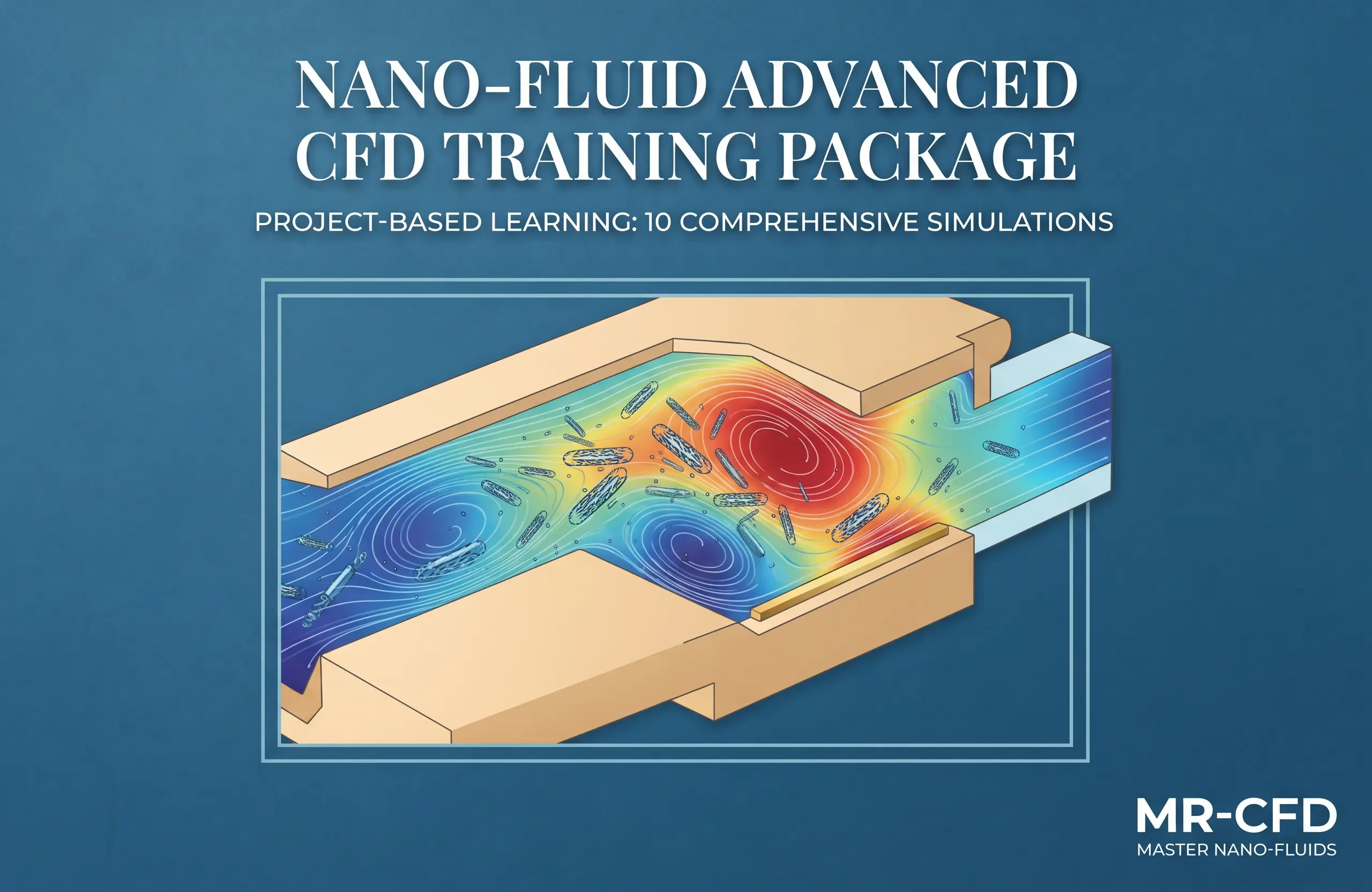
Nano Fluid: Advanced CFD Training Package
Intermediate, Advanced
Price: $79
Advance your nanofluid CFD skills with this 10-project ANSYS Fluent training package — covering fundamental nanofluid channel and tube flow, applied heat exchanger and electronics cooling devices, solar energy applications, and advanced magnetic and electric field-coupled nanofluid physics.
Nano Fluid: Beginner CFD Training Package
Beginner, Intermediate
Price: $39
Nanofluid: Beginner CFD Training Package is a ten-project introduction to nanofluid and enhanced heat-transfer simulation in ANSYS Fluent. Starting from particle-laden flow and building through heat exchangers, heat-transfer-enhancement features, porous media, and electric- and magnetic-field effects, it gives newcomers a hands-on, application-driven foundation in the CFD techniques behind modern nanofluid and thermal-enhancement engineering — one real engineering case at a time.
Price: $49
The final step in the series, this course covers the most demanding version of each project — high-speed and reacting flows, fluid-structure interaction, UDFs, and moving geometry — the kind of coupled, multi-physics problems most CFD engineers never get past. It's built for those who want to solve undefined, real-world problems and defend their results with confidence.

Build Real-World CFD Skills with ANSYS Fluent
Intermediate
Price: $29
Building on the fundamentals, this course tackles harder, more realistic versions of the same 16 engineering fields and flow models, introducing multi-phase interactions, transient behavior, and more demanding boundary conditions. You'll leave with the skills to handle real project complexity, not just tutorial-scale problems.

Price: $9
This course takes you from zero to your first working simulations in ANSYS Fluent, covering foundational projects across 16 engineering fields — aerospace, biomedical, chemical, HVAC, marine, renewable energy, and more — alongside core flow models and Fluent modules. By the end, you'll be comfortable setting up, running, and interpreting basic CFD simulations on your own.
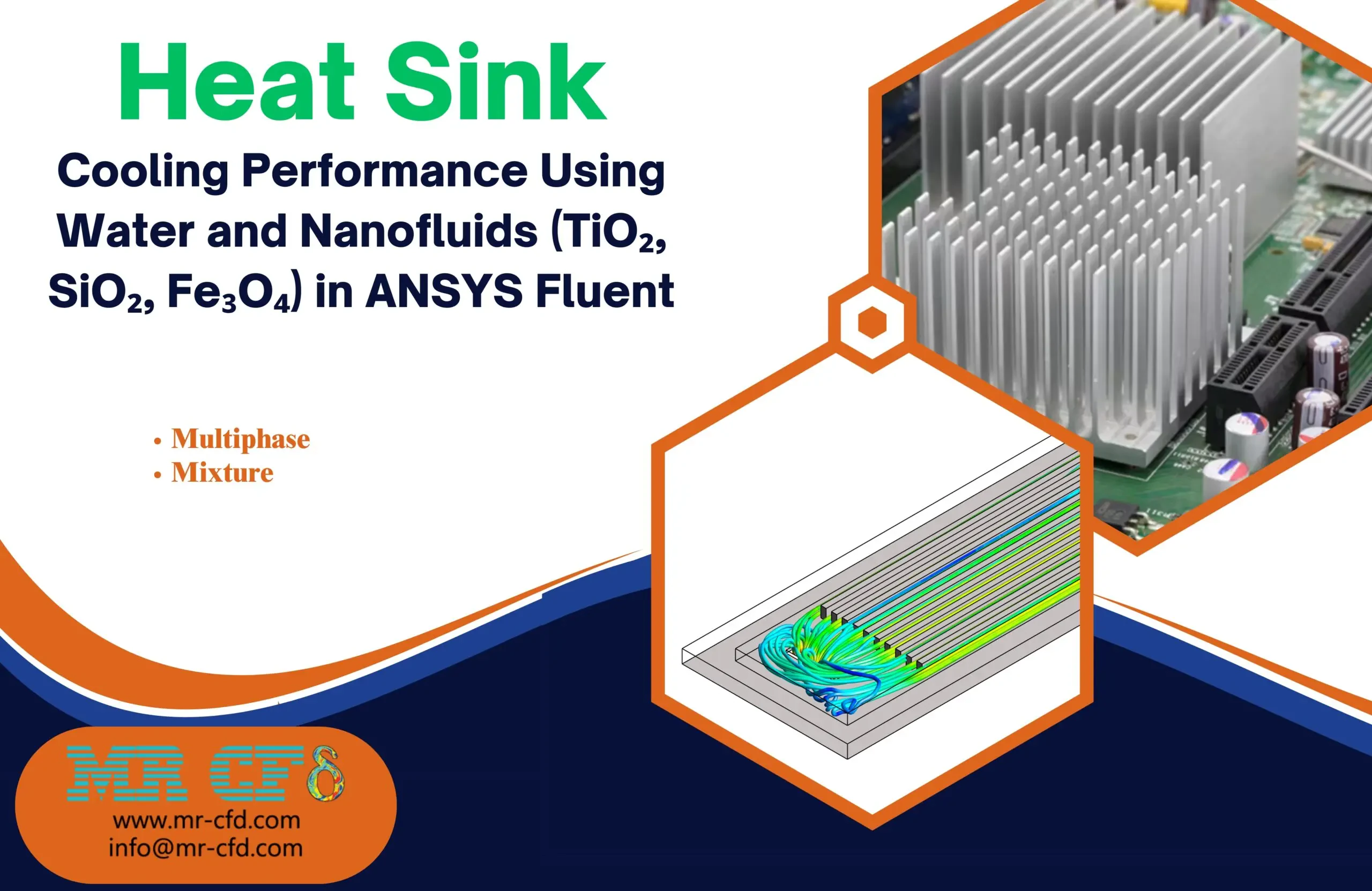
Heat Sink Cooling Performance Using Water and Nanofluids (TiO₂, SiO₂, Fe₃O₄) in ANSYS Fluent
Beginner, Intermediate
Price: $63
This project presents a numerical study of heat transfer in a heat sink using ANSYS Fluent. Four cases were simulated, including pure water (single-phase) and three nanofluids (water mixed with TiO₂, SiO₂, and Fe₃O₄) using the mixture multiphase model. The geometry was created in ANSYS DesignModeler, and a high-quality mesh of about 1.6 million elements was generated. A pressure-based, steady-state solver with the SIMPLE algorithm was applied. The results, illustrated in contour plots of velocity and temperature, show that nanofluids enhance cooling efficiency compared to pure water. Among the tested fluids, the Fe₃O₄–water mixture demonstrated the best thermal performance at the fins and base plate, highlighting its potential for advanced heat sink applications
Price: $480
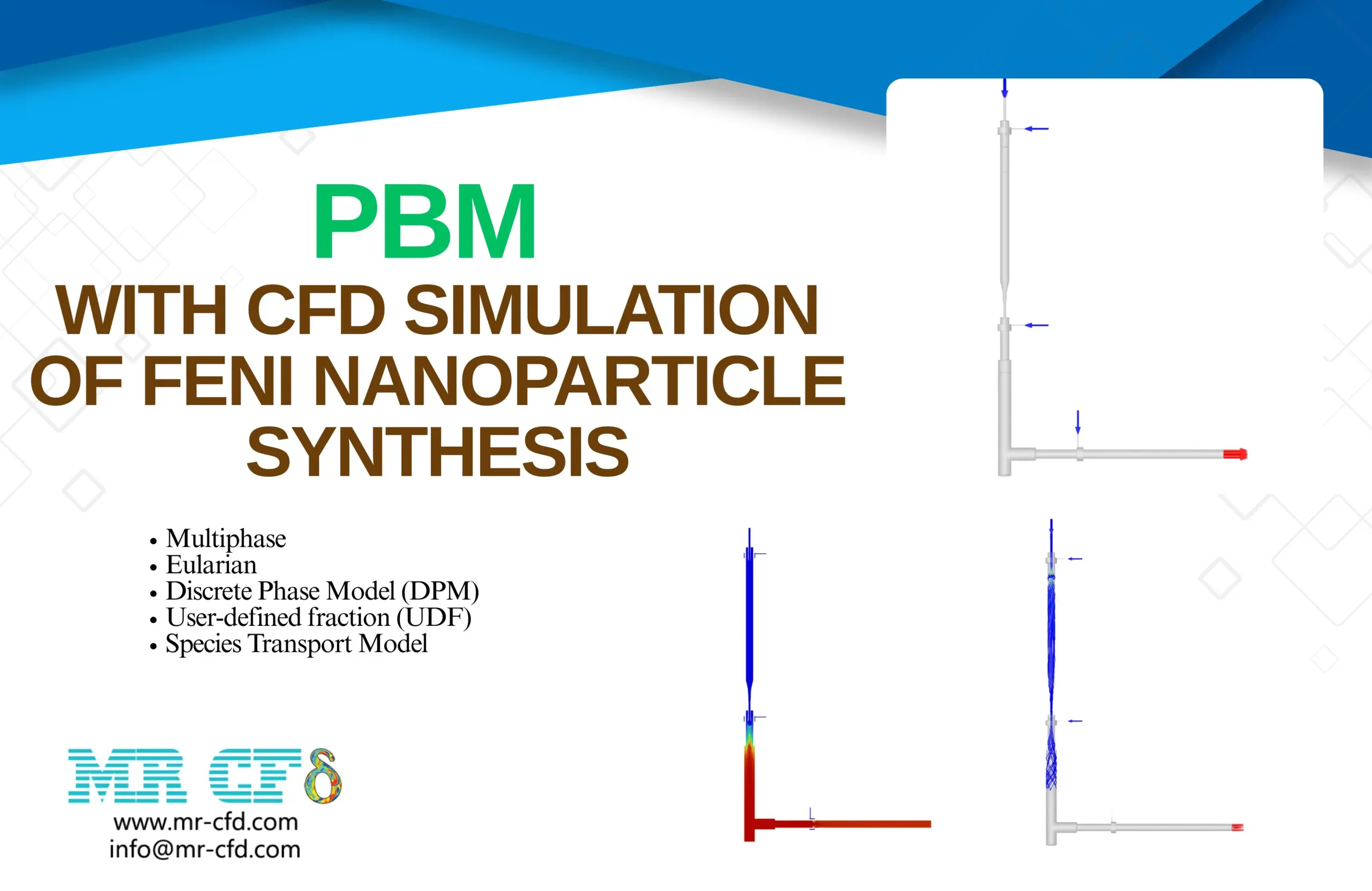
PBM with CFD Simulation of FeNi Nanoparticle Synthesis is performed using ANSYS Fluent . A Multiphase Eulerian approach is applied with FeNi alloy represented in the secondary phase. Powder precursors (FeCl₂ and NiCl₂) are injected into the domain using the Discrete Phase Model (DPM). The Species Transport Model with finite-rate Arrhenius kinetics is used to simulate the reduction reactions. User-Defined Functions (UDFs) implement nucleation, growth, and agglomeration phenomena for nanoparticle prediction.
PCM Melting Rate Via Internal Fin and Nanoparticles
Intermediate, Advanced
Price: $20
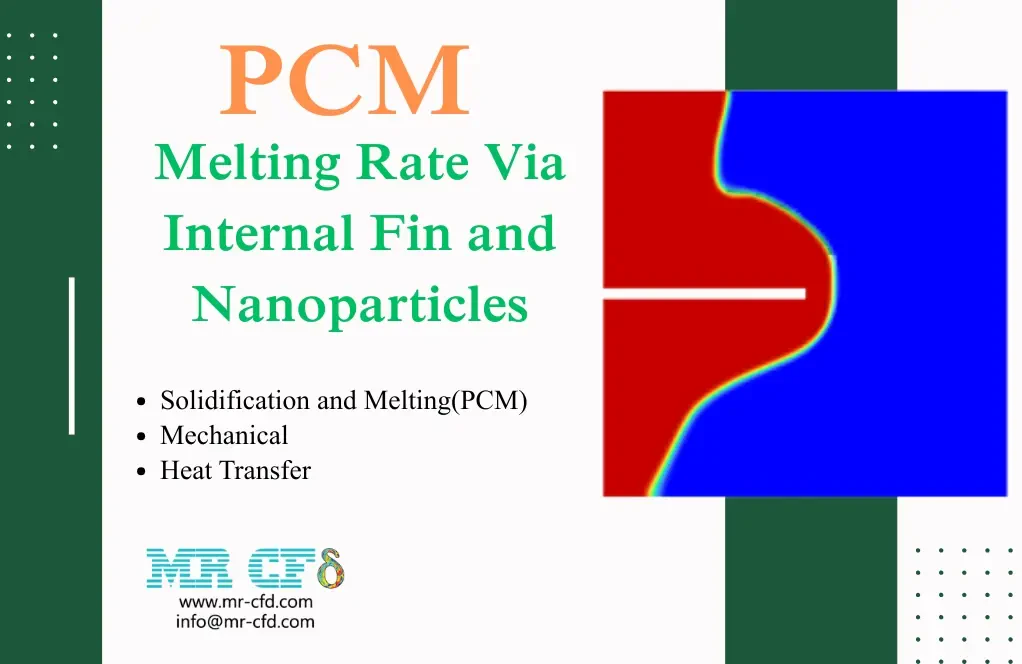
This project explores the simulation of phase change material (PCM) melting within a 2D cavity, utilizing internal fins and nanoparticles to enhance thermal performance. The cavity, measuring 20mm in width and filled with paraffin wax, features a left wall and fin maintained at a constant temperature of 350K, while the right wall is kept at 300K, with other walls insulated. Simulations conducted over 375 seconds revealed that heat transfer occurs due to a temperature gradient, initiating phase change once the PCM reaches its melting temperature. Results indicated that 35.65% of the material was melted by the end of the simulation, providing critical insights into heat transfer efficiency and the influence of design parameters on PCM behavior in thermal systems.
Frictional Force of a Fluid Flow Mixed With Particles
Intermediate, Advanced
Price: $24
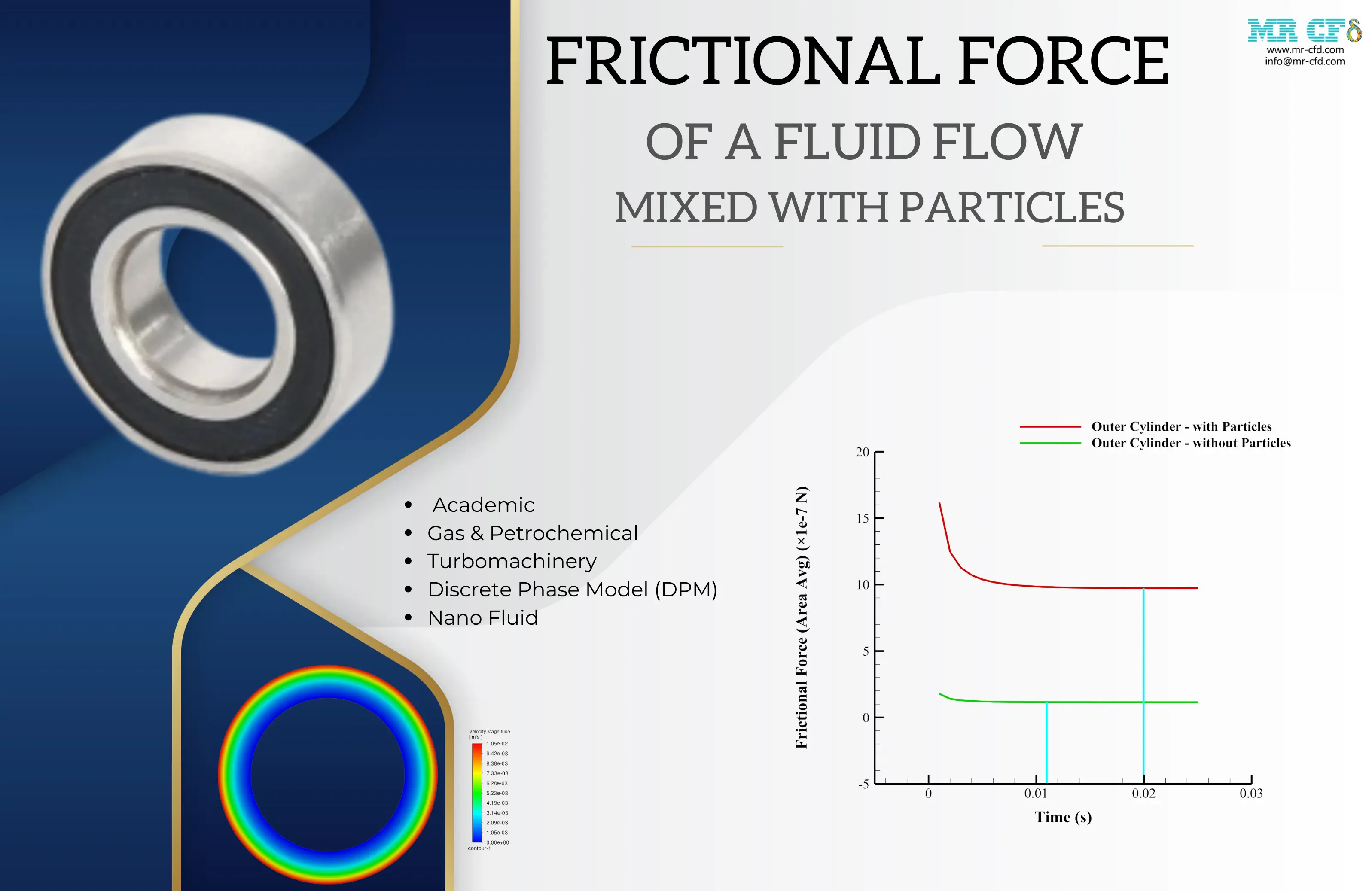
This report presents a simulation examining how particle presence affects the friction force on the walls of two concentric cylinders using the Discrete Phase Method (DPM). The geometry of the two concentric cylinders was created using ANSYS SpaceClaim software. A high-quality mesh of 51840 hexahedral elements was generated using ANSYS Meshing software. Appropriate DPM settings were applied and the friction force exerted on the two cylinder walls was calculated.