

Rotary Equipments Online Courses
Here's every CFD online course related to Rotary Equipments category.
Horizontal Axis Wind Turbine (HAWT), Paper Numerical Validation, ANSYS Fluent
Intermediate, Advanced
Price: $320
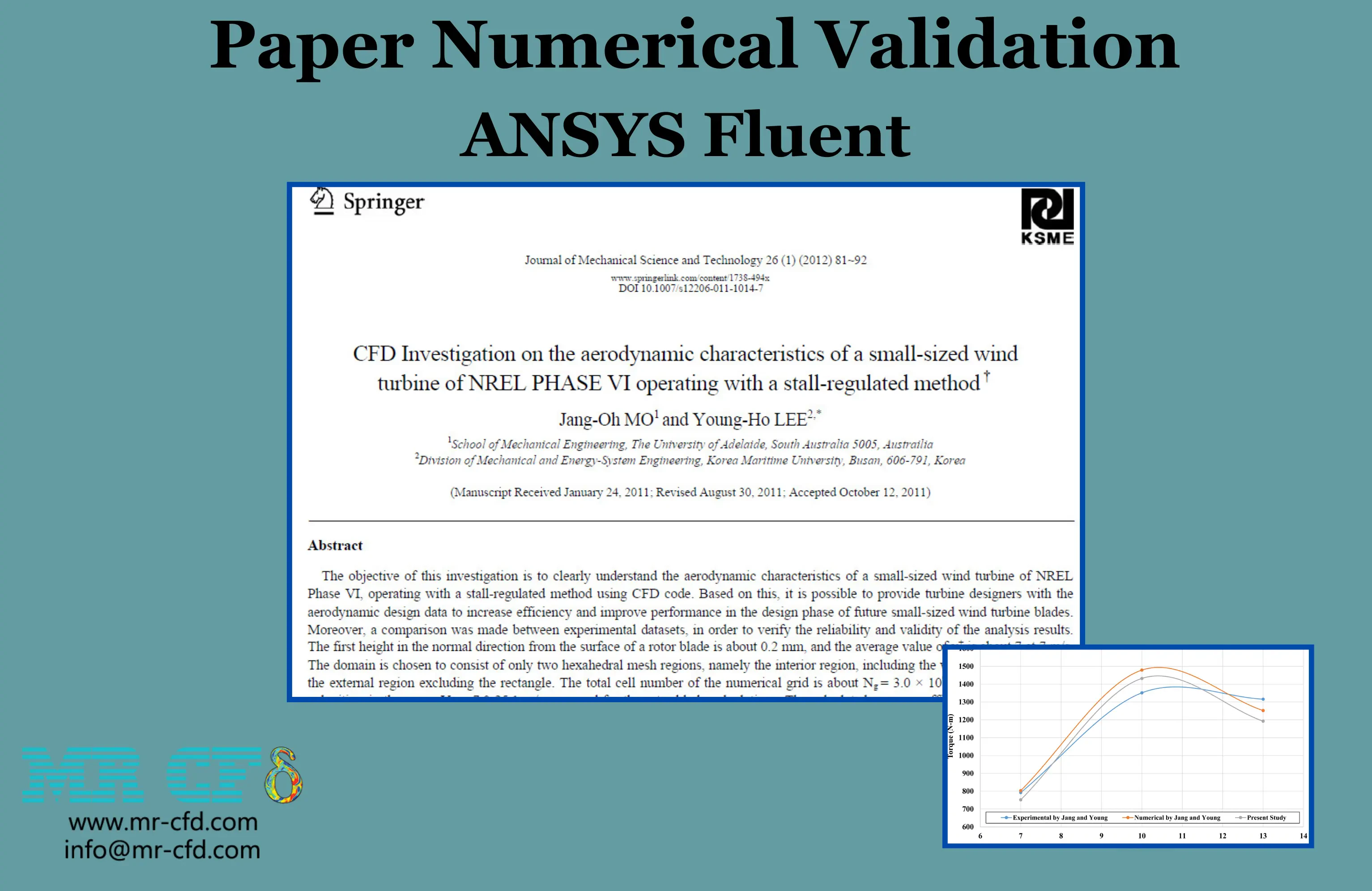
The current CFD Analysis numerically validates the Paper "CFD Investigation on the aerodynamic characteristics of a small-sized wind turbine of NREL PHASE VI operating with a stall-regulated method" via ANSYS Fluent software. We have designed and meshed the geometry using Spaceclaim and ANSYS Meshing then meshing in fluent, producing 5,466,728 elements. MRF is used to simulate rotating zone. The turbulence of the flow is simulated via Realizable k-epsilon model.
Mixing Tank Containing Iron Powder, Transient CFD Simulation by ANSYS Fluent
Intermediate, Advanced
Price: $42
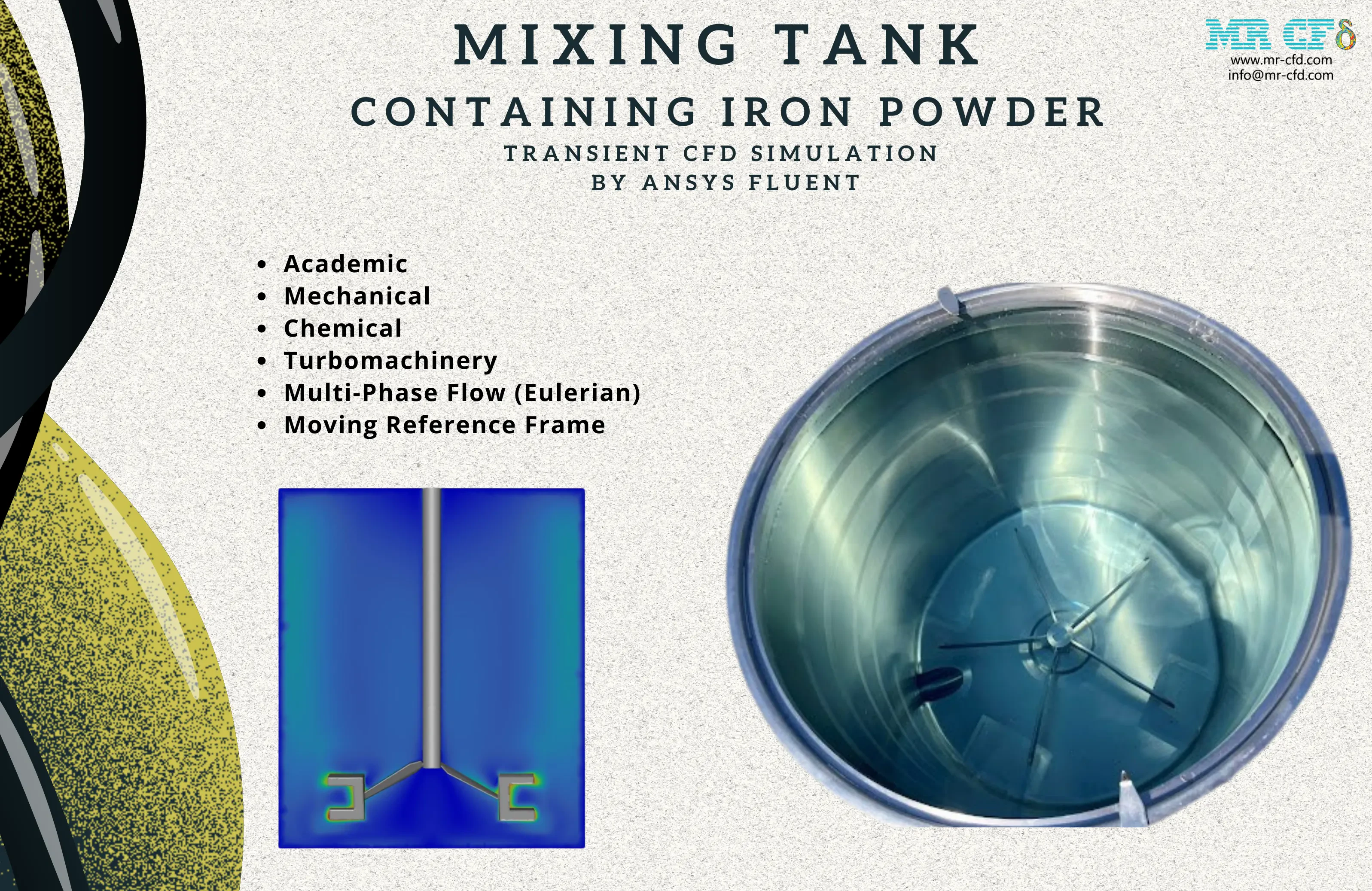
This report presents a simulation of the mixing of water and iron powder in a cylindrical tank with a rotating impeller using the Eulerian multiphase method. The geometry of the mixing tank was created using ANSYS SpaceClaim software. A high-quality mesh of about 1,260,000 tetrahedron elements was generated using ANSYS Meshing software. Appropriate Eulerian interphase forces and settings were applied and the Moving Reference Frame (MRF) method was used.

Price: $60
The present problem simulates the aeroacoustics and sound generation by a water flow inside a Francis Turbine using ANSYS Fluent software. We have designed the geometry using ANSYS Design Modeler software and created the mesh on this geometry using ANSYS Meshing software. The mesh type is unstructured with 4,914,404cells. We use the Frame Motion (MRF) to define rotation movement. The Broadband Noise Sources model is also used to define the acoustic model
Price: $20
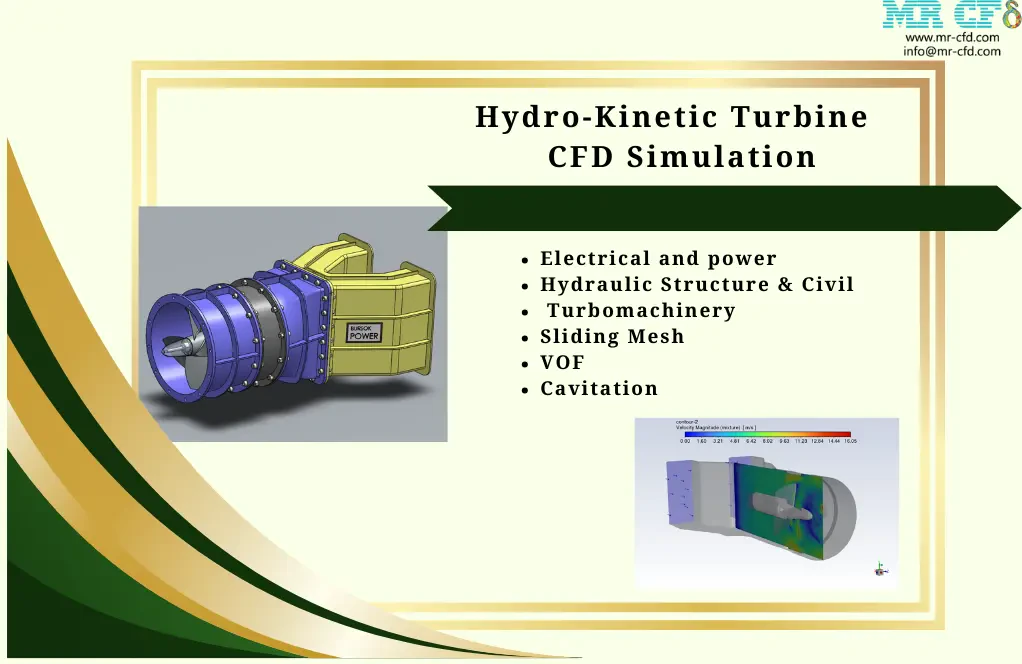
The problem numerically simulates Hydro-Kinetic turbine using ANSYS Fluent software. We design the 3-D model with the Solidworks software. We mesh the model with ANSYS Meshing software, and the element number equals 7,758,370. The Mesh Motion (Sliding Mesh) technique is used to simulate the rotation of the turbine blades The VOF method is used In this simulation.
Bulb Turbine, Sand Erosion Study CFD Simulation
Intermediate, Advanced
Price: $160
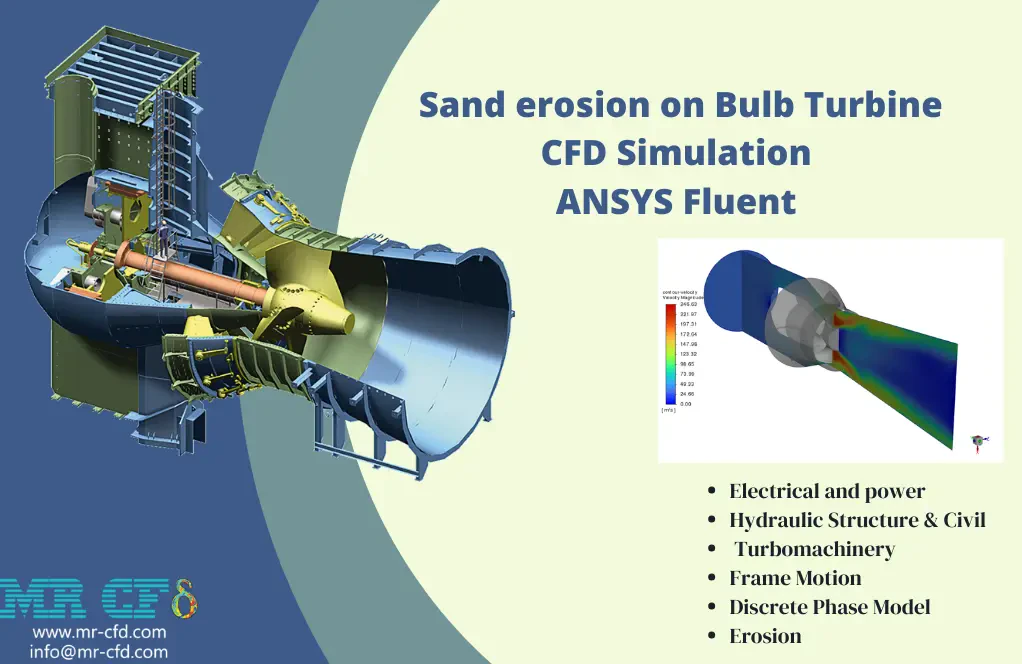
The current CFD Analysis models the Bulb Turbine via ANSYS Fluent software. We have designed the geometry using ANSYS Design Modeler software and generated the mesh on this geometry using ANSYS Meshing software. The Frame Motion technique is utilized to model the rotation of the turbine. The Discrete Phase Model (DPM) account for the presence of sand particles. The Erosion on the turbine, due to particle collision is investigated.
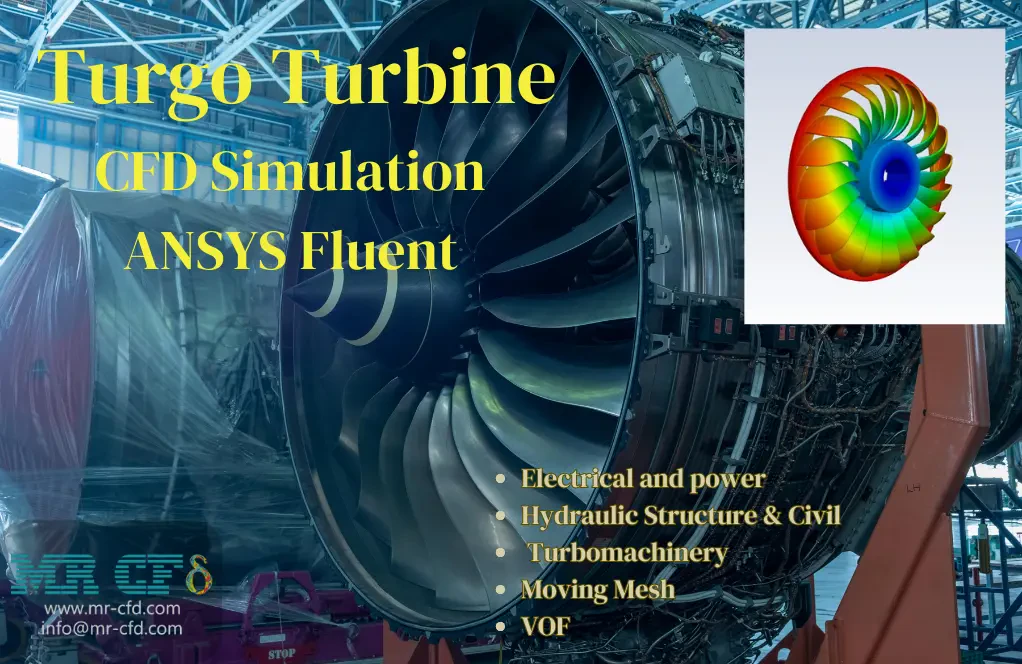
Turgo Turbine, ANSYS Fluent CFD Simulation Training
Intermediate
Price: $24
The present problem simulates the water flow inside a Turgo water turbine by ANSYS Fluent software. The geometry is designed using Design Modeler software. The meshing of the model has been done using ANSYS Meshing software and the element number is 4,344,106. Mesh Motion (Sliding Mesh) is used to define the rotation of the blades inside the chamber.
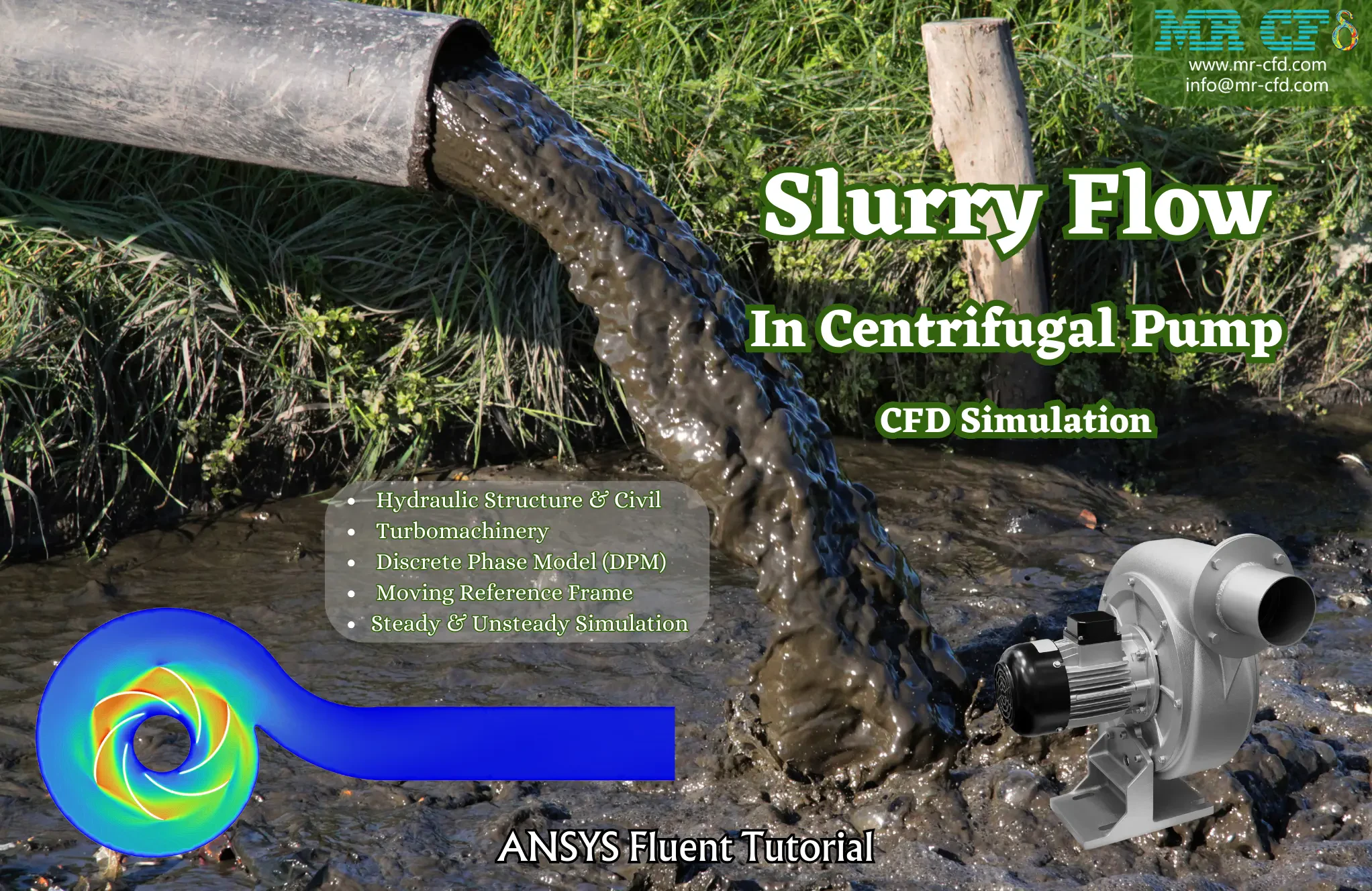
Slurry Flow Erosion In Centrifugal Pump CFD Simulation
Intermediate, Advanced
Price: $160
The problem numerically simulates Slurry Flow in Centrifugal Pump using ANSYS Fluent software. We design the 3-D model with the Design Modeler software. We Mesh the model with ANSYS Meshing software, and the polyhedra element number equals 1,498,132. We use the Frame Motion to define the rotational movement in the rotating zone. The DPM multiphase is activated to model the effect of solid particles on erosion. The activated erosion models are Generic, Finnie, McLaury, Oka, and DNV.
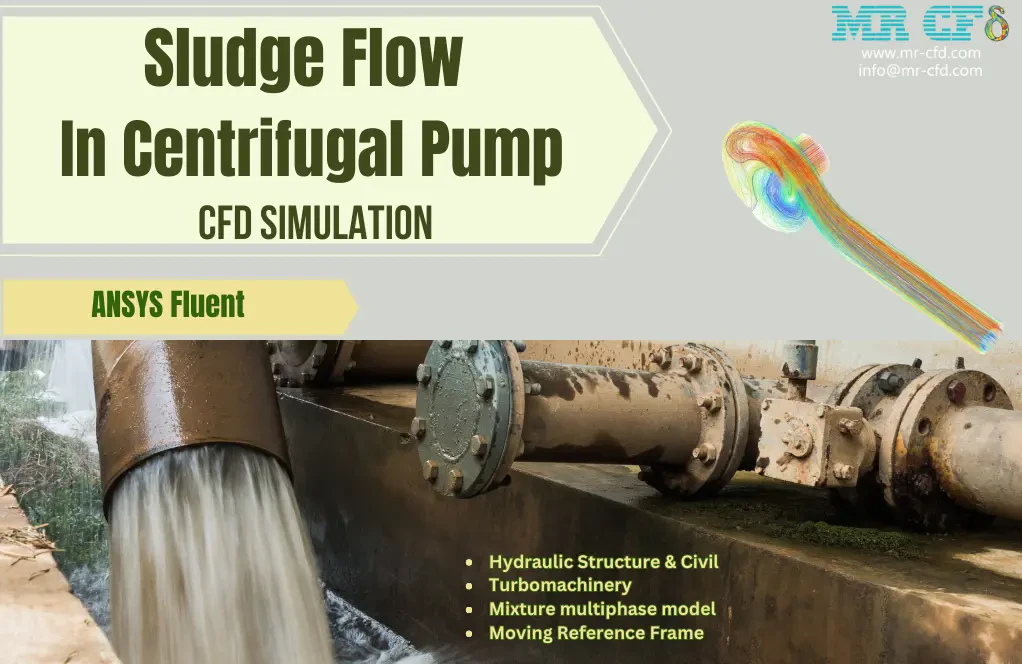
Sludge Flow In Centrifugal Pump CFD Simulation
Intermediate, Advanced
Price: $16
The problem numerically simulates Slurry Flow in Centrifugal Pump using ANSYS Fluent software. We design the 3-D model with the Design Modeler software. We Mesh the model with ANSYS Meshing software, and the polyhedra element number equals 1,498,132. We use the Frame Motion to define the rotational movement in the rotating zone. The Mixture multiphase model is activated to model the effect of solid particles.
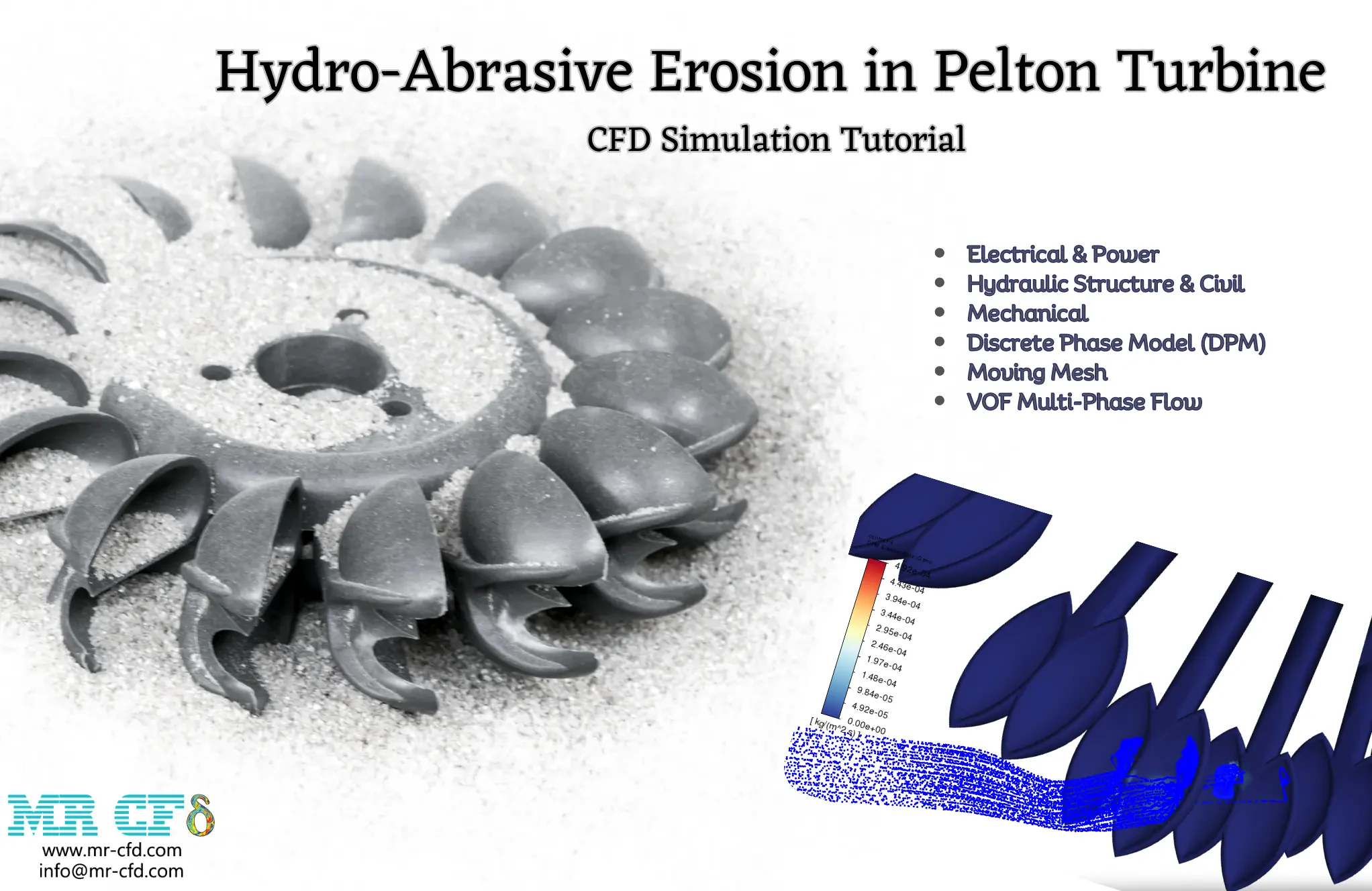
Price: $220
This project numerically simulates the Hydro-Abrasive Erosion in Pelton Turbine using ANSYS Fluent software. The 3-D geometry is designed in Design Modeler software. We used ANSYS Meshing Software to generate mesh; the element number equals 6,433,121. The multiphase VOF model simulates the water jet. The 2-way DPM model also enables the erosion of the solution. The rotational movement of the turbine is modeled using Mesh Motion Approach.