

Solidification & Melting (PCM) Online Courses
Here's every CFD online course related to Solidification & Melting (PCM) category.
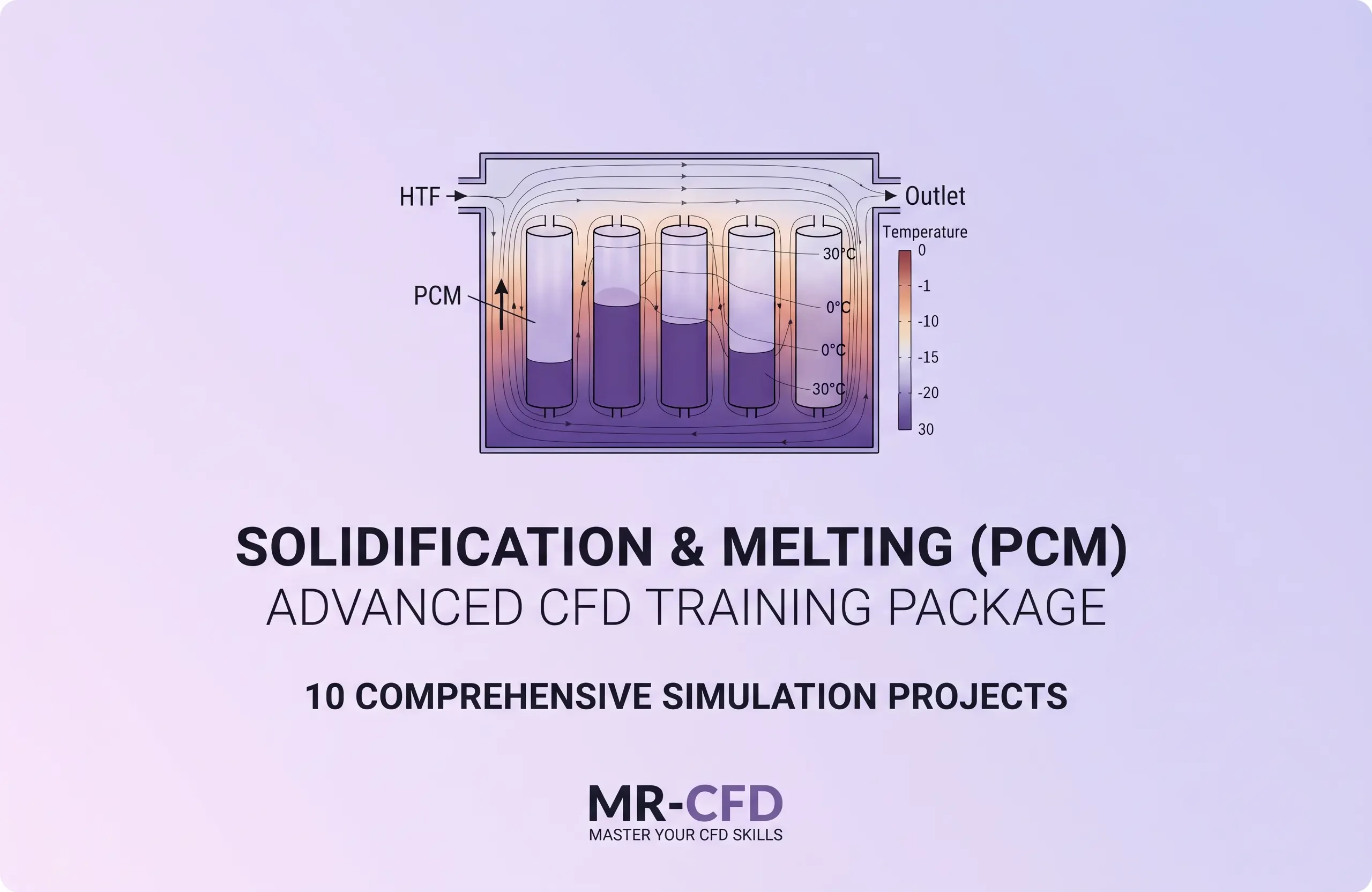
Solidification & Melting (PCM): Advanced CFD Training Package
Intermediate, Advanced
Price: $79
Advance your PCM (phase change material) CFD skills with this 10-project ANSYS Fluent training package — covering paper-validated PCM heat exchanger geometries, building-scale PCM thermal management, and PCM applications in renewable energy and electronics cooling.
Price: $420
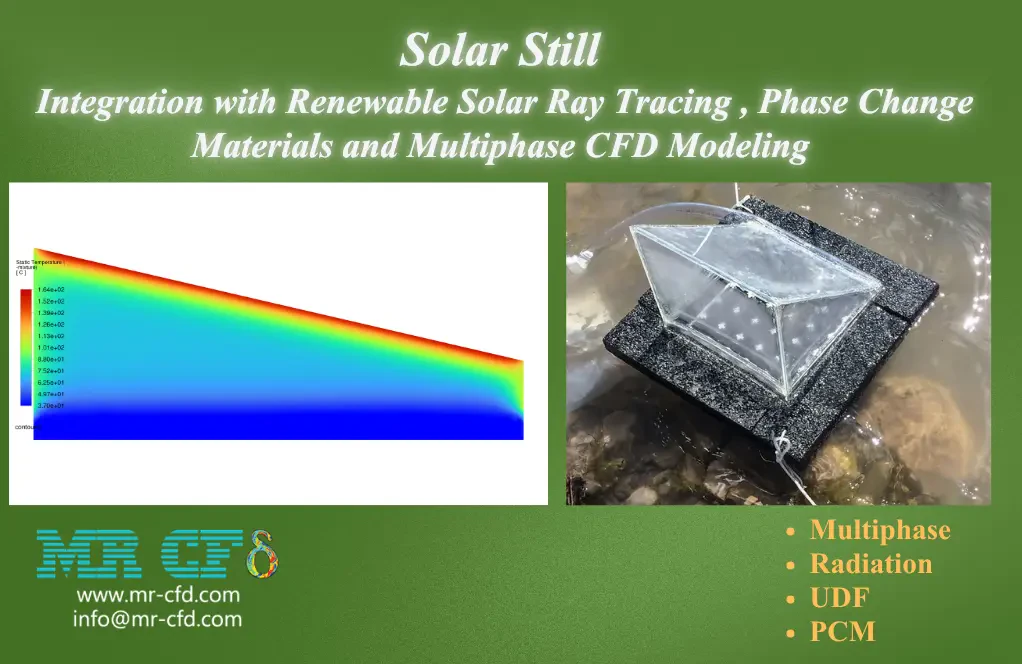
Investigates transient thermal behavior and multiphase flow dynamics within a solar still system. Features a multi-layered domain modeled in SpaceClaim and discretized with 3.3 million tetrahedral elements. Utilizes ANSYS Fluent's transient Eulerian multiphase solver, UDF-based phase change, and discrete ordinates radiation. Accurately captures temporal temperature gradients, paraffin wax melting fractions, and water vaporization dynamics.
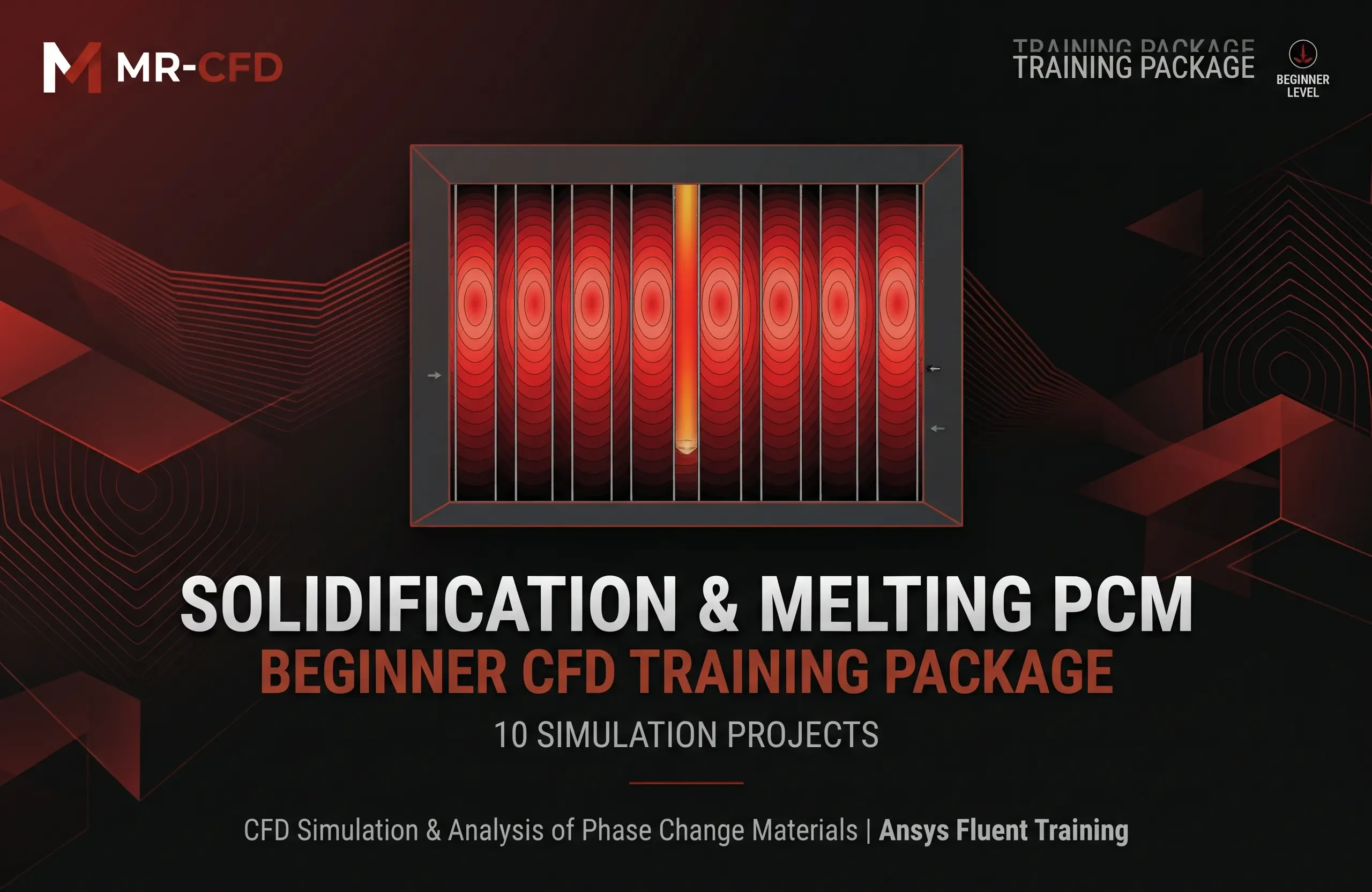
Solidification & Melting (PCM) CFD Training Package [Beginner]
Beginner, Intermediate
Price: $49
10 hands-on ANSYS Fluent projects on PCM simulation and solidification/melting CFD. Beginner-level package. No phase-change experience required; basic Fluent skills assumed. Covers latent heat, mushy-zone constant, liquid fraction, and moving melt-front tracking. Enhancement techniques included: fins, nanoparticle PCM, sandwiched layers, corrugated tubes. Real systems: shell-and-tube PCM heat exchanger, solar water heater, PCM air conditioning. Total runtime: 3 hours 12 minutes across 10 lessons. Every lesson is a full workflow: geometry, mesh, setup, solve, post-processing. Certificate issued on completion.
Price: $49
The final step in the series, this course covers the most demanding version of each project — high-speed and reacting flows, fluid-structure interaction, UDFs, and moving geometry — the kind of coupled, multi-physics problems most CFD engineers never get past. It's built for those who want to solve undefined, real-world problems and defend their results with confidence.
Build Real-World CFD Skills with ANSYS Fluent
Intermediate
Price: $29
Building on the fundamentals, this course tackles harder, more realistic versions of the same 16 engineering fields and flow models, introducing multi-phase interactions, transient behavior, and more demanding boundary conditions. You'll leave with the skills to handle real project complexity, not just tutorial-scale problems.
Price: $9
This course takes you from zero to your first working simulations in ANSYS Fluent, covering foundational projects across 16 engineering fields — aerospace, biomedical, chemical, HVAC, marine, renewable energy, and more — alongside core flow models and Fluent modules. By the end, you'll be comfortable setting up, running, and interpreting basic CFD simulations on your own.
PCM (Solidification & Melting) GOLDEN Training Package
Beginner, Intermediate, Advanced
Price: $999
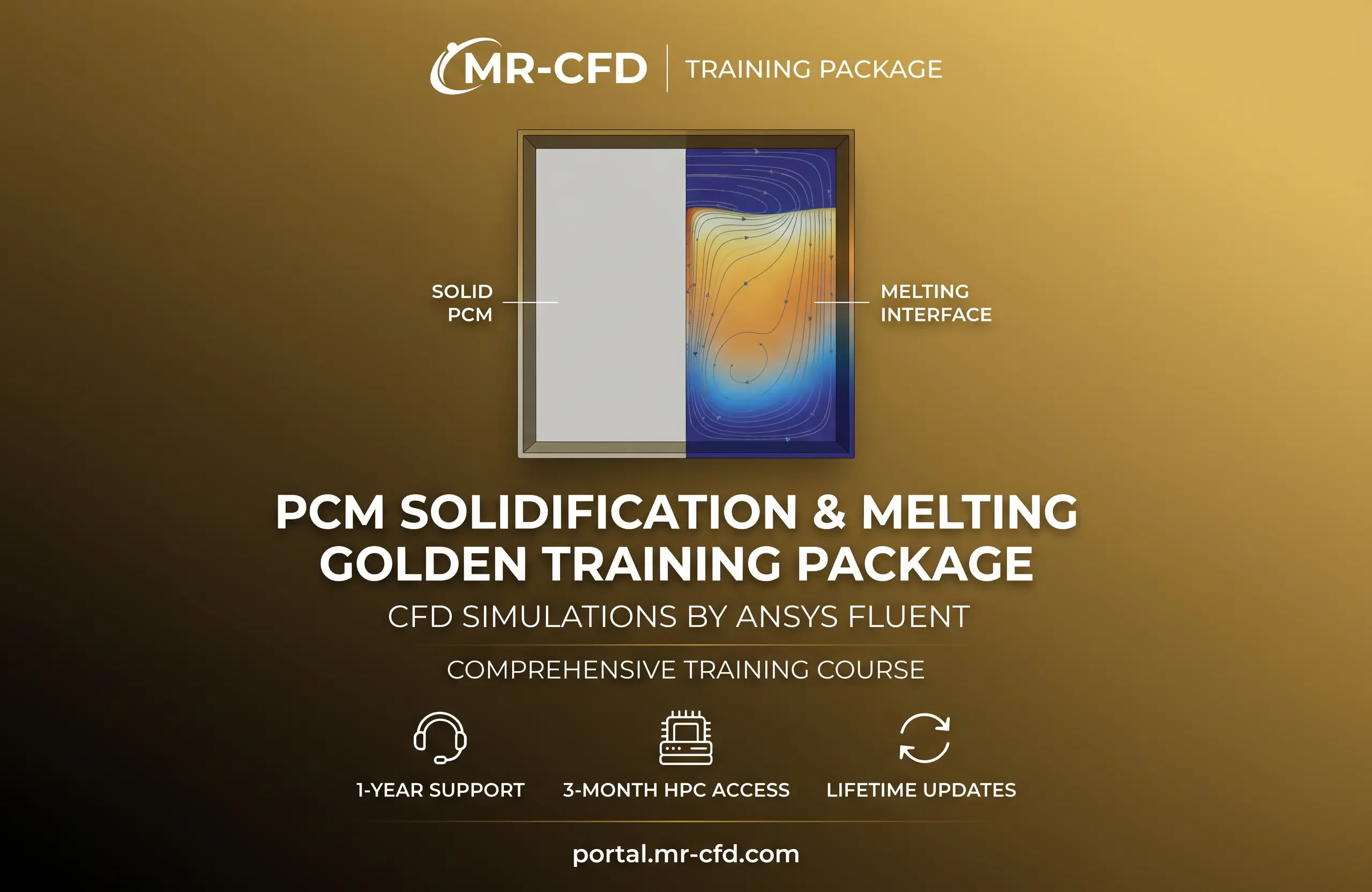
Phase Change Material (PCM) CFD Simulation GOLDEN Training Package by MR CFD equips engineering teams with 35+ ANSYS Fluent tutorials covering phase change material applications from battery cooling to solar energy storage. Perfect for professors, managers, and companies, it transforms beginners into experts ready for real projects like PCM-enhanced heat exchangers, building energy systems, and fighter helmet cooling—complete with 1-year expert support and 3 months HPC access. Backed by 15 years of proven CFD consulting experience for fast onboarding and maximum ROI.
Price: $300
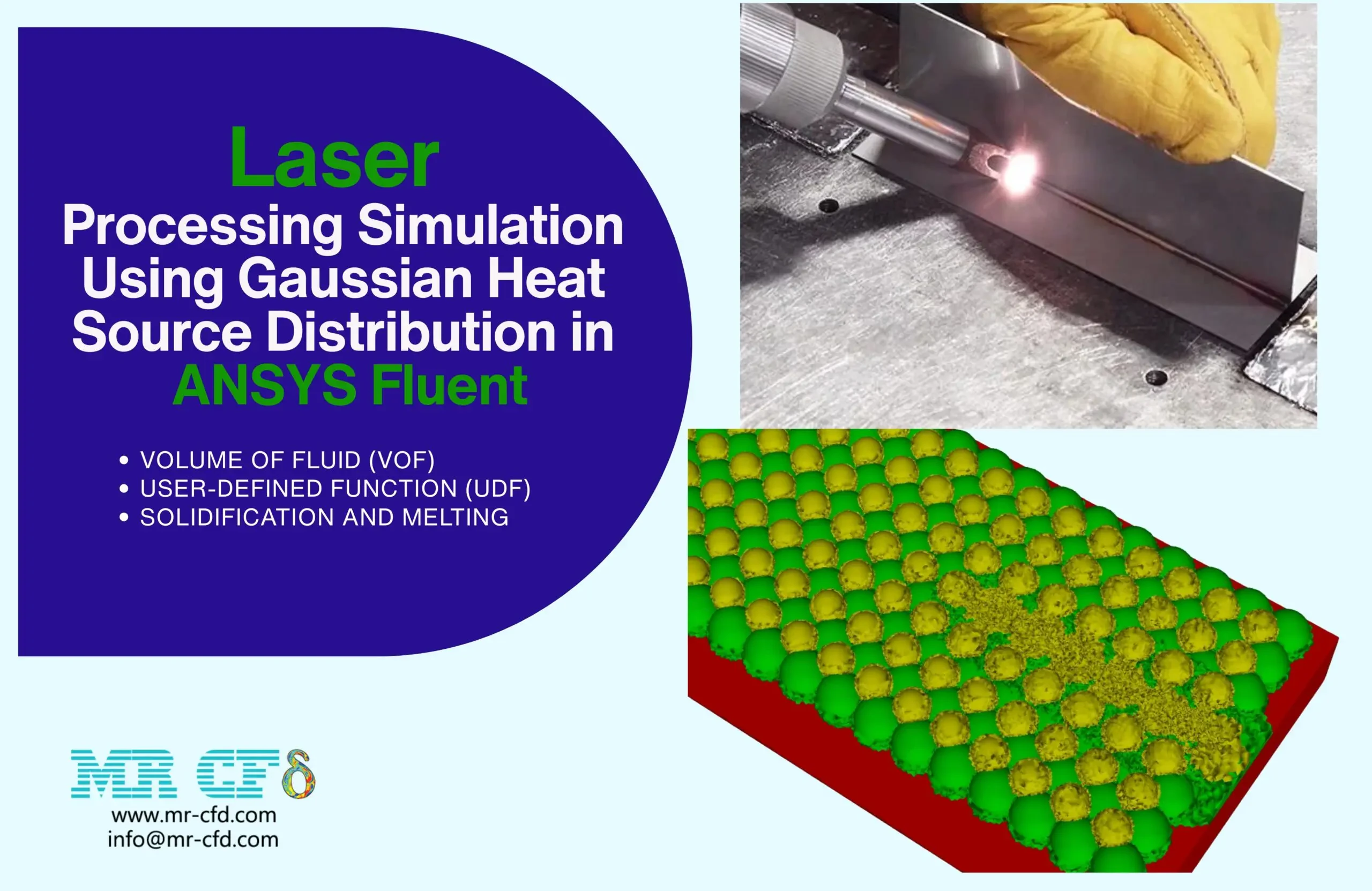
In Laser Processing project, we have simulated the laser-induced selective melting of bi-material particles using ANSYS Fluent software. Three-dimensional modeling was performed using Design Modeler software with a computational domain of 1.0 × 0.5 × 0.4 mm dimensions. The meshing of the model was accomplished using ANSYS Fluent Meshing software, generating approximately 800,000 computational cells with refined regions around the particle bed. The transient simulation employs VOF multiphase model, Solidification and Melting model, and a User-Defined Function (UDF) implementing the moving Gaussian laser heat source with laminar flow characteristics.
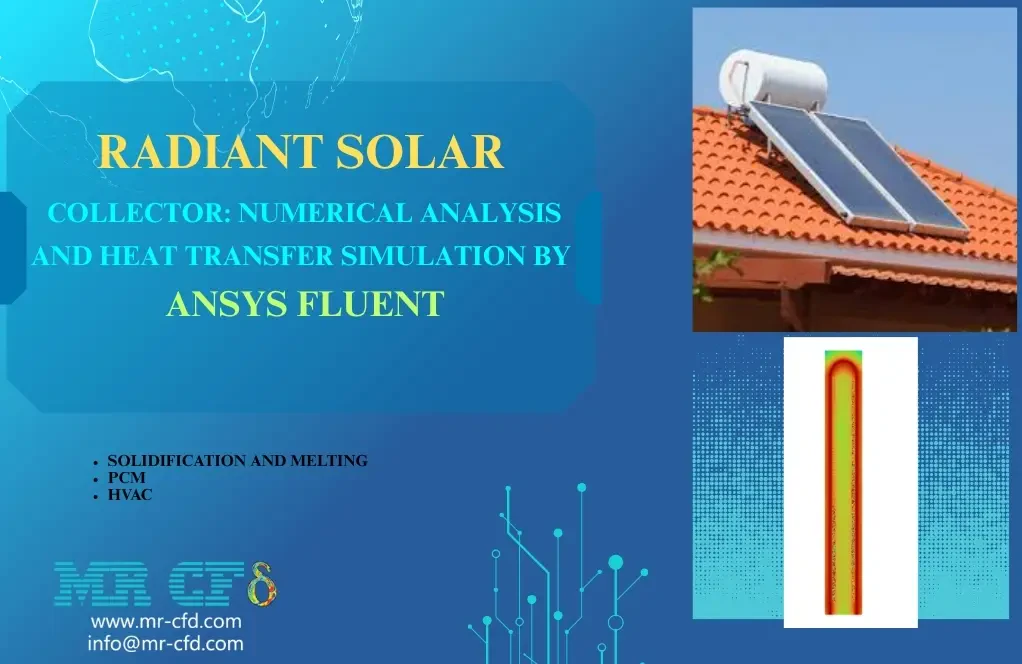
Radiant Solar Collector Applying PCM: Numerical Analysis and Heat Transfer CFD Simulation by ANSYS Fluent
Intermediate, Advanced
Price: $120
In this project, the numerical investigation of a radiant solar collector is conducted utilizing ANSYS SpaceClaim software, inspired by advanced modeling techniques. The 3D geometry is meticulously crafted and meshed with 647,500 elements, emphasizing an unstructured grid and refinement near the tubes to enhance simulation accuracy. The RNG K-epsilon turbulence model serves as the foundation for simulating the flow field, while the solidification and melting module addresses the PCM zone characteristics. Momentum, turbulence, and energy equations are tackled using the SIMPLE algorithm with second-order upwind discretization for precision. The simulation focuses on fluid dynamics and heat transfer, crucial for understanding the collector's performance under variable environmental conditions, despite the exclusion of radiation effects.