

HVAC GOLDEN Training Package
Price:
$6,253
$2,229
HVAC Engineering CFD Simulation GOLDEN Training Package by MR CFD is a premium, all-in-one learning solution that transforms beginners and intermediates into confident HVAC simulation experts using ANSYS Fluent. Designed for universities, institutes, and engineering companies, it bundles 100+ real industrial projects in areas such as virus dispersion, hospital ventilation, radiant and underfloor heating, passive/active ventilation, and PCM-based energy saving into a single structured program. With step-by-step tutorials, one year of expert technical support, three months of HPC access, and content distilled from 15 years of consulting experience, it enables fast onboarding, consistent training, and immediate deployment of high-quality HVAC CFD simulations across your team.
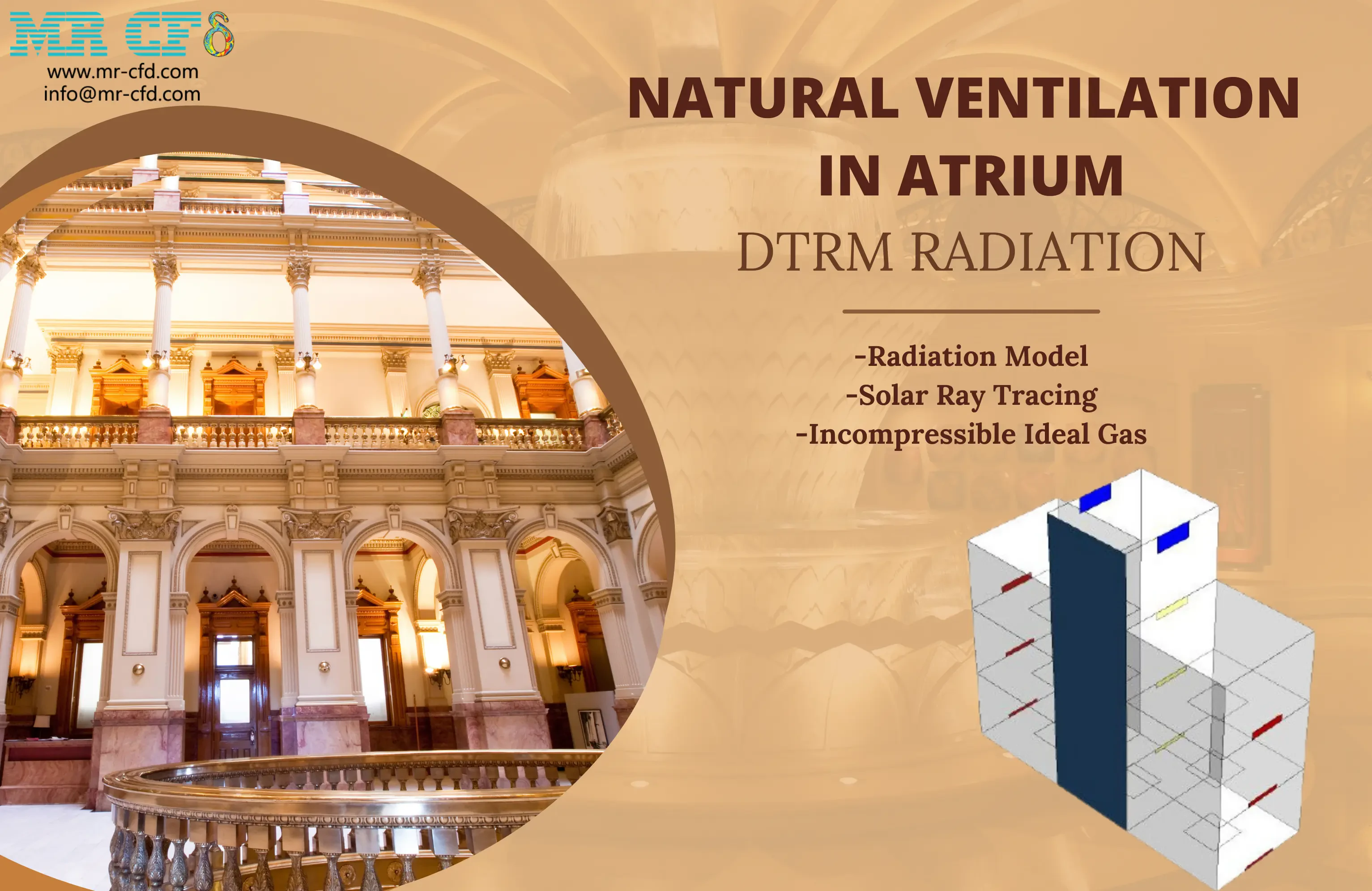
DTRM Radiation Model, Atrium Natural Ventilation
Beginner, Intermediate
Price: $36
The problem numerically simulates Natural Ventilation in Atrium using ANSYS Fluent software. We design the 3-D model with the Design Modeler software. We mesh the model with ANSYS Meshing software, and the element number equals 709511. We use the Discrete Transfer Radiation Model (DTRM) to define radiation heat transfer. We use Solar Ray Tracing to apply the effect of solar irradiation.
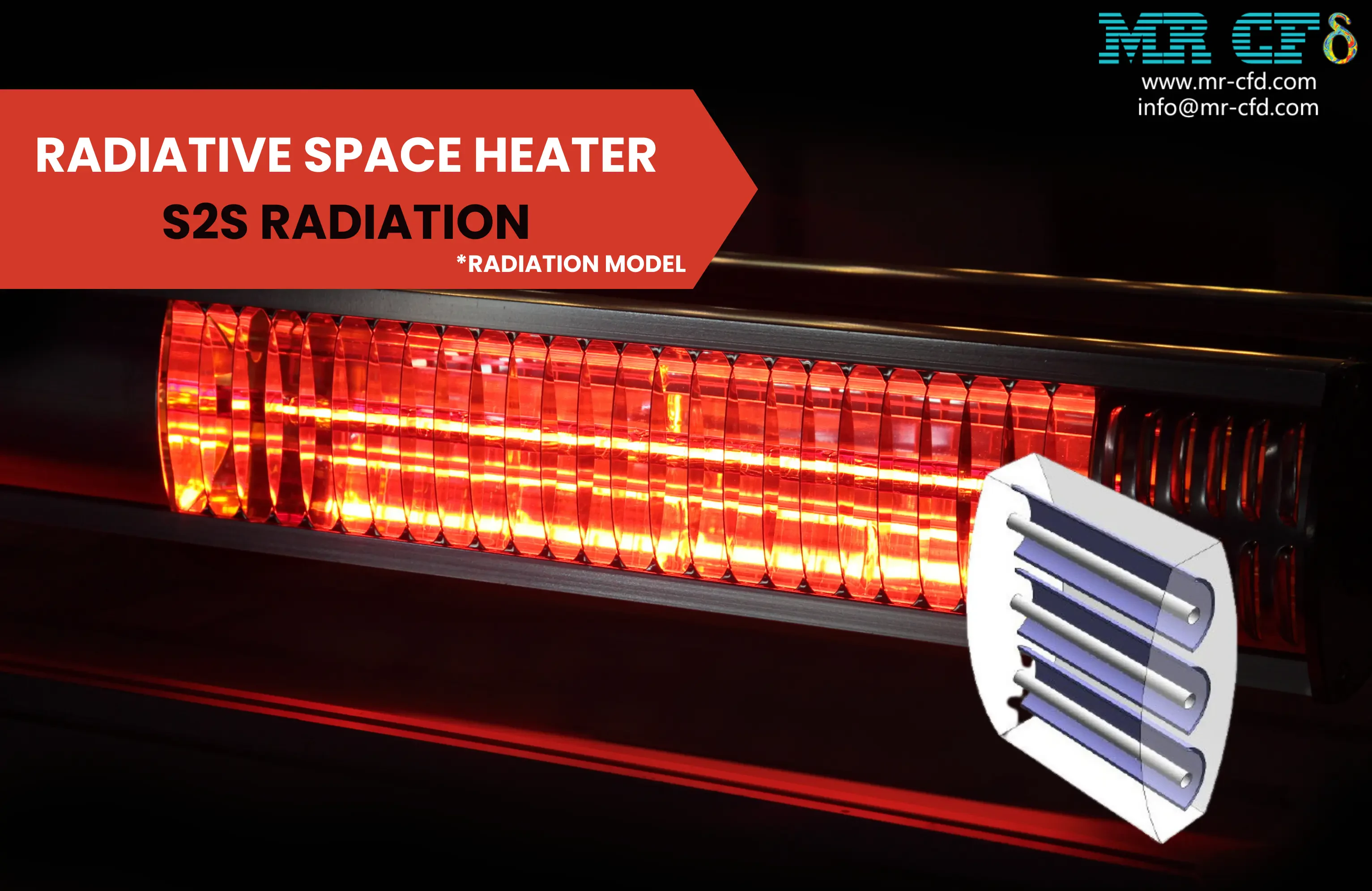
Price: $36
The problem numerically simulates the Radiative space Heater using ANSYS Fluent software. We design the 3-D model with the Design Modeler software. We mesh the model with ANSYS Meshing software, and the element number equals 703545. We use the Surface to Surface Radiation Model (S2S) to define radiation heat transfer.
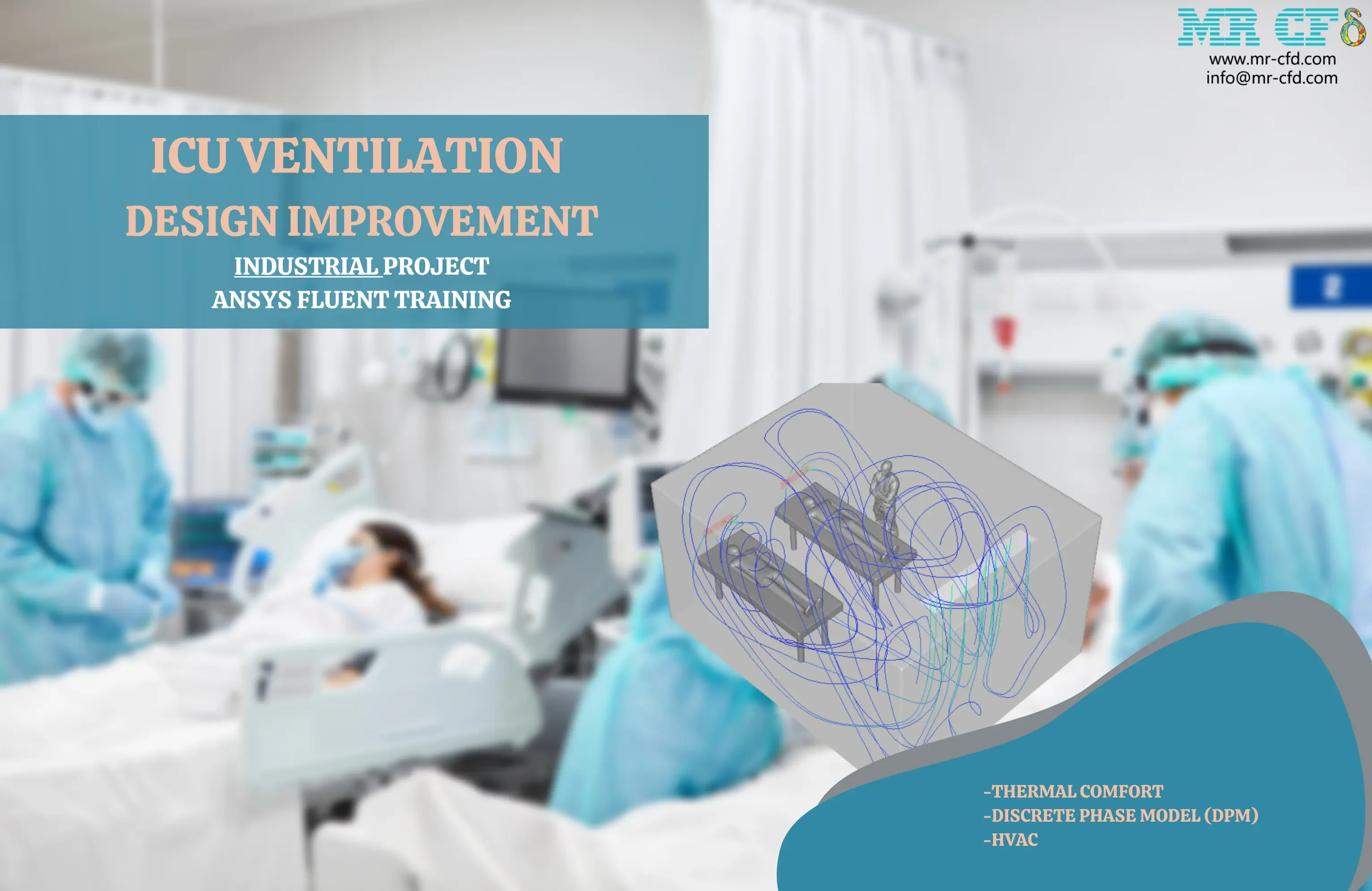
Price: $120
The geometry is designed in Design Modeler & meshed in ANSYS Meshing software. One of the patients suffering from respiratory disease. It is one of our goals to prevent it from dispersion. The one-way discrete Phase Model (DPM) is used to model aerosols. An acceptable thermal comfort is our other concern in this project which is controlled by PPD & PMV factors.
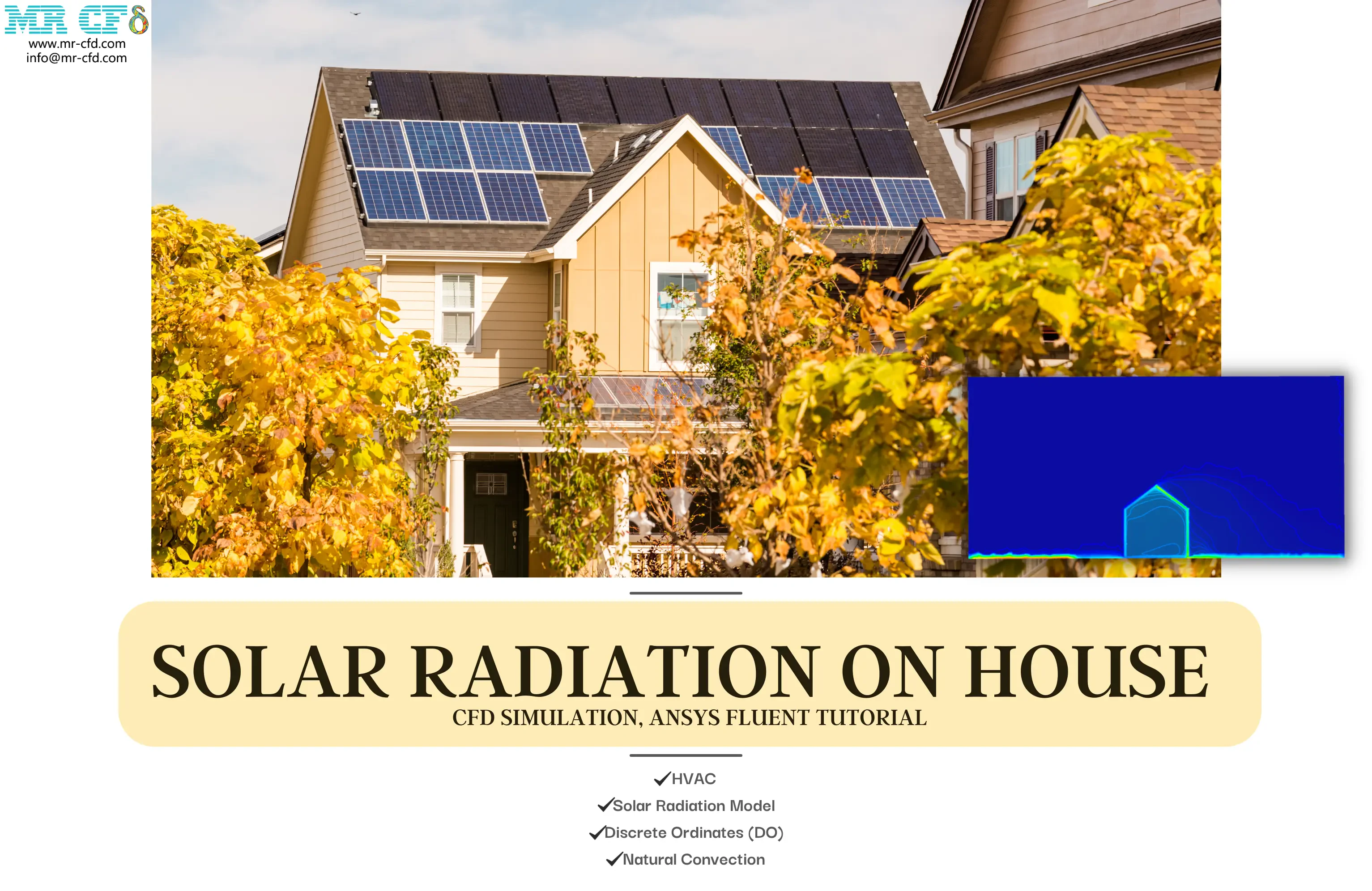
Solar Radiation effect on a House CFD Simulation
Intermediate
Price: $20
The problem numerically simulates solar radiation on a house using ANSYS Fluent software. The model is designed by the Design Modeler software. The Mesh was modeled by ANSYS Meshing software, and the element number equals 696,480. We use Discrete Ordinate Radiation (DO) and Solar Ray Tracing to consider radiation heat transfer. Natural Convection is visible due to the Buoyancy effect.
Price: $99
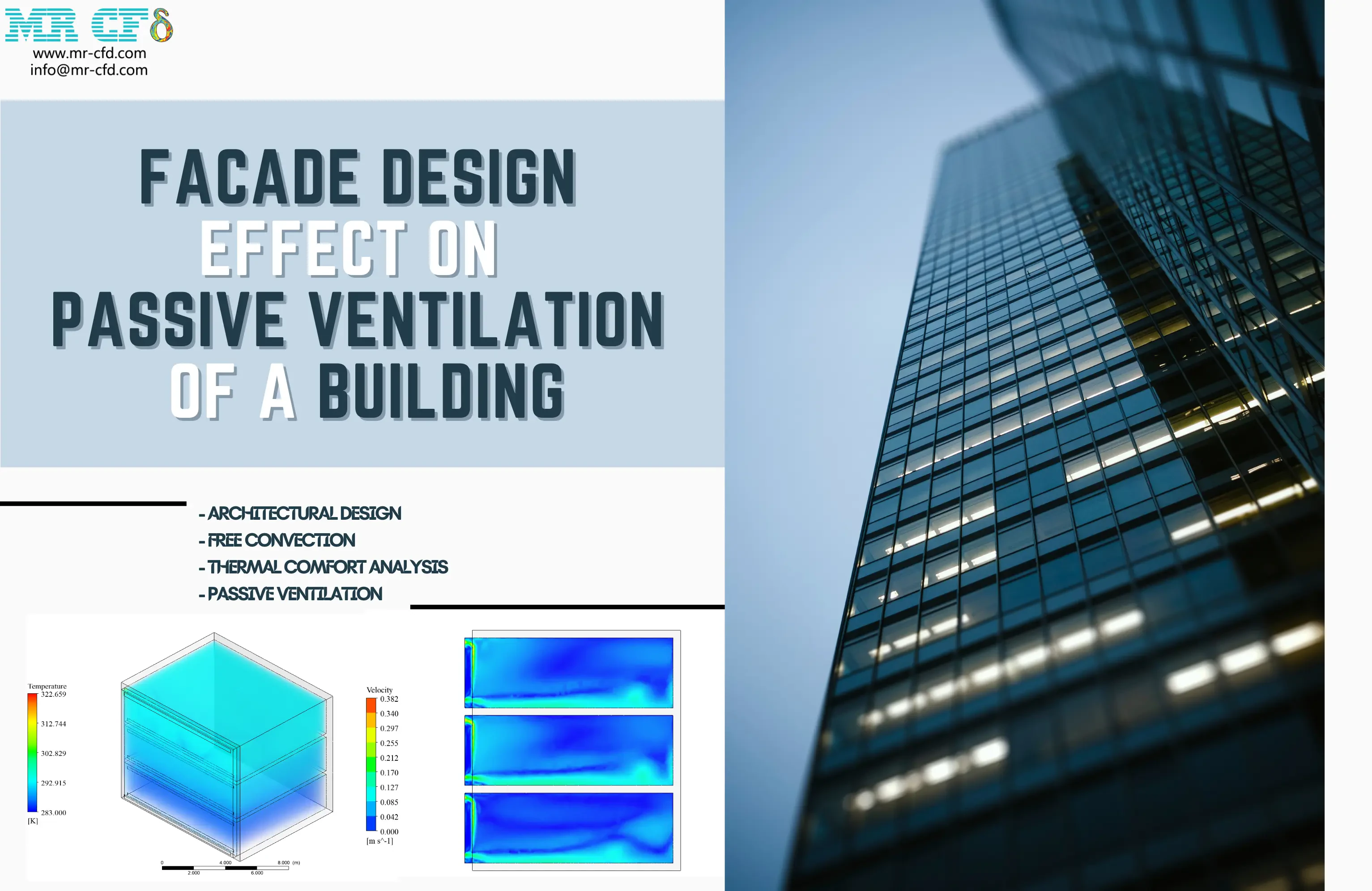
In this project, the effects of façade design on passive ventilation of a building numerically investigated by ANSYS Fluent. Studying thermal condition from energy aspect and ventilation (ACH). Façade design as a passive ventilation system Solar ray tracing effect on heat transfer
Price: $36
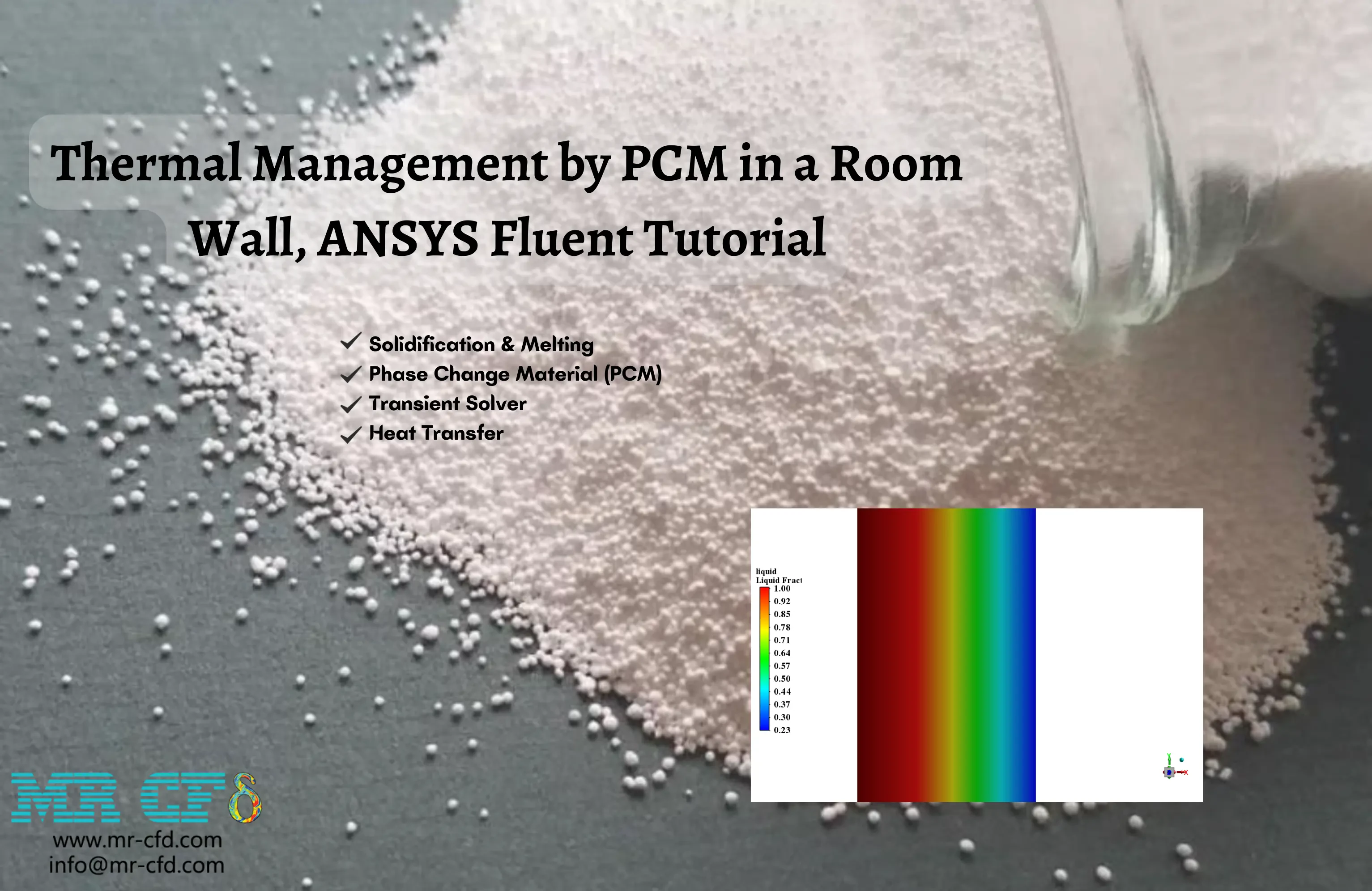
This problem simulates the Wall of a room with Phase Change Material (PCM) by ANSYS Fluent software. The geometry of the present model is drawn by Design Modeler software and then meshed by ANSYS Meshing software. the mesh type is structured and the cell number equals 193,500. the solution is solved transiently. The solidification & Melting model is enabled.
Price: $42
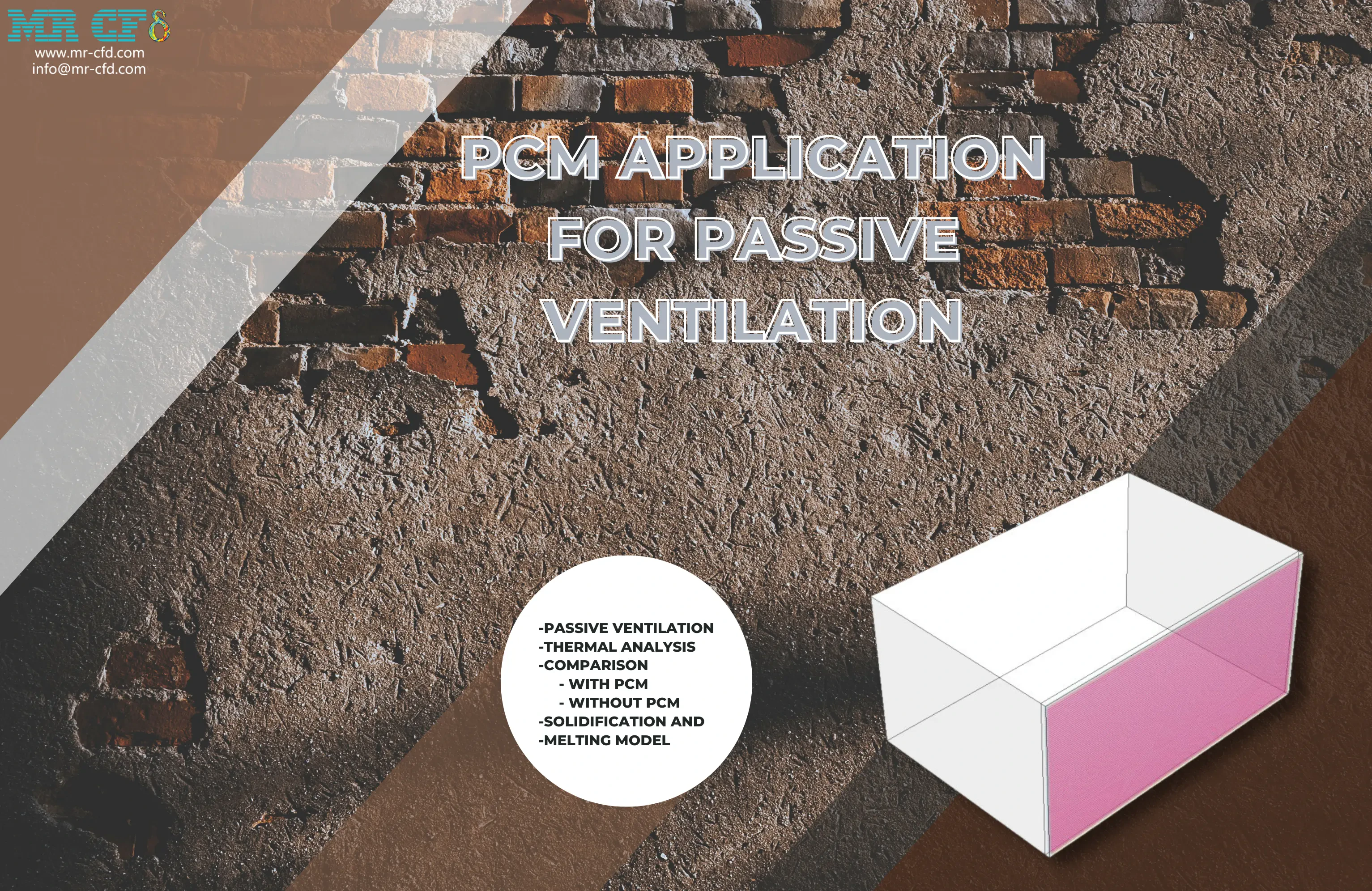
The present CFD Project simulates PCM for Passive Ventilation via ANSYS Fluent software. We modeled the geometry using ANSYS Design modeler software and created the mesh using ANSYS meshing software. The meshing is structured, and the number of cells for the first and second models is 228448 and 241560, respectively. The solidification and Melting Model has been used to define PCMs. Incompressible Ideal Gas has been used to define density changes. The problem is dependent on time and unsteady.
Price: $16
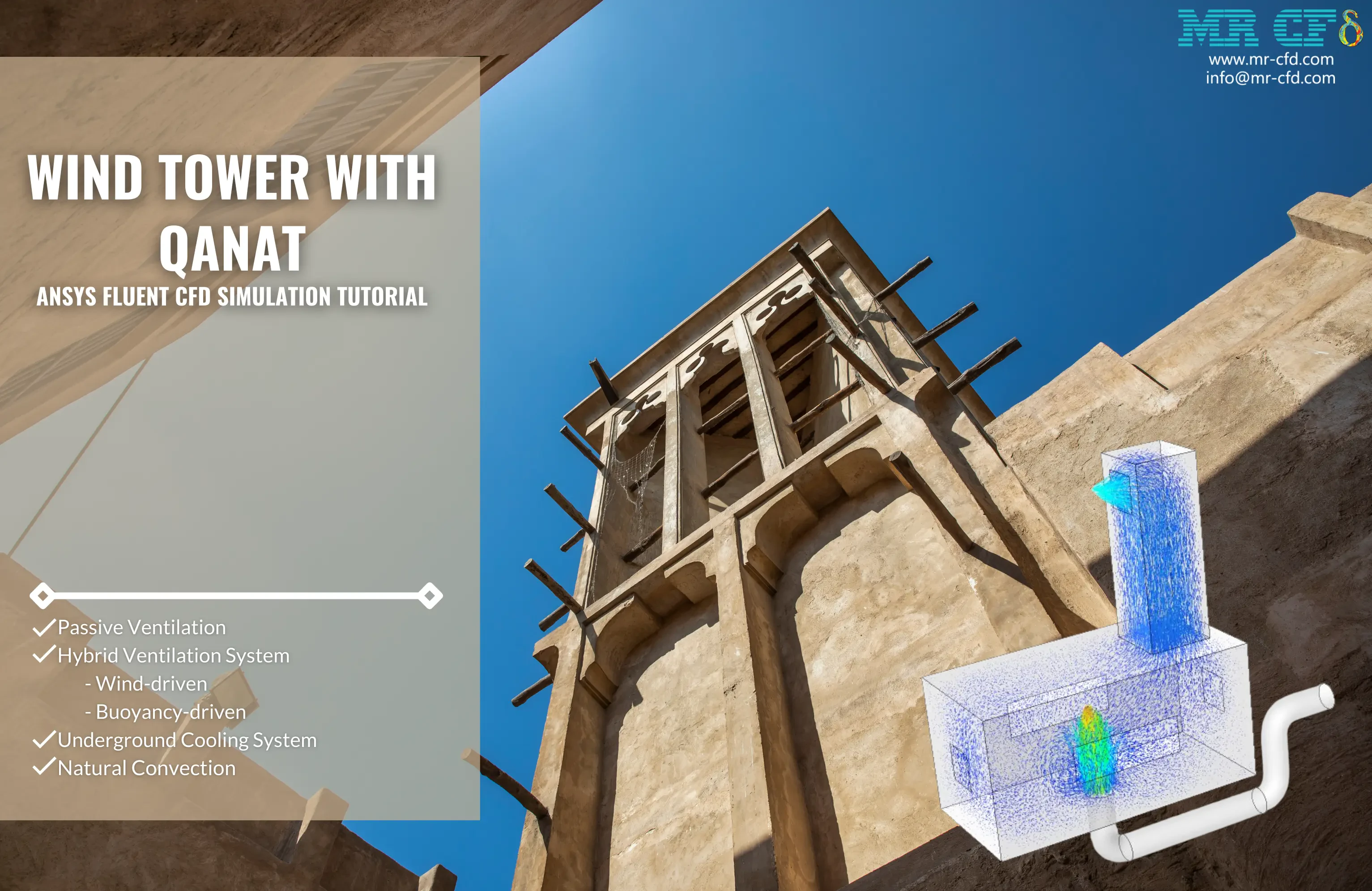
The present CFD Project simulates a Wind Tower with Qanat via ANSYS Fluent software. We modeled the geometry using ANSYS Design modeler software and created the mesh using ANSYS meshing software. The total number of elements is 402,198. Incompressible Ideal Gas has been used to define density changes.
Price: $140
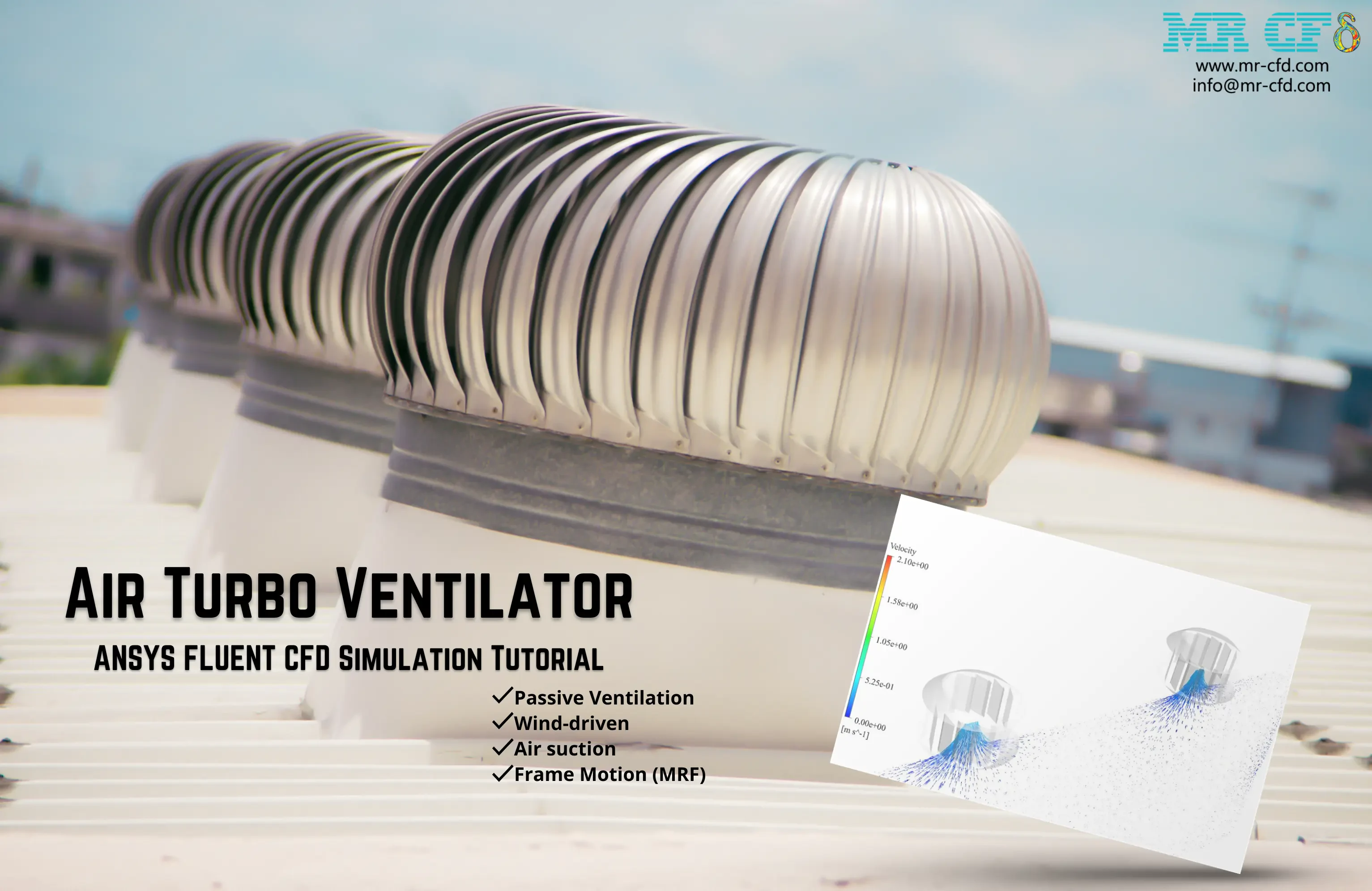
The present CFD project simulates an Air Turbo Ventilator via ANSYS Fluent software. We designed the geometry using ANSYS Design modeler software and created the mesh using ANSYS meshing software. The total number of elements is 2094625. The Frame Motion (MRF) method has been used in Cell Zone Conditions to define rotation.
Complete HVAC CFD Course for Ventilation, Thermal Comfort, and Indoor Airflow Simulation
The Complete HVAC CFD Course: +100 CFD Simulations by ANSYS Fluent is a comprehensive training solution for HVAC engineers, mechanical engineers, universities, professors, companies, institutes, technical managers, and simulation teams that need practical CFD capability for building ventilation, indoor airflow, heating, cooling, thermal comfort, and air quality analysis.
Developed by MR CFD, this course is part of MR CFD’s professional CFD Training Courses and Complete CFD Courses is designed to help learners move beyond scattered tutorials into a complete, structured, project-based HVAC simulation experience. The course is also offered as the HVAC GOLDEN Training Package, giving buyers access to a wide range of real-world HVAC CFD simulations in one comprehensive package.
This complete course covers active ventilation, passive ventilation, hospital ventilation, clean rooms, operating rooms, classrooms, server rooms, computer room air conditioning, greenhouses, façades, radiation, PCM in HVAC, radiant heating, underfloor heating, cooling systems, aerosol transport, virus dispersion, and indoor air quality analysis.
Why Choose This Complete HVAC CFD Course (All in One Course)?
This course is built for buyers who need practical HVAC simulation readiness, not only theoretical knowledge. It helps engineering teams, academic departments, and industrial companies train users faster, reduce design uncertainty, and standardize CFD workflows across HVAC and building airflow projects.
| Business Need | How This Complete CFD Course Solves It |
| Faster HVAC team onboarding | New engineers can learn from complete, pre-built HVAC CFD projects instead of starting from disconnected tutorials. |
| Reduced training cost | One comprehensive course replaces scattered learning resources, repeated internal training, and multiple single-topic tutorials. |
| Practical HVAC project coverage | The course includes ventilation, heating, cooling, thermal comfort, indoor airflow, radiation, PCM, pathogen dispersion, and public-space HVAC cases. |
| Academic teaching support | Professors can use the simulations as practical teaching material for students, interns, and research assistants. |
| Enterprise workflow consistency | Teams can follow proven simulation workflows for HVAC design, troubleshooting, and performance evaluation. |
| Real project readiness | Learners work with applied CFD simulations based on hospitals, classrooms, clean rooms, server rooms, greenhouses, and commercial spaces. |
Complete CFD Training for HVAC Engineering Teams
This course gives your organization a structured path to HVAC CFD mastery. It supports users who need to simulate room airflow, ventilation efficiency, thermal comfort, pathogen dispersion, aerosol transport, heating systems, cooling systems, server room cooling, hospital ventilation, clean room breathing flows, operating room air distribution, classroom air quality, underfloor heating, passive ventilation, solar chimney systems, and radiation effects in building environments.
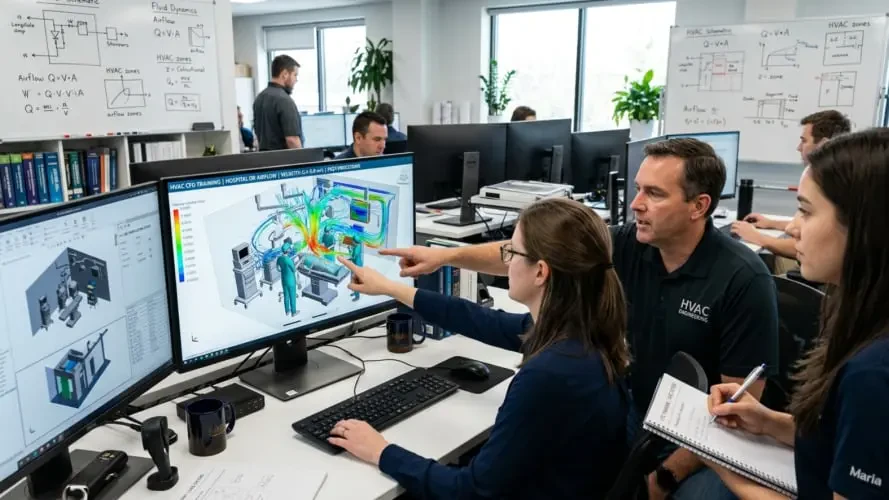
For companies, this complete HVAC CFD course reduces dependency on isolated experts and creates a repeatable training pathway for HVAC engineers, mechanical engineers, CFD specialists, building performance teams, and technical departments. For universities and institutes, it provides ready-to-use simulation projects that can support lectures, laboratories, workshops, research projects, and advanced engineering curricula.
What You Get in This HVAC CFD Course
| Included Asset | Value for the Buyer |
| +100 CFD simulation projects | A comprehensive HVAC engineering CFD library in one course package. |
| Step-by-step tutorials | Practical guidance from geometry creation to final post-processing. |
| Complete simulation workflows | Geometry, meshing, solver setup, results analysis, and engineering interpretation. |
| Advanced HVAC case studies | Coverage of ventilation, heating, cooling, thermal comfort, virus dispersion, radiation, PCM, façades, clean rooms, and public spaces. |
| 1 year of technical support | Direct support from MR CFD experts for course users. |
| 3 months of HPC access | Additional computational resources for selected learning and simulation needs. |
| Regular course enhancements | Continued value through updates for emerging HVAC fields such as underfloor heating, pathogen control, and advanced ventilation systems. |
HVAC CFD Topics Covered in This Complete Course
This complete CFD course covers a broad range of HVAC engineering applications, from ventilation design and indoor airflow to thermal comfort, pathogen dispersion, heating, cooling, radiation, and energy-efficient building systems.
| Training Area | Covered Topics |
| Active ventilation | Engine room ventilation, ship ventilation systems, swamp cooler HVAC, computer room air conditioning, storage container ventilation, miner room ventilation, and fan-assisted airflow. |
| Cooling systems | Spray cooling, swamp cooler cooling, cross ventilation, server room cooling with cabinets, cooling performance studies, and air conditioning systems. |
| Hospital ventilation | Clean room breathing simulations, operating room HVAC, COVID-19 transient breathing, ICU ventilation design improvement, patient airflow studies, and pathogen dispersion control. |
| Virus and aerosol dispersion | Elevator sneeze dispersion, airplane breathing, classroom airborne risk, car cough dispersion, human-exhaled particle distribution, and aerosol transport in indoor environments. |
| Heating systems | Radiator transient heat transfer, underfloor heating, ground heat exchangers, room heaters, single-sided ventilation with heaters, uniform floor heating, and room heat sources. |
| Passive ventilation | Wind towers, windcatchers, double skin façades, solar chimneys, atrium airflow, wind tower with qanat, and natural ventilation strategies. |
| Façade and building envelope | Double skin façades, façade radiation effects, solar exposure, energy-efficient building envelope studies, and façade-based airflow improvement. |
| PCM in HVAC | Air conditioning with PCM, PCM in room walls, radiant solar collectors, microencapsulated PCM for energy saving, and PCM-based building thermal management. |
| Radiation modeling | Discrete Ordinates radiation, P1, S2S, solar radiation at different hours, façade radiation, solar air conditioning, and radiation model comparison. |
| Commercial and public spaces | Restrooms, smoking rooms, outdoor coffee shop misting systems, computer rooms, public ventilation systems, and indoor air quality studies. |
| Greenhouse HVAC | Greenhouse thermal performance, airflow behavior, heating system comparison, humidity analysis, and ventilation design improvement. |
Advanced HVAC CFD Modules Included in this Complete CFD Course
This complete course includes advanced simulation categories that help engineers move beyond basic HVAC setup and into professional-grade building airflow and thermal comfort analysis.
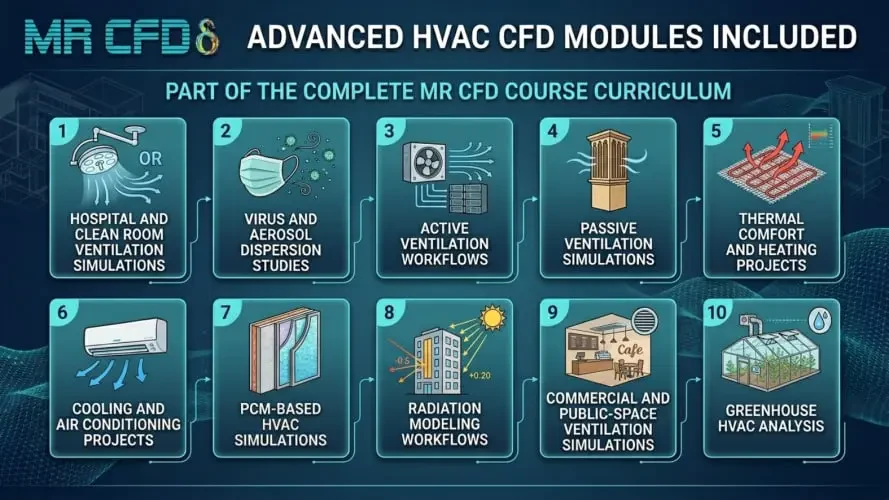
Key advanced modules include:
Hospital and clean room ventilation simulations for operating rooms, ICU airflow, patient breathing, pathogen dispersion, and infection control analysis.
Virus and aerosol dispersion studies for classrooms, elevators, cars, airplanes, clean rooms, and public indoor environments.
Active ventilation workflows for engine rooms, miner rooms, server rooms, storage containers, computer rooms, and fan-assisted ventilation systems.
Passive ventilation simulations for wind towers, windcatchers, double skin façades, solar chimneys, atriums, and natural airflow strategies.
Thermal comfort and heating projects for radiator systems, underfloor heating, uniform floor heating, room heaters, and radiant floor heating validation.
Cooling and air conditioning projects for swamp coolers, spray cooling, server rooms, computer rooms, cross ventilation, and cabinet cooling.
PCM-based HVAC simulations for air conditioning, room wall thermal management, radiant solar collectors, and energy-efficient building systems.
Radiation modeling workflows using DO, P1, S2S, solar radiation, façade radiation, and solar air conditioning cases.
Commercial and public-space ventilation simulations for restrooms, smoking rooms, outdoor cafés, public spaces, and indoor air quality control.
Greenhouse HVAC analysis for airflow, humidity, heating, ventilation design, and thermal performance improvement.
Complete HVAC CFD Course vs Standard Single-Topic HVAC Training
<div class="compare-chart">
| Feature | Complete HVAC CFD Course | Standard Single-Topic HVAC CFD Training |
| Main purpose | Comprehensive CFD training for HVAC engineering and building airflow applications | Focused learning for one narrow HVAC topic |
| Best for | Companies, universities, professors, HVAC teams, building simulation groups, instructors, and advanced engineers | Individual learners studying one specific HVAC workflow |
| Content depth | +100 applied HVAC CFD simulations across ventilation, heating, cooling, radiation, PCM, and air quality | Limited case studies in one application area |
| Project variety | Hospitals, classrooms, clean rooms, server rooms, greenhouses, façades, public spaces, virus dispersion, heating, and cooling | Usually limited to one system type or building scenario |
| Business value | Reduces training cost, accelerates onboarding, and standardizes team capability | Builds knowledge in a specific technical niche |
| Purchase motivation | Complete HVAC CFD capability building | Individual skill improvement |
</div>
Who Should Buy This Complete HVAC CFD Course?
This course is ideal for HVAC engineers, mechanical engineers, building performance specialists, CFD analysts, university professors, research institutes, architectural engineering teams, facility design consultants, technical managers, CEOs, professional instructors, and advanced engineering practitioners.
It is especially valuable for organizations that want to train multiple users, reduce repeated onboarding, support academic programs, standardize CFD workflows, and improve internal simulation capability across HVAC, building airflow, thermal comfort, and indoor air quality applications.
Business Benefits of Buying This Complete HVAC CFD Course
| ROI Driver | Business Impact |
| Faster onboarding | New engineers become productive sooner on HVAC CFD projects. |
| Reduced external training dependency | Teams can learn from a complete internal CFD training resource. |
| Better workflow consistency | Engineers follow proven simulation workflows instead of scattered tutorials. |
| Lower project risk | Teams learn from pre-built, practical HVAC engineering examples. |
| Stronger academic outcomes | Instructors can assign realistic HVAC CFD projects for ventilation, heating, cooling, and indoor air quality. |
| Faster design improvement | Teams can evaluate airflow, thermal comfort, pathogen dispersion, server cooling, and ventilation strategies more efficiently. |
| Higher long-term value | One complete course supports repeated training across departments, students, interns, and new employees. |
Why This Complete CFD Course Is Built for Direct Purchase
When your team needs serious CFD capability in HVAC engineering, buying isolated tutorials one by one creates gaps, duplicated effort, and inconsistent learning outcomes. This complete course removes that friction by giving you a structured HVAC simulation library in one purchase.
You get practical training built around real engineering applications, including hospital ventilation, classroom airflow, virus dispersion, operating rooms, clean rooms, server room cooling, passive ventilation, active ventilation, PCM systems, radiation, heating, cooling, façades, greenhouses, and public-space airflow. That makes this course a strong choice for buyers who want immediate access to a deep, organized, and commercially valuable CFD learning system.
Final Conversion Section
Invest in the HVAC GOLDEN Training Package: +100 CFD Simulations by ANSYS Fluent and give your team a complete HVAC CFD training system built for advanced industrial, commercial, academic, and research applications.
Whether you manage a university lab, a corporate CFD department, an HVAC design team, a building performance group, a facility engineering department, or a technical training center, this course helps you reduce training time, improve simulation quality, and build long-term internal expertise.
Instead of purchasing separate tutorials and managing disconnected learning materials, choose one complete CFD course that delivers depth, breadth, technical support, HPC access, and practical project readiness in a single solution.
FAQ for Complete HVAC CFD Course
What is included in the Complete HVAC CFD Course?
The course includes +100 CFD simulation projects covering active ventilation, passive ventilation, hospital ventilation, clean rooms, operating rooms, classrooms, server rooms, heating, cooling, PCM, radiation, façades, virus dispersion, and indoor air quality.
Who is this HVAC CFD course designed for?
This course is designed for HVAC engineers, mechanical engineers, CFD specialists, university professors, building simulation teams, research institutes, technical managers, companies, and advanced users who need practical CFD training for HVAC applications.
Is this course suitable for company-wide HVAC CFD training?
Yes. This complete CFD course is suitable for team training because it provides a large library of practical HVAC simulations that help standardize workflows, reduce onboarding time, and improve project readiness.
Can university professors use this course for teaching HVAC simulation?
Yes. Professors and instructors can use the course as a ready-made library of practical HVAC CFD case studies for lectures, laboratories, assignments, workshops, research projects, and advanced student training.
Does this course cover hospital ventilation and clean room CFD?
Yes. The course includes hospital airflow, clean room breathing, operating room HVAC, ICU ventilation design, patient breathing simulations, and pathogen dispersion control projects.
Does this course include virus and aerosol dispersion simulations?
Yes. It includes simulations for sneeze dispersion in elevators, breathing in airplanes, cough dispersion in cars, classroom airborne risk, clean room breathing, and human-exhaled particle distribution.
Are heating and cooling systems included in this HVAC CFD course?
Yes. The course covers radiator heating, underfloor heating, ground heat exchangers, room heaters, swamp cooling, spray cooling, server room cooling, computer room air conditioning, and cross ventilation.
Does this course cover passive ventilation and façade simulations?
Yes. It includes wind towers, windcatchers, double skin façades, solar chimneys, atrium airflow, façade radiation, wind tower with qanat, and natural ventilation strategies.
Is technical support included after purchasing the course?
Yes. Buyers receive 1 year of non-limited technical support from MR CFD experts, helping learners and teams resolve technical questions related to the course simulations.
Why should I buy this complete CFD course instead of separate HVAC tutorials?
Buying this complete CFD course gives you a broader, more organized, and more cost-effective training solution. It supports team-wide learning, reduces repeated training costs, and gives access to a comprehensive HVAC CFD simulation library in one purchase.