

CFD Beginner Courses
Here's every CFD online course in the Beginner level.
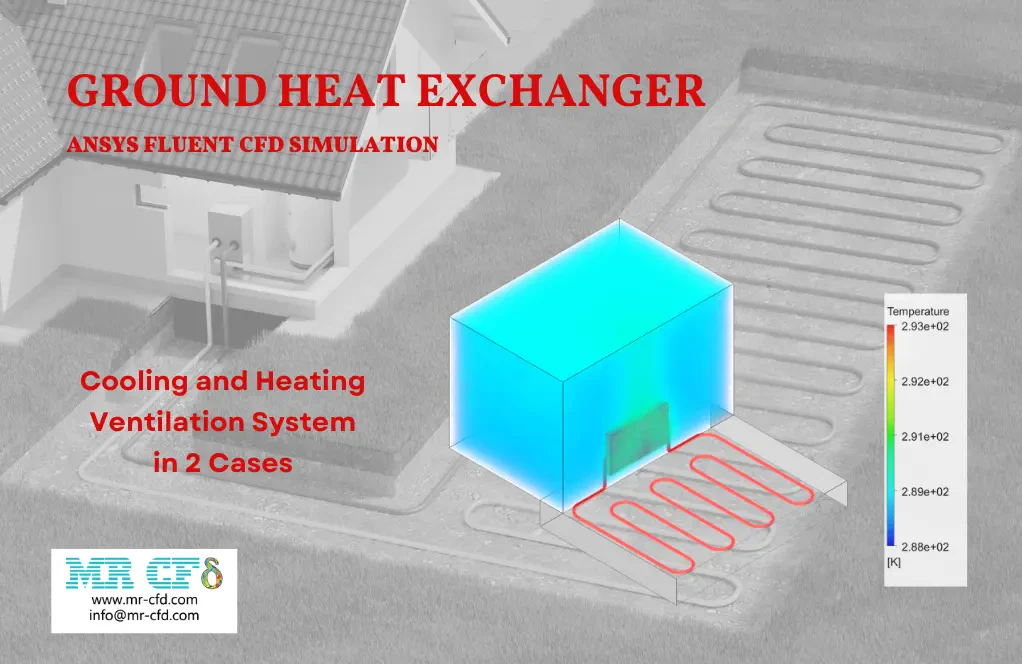
Ground Heat Exchanger, ANSYS Fluent CFD Simulation
Beginner, Intermediate
Price: $100
This product numerically simulates a Ground Heat Exchanger using ANSYS Fluent software. We designed the 3-D model using the Design Modeler software. We meshed the model with ANSYS Meshing software; the element numbers are 3060397. We performed the present simulation in two cases, including cooling and heating.
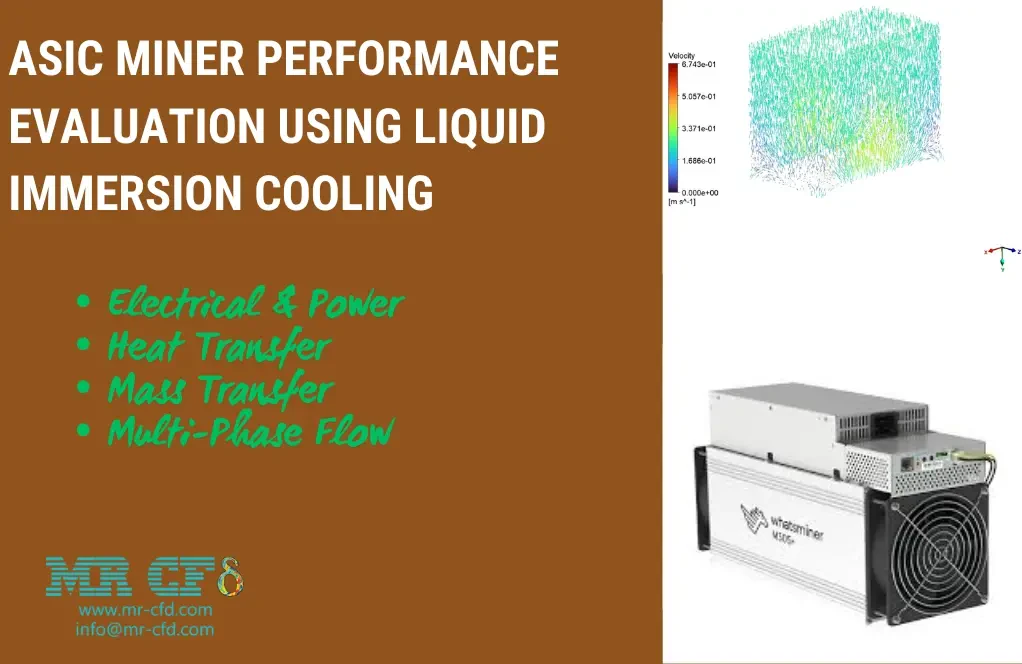
ASIC Miner Performance Evaluation Using Liquid Immersion Cooling
Beginner, Intermediate
Price: $18
The problem numerically simulates the performance of single-phase immersion cooling using ANSYS Fluent software. We design the 3-D model by the Space claim software. We Mesh the model by ANSYS Meshing software, and the element number equals1,591,373.. We perform this simulation as unsteady (Transient). We use the VOF Multi-Phase model to define Mass Transfer in the form of Evaporation-Condensation.
Fluent Meshing Training Course
Beginner, Intermediate, Advanced
Price: Free
Master ANSYS Fluent Meshing with this comprehensive course covering advanced techniques for creating high-quality meshes for complex CFD simulations. Learn structured and unstructured meshing methods, boundary layer refinement, mesh quality improvement, and workflow optimization through practical examples.
ANSYS Fluent Simulation Projects [FREE] Real-World CFD Simulation Projects
Beginner, Intermediate
Price: Free
Dive into 39 free, real-world CFD simulation projects covering heat transfer, aerodynamics, and multiphase flows using the complete Ansys pipeline—from DesignModeler and SpaceClaim geometry to Fluent setup and CFD-Post analysis. If you need a structured foundation before tackling these complex exercises, master the core workflow with our guided ANSYS Fluent beginner project training and buy for $9 to launch your applied CFD journey today!
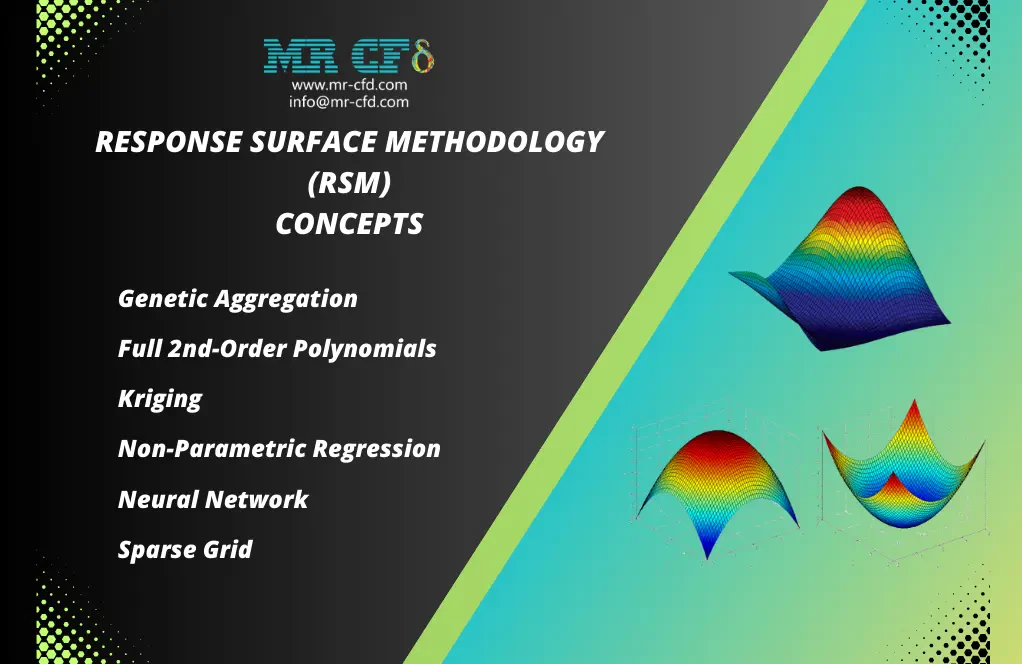
Response Surface Methodology (RSM) Concepts, Optimization by ANSYS Fluent
Beginner, Intermediate, Advanced
Price: Free
Introduction to the Response Surface Methodology (RSM) in ANSYS Fluent software Introduction to the Genetic Aggregation Introduction to the Full 2nd-Order Polynomials Introduction to the Kriging Introduction to the Non-Parametric Regression Introduction to the Neural Network Introduction to the Sparse Grid
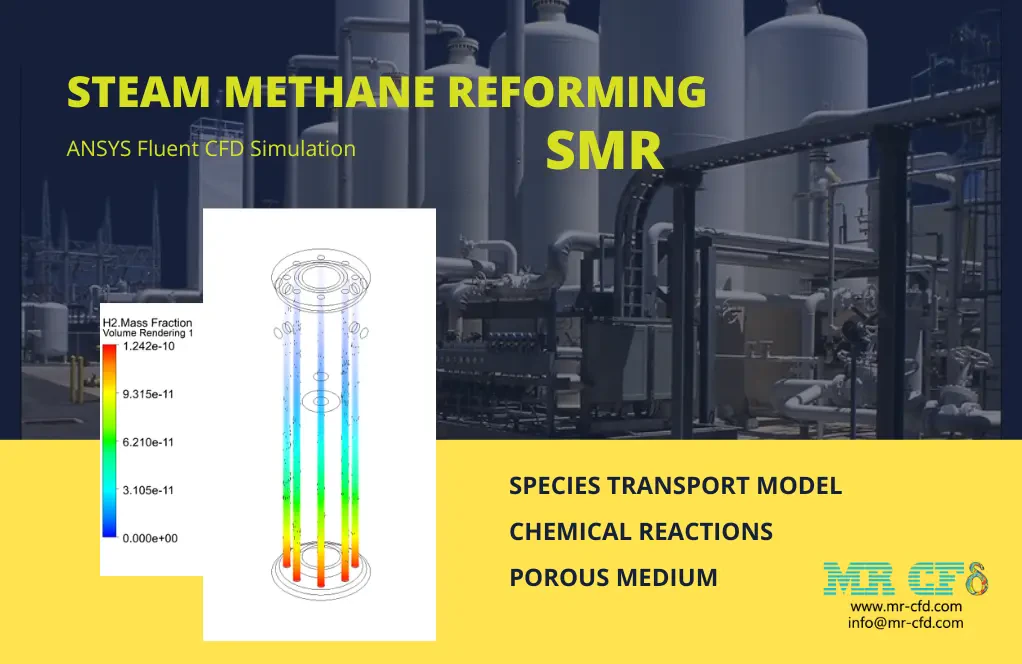
Steam Methane Reforming, SMR, ANSYS Fluent CFD Simulation
Beginner, Intermediate
Price: $24
This product numerically simulates the Steam Methane Reforming (SMR) using ANSYS Fluent software. We design the 3-D model using the Design Modeler software. We mesh the model with ANSYS Meshing software; the element numbers are 1651814. We use the Species Transport model to define the chemical reactions.
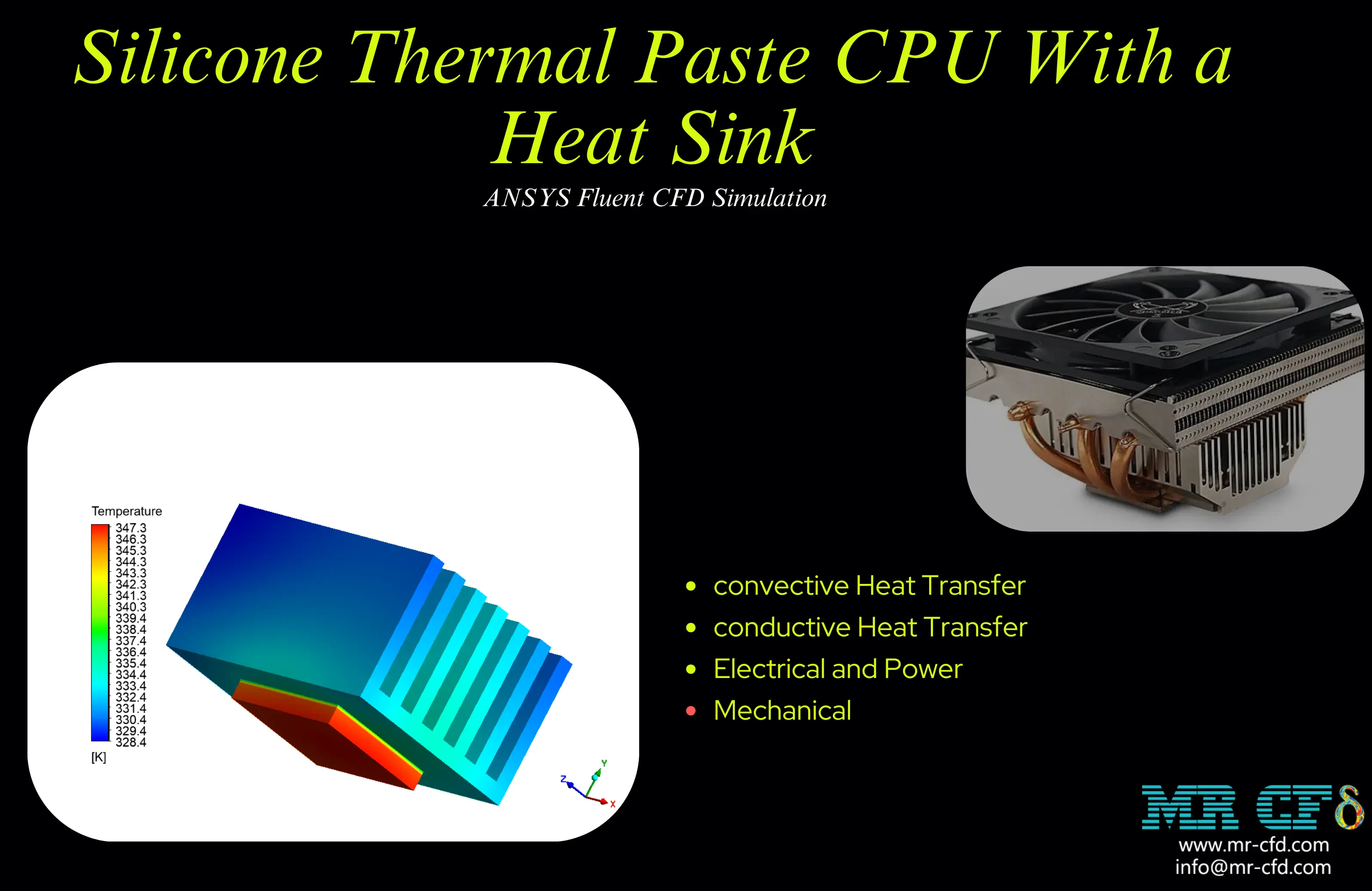
Silicone Thermal Paste CPU with a Heat Sink CFD Simulation by ANSYS Fluent
Beginner, Intermediate
Price: $8
Simulate forced convective cooling of a heat sink to dissipate 100 W of thermal power from a CPU with silicone thermal paste. Copper plate, silicone thermal paste, and aluminum heat sink with seven fins. Forced air flow at 7 m/s removes thermal energy through convection. CFD simulation using the k-ω SST turbulence model in ANSYS Fluent. The model was designed in Design Modeler for simulation. The simulation uses 1,477,676 mesh elements in Fluent Meshing for accuracy. Heat sink assembly ensures efficient cooling and maintains safe operating temperatures for the CPU.

CFD Algorithms: ANSYS Fluent Different Capabilities
Beginner, Intermediate, Advanced
Price: Free
Comprehensive analysis of different CFD algorithms using a variable-width channel case study (5cm inlet, 10cm outlet, 20cm length). Pressure-based solvers (SIMPLE, SIMPLEC, PISO, Coupled) compared with density-based solvers (Roe, AUSM) for various flow conditions. SIMPLE algorithm excels in low-speed flows, while Coupled solver shows superior performance across all speed regimes. Density-based solvers (Roe, AUSM) perform best in high-speed and supersonic flows but struggle with low Mach numbers. Under-relaxation factors significantly impact convergence stability and simulation accuracy. Optimal solver selection depends on flow regime: low subsonic (SIMPLE/SIMPLEC), transonic/supersonic (Coupled/AUSM), hypersonic (Roe/AUSM).
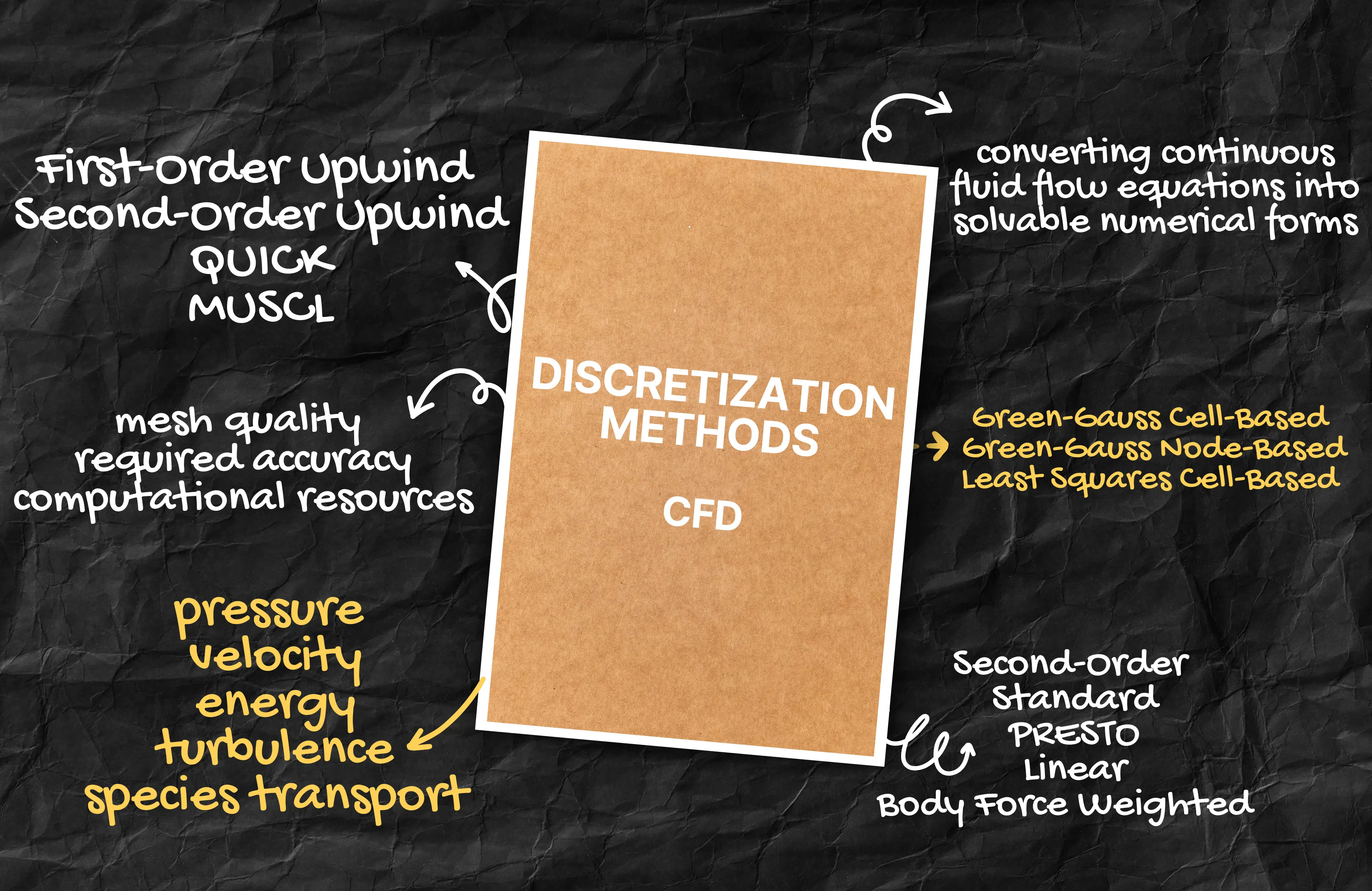
Discretization Methods in CFD
Beginner, Intermediate, Advanced
Price: Free
Discretization methods in ANSYS Fluent are crucial techniques for converting continuous fluid flow equations into solvable numerical forms. Three main gradient calculation methods are available: Green-Gauss Cell-Based, Green-Gauss Node-Based, and Least Squares Cell-Based. Pressure discretization offers five options: Second-Order, Standard, PRESTO, Linear, and Body Force Weighted schemes. Momentum discretization includes First-Order Upwind, Second-Order Upwind, QUICK, and MUSCL schemes. Choice of method depends on mesh quality, required accuracy, and available computational resources. These methods apply to various parameters including pressure, velocity, energy, turbulence, and species transport equations.