

MR CFD’s All Courses
Here's every Course from Basic to Advanced, that can boost your skills and career.

Price: $150
This product numerically simulates the Electroplating using ANSYS Fluent software. We design the 3-D model using the Design Modeler software. We mesh the model with ANSYS Meshing software; the element numbers are 89115. We use the Species Transport model to define the electrochemical reactions. We use the Potential/Electrochemistry model to apply the potential equations. The run calculation is in an unsteady state (transient).
Price: $64
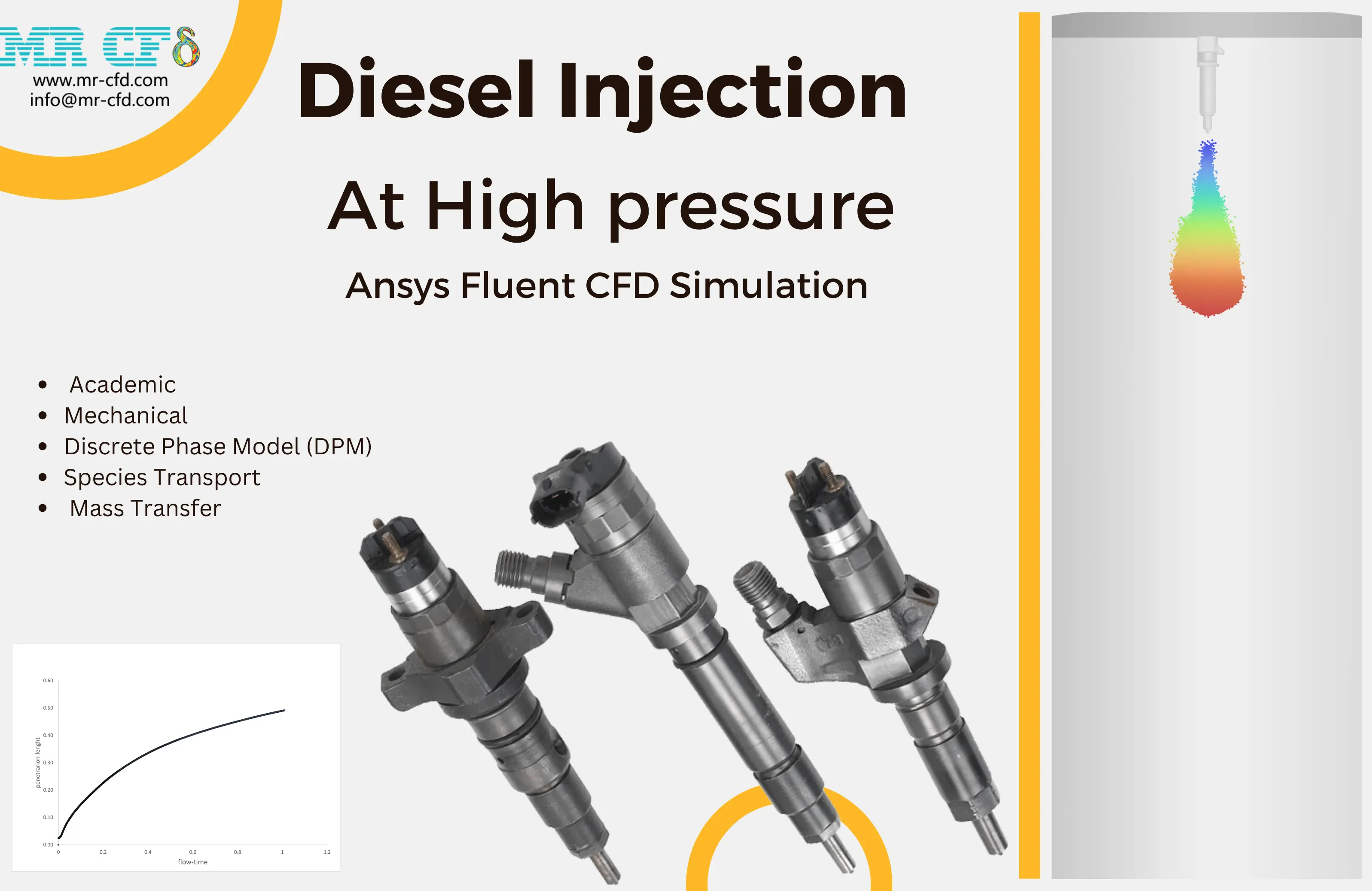
The project focuses on simulating diesel injection at high pressure under varying environmental pressures. The primary objectives are to analyze the diesel spray's penetration length The simulation employs a two-way Discrete Phase Model (DPM) to capture the interaction between the diesel droplets and the surrounding air the geometry of the diesel injector and combustion chamber was created in SpaceClaim, and The mesh was generated using ANSYS Meshing. The final mesh comprises 1,250,256 cells, balancing computational accuracy and efficiency.
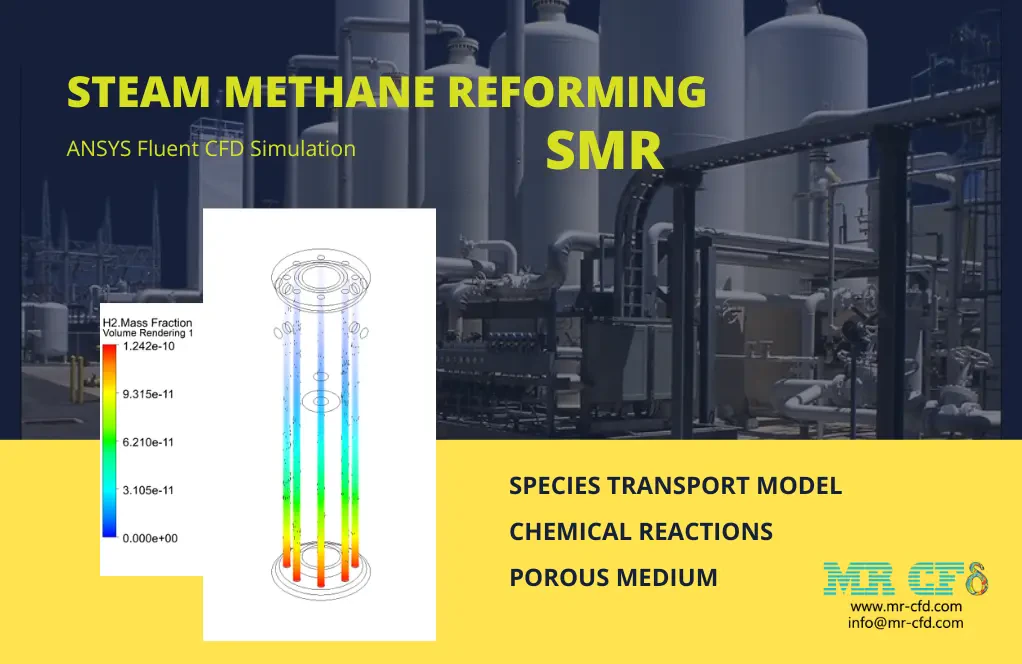
Steam Methane Reforming, SMR, ANSYS Fluent CFD Simulation
Beginner, Intermediate
Price: $24
This product numerically simulates the Steam Methane Reforming (SMR) using ANSYS Fluent software. We design the 3-D model using the Design Modeler software. We mesh the model with ANSYS Meshing software; the element numbers are 1651814. We use the Species Transport model to define the chemical reactions.
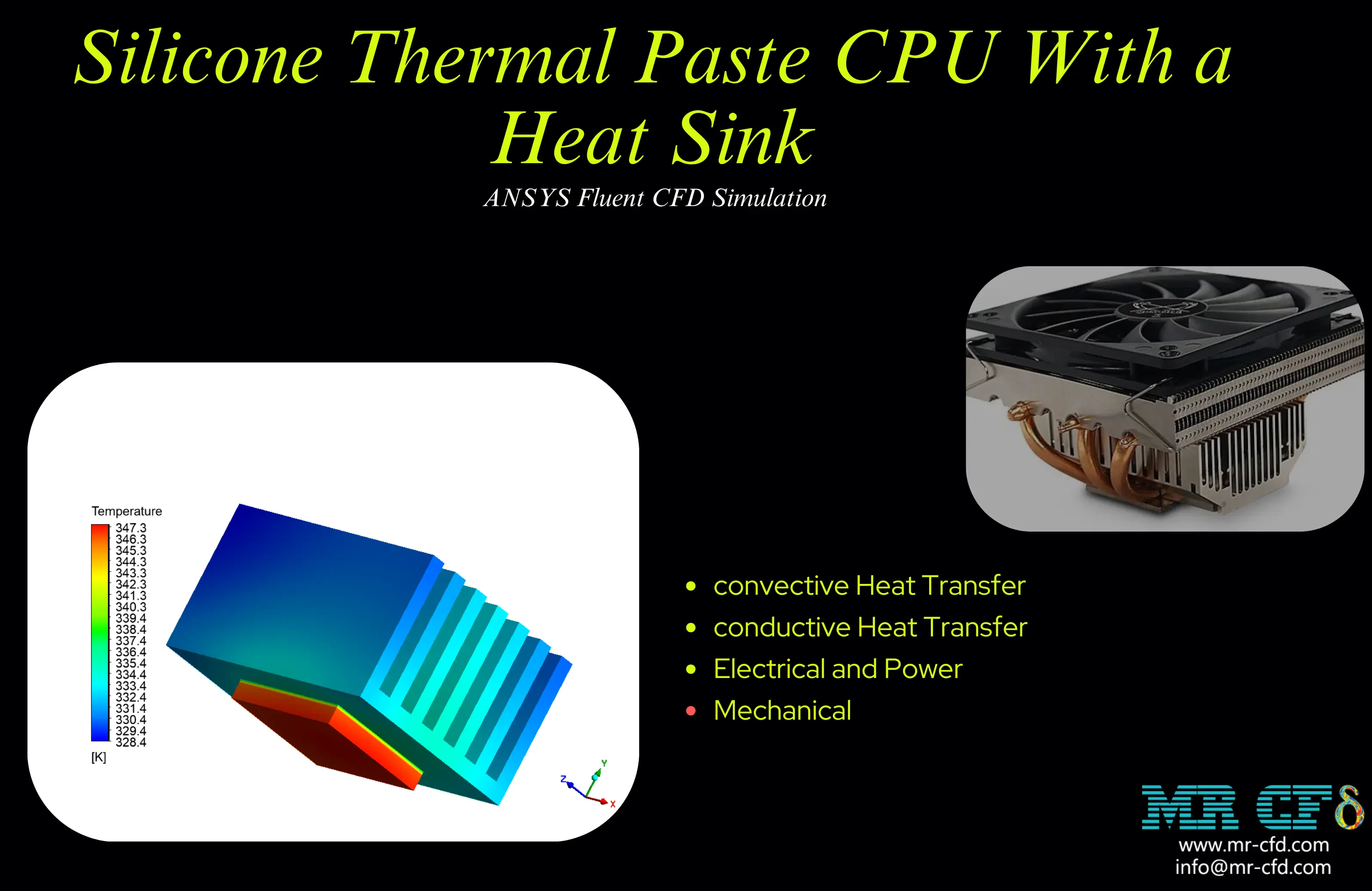
Silicone Thermal Paste CPU with a Heat Sink CFD Simulation by ANSYS Fluent
Beginner, Intermediate
Price: $8
Simulate forced convective cooling of a heat sink to dissipate 100 W of thermal power from a CPU with silicone thermal paste. Copper plate, silicone thermal paste, and aluminum heat sink with seven fins. Forced air flow at 7 m/s removes thermal energy through convection. CFD simulation using the k-ω SST turbulence model in ANSYS Fluent. The model was designed in Design Modeler for simulation. The simulation uses 1,477,676 mesh elements in Fluent Meshing for accuracy. Heat sink assembly ensures efficient cooling and maintains safe operating temperatures for the CPU.
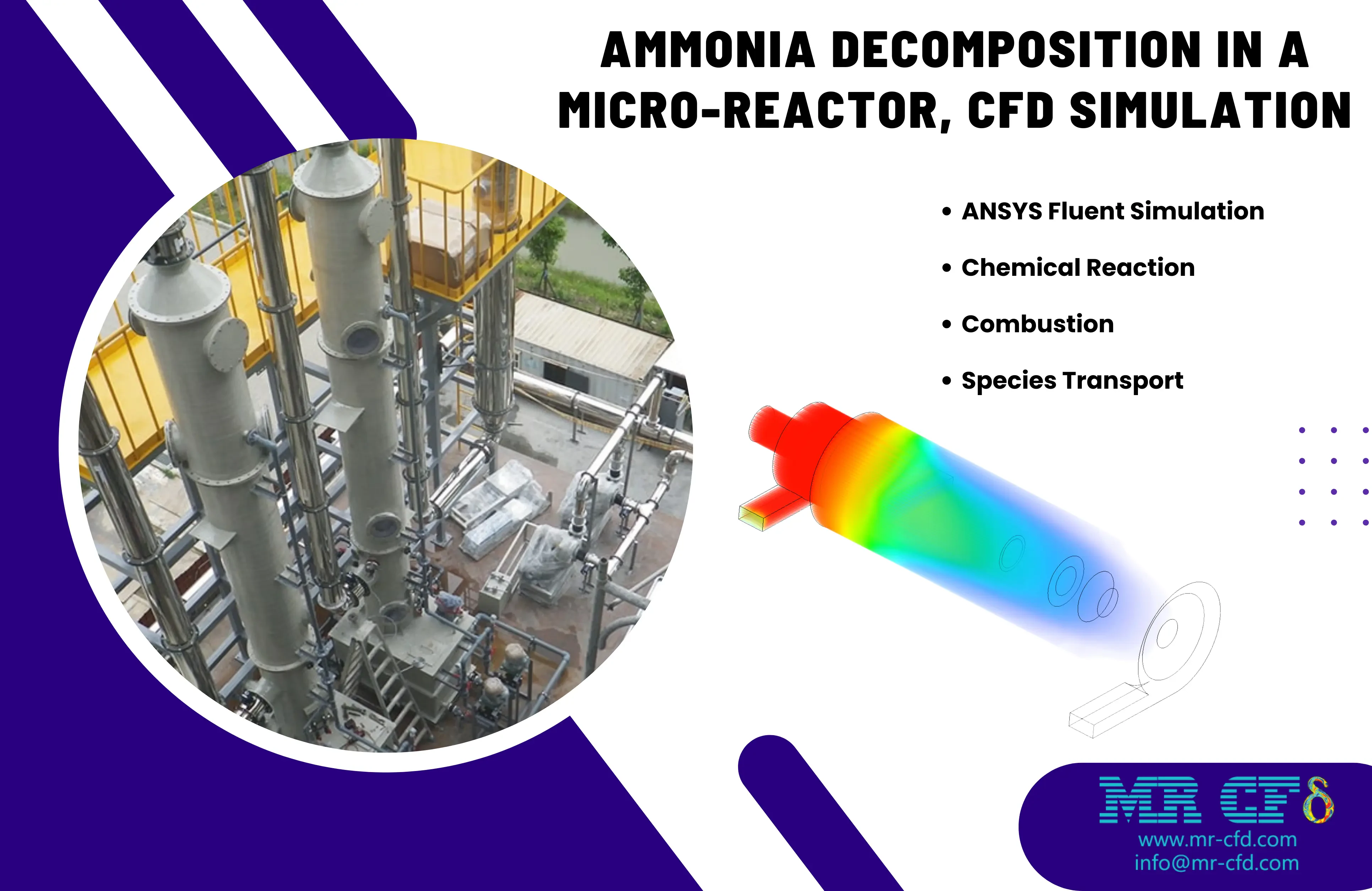
Ammonia Decomposition in a Micro-Reactor, CFD Simulation
Intermediate, Advanced
Price: $14
This report presents a simulation which investigates the production of hydrogen gas from ammonia, using the heat of the propane-air reaction. The ammonia conversion rate and the overall system efficiency were calculated. The geometry of the ammonia decomposition micro-combustor was created using ANSYS SpaceClaim software. A high-quality tetrahedron elements mesh was generated using ANSYS Meshing software. Appropriate species transport settings and boundary conditions were applied to correctly simulate the rate of ammonia decomposition.
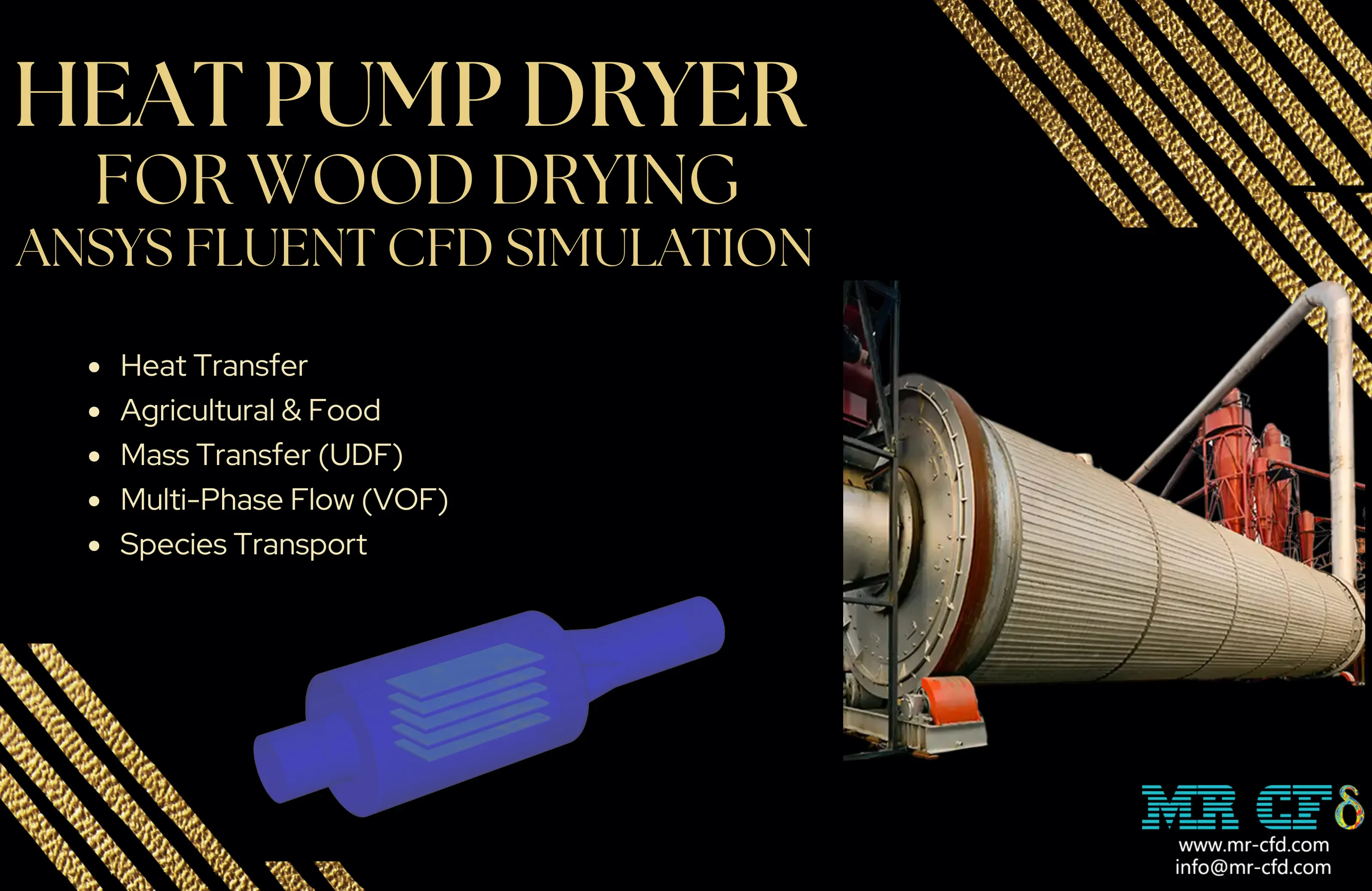
Heat Pump Dryer For Wood Drying, Ansys Fluent CFD Simulation
Intermediate, Advanced
Price: $360
This project aimed to simulate the performance of a heat pump dryer designed for drying wet wood volatiles. The Volume of Fluid (VOF) method was employed to capture the interaction between air and liquid water phases. Species Transport Model was activated to simulate the mass transfer associated with water evaporation. A User-Defined Function (UDF) was developed to represent the evaporation process accurately.

CFD Algorithms: ANSYS Fluent Different Capabilities
Beginner, Intermediate, Advanced
Price: Free
Comprehensive analysis of different CFD algorithms using a variable-width channel case study (5cm inlet, 10cm outlet, 20cm length). Pressure-based solvers (SIMPLE, SIMPLEC, PISO, Coupled) compared with density-based solvers (Roe, AUSM) for various flow conditions. SIMPLE algorithm excels in low-speed flows, while Coupled solver shows superior performance across all speed regimes. Density-based solvers (Roe, AUSM) perform best in high-speed and supersonic flows but struggle with low Mach numbers. Under-relaxation factors significantly impact convergence stability and simulation accuracy. Optimal solver selection depends on flow regime: low subsonic (SIMPLE/SIMPLEC), transonic/supersonic (Coupled/AUSM), hypersonic (Roe/AUSM).

Price: Free
A fundamental CFD case study analyzing fluid flow inside a cavity using SIMPLE algorithm and second-order discretization schemes. Problem features water flow with a moving top lid (U=1 m/s) and no-slip conditions on other walls. Simulation implemented through MATLAB code, demonstrating practical application of Navier-Stokes equations and pressure-velocity coupling. Study explores effects of under-relaxation factors, grid size, and various boundary conditions on flow patterns. Results show formation of distinct vortices under different cavity dimensions and boundary conditions. Case serves as an excellent example for understanding fundamental CFD concepts and numerical methods in fluid dynamics.
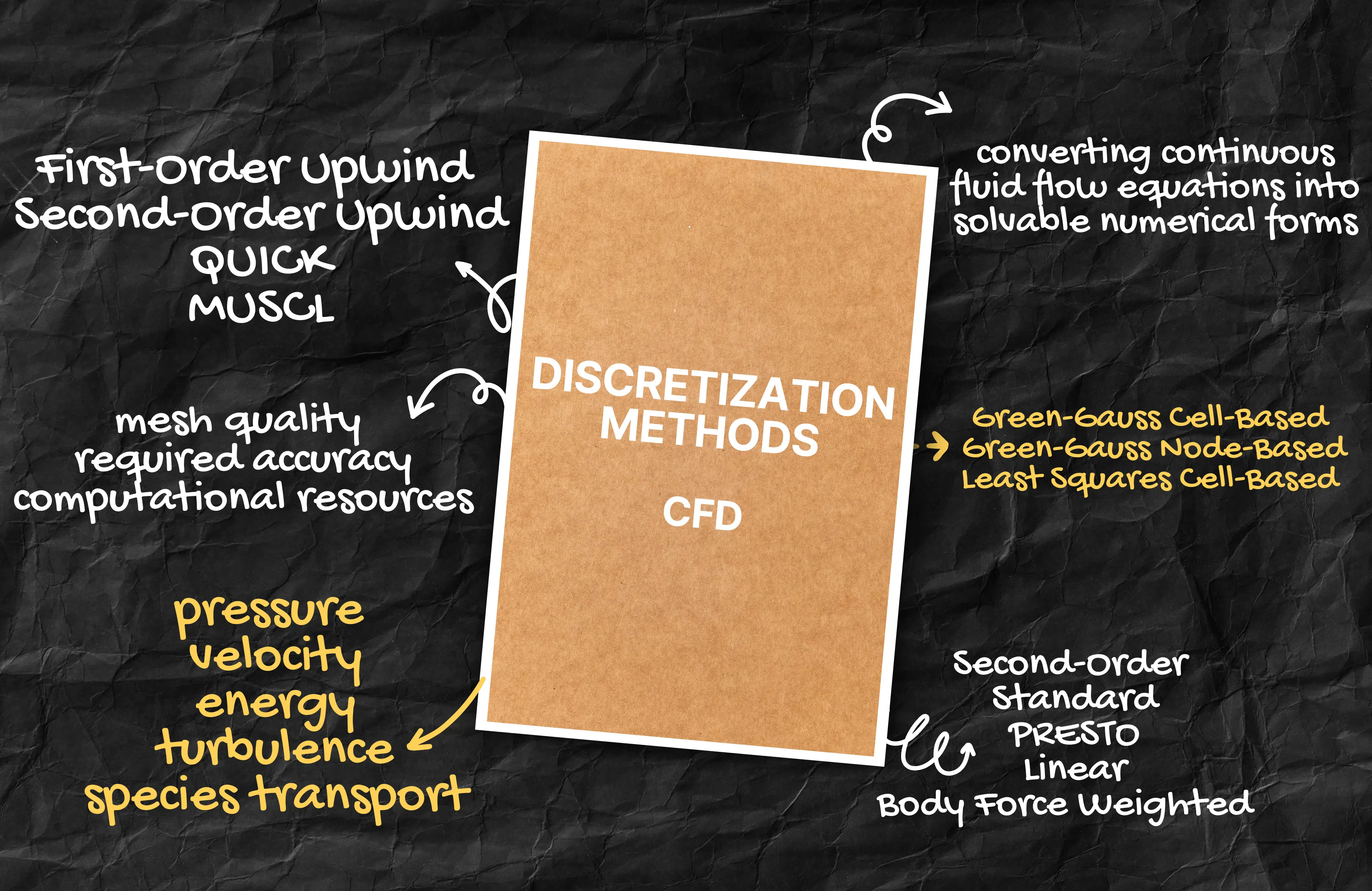
Discretization Methods in CFD
Beginner, Intermediate, Advanced
Price: Free
Discretization methods in ANSYS Fluent are crucial techniques for converting continuous fluid flow equations into solvable numerical forms. Three main gradient calculation methods are available: Green-Gauss Cell-Based, Green-Gauss Node-Based, and Least Squares Cell-Based. Pressure discretization offers five options: Second-Order, Standard, PRESTO, Linear, and Body Force Weighted schemes. Momentum discretization includes First-Order Upwind, Second-Order Upwind, QUICK, and MUSCL schemes. Choice of method depends on mesh quality, required accuracy, and available computational resources. These methods apply to various parameters including pressure, velocity, energy, turbulence, and species transport equations.