

MR CFD’s All Courses
Here's every Course from Basic to Advanced, that can boost your skills and career.

Fluent Meshing Training Course
Beginner, Intermediate, Advanced
Price: Free
Master ANSYS Fluent Meshing with this comprehensive course covering advanced techniques for creating high-quality meshes for complex CFD simulations. Learn structured and unstructured meshing methods, boundary layer refinement, mesh quality improvement, and workflow optimization through practical examples.
ANSYS Fluent Simulation Projects [FREE] Real-World CFD Simulation Projects
Beginner, Intermediate
Price: Free
Dive into 39 free, real-world CFD simulation projects covering heat transfer, aerodynamics, and multiphase flows using the complete Ansys pipeline—from DesignModeler and SpaceClaim geometry to Fluent setup and CFD-Post analysis. If you need a structured foundation before tackling these complex exercises, master the core workflow with our guided ANSYS Fluent beginner project training and buy for $9 to launch your applied CFD journey today!
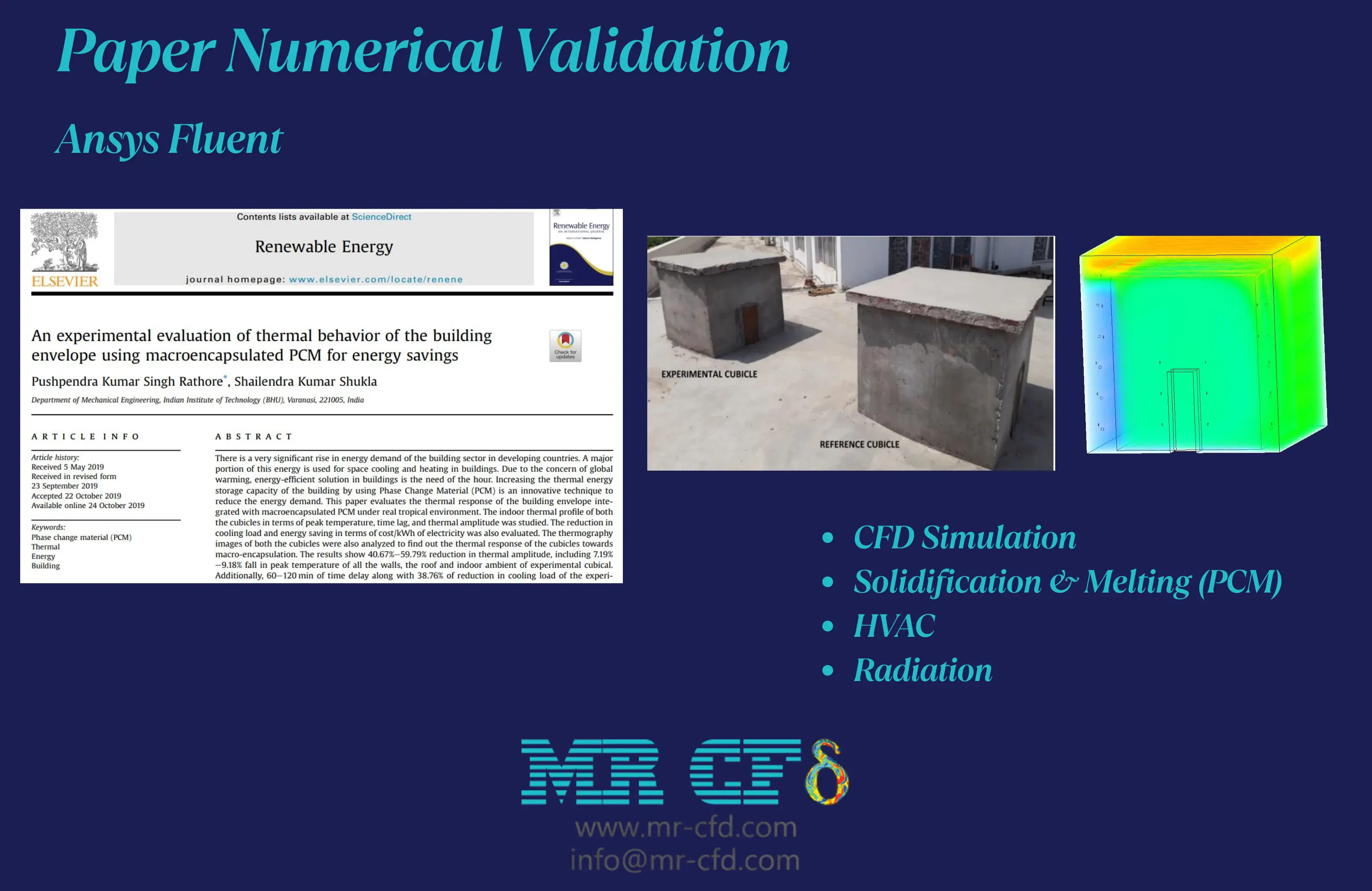
Microencapsulated PCMs for Energy Saving: Paper Validation
Intermediate, Advanced
Price: $27
The problem numerically simulates Microencapsulated PCMs in ANSYS Fluent software. The 3D geometry of the model is created in Space Claim software. The model is meshed in ANSYS Meshing creating 4,045,254 elements. We simulate the problem Transient via pressure-based solver.
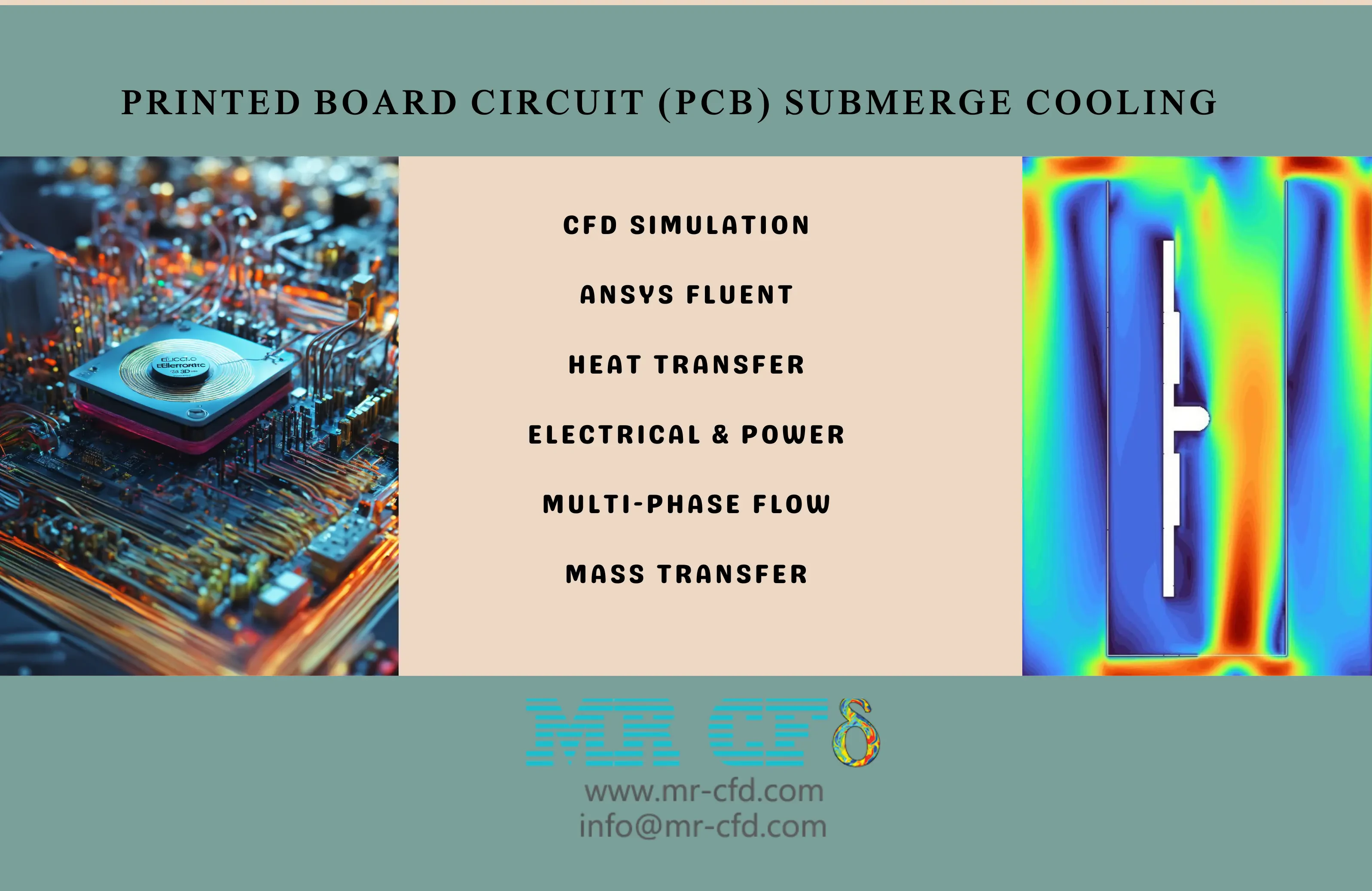
Price: $28
The problem numerically simulates a printed circuit board (PCB) cooling using ANSYS Fluent software. We design the 2-D model by the Space claim software. We Mesh the model by ANSYS Meshing software, and the element number equals 19106. We perform this simulation as unsteady (Transient). We use the VOF Multi-Phase model to define Mass Transfer in the form of Evaporation-Condensation.
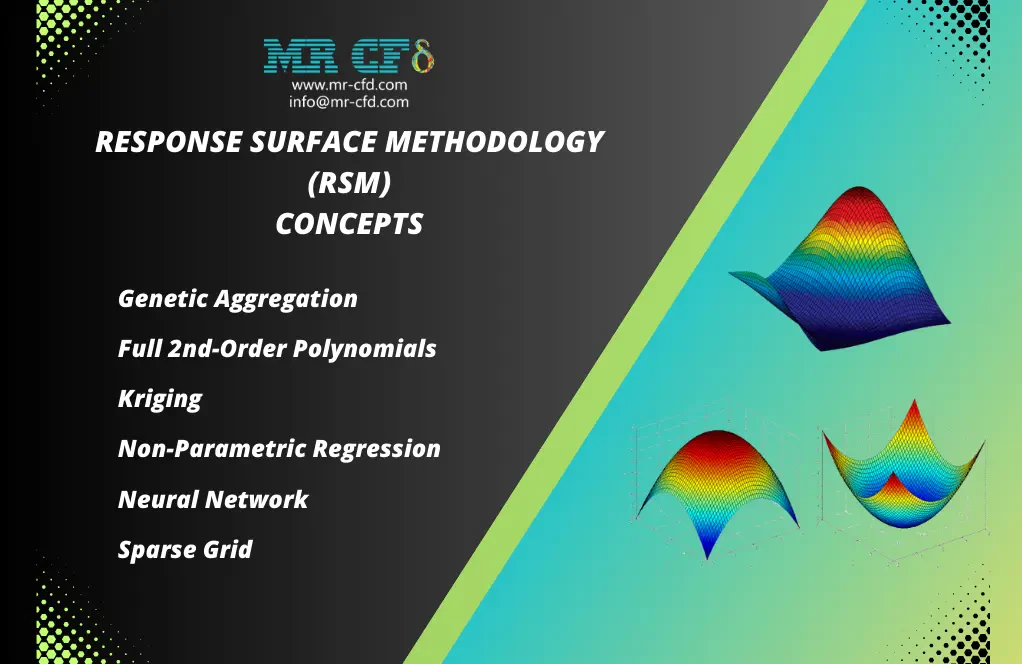
Response Surface Methodology (RSM) Concepts, Optimization by ANSYS Fluent
Beginner, Intermediate, Advanced
Price: Free
Introduction to the Response Surface Methodology (RSM) in ANSYS Fluent software Introduction to the Genetic Aggregation Introduction to the Full 2nd-Order Polynomials Introduction to the Kriging Introduction to the Non-Parametric Regression Introduction to the Neural Network Introduction to the Sparse Grid
Price: Free
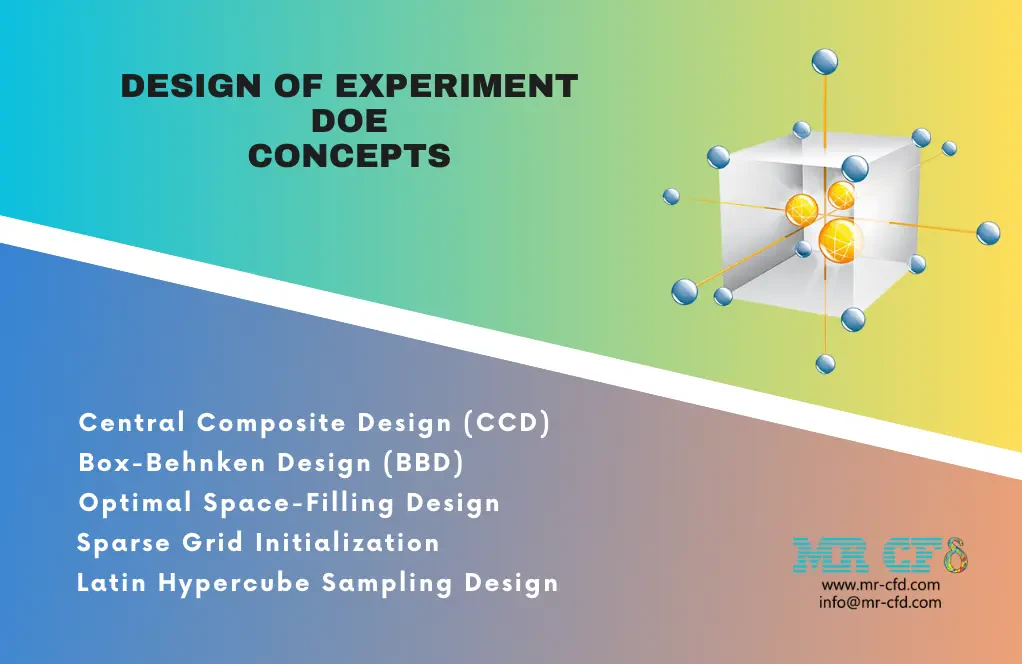
Introduction to the Design of Experiment (DOE) in ANSYS Fluent software Introduction to the Central Composite Design (CCD) Introduction to the Rotatable, VIF-Optimality, G-Optimality, and Face-Centered Introduction to the Box-Behnken Design (BBD) Introduction to the Optimal Space-Filling Design Introduction to the Sparse Grid Initialization Introduction to the Latin Hypercube Sampling Design Introduction to the Custom and Custom+Sampling
Price: $72
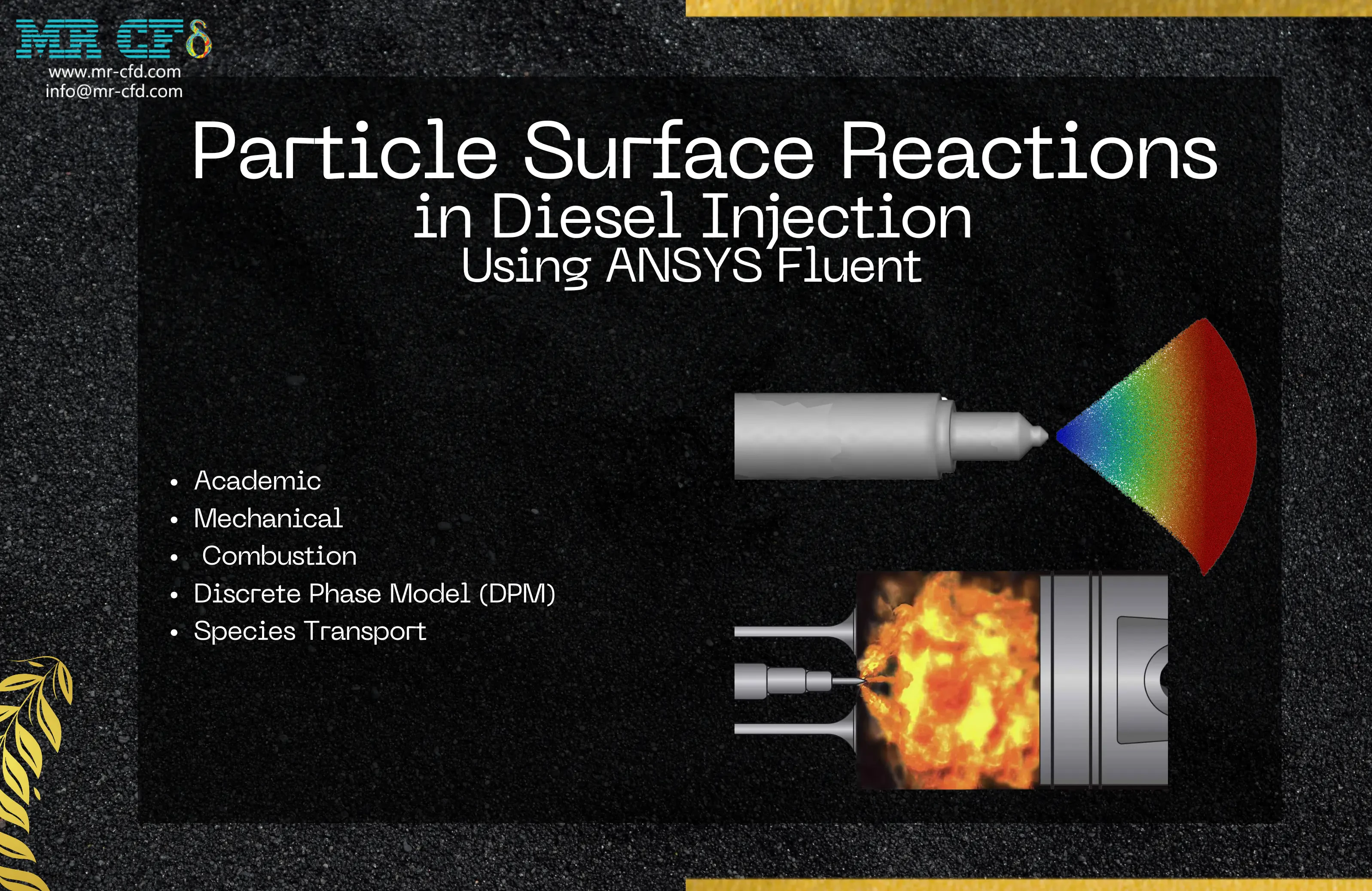
The main objective of this study is to analyze the behavior of the reacting spray The study combines the finite-rate chemistry and eddy dissipation models to capture kinetic-controlled and turbulence-driven reaction dynamics Water evaporates first due to its lower boiling point, while gasoline undergoes thermal decomposition and combustion The mesh was generated using ANSYS Meshing. The final mesh comprises 1,250,256 cells, balancing computational accuracy and efficiency.
Price: $260
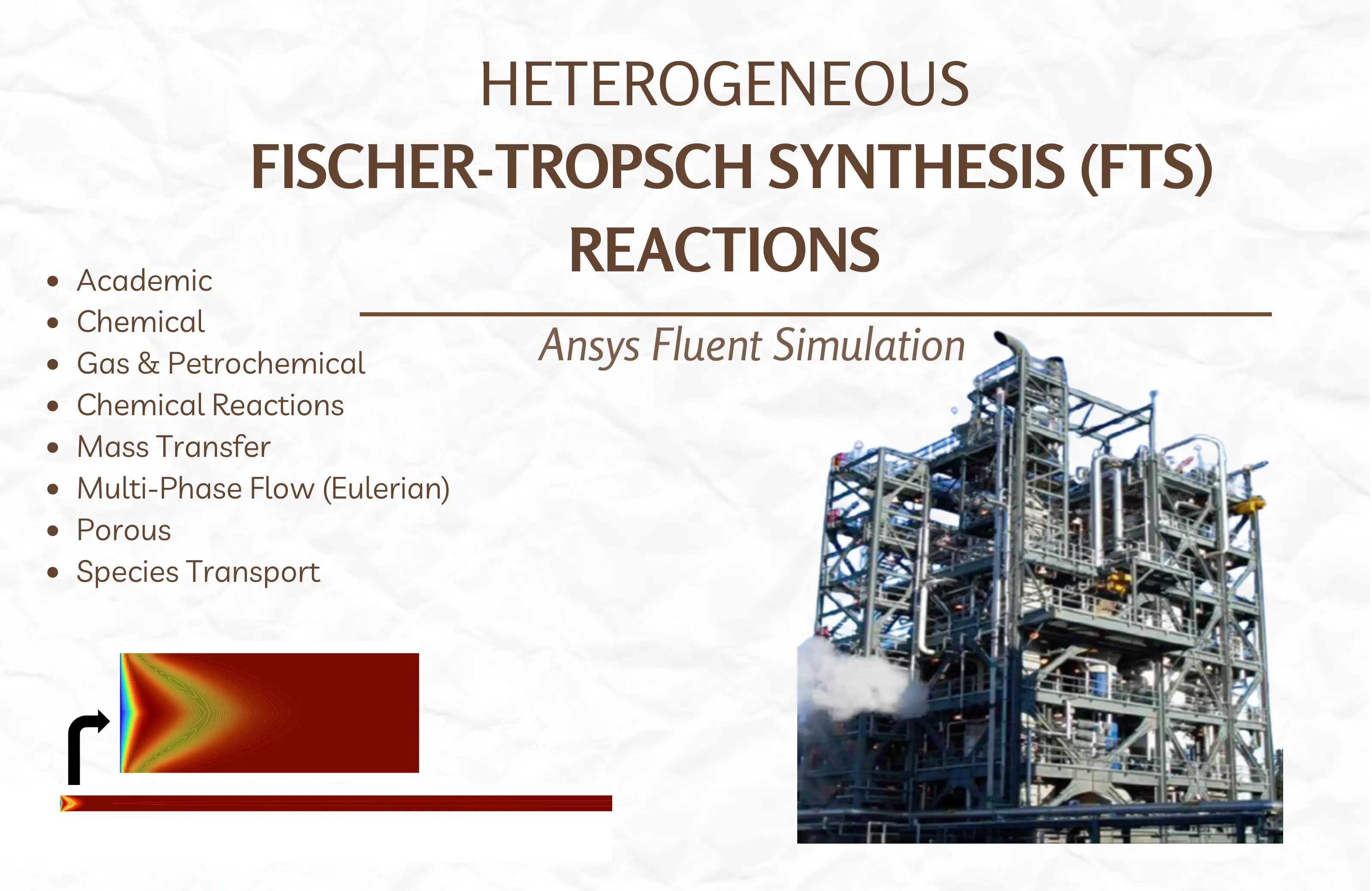
This report presents the simulation of a reactive multiphase system incorporating heterogeneous Fischer-Tropsch synthesis reactions in a porous medium An iron (Fe) catalyst catalyzes the reactions, and the reaction rates are determined using Arrhenius kinetics. The Eulerian multiphase model is employed to investigate the interaction between different phases A Lee mass transfer model is applied for the phase change of water between liquid and gaseous states. A 2D geometry was created using SpaceClaim and The domain was meshed in ANSYS Meshing, using a structured mesh with 105,000 structured elements.
Price: $499
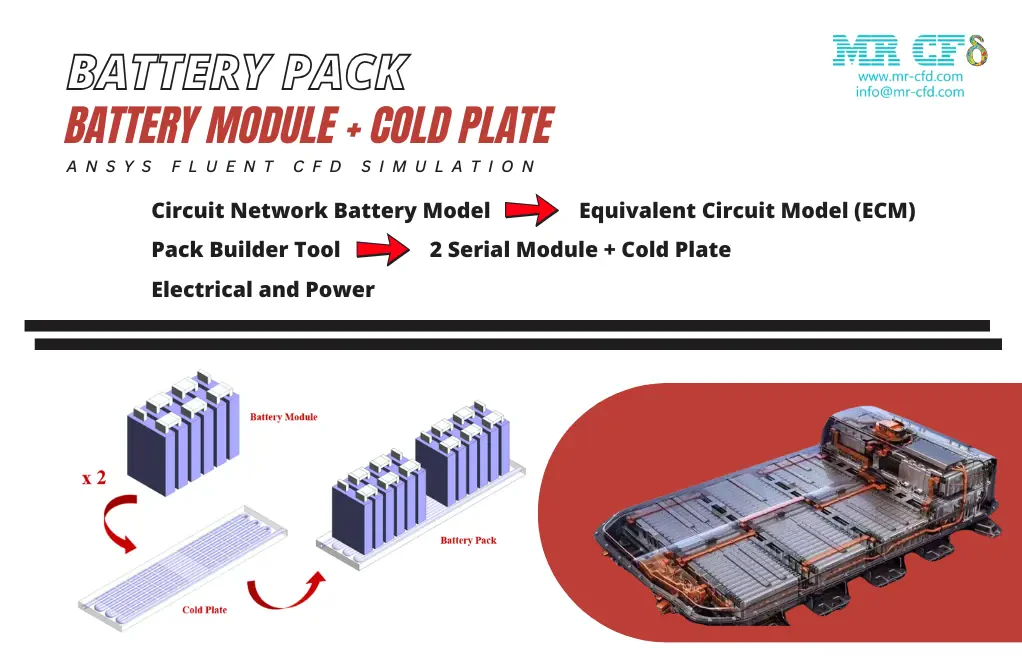
This product numerically simulates a Battery Pack using ANSYS Fluent software. We use the Pack Builder to define a battery pack consisting of two Battery Modules and a Cold Plate. We design the 3-D models with the Design Modeler software. We mesh the models with ANSYS Meshing software. We use the Circuit Network Battery model to define the discharge. We use the ECM (Equivalent Circuit Model) sub-model to determine the electrochemical computations. The run calculation is in an unsteady state (transient).