

Academic Online Courses
Here's every CFD online course related to Academic category.
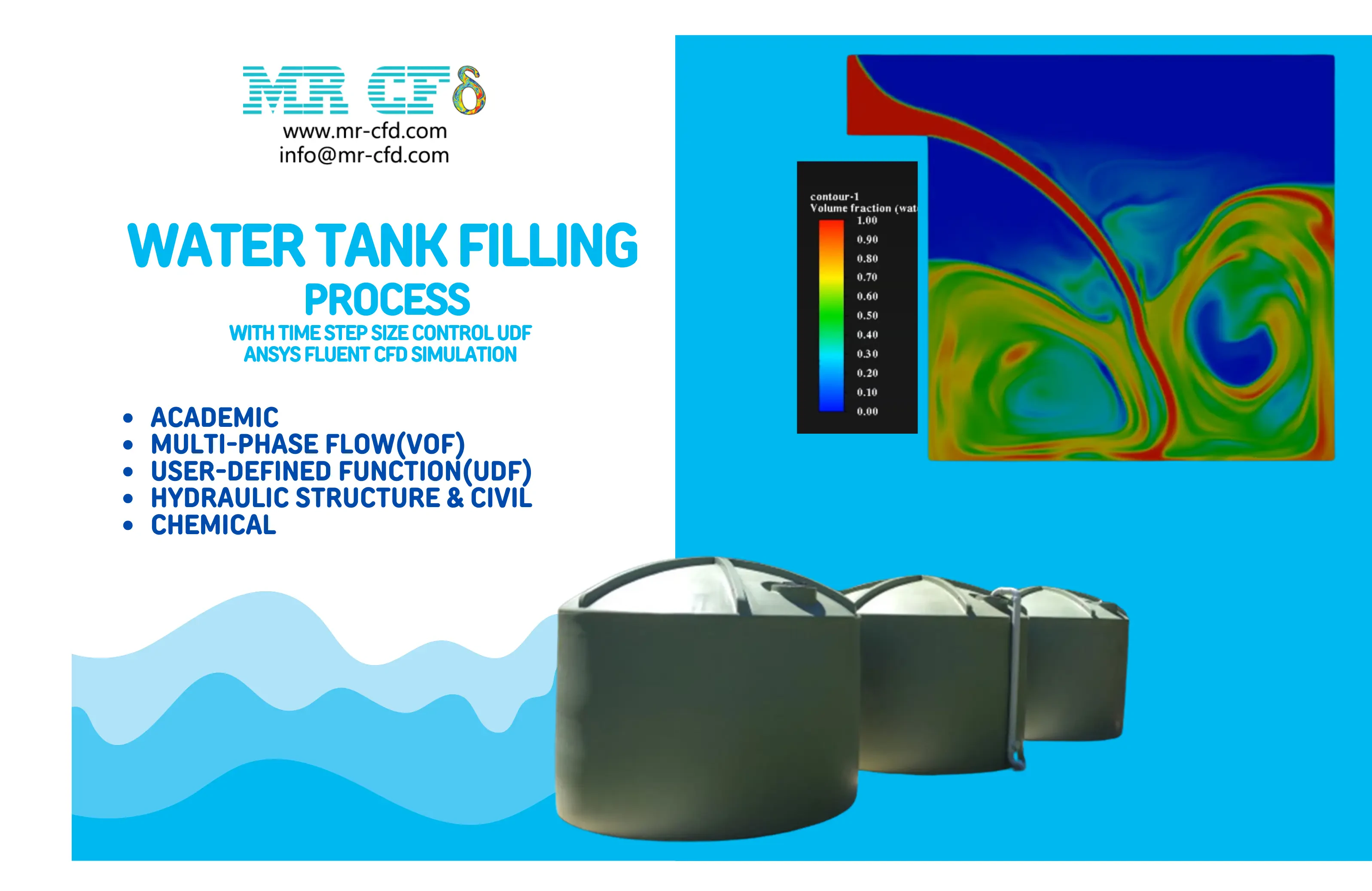
Water Tank Filling Process With Time Step Size Control UDF, CFD Simulation
Intermediate, Advanced
Price: $24
This study uses CFD simulation to investigate the water tank filling process The geometry of the tank was created using ANSYS Design Modeler, and the computational domain was discretized using ANSYS Meshing, resulting in over 135,000 elements The Volume of Fluid (VOF) model was employed to simulate the interaction between water and air phases A User-Defined Function (UDF) was implemented to control the time step size

Price: $649
The problem numerically simulates the Dynamic Stability Derivatives of Quadcopter using ANSYS Fluent We designed the 3-D symmetry model using the SpaceClaim We mesh the model with ANSYS Meshing software, and the element number equals 1,710,236. We perform this simulation as unsteady (Transient). We use the Mesh Motion and UDF files to define the rotational and oscillation motion of the Quadcopter and blades.
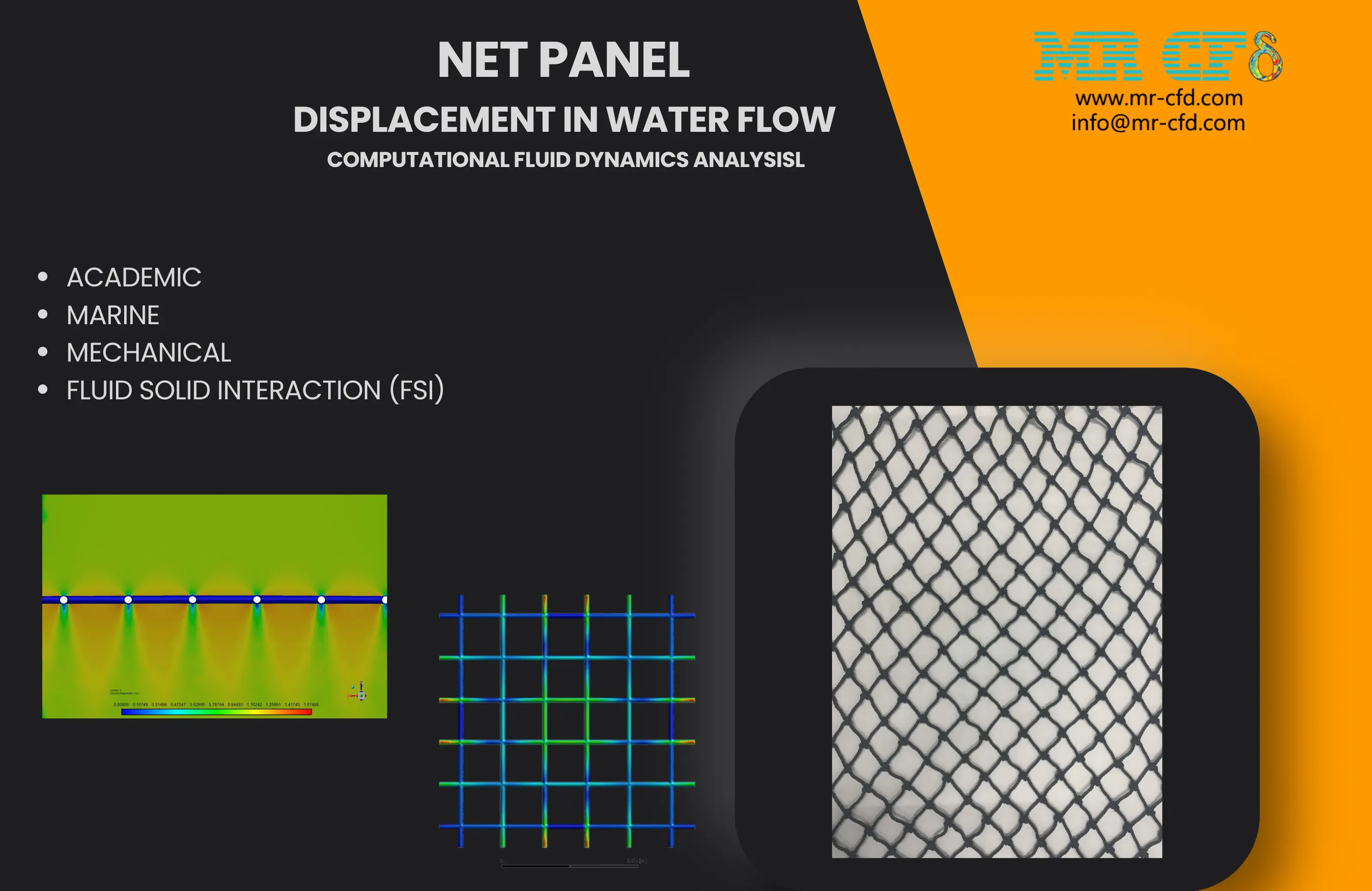
Net Panel Displacement in Water Flow CFD Analysis, Ansys Fluent
Intermediate, Advanced
Price: $15
This study investigates the displacement of a net panel subjected to water flow using ANSYS Fluent simulation. The geometry of a square net panel was created using ANSYS Design Modeler. The computational domain was then discretized using ANSYS Meshing, resulting in over 2,339,853 elements. The simulation aims to analyze the net panel's fluid-structure interaction The structural model utilized a Linear Elasticity submodel to simulate the net panel’s deformation
Price: $12
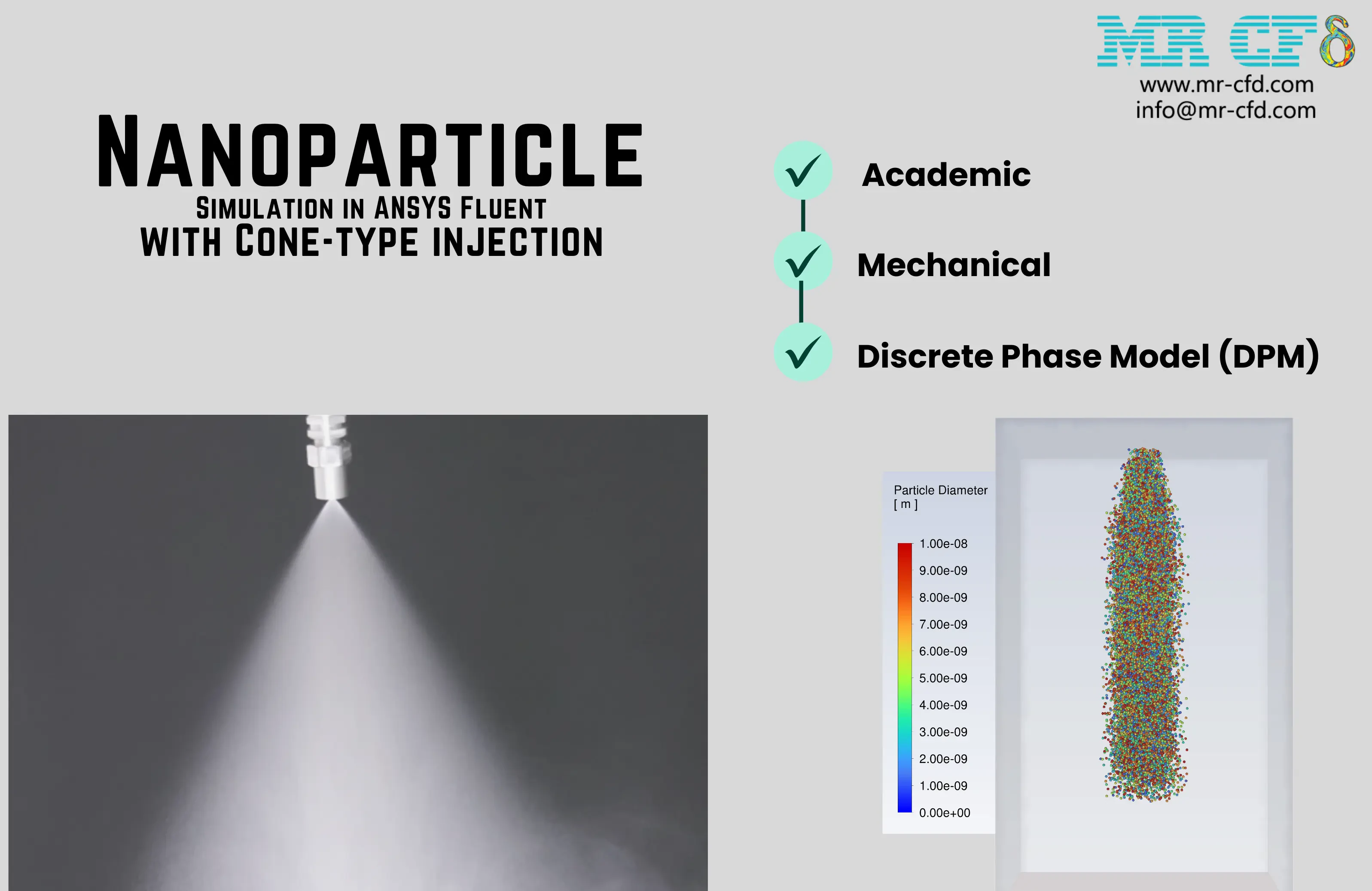
This report details a nanoparticle simulation conducted using ANSYS Fluent The simulation geometry consists of a rectangular cuboid created in SpaceClaim . Meshing was performed in ANSYS Meshing, resulting in a grid of 151,294 triangular cells Discrete Phase Model (DPM) activated, Flow and turbulence equations deactivated
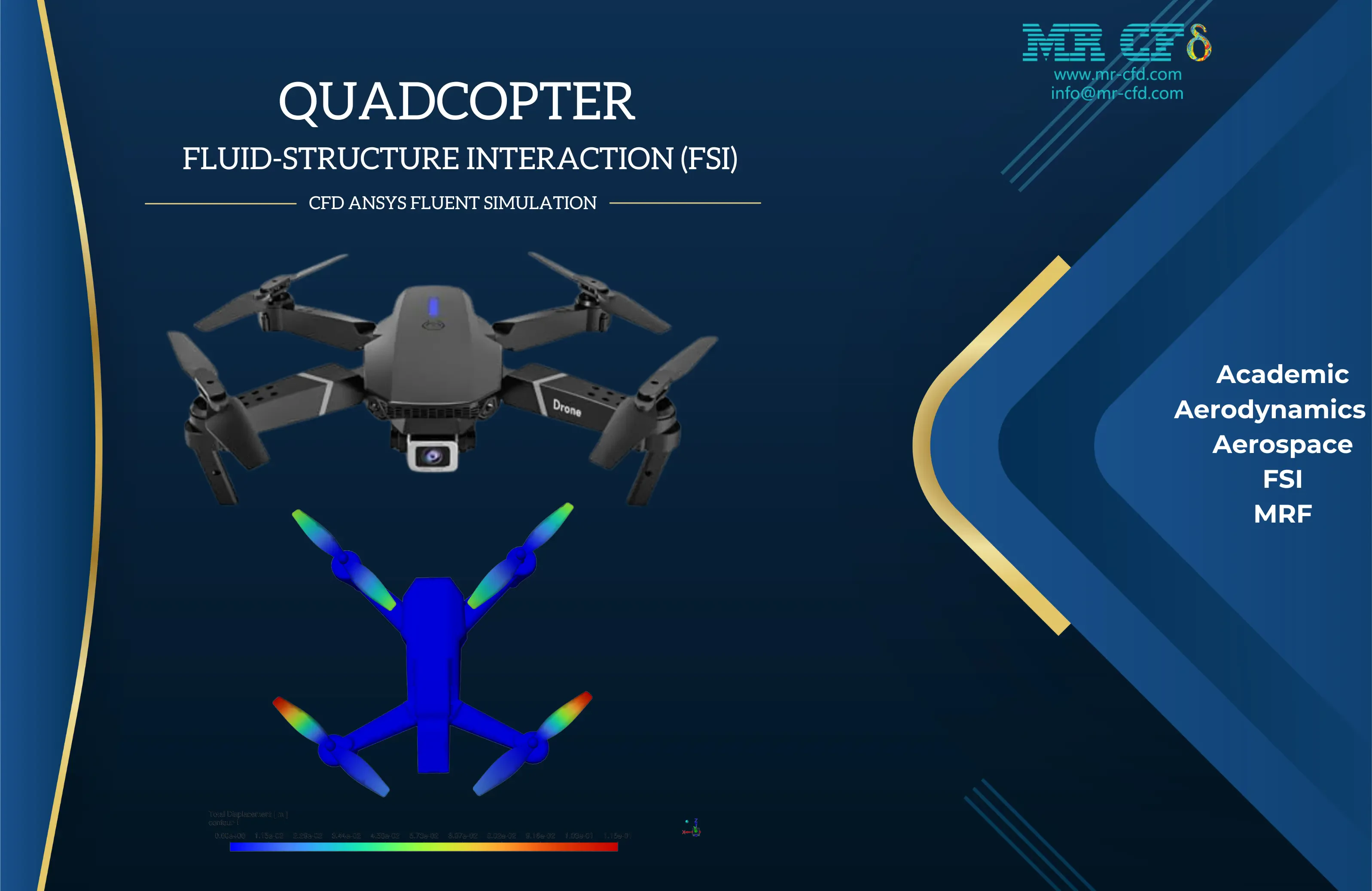
Quadcopter Fluid-Structure Interaction (FSI) Simulation using ANSYS Fluent
Intermediate, Advanced
Price: $649
This study presents a Fluid-Structure Interaction (FSI) simulation of a quadcopter using ANSYS Fluent The quadcopter geometry was created using ANSYS SpaceClaim The model was then meshed using ANSYS Meshing, which generated an unstructured mesh consisting of approximately 499,152 elements To accurately capture the blades’ rotation, two frame motion(MRF) zones are applied to the blades. The Structure model with the Linear Elasticity option was enabled to investigate the displacement of the blade
Price: $949
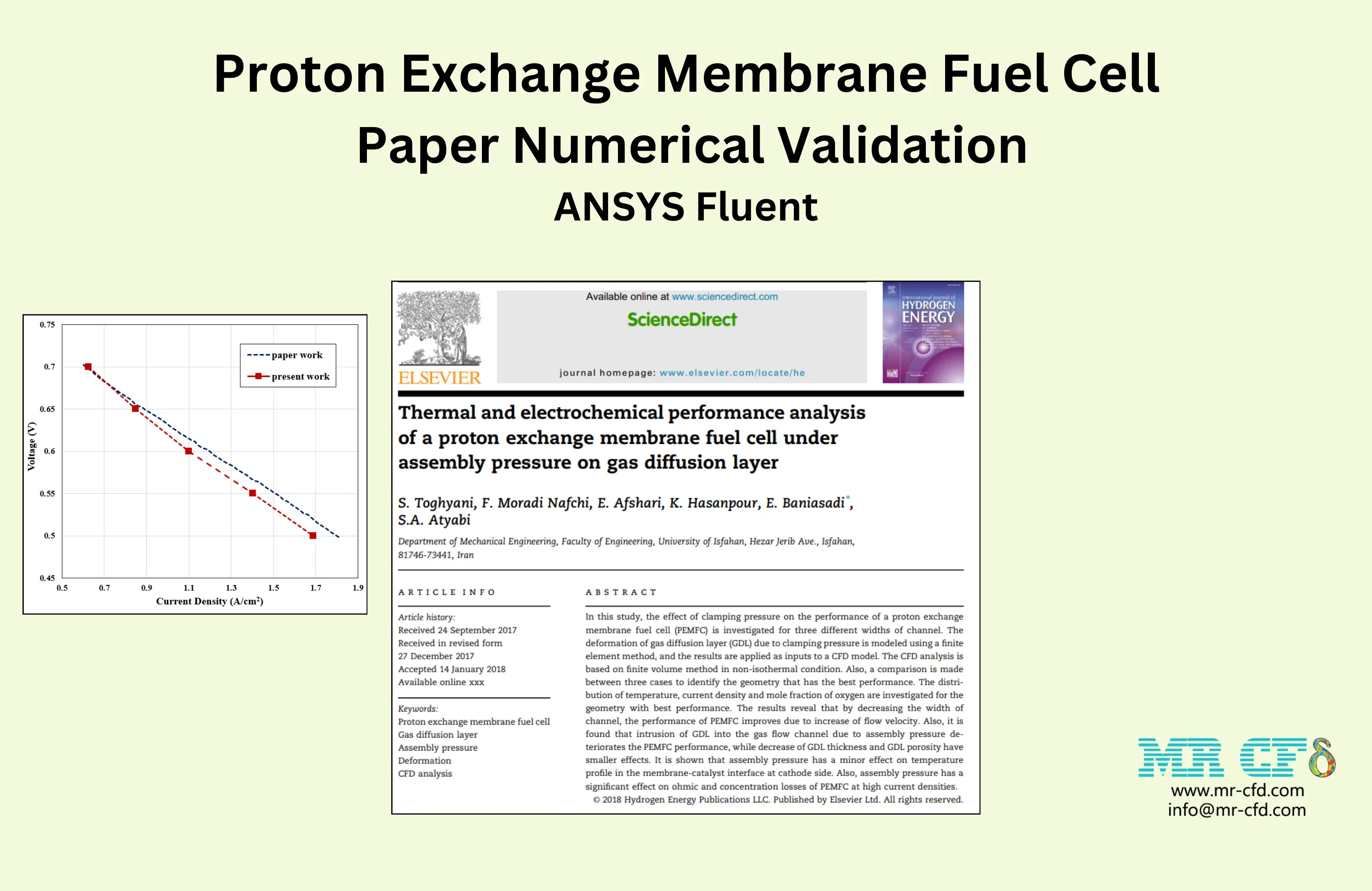
This project numerically simulates the PEM Fuel Cell using ANSYS Fluent software. We design the 3-D model with the Design Modeler software. We mesh the model with ANSYS Meshing software and the Structured mesh including 270,0000 elements is generated. We use the Fuel Cell and Electrolysis Model to define a fuel cell system. We used the PEMFC sub-model to define a proton-exchange membrane fuel cell. We used the Species model to define H2, O2, and H2O. The present CFD work is Validated with a reference Article.
Price: $12
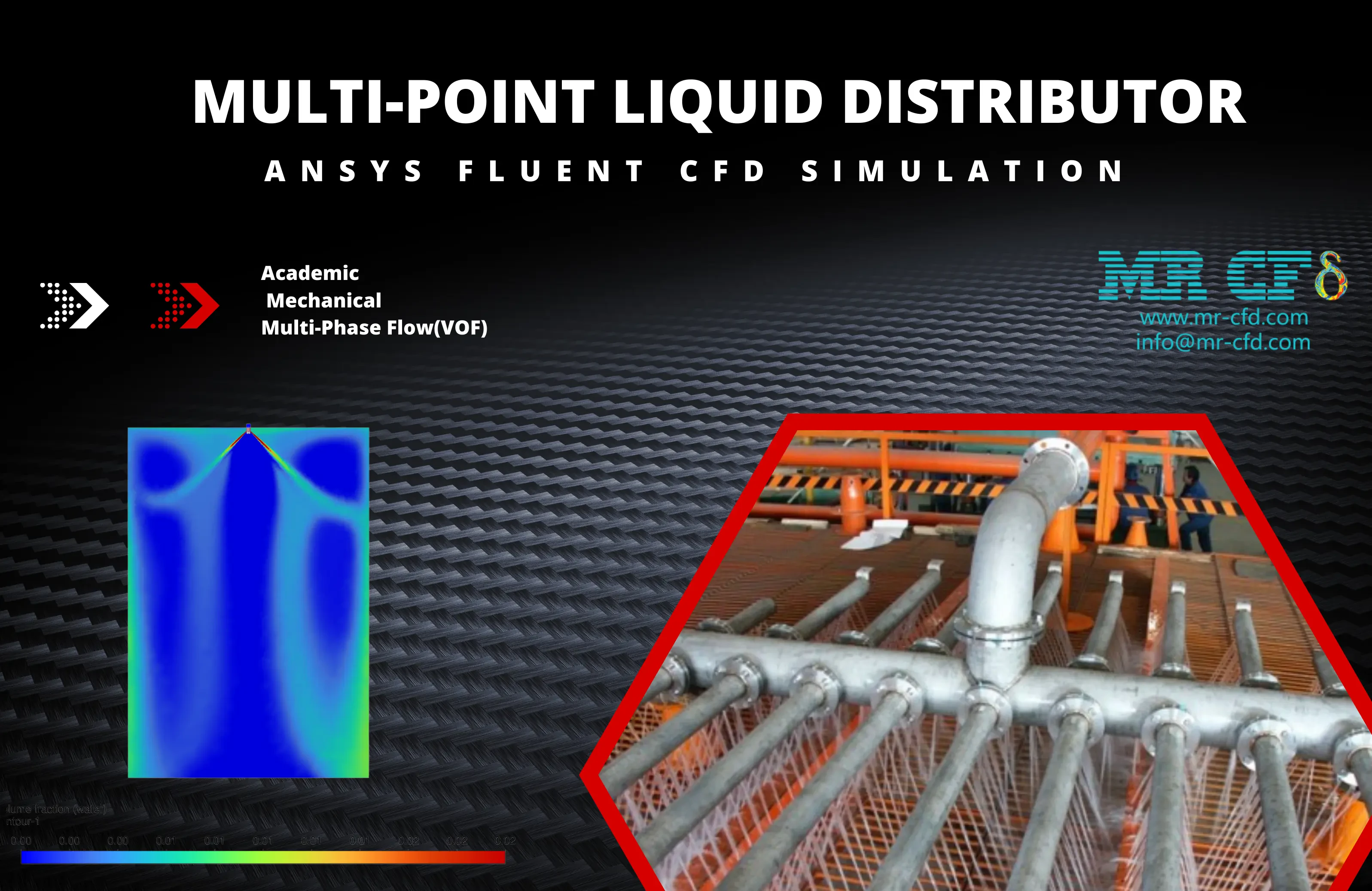
This study presents a CFD analysis of a Multi-point Liquid Distributor for packed columns using ANSYS Fluent. We designed the 3-D symmetry model using the ANSYS Design Modeler We mesh the model with ANSYS Meshing software, and the element number equals 783,039. The Volume of Fluid (VOF) model was utilized to simulate the multiphase flow of water and air. A steady-state, pressure-based solver was employed for the simulation.
Impact of Geometry on Heat Sink Performance
Beginner, Intermediate
Price: $14
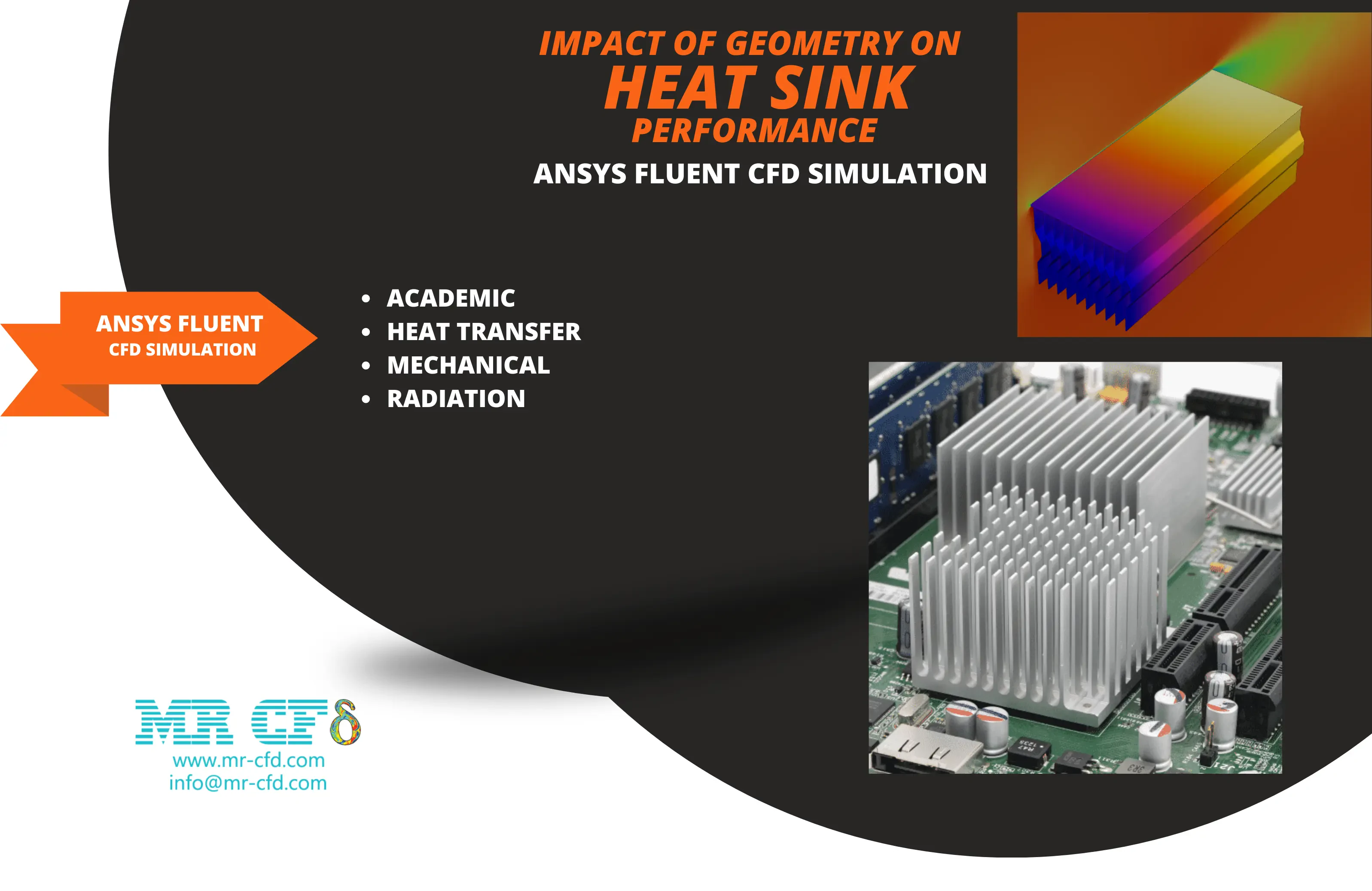
This study compares the thermal performance of open and enclosed heat sink designs using CFD simulations The open design features exposed fins, while the enclosed design has a closed-top 3-D symmetry model designed using ANSYS Design Modeler software model meshed with ANSYS Meshing software, and the element number equals 2,599,334. The discrete Ordinates (DO) radiation model was activated to simulate the impact of solar irradiation
Price: $8
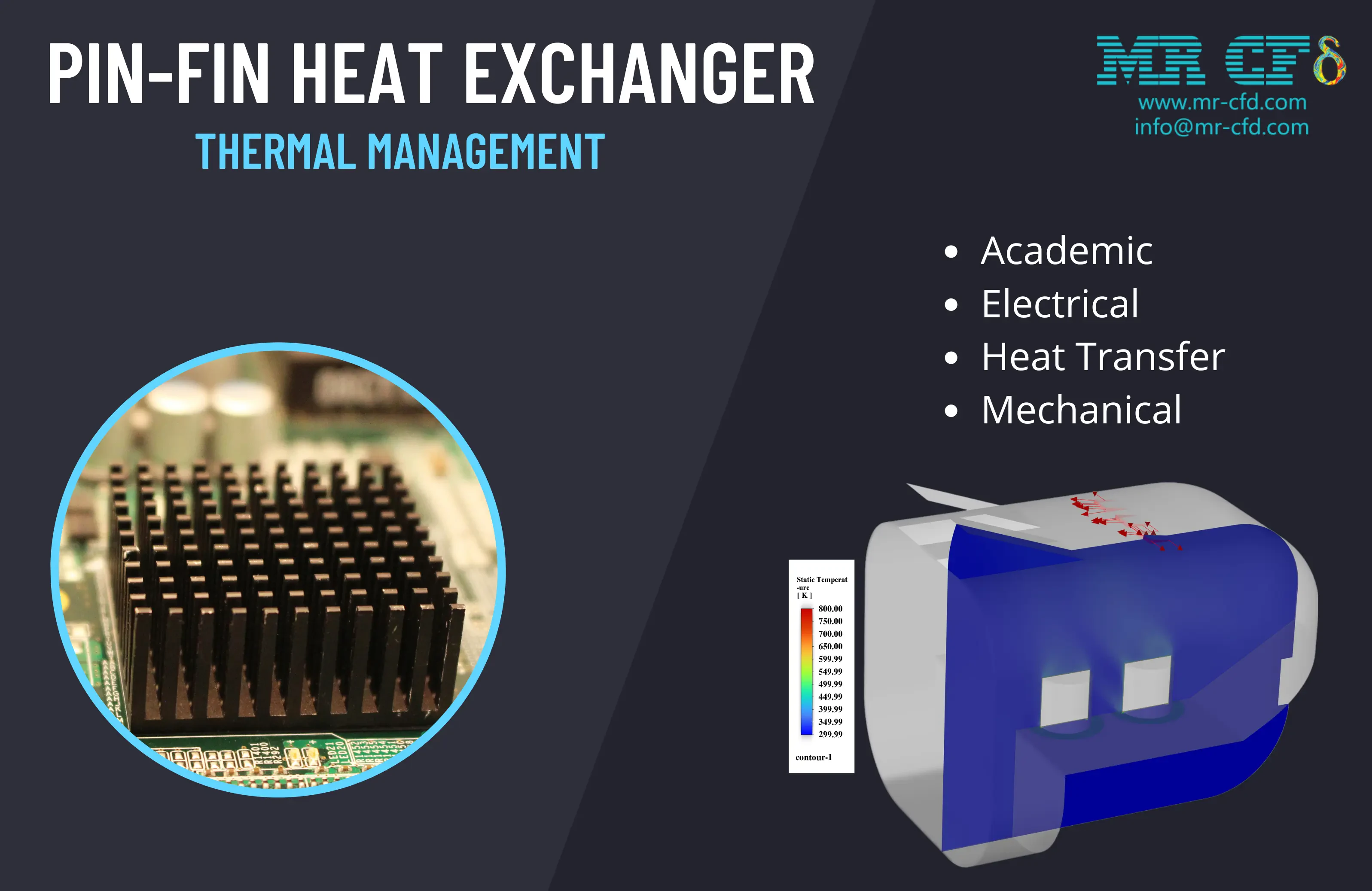
This study investigates the thermal and fluid dynamics behavior of a pin-fin heat exchanger using CFD simulation. The geometry of the pin-fin heat exchanger was created using ANSYS Design Modeler. The computational domain was then discretized using ANSYS Meshing, resulting in 1,679,530 elements. The pin wall temperature was set to a constant 800 K to simulate a high-temperature heat source