

Academic Online Courses
Here's every CFD online course related to Academic category.
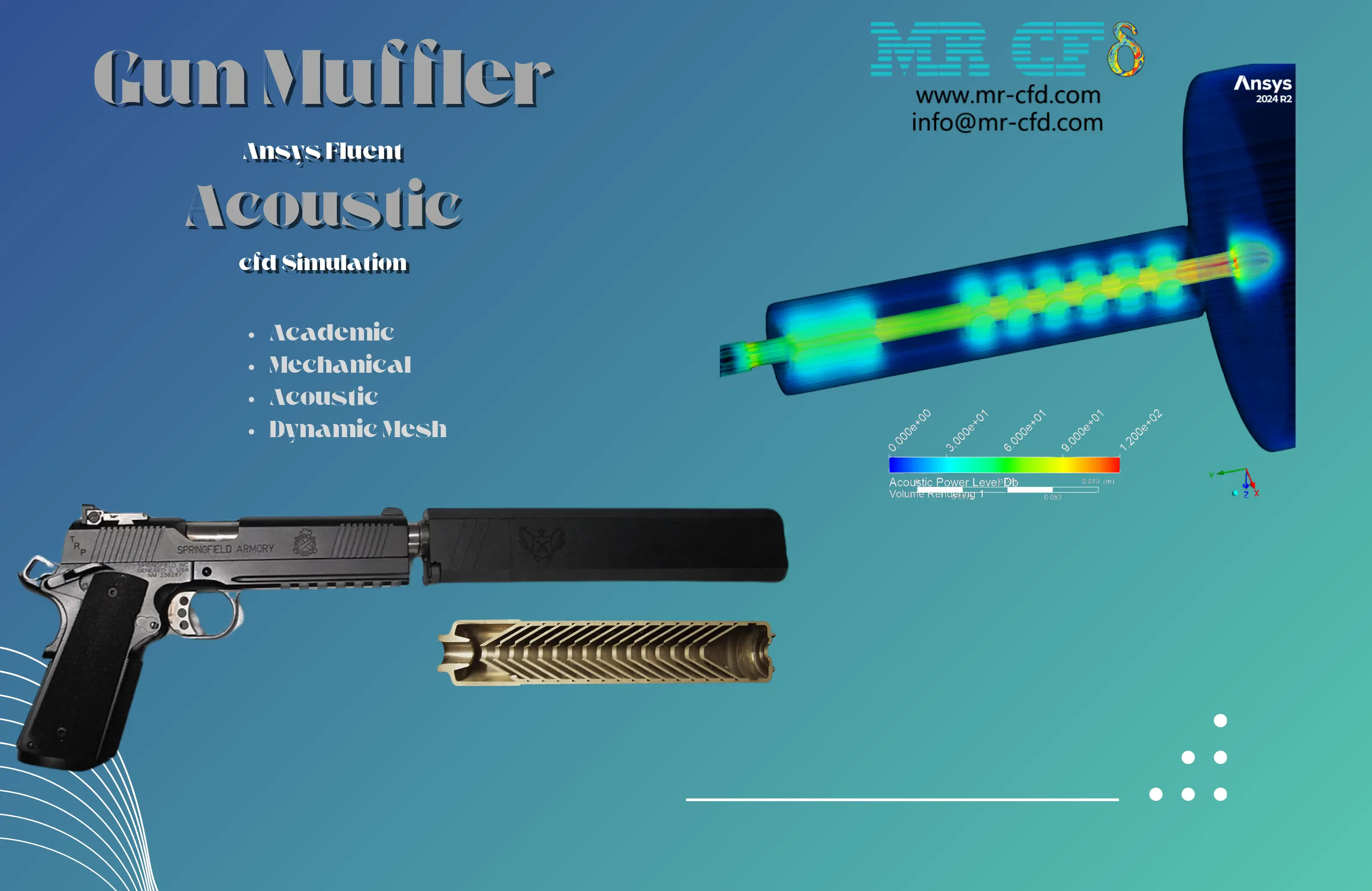
Gun Muffler CFD Simulation: Acoustic and Dynamic Mesh Analysis by Ansys Fluent
Intermediate, Advanced
Price: $54
his report presents the simulation and analysis of a gun muffler using ANSYS Fluent The objective is to compare the acoustic parameters of a gunshot with and without a muffler The study involves creating the geometry in SpaceClaim, meshing in ANSYS Meshing, and using dynamic mesh and broadband acoustic models to simulate the bullet’s movement and sound propagation

Price: $200
The computational fluid dynamics (CFD) analysis of a Francis turbine was conducted using ANSYS Fluent software to investigate its performance characteristics and flow behavior. This study aims to provide detailed insights into the pressure distribution, velocity patterns, and potential cavitation phenomena within the turbine system. The simulation incorporates advanced numerical models and careful consideration of boundary conditions to ensure accurate results.
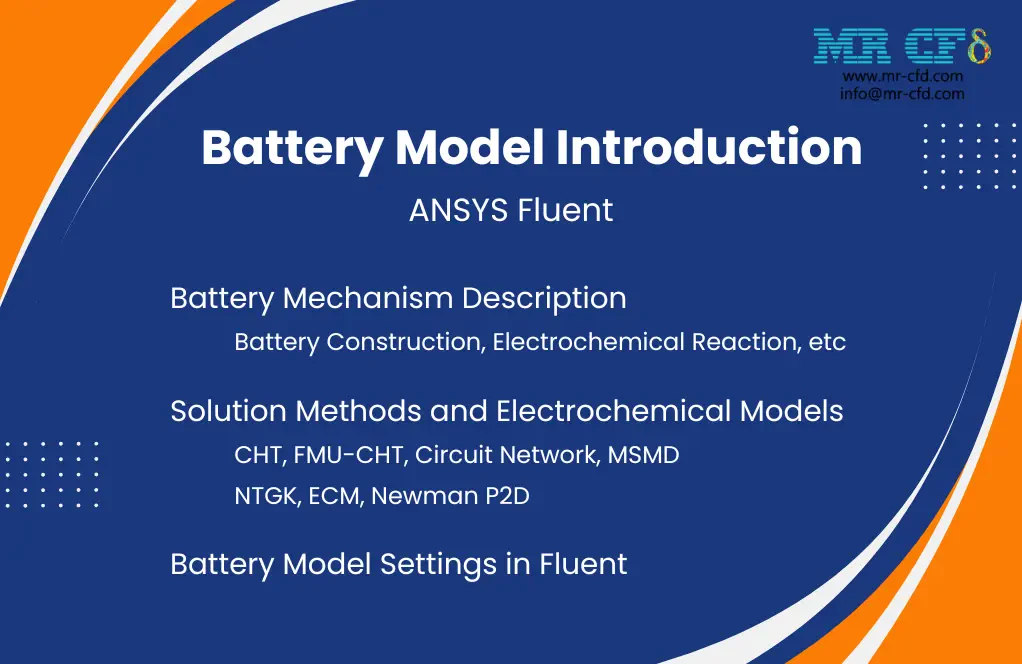
Battery Model Introduction
Intermediate
Price: Free
Introduction to the Battery Model in ANSYS Fluent software Introduction to the Battery System Operation Introduction to the Solution Methods (CHT, FMU-CHT, Circuit Network, MSMD) Introduction to the Electrochemistry Models (NTGK, ECM, Newman P2D) Introduction to the Battery Model Settings
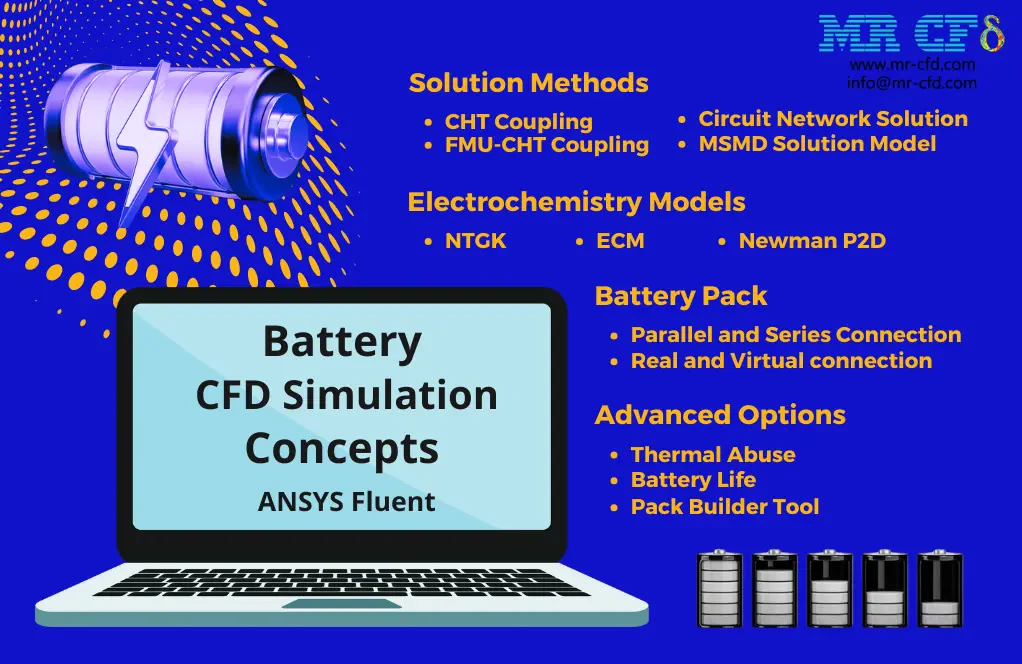
Battery CFD Simulation Concepts, ANSYS Fluent
Beginner, Intermediate, Advanced
Price: $9
Introduction to the Battery Model in ANSYS Fluent software Introduction to the Solution Methods (CHT, FMU-CHT, Circuit Network, MSMD) Introduction to the Electrochemistry Models (NTGK, ECM, Newman P2D) Introduction to the Battery Module and Battery Pack (Parallel and Series) Introduction to the Real Connection and Virtual Connection Introduction to the Thermal Abuse, Battery Life, and Pack Builder options
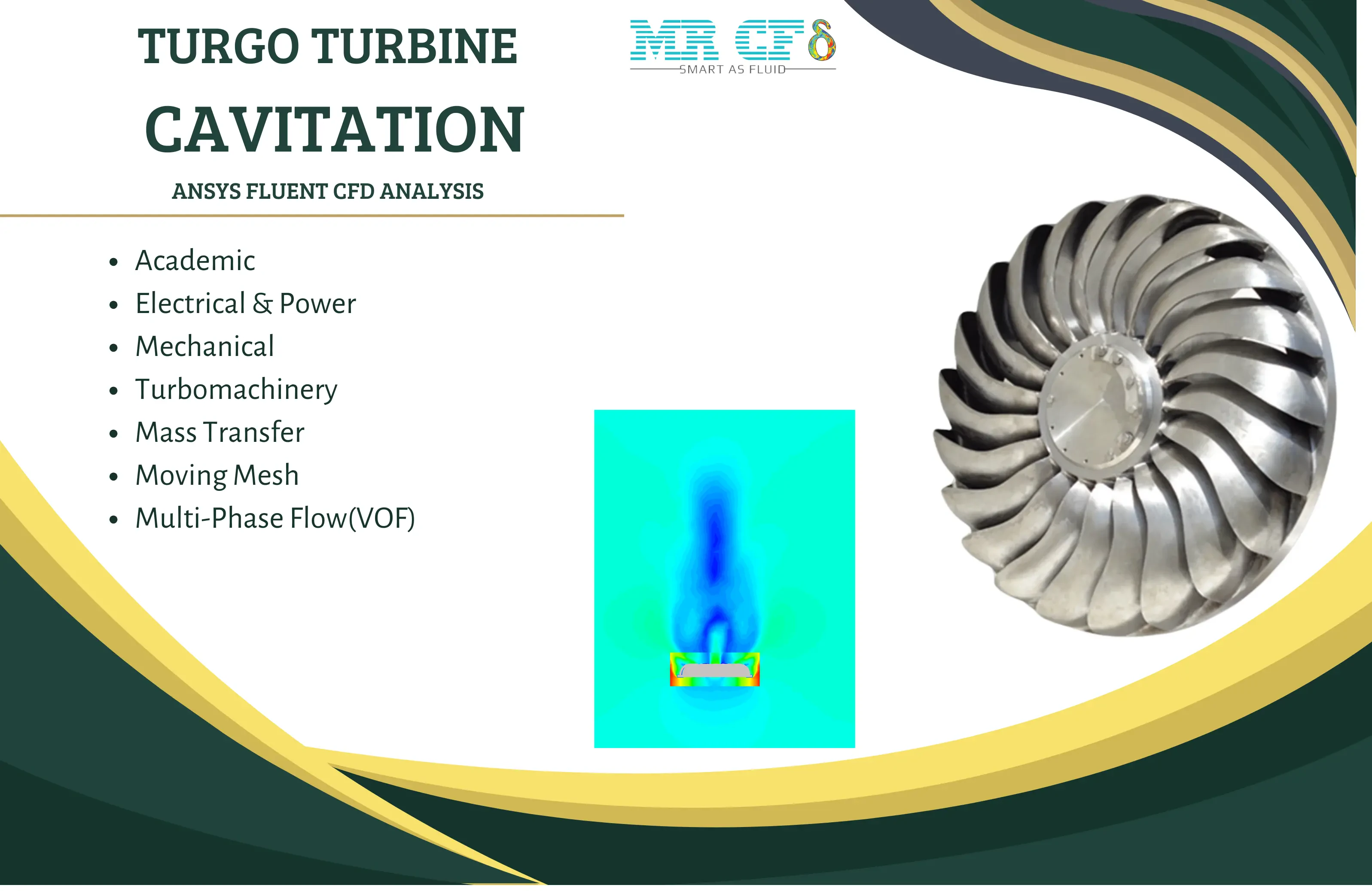
Turgo Turbine Cavitation: CFD Analysis
Intermediate, Advanced
Price: $20
The project utilized the ANSYS software suite to simulate and analyze the fluid behavior and cavitation characteristics under specific operating conditions. The initial phase of the project involved geometry creation using ANSYS Design Modeler, followed by mesh generation in ANSYS Meshing. The multiphase modeling approach utilized the Volume of Fluid (VOF) method, coupled with cavitation mechanisms to accurately represent the two-phase flow dynamics
Price: $439
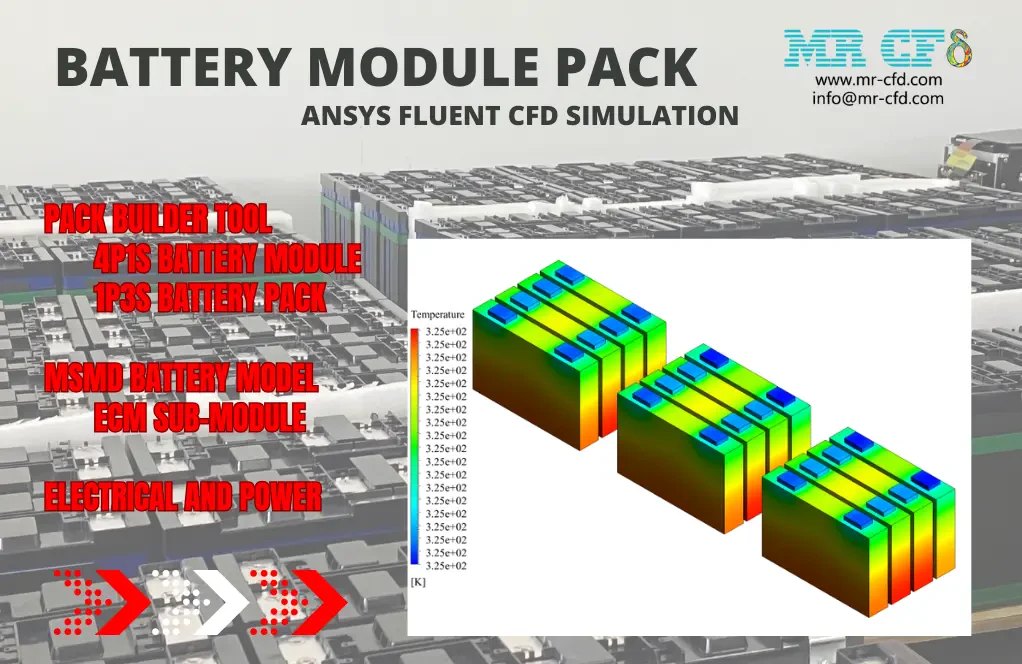
This product numerically simulates the Battery Module Pack using ANSYS Fluent software. We design the 3-D model in parallel and serial connection with the Design Modeler software. We mesh the model with ANSYS Meshing software; the element numbers are 269562. We use the Circuit Network Battery model to define the charge/discharge. We use the ECM (Equivalent Circuit Model) sub-model to determine the electrochemical computations. We use the Pack Builder to define the battery module pack. The run calculation is in an unsteady state (transient).
Frictional Force of a Fluid Flow Mixed With Particles
Intermediate, Advanced
Price: $24
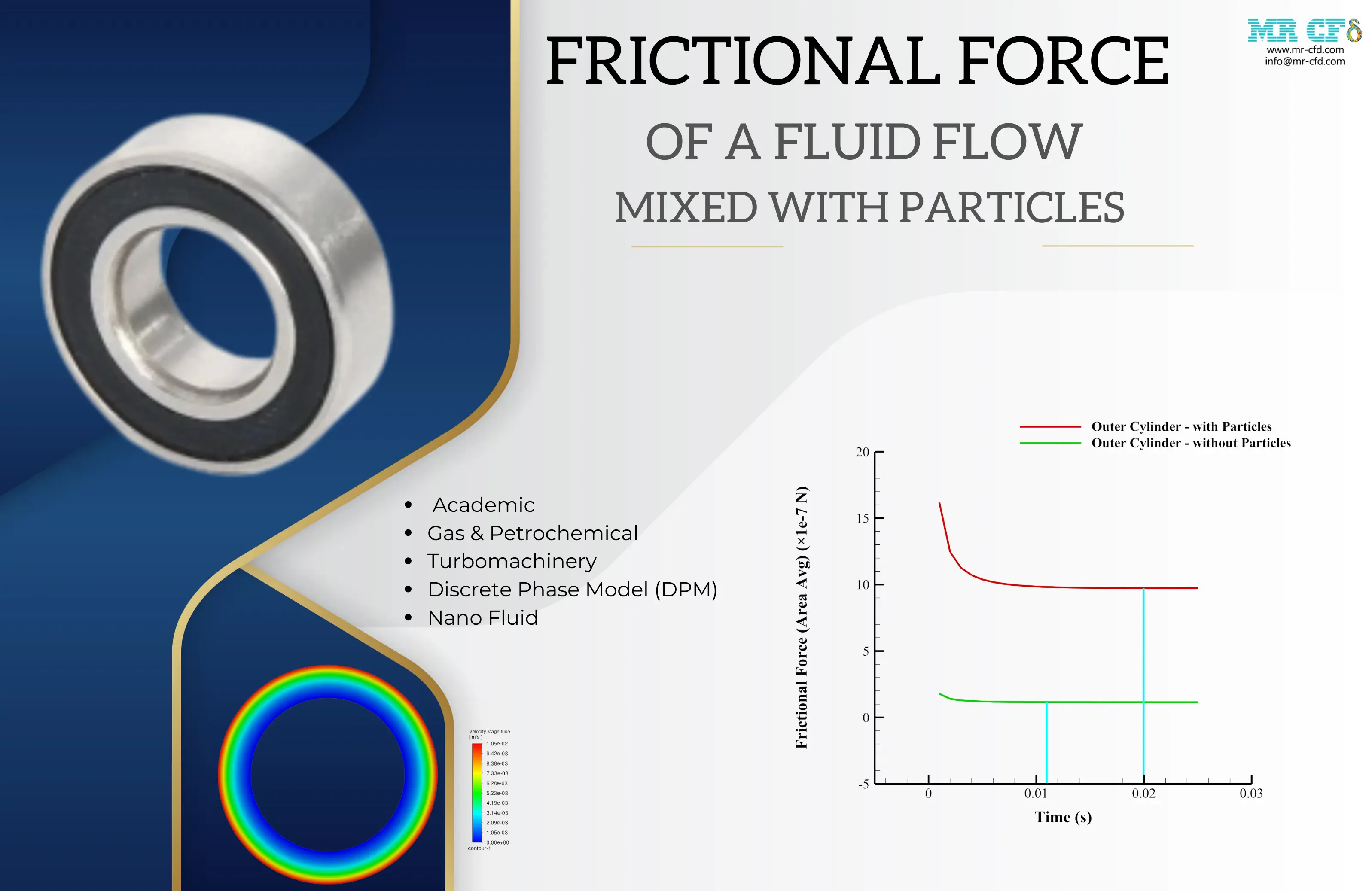
This report presents a simulation examining how particle presence affects the friction force on the walls of two concentric cylinders using the Discrete Phase Method (DPM). The geometry of the two concentric cylinders was created using ANSYS SpaceClaim software. A high-quality mesh of 51840 hexahedral elements was generated using ANSYS Meshing software. Appropriate DPM settings were applied and the friction force exerted on the two cylinder walls was calculated.
Tilt-Rotor Drone CFD Simulation with Mesh Motion
Intermediate
Price: $108
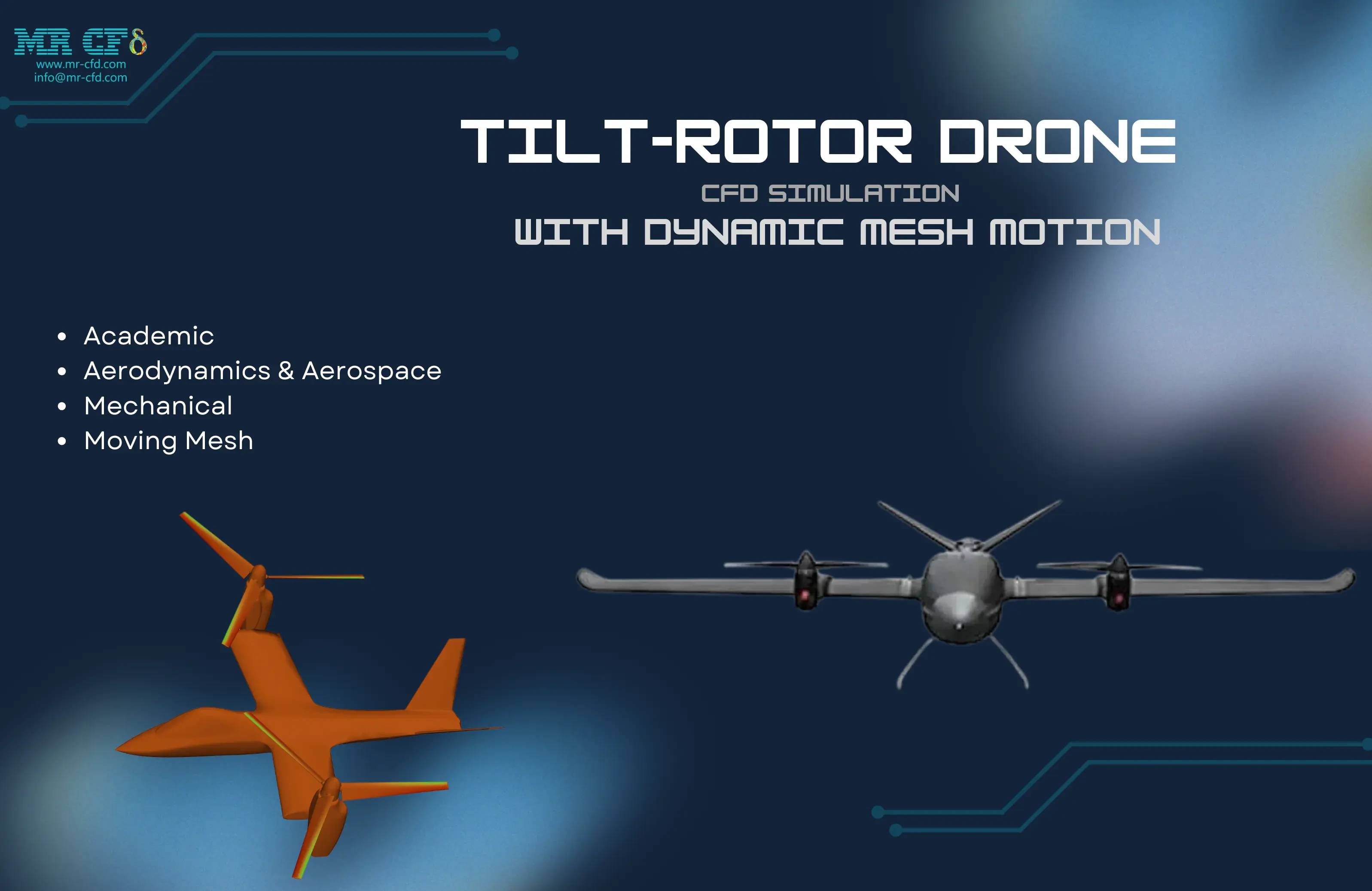
This report presents the results of a CFD analysis performed on a tilt-rotor drone using ANSYS Fluent with mesh motion capabilities for the arms and propellers. The geometry of the Drone was created using ANSYS SpaceClaim software. A high-quality non-conformal un-structured mesh was generated using ANSYS Meshing software. Applied Mesh motion for both arms and propellers
Price: $439
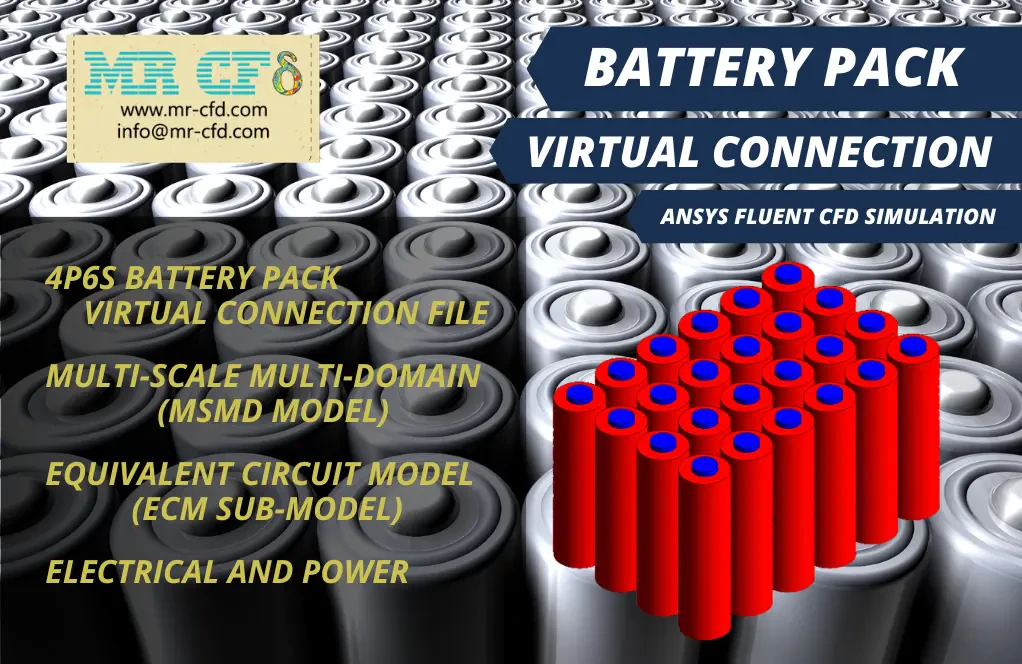
This product numerically simulates the Cylindrical Battery Pack using ANSYS Fluent software. We design the 3-D model with the Design Modeler software. We mesh the model with ANSYS Meshing software, element numbers are 485797. We use a Virtual Connection to define a battery pack without designing busbars. We use the MSMD (Multi-Scale Multi-Domain) Battery model to define the charge/discharge. We use the ECM (Equivalent Circuit Model) sub-model to determine the electrochemical computations. The run calculation is in an unsteady state (transient).