

CFD Online Courses
Here's every CFD online course related to CFD category.
![Introduction to CFD Course with ANSYS Fluent [Free]](https://mr-cfd.nbg1.your-objectstorage.com/media/1907/conversions/01M48XX0M0DGJZXSYCKZCC25E1-webp.webp)
Introduction to CFD Course with ANSYS Fluent [Free]
Beginner, Intermediate, Advanced
Price: Free
If you need Beginner Step for CFD Coruse with ANSYS Fluent, follow this course: Beginner CFD Course . This comprehensive 12-session program by MR CFD blends theoretical foundations with practical ANSYS Fluent applications. Structured Curriculum: The first seven sessions build a strong theoretical framework (CFD fundamentals, Finite Volume Method, solver algorithms), while the final five focus on hands-on practical simulations (2D/3D flows, heat transfer, airfoil, and pipe studies). Professional Mastery: Designed for engineers, researchers, and students, it equips you with end-to-end CFD skills—from mesh generation to result validation—to solve complex fluid dynamics and heat transfer challenges.
Price: $8
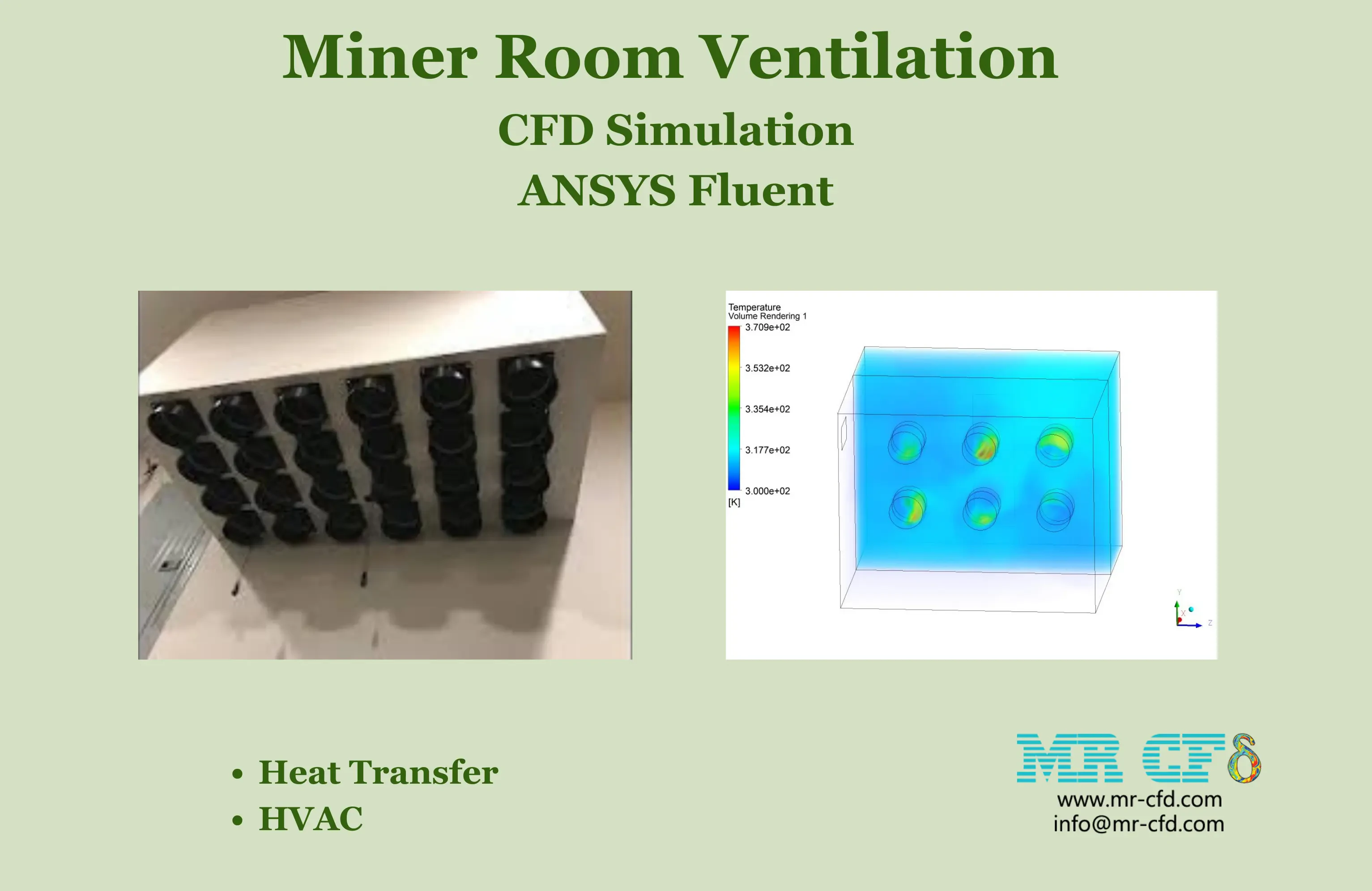
This project simulates a Miner Room Ventilation in ANSYS Fluent software. The geometry of the problem is designed in Spaceclaim then Meshed in ANSYS Meshing software with 1,530,586 cells. The turbulence of the air flow is simulated with RNG k-e model. The energy source in cell zone conditions is activated for the fans.
Boat Propeller Cavitation
Beginner, Intermediate, Advanced
Price: $40
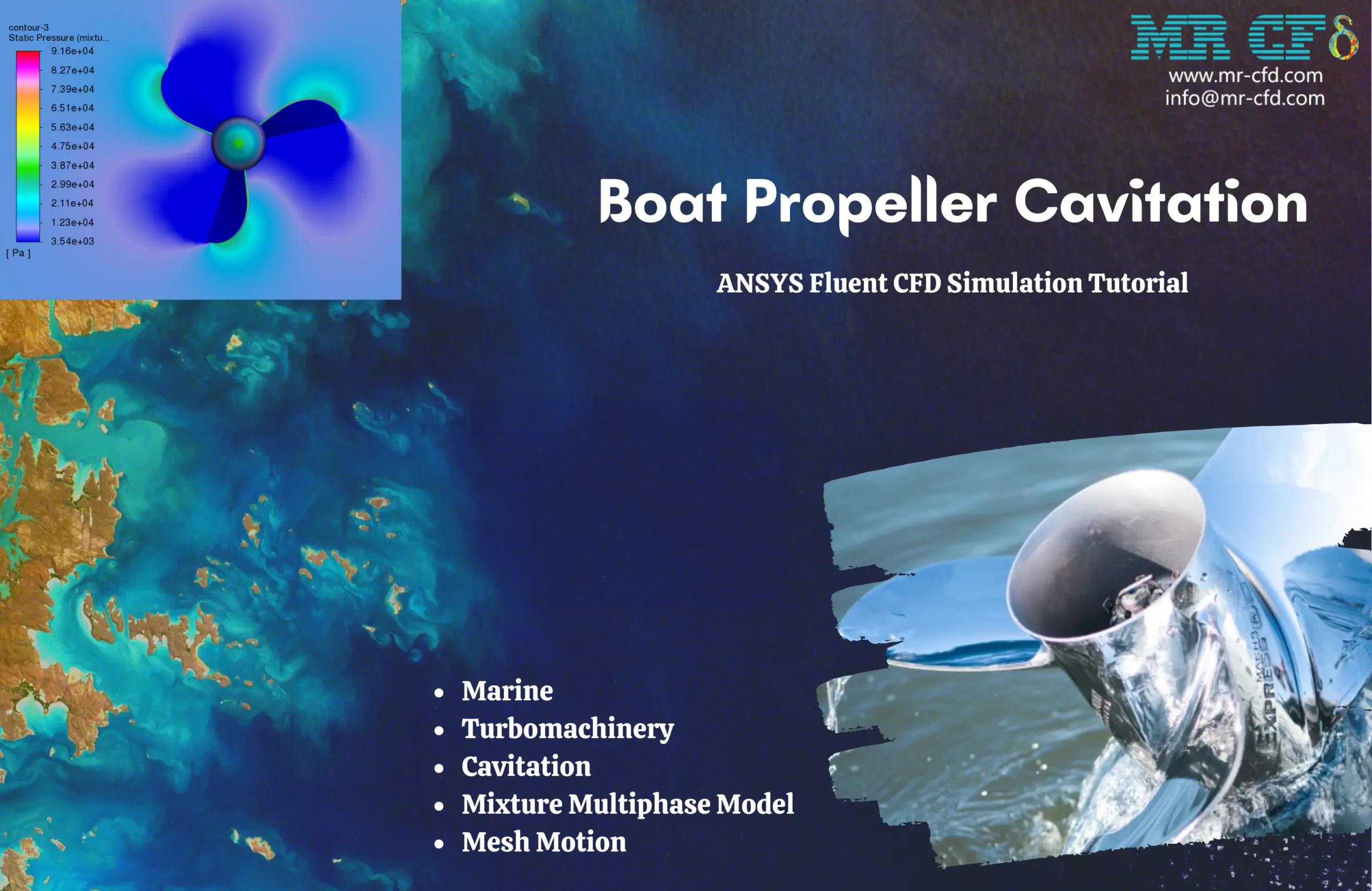
This tutorial simulates cavitation on a boat propeller using ANSYS Fluent. It applies the Mixture multiphase model with the Schnerr-Sauer cavitation model and mesh motion for the rotating propeller, and examines how pressure distribution and rotational speed drive vapor formation on the blades.
Wind Driven Rain (1-way Vs. 2-way) DPM, Ansys Fluent CFD Simulation Training
Intermediate, Advanced
Price: $100
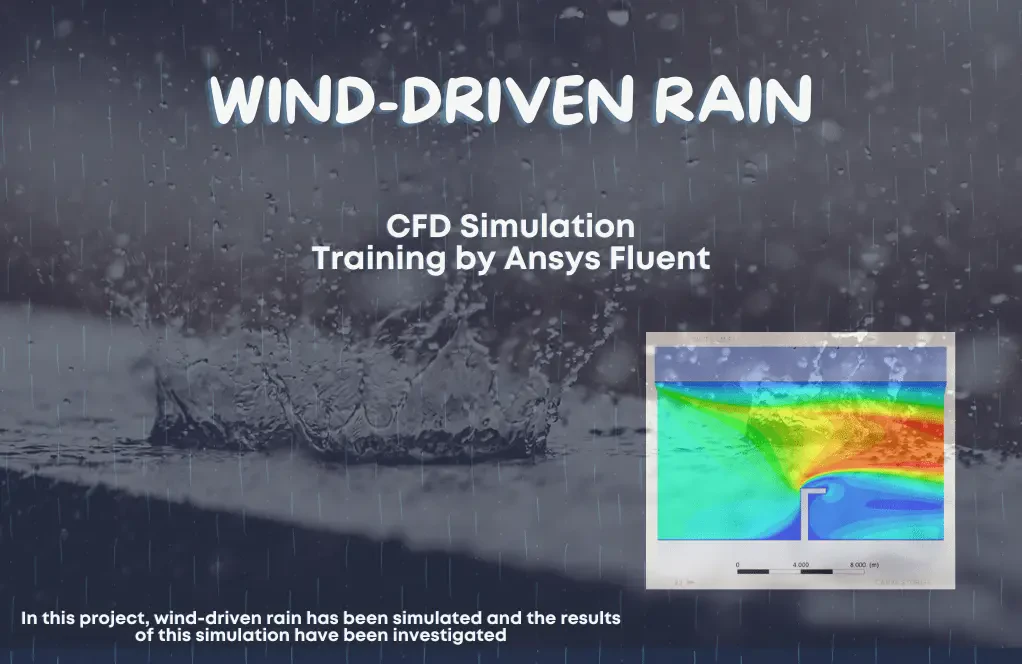
In this project, wind-driven rain has been simulated, and the results of this simulation have been investigated.
Price: $48
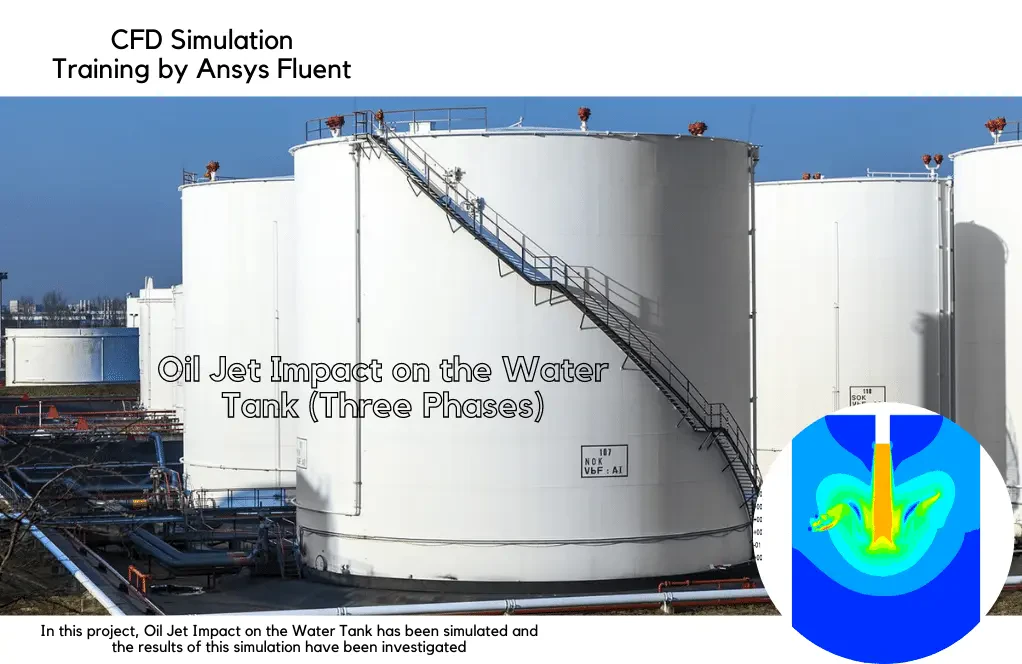
Using Multi-Fluid VOF (Eulerian-based) approach with three phases (air, water, and oil). Explanation and comparison of different Eulerian approaches, selecting the most suitable model for this simulation. Turbulent viscous modeling for capturing high-velocity jet behavior and interface instabilities. Discussion of explicit and implicit formulations, highlighting their numerical stability and accuracy in transient multiphase simulations.