

Flow Regimes Online Courses
Here's every CFD online course related to Flow Regimes category.

Price: $9
This course takes you from zero to your first working simulations in ANSYS Fluent, covering foundational projects across 16 engineering fields — aerospace, biomedical, chemical, HVAC, marine, renewable energy, and more — alongside core flow models and Fluent modules. By the end, you'll be comfortable setting up, running, and interpreting basic CFD simulations on your own.
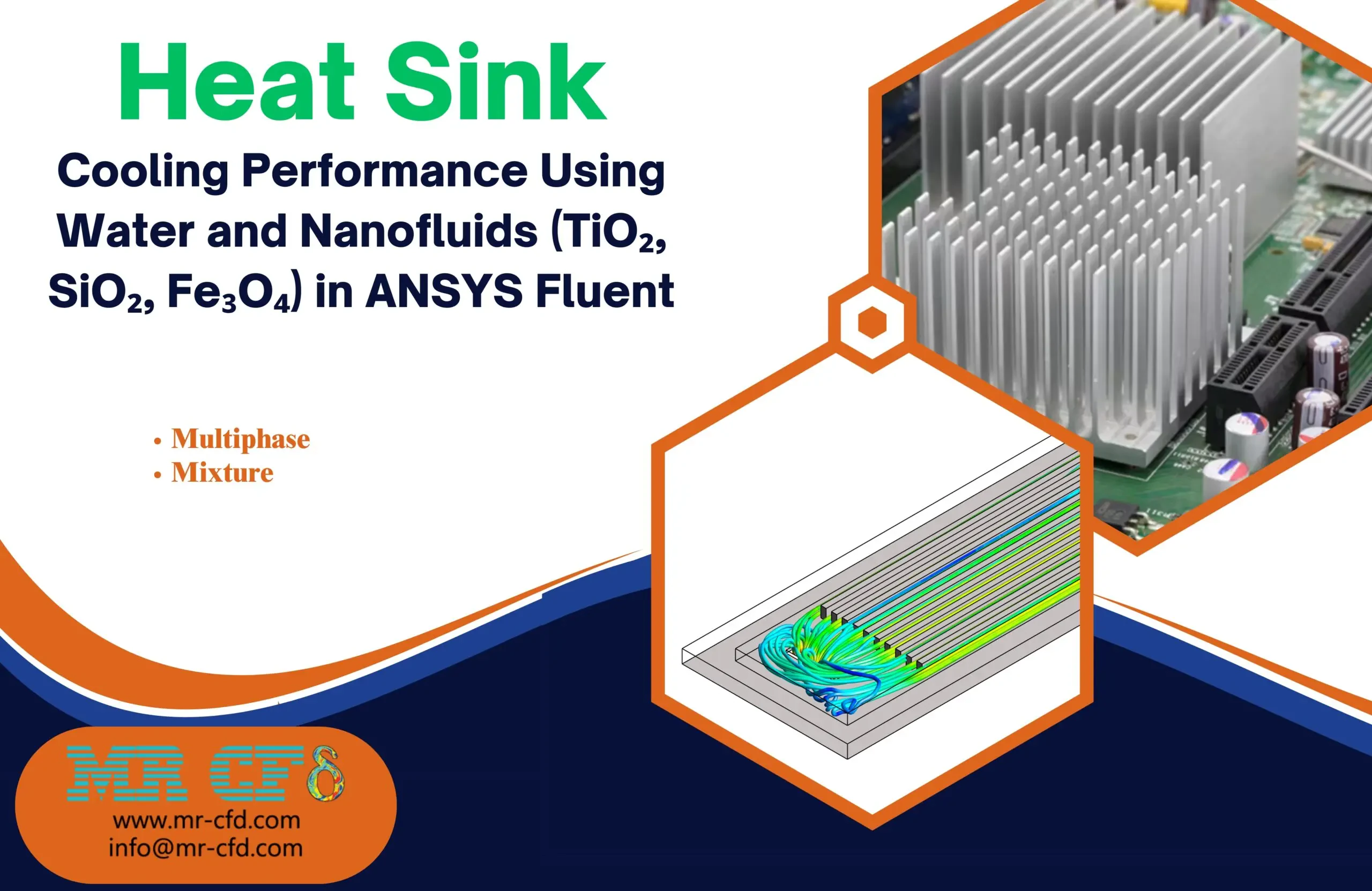
Heat Sink Cooling Performance Using Water and Nanofluids (TiO₂, SiO₂, Fe₃O₄) in ANSYS Fluent
Beginner, Intermediate
Price: $63
This project presents a numerical study of heat transfer in a heat sink using ANSYS Fluent. Four cases were simulated, including pure water (single-phase) and three nanofluids (water mixed with TiO₂, SiO₂, and Fe₃O₄) using the mixture multiphase model. The geometry was created in ANSYS DesignModeler, and a high-quality mesh of about 1.6 million elements was generated. A pressure-based, steady-state solver with the SIMPLE algorithm was applied. The results, illustrated in contour plots of velocity and temperature, show that nanofluids enhance cooling efficiency compared to pure water. Among the tested fluids, the Fe₃O₄–water mixture demonstrated the best thermal performance at the fins and base plate, highlighting its potential for advanced heat sink applications
Price: $480
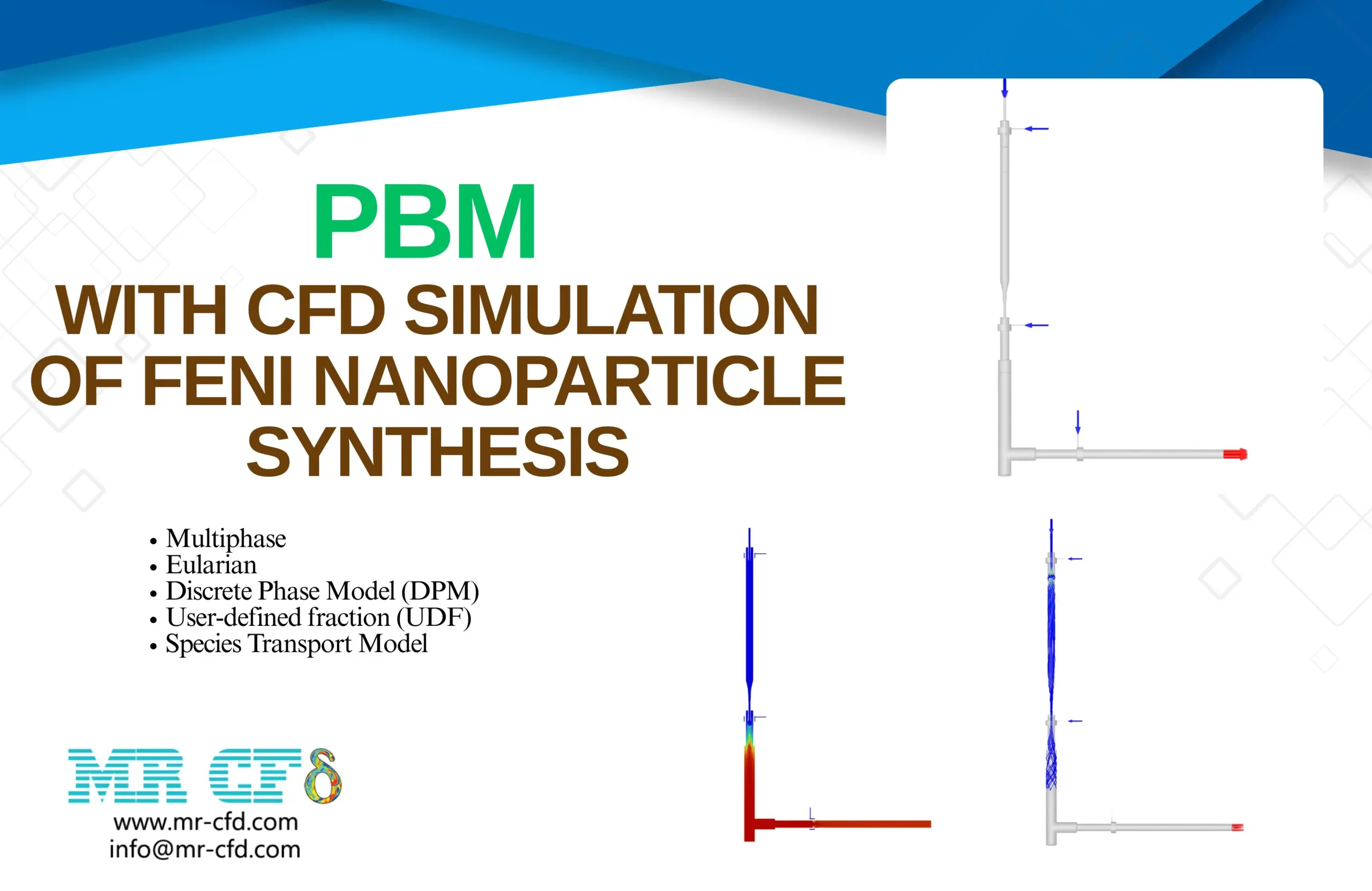
PBM with CFD Simulation of FeNi Nanoparticle Synthesis is performed using ANSYS Fluent . A Multiphase Eulerian approach is applied with FeNi alloy represented in the secondary phase. Powder precursors (FeCl₂ and NiCl₂) are injected into the domain using the Discrete Phase Model (DPM). The Species Transport Model with finite-rate Arrhenius kinetics is used to simulate the reduction reactions. User-Defined Functions (UDFs) implement nucleation, growth, and agglomeration phenomena for nanoparticle prediction.

Price: $140
This project simulates blood flow in a porous artery wall using CFD in ANSYS. The wall is modeled as a high-viscosity fluid to mimic porosity, with no actual flow through it. Geometry was simplified, meshed, and solved in Fluent under steady laminar conditions. The study includes validation, mesh independence, and analysis of velocity profiles.

Price: $270
This artery flow project involves the simulation of blood flow in a compliant artery using CFD and FSI techniques in ANSYS. The primary objectives are to validate the simulation against a published study, analyze mesh independence, and investigate the effects of wall compliance and porosity on hemodynamic behavior. The artery geometry is simplified and reconstructed for numerical accuracy, with meshing performed in ANSYS Meshing and flow solved using Fluent. Wall deformation is modeled using the FSI module, while porosity effects are simulated by assigning high-viscosity fluid properties to the vessel wall. Simulations are performed under unsteady, incompressible flow conditions with non-Newtonian blood properties. Key results include time-dependent deformation, wall shear stress, and velocity distributions, with validation confirming a shear stress error below 1% in mesh studies.
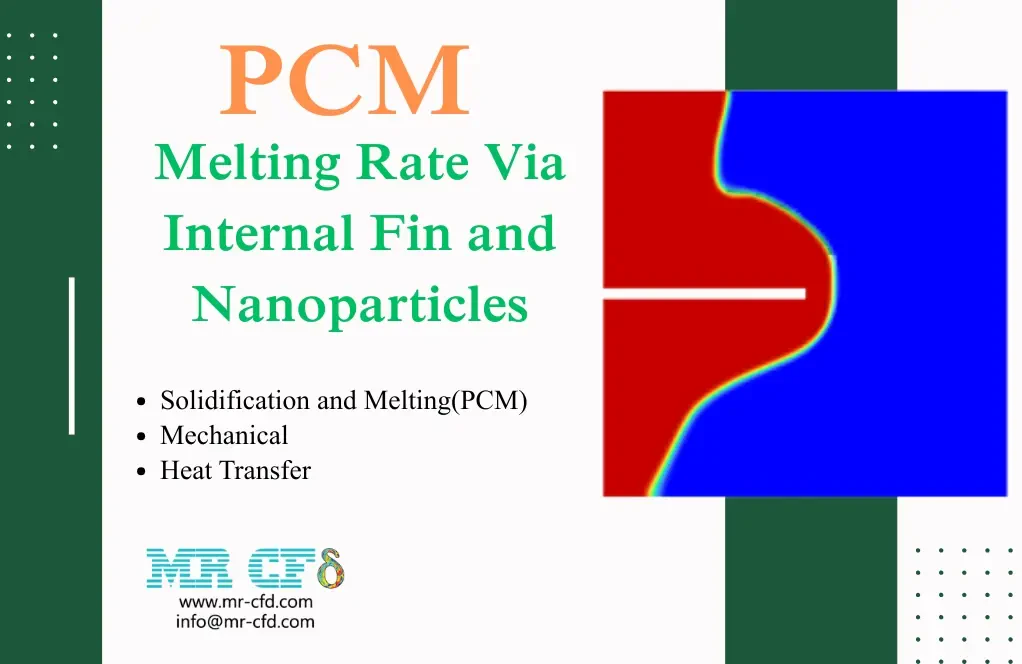
PCM Melting Rate Via Internal Fin and Nanoparticles
Intermediate, Advanced
Price: $20
This project explores the simulation of phase change material (PCM) melting within a 2D cavity, utilizing internal fins and nanoparticles to enhance thermal performance. The cavity, measuring 20mm in width and filled with paraffin wax, features a left wall and fin maintained at a constant temperature of 350K, while the right wall is kept at 300K, with other walls insulated. Simulations conducted over 375 seconds revealed that heat transfer occurs due to a temperature gradient, initiating phase change once the PCM reaches its melting temperature. Results indicated that 35.65% of the material was melted by the end of the simulation, providing critical insights into heat transfer efficiency and the influence of design parameters on PCM behavior in thermal systems.
Price: $27
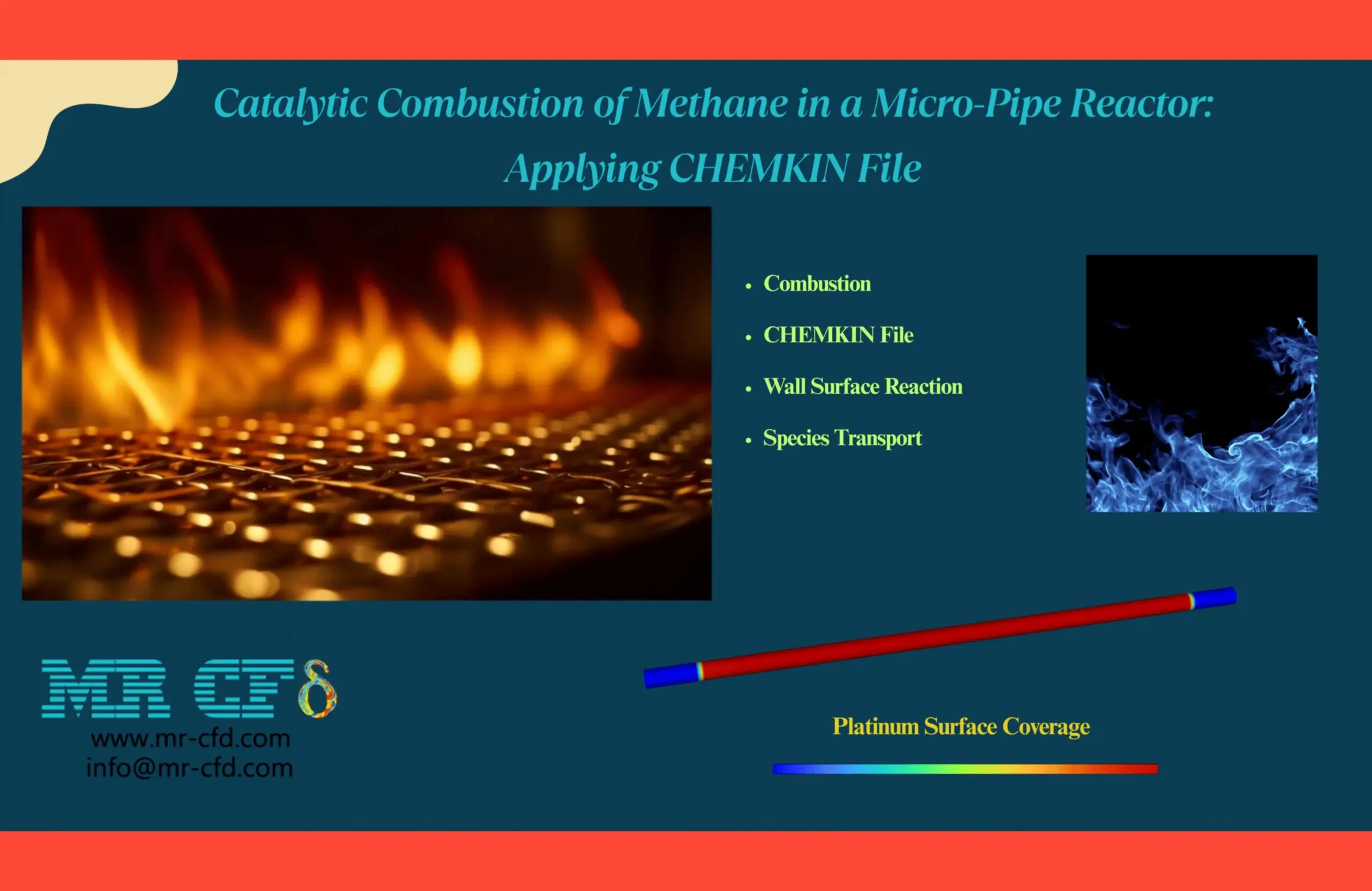
This report presents a simulation which investigates the catalytic combustion of methane in a micro-pipe reactor. A CHEMKIN file was created to define detailed wall surface reactions based on the reactions reported by Deutschmann (1996). The geometry of the micro-reactor was created using ANSYS SpaceClaim software. A high-quality hexahedral elements mesh was generated using ANSYS Meshing software. Appropriate species transport settings and boundary conditions were applied to correctly simulate the volumetric and wall surface reactions.
Price: $72
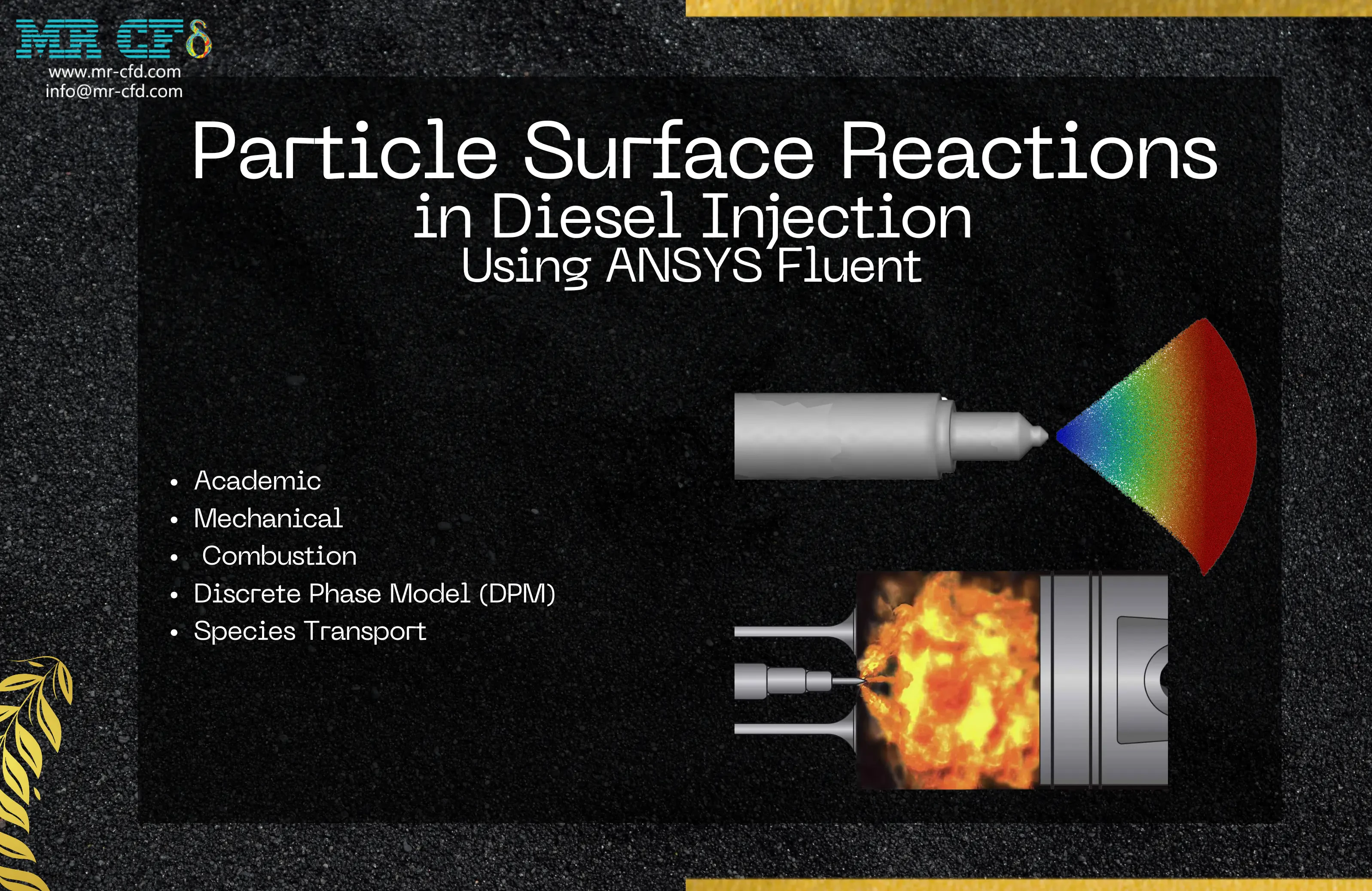
The main objective of this study is to analyze the behavior of the reacting spray The study combines the finite-rate chemistry and eddy dissipation models to capture kinetic-controlled and turbulence-driven reaction dynamics Water evaporates first due to its lower boiling point, while gasoline undergoes thermal decomposition and combustion The mesh was generated using ANSYS Meshing. The final mesh comprises 1,250,256 cells, balancing computational accuracy and efficiency.
Price: $260
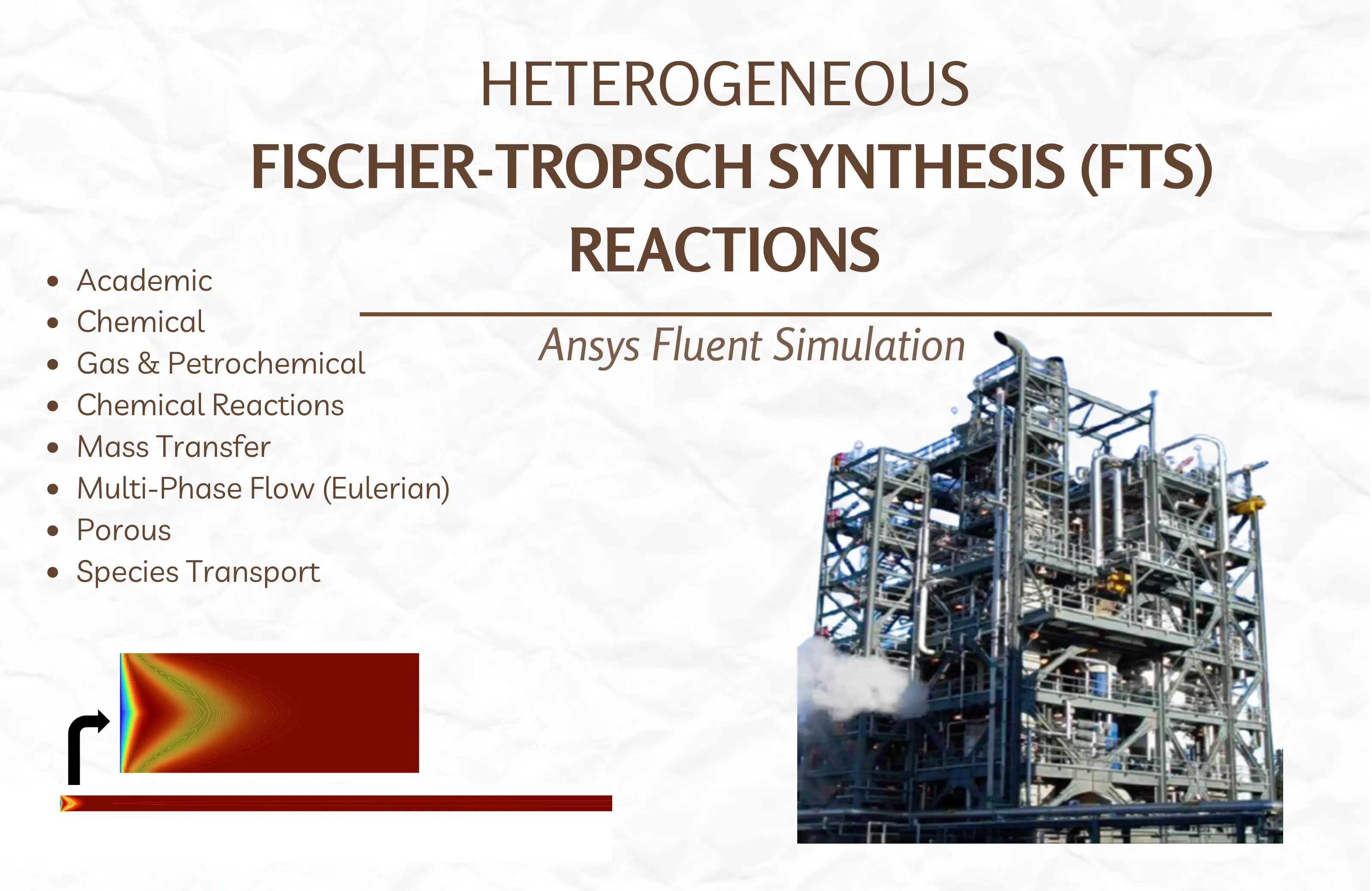
This report presents the simulation of a reactive multiphase system incorporating heterogeneous Fischer-Tropsch synthesis reactions in a porous medium An iron (Fe) catalyst catalyzes the reactions, and the reaction rates are determined using Arrhenius kinetics. The Eulerian multiphase model is employed to investigate the interaction between different phases A Lee mass transfer model is applied for the phase change of water between liquid and gaseous states. A 2D geometry was created using SpaceClaim and The domain was meshed in ANSYS Meshing, using a structured mesh with 105,000 structured elements.