

Flow Regimes Online Courses
Here's every CFD online course related to Flow Regimes category.
Price: $12
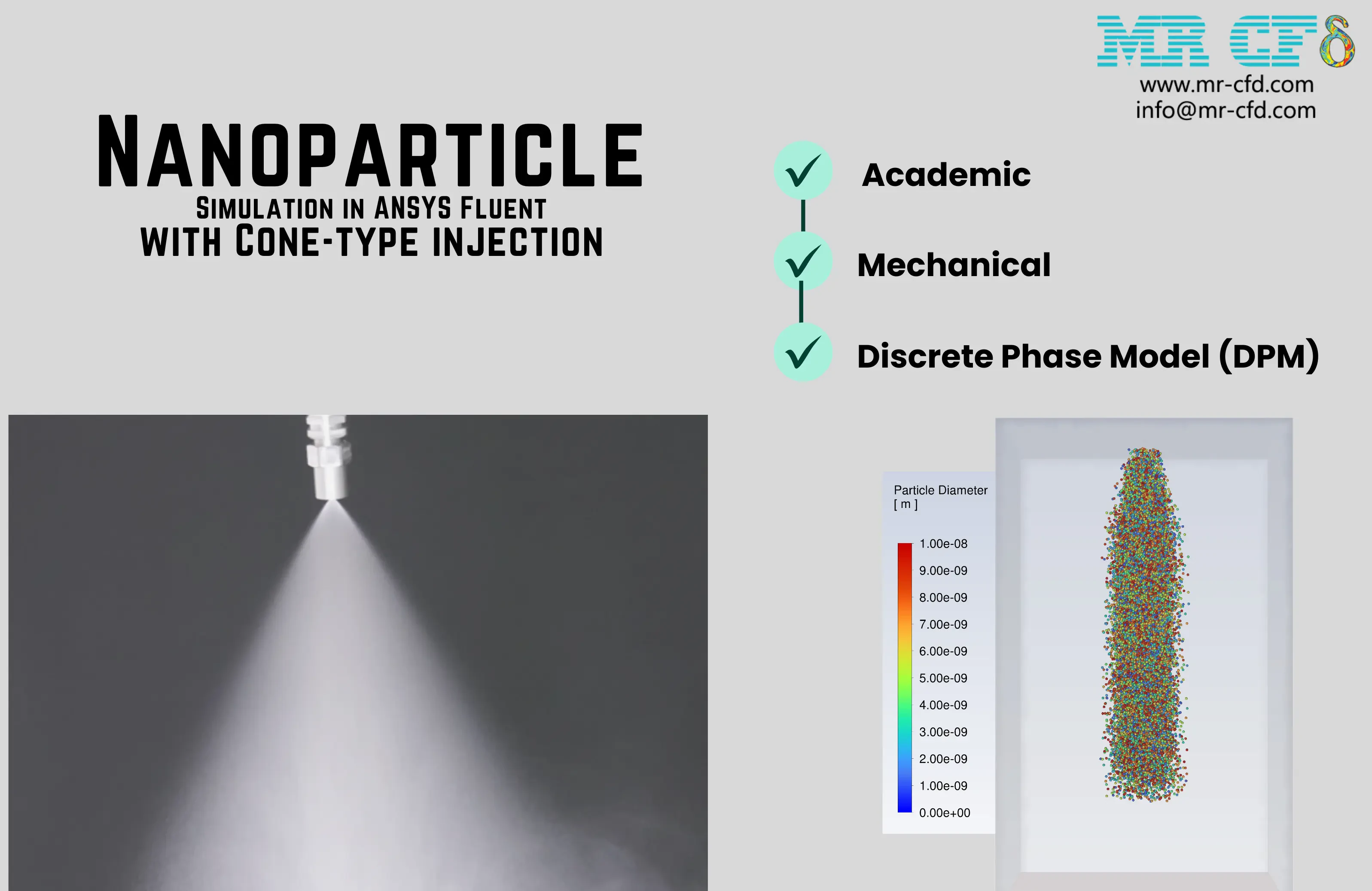
This report details a nanoparticle simulation conducted using ANSYS Fluent The simulation geometry consists of a rectangular cuboid created in SpaceClaim . Meshing was performed in ANSYS Meshing, resulting in a grid of 151,294 triangular cells Discrete Phase Model (DPM) activated, Flow and turbulence equations deactivated
Price: $31.50
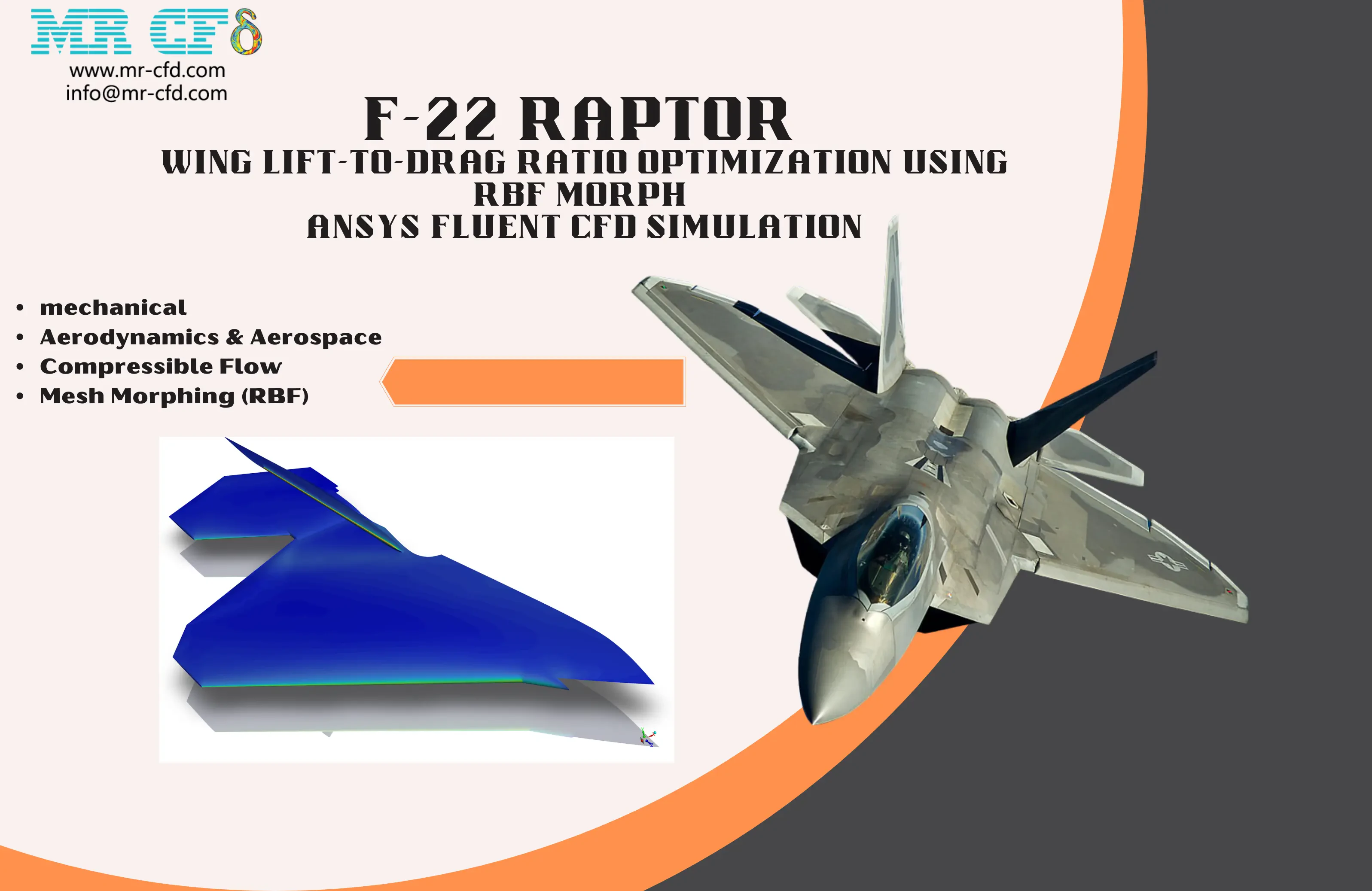
The problem numerically simulates the Lockheed Martin F-22 Raptor using ANSYS Fluent The geometry is designed in SpaceClaim, and the meshing is performed using fluent Meshing. The mesh type is polyhedral, and the element number equals 4,989,000. We aim to Maximize the Lift-to-Drag Ratio of wings. We use the Adjoint Solver to analyze the Shape Sensitivity. The Design Optimization is performed with the Gradient-based Radial Basis Function (RBF) used to apply Mesh Morphing.
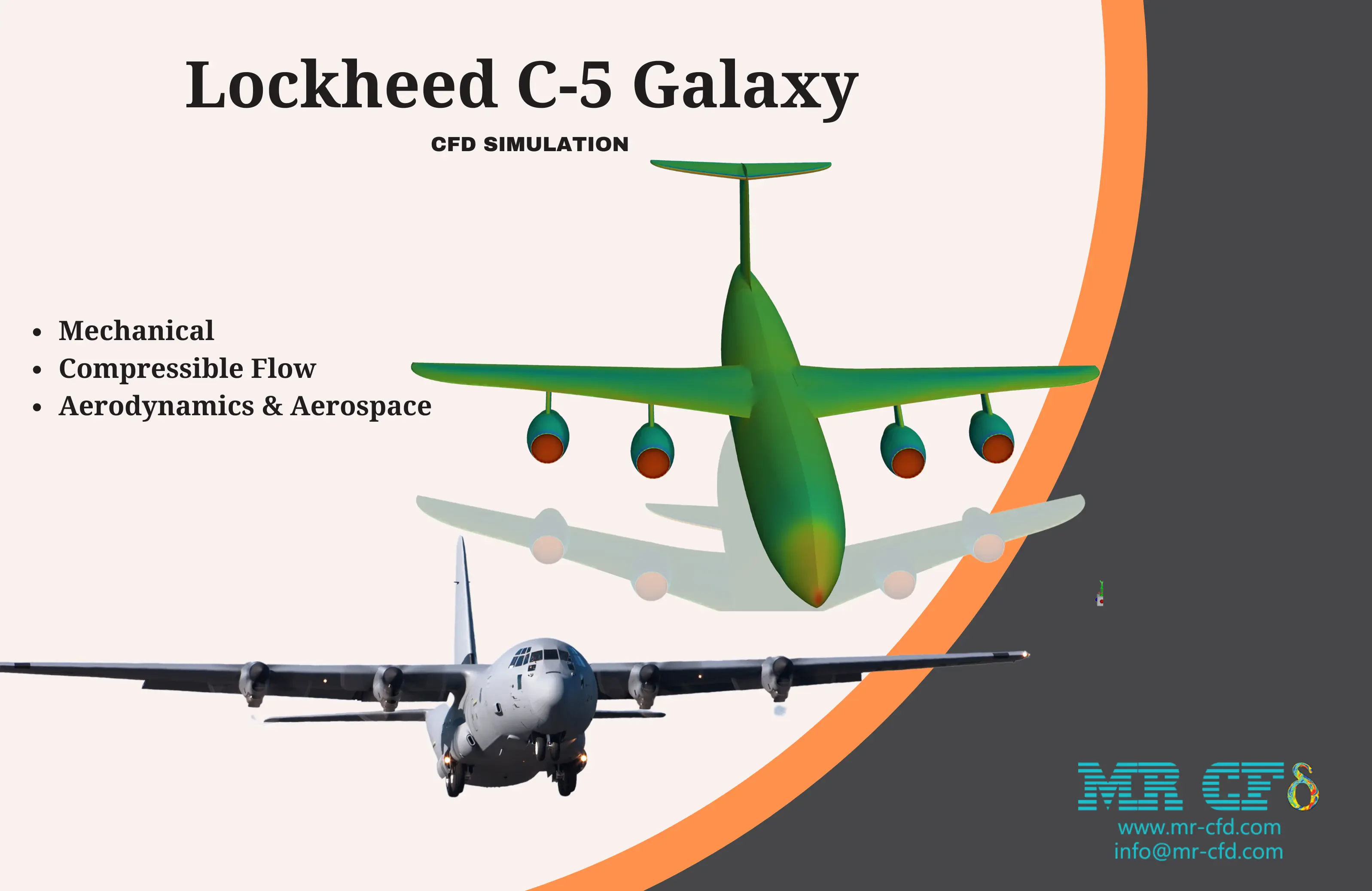
Lockheed C-5 Galaxy Aerodynamic CFD Simulation
Beginner, Intermediate
Price: $10
This problem simulates a Lockheed C-5 Galaxy using ANSYS Fluent software. The geometry is designed in SpaceClaim, and the meshing is performed using fluent Meshing with approximately 14 million cells. The simulation is carried out using the pressure-based solver. The turbulence model is set to Realizable k-ε.
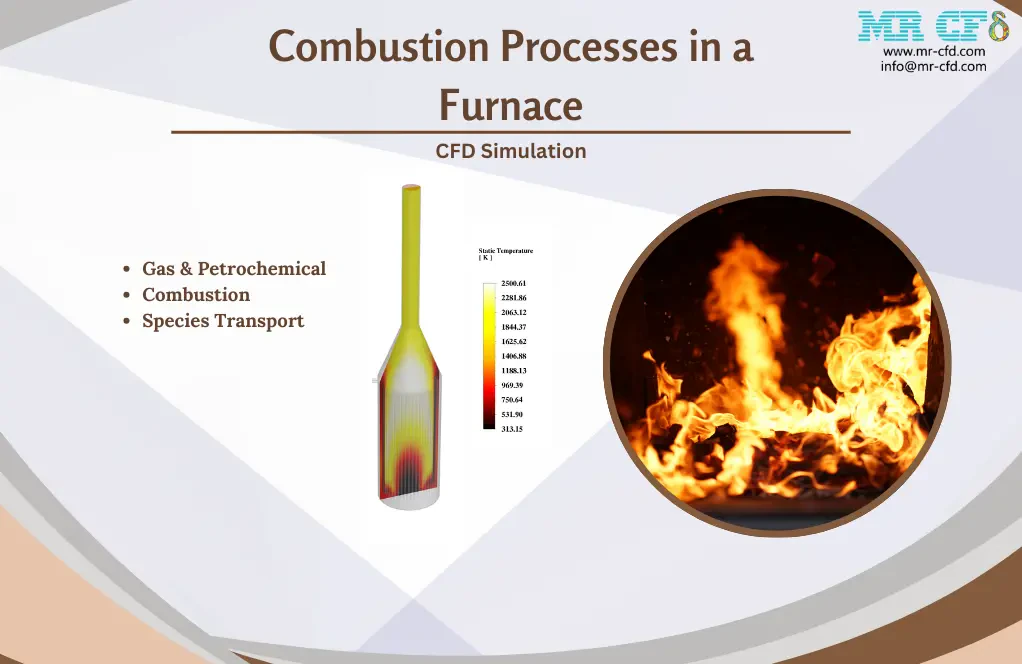
Combustion Processes in a Furnace CFD Analysis
Intermediate
Price: $16
This report details a Computational Fluid Dynamics (CFD) simulation of a furnace using ANSYS Fluent. The study investigates combustion processes, species transport, and NOx production to optimize furnace design and reduce emissions. The simulation employs a steady-state, pressure-based solver with the Realizable k-epsilon turbulence model. Results include density stratification, species distribution, temperature gradients, and flow patterns, providing valuable insights into combustion dynamics and pollutant formation within the furnace.
Price: $48
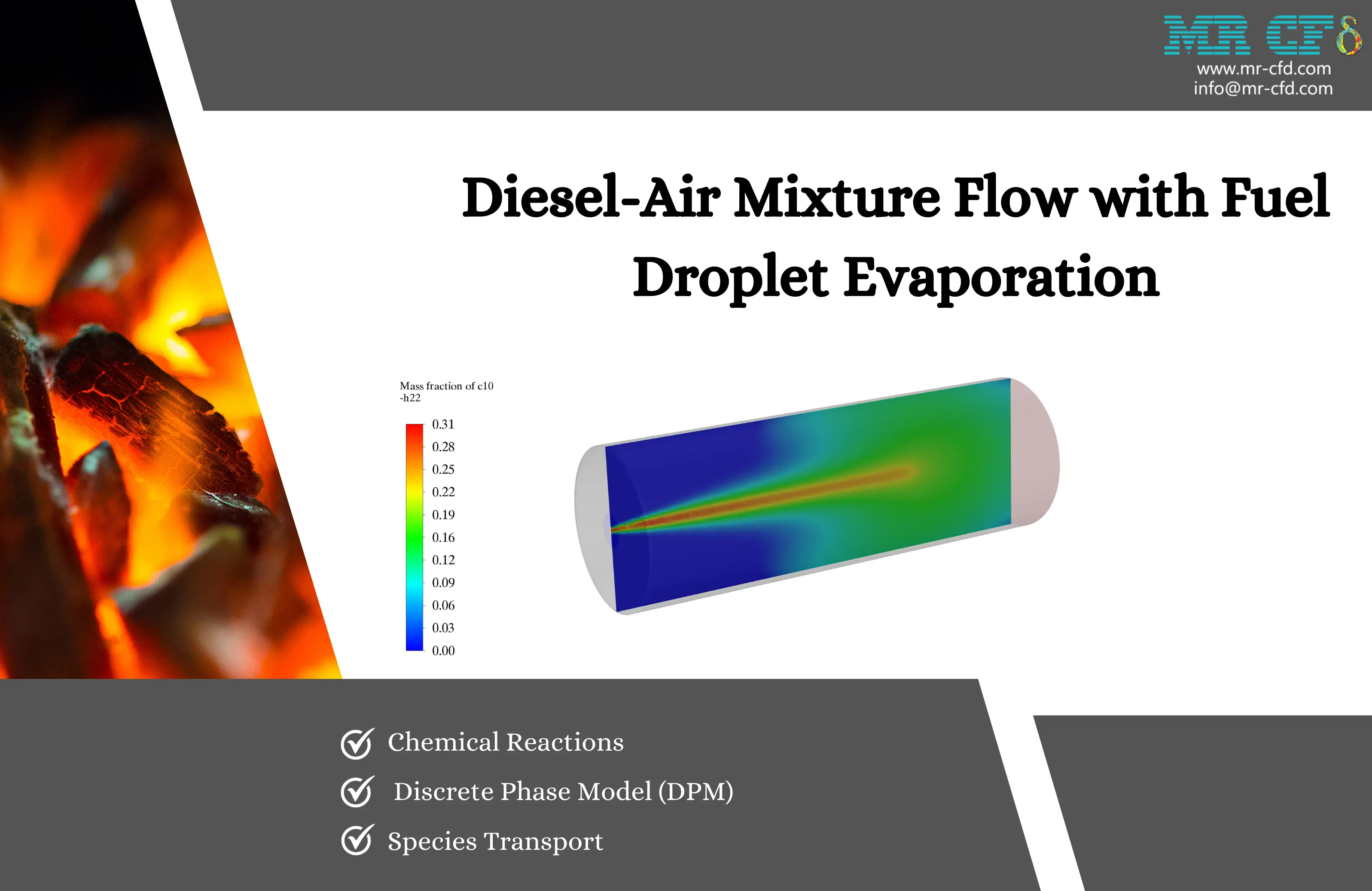
This study simulates diesel-air mixture flow with fuel droplet evaporation using ANSYS Fluent CFD software. The 3D cylindrical chamber geometry is designed in SpaceClaim. Meshing is performed using ANSYS Meshing, resulting in over 2 million elements. The Species Transport model with Eddy-Dissipation is employed for turbulence-chemistry interaction. The Discrete Phase Model (DPM) is utilized to simulate fuel droplet movement and evaporation.
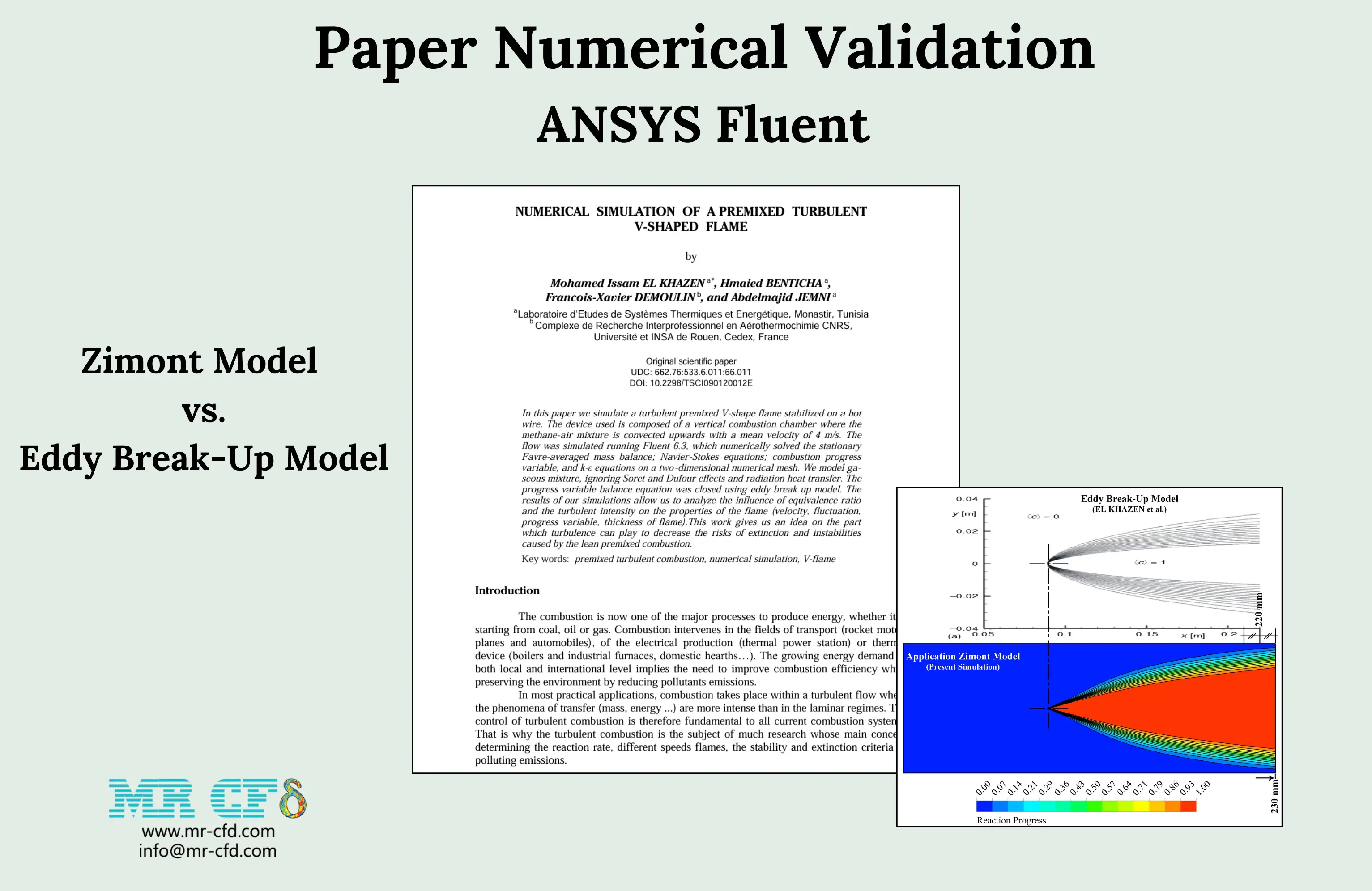
Premixed Turbulent V-shaped flame, Paper Numerical Validation, ANSYS Fluent
Intermediate, Advanced
Price: $36
In this project, a V-Flame is simulated using the Zimont model, then compared with the paper "Numerical simulation of a premixed turbulent V-shaped flame." by Ansys Fluent software. Premixed combustion of methane-air is simulated, comparing the Zimont and Eddy Break-Up models. The geometry is designed in Spaceclaim software. A structured grid is used to create a mesh in the computing domain using ANSYS Meshing software.
Price: $30
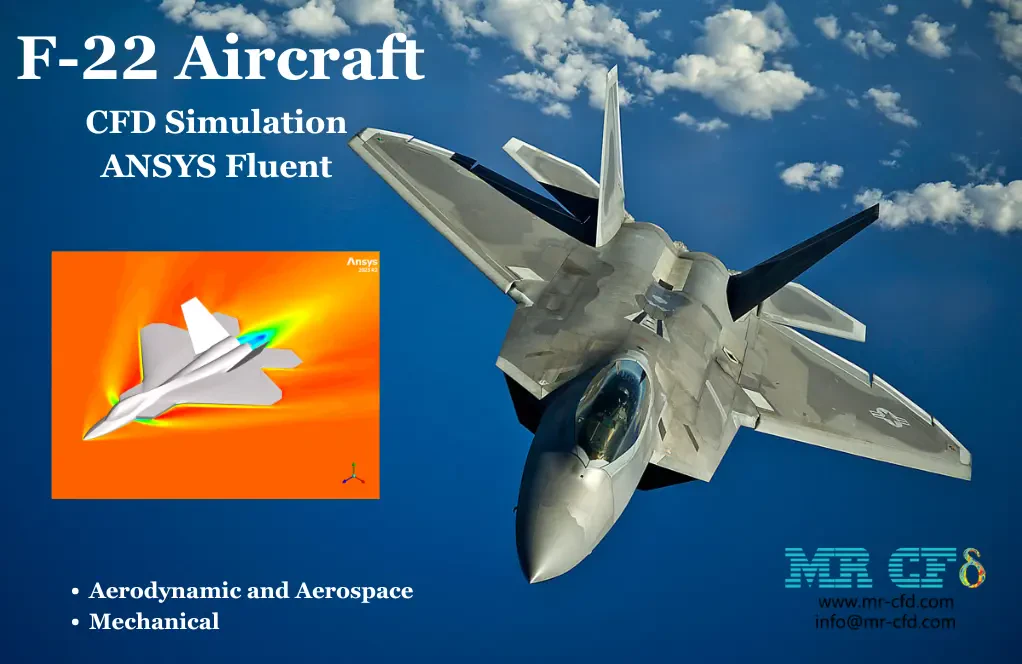
This problem simulates a F-22 aircraft using ANSYS Fluent software. The geometry is designed in SpaceClaim, and the meshing is performed using FLUENT Meshing. The simulation is carried out using the density-based solver. The turbulence model is set to k-ε Realizable.
Price: $28
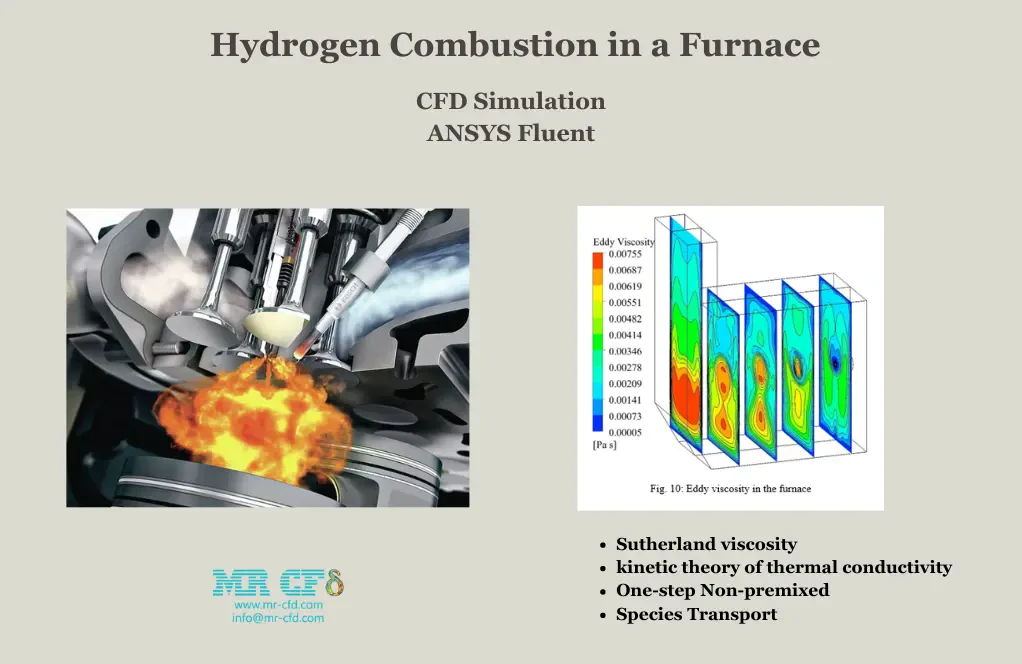
The problem numerically simulates one-step non-premixed hydrogen combustion with integration of the Sutherland viscosity and kinetic theory of thermal conductivity using ANSYS Fluent software. We design the 3-D model with the Spaceclaim software. We mesh the model with ANSYS Meshing software. The mesh type is Structured We use the Species Transport model to define a Combustion reaction. The combination of Sutherland viscosity and kinetic theory for thermal conductivity is presented for the accurate simulation of the combustion process. The standard k-e turbulence model is used to simulate the turbulence.
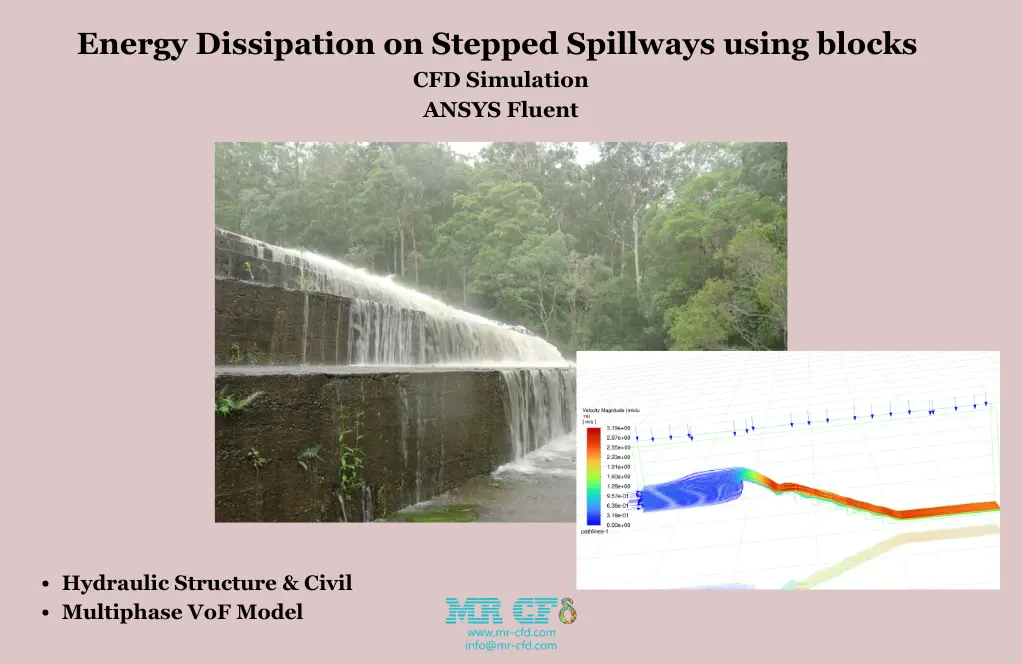
Energy Dissipation on Stepped Spillways using blocks CFD Simulation
Beginner, Intermediate
Price: $14
This study investigates the effects of energy dissipation blocks on the energy dissipation efficiency of stepped spillways using computational fluid dynamics (CFD) simulations. Two spillway configurations, with and without blocks, were analyzed under different flow conditions. The results showed that the presence of blocks enhanced energy dissipation by 6% compared to the conventional stepped spillway design. These findings contribute to the optimization of stepped spillway designs for improved energy dissipation and downstream channel protection.