

Flow Regimes Online Courses
Here's every CFD online course related to Flow Regimes category.
Price: $109
Non-Newtonian Flow: Beginner CFD Training Package is a seven-project introduction to non-Newtonian fluid simulation in ANSYS Fluent. Starting from fundamental cylinder geometries and building through industrial drilling fluids, non-Newtonian heat transfer, and biomedical blood flow up to a fluid-structure-interaction vessel, it gives newcomers a hands-on, application-driven foundation in the CFD techniques behind modern non-Newtonian and biofluid engineering — one real engineering case at a time.
Price: $39
Compressible Flow: Beginner CFD Training Package is a ten-project introduction to high-speed and compressible-flow simulation in ANSYS Fluent. Starting from compressible flow over airfoils and building through transonic wings, internal nozzle flows, shock waves, and supersonic propulsion devices to a full aircraft geometry, it gives newcomers a hands-on, application-driven foundation in the CFD techniques behind modern aerospace and high-speed flow engineering — one real engineering case at a time.
Price: $29
Chemical Reactions: Beginner CFD Training Package is a ten-project introduction to reacting-flow and combustion simulation in ANSYS Fluent. Starting from basic non-premixed combustion and building through defined reaction mechanisms, furnace and chamber geometries, industrial reforming and decomposition processes, and applied fire-safety cases, it gives newcomers a hands-on, application-driven foundation in the CFD techniques behind modern combustion and process engineering — one real engineering case at a time.
Icing: CFD Simulation Masterclass
Beginner, Intermediate, Advanced
Price: $699
Master the icing process with our “Icing: All Levels” CFD course using ANSYS Fluent. From basics to advanced, learn to perform procedures of Icing simulation by ANSYS Fluent (setting Fluent launcher on the Enterprise level and selecting the icing solver). This course equips you with the essential skills to model icing phenomena under supercooled atmospheric conditions using CFD. This study has applications, particularly in aerodynamic engineering. Ideal for beginners and experts alike, this course enhances your capabilities in Icing analysis for cutting-edge research and industrial applications.
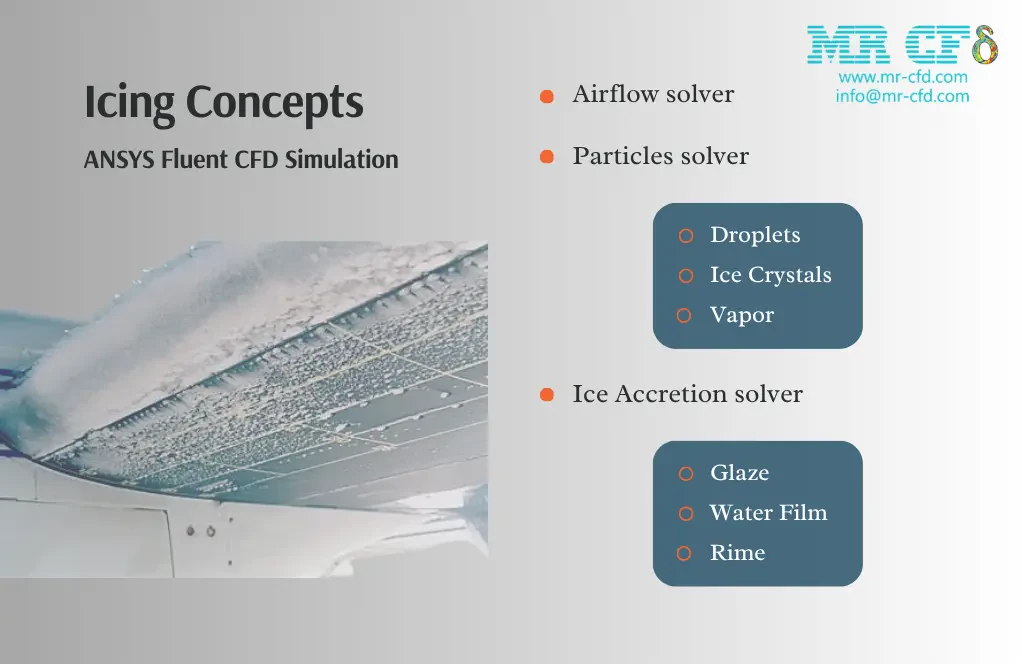
Icing Concepts
Beginner, Intermediate, Advanced
Price: Free
Introduction to the Icing Introduction to the Icing Solver in ANSYS Fluent Introduction to the Particles and Ice Accretion solver Introduction to the particle types: Droplets, Ice Crystals, and Vapor Introduction to the ice physical models: Glaze, Water Film, and Rime
Price: $49
The final step in the series, this course covers the most demanding version of each project — high-speed and reacting flows, fluid-structure interaction, UDFs, and moving geometry — the kind of coupled, multi-physics problems most CFD engineers never get past. It's built for those who want to solve undefined, real-world problems and defend their results with confidence.
Build Real-World CFD Skills with ANSYS Fluent
Intermediate
Price: $29
Building on the fundamentals, this course tackles harder, more realistic versions of the same 16 engineering fields and flow models, introducing multi-phase interactions, transient behavior, and more demanding boundary conditions. You'll leave with the skills to handle real project complexity, not just tutorial-scale problems.
Price: $450
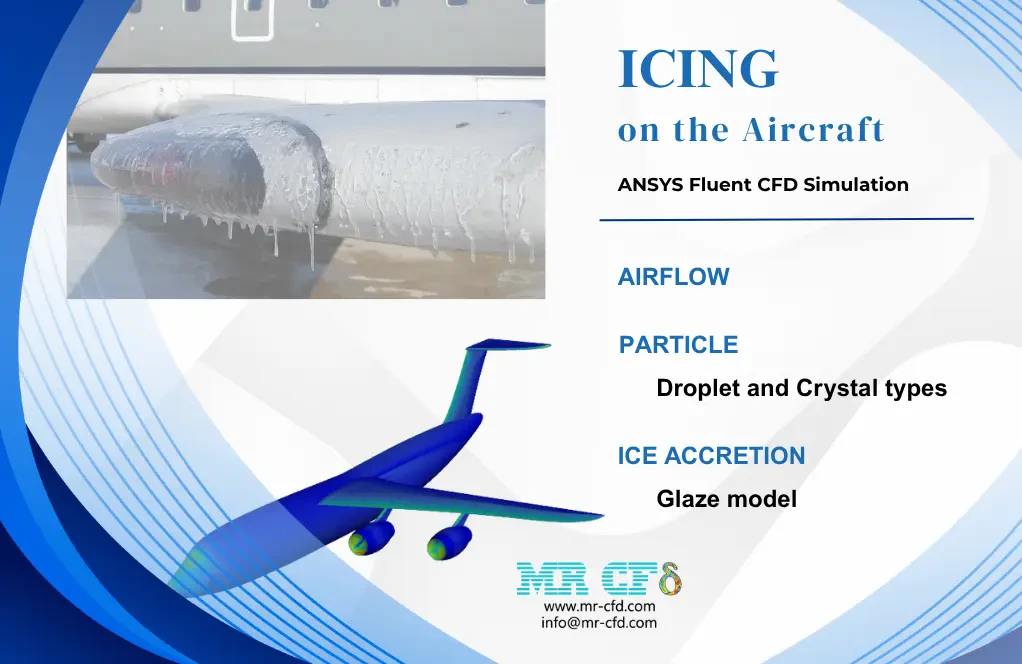
This product numerically simulates an Icing on the aircraft using ANSYS Fluent software. We model the domain in the Design Modeler and mesh it in the ANSYS Meshing. We implement the icing simulation by three solvers: Airflow, Particle, and Ice accretion. We run the icing solver at the Enterprise level in Fluent. We use the Droplet and Crystal types as the ice particle. We use the Glaze Model as the physical icing model.
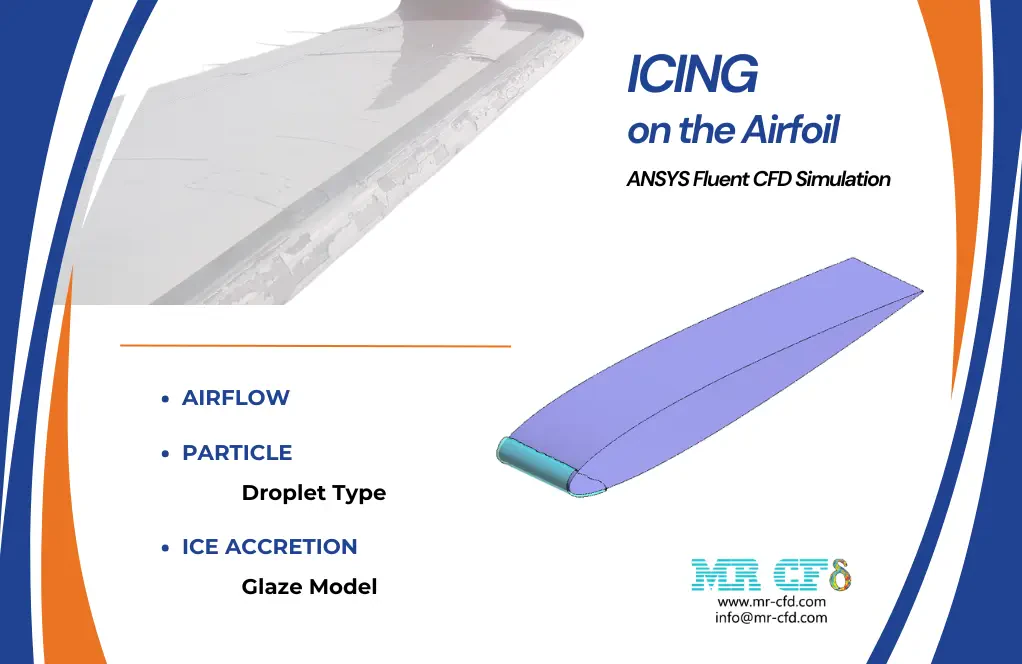
Price: $450
This product numerically simulates an Icing on the airfoil using ANSYS Fluent software. We model the domain in the Design Modeler and mesh it in the ANSYS Meshing. We implement the icing simulation by three solvers: Airflow, Particle, and Ice accretion. We run the icing solver at the Enterprise level in Fluent. We use the Droplet type as the ice particle. We use the Glaze Model as the physical icing model.