

Multi-Phase Flow Online Courses
Here's every CFD online course related to Multi-Phase Flow category.
Price: $28
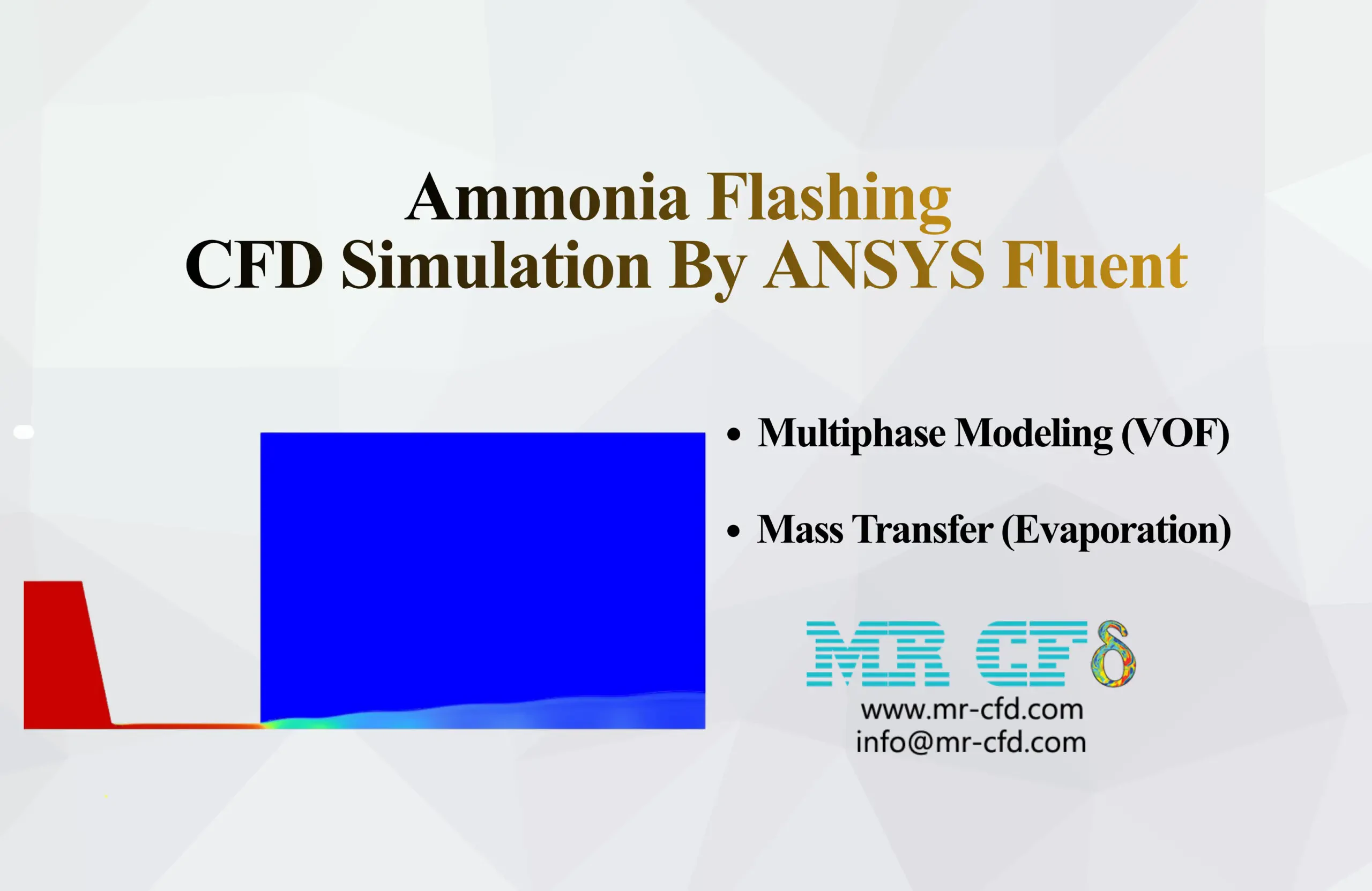
2D Ammonia Flashing Simulation. VOF model with three phases (Air, Ammonia liquid and Ammonia Vapor). Lee Model for Evaporation of Ammonia.
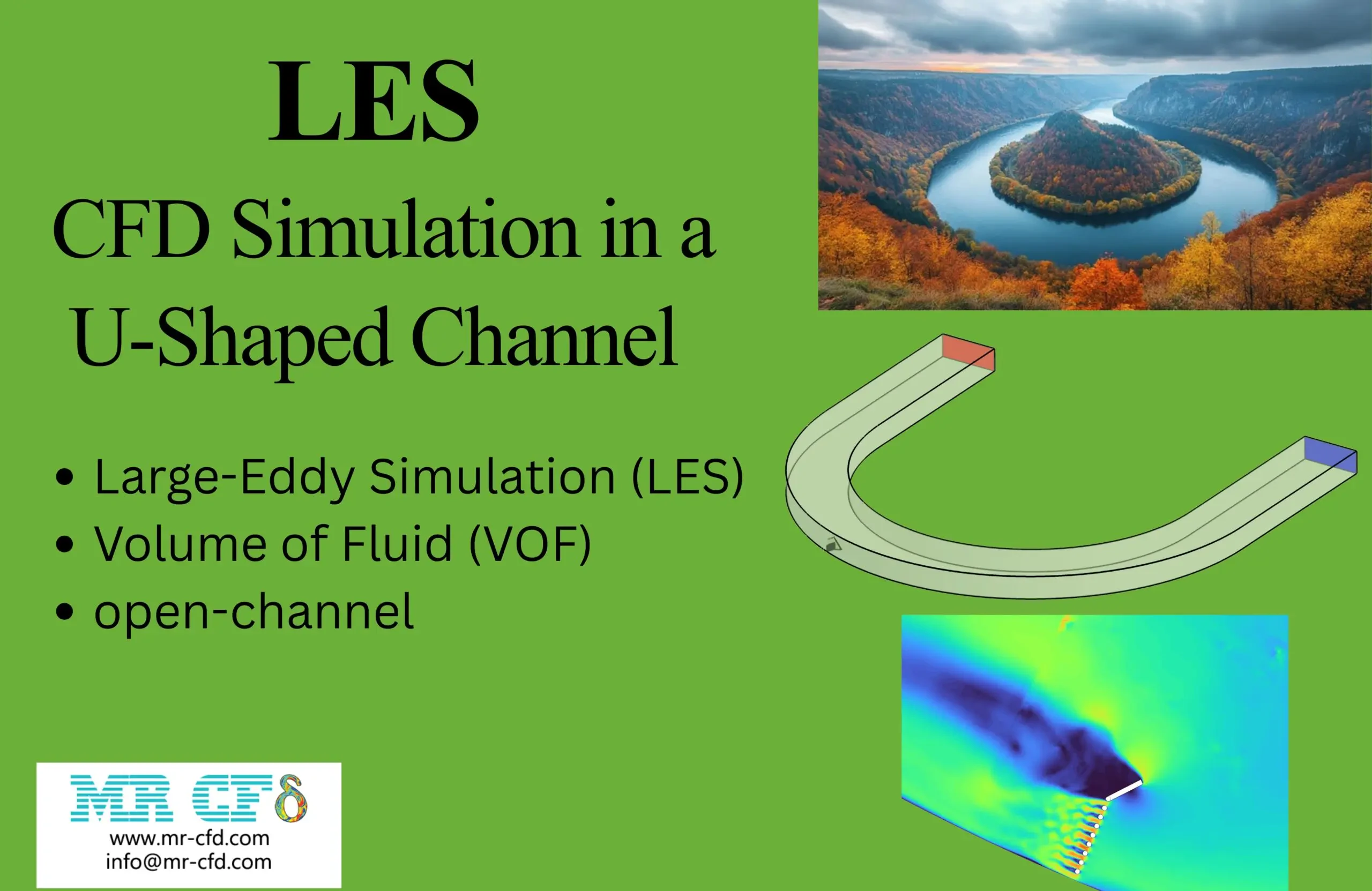
LES using open-channel in VOF for Multiphase Flow in a U-Shaped Channel
Intermediate, Advanced
Price: $240
LES–VOF simulation of multiphase open-channel flow in a U-shaped channel using ANSYS Fluent. Geometry built in DesignModeler; hexa-dominant ANSYS Meshing with local refinement near the baffle, cylinder array, bend walls, and free surface. Open-channel VOF captures the air–water free surface; LES resolves unsteady vortices (Δt = 0.01 s). Results show interface deformation, outer-wall acceleration, inner-wall separation, and vortex shedding past baffle/cylinders.
Price: $120
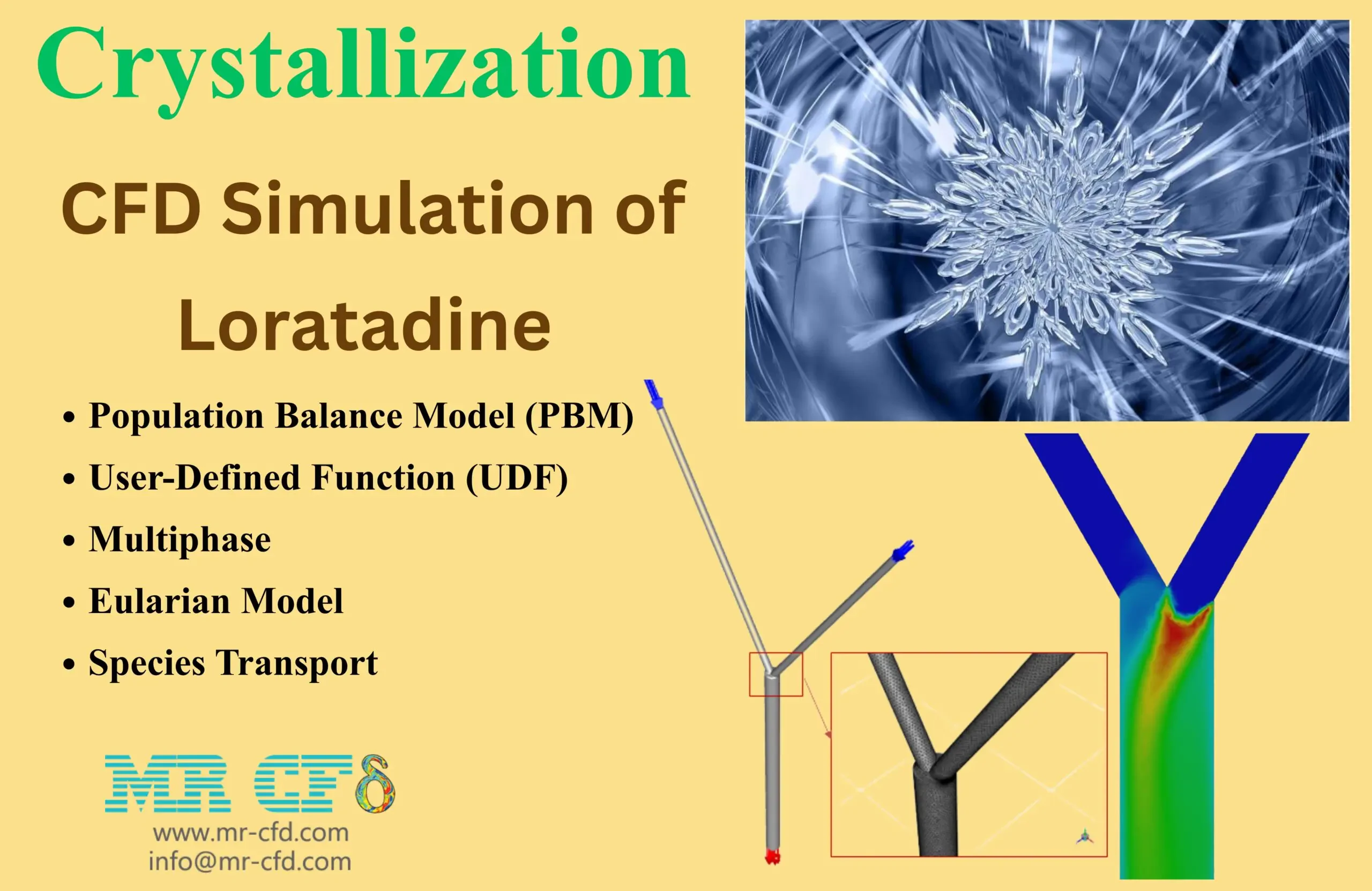
This project investigates the crystallization of Loratadine in a dual-inlet nozzle using the Population Balance Model (PBM) in ANSYS Fluent. The study focuses on the effects of mixing and flow dynamics on nucleation and crystal growth. A tetrahedral mesh with 506,677 cells was used for accurate flow and particle tracking. A User-Defined Function (UDF) defined the kinetics of crystal formation based on local conditions. The results show realistic particle size distribution and effective prediction of crystallization behavior.
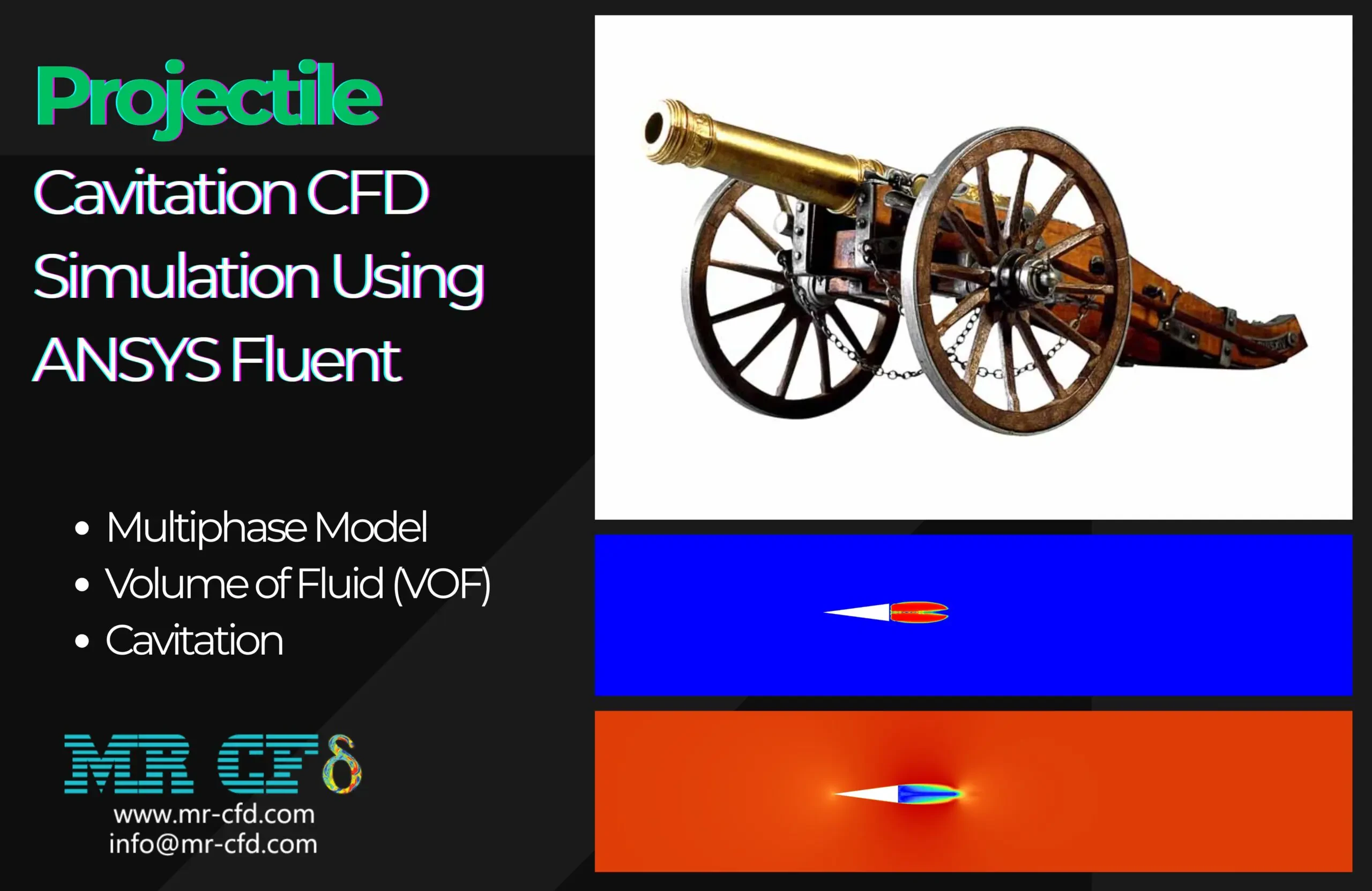
Projectile Cavitation (2D) CFD Simulation Using ANSYS Fluent
Intermediate, Advanced
Price: $120
A 2D symmetric geometry with a structured mesh of 310,000 cells was created, refined near the projectile walls for accuracy. This project investigates the cavitation phenomenon caused by a projectile moving through water using ANSYS Fluent. A transient, pressure-based solver with the Volume of Fluid (VOF) model captures the phase interaction between liquid and vapor. The simulation analyzes velocity, pressure, and vapor volume fraction around the projectile.
Price: $360
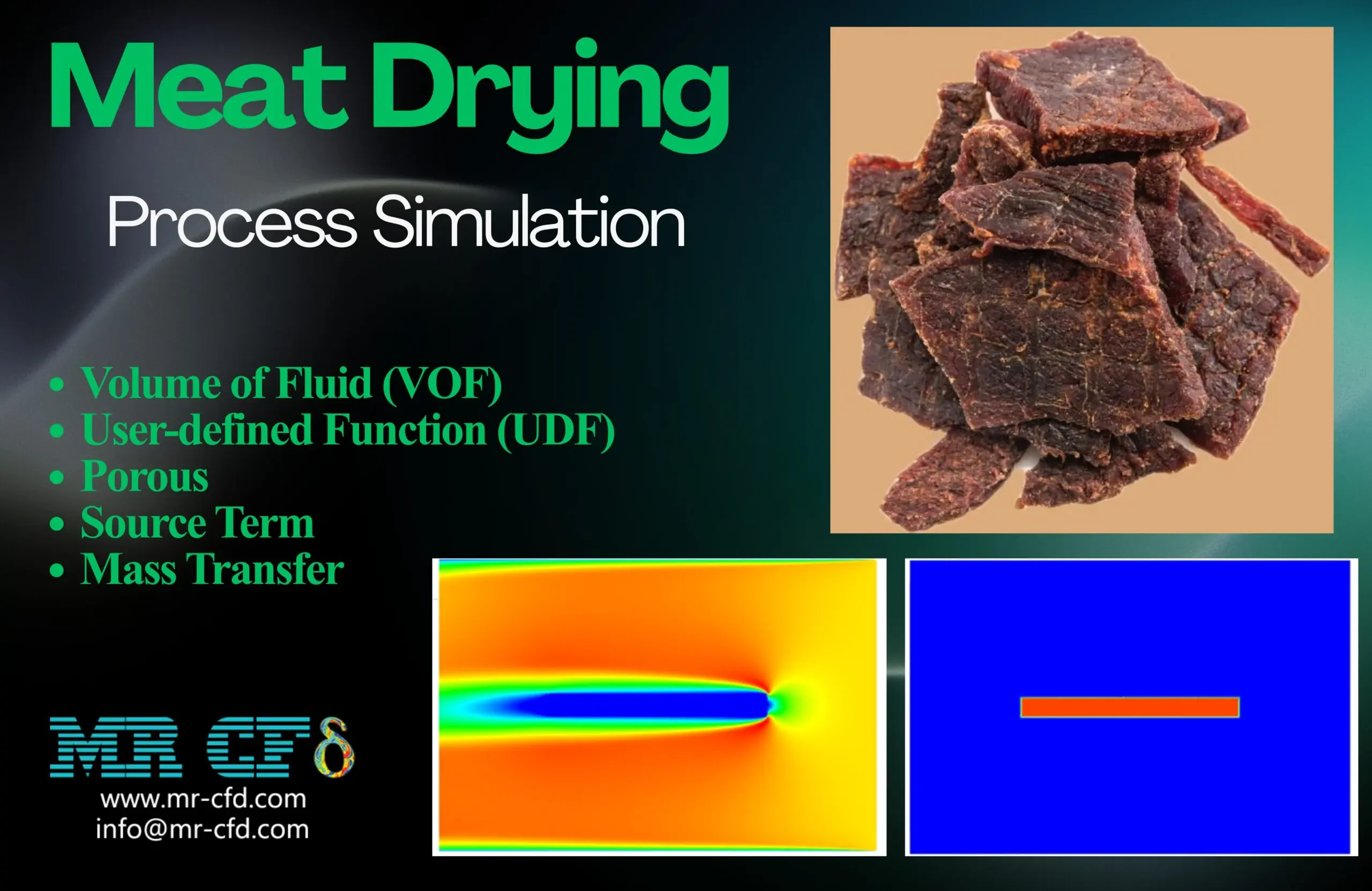
The geometry represents the meat sample and surrounding air domain, discretized with a structured mesh of 58,800 elements to accurately capture heat and mass transfer gradients. The meat drying process was simulated using CFD to analyze heat and mass transfer during drying. The VOF model was applied to capture multiphase interactions between liquid water and vapor. The meat was modeled as a porous medium to represent internal moisture transport. Infrared heating and air convection were used as drying mechanisms under two operating cases. Results showed that higher heat flux and temperature enhanced drying efficiency and reduced moisture content.
Price: $270
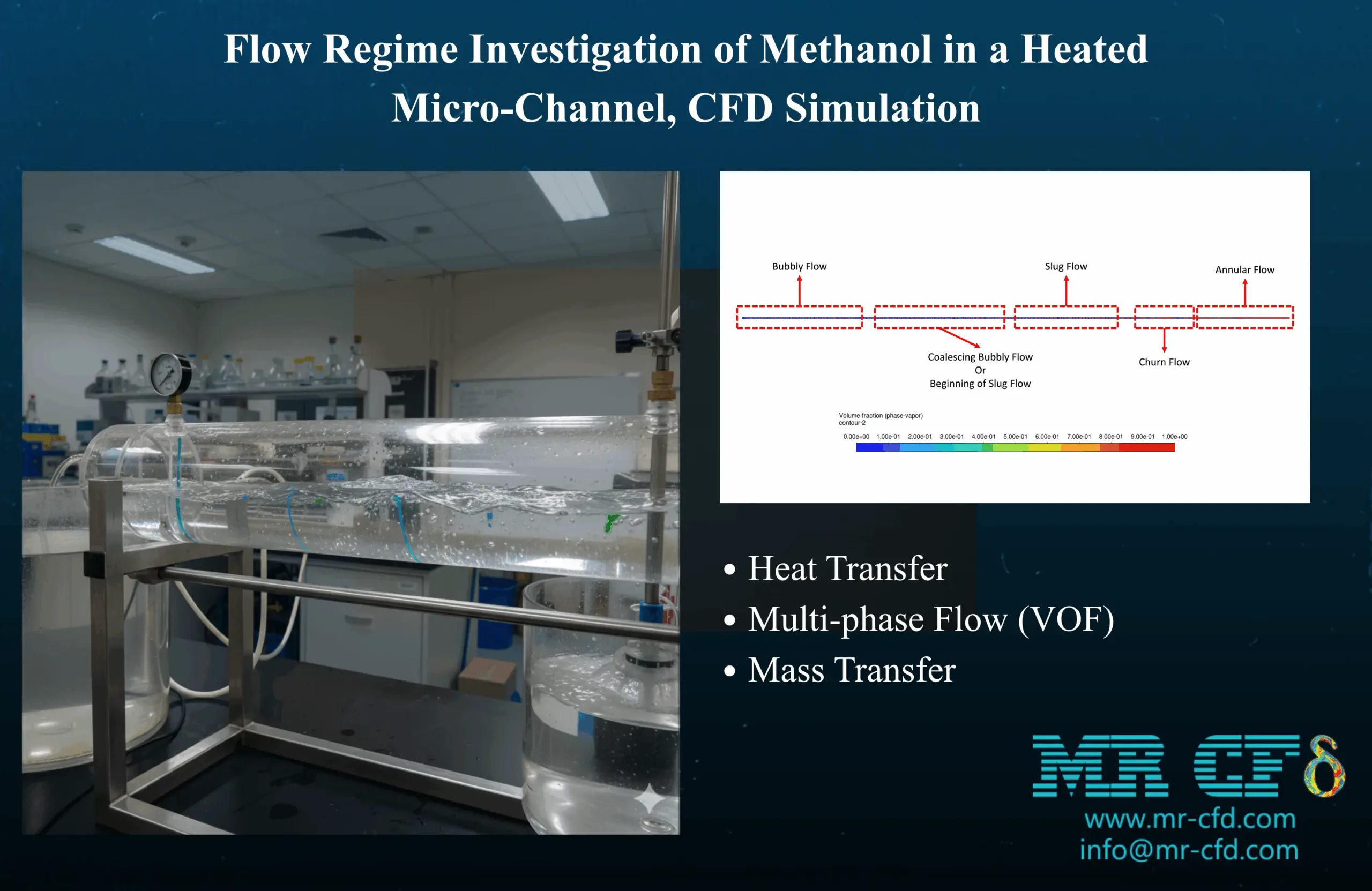
This report presents a simulation that investigates the two-phase flow boiling of methanol in a heated horizontal micro-channel. The development and transition of different flow regimes (bubbly, slug, churn, and annular) along the channel were analyzed. The 2D geometry of the micro-channel was created using ANSYS SpaceClaim software. A high-quality structured mesh was generated using ANSYS Meshing software. Appropriate multiphase model settings and boundary conditions were applied to correctly simulate the evaporation process and the resulting flow patterns.
Heat Pipe Evaporation and Condensation CFD Simulation Using ANSYS Fluent
Intermediate, Advanced
Price: $24
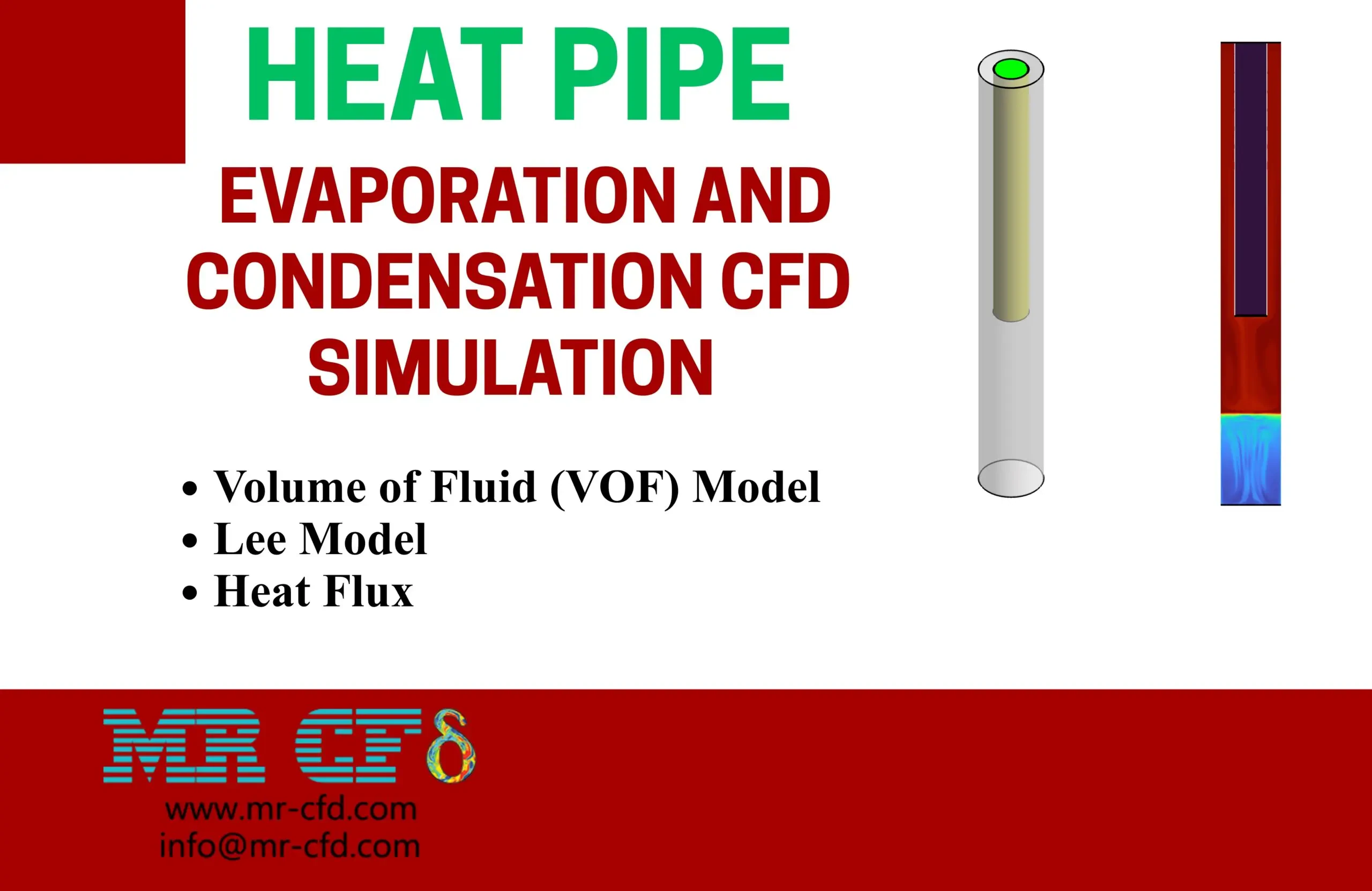
This transient 3D simulation models evaporation and condensation of water in a thermosyphon heat pipe using the VOF and k‑ε models. The domain, meshed with 3,900,000 elements, includes heated and cooled sections defined by heat‑flux and temperature boundaries. At t = 1.655 s, liquid accumulates in the evaporator, vapor rises to the condenser, and condensation occurs at cooler surfaces. Contours of mass transfer, liquid fraction, temperature, and velocity confirm stable phase circulation and efficient heat transport.
Slug Flow CFD Simulation and Fluid–Structure Interaction Analysis in a Bent Pipe
Intermediate, Advanced
Price: $210
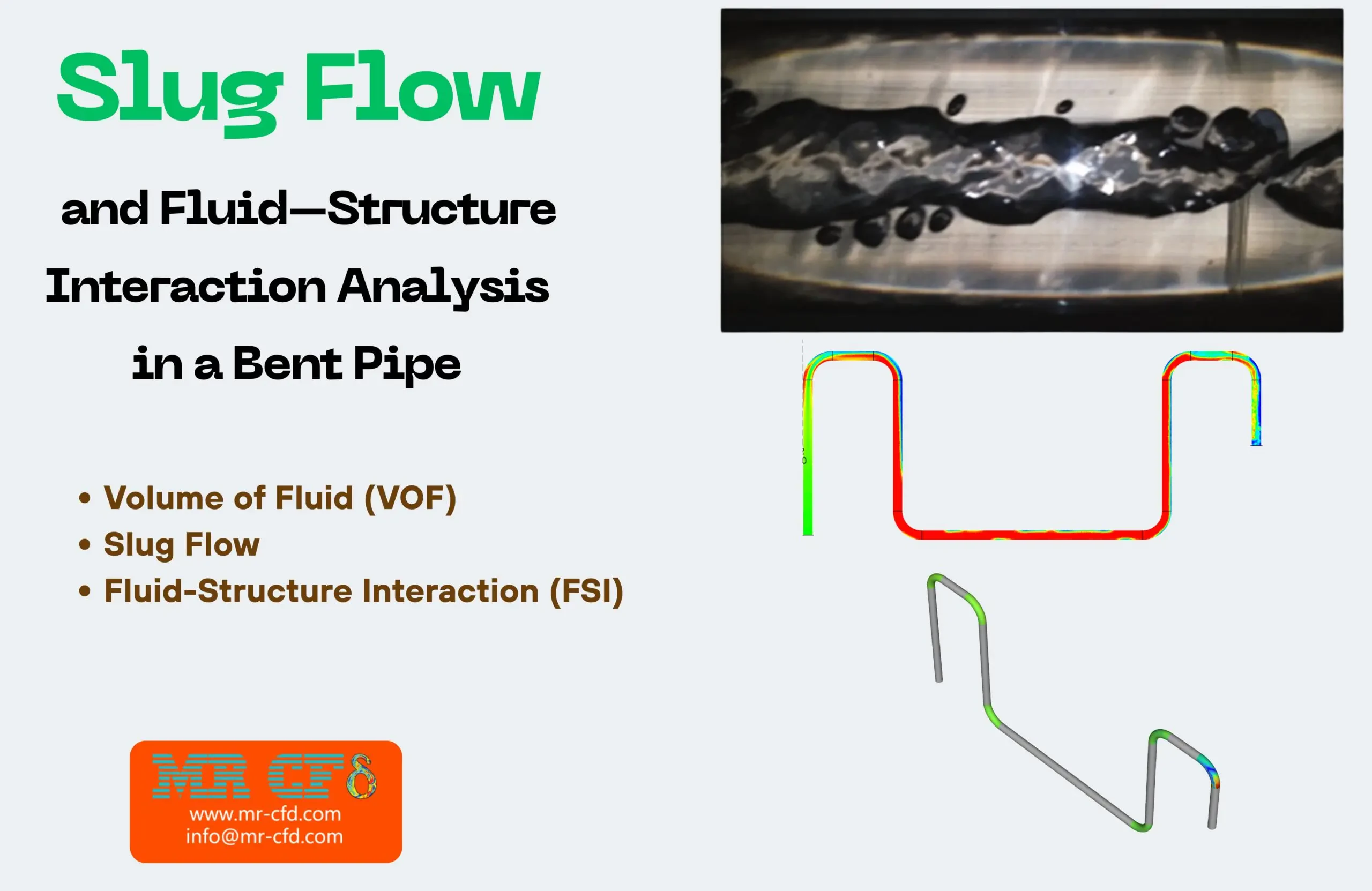
This project simulates slug flow of gas–liquid mixture in a bent pipe using ANSYS. The VOF multiphase model is applied to capture slug formation, phase separation, and velocity distribution. Results show strong gas redistribution and velocity rise up to 48 m/s in pipe bends. The structural response is negligible, with displacements around 10⁻¹⁴ m near curved sections.
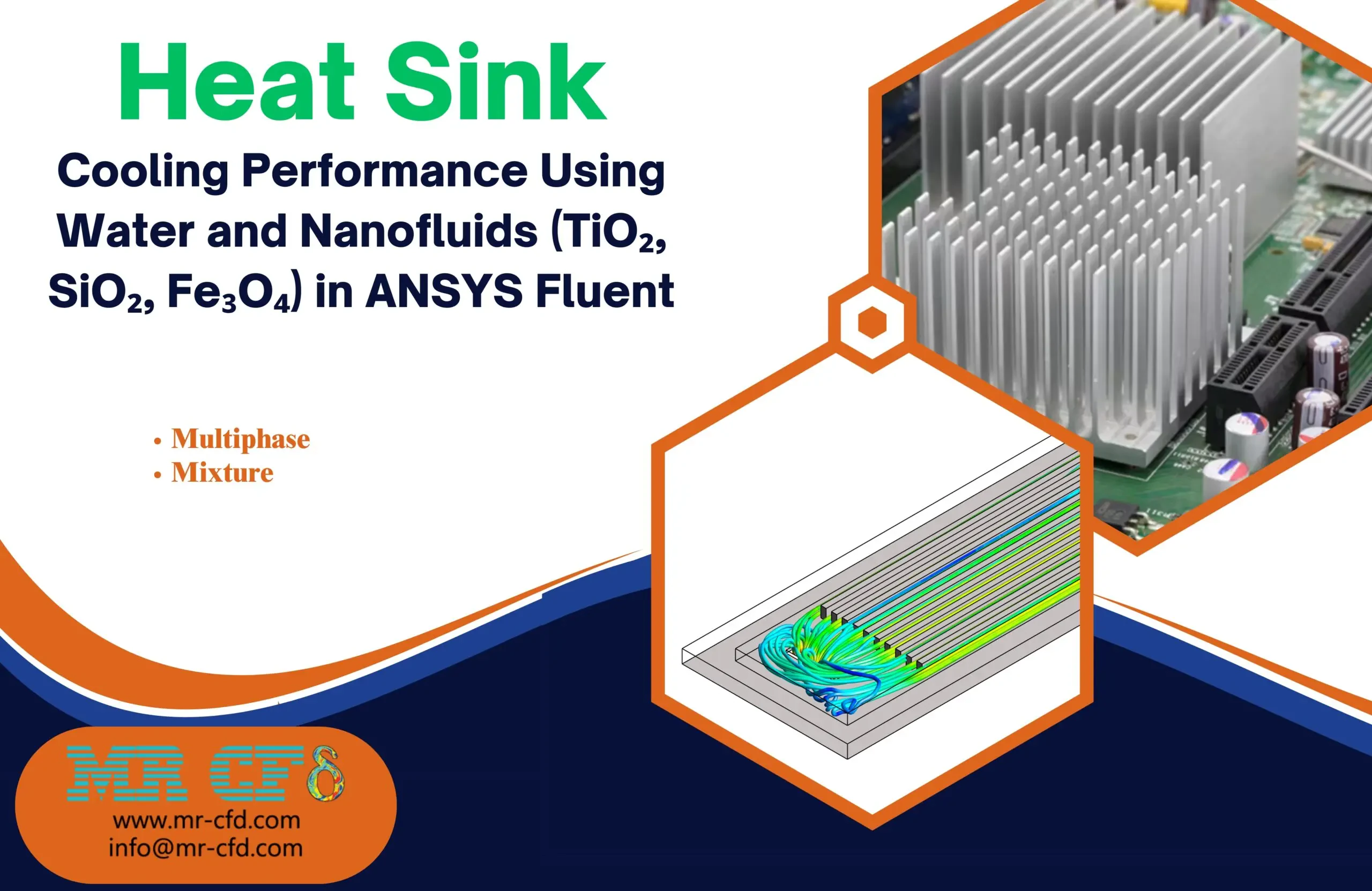
Heat Sink Cooling Performance Using Water and Nanofluids (TiO₂, SiO₂, Fe₃O₄) in ANSYS Fluent
Beginner, Intermediate
Price: $63
This project presents a numerical study of heat transfer in a heat sink using ANSYS Fluent. Four cases were simulated, including pure water (single-phase) and three nanofluids (water mixed with TiO₂, SiO₂, and Fe₃O₄) using the mixture multiphase model. The geometry was created in ANSYS DesignModeler, and a high-quality mesh of about 1.6 million elements was generated. A pressure-based, steady-state solver with the SIMPLE algorithm was applied. The results, illustrated in contour plots of velocity and temperature, show that nanofluids enhance cooling efficiency compared to pure water. Among the tested fluids, the Fe₃O₄–water mixture demonstrated the best thermal performance at the fins and base plate, highlighting its potential for advanced heat sink applications