

Free CFD Online Courses
Here's every free CFD simulation course that can give you a taste of what MR CFD has to offer.
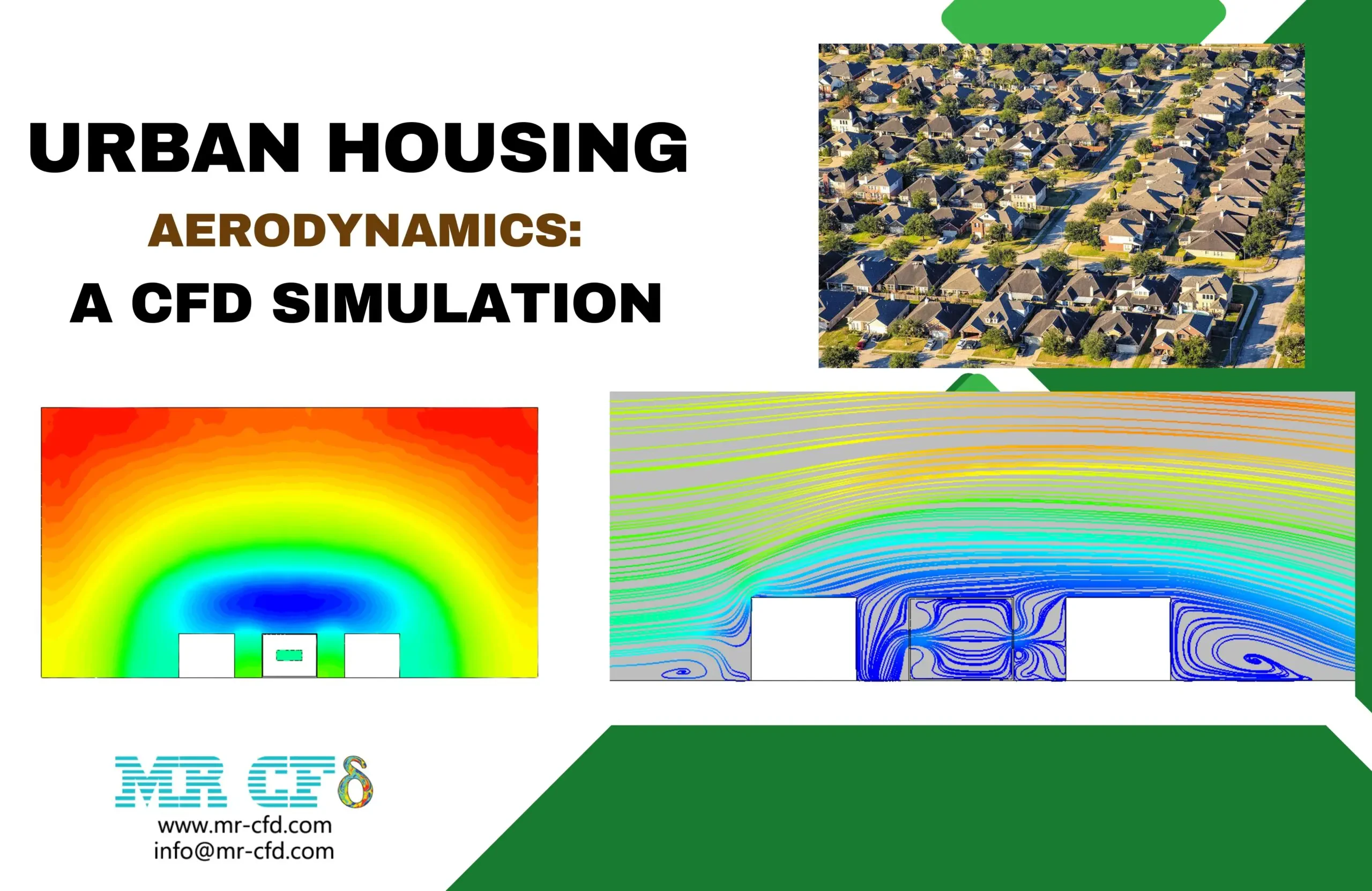
Urban Housing Aerodynamics: A CFD Simulation
Intermediate
Price: Free
In the urban housing aerodynamics project, investigates the effect of building spacing on cross-ventilation performance in an urban housing layout using Computational Fluid Dynamics (CFD). Numerical simulations were carried out in ANSYS Fluent based on a reference study comparing steady RANS, LES, and wind tunnel experiments. Three geometric cases were modeled, varying the distance between adjacent buildings (100 mm, 200 mm, and 300 mm), and meshed with high-quality tetrahedral elements. A k-ε turbulence model with a velocity inlet profile was applied to replicate realistic wind conditions. The results show that increasing the distance between buildings enhances airflow into the central house due to greater pressure differentials, leading to improved ventilation efficiency.
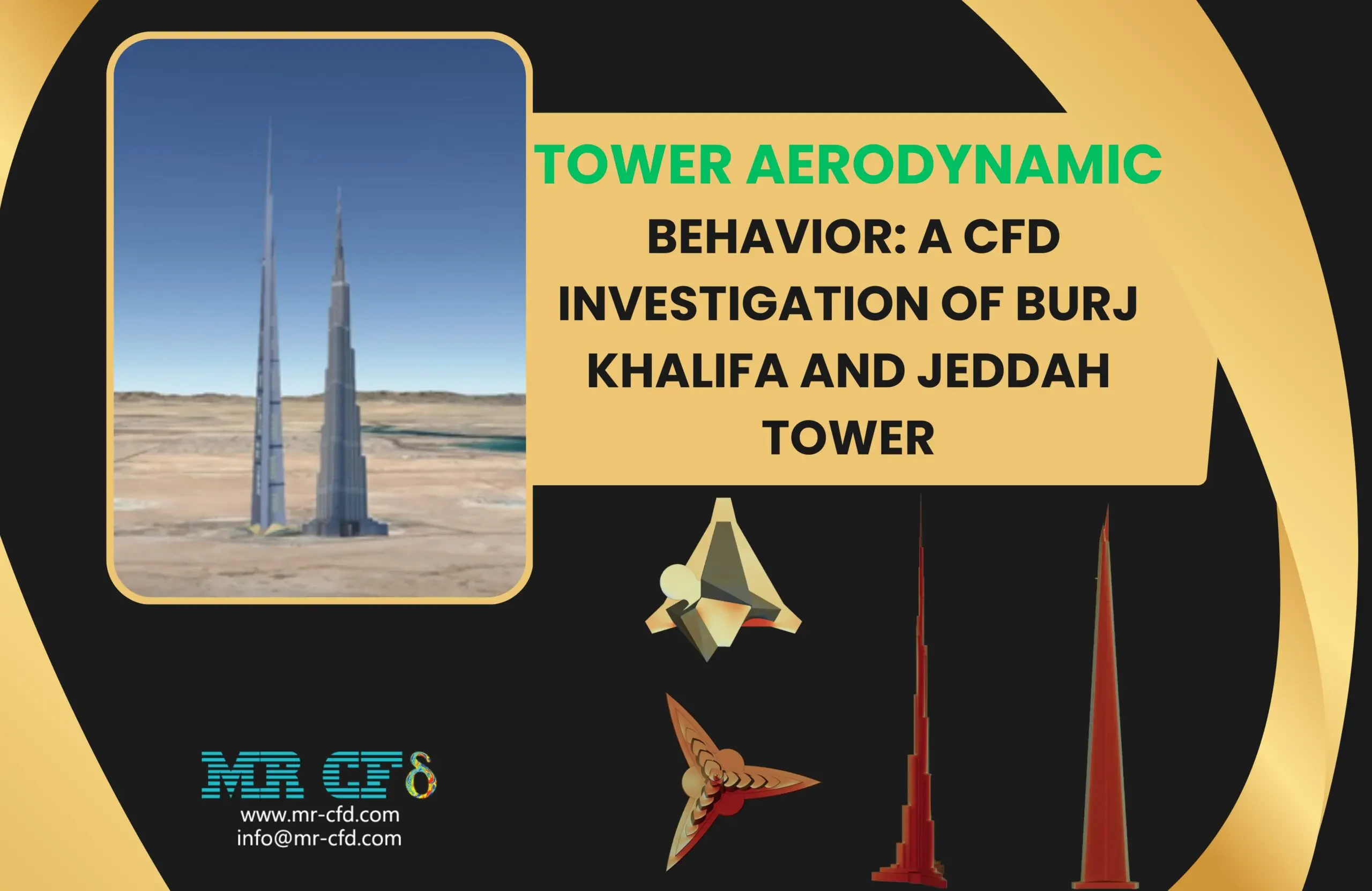
Price: Free
Tower aerodynamic project presents a CFD analysis of the Burj Khalifa (828 m) and Jeddah Tower (1000 m) under a steady 10 m/s wind using ANSYS Fluent. Geometries were built in SpaceClaim/Design Modeler and meshed in ANSYS Meshing, later converted into polyhedral elements for efficiency. A pressure-based steady solver with the Realizable k-ε turbulence model was applied, with velocity-inlet and pressure-outlet boundary conditions. Results show pressure drag dominates in both towers, while torque due to height is a critical factor, influenced strongly by tower geometry.
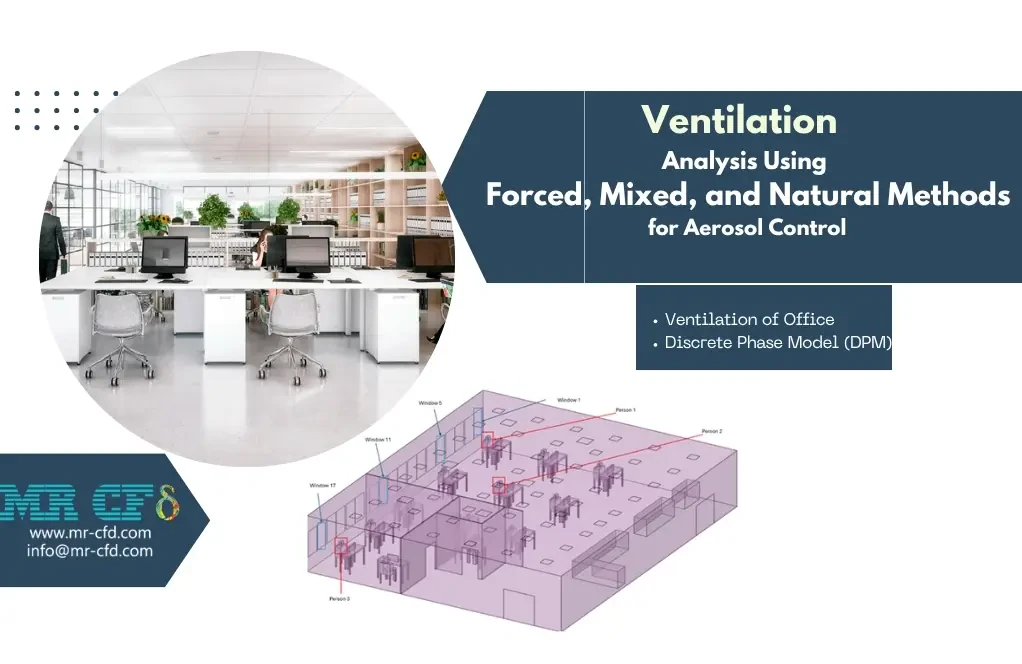
Ventilation Analysis Using Forced, Mixed, and Natural Methods for Aerosol Control
Intermediate, Advanced
Price: Free
Expert-level training package utilizing DPM in ANSYS Fluent, featuring comprehensive analysis of ventilation methods for aerosol control in office environments. Focused on understanding airflow patterns and virus dispersion under various scenarios: forced, mixed, and natural ventilation. Analyzes mechanical ventilation using fan coil units, neutral ventilation through open windows, and combined mixed ventilation approaches. Aimed at researchers and professionals seeking advanced understanding and optimization of ventilation systems for aerosol control in indoor settings.
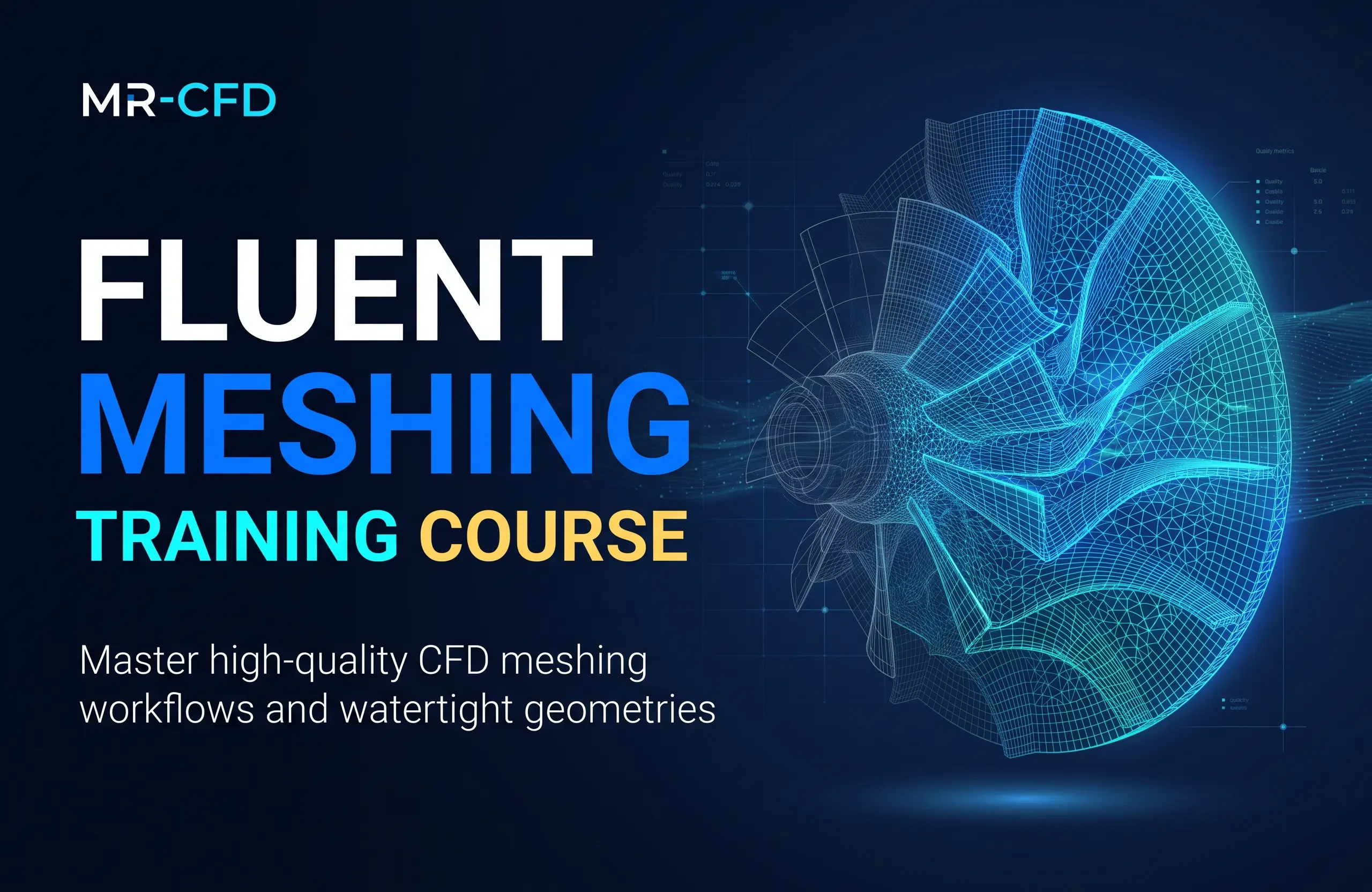
Fluent Meshing Training Course
Beginner, Intermediate, Advanced
Price: Free
Master ANSYS Fluent Meshing with this comprehensive course covering advanced techniques for creating high-quality meshes for complex CFD simulations. Learn structured and unstructured meshing methods, boundary layer refinement, mesh quality improvement, and workflow optimization through practical examples.
ANSYS Fluent Simulation Projects [FREE] Real-World CFD Simulation Projects
Beginner, Intermediate
Price: Free
Dive into 39 free, real-world CFD simulation projects covering heat transfer, aerodynamics, and multiphase flows using the complete Ansys pipeline—from DesignModeler and SpaceClaim geometry to Fluent setup and CFD-Post analysis. If you need a structured foundation before tackling these complex exercises, master the core workflow with our guided ANSYS Fluent beginner project training and buy for $9 to launch your applied CFD journey today!
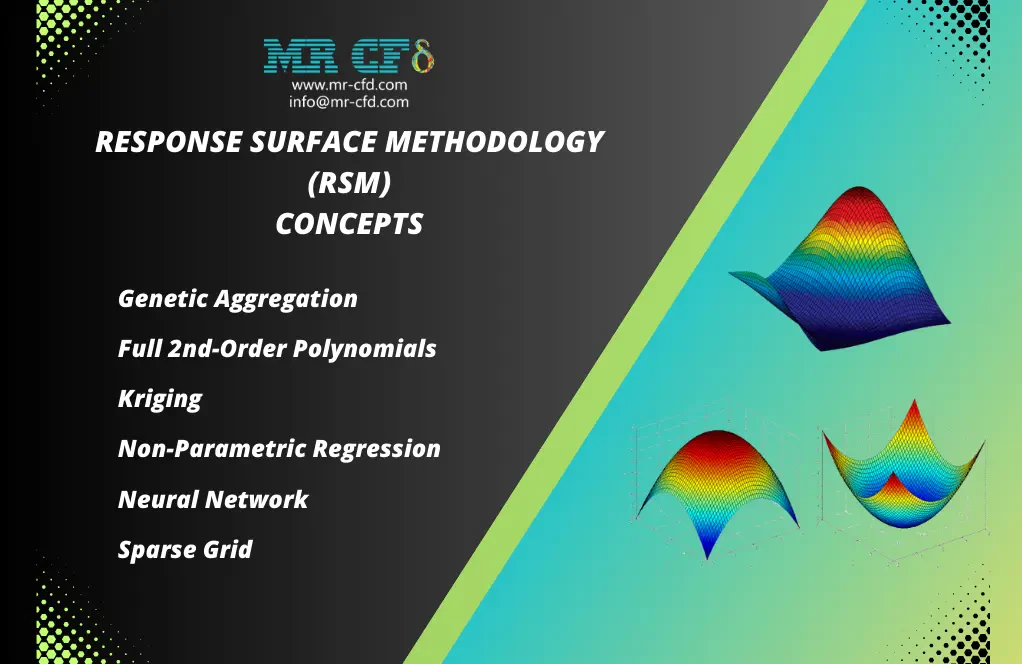
Response Surface Methodology (RSM) Concepts, Optimization by ANSYS Fluent
Beginner, Intermediate, Advanced
Price: Free
Introduction to the Response Surface Methodology (RSM) in ANSYS Fluent software Introduction to the Genetic Aggregation Introduction to the Full 2nd-Order Polynomials Introduction to the Kriging Introduction to the Non-Parametric Regression Introduction to the Neural Network Introduction to the Sparse Grid
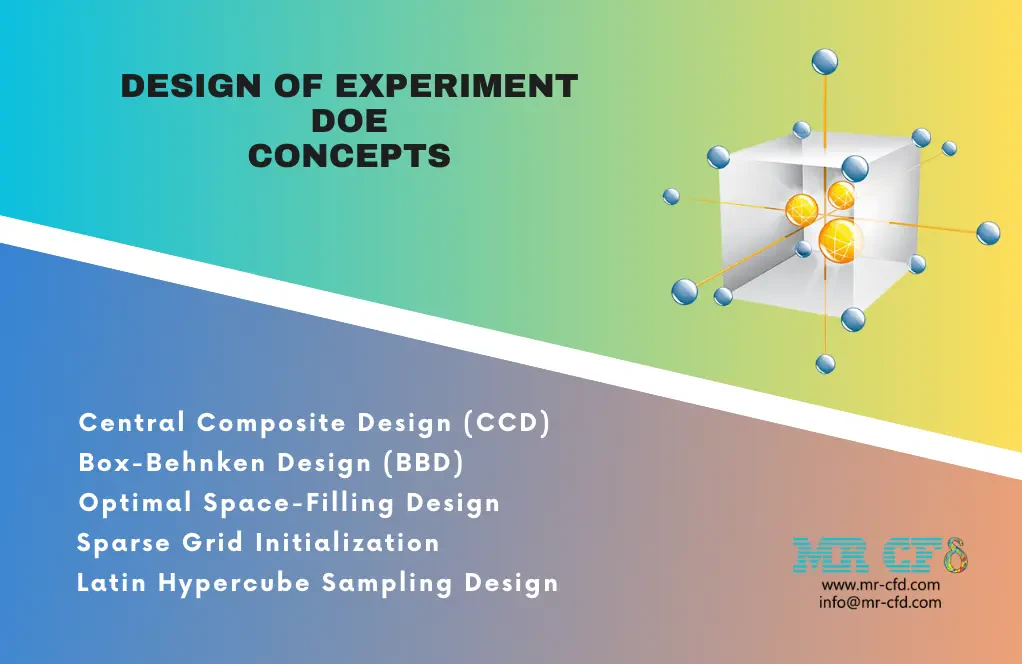
Price: Free
Introduction to the Design of Experiment (DOE) in ANSYS Fluent software Introduction to the Central Composite Design (CCD) Introduction to the Rotatable, VIF-Optimality, G-Optimality, and Face-Centered Introduction to the Box-Behnken Design (BBD) Introduction to the Optimal Space-Filling Design Introduction to the Sparse Grid Initialization Introduction to the Latin Hypercube Sampling Design Introduction to the Custom and Custom+Sampling

CFD Algorithms: ANSYS Fluent Different Capabilities
Beginner, Intermediate, Advanced
Price: Free
Comprehensive analysis of different CFD algorithms using a variable-width channel case study (5cm inlet, 10cm outlet, 20cm length). Pressure-based solvers (SIMPLE, SIMPLEC, PISO, Coupled) compared with density-based solvers (Roe, AUSM) for various flow conditions. SIMPLE algorithm excels in low-speed flows, while Coupled solver shows superior performance across all speed regimes. Density-based solvers (Roe, AUSM) perform best in high-speed and supersonic flows but struggle with low Mach numbers. Under-relaxation factors significantly impact convergence stability and simulation accuracy. Optimal solver selection depends on flow regime: low subsonic (SIMPLE/SIMPLEC), transonic/supersonic (Coupled/AUSM), hypersonic (Roe/AUSM).

Price: Free
A fundamental CFD case study analyzing fluid flow inside a cavity using SIMPLE algorithm and second-order discretization schemes. Problem features water flow with a moving top lid (U=1 m/s) and no-slip conditions on other walls. Simulation implemented through MATLAB code, demonstrating practical application of Navier-Stokes equations and pressure-velocity coupling. Study explores effects of under-relaxation factors, grid size, and various boundary conditions on flow patterns. Results show formation of distinct vortices under different cavity dimensions and boundary conditions. Case serves as an excellent example for understanding fundamental CFD concepts and numerical methods in fluid dynamics.