

CFD Advanced Courses
Here's every CFD online course in the Advanced level.
Price: $360
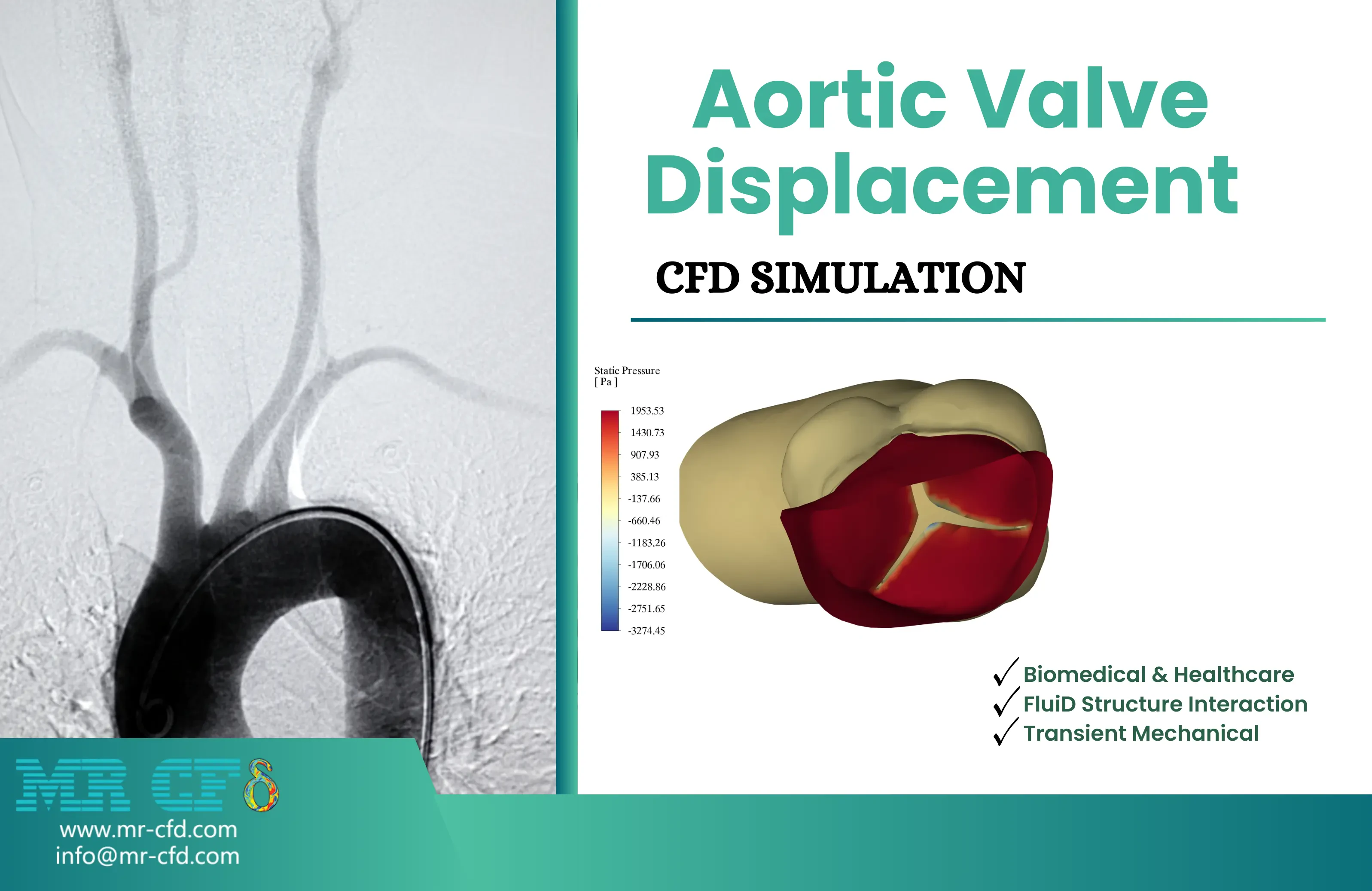
The study conducts a CFD analysis of aortic valve displacement using ANSYS Workbench. The geometry is designed in SpaceClaim based on CT-scan data, with a mesh of 67,926 fluid elements and 627,914 solid elements. The simulation uses a pressure-based transient solver with a laminar flow model. System coupling between Transient Structural and Fluent enables analysis of valve leaflet movement and blood flow interaction. Results show pressure gradients, velocity patterns, wall shear stress distribution, and valve leaflet deformation.
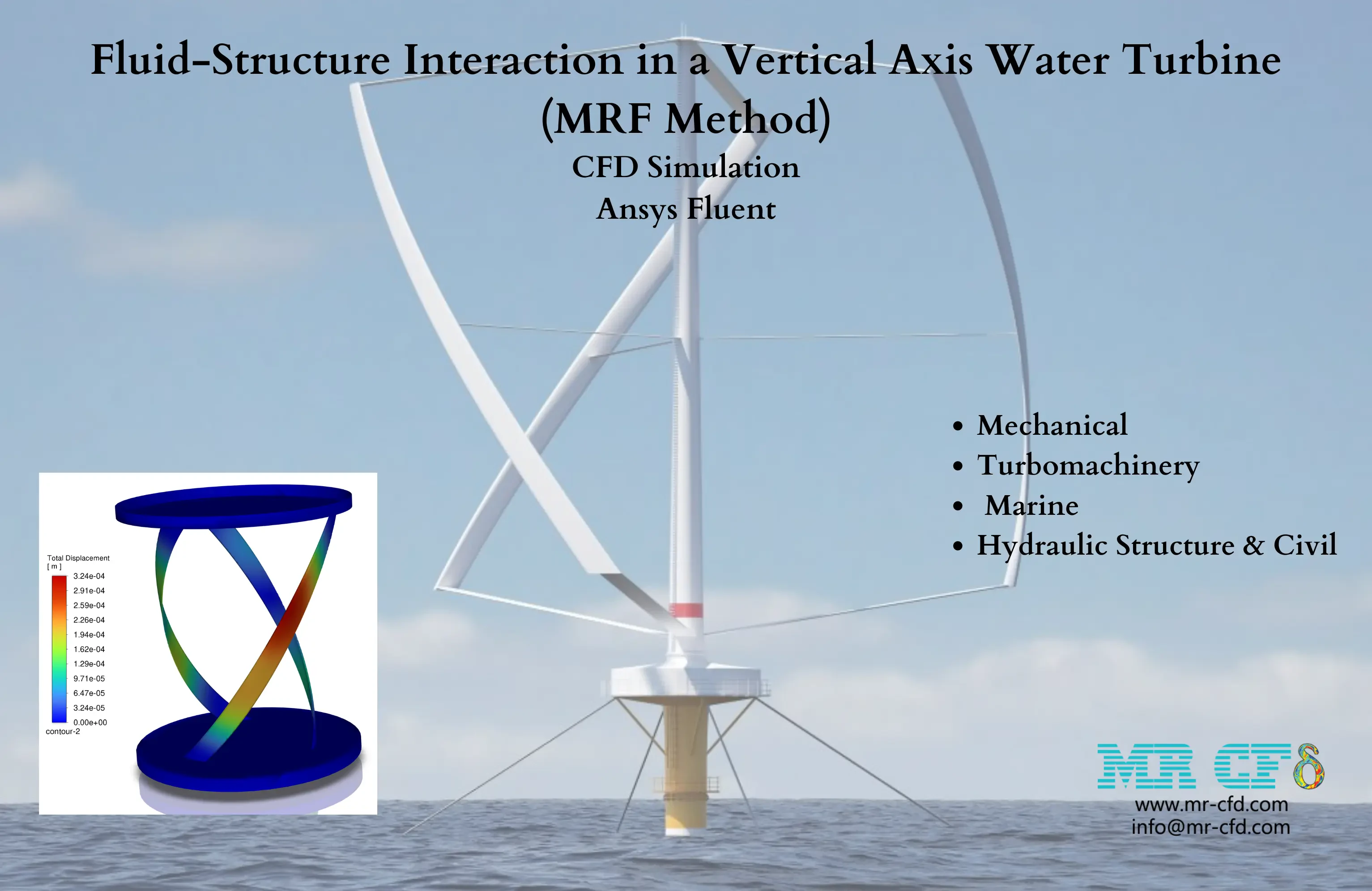
Fluid-Structure Interaction in a Vertical Axis Water Turbine using MRF Method, Ansys Fluent
Intermediate, Advanced
Price: $45
The problem numerically simulates the Fluid-Structure Interaction over Vertical Turbine using ANSYS Fluent software. We designed the 3-D model using the Design Modeler software. The mesh grid is generated using ANSYS Meshing, and the element number equals 705,465. The Frame Motion method is used to rotate the turbine. FSI model analyses total strain, and stress over the VAWT turbine.
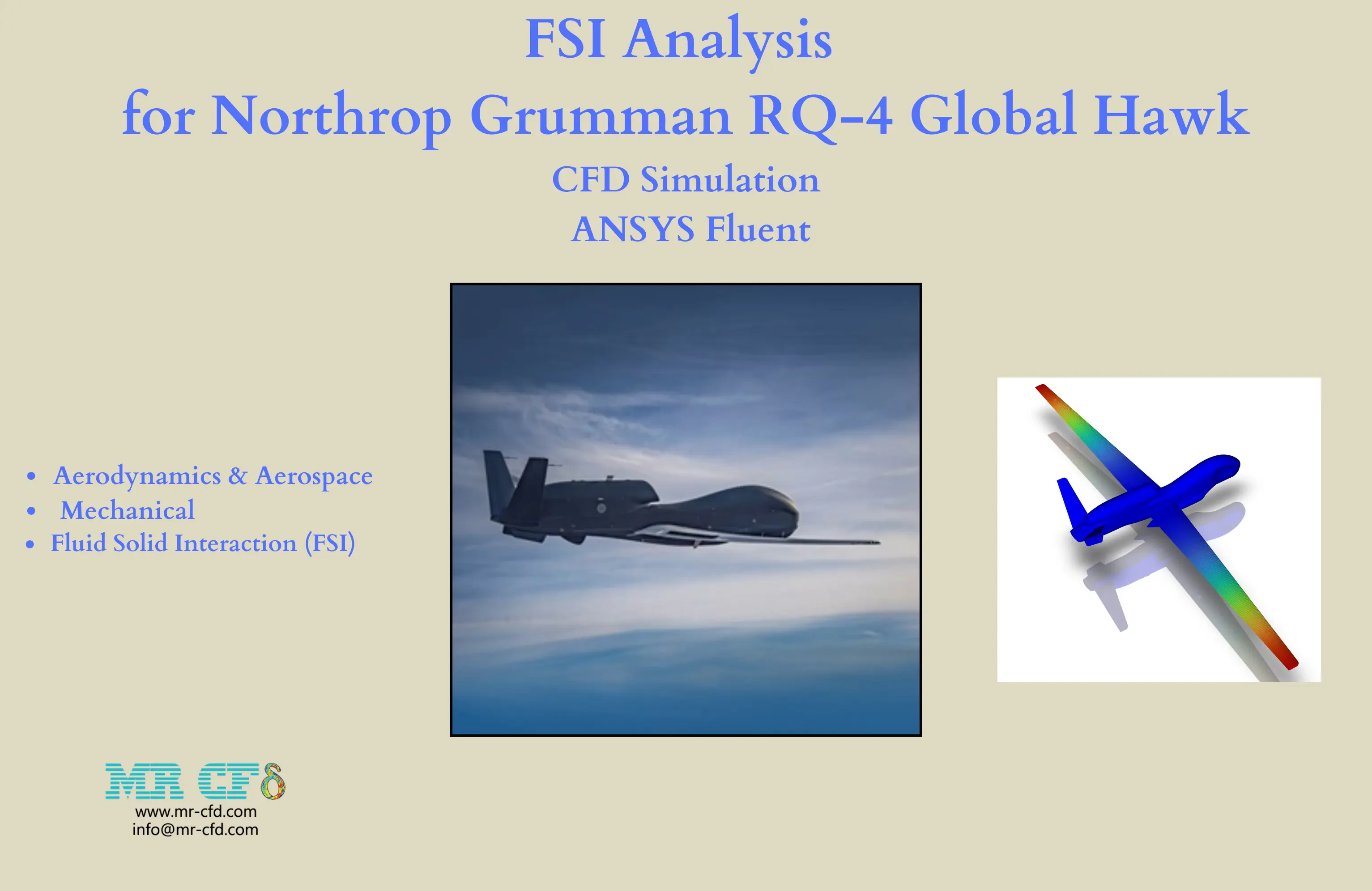
FSI Analysis for Northrop Grumman RQ-4 Global Hawk, ANSYS Fluent
Intermediate, Advanced
Price: $489
The problem numerically simulates the Fluid-Structure Interaction over Northrop Grumman RQ-4 Global Hawk using ANSYS Fluent software. The Global Hawk geometry was modeled using SpaceClaim and then imported into ANSYS meshing for meshing consisting of 5,056,067 non-conformal elements. The simulation used a pressure-based solver. One way FSI model analyses total strain, and stress over the turbine.
Sand Particle Sedimentation CFD Analysis
Intermediate, Advanced
Price: $30
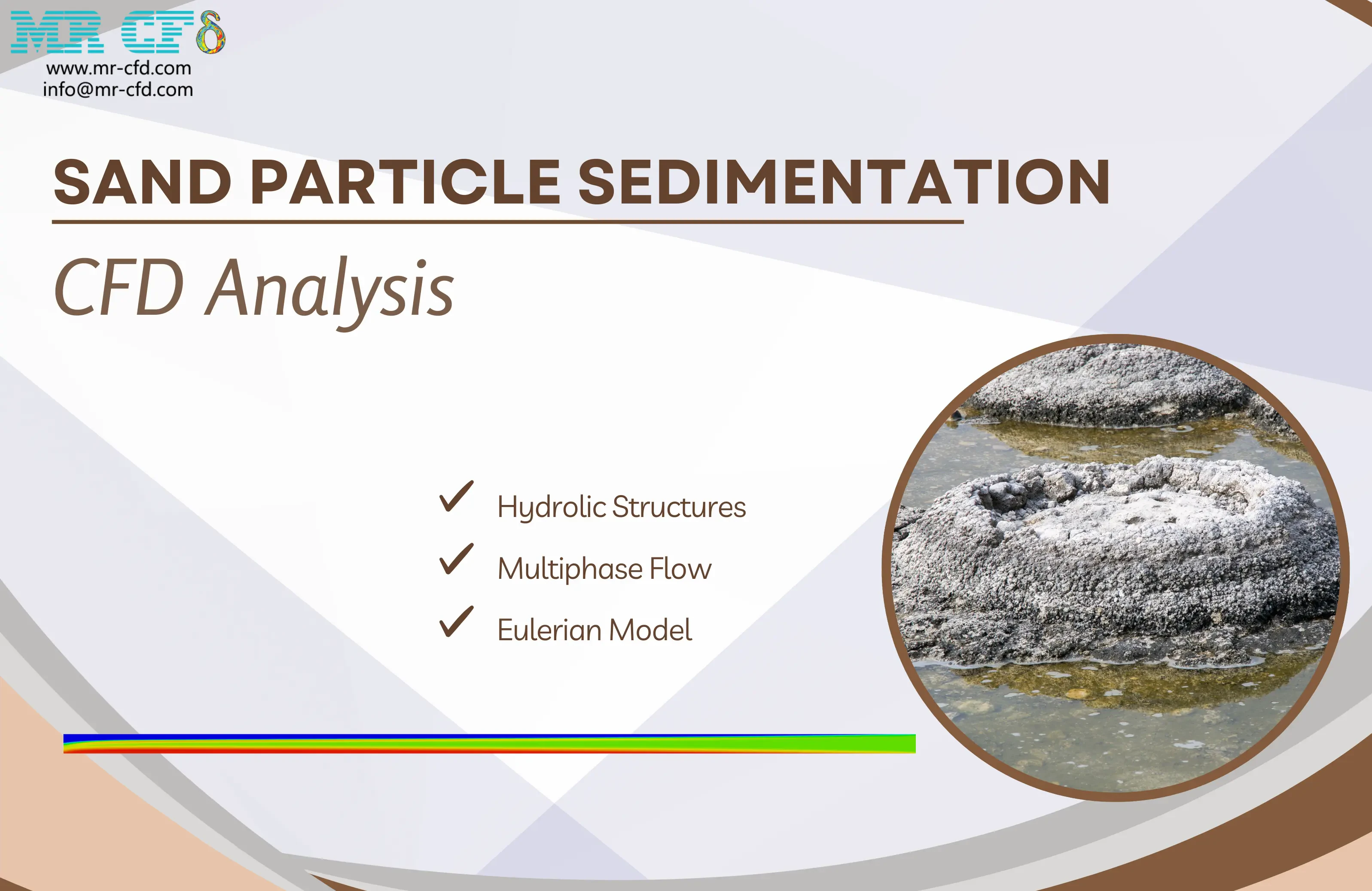
The study conducts a CFD analysis of sand particle sedimentation using ANSYS Fluent software. We design the cylindrical geometry using ANSYS Design Modeler. We mesh the model using ANSYS Meshing software, resulting in 388,797 hexahedral elements. We use the Eulerian multiphase model to simulate three different sizes of sand particles (small, medium, and large) interacting with the fluid phase. We aim to predict the sedimentation patterns and particle distribution for different sand sizes, analyzing density, pressure, and volume fraction contours.
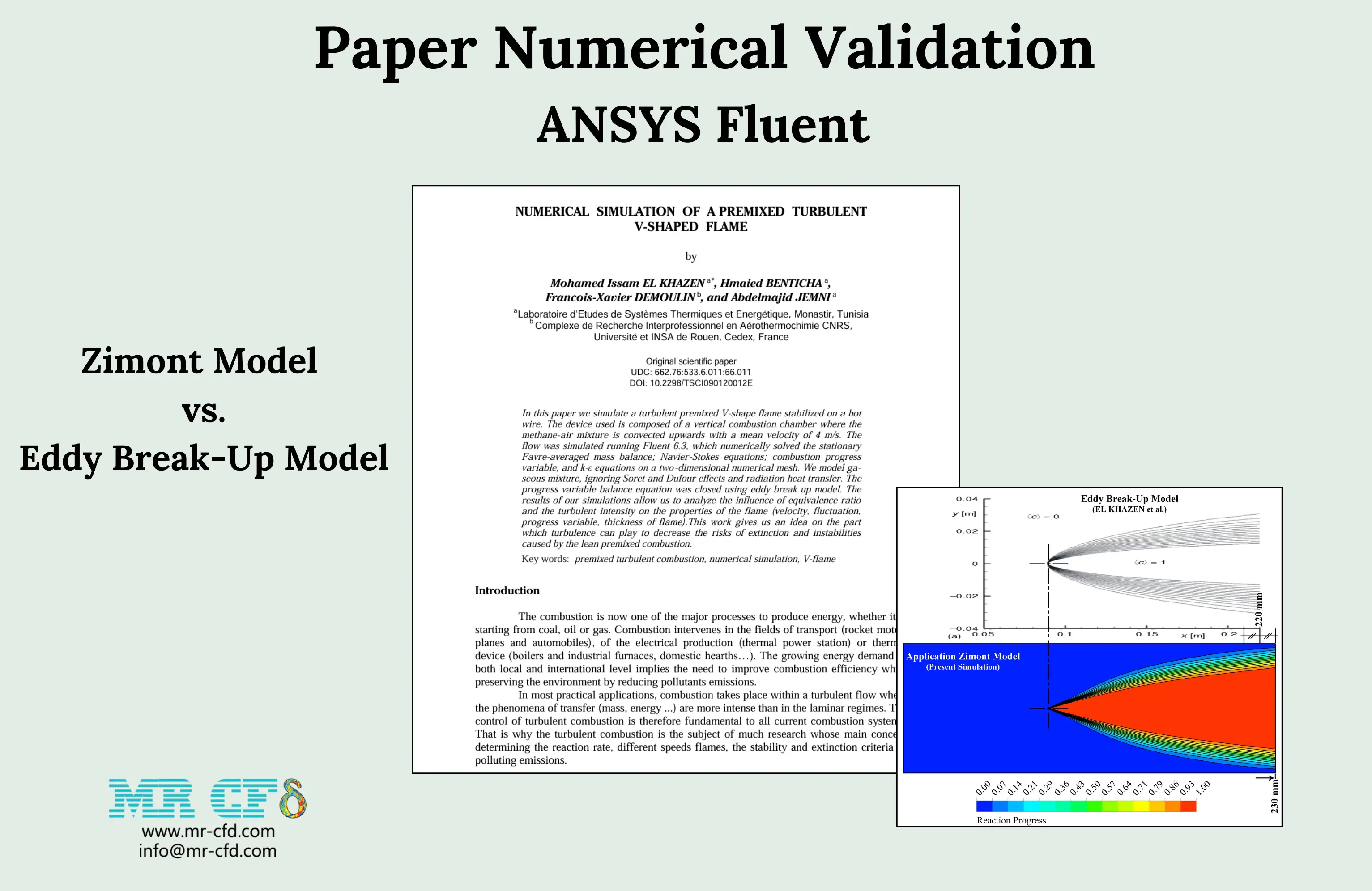
Premixed Turbulent V-shaped flame, Paper Numerical Validation, ANSYS Fluent
Intermediate, Advanced
Price: $36
In this project, a V-Flame is simulated using the Zimont model, then compared with the paper "Numerical simulation of a premixed turbulent V-shaped flame." by Ansys Fluent software. Premixed combustion of methane-air is simulated, comparing the Zimont and Eddy Break-Up models. The geometry is designed in Spaceclaim software. A structured grid is used to create a mesh in the computing domain using ANSYS Meshing software.
Price: $100
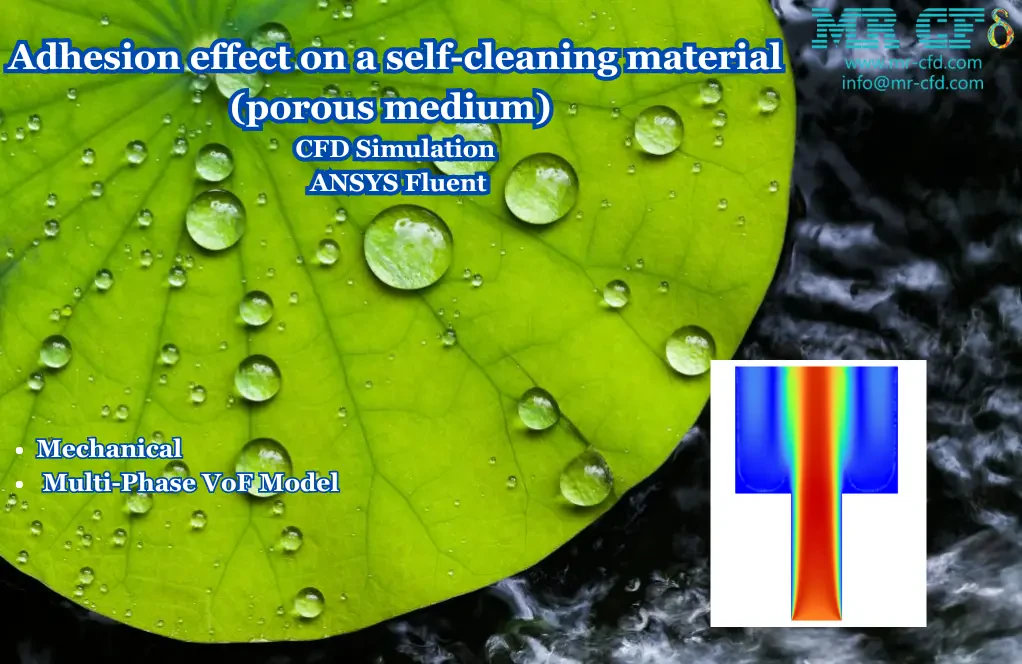
This problem simulates Adhesion effect on a self-cleaning material (porous)using Ansys Fluent software. The 2-D geometry is designed in Design Modeler software. Ansys Meshing software is used to generate the mesh; the element number equals 105,000. In this project, the Hydrophilicity and hydrophobicity of surfaces is simulated using the VOF How the flow pattern near a hydrophobic surface and near a hydrophobic surface is well modeled in this project.
Price: $16
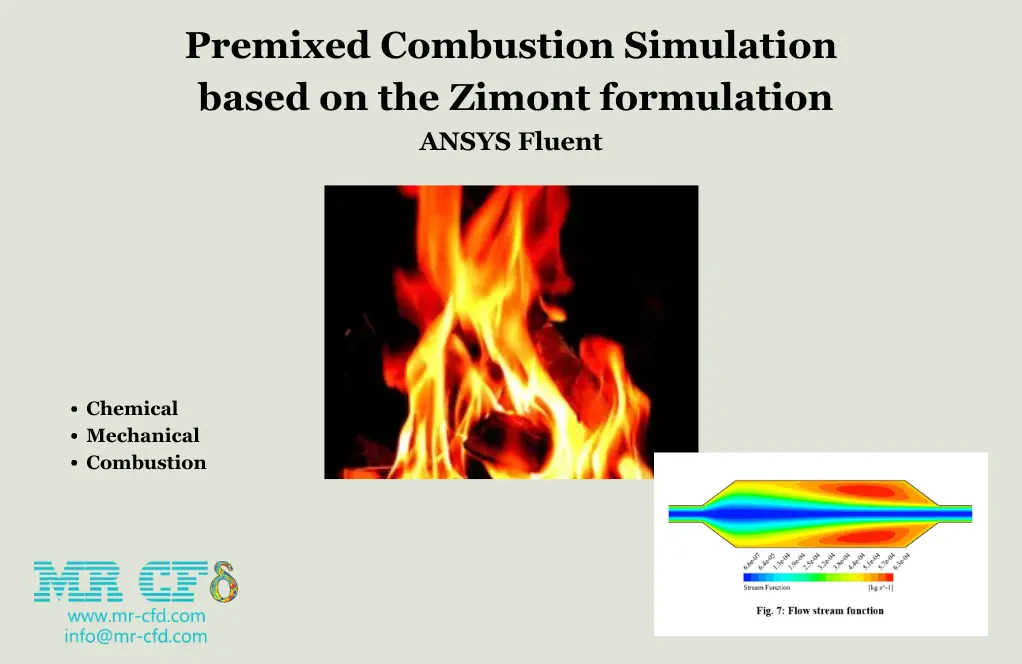
In this project, a part of an annular combustion chamber is simulated by Ansys Fluent software. Premixed combustion of methane-air is analyzed, and Zimont's method is also used to model the flame speed. Structured grid is used to create a mesh in the computing domain.
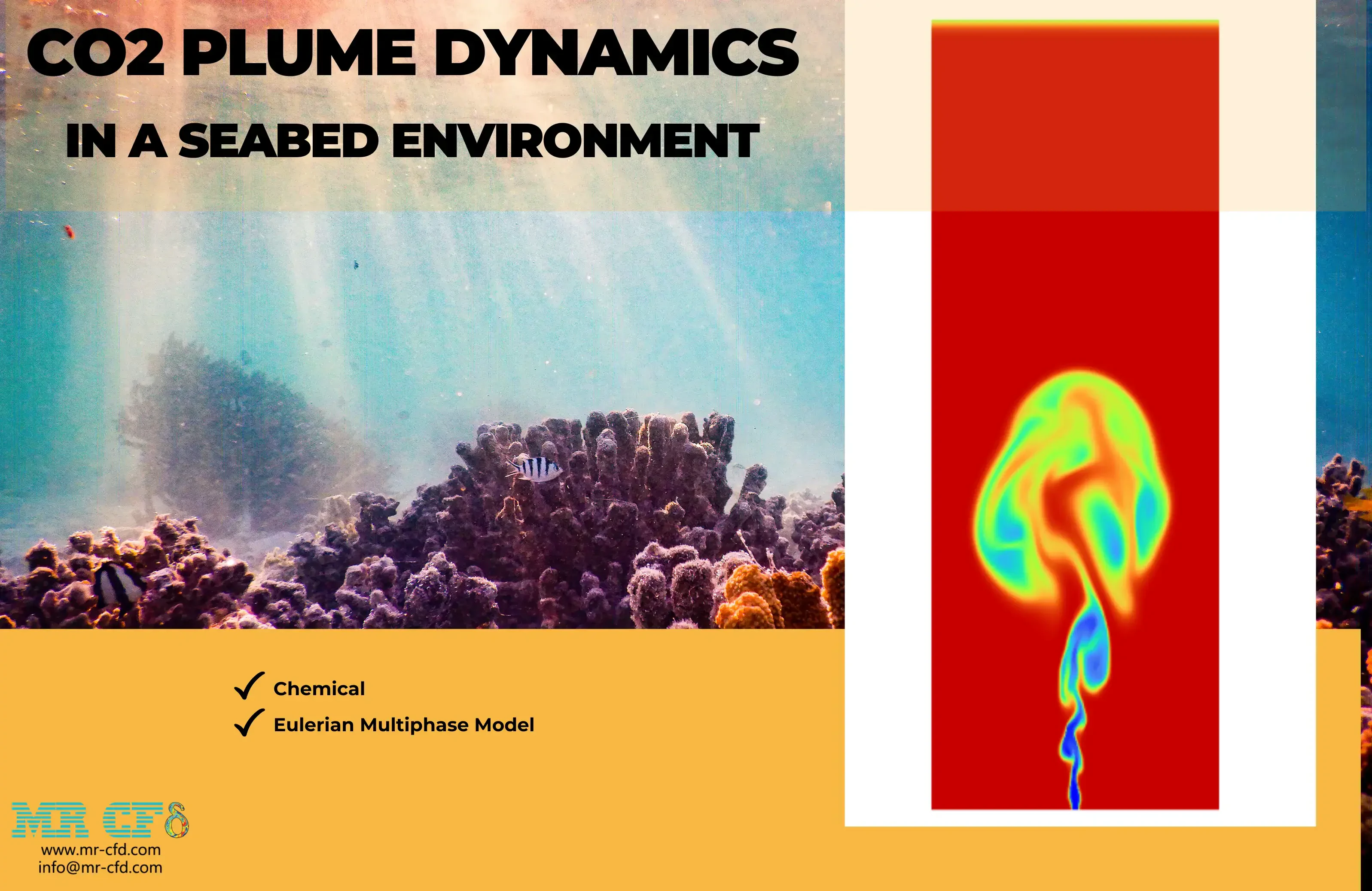
CO2 Plume Dynamics in a Seabed Environment
Intermediate, Advanced
Price: $12
The problem numerically simulates CO2 plume dynamics in a seabed environment using ANSYS Fluent software. The 2-D geometry is designed in ANSYS Design Modeler and ANSYS Meshing is used to generate a structured mesh with 306,278 elements. The Eulerian multiphase model is employed to handle the interaction between different phases. Results are analyzed , including CO2 distribution, pressure fields, and velocity patterns.
Price: $160
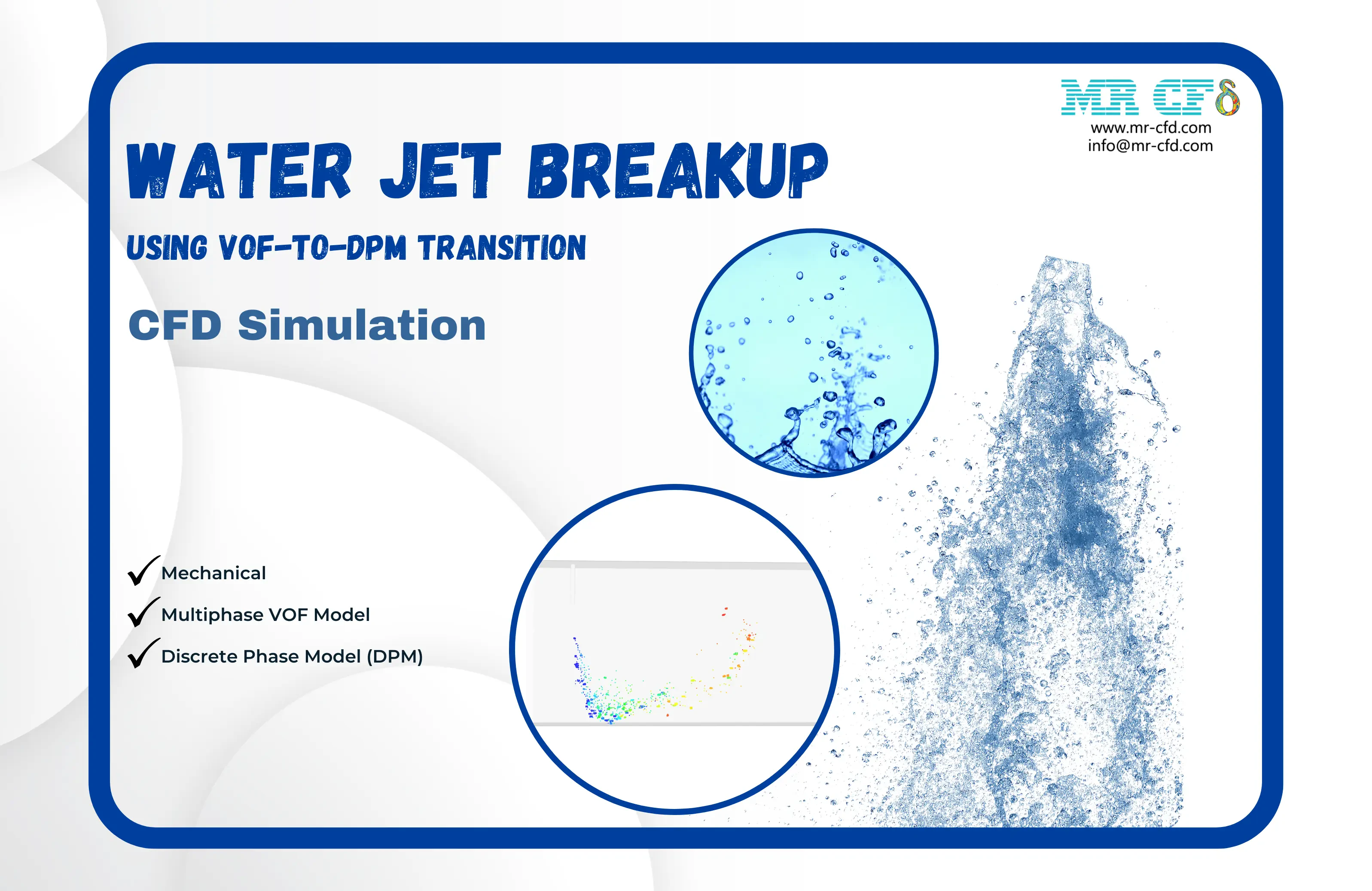
The problem numerically simulates the Water Jet Breakup using ANSYS Fluent software. The3-D geometry is designed in Design Modeler software. We used ANSYS Meshing to generate mesh; the element number equals 3,157,674. The Adaptive mesh refinement is the mesh method for this problem. The liquid bulk in the domain is simulated using VOF model. Also, the droplets are modeled via DPM model.