

CFD Advanced Courses
Here's every CFD online course in the Advanced level.
Price: $499
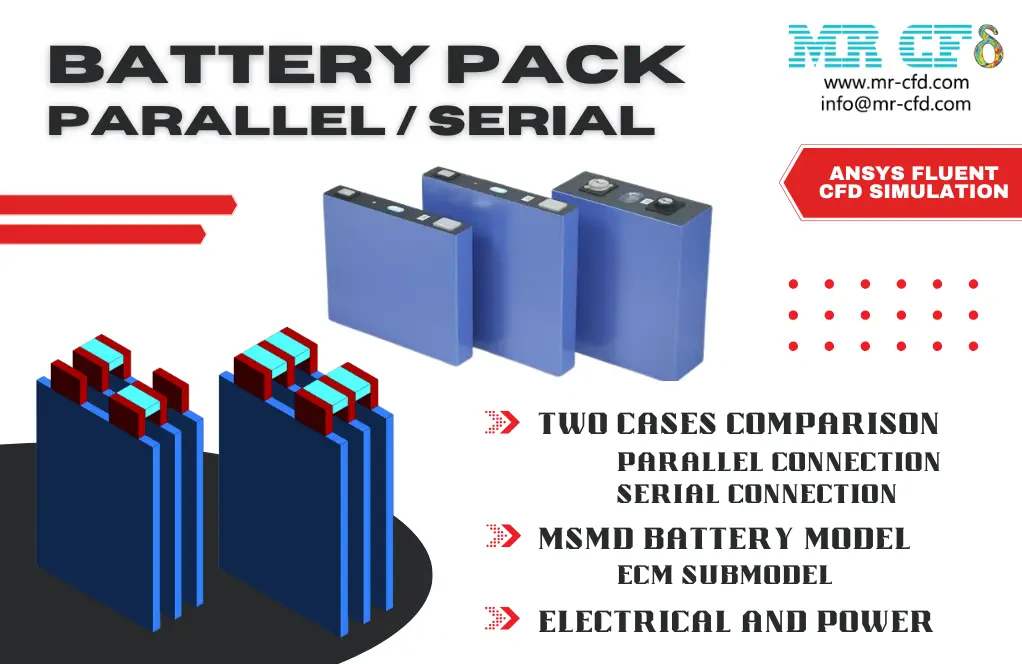
This product numerically simulates the Parallel and Serial Battery Pack using ANSYS Fluent software. We design the 3-D models in parallel and serial connection with the Design Modeler software. We mesh the models with ANSYS Meshing software; the element numbers are 74240 and 73216. We use the MSMD (Multi-Scale Multi-Domain) Battery model to define the charge/discharge. We use the ECM (Equivalent Circuit Model) sub-model to determine the electrochemical computations. The run calculation is in an unsteady state (transient).
Particle Stickiness in a Bend Pipe CFD Simulation
Intermediate, Advanced
Price: $10
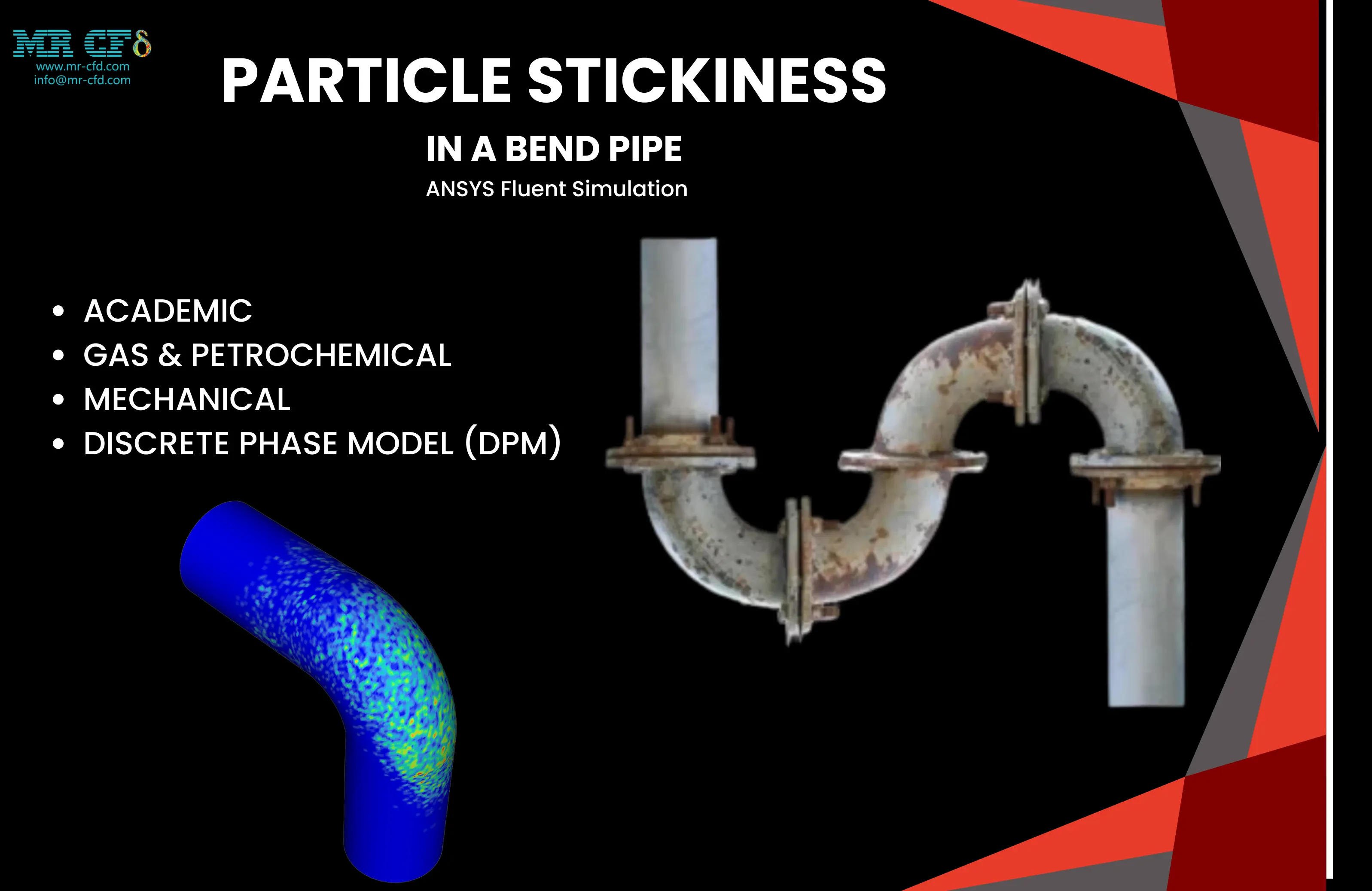
This report presents a simulation of the particle stickiness in a bend pipe using Discrete Phase Method (DPM). The geometry of the bend pipe was created using ANSYS SpaceClaim software. A high-quality mesh of 1,664,000 hexahedral elements was generated using ANSYS Meshing software. Appropriate DPM settings were applied and the particle accretion rate was calculated on the bend pipe wall.
Price: $319
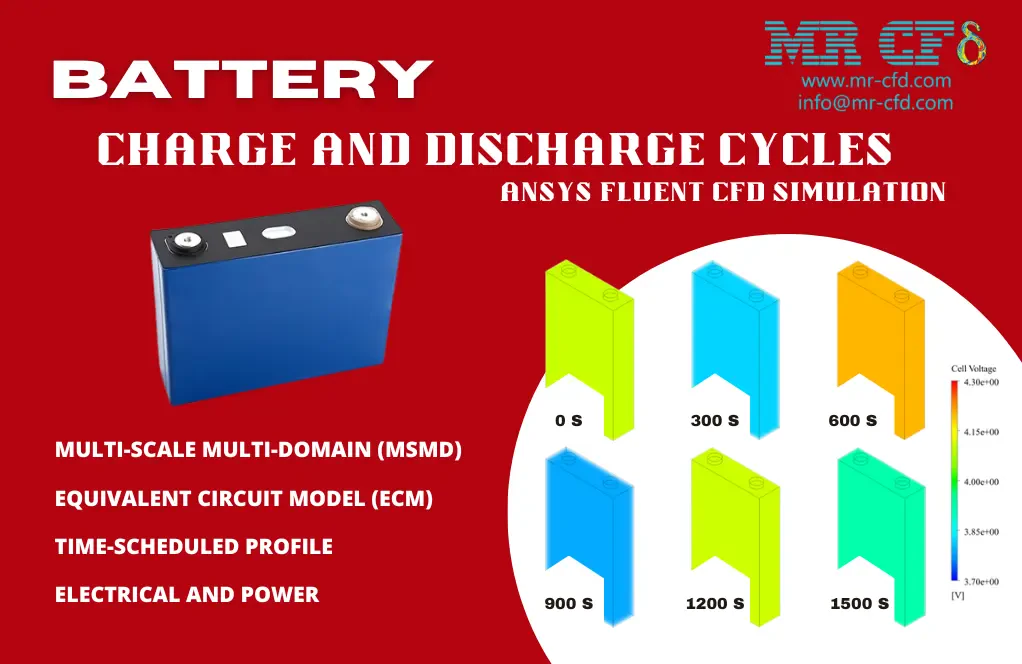
Simulate the charge and discharge cycles of a 3D prismatic battery in Ansys Fluent, driven by a five-stage time-scheduled profile, with the MSMD battery model and an equivalent circuit model. For engineers working on battery thermal management and cell performance.
Price: $249
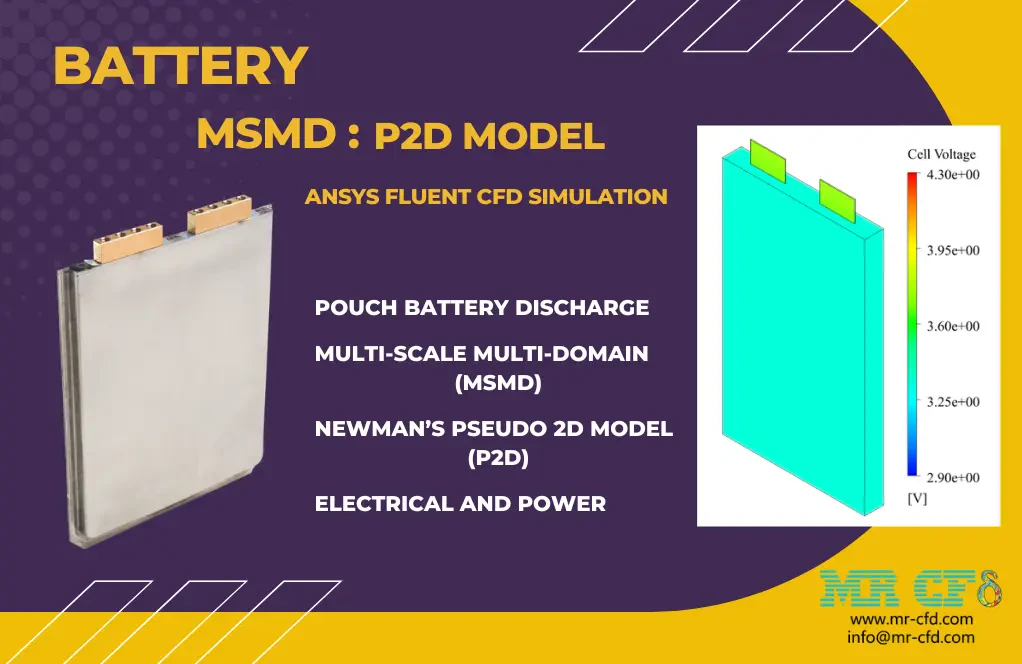
This product numerically simulates the Pouch Battery Discharge using ANSYS Fluent software. We design the 3-D model with the Design Modeler software. We mesh the model with ANSYS Meshing software, and the element number equals 125401. We use the MSMD (Multi-Scale Multi-Domain) Battery model to define the charge/discharge. We use Newman's P2D (Pseudo 2-D) sub-model to determine the electrochemical computations. The run calculation is in an unsteady state (transient).
Price: $249
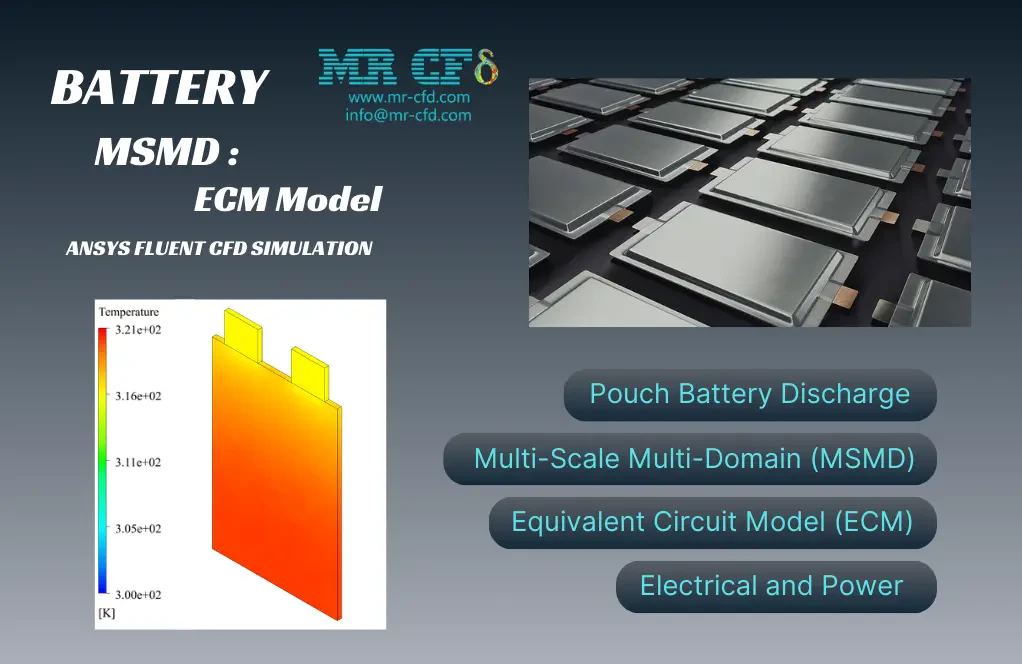
This product numerically simulates the Pouch Battery Discharge using ANSYS Fluent software. We design the 3-D model with the Design Modeler software. We mesh the model with ANSYS Meshing software, and the element number equals 13601. We use the MSMD (Multi-Scale Multi-Domain) Battery model to define the charge/discharge. We use the ECM (Equivalent Circuit Model) sub-model to determine the electrochemical computations. The run calculation is in an unsteady state (transient).
Price: $249
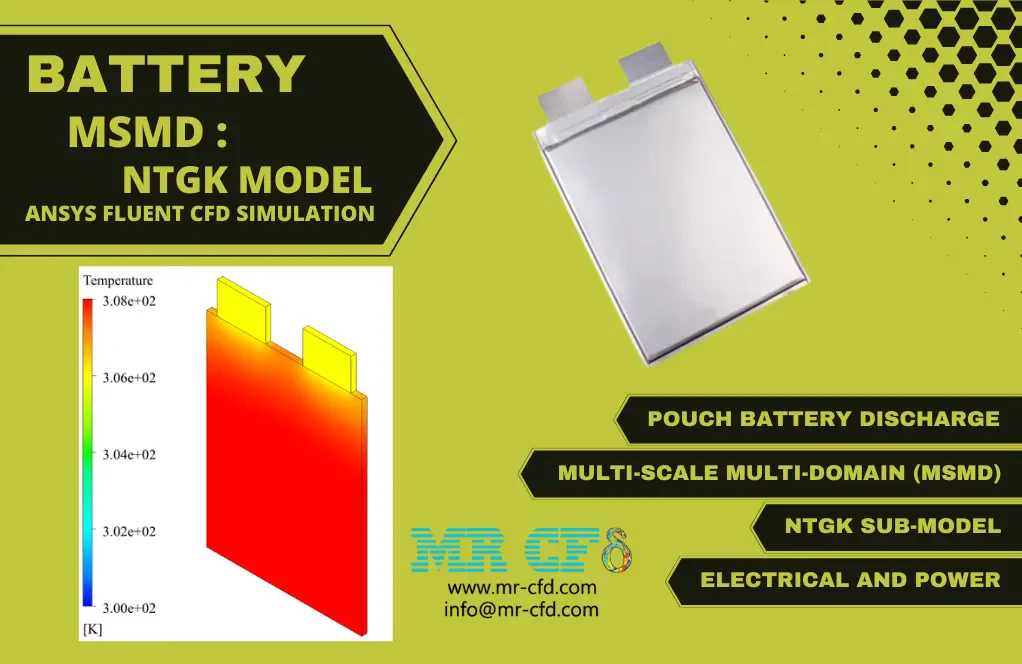
This product numerically simulates the Pouch Battery Discharge using ANSYS Fluent software. We design the 3-D model with Design Modeler software. We mesh the model with ANSYS Meshing software. The mesh is Structured, and the element number equals 1210. We use the MSMD (Multi-Scale Multi-Domain) Battery model to define the charge/discharge. We use the NTGK sub-model to determine the electrochemical computations. The run calculation is in an unsteady state (transient).
Fluid-Structure Interaction over HAWT Turbine Vibration (two-way)
Intermediate, Advanced
Price: $60
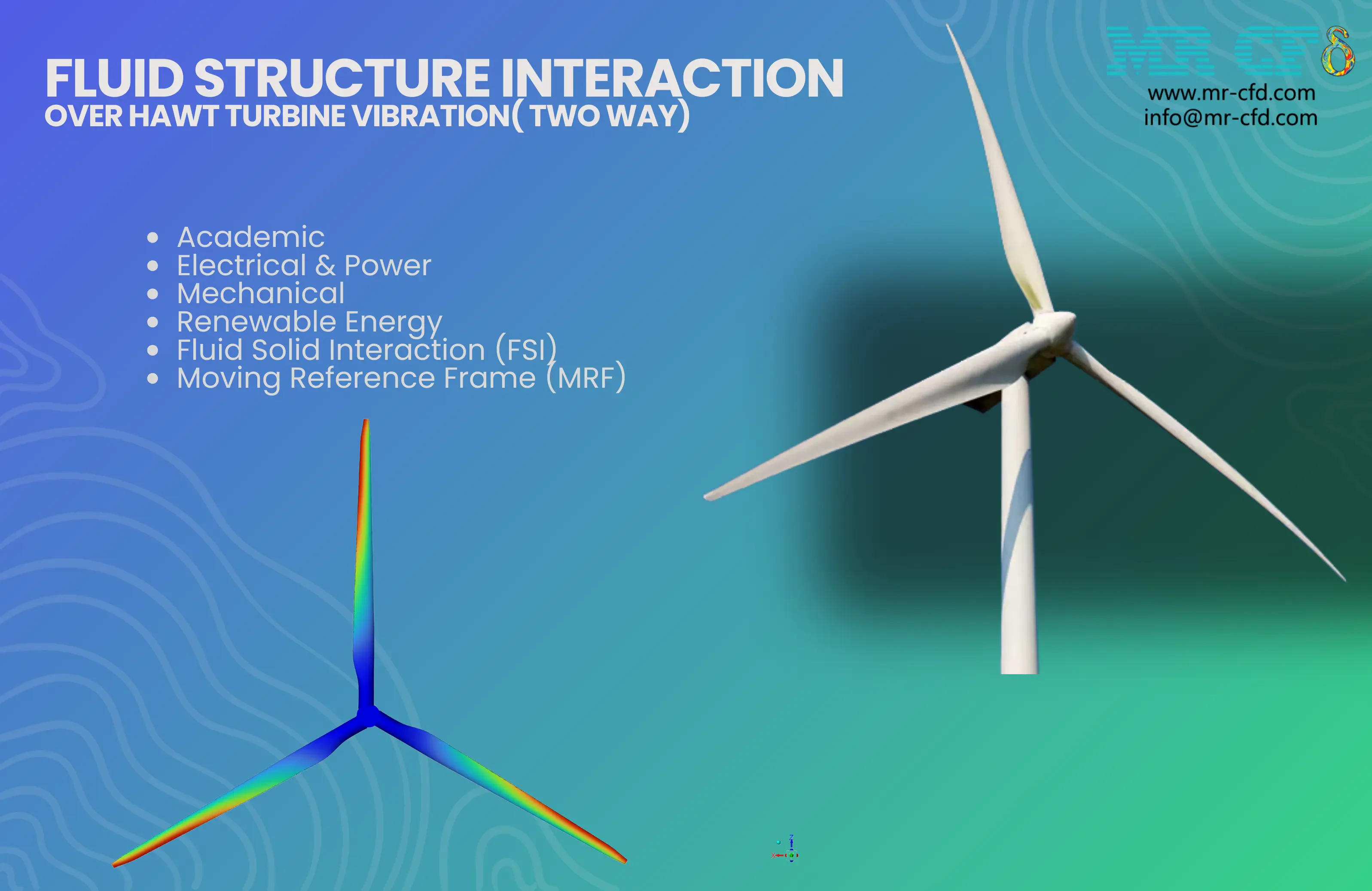
this report presents a FSI analysis of a HAWT using CFD. The geometry was created using ANSYS Design Modeler, and meshing was performed with ANSYS Meshing, resulting in a high-fidelity model with 3,465,821 cells. The simulation leverages (MRF) approach for rotating domains and dynamic mesh methods to capture the complex fluid-structure interactions. A two-way FSI approach was employed to capture the mutual interaction between the fluid flow and the structural deformation of the turbine blades.
Design Modeler Training Course
Beginner, Intermediate, Advanced
Price: Free
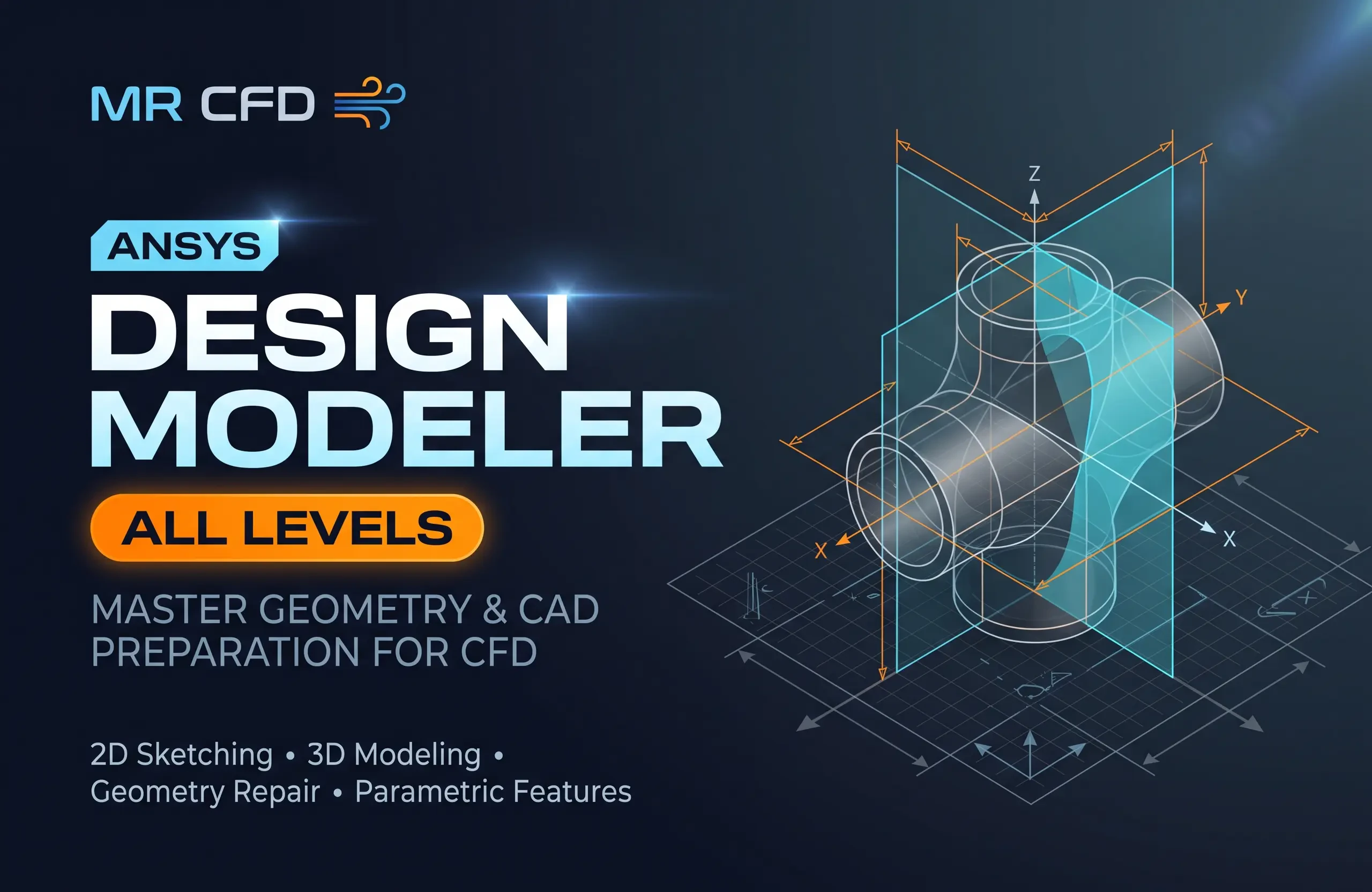
In this course, you will thoroughly learn how to design a 3D model. In addition, how to draw two-dimensional sketches is fully explained. Geometry drawing tools are fully introduced in Design Modeler software. At the end of the course, you will be able to model a complex three-dimensional geometry with the tools in this software. This Course is presented so that it is as practical as possible so that the graduates after the end of the Course can work well with this software to produce the geometries required for CFD works.
ANSYS Meshing Training Course
Beginner, Intermediate, Advanced
Price: Free
In this course, you will thoroughly learn how to mesh a 2D/3D geometry model to be used for your CFD/structural simulation stage. Namely, different types of mesh/grids including, unstructured, hybrid, structured, and multiple ways how to carry each out are illustrated. You will be first familiarized with different types of mesh and the geometries over which these specific mesh types are applied. Then building upon that knowledge, we will teach you the tricks and tips on how to create the mentioned mesh or grids. This Course is presented so that it is as practical as possible so that the graduates after the end of the Course can work well with this software to generate high-quality mesh for the geometries required for CFD works.