

CFD Intermediate Courses
Here's every CFD online course in the Intermediate level.
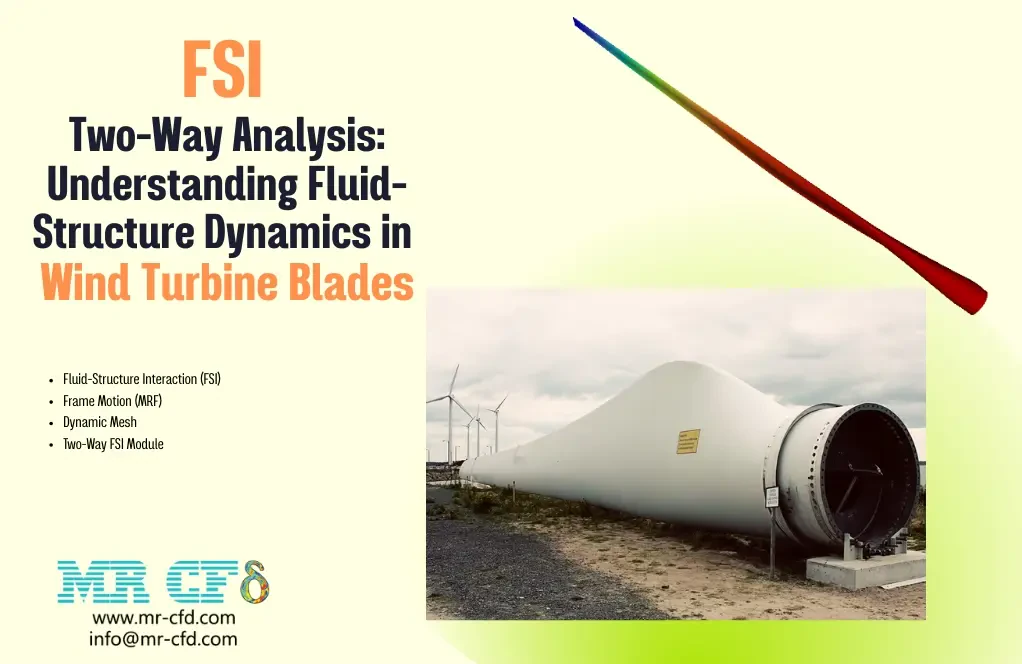
FSI Two-Way Analysis: Understanding Fluid-Structure Dynamics in Wind Turbine Blades
Intermediate, Advanced
Price: $270
This project focuses on the two-way Fluid-Structure Interaction (FSI) simulation of wind turbine blades to analyze their performance under specified conditions. Utilizing a dynamic mesh and advanced computational techniques, the study aims to evaluate key parameters such as torque, maximum stress, and total deformation. By modifying the geometry in ANSYS Spaceclaim and conducting the simulation with 990,399 cells, the project demonstrates how the blade’s structural integrity is affected by fluid flow and mechanical forces. The results, including stress distribution and displacement, provide insights into optimizing wind turbine design for improved efficiency and durability.
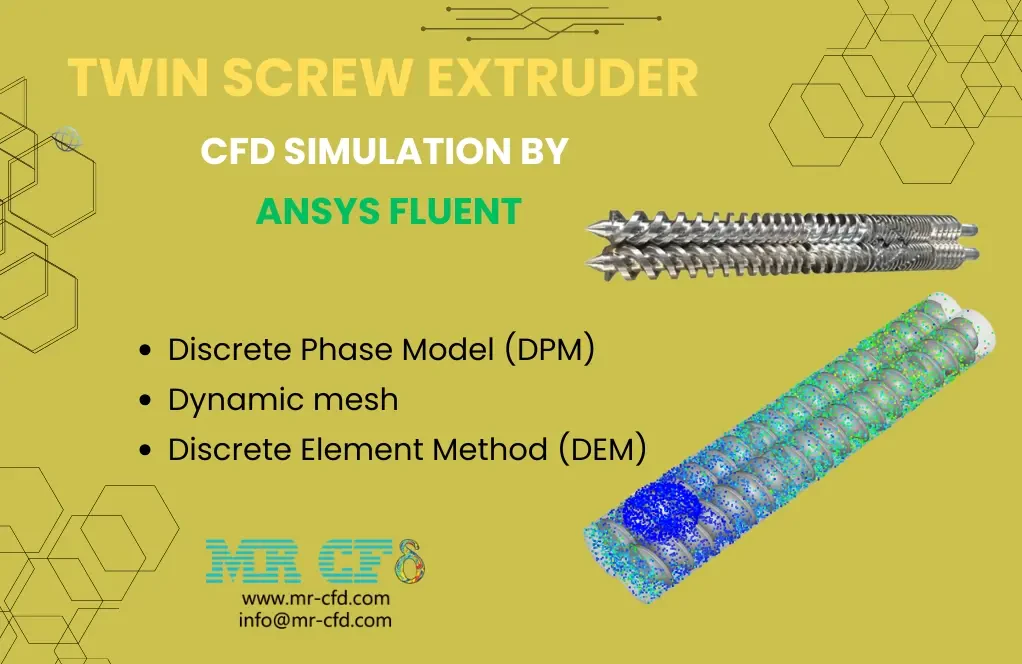
Twin Screw Extruder CFD Simulation, Using DEM and Dynamic Mesh
Intermediate, Advanced
Price: $108
In this project, a twin screw extruder is simulated using ANSYS Fluent to analyze the interaction of water and particles within the system. The flow rate of particles is nine times that of the continuous phase, and both the interactions within the particle phase and with the continuous phase are considered using a 4-way DEM module. The geometry is designed in ANSYS SpaceClaim, and an unstructured mesh is generated in ANSYS Meshing with dynamic adjustments at each time step. The k-epsilon turbulence model and DPM model are employed along with the DEM module to simulate interactions. This complex simulation, involving dynamic meshing and high computational demands, reveals insights into particle tracking and residence time as the extruder operates at 300 rpm with a 60-degree rotation scope.
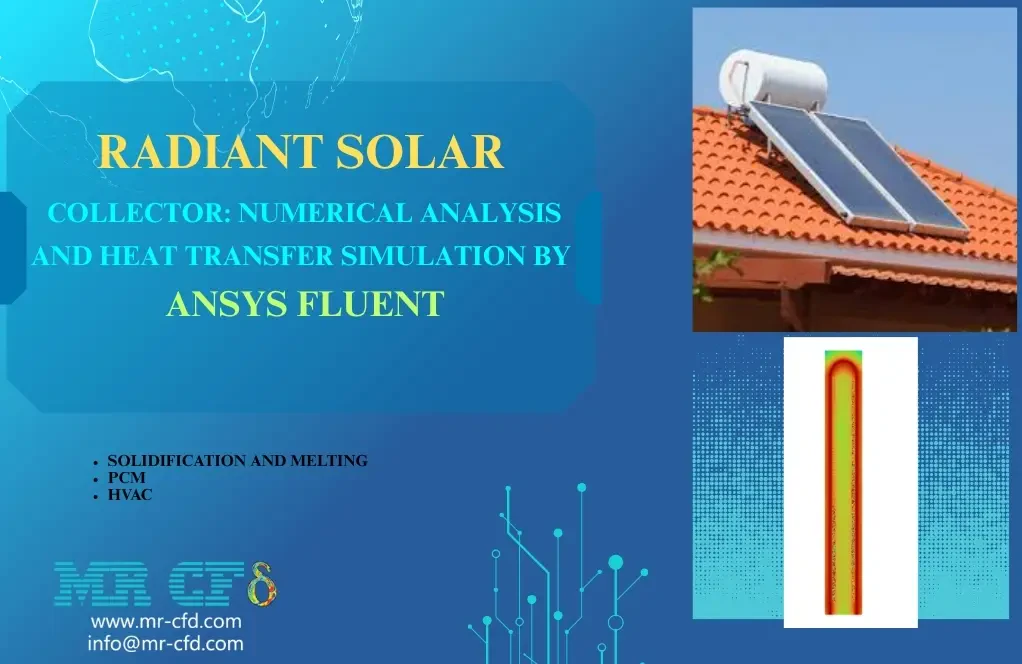
Radiant Solar Collector Applying PCM: Numerical Analysis and Heat Transfer CFD Simulation by ANSYS Fluent
Intermediate, Advanced
Price: $120
In this project, the numerical investigation of a radiant solar collector is conducted utilizing ANSYS SpaceClaim software, inspired by advanced modeling techniques. The 3D geometry is meticulously crafted and meshed with 647,500 elements, emphasizing an unstructured grid and refinement near the tubes to enhance simulation accuracy. The RNG K-epsilon turbulence model serves as the foundation for simulating the flow field, while the solidification and melting module addresses the PCM zone characteristics. Momentum, turbulence, and energy equations are tackled using the SIMPLE algorithm with second-order upwind discretization for precision. The simulation focuses on fluid dynamics and heat transfer, crucial for understanding the collector's performance under variable environmental conditions, despite the exclusion of radiation effects.
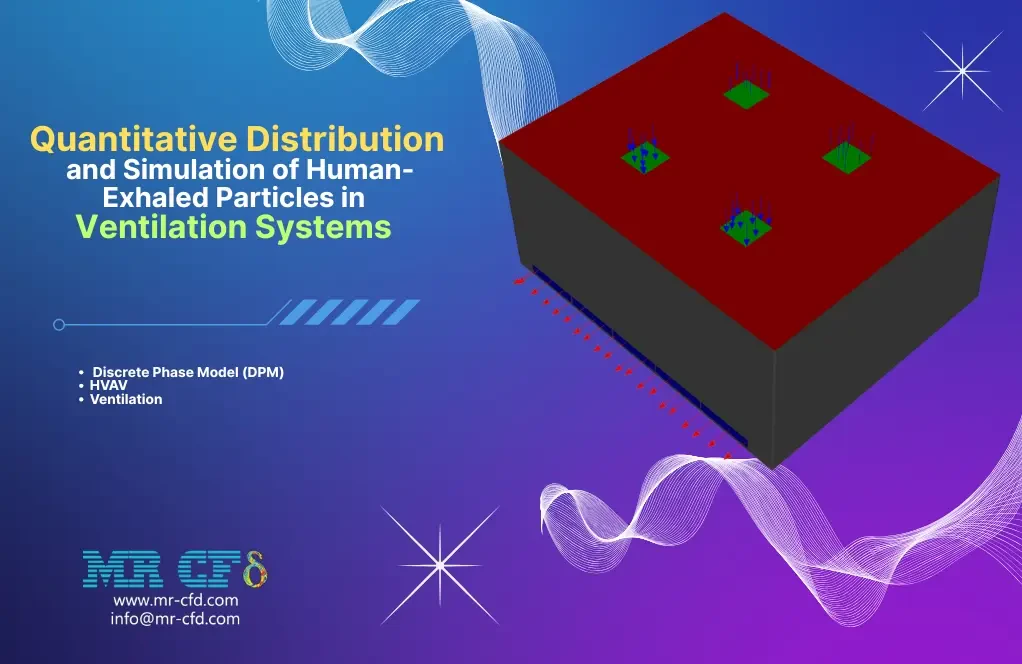
Quantitative Distribution and CFD Simulation of Human-Exhaled Particles in Ventilation Systems
Intermediate, Advanced
Price: $120
In this project, the quantitative distribution of human exhaled particles in a ventilated room is simulated using ANSYS Fluent software, based on the methodology from Zhijian Liu’s study. The 3-D geometry and mesh were created with user-provided files and consist of 547,820 elements. The simulation accounts for steady-state flow conditions and transitions to solve energy and DPM equations transiently. Airflow dynamics and heat transfer are analyzed using the ideal gas equation to address density variations due to temperature changes. The fan’s operation is modeled through a polynomial pressure jump function.
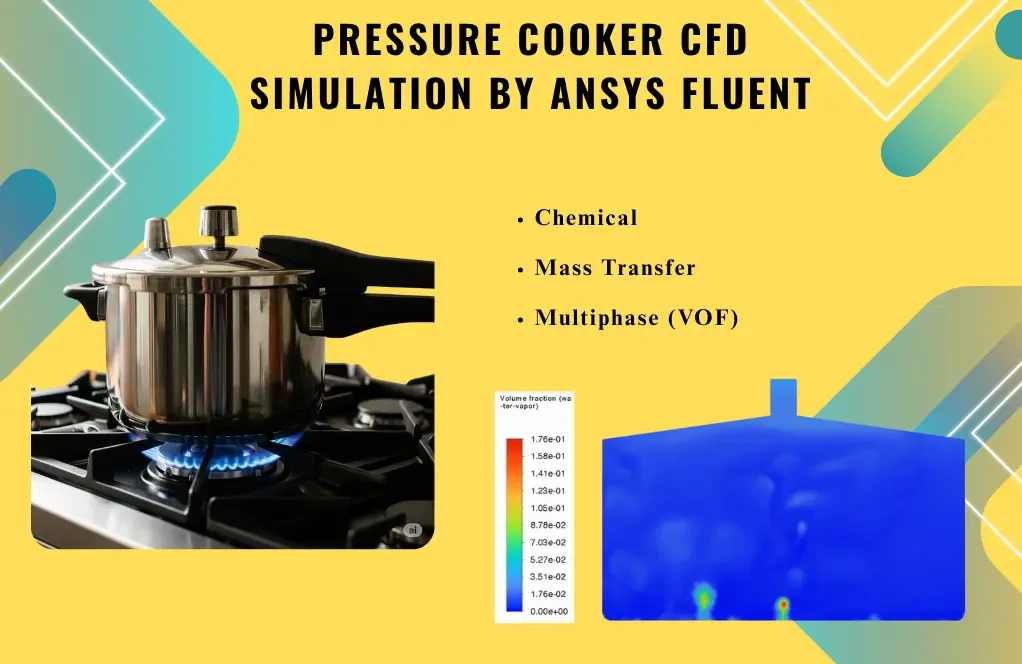
Pressure Cooker CFD Simulation by ANSYS Fluent
Beginner, Intermediate
Price: $140
This report presents a simulation which investigates the multiphase flow and mass transfer phenomena within a pressure cooker, focusing on the interactions between liquid water, water vapor, and air. The evaporation rate, pressure build-up, and temperature distribution within the pressure cooker were analyzed over a 30-second period. A high-quality tetrahedron elements mesh was generated using ANSYS Meshing software. Appropriate multiphase settings and boundary conditions were applied to correctly simulate the boiling process and vapor generation.

PCM Melting Rate Via Internal Fin and Nanoparticles
Intermediate, Advanced
Price: $20
This project explores the simulation of phase change material (PCM) melting within a 2D cavity, utilizing internal fins and nanoparticles to enhance thermal performance. The cavity, measuring 20mm in width and filled with paraffin wax, features a left wall and fin maintained at a constant temperature of 350K, while the right wall is kept at 300K, with other walls insulated. Simulations conducted over 375 seconds revealed that heat transfer occurs due to a temperature gradient, initiating phase change once the PCM reaches its melting temperature. Results indicated that 35.65% of the material was melted by the end of the simulation, providing critical insights into heat transfer efficiency and the influence of design parameters on PCM behavior in thermal systems.
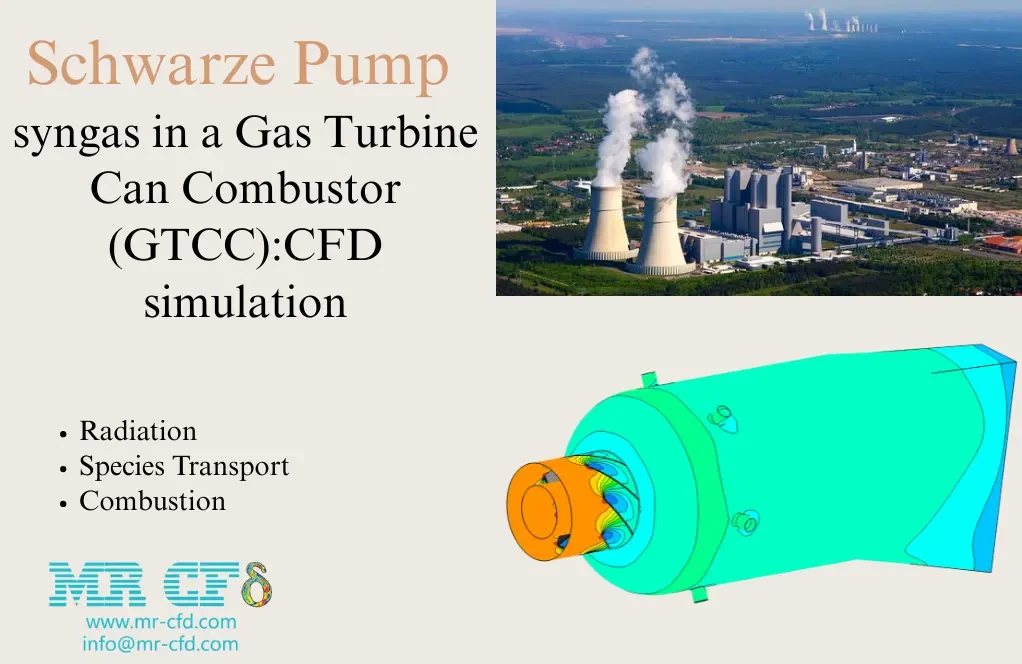
Syngas Fuel Combustion in Gas Turbine Can Combustor: CFD simulation
Intermediate, Advanced
Price: $300
The report details a simulation of a Gas Turbine Can Combustor (GTCC) using Computational Fluid Dynamics (CFD) to analyze the combustion and emission characteristics of Schwarze Pumpe syngas. The setup includes a combustion system with six fuel injectors, a primary air inlet, and six secondary air inlets. The analysis uses a sophisticated mesh and applies the standard k-ε turbulence model and the P1 radiation model for accurate simulations. Key findings show that the combustor design effectively facilitates mixing and combustion, achieving a maximum inner flame temperature of approximately 1900 K. The study also successfully models pollutant formation, such as NOx, providing insights into emission control. Overall, the simulation demonstrates high combustion efficiency, supported by detailed species volume fraction contours, confirming complete fuel combustion at the outlet and the viability of the GTCC in optimizing syngas combustion processes.
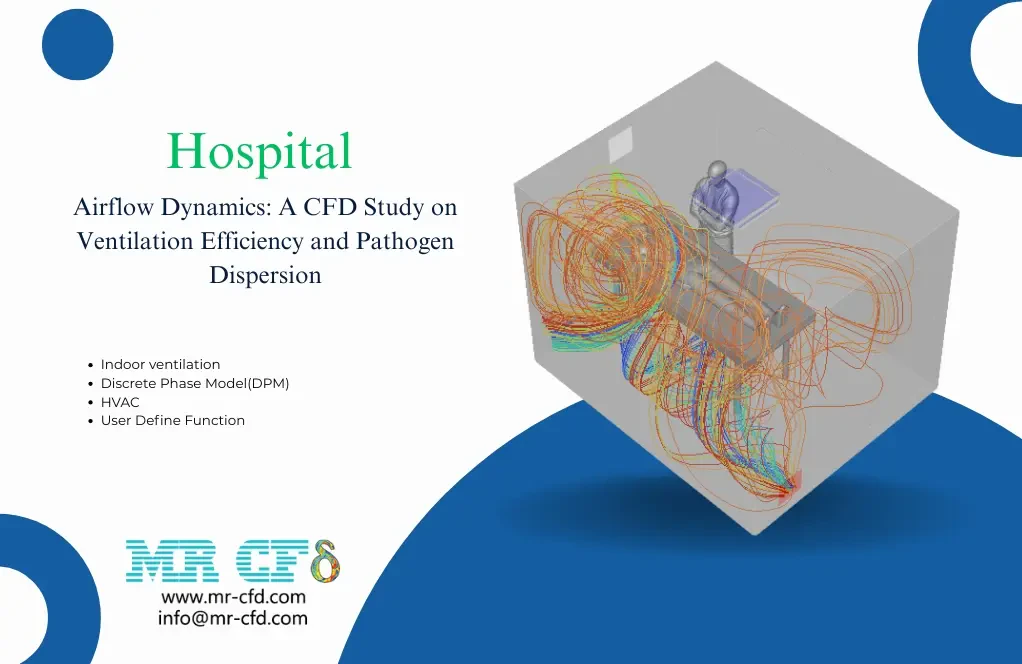
Hospital Airflow Dynamics: A CFD Study on Ventilation Efficiency and Pathogen Dispersion
Intermediate
Price: $270
The project aims to evaluate and enhance hospital room ventilation systems to effectively control aerosol dispersion, a crucial aspect of maintaining a safe environment within healthcare facilities. Three scenarios are analyzed: sneezing, coughing, and breathing, each with varying particle injection velocities and mass flow rates, to observe their effects on airflow patterns and particle trajectories. The simulation highlights that current ventilation setups exhibit limitations, as particles often become trapped or follow circular paths, indicating areas for improvement in ventilation strategy. Results suggest optimizing airflow by adjusting inlet and outlet conditions and improving flow patterns to enhance particle escape and overall air quality, ensuring safety and comfort in hospital settings.

Mixing Length and Pressure Optimization in Ethanol-Gasoline Pipelines
Intermediate, Advanced
Price: $140
The study aims to optimize the mixing length and pressure balance within ethanol-gasoline T-shape pipeline systems, a critical factor for efficient fuel blending. Three distinct pipeline designs were evaluated, each with differing diameters (10-inch and 6-inch) to assess their effects on pressure drop and mixing efficiency This design successfully met all constraints, including maintaining the desired outlet ethanol volume fraction of 7.8% and ensuring the outlet pressure remained above 80 kPa, confirming the feasibility of using thinner pipelines for optimized fuel mix and flow conditions.