

Renewable Energy Golden Training Package
Price:
$9,427
$1,799
The Renewable Energy GOLDEN Training Package delivers 75+ ANSYS Fluent tutorials, transforming teams into experts with instant project readiness. Tailored for professors, CEOs, and firms, it covers horizontal and vertical axis wind turbines, wind farms, wind turbine acoustics and FSI vibration, Pelton, tidal, and Archimedes screw hydro turbines, solar collectors, solar chimneys, PCM-enhanced PV, solar stills for desalination, geothermal systems, and greenhouse and dry cooling tower performance. Includes step-by-step exercises, 1-year support, 3-month HPC, lifetime updates, and 15 years of MR CFD expertise for stress-free onboarding and competitive edge.
Price: $60
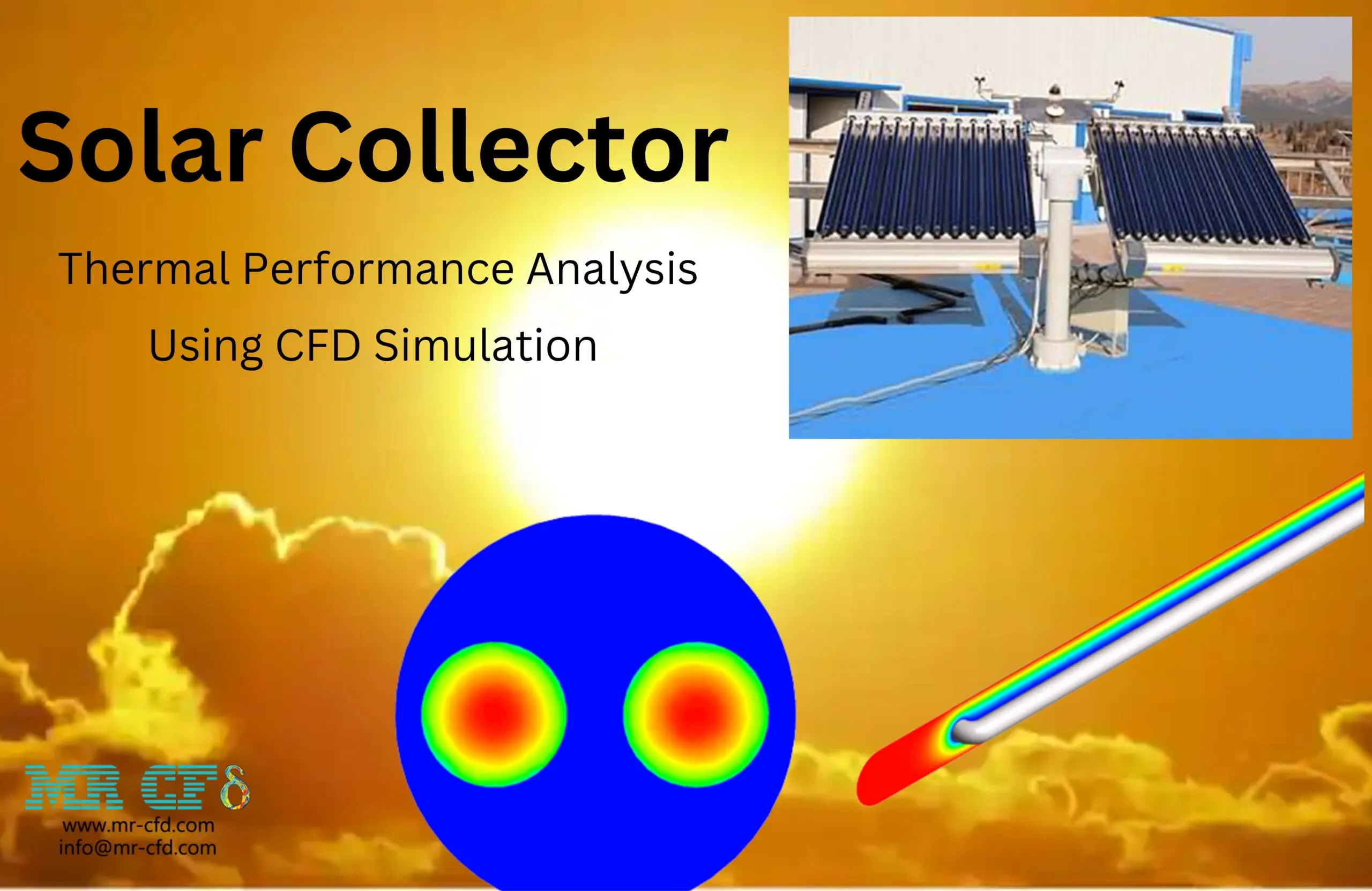
This project presents a CFD simulation of a solar collector designed to analyze heat transfer and fluid flow inside a U-shaped tube. The system uses water as the working fluid under steady-state conditions. The outer wall is maintained at a constant high temperature to simulate solar heating. Results show an effective temperature rise, confirming efficient thermal performance of the collector.
Price: $240
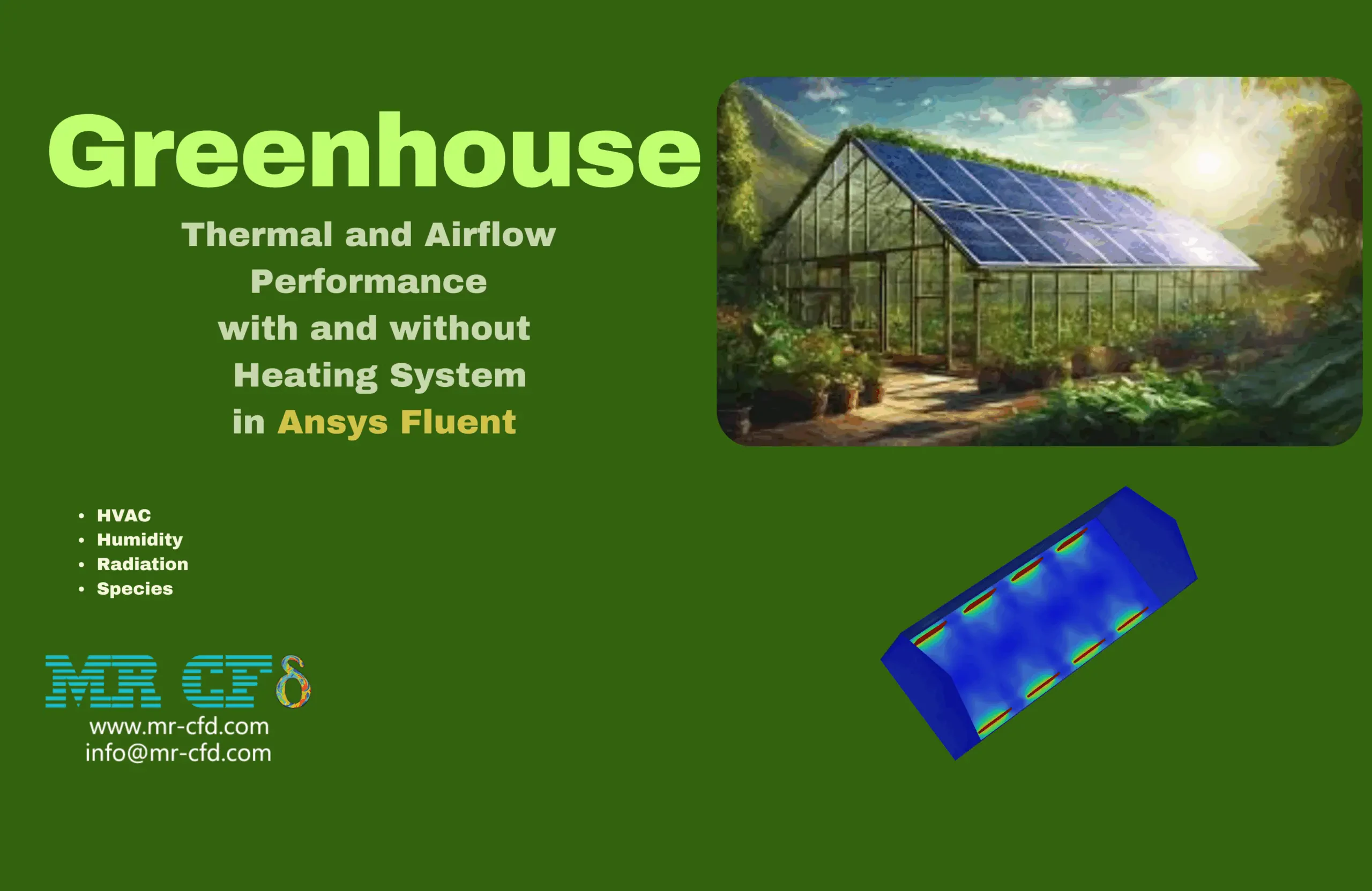
In this project, we have simulated the thermal and airflow performance of a greenhouse with and without a heating system using ANSYS Fluent software. Three-dimensional modeling was done using Design Modeler software. The meshing of the model has been done using ANSYS Meshing software, with approximately 1,860,000 cells for the base case and 3,110,000 cells for the heated case. The energy equation, species transport, and solar ray tracing using the Discrete Ordinates (DO) radiation model are enabled for accurate representation of heat transfer and humidity. The standard K-epsilon model is selected for turbulence characteristics of fluid flow.
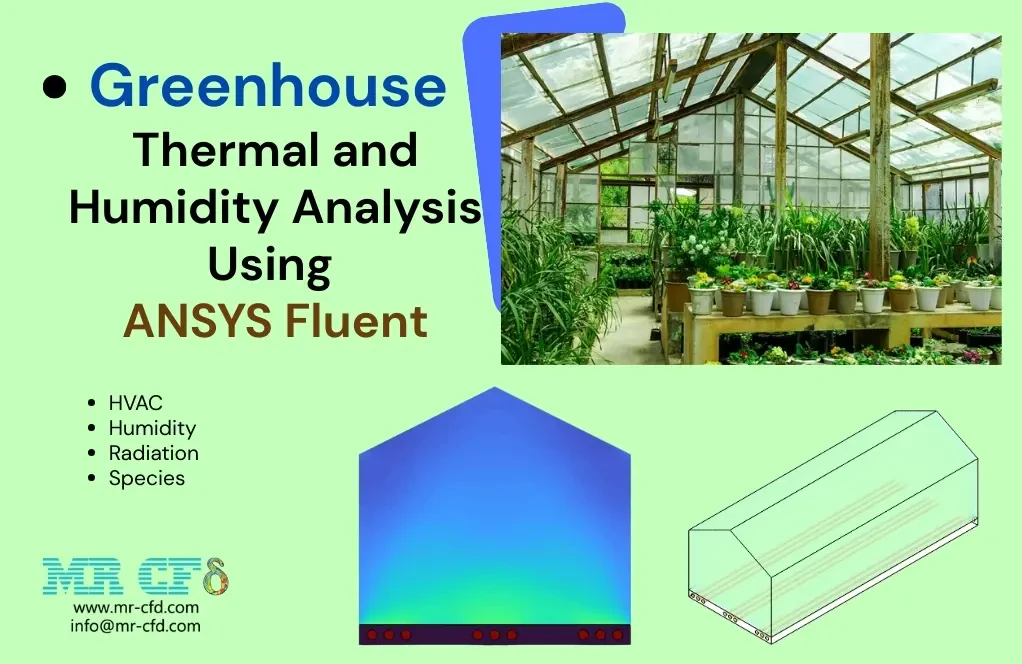
Greenhouse Thermal and Humidity Analysis Using ANSYS Fluent
Intermediate, Advanced
Price: $72
The problem numerically simulates airflow, heat transfer, solar radiation, and humidity inside a greenhouse using ANSYS Fluent software. We perform this simulation as steady-state. The study incorporates the Discrete Ordinates radiation model with solar ray tracing and species transport for air–water vapor mixture analysis.
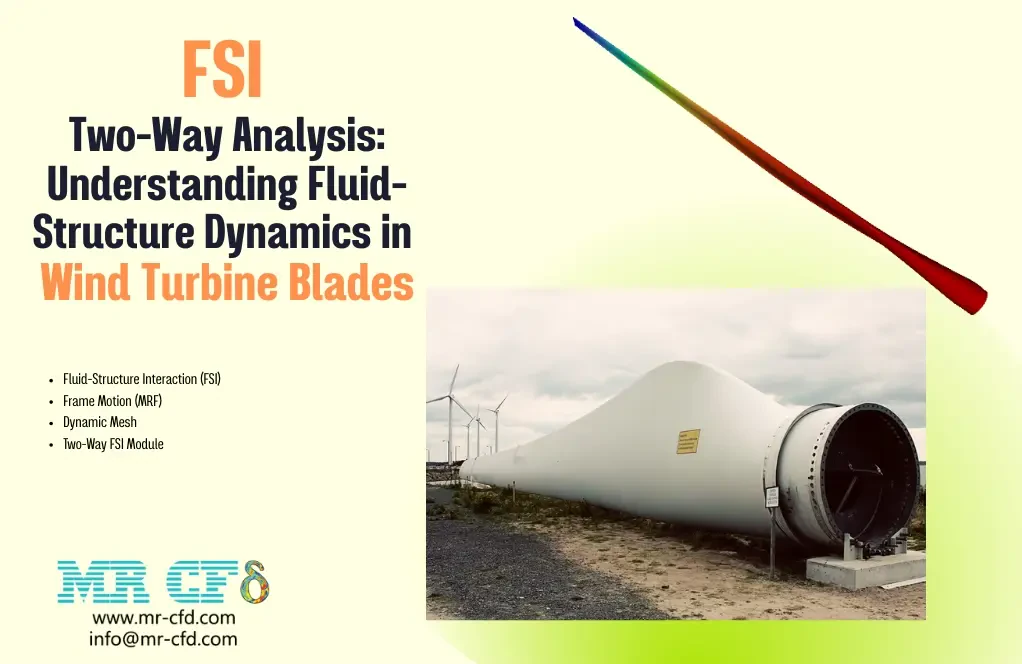
FSI Two-Way Analysis: Understanding Fluid-Structure Dynamics in Wind Turbine Blades
Intermediate, Advanced
Price: $270
This project focuses on the two-way Fluid-Structure Interaction (FSI) simulation of wind turbine blades to analyze their performance under specified conditions. Utilizing a dynamic mesh and advanced computational techniques, the study aims to evaluate key parameters such as torque, maximum stress, and total deformation. By modifying the geometry in ANSYS Spaceclaim and conducting the simulation with 990,399 cells, the project demonstrates how the blade’s structural integrity is affected by fluid flow and mechanical forces. The results, including stress distribution and displacement, provide insights into optimizing wind turbine design for improved efficiency and durability.
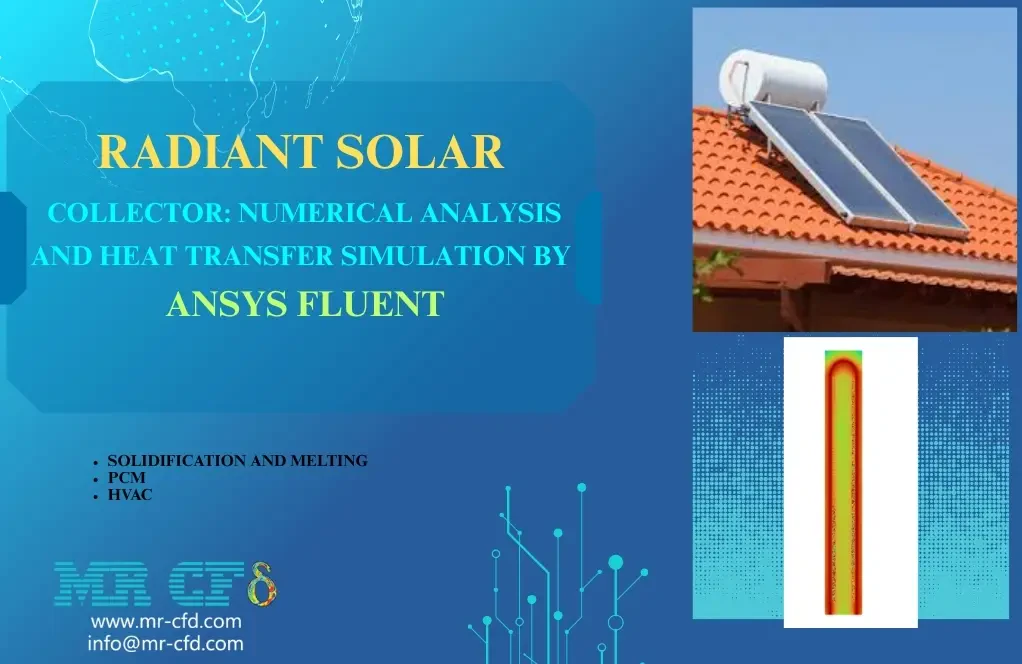
Radiant Solar Collector Applying PCM: Numerical Analysis and Heat Transfer CFD Simulation by ANSYS Fluent
Intermediate, Advanced
Price: $120
In this project, the numerical investigation of a radiant solar collector is conducted utilizing ANSYS SpaceClaim software, inspired by advanced modeling techniques. The 3D geometry is meticulously crafted and meshed with 647,500 elements, emphasizing an unstructured grid and refinement near the tubes to enhance simulation accuracy. The RNG K-epsilon turbulence model serves as the foundation for simulating the flow field, while the solidification and melting module addresses the PCM zone characteristics. Momentum, turbulence, and energy equations are tackled using the SIMPLE algorithm with second-order upwind discretization for precision. The simulation focuses on fluid dynamics and heat transfer, crucial for understanding the collector's performance under variable environmental conditions, despite the exclusion of radiation effects.
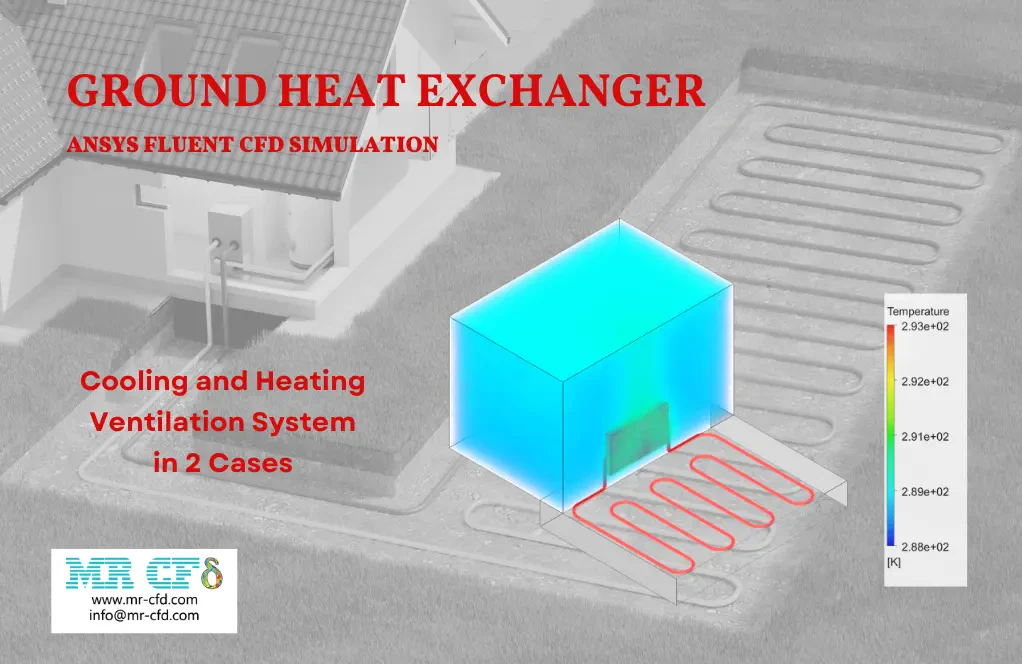
Ground Heat Exchanger, ANSYS Fluent CFD Simulation
Beginner, Intermediate
Price: $100
This product numerically simulates a Ground Heat Exchanger using ANSYS Fluent software. We designed the 3-D model using the Design Modeler software. We meshed the model with ANSYS Meshing software; the element numbers are 3060397. We performed the present simulation in two cases, including cooling and heating.
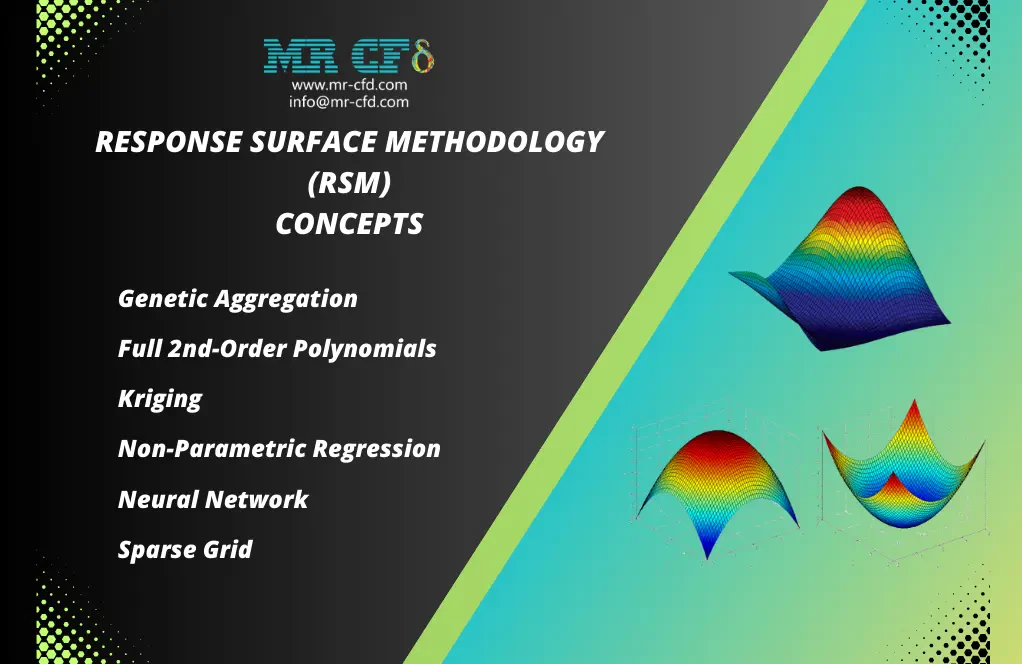
Response Surface Methodology (RSM) Concepts, Optimization by ANSYS Fluent
Beginner, Intermediate, Advanced
Price: Free
Introduction to the Response Surface Methodology (RSM) in ANSYS Fluent software Introduction to the Genetic Aggregation Introduction to the Full 2nd-Order Polynomials Introduction to the Kriging Introduction to the Non-Parametric Regression Introduction to the Neural Network Introduction to the Sparse Grid
Price: Free
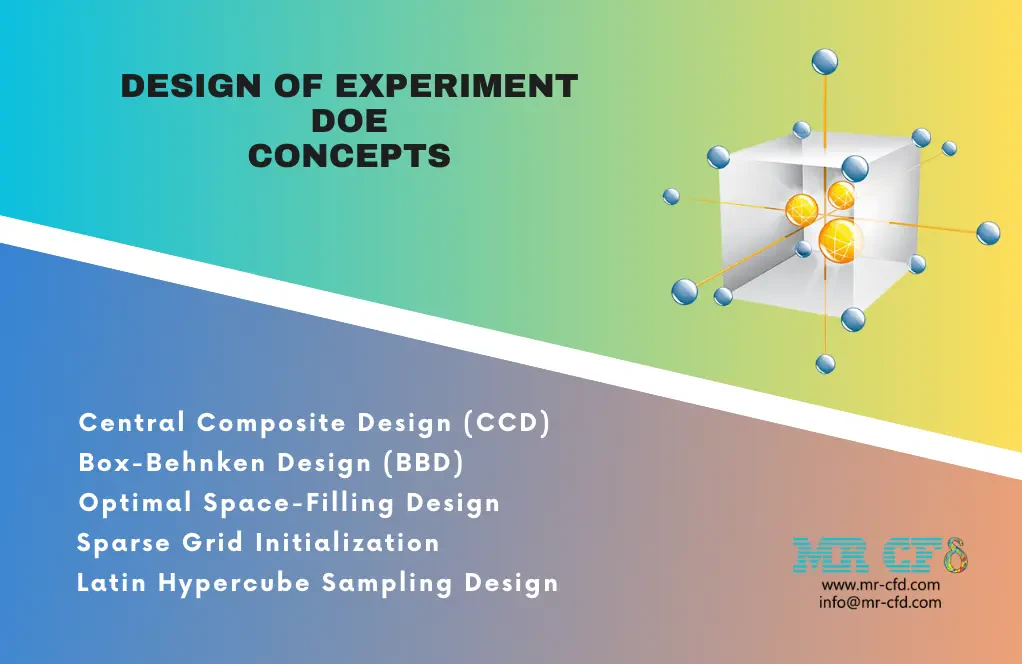
Introduction to the Design of Experiment (DOE) in ANSYS Fluent software Introduction to the Central Composite Design (CCD) Introduction to the Rotatable, VIF-Optimality, G-Optimality, and Face-Centered Introduction to the Box-Behnken Design (BBD) Introduction to the Optimal Space-Filling Design Introduction to the Sparse Grid Initialization Introduction to the Latin Hypercube Sampling Design Introduction to the Custom and Custom+Sampling
Computational Fluid Dynamics (CFD): Introduction
Beginner, Intermediate, Advanced
Price: Free
This is the first session of a Computational Fluid Dynamics (CFD) course, focusing on equations and numerical methods for discretization and solving them in detail. The course is designed by the Mister CFD team to help students and engineers understand the numerical techniques used in software like Ansys Fluent, rather than focusing on fundamental coding. It introduces CFD as a method for solving nonlinear partial differential equations (Navier-Stokes equations) through numerical techniques, since general analytical solutions aren’t available. The document covers three main numerical methods: Finite Difference Method (FDM), Finite Volume Method (FVM), and Finite Element Method (FEM), with their advantages and limitations. It explains different types of Partial Differential Equations (PDEs) including their classifications based on order, linearity, and behavior (Elliptic, Parabolic, and Hyperbolic). The content concludes with detailed explanations of conservation equations, numerical errors in CFD, and the importance of Taylor series in discretization processes.
The Renewable Energy GOLDEN Training Package is MR CFD’s most complete ANSYS Fluent collection for clean-energy simulation, with 75+ hands-on tutorials that take you from first setup to advanced, publication-level modeling. Built for professors, CEOs, research teams, and engineering firms, it gives your group a ready-to-use project library, so new members become productive quickly and ongoing work starts from proven templates.
Wind energy: Simulate horizontal axis (HAWT) and vertical axis (VAWT) wind turbines using MRF, mesh motion, and dynamic mesh 6DOF methods. Cover Savonius, Darrieus, Gorlov, helical, H-type, Archimedes spiral, shrouded micro, ducted, and airborne turbines, plus wind farm layouts. Go further with FW-H and broadband noise analysis and one-way and two-way FSI for blade vibration.
Hydropower and tidal energy: Model Pelton turbines, including cavitation, hydro-abrasive erosion, acoustics, and FSI. Study Archimedes screw turbines, horizontal and vertical axis tidal and water turbines, contra-rotating turbines, and oscillating wave-driven fin motion.
Solar thermal and photovoltaics: Analyze flat plate, parabolic, evacuated U-bend, and conical solar collectors, solar ovens, and solar heat exchangers. Add nanofluids, PCM-enhanced collectors and PV panels, PVT systems, floating solar panels, and Trombe walls.
Solar chimneys and desalination: Simulate solar chimney power plants with DOE optimization, and solar stills and desalination using solar ray tracing, species transport, and surface evaporation.
Geothermal and cooling: Explore geothermal reservoirs and systems, ground heat exchangers, Heller indirect dry cooling towers, and greenhouse thermal, airflow, and humidity performance.
What’s included:
Step-by-step exercises with complete setup, meshing, solving, and post-processing
Projects spanning beginner, intermediate, and advanced levels, including paper-validation cases
1-year technical support
3-month HPC access
Lifetime updates
Backed by 15 years of MR CFD simulation expertise
Whether you’re preparing a research paper, optimizing a turbine or solar system, or building in-house CFD capability, this package gives you the knowledge, tools, and confidence to deliver faster and stay ahead of the competition.