

Academic Online Courses
Here's every CFD online course related to Academic category.
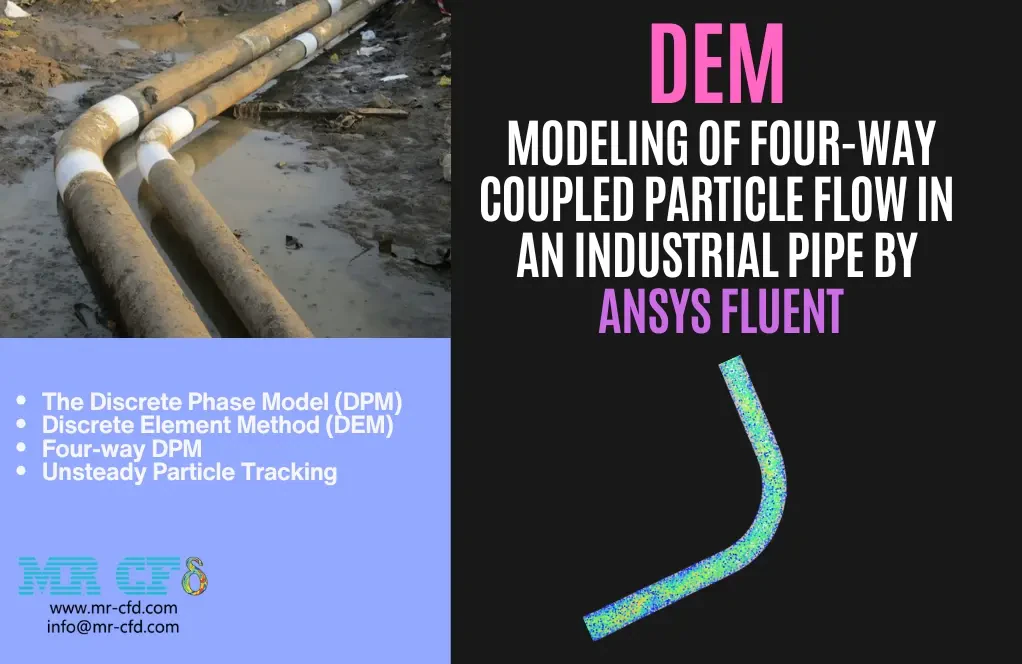
DEM Modeling of Four-Way Coupled Particle Flow in an Industrial Pipe CFD Simulation by ANSYS Fluent
Advanced
Price: $150
The problem numerically simulates particle-laden airflow in a long pipe with a bend using ANSYS Fluent software. We perform this simulation in steady state for the fluid phase with unsteady (transient) particle tracking. We model the problem using a four-way coupled DEM–CFD DPM approach to capture particle–particle and particle–fluid interactions. The DEM collision model, Saffman lift force, and two-way turbulence coupling are included as per project requirements. The geometry is created in ANSYS Design Modeler and meshed in ANSYS Meshing with an unstructured grid of about 382,000 elements.
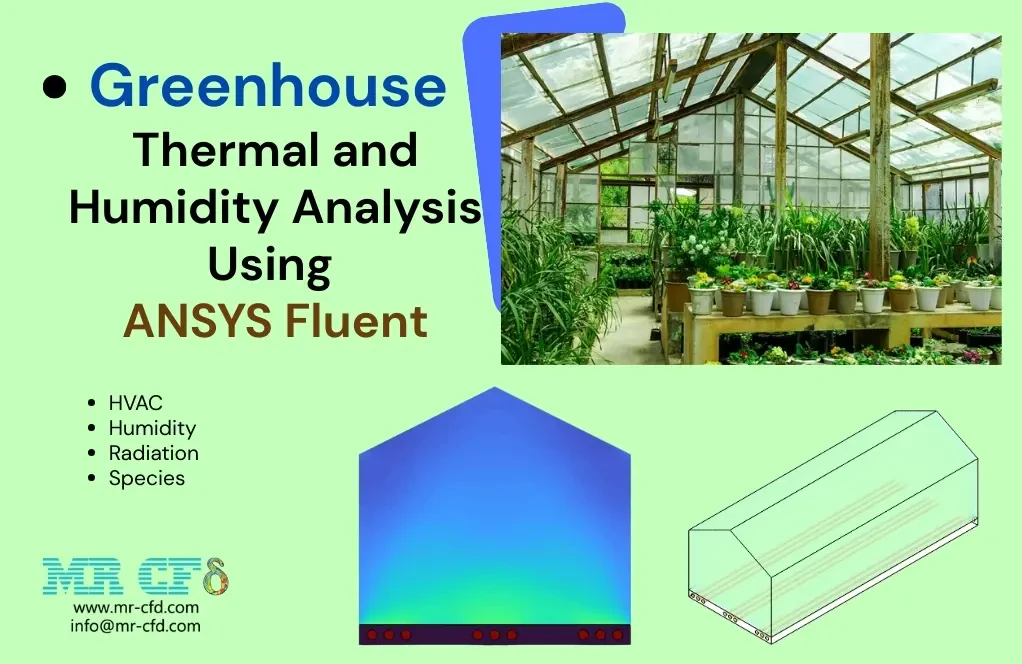
Greenhouse Thermal and Humidity Analysis Using ANSYS Fluent
Intermediate, Advanced
Price: $72
The problem numerically simulates airflow, heat transfer, solar radiation, and humidity inside a greenhouse using ANSYS Fluent software. We perform this simulation as steady-state. The study incorporates the Discrete Ordinates radiation model with solar ray tracing and species transport for air–water vapor mixture analysis.
Price: $24
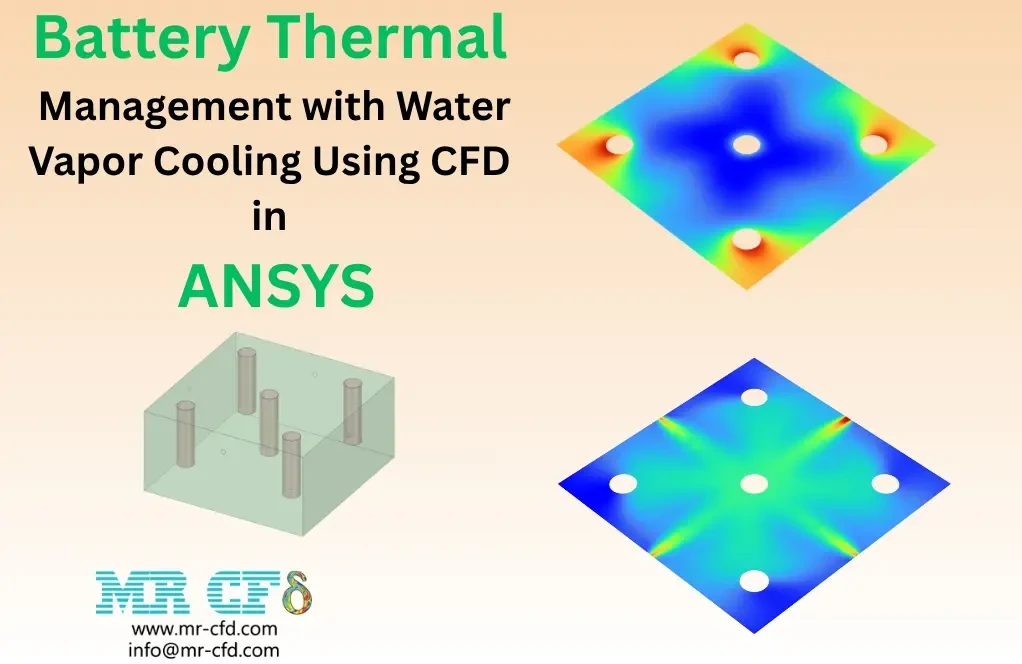
In Battery Thermal Management project simulates battery thermal management using water vapor injection cooling in ANSYS Fluent. A five-cell vertical battery pack is modeled in SpaceClaim, with unstructured mesh and wall boundary layers applied for accuracy. Air and water vapor at 18°C are injected from side nozzles at 0.5 m/s to reduce battery temperatures. The model runs species transport in pseudo-transient mode, includes a grid independence study, and analyzes the effectiveness of vapor cooling on temperature reduction.

Price: $140
This project simulates blood flow in a porous artery wall using CFD in ANSYS. The wall is modeled as a high-viscosity fluid to mimic porosity, with no actual flow through it. Geometry was simplified, meshed, and solved in Fluent under steady laminar conditions. The study includes validation, mesh independence, and analysis of velocity profiles.

Price: $270
This artery flow project involves the simulation of blood flow in a compliant artery using CFD and FSI techniques in ANSYS. The primary objectives are to validate the simulation against a published study, analyze mesh independence, and investigate the effects of wall compliance and porosity on hemodynamic behavior. The artery geometry is simplified and reconstructed for numerical accuracy, with meshing performed in ANSYS Meshing and flow solved using Fluent. Wall deformation is modeled using the FSI module, while porosity effects are simulated by assigning high-viscosity fluid properties to the vessel wall. Simulations are performed under unsteady, incompressible flow conditions with non-Newtonian blood properties. Key results include time-dependent deformation, wall shear stress, and velocity distributions, with validation confirming a shear stress error below 1% in mesh studies.
Price: $420
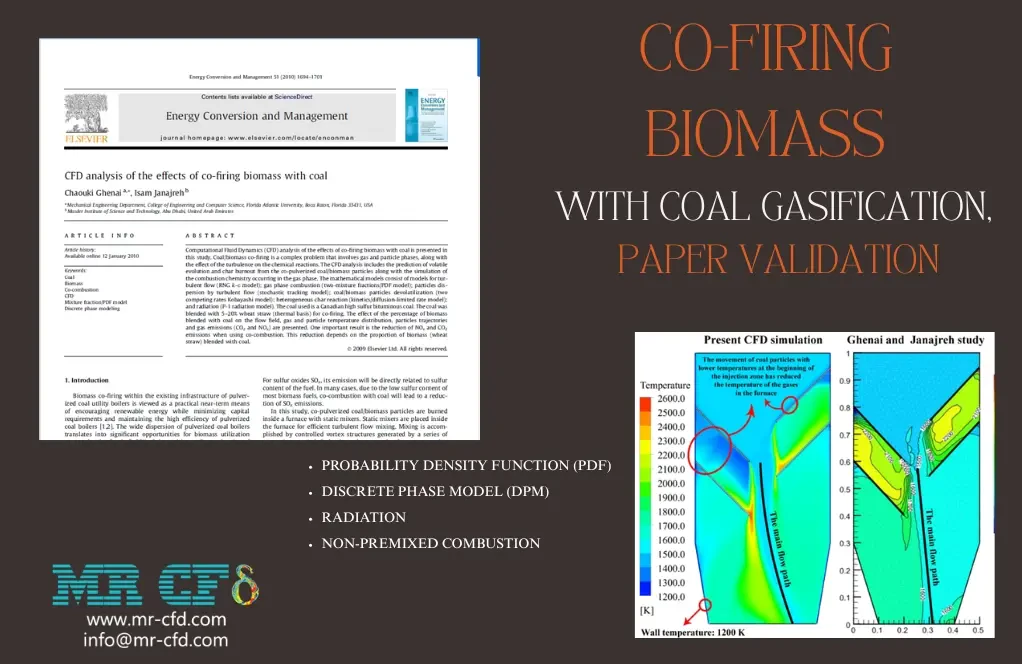
Co-firing Biomass with Coal Gasification. This project involves the simulation of coal and biomass co-firing in a furnace using CFD techniques. The primary objectives are to examine the combustion characteristics and validate the simulation results against the study by Ghenai and Janajreh. The furnace is defined with specific boundary conditions, and simulations are performed using an unsteady, incompressible flow model. The turbulent flow within the furnace is modeled using the k-e RNG turbulent model, thermal radiation is simulated with the P1 model, and combustion is analyzed with a PDF model. The simulation incorporates the kinetics/diffusion-limited rate model for particle combustion and the two competing rates Kobayashi model for devolatilization. Results are compared in terms of temperature contours and particle trajectories, confirming the simulation’s accuracy with a maximum error of approximately 5% in particle temperature ranges.
Price: $240
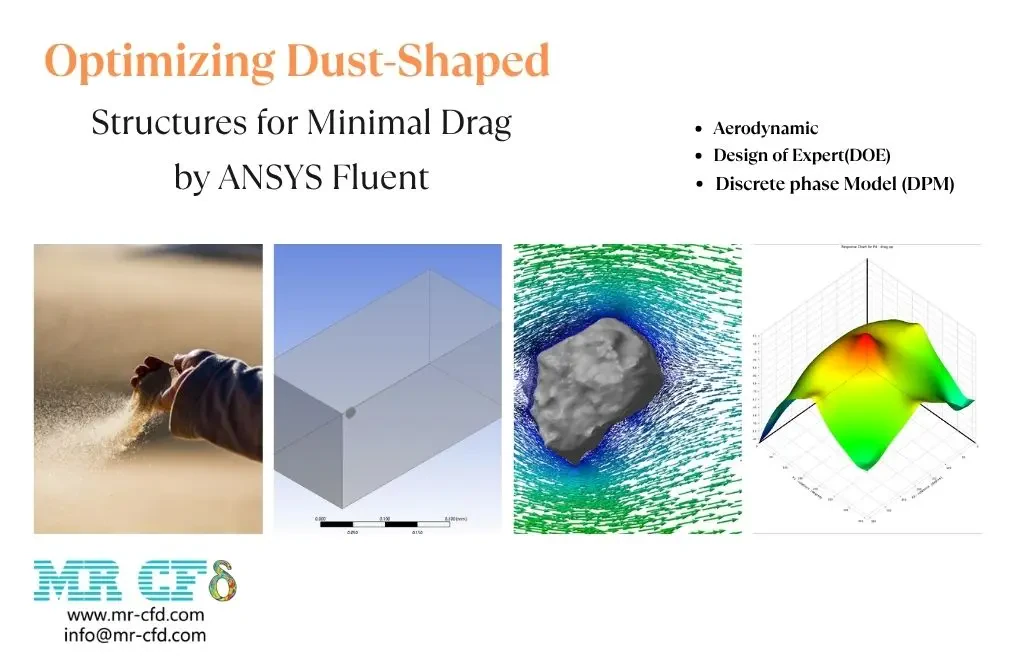
This project simulates and analyzes a dust-shaped geometry exposed to wind using Computational Fluid Dynamics (CFD). The study employs a pressure-based solver with a focus on understanding drag forces resulting from varying inlet velocities and rotational dynamics. The study uses advanced optimization techniques, including Design of Experiment (DOE) and Central Composite Design (CCD) methods, to explore 15 design scenarios. The findings highlight the inlet velocity magnitude as the most influential parameter, aiding in the optimization of aerodynamic efficiency and contributing to enhanced dust simulation accuracy.
Price: $48
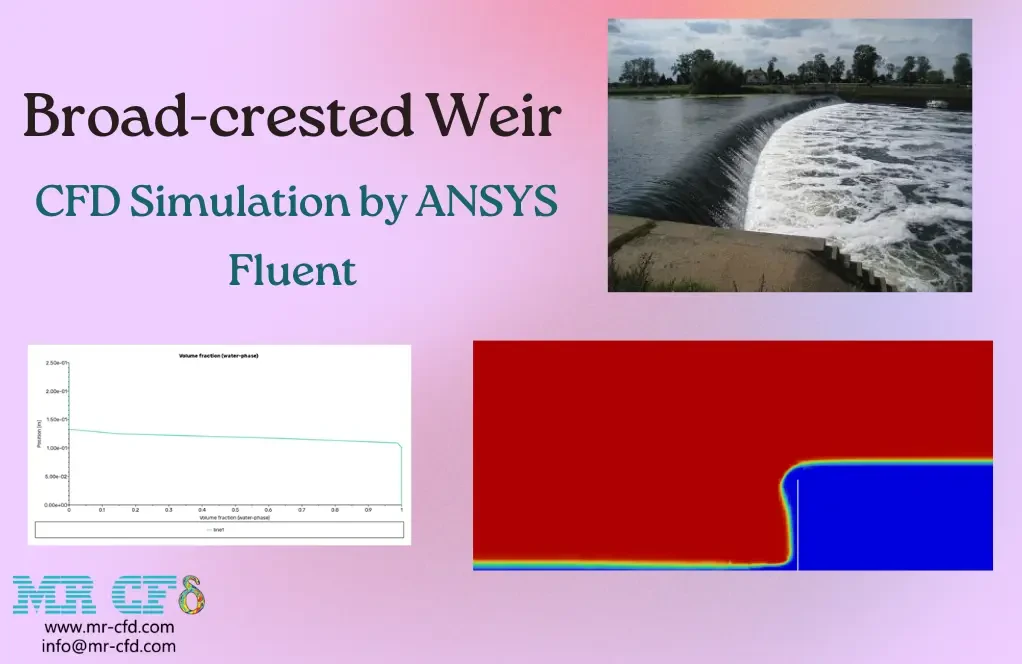
This project involves the simulation of a broad-crested weir using ANSYS Fluent to analyze fluid dynamics parameters. The primary goals are to assess the flow rate, drag force, and water level at various sections of the weir and compare these with experimental results. The geometry is created in SpaceClaim and meshed in ANSYS Meshing, resulting in a structured mesh with 1,222,021 elements for improved accuracy. The CFD simulation employs a pressure-based solver and a multiphase VOF model to address the incompressibility of fluids, with air as the primary phase and water as the secondary.
FSI Two-Way Analysis: Understanding Fluid-Structure Dynamics in Wind Turbine Blades
Intermediate, Advanced
Price: $270
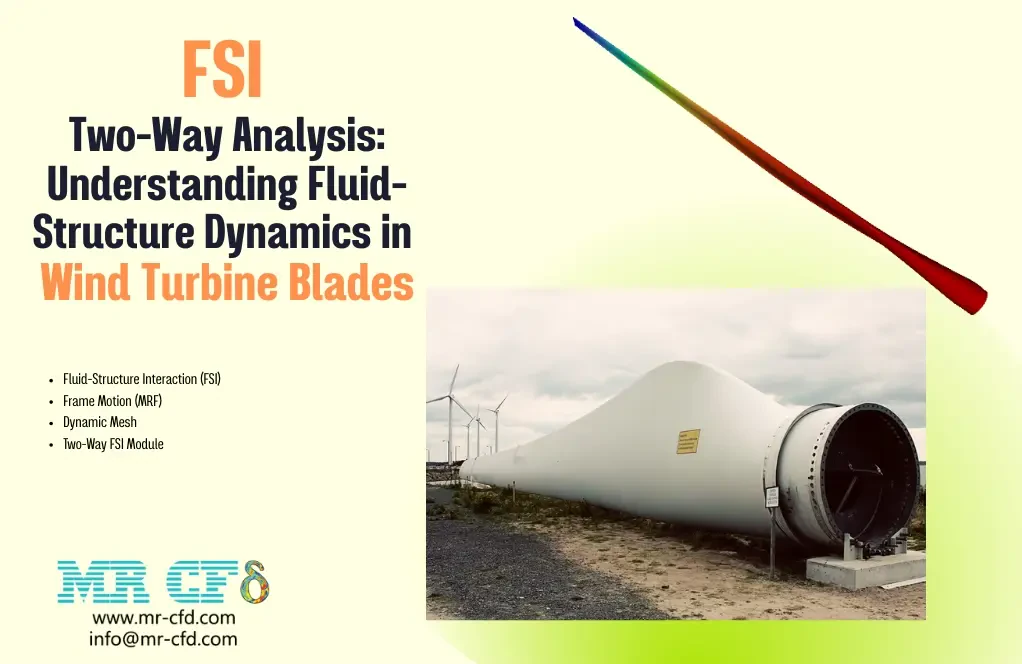
This project focuses on the two-way Fluid-Structure Interaction (FSI) simulation of wind turbine blades to analyze their performance under specified conditions. Utilizing a dynamic mesh and advanced computational techniques, the study aims to evaluate key parameters such as torque, maximum stress, and total deformation. By modifying the geometry in ANSYS Spaceclaim and conducting the simulation with 990,399 cells, the project demonstrates how the blade’s structural integrity is affected by fluid flow and mechanical forces. The results, including stress distribution and displacement, provide insights into optimizing wind turbine design for improved efficiency and durability.