

ANSYS Fluent Online Courses
Here's every CFD online course related to ANSYS Fluent category.
Price: $569
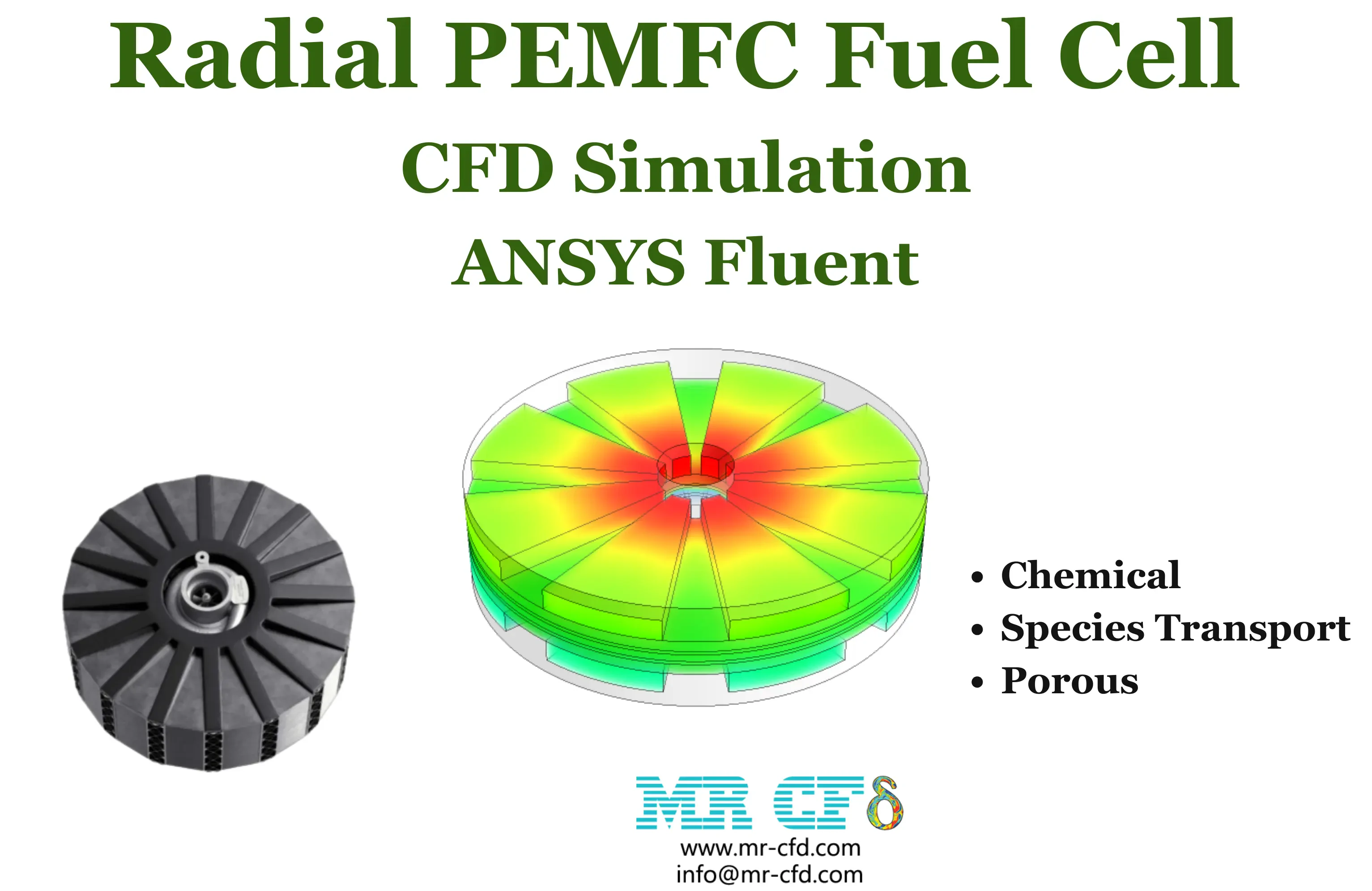
The problem numerically simulates a Radial Fuel Cell using ANSYS Fluent software. We design the 3-D model with the Design Modeler software. We mesh the model with ANSYS Meshing software, and the element number equals 2,393,706. We use the Fuel Cell and Electrolysis Model to define a fuel cell. We used the PEMFC sub-model to define a proton exchange membrane fuel cell. We used the Species model to define H2, O2, and H2O.

Price: $629
The problem numerically simulates the Electrolysis using ANSYS Fluent software. We design the 3-D model with the Design Modeler software. We mesh the model with ANSYS Meshing software, and the element number equals 2,393,706. We use the Fuel Cell and Electrolysis Model and the Electrolysis sub-model. We used the Species model to define H2, O2, and H2O.
Solid Fuel Ramjet Engine, SFRJ, CFD Simulation, ANSYS Fluent
Intermediate, Advanced
Price: $80
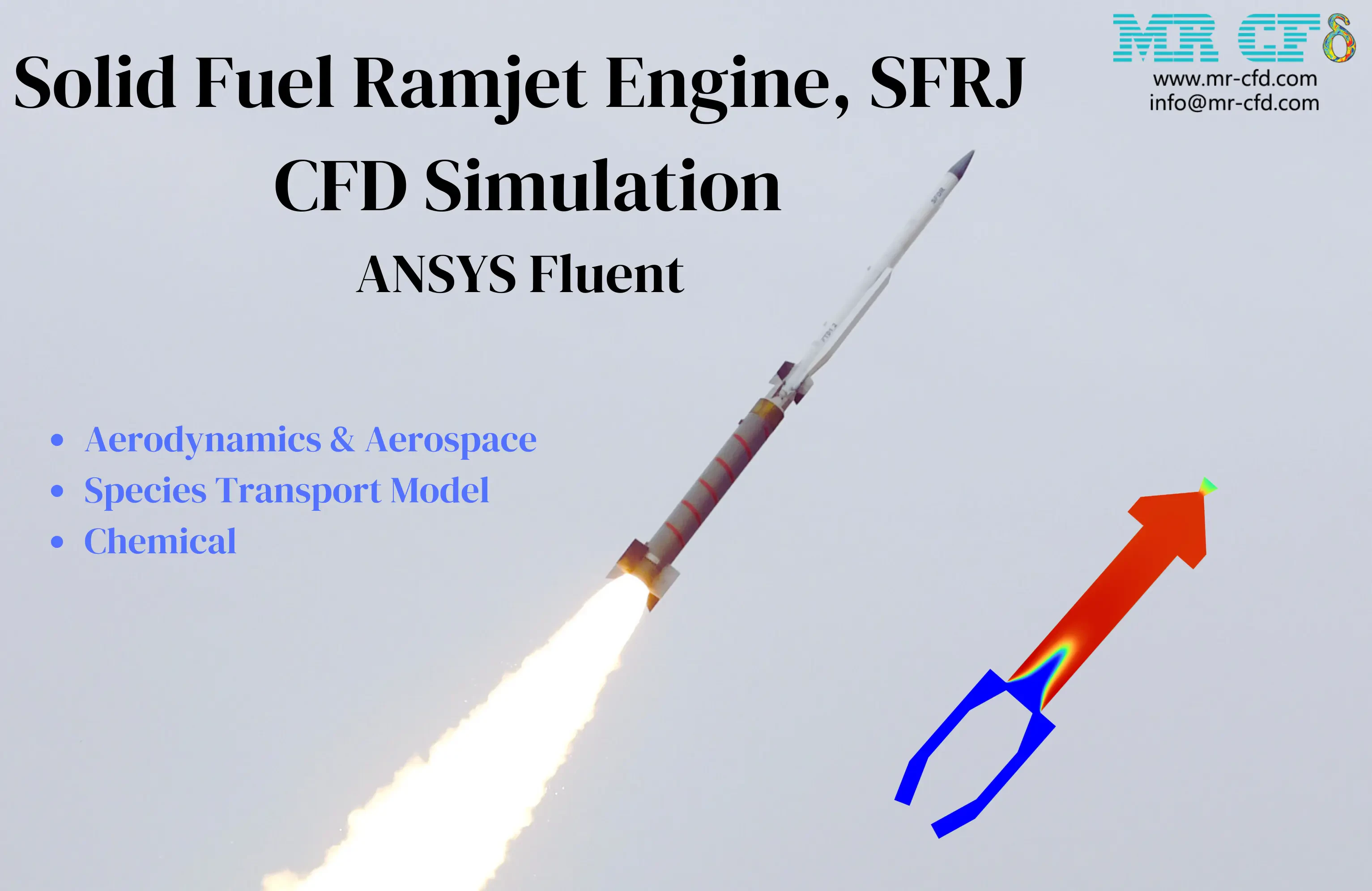
In this project, a solid fuel ramjet (SFRJ) engine has been numerically simulated by ANSYS Fluent software. We design the 2-D model by the Design Modeler software. We Mesh the model with ANSYS Meshing software. The mesh type is Structured, and the element number equals 35,224. We use the Species Transport model to define the combustion process.
Price: $499
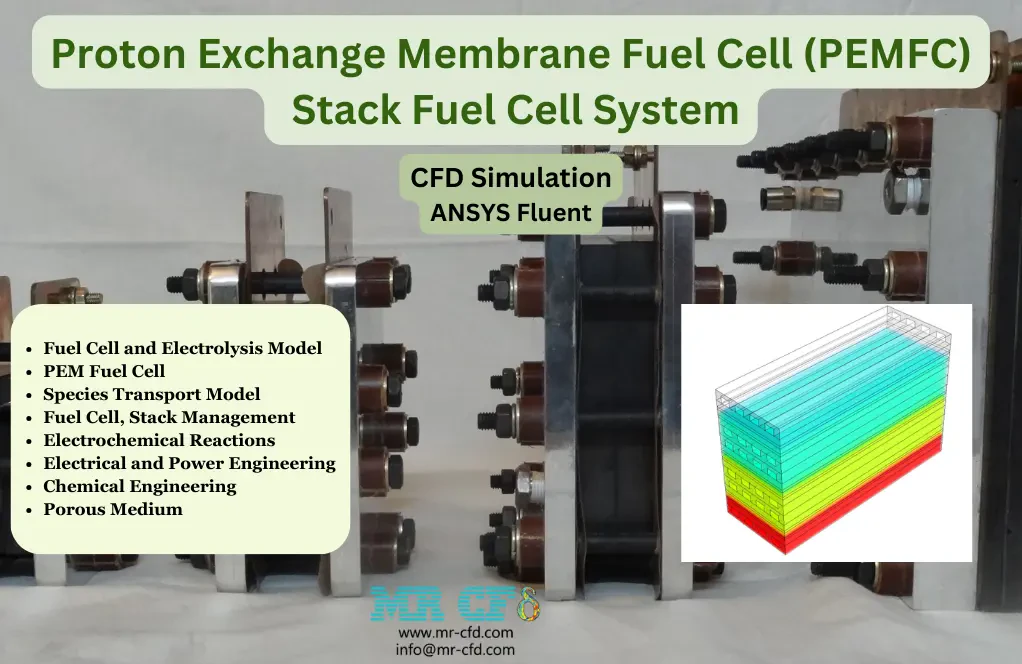
In this project, we perform the numerical simulation of a PEM Fuel Cell Stack System using ANSYS Fluent software. We designed the geometry of the model in 3D using Design Modeler software. We meshed the model using ANSYS Meshing software, and 9,946,409 cells have been generated. We used the Fuel Cell and Electrolysis model and the PEMFC submodel to define the proton-exchange membrane fuel cell. We applied the Stack Management option to define multiple fuel cell units. The Species Transport model is automatically activated because of using the fuel cell model.
DDPM, Proppant Transport among Multicluster Hydraulic Fractures, Paper Numerical Validation
Advanced
Price: $320
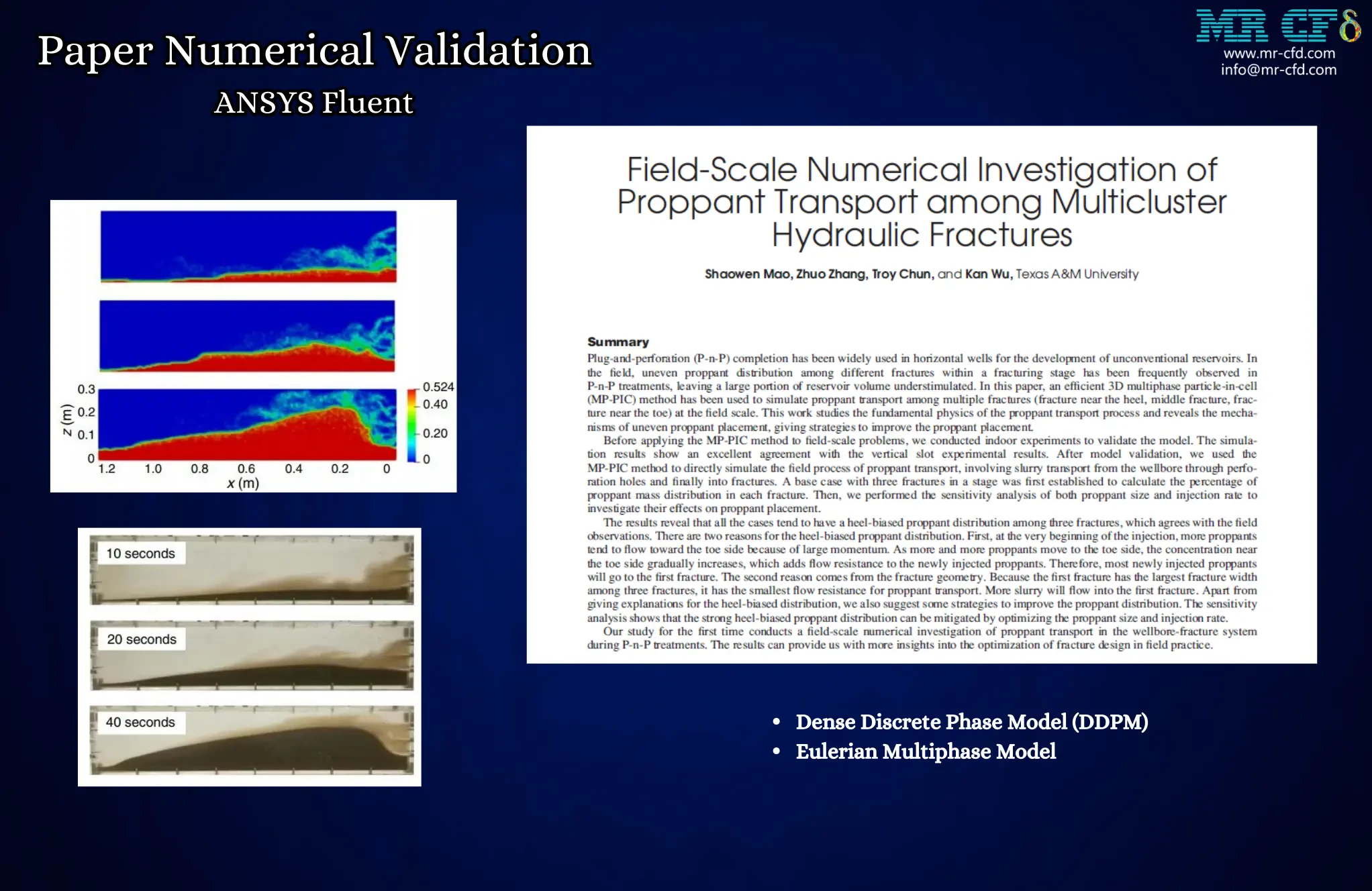
The current CFD Analysis Validates the Paper ‘Field-Scale Numerical Investigation of Proppant Transport among Multicluster Hydraulic Fractures’ via ANSYS Fluent software. We have designed the geometry using ANSYS Design Modeler software and generated the mesh on this geometry using ANSYS Meshing software. The mesh type is structured. The Eulerian multiphase model is used to simulate the proppant. The Dense Discrete phase model (DDPM) is used in the simulation. The Saffman lift force, virtual mass force, and two-way turbulence coupling models are taken into account.

Price: $60
The present problem simulates the aeroacoustics and sound generation by a water flow inside a Francis Turbine using ANSYS Fluent software. We have designed the geometry using ANSYS Design Modeler software and created the mesh on this geometry using ANSYS Meshing software. The mesh type is unstructured with 4,914,404cells. We use the Frame Motion (MRF) to define rotation movement. The Broadband Noise Sources model is also used to define the acoustic model
Price: $20
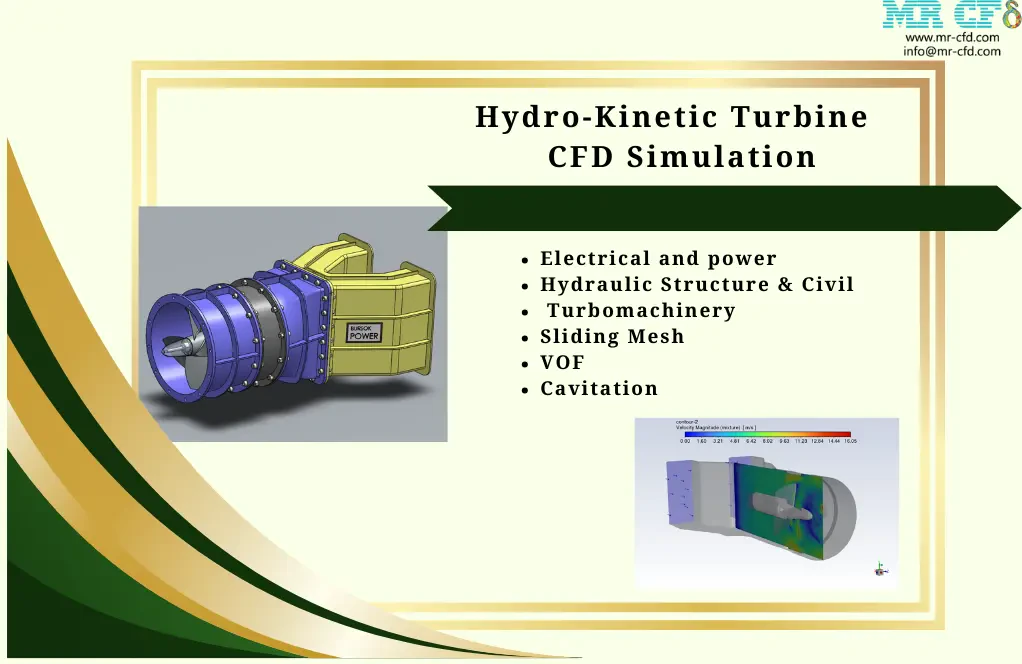
The problem numerically simulates Hydro-Kinetic turbine using ANSYS Fluent software. We design the 3-D model with the Solidworks software. We mesh the model with ANSYS Meshing software, and the element number equals 7,758,370. The Mesh Motion (Sliding Mesh) technique is used to simulate the rotation of the turbine blades The VOF method is used In this simulation.
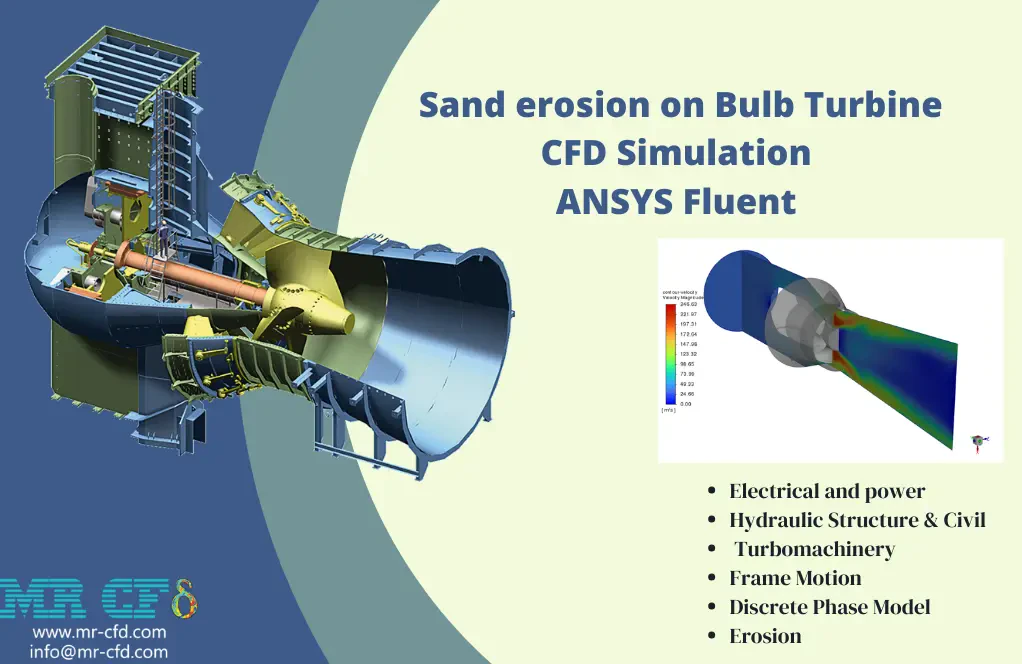
Bulb Turbine, Sand Erosion Study CFD Simulation
Intermediate, Advanced
Price: $160
The current CFD Analysis models the Bulb Turbine via ANSYS Fluent software. We have designed the geometry using ANSYS Design Modeler software and generated the mesh on this geometry using ANSYS Meshing software. The Frame Motion technique is utilized to model the rotation of the turbine. The Discrete Phase Model (DPM) account for the presence of sand particles. The Erosion on the turbine, due to particle collision is investigated.
Price: $629
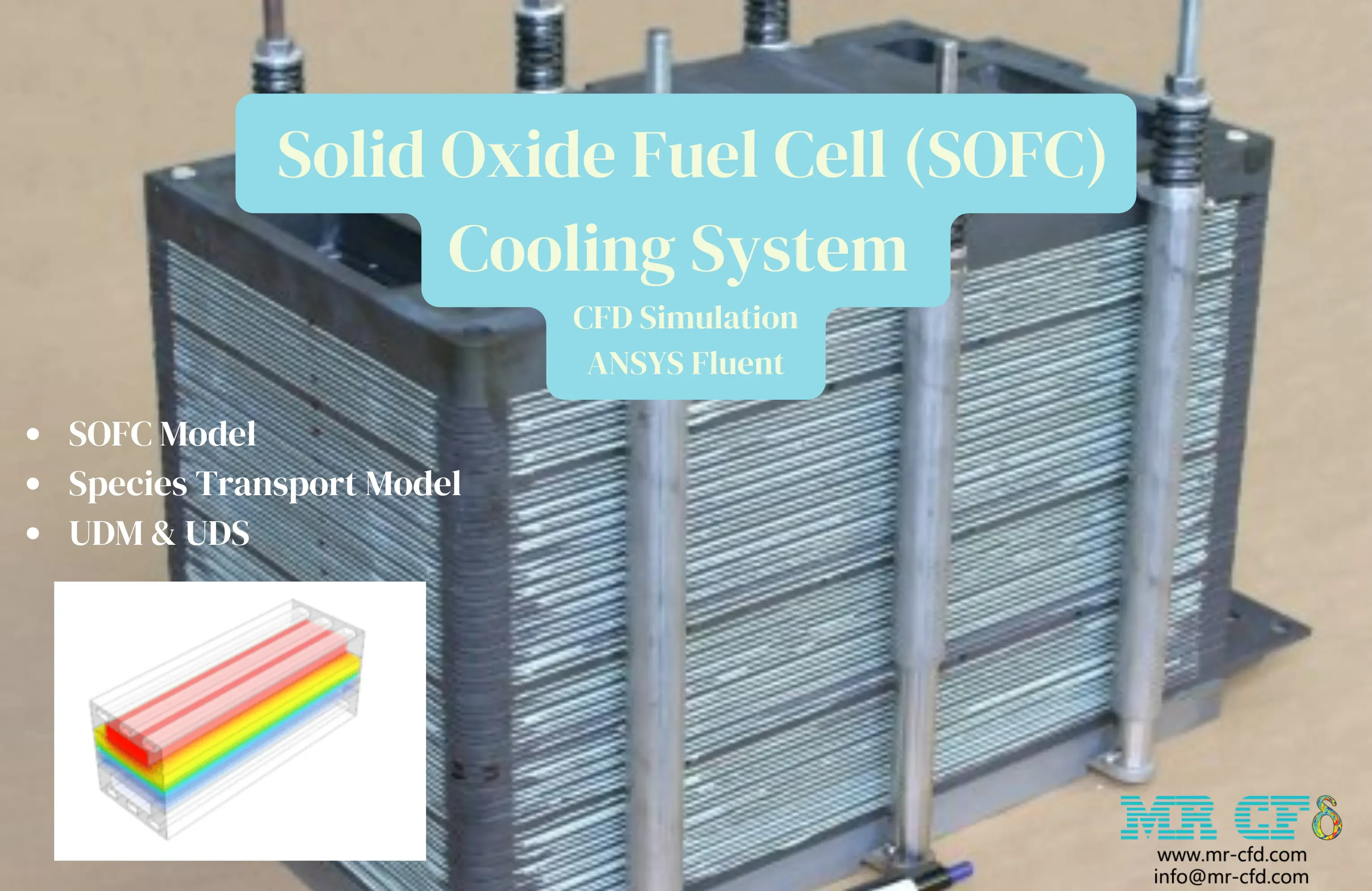
The problem numerically simulates Fuel Cell with Cooling System using ANSYS Fluent software. We design the 3-D model with the Design Modeler software. We mesh the model with ANSYS Meshing software, and the element number equals 4,984,882. We use the Fuel Cell and Electrolysis Model to define a fuel cell. We used the SOFC sub-model to define a solid oxide fuel cell. We used the Species model to define H2, O2, and H2O.