

Fluent Modules Online Courses
Here's every CFD online course related to Fluent Modules category.
FSI Analysis of Airflow around an Airfoil Vibration
Intermediate
Price: $54
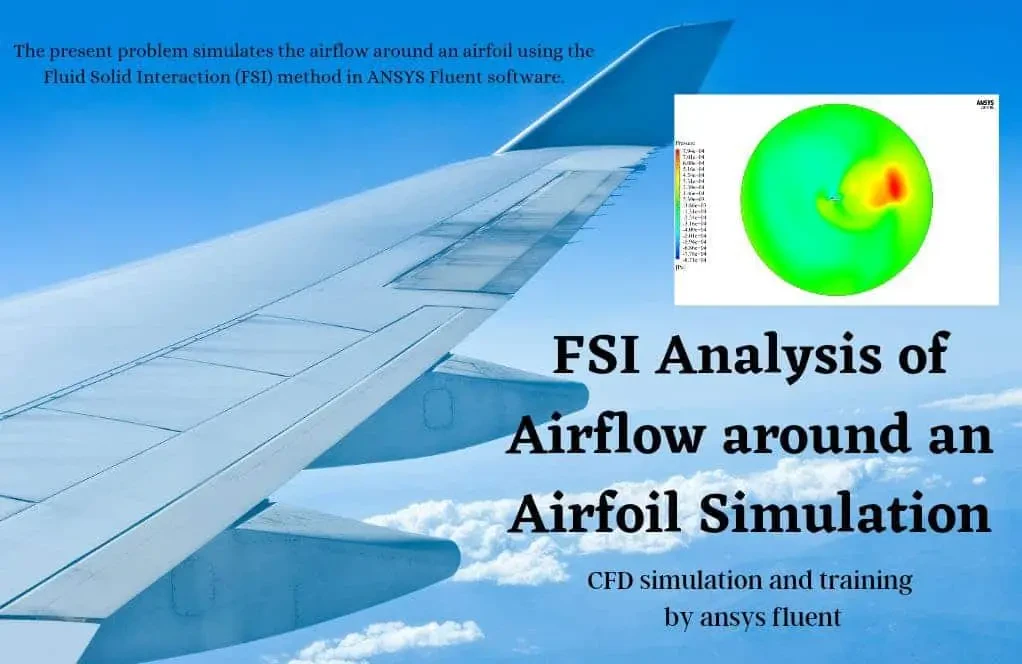
The problem numerically simulates the airflow around an airfoil using ANSYS Fluent software. This project is performed by the fluid-structure interaction (FSI) method. We design the 2-D model with the Design Modeler software. We Mesh the model with ANSYS Meshing software, and the element number equals 56220. We perform this simulation as unsteady (Transient). We use the Dynamic Mesh method to consider grid changes over time. We apply the System Coupling to communicate between Fluent and Transient Structural software. We use the Density-based solver to consider compressible flow. We use a UDF to determine variable velocity and attack angle.
Price: $99
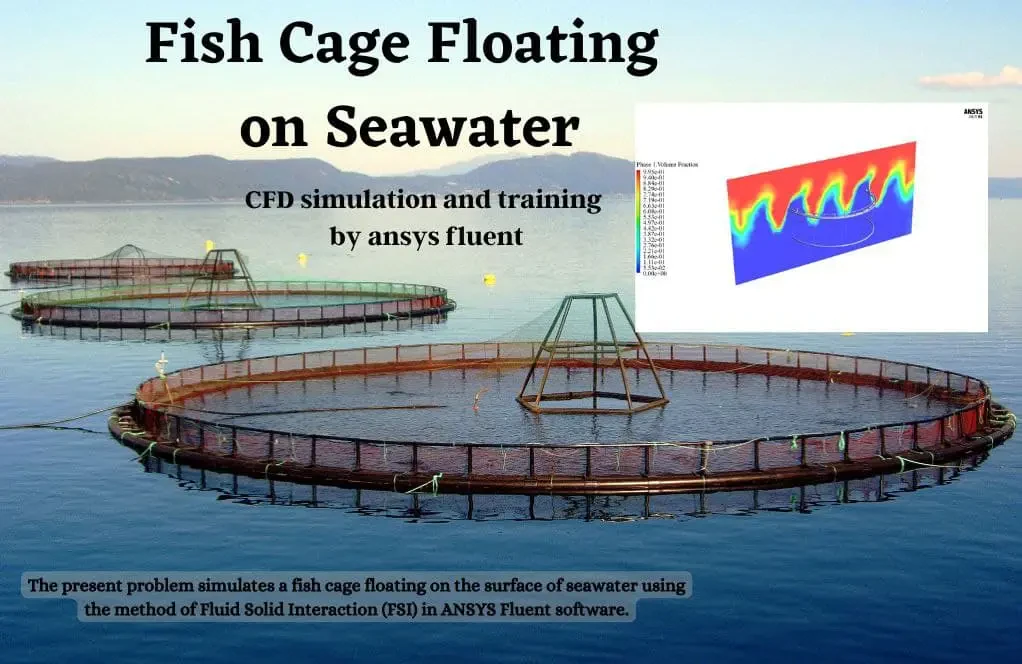
The problem numerically simulates Fish Cage Floating on Seawater using ANSYS Fluent software. This project is performed by the fluid-structure interaction (FSI) method. We design the 3-D model by the Design Modeler software. We Mesh the model by ANSYS Meshing software, and the element number equals 4922130. We perform this simulation as unsteady (Transient). We use the Dynamic Mesh method to consider grid changes over time. We apply the System Coupling to communicate between Fluent and Transient Structural software. We use the VOF Multi-Phase model to define the two-phase flow, including water and air.
Price: $20
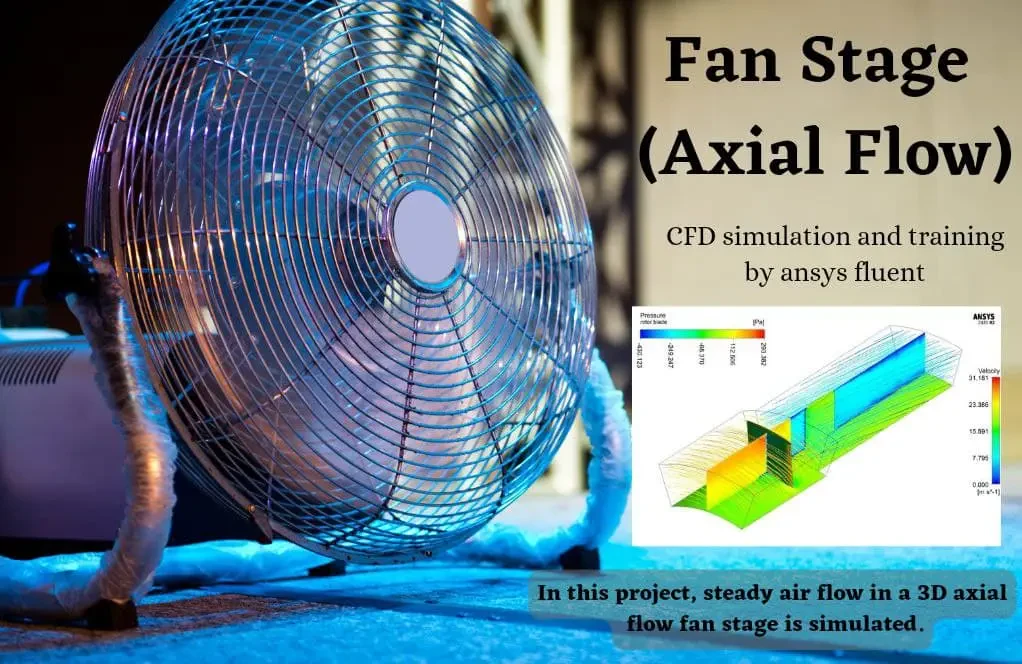
The problem numerically simulates Fan Stage (Axial Flow) Aerodynamic Performance using ANSYS Fluent software. We design the 3-D model by the Design Modeler software. We Mesh the model by ANSYS Meshing software, and the element number equals 757886. We use the Frame Motion model to define rotational motion.
Price: $36
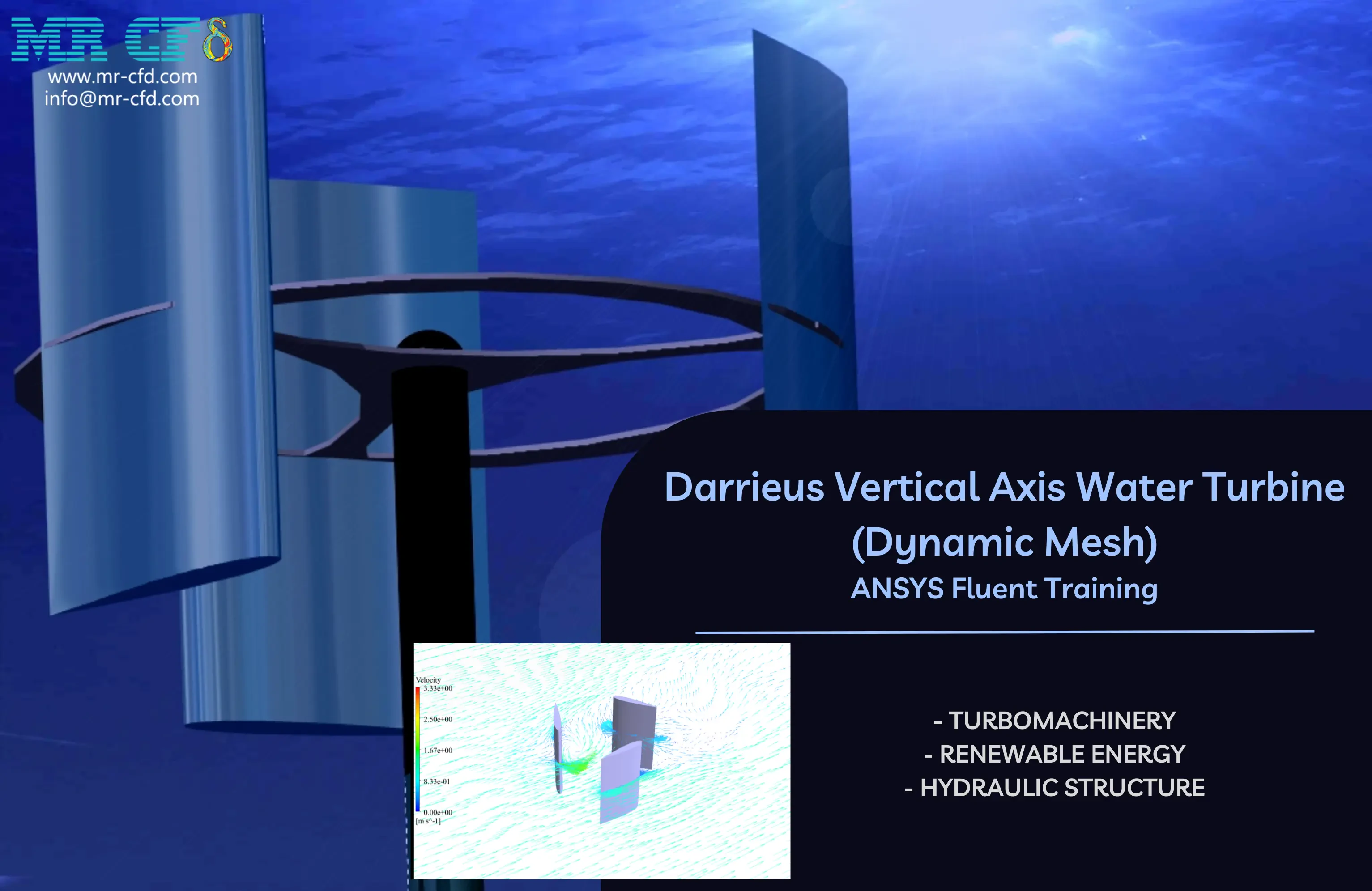
The problem numerically simulates the Darrieus Vertical Axis Water Turbine using ANSYS Fluent software. We design the 3-D model with the Design Modeler software. We mesh the model with ANSYS Meshing software, and the element number equals 7422668. We perform this simulation as unsteady (Transient). We use the Dynamic Mesh Model to define the change of meshing around the rotating turbine blades. We define a Rigid Body by a rotational motion with one degree of freedom (1-DOF).
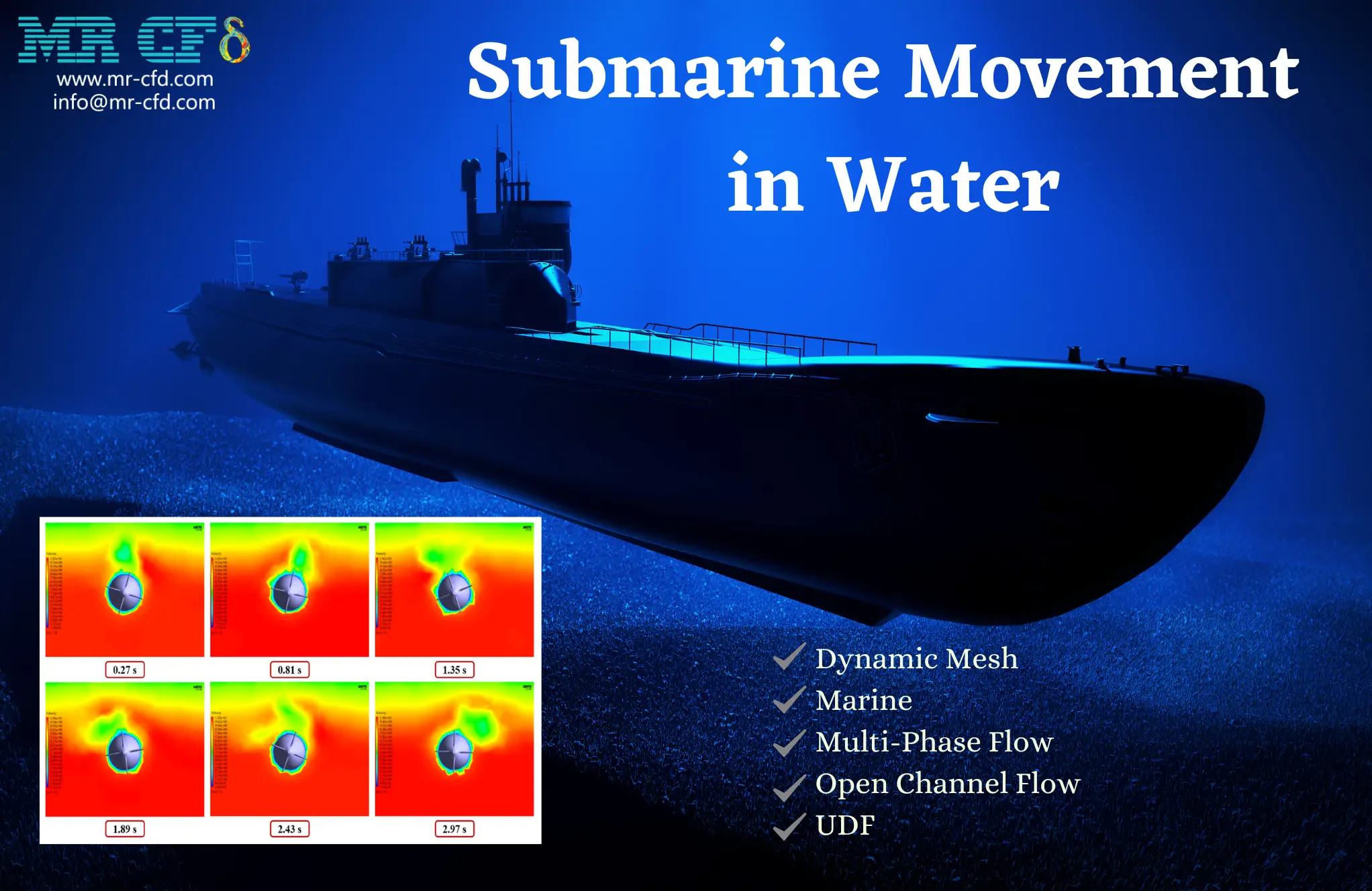
Self-Propelled Submarine Motion, Dynamic Mesh (6-DOF)
Intermediate, Advanced
Price: $99
The problem numerically simulates Self-Propelled Submarine Motion using ANSYS Fluent software. We design the 3-D model with the CATIA software. We Mesh the model with ICEM software, and the element number equals 2802219. We perform this simulation as unsteady (Transient). We use the Dynamic Mesh method to define grid changes. We use a UDF to define the movement as a Rigid Body. We use the VOF Multi-phase model to consider water and air.
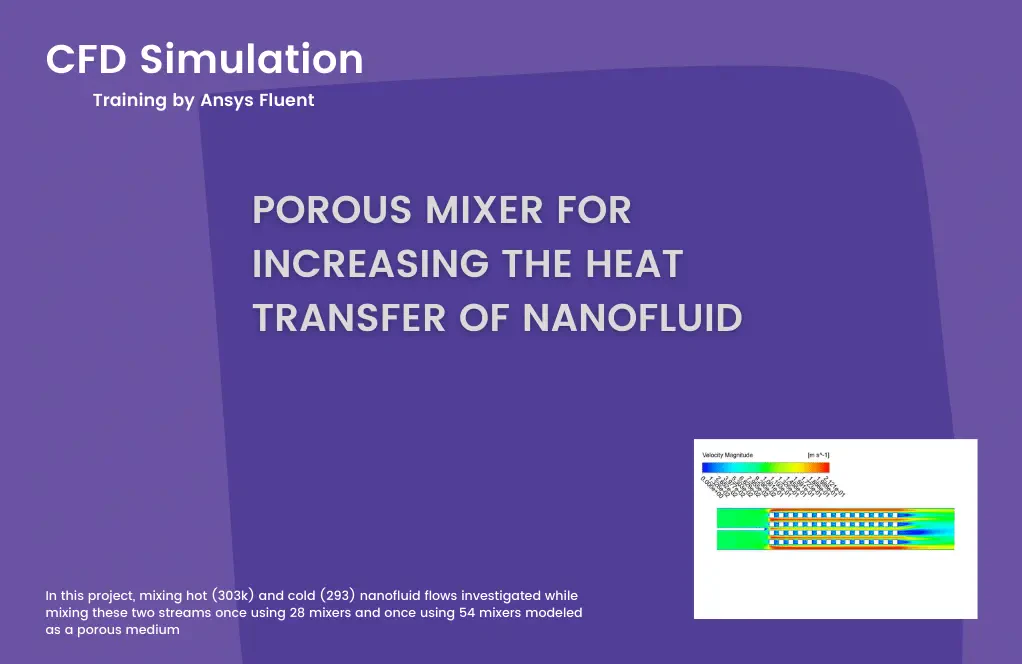
Nanofluid Porous Mixer for Increasing Heat Transfer
Beginner, Intermediate
Price: $40
The problem numerically simulates the Porous Mixer for Increasing the Heat Transfer of Nanofluid using ANSYS Fluent software. We design the 3-D model by the Spaceclaim software, and then mesh the model by ANSYS Meshing software. The Nanofluid is modeled as a single-phase fluid with modified thermophysical properties. We use the Porous option in the cell zone conditions.
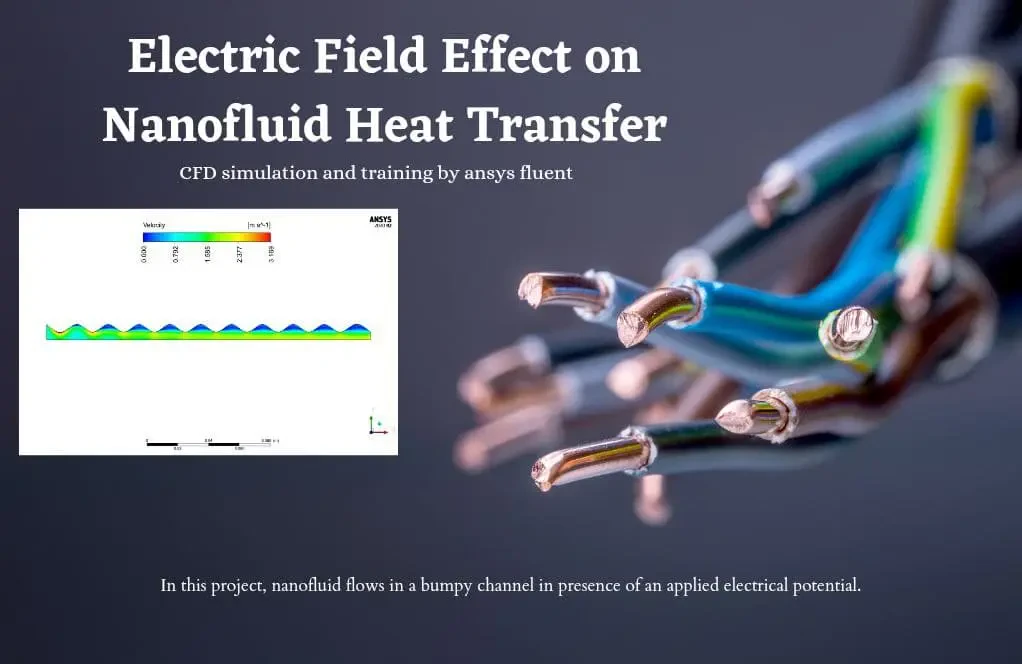
Electric Field Effect on Nanofluid Heat Transfer (EHD)
Intermediate, Advanced
Price: $42
In this project, nanofluid flows in a bumpy channel in presence of an applied electrical potential.
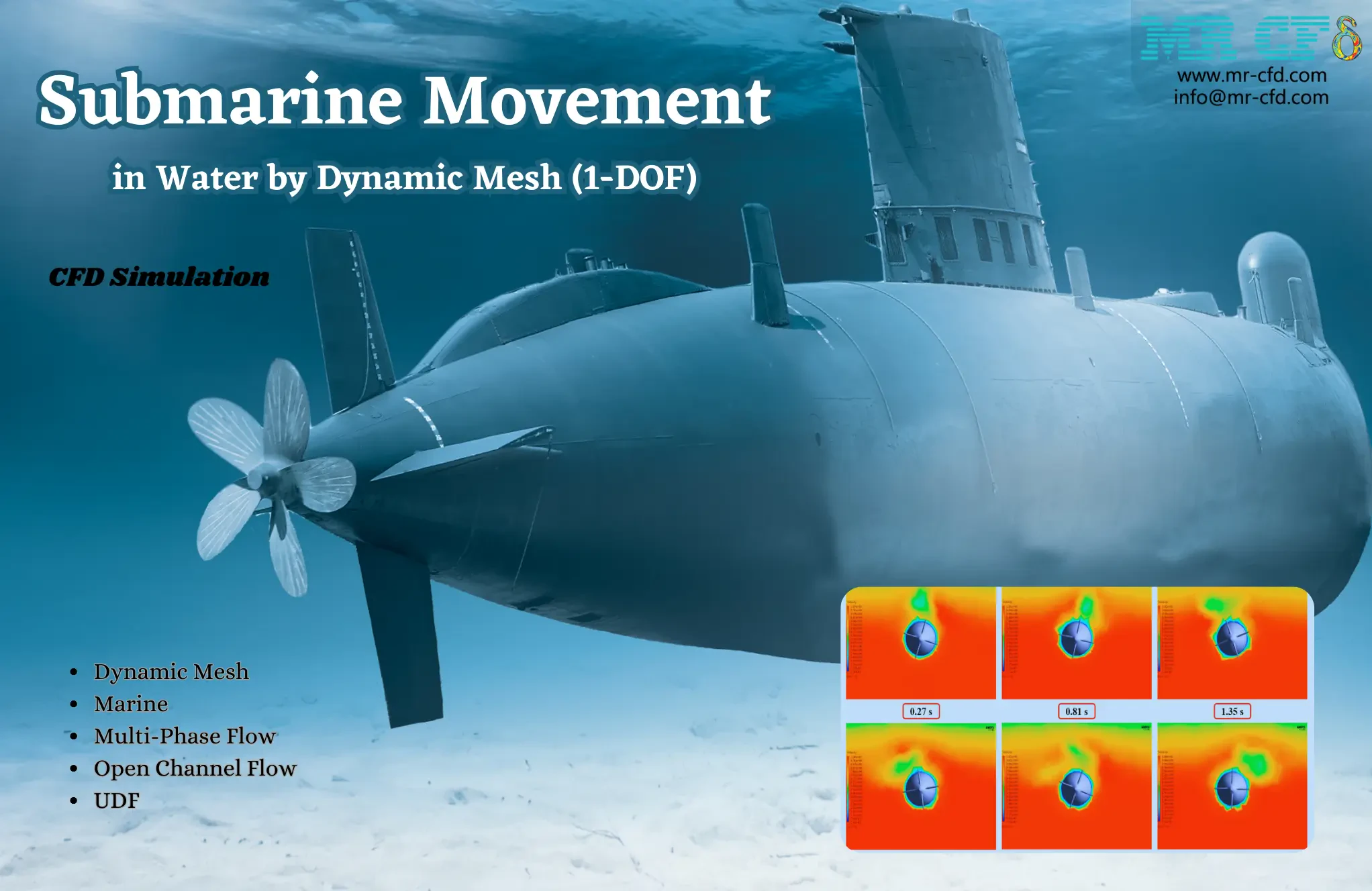
Submarine Movement in Water by Dynamic Mesh (1-DOF)
Intermediate, Advanced
Price: $99
The problem numerically simulates the Submarine Movement in Water using ANSYS Fluent software. We design the 3-D model with the Design Modeler software. We mesh the model with ANSYS Meshing software, and the element number equals 316846. We define the Dynamic Mesh model to define the instantaneous change of meshing. We use a UDF to define the rotational movement. We define a rigid body by considering one degree of freedom. We use the VOF Multi-phase model to define water and air.
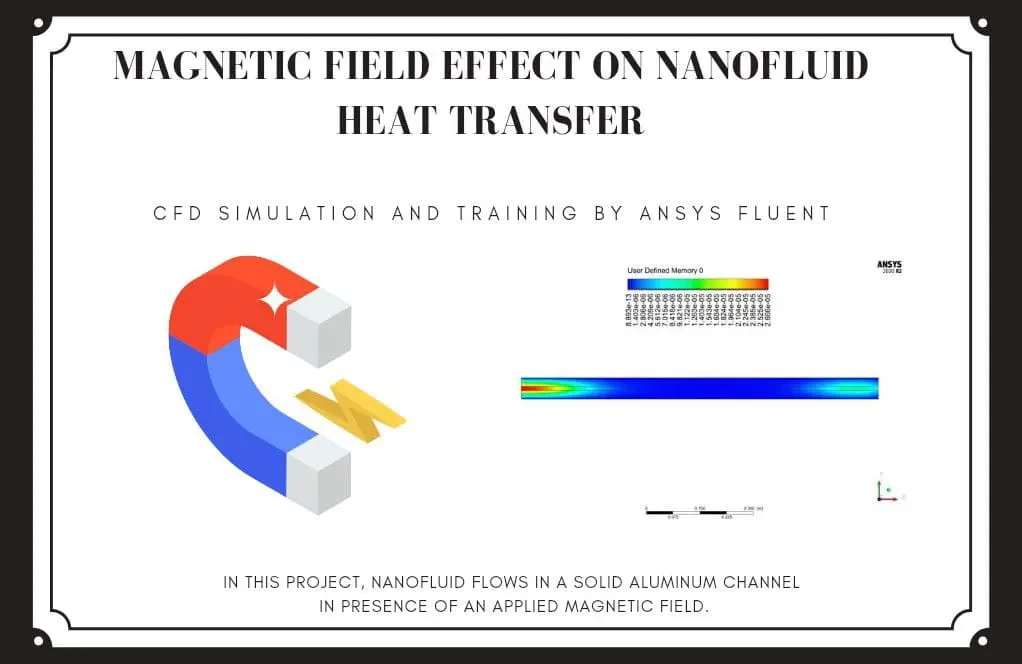
Magnetic Field (MHD) Effect on Nanofluid Heat Transfer, 3-D
Intermediate, Advanced
Price: $54
In this project, nanofluid flows in a solid aluminum channel in the presence of an applied magnetic field.