

For Professionals Online Courses
Here's every CFD online course related to For Professionals category.
Price: $499
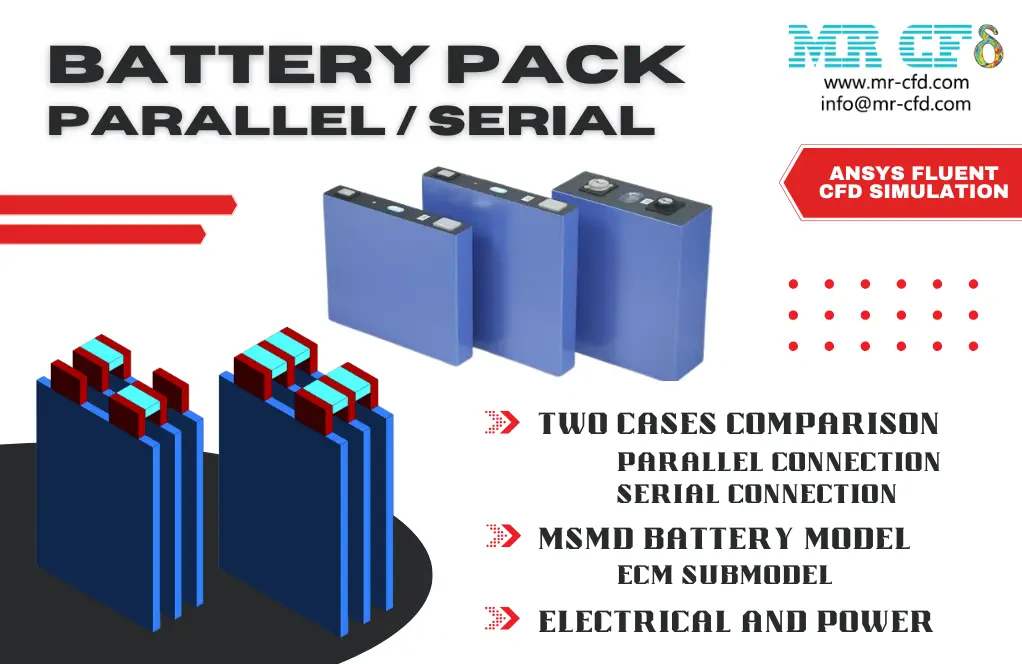
This product numerically simulates the Parallel and Serial Battery Pack using ANSYS Fluent software. We design the 3-D models in parallel and serial connection with the Design Modeler software. We mesh the models with ANSYS Meshing software; the element numbers are 74240 and 73216. We use the MSMD (Multi-Scale Multi-Domain) Battery model to define the charge/discharge. We use the ECM (Equivalent Circuit Model) sub-model to determine the electrochemical computations. The run calculation is in an unsteady state (transient).
Price: $319
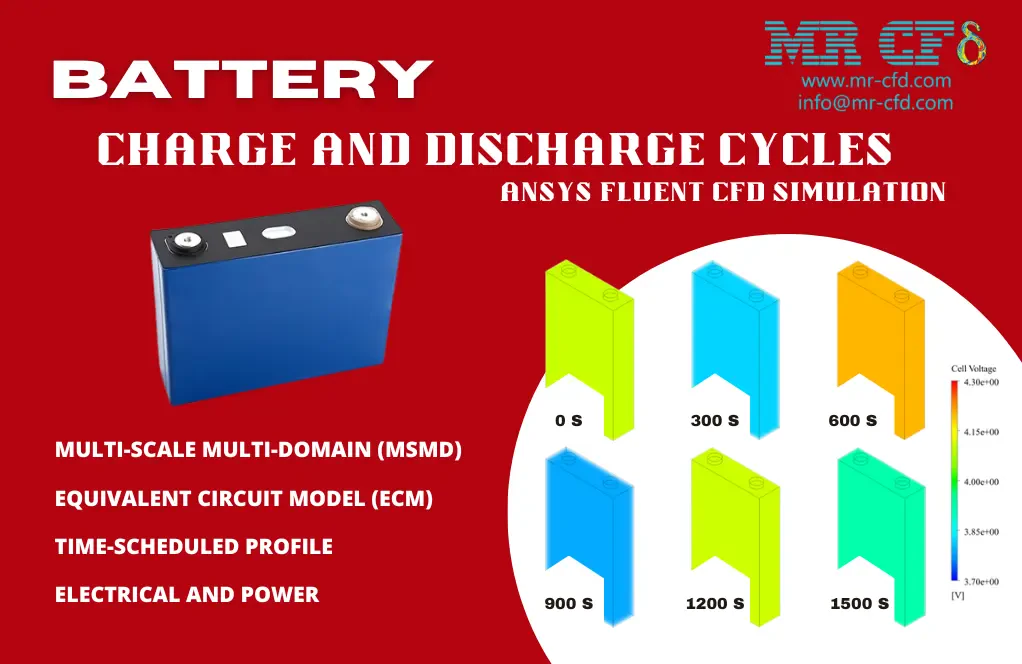
Simulate the charge and discharge cycles of a 3D prismatic battery in Ansys Fluent, driven by a five-stage time-scheduled profile, with the MSMD battery model and an equivalent circuit model. For engineers working on battery thermal management and cell performance.
Price: $249
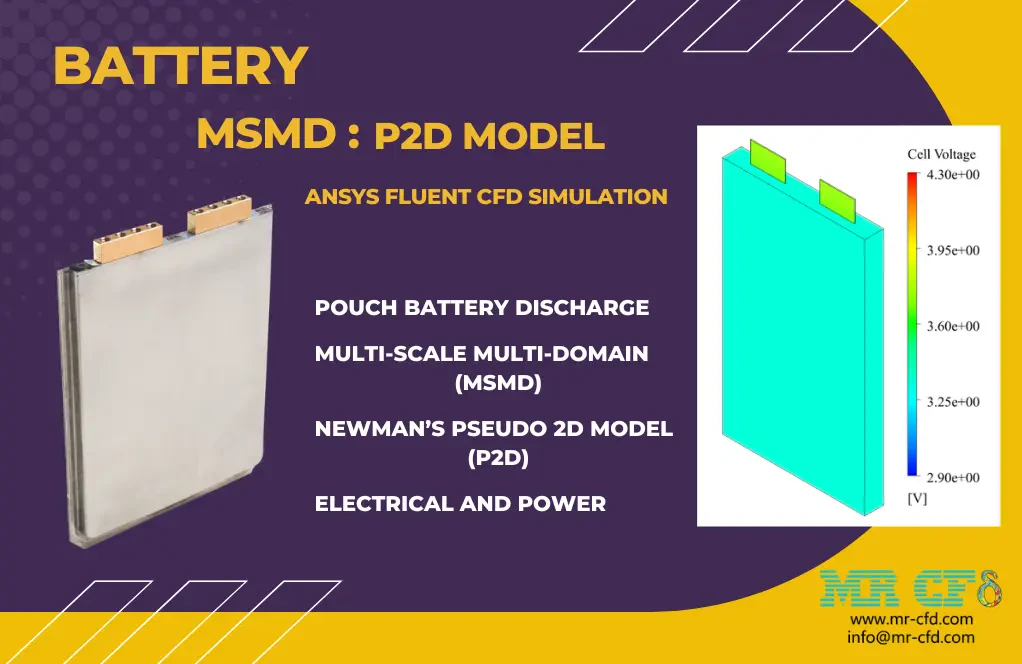
This product numerically simulates the Pouch Battery Discharge using ANSYS Fluent software. We design the 3-D model with the Design Modeler software. We mesh the model with ANSYS Meshing software, and the element number equals 125401. We use the MSMD (Multi-Scale Multi-Domain) Battery model to define the charge/discharge. We use Newman's P2D (Pseudo 2-D) sub-model to determine the electrochemical computations. The run calculation is in an unsteady state (transient).
Price: $249
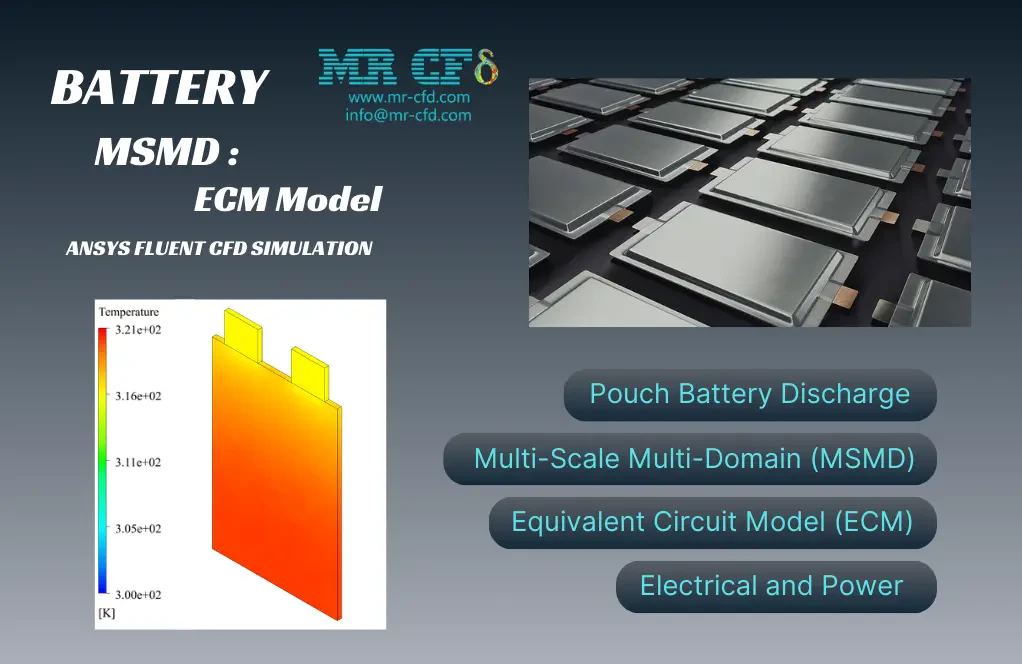
This product numerically simulates the Pouch Battery Discharge using ANSYS Fluent software. We design the 3-D model with the Design Modeler software. We mesh the model with ANSYS Meshing software, and the element number equals 13601. We use the MSMD (Multi-Scale Multi-Domain) Battery model to define the charge/discharge. We use the ECM (Equivalent Circuit Model) sub-model to determine the electrochemical computations. The run calculation is in an unsteady state (transient).
Price: $249
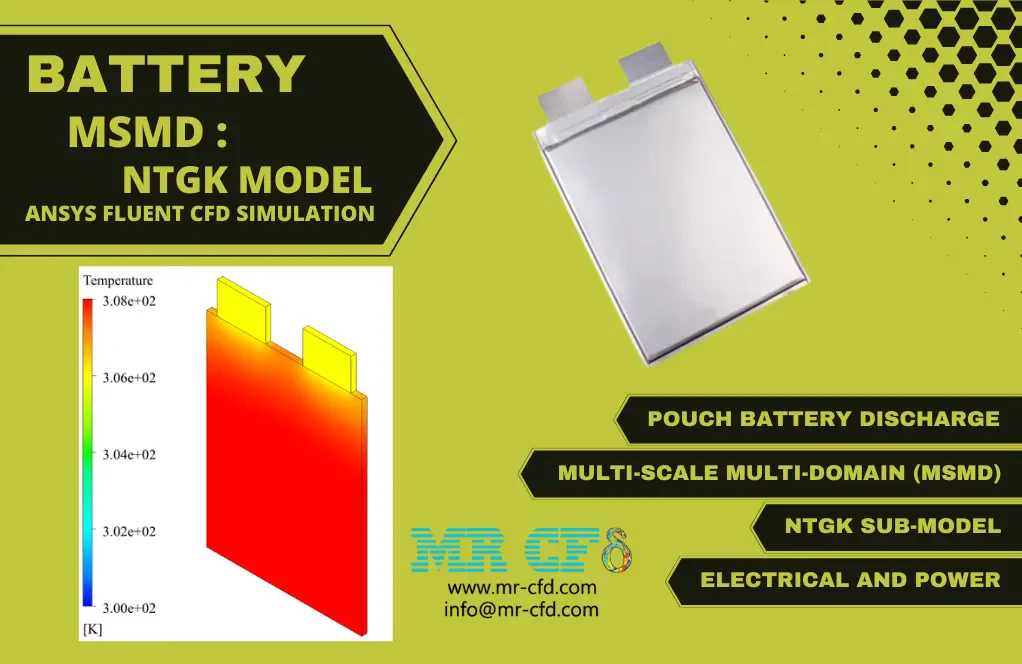
This product numerically simulates the Pouch Battery Discharge using ANSYS Fluent software. We design the 3-D model with Design Modeler software. We mesh the model with ANSYS Meshing software. The mesh is Structured, and the element number equals 1210. We use the MSMD (Multi-Scale Multi-Domain) Battery model to define the charge/discharge. We use the NTGK sub-model to determine the electrochemical computations. The run calculation is in an unsteady state (transient).
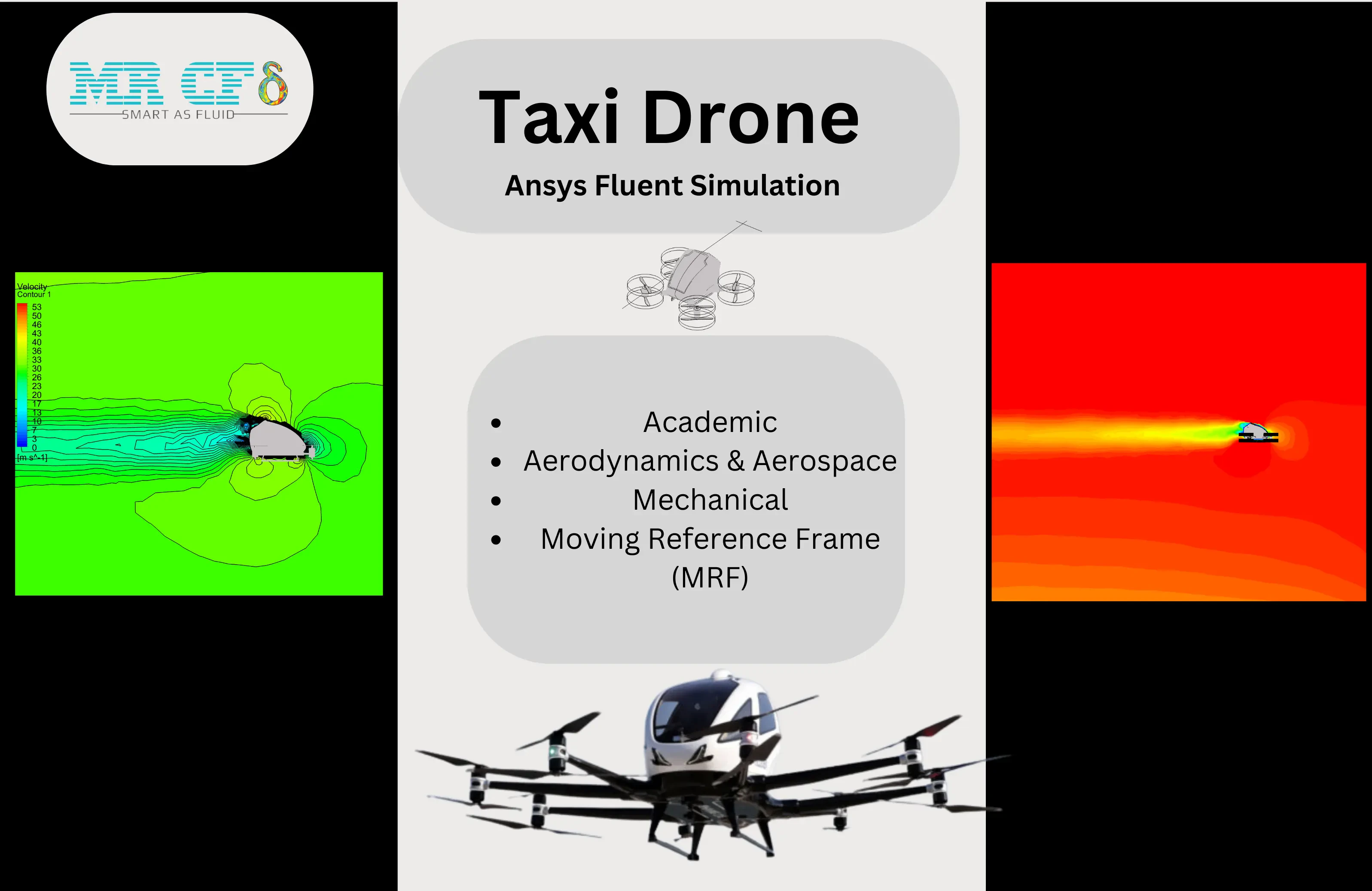
Taxi Drone, Ansys Fluent Simulation
Intermediate
Price: $319
Taxi Drone Ansys Fluent Simulation involves using advanced CFD software to analyze the aerodynamic performance of urban air mobility vehicles The geometry of the taxi drone was designed using ANSYS SpaceClaim , The mesh was generated using ANSYS Meshing, resulting in a total of 2,829,977 elements The velocity inlet was set to 30 m/s with an angle of attack of 5 degrees. The rotational speed of the blades was configured with MRF method at 5000 RPM, with the upper and lower blades rotating in opposite directions.
Price: $56
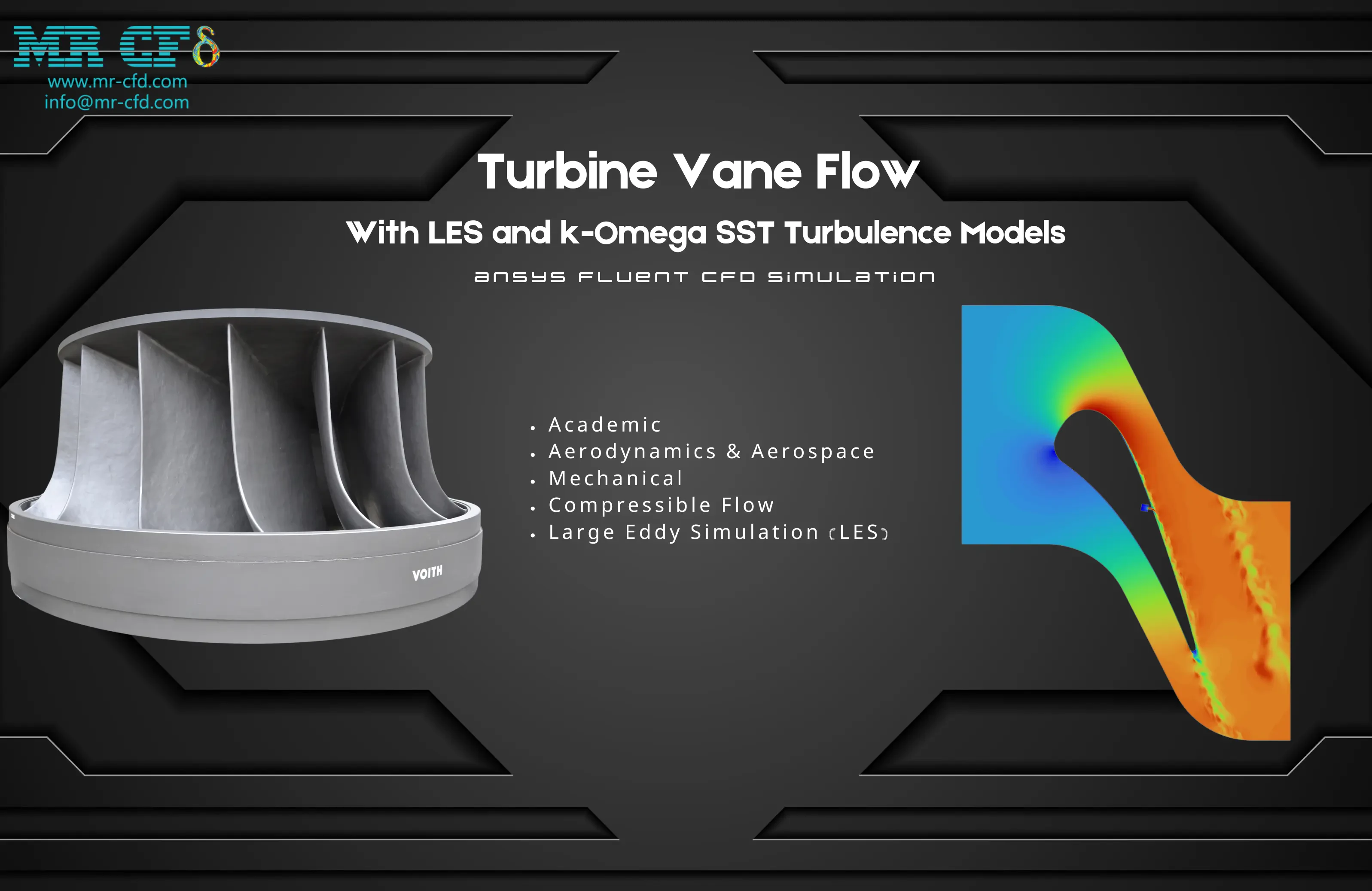
This study investigates the aerodynamic performance of a turbine vane using CFD simulations with two different turbulence models The simulations were conducted using ANSYS Fluent, comparing the k-Omega SST and Large Eddy Simulation (LES) turbulence models The geometry of the turbine vane was created using ANSYS Design Modeler. The computational domain was then discretized using ANSYS Meshing, resulting in a high-resolution structured mesh of 12,634,415 elements
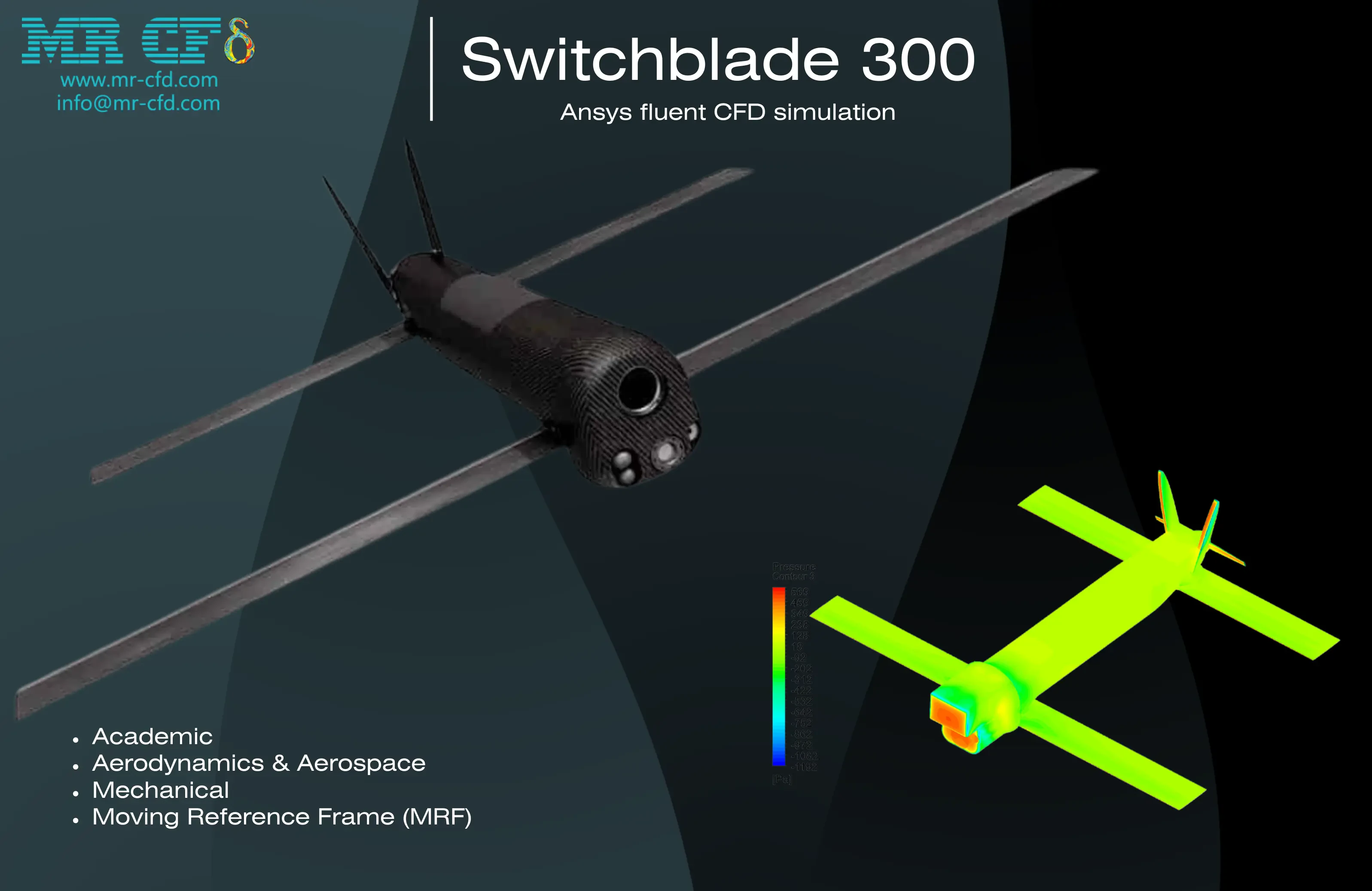
Switchblade 300 (steady-state), Ansys Fluent CFD Simulation
Intermediate, Advanced
Price: $319
This study focuses on the aerodynamic analysis of the Switchblade 300 using ANSYS Fluent Two scenarios are simulated: one with the rear blade stationary and the other with the rear blade in motion. The geometry of the Switchblade was created using SpaceClaim software,The meshing was performed in Fluent Meshing, utilizing a polyhedral mesh with over 7,600,000 elements The Multiple Reference Frame (MRF) approach was employed to simulate the rotating rear blade at 5000 RPM.
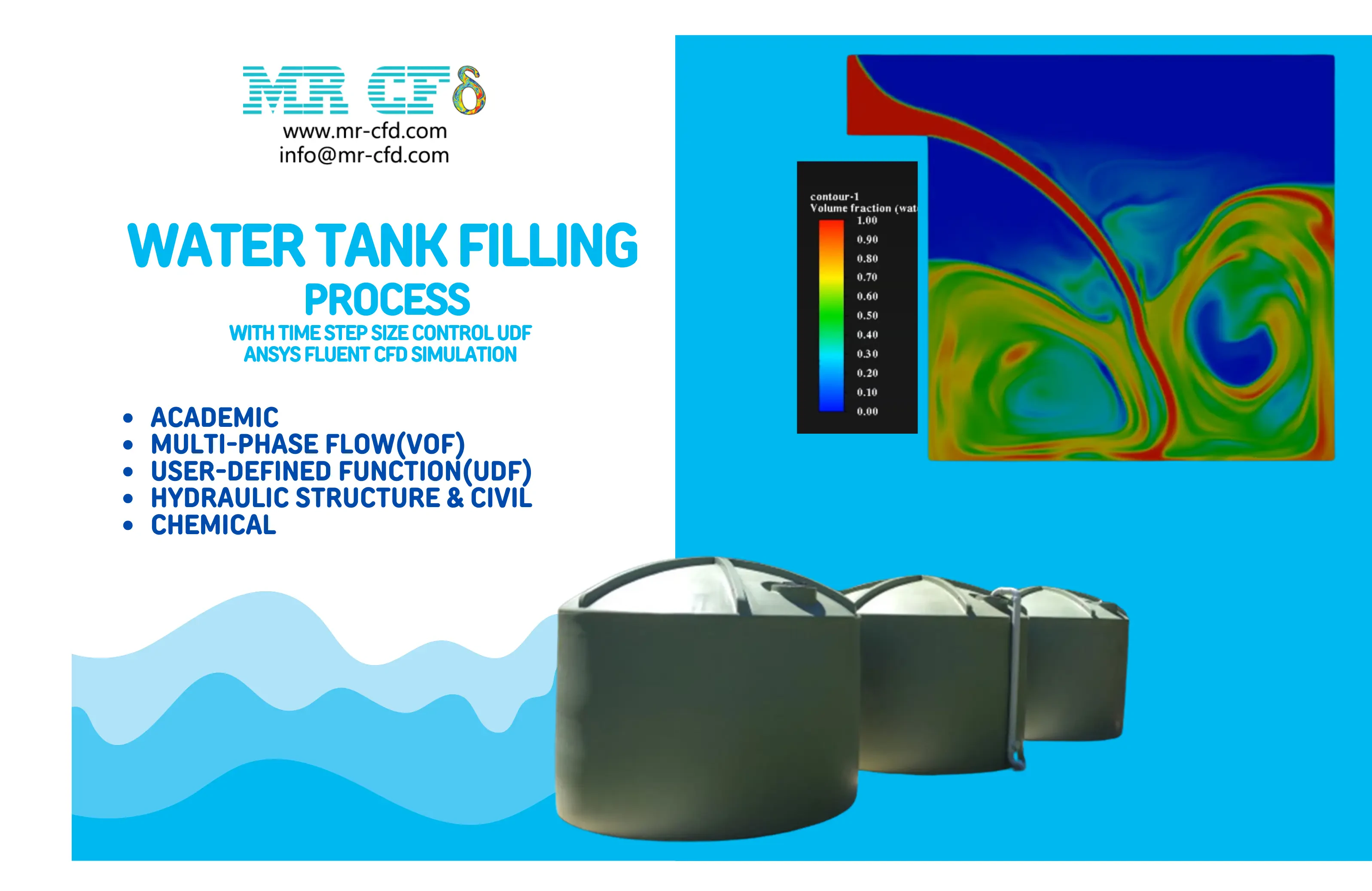
Water Tank Filling Process With Time Step Size Control UDF, CFD Simulation
Intermediate, Advanced
Price: $24
This study uses CFD simulation to investigate the water tank filling process The geometry of the tank was created using ANSYS Design Modeler, and the computational domain was discretized using ANSYS Meshing, resulting in over 135,000 elements The Volume of Fluid (VOF) model was employed to simulate the interaction between water and air phases A User-Defined Function (UDF) was implemented to control the time step size